Focus: Blue-Green Infrastructure
Navigating the complexities of Blue-Green Infrastructure
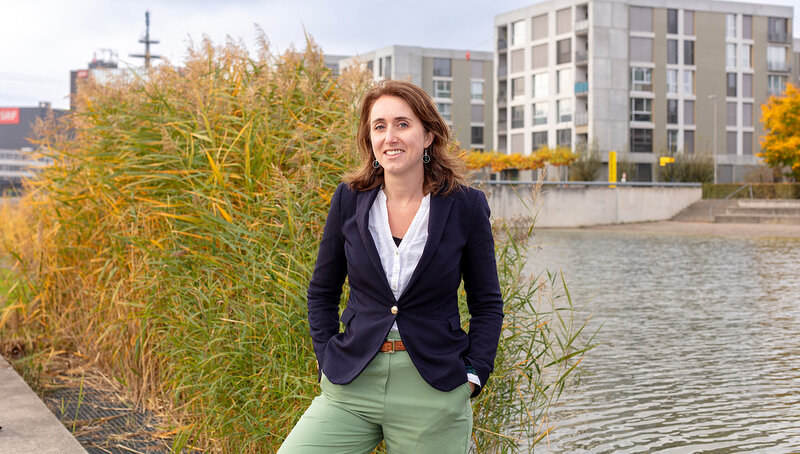
As the leader of the research group on Multifunctional Blue-Green Design at Eawag, Lauren Cook explores the intricate trade-offs between flood management, biodiversity, and urban heat. In this interview, she challenges the simplicity of "nature-based solutions" and explains how decision-making tools can help find the optimal solution for competing goals. Read more
Foto: Andri Bryner
Video CWIS
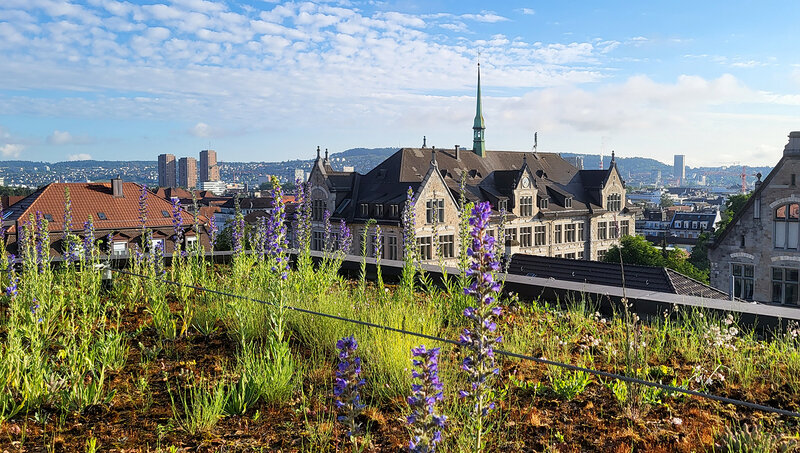
Green roofs provide additional habitats
Green roofs are not only good for the urban climate, but also support a variety of species. However, these species need to be actively assisted through appropriate measures, as living conditions for these lofty inhabitants are far from easy. Read more
Foto: Raoul Schaffner
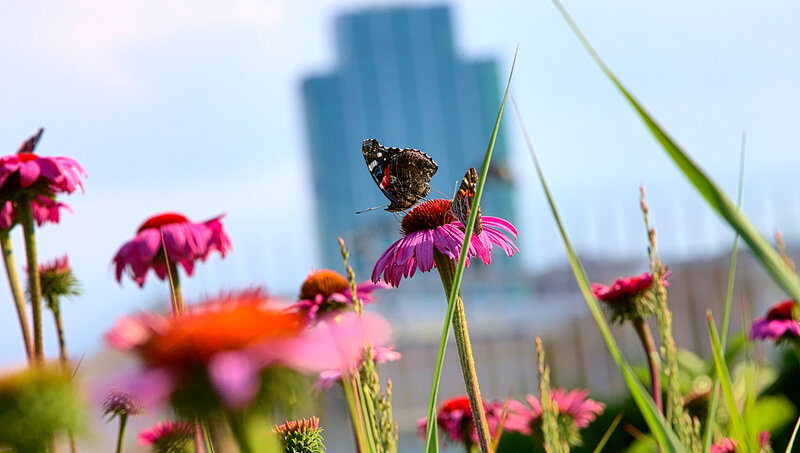
Climate change in cities: A risk to biodiversity
Climate change is causing shifts in the regional distribution of animal  and plant species. In cities, this risk is often underestimated. A new modelling approach enables more  reliable predictions and, consequently, more targeted measures. Read more
Foto: Aldo Todaro
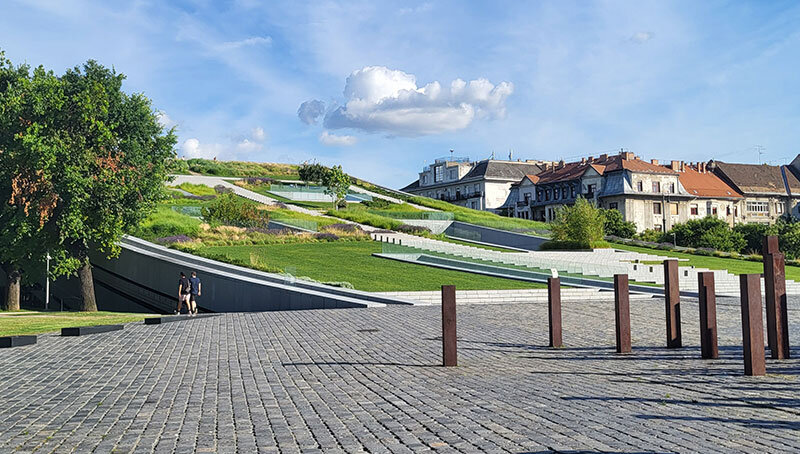
Designing cities with and for biodiversity
Blue-green infrastructure protects cities from climate-related hazards. However, greater attention should be paid to biological aspects when planning such infrastructure. It then becomes more effective and resilient, and requires less maintenance. Read more
Here you will find regularly updated news, events, scientific publications, practical guides, current research projects and Eawag experts on the topic of blue-green infrastructure.
Foto: Peter Penicka
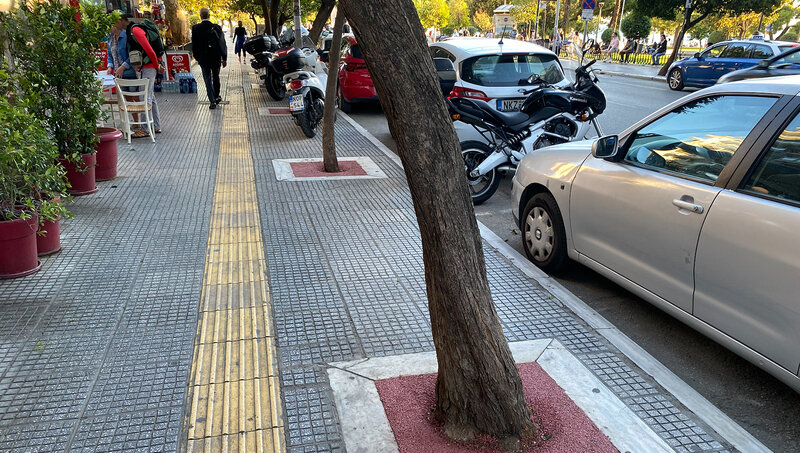
Trees need water to cool the city
Urban trees are often seen as natural allies in fighting summer heat waves. But how much they actually help to cool their surroundings depends heavily on how moist the soil is. Read more
Foto: Peter Penicka
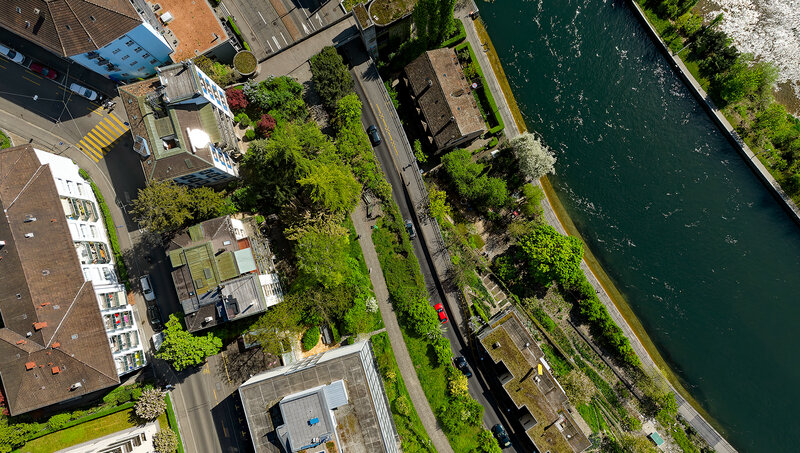
Green roofs and ponds as networks
To enhance biodiversity, natural areas of high ecological value need to be interconnected. However, the necessary collaboration between different stakeholders is often lacking, particularly in urban areas. Read more
Foto: Peter Penicka
Making heatwaves in cities more bearable
Plants and water can mitigate heat in cities. Using Zurich as a case study, Eawag researchers tested a climate model which indicates how large the effect of green and blue spaces is. Read more
Foto: Peter Penicka
Mitigating the consequences of heavy rainfall
During heavy rainfall, sewage systems are often overloaded, leading to untreated wastewater being discharged into surface waters. Such combined sewer overflows could more than triple. However, this increase could be avoided by using BGI. Read more
8 September 2026, 9.00 am - 5.00 pm
Energy - Water - Future
Eawag Infoday 2026, Lucerne
21 - 23 September 2026
Aqua Urbanica: Verstehen, was ist ...
D-A-CH-Fachtagung, Kaiserlautern
21 October 2026, 9.00 am - 5.00 pm
In our agenda you will find further events as well as our Eawag seminars with internationally renowned researchers and the Practice-oriented courses at Eawag (PEAK).
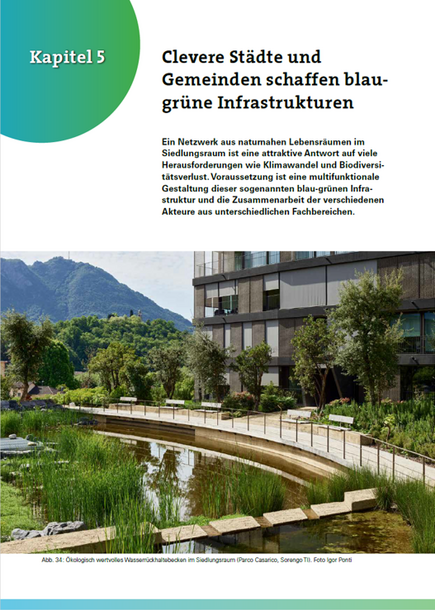
Clever cities and communes create blue-green infrastructures
Infoday Magazine 2024, Chapter 5, Eawag (in German and French)
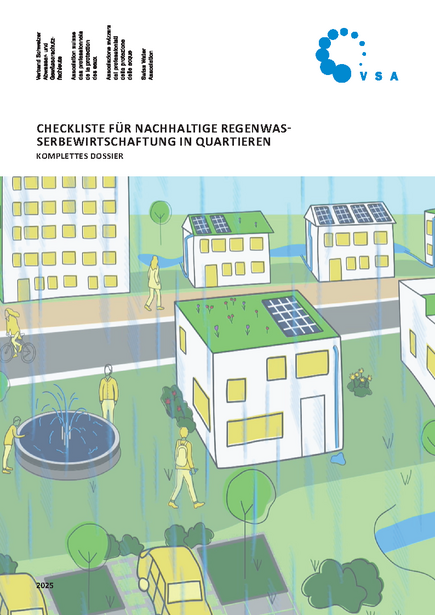
Checkliste für nachhaltige Regenwasserbewirtschaftung in Quartieren
Publikation des Verbands Schweizer Abwasser- und Gewässerschutzfachleute VSA (in German and French)
Scientific publications from Eawag can be found on DORA Eawag.
Eawag Info Day 2026: Energy - Water - Future
Tuesday, 8 September 2026, Swiss Museum of Transport Lucerne

The energy transition aims to move away from fossil fuels. This involves expanding renewable energy sources, including hydropower. However, hydropower is already highly developed in Switzerland, and in addition to the climate crisis - the primary driver of the energy transition - we are also facing a biodiversity crisis. Addressing both challenges simultaneously leads to conflicts that are particularly pronounced in water bodies. Net-zero strategies, the extraction of raw materials critical to the transition, and the use of geothermal energy can also impact water. Eawag’s research helps to make these conflicting goals transparent and enables the development of fact-based solutions. It provides policymakers with a basis for making ecologically, economically, and socially sustainable decisions.

➡ Further information and registration
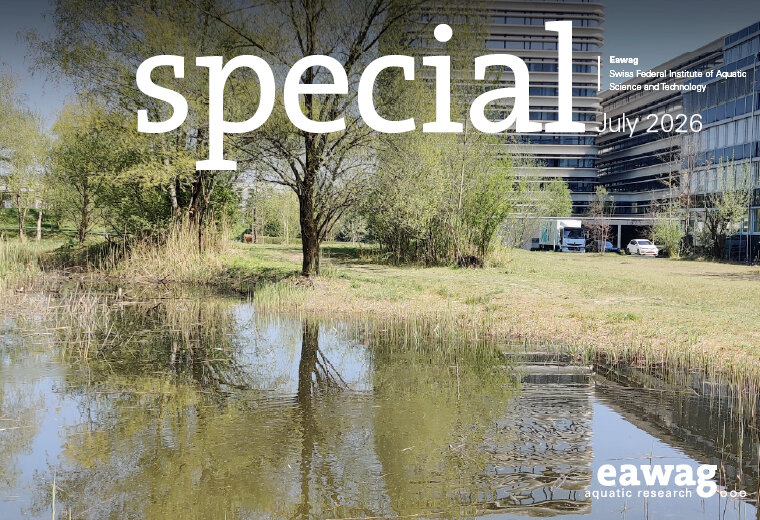
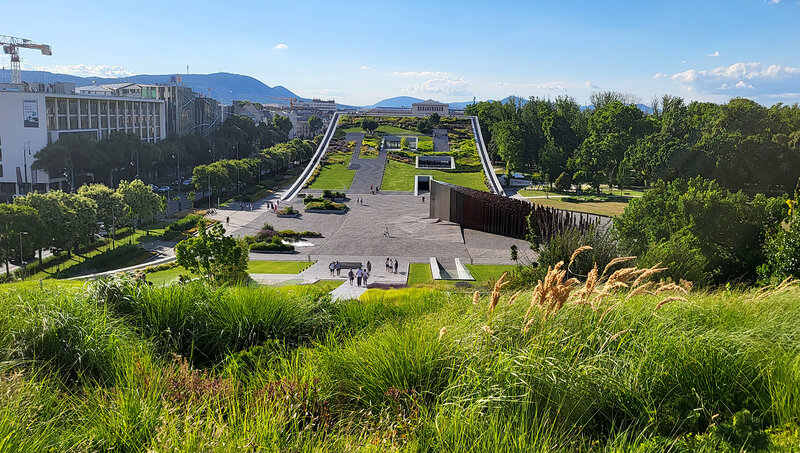
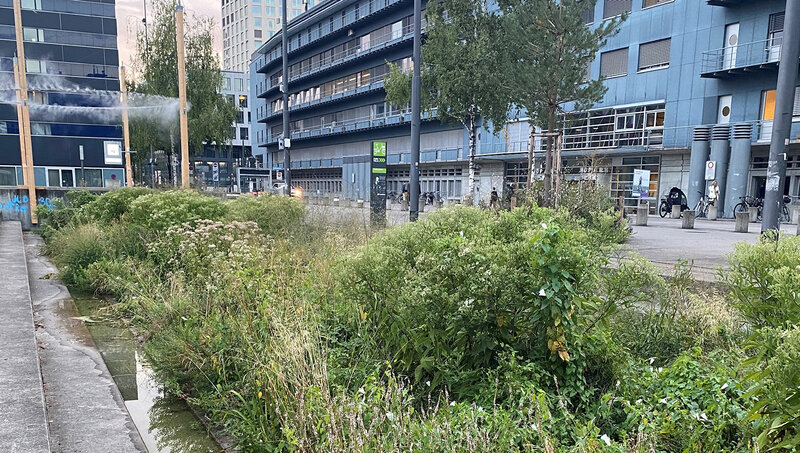
Cover image: Blue-green infrastructure, such as this example in Zurich, can significantly improve the urban climate. Among other things, it mitigates the effects of heatwaves and helps to protect against flooding. It also creates habitats for plants and animals, thereby promoting urban biodiversity. Photo: Kilian Perrelet, Eawag

You can find more articles on our News Portal.
If you have any questions or suggestions, please send us an e-mail to redaktion@eawag.ch
or visit our website eawag.ch.

Publisher
Eawag: Swiss Federal Institute of Aquatic Science and Technology

Contact
Eawag
Überlandstrasse 133
8600 Dübendorf
Switzerland
www.eawag.ch
redaktion@eawag.ch
The texts and photos credited as "Eawag" on the linked websites are subject to the Creative Commons “Attribution 4.0 International” licence. As long as the source is indicated, this material may be freely copied, redistributed and modified. Further information on the licence.