Blue Diversion Autarky – Abwasserbehandlung ohne Netzanschluss

Autarky im Überblick

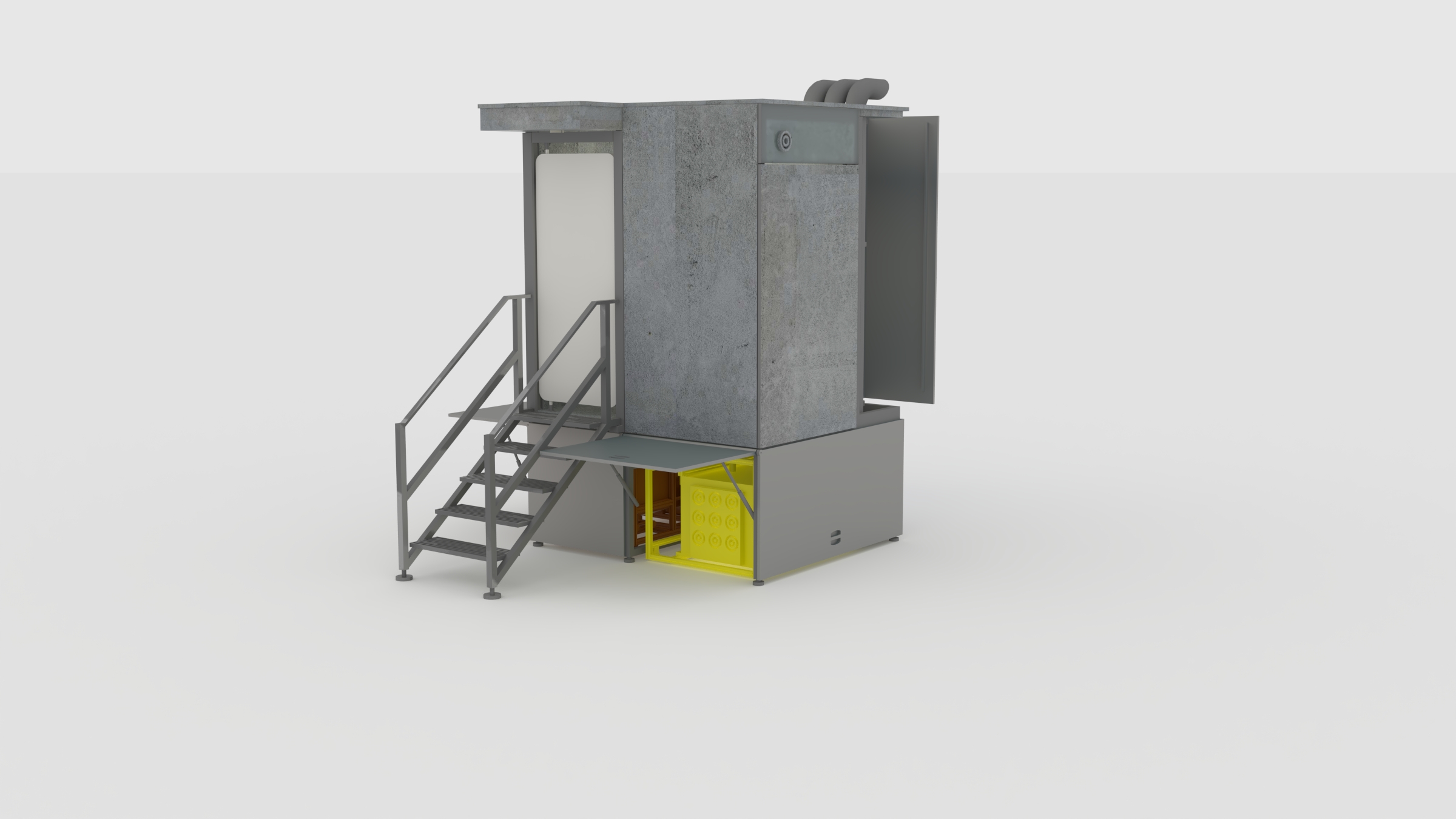
Unsere Vision ist es, Menschen ohne Zugang zu sanitärer Versorgung eine Toilette zur Verfügung zu stellen, welche mit einem ansprechenden Design und einer einfachen und komfortablen Bedienbarkeit eine sichere, attraktive und bezahlbare Sanitärlösung bietet. 

Ziel des Blue Diversion Autarky Projekts ist die Entwicklung modularer Anlagen für die Behandlung von Abwasser, Urin und Fäkalien direkt in der Toilette am Entstehungsort. Die Anlagen kommen ohne externen Anschluss an das Trinkwasser- und Abwassernetz aus und können somit auch in Gegenden mit mangelnder Infrastruktur eingesetzt werden. Durch die Trennung von Abwasser, Urin und Fäkalien an der Quelle, können die drei Ströme entsprechend ihrer besonderen Eigenschaften behandelt werden. Dies erlaubt eine maximale Rückgewinnung von Ressourcen wie Nährstoffen und Frischwasser.

Das Projekt wird im Rahmen der „Reinvent the toilet Challenge (RTTC)“ durch die Bill & Melinda Gates Stiftung (BMGF) gefördert. Das Projekt Blue Diversion Autarky befindet sich momentan in seiner zweiten Projektphase. Blue Diversion Autarky ist die Fortführung des Projekts Blue Diversion.
Leitlinien

Sicherheit & Komfort

Die Blue Diversion Autarky-Toilette bietet die Sicherheit und den Komfort einer modernen wassergespülten Toilette ohne der Notwendigkeit eines Wasser- und Kanalisationsanschluss.
Trennung am Entstehungsort

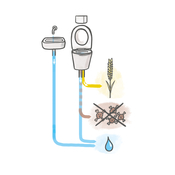
Durch die separate Behandlung von Fäkalien, Urin und Wasser ist es möglich, Krankheitserreger unschädlich zu machen, Nährstoffe zurückzugewinnen und Wasser sowohl zum Spülen als auch zum Hände waschen wiederaufzubereiten. 
Modularisierung

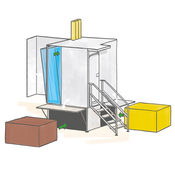
Ein modularer Aufbau ermöglicht eine breite Palette von Anwendungen. Die einzelnen Module können integriert, separat (Beispiel Handwaschstation) oder mit anderen Technologien kombiniert verwendet werden.
Forschungsschwerpunkte

Blue Diversion Autarky basiert auf der getrennten Behandlung von Abwasser, Urin und Fäkalien. In der Wasserbehandlung stellt ein Multibarrierenansatz sicher, dass das Wasser für die Wiederverwendung jederzeit sicher ist. In einem  biologischen Behandlungsverfahren bauen Mikroorganismen die Verschmutzung aus Seife, Urin und Fäkalien ab. Das Wasser wird anschliessend durch eine Ultrafiltrationsmembran filtriert. Mit der Hilfe eines Aktivkohlefilters und einer elektrochemischen Behandlung (Elektrolyse) des Wassers werden letzte Spuren organischer Verunreinigungen beseitigt und das Wasser desinfiziert. Im Anschluss ist es bereit zum Händewaschen und Spülen wiederverwendet zu werden. Die Urinbehandlung setzt sich aus zwei Prozessen zusammen. Durch die Stabilisierung des frischen Urins mit Kalziumhydroxid werden sowohl übler Geruch und Nährstoffverlust verhindert, als auch pathogene Keime abgetötet. Anschliessend wird das anteilige Wasser verdunstet. Übrig bleibt ein Konzentrat verschiedener organischer und anorganischer Nährstoffe, welche als Dünger weiterverwendet werden können. Die Fäkalienbehandlung basiert auf dem Prinzip der hydrothermalen Oxidation (HTO). Unter hoher Temperatur und hohem Druck erfolgt dabei die direkte Aufspaltung in die Endprodukte Kohlendioxyd, Wasser und ausgefällte anorganische Feststoffe.

Wir haben die Blue Diversion Autarky Toilette vor Kurzem in einem 14-Personen Haushalt in einer peri-urbanen Zone von Durban, Südafrika, getestet. Das Toilettensystem hat in diesem Kontext sehr gut funktoniert und produzierte genügend Wasser für die Toilettenspülung. Die erfolgreiche Einführung neuartiger Sanitärtechnologien hängt jedoch nicht nur von der technischen Funktionalität ab, weshalb der Feldtest von einem sozialwissenschaftlichen Team begleitet wurde. Die Resultate dieser sozio-technischen Auswertung sowie eine detaillierte Auswertung der Wasseraufbereitungstechnologie sind in Open Access Publikationen verfügbar.

Publikationen

Extbase Variable Dump
array(2 items)
   publications => '21700,23229' (11 chars)
   libraryUrl => '' (0 chars)
Extbase Variable Dump
array(2 items)
   0 => Snowflake\Publications\Domain\Model\Publicationprototypepersistent entity (uid=21700, pid=124)
      originalId => protected21700 (integer)
      authors => protected'Sutherland, C.; Reynaert, E.; Dhlamini, S.; Magwaza, F.;
          Lienert, J.; Riechmann, M. E.; Buthelezi, S.; Khumalo,&
         nbsp;D.; Morgenroth, E.; Udert, K. M.; Sindall, R. 
         C.
' (230 chars) title => protected'Socio-technical analysis of a sanitation innovation in a peri-urban househol
         d in Durban, South Africa
' (101 chars) journal => protected'Science of the Total Environment' (32 chars) year => protected2021 (integer) volume => protected755 (integer) issue => protected'' (0 chars) startpage => protected'143284 (12 pp.)' (15 chars) otherpage => protected'' (0 chars) categories => protected'field test; water reuse; source separation; service delivery; social accepta
         nce; transdisciplinary research
' (107 chars) description => protected'The provision of water and sanitation for all that is safe, dignified, relia
         ble, affordable and sustainable is a major global challenge. While centraliz
         ed sewer-based sanitation systems remain the dominant approach to providing
         sanitation, the benefits of non-sewered onsite sanitation systems are increa
         singly being recognised. This paper presents the outcomes of the testing of
         the Blue Diversion Autarky Toilet (BDAT), a sanitation system providing hygi
         ene and dignity without relying on water and wastewater infrastructure, in a
          peri-urban household in Durban, South Africa. The BDAT was used by a single
          household as their only form of sanitation during three months of technical
          and social testing. An analysis based on technical data in combination with
          interpretive, qualitative research methods revealed that the BDAT functione
         d well and achieved high levels of social acceptance in the test household.
         The flushing, cleanliness and odour-free nature of the sanitation technology
         , its functionality, the household's previous sanitation experience, and the
         ir experience with and understanding of water scarcity, were the main factor
         s underpinning their positive response to this innovation in sanitation. The
          testing process resulted in broader developmental benefits for the househol
         d, including improved basic services due to the upgrading of the electrical
         and existing sanitation system, social learning, and improved relationships
         between household members and the local state. A transdisciplinary research
         process, which emerged through the assessment, enabled the integration of di
         fferent forms of knowledge from multiple actors to address the complexity of
          problems related to the development of socially just sanitation. The benefi
         t of engaging with societal actors in sanitation innovation and assessing it
         s outcomes using both the technical and social sciences is evident in this p
         aper.
' (1905 chars) serialnumber => protected'0048-9697' (9 chars) doi => protected'10.1016/j.scitotenv.2020.143284' (31 chars) uid => protected21700 (integer) _localizedUid => protected21700 (integer)modified _languageUid => protectedNULL _versionedUid => protected21700 (integer)modified pid => protected124 (integer)
1 => Snowflake\Publications\Domain\Model\Publicationprototypepersistent entity (uid=23229, pid=124) originalId => protected23229 (integer) authors => protected'Sutherland, C.; Reynaert, E.; Sindall, R. C.; Riechmann,
          M. E.; Magwaza, F.; Lienert, J.; Buthelezi, S.; Kh
         umalo, D.; Dhlamini, S.; Morgenroth, E.; Udert, K. 
         M.
' (230 chars) title => protected'Innovation for improved hand hygiene: field testing the Autarky handwashing
         station in collaboration with informal settlement residents in Durban, South
          Africa
' (159 chars) journal => protected'Science of the Total Environment' (32 chars) year => protected2021 (integer) volume => protected796 (integer) issue => protected'' (0 chars) startpage => protected'149024 (13 pp.)' (15 chars) otherpage => protected'' (0 chars) categories => protected'community participation; hand hygiene; WASH; technology field test; water re
         cycling; transdisciplinary research
' (111 chars) description => protected'Safe and accessible water services for hand hygiene are critical to human he
         alth and well-being. However, access to handwashing facilities is limited in
          cities in the Global South, where rapid urbanisation, service backlogs, lac
         k of infrastructure and capacity, and water scarcity impact on the ability o
         f local governments to provide them. Community participation and the co-prod
         uction of knowledge in the development of innovative technologies, which are
          aligned with Water, Sanitation and Hygiene (WASH) principles, can lead to m
         ore sustainable and socially-acceptable hand hygiene systems. This paper pre
         sents the outcomes of the testing of the Autarky handwashing station, a tech
         nology that provides onsite treatment and recycling of handwashing water, in
          an informal settlement in Durban, South Africa. The transdisciplinary resea
         rch approach adopted enabled the participation of multiple stakeholders with
          different knowledge systems in the framing, testing and evaluation of the s
         ystem. The process of co-producing knowledge, as well as the outcomes of the
          testing, namely high levels of functionality and social acceptability of th
         e technology, supported the WASH principles. The evaluation revealed that th
         e Autarky handwashing station is a niche intervention that improved access t
         o safe and appealing handwashing facilities in an informal settlement. Its n
         ovel design, socially desirable features, reliability and ability to save wa
         ter increased its acceptance in the community. The testing of the system in
         a real-world context revealed the value of including communities in knowledg
         e production processes for technology innovation. Further work is required t
         o ensure that real-time monitoring of system function is feasible before suc
         h systems can be implemented at larger scale.
' (1793 chars) serialnumber => protected'0048-9697' (9 chars) doi => protected'10.1016/j.scitotenv.2021.149024' (31 chars) uid => protected23229 (integer) _localizedUid => protected23229 (integer)modified _languageUid => protectedNULL _versionedUid => protected23229 (integer)modified pid => protected124 (integer)
Sutherland, C.; Reynaert, E.; Dhlamini, S.; Magwaza, F.; Lienert, J.; Riechmann, M. E.; Buthelezi, S.; Khumalo, D.; Morgenroth, E.; Udert, K. M.; Sindall, R. C. (2021) Socio-technical analysis of a sanitation innovation in a peri-urban household in Durban, South Africa, Science of the Total Environment, 755, 143284 (12 pp.), doi:10.1016/j.scitotenv.2020.143284, Institutional Repository
Sutherland, C.; Reynaert, E.; Sindall, R. C.; Riechmann, M. E.; Magwaza, F.; Lienert, J.; Buthelezi, S.; Khumalo, D.; Dhlamini, S.; Morgenroth, E.; Udert, K. M. (2021) Innovation for improved hand hygiene: field testing the Autarky handwashing station in collaboration with informal settlement residents in Durban, South Africa, Science of the Total Environment, 796, 149024 (13 pp.), doi:10.1016/j.scitotenv.2021.149024, Institutional Repository

Mehr zu Wasserbehandlung

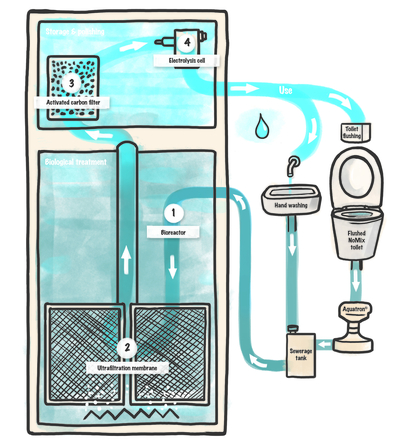
Das verwendete Wasserbehandlunggsystem, die sogenannte Wasserwand, erlaubt die Rückgewinnung und Wiederverwendung von Handwaschwasser und Toilettenspülwasser (vom überwiegenden Teil Urin und Fäkalien getrennt). Ein Multibarrierenansatz mit vier Behandlungsstufen stellt sicher, dass das Wasser für die Wiederverwendung sicher ist.

  • Das Herzstück der Behandlung bildet ein belüfteter Bioreaktor, in dem Verunreinigungen, resultierend aus Seife, Urin und Fäkalien von Mikroorganismen in einer ersten Stufe abgebaut werden.
  • Als zweite Stufe wird das Wasser anschliessend mit Hilfe der Schwerkraft durch eine Ultrafiltrationsmembran filtriert. Die Porengrösse der Membran ist geringer als jene von Bakterien und den meisten Viren. Das gefilterte Wasser ist daher mikrobiell sicher.


Contacts

Eva Reynaert Gruppenleiterin Tel. +41 58 765 6681 E-Mail senden

Die Kombination aus biologischer Behandlung und Membranfiltration führt ohne Reinigung zum Wachstum eines Biofilms auf der Membran. Dieser Effekt ist bei einer schwerkraftbetriebenen Membran (Englisch: gravity-driven membrane, GDM) erwünscht, da der Biofilm zusätzlich zum Abbau von organischem Kohlenstoff beiträgt. Insgesamt erreicht das GDM-System einen Kohlensstoffabbau von etwa 95%.

Das filtrierte Wasser wird in einem Frischwassertank gelagert. Zwei zusätzliche Behandlungsstufen stellen sicher, dass keine Wiederverkeimung stattfindet.

  • Die dritte Stufe, ein Aktivkohlerfilter, entfernt Spuren von organischer Verschmutzung im Frischwassertank durch Adsorption.
  • Die vierte und letzte Stufe, eine Elektrolysezelle, bringt eine zusätzliche Verringerung der Konzentration von organischem Kohlenstoff und produziert zusätzlich freies Chlor. Beides trägt dazu bei, das Wachstum von pathogenen Keimen während der Lagerung des Wassers zu verhindern.
Aktuelle Aktivitäten

Mit dieser Konfiguration konnten wir eine Klein-Serie Wasserwand-Prototypen zur Rückgewinnung von Handwasch- und Spülwasser entwickeln. Diese Prototypen wurden im Labor ausgiebig getestet. Unter Laborbedingungen entfernten die Prototypen zuverlässig Pathogene, Nährstoffe, Geruch und Farbe aus dem rückgewonnenen Wasser. Allerdings werden ausserhalb des Labors bedeutend grössere Schwankungen der Anzahl Nutzer, der Wasserzusammensetzung und der externen Bedingungen  erwartet. Daher setzen wir die Wasserwand zur Zeit  realen Bedingungen in unterschiedlichen  Anwendungen aus.

In einem ersten Feldversuch im Sommer 2018 konnten wir zeigen, dass die Wasserwand in einer öffentlichen Grünanlage in der Stadt Zürich bis zu 150 Nutzer pro Tag mit sicherem Handwaschwasser versorgen kann. Eine weitere Wasserwand wird zur Zeit auf dem Areal der Eawag als Teil eines kompletten Toilettensystems getestet. Bis jetzt war das System in der Lage, aus Abwasser mit erhöhten Mengen von Urin und Fäkalien wieder Handwaschwasser rückzugewinnen. E. coli (ein Indikatororganismus für fäkale Verunreinigungen) wurde zu keinem Zeitpunkt im behandelten Wasser festgestellt. Die nächste Runde Feldversuche steht schon vor der Tür:  im Februar 2019 werden eine Handwaschstation und ein komplettes Toilettensystem getestet und den Bewohnern einer Township in Durban (Südafrika) zur Verfügung gestellt. Diese Tests sollen einen vertieften Einblick in den langfristigen Betrieb des Systems in einem solchen Kontext  geben.

Update: wir haben die Resultate unserer Feldtests in der Schweiz und in Südafrika veröffentlicht. Die Publikation ist unter folgendem Link frei zugänglich: https://doi.org/10.1016/j.wroa.2020.100051.


Eine Wasserwand als Teil der kompletten Blue Diversion Autarky Toilette.  Die biologische Behandlung findet im unteren Tank statt, wobei die Ultrafiltrationsmembran auf dem Boden des Tanks sitzt. Der Aktivkohlefilter und die Elektrolyseeinheit befinden sich im oberen Tank.

Publications

Extbase Variable Dump
array(2 items)
   publications => '20895,22034,20446,18717,17193,16816,8435,8254' (45 chars)
   libraryUrl => '' (0 chars)
Extbase Variable Dump
array(8 items)
   0 => Snowflake\Publications\Domain\Model\Publicationprototypepersistent entity (uid=20895, pid=124)
      originalId => protected20895 (integer)
      authors => protected'Reynaert, E.; Greenwood, E. E.; Ndwandwe, B.; Riechmann,
          M. E.; Sindall, R. C.; Udert, K. M.; Morgenro
         th, E.
' (163 chars) title => protected'Practical implementation of true on-site water recycling systems for hand wa
         shing and toilet flushing
' (101 chars) journal => protected'Water Research X' (16 chars) year => protected2020 (integer) volume => protected7 (integer) issue => protected'' (0 chars) startpage => protected'100051 (13 pp.)' (15 chars) otherpage => protected'' (0 chars) categories => protected'field test; water recycling; hand washing; toilet flushing; wastewater reuse
         ; biologically activated membrane bioreactor (BAMBI)
' (128 chars) description => protected'On-site wastewater reuse can improve global access to clean water, sanitatio
         n and hygiene. We developed a treatment system (aerated bioreactor, ultrafil
         tration membrane, granular activated carbon and electrolysis for chlorine di
         sinfection) that recycles hand washing and toilet flush water.<br /> Three p
         rototypes were field-tested in non-sewered areas, one in Switzerland (hand w
         ashing) and two in South Africa (hand washing, toilet flushing), over period
         s of 63, 74 and 94 days, respectively.<br /> We demonstrated that the system
          is able to recycle sufficient quantities of safe and appealing hand washing
          and toilet flush water for domestic or public use in real-life applications
         . Chemical contaminants were effectively removed from the used water in all
         prototypes. Removal efficiencies were 99.7% for the chemical oxygen demand (
         COD), 98.5% for total nitrogen (TN) and 99.9% for phosphate in a prototype t
         reating hand washing water, and 99.8% for COD, 95.7% for TN and 89.6% for ph
         osphate in a prototype treating toilet flush water. While this system allowe
         d for true recycling for the same application, most on-site wastewater reuse
          systems downcycle the treated water, i.e., reuse it for an application requ
         iring lower water quality. An analysis of 18 selected wastewater reuse speci
         fications revealed that at best these guidelines are only partially applicab
         le to innovative recycling systems as they are focused on the downcycling of
          water to the environment (e.g., use for irrigation). We believe that a para
         digm shift is necessary and advocate for the implementation of risk-based (a
         nd thus end-use dependent) system performance targets to evaluate water trea
         tment systems, which recycle and not only downcycle water.
' (1730 chars) serialnumber => protected'2589-9147' (9 chars) doi => protected'10.1016/j.wroa.2020.100051' (26 chars) uid => protected20895 (integer) _localizedUid => protected20895 (integer)modified _languageUid => protectedNULL _versionedUid => protected20895 (integer)modified pid => protected124 (integer)
1 => Snowflake\Publications\Domain\Model\Publicationprototypepersistent entity (uid=22034, pid=124) originalId => protected22034 (integer) authors => protected'Ziemba,&nbsp;C.; Sharma,&nbsp;P.; Ahrens,&nbsp;T.; Reynaert,&nbsp;E.; Morgen
         roth,&nbsp;E.
' (89 chars) title => protected'Disruptions in loading and aeration impact effluent chlorine demand during b
         iological greywater recycling
' (105 chars) journal => protected'Water Research X' (16 chars) year => protected2021 (integer) volume => protected11 (integer) issue => protected'' (0 chars) startpage => protected'100087 (10 pp.)' (15 chars) otherpage => protected'' (0 chars) categories => protected'permeate quality; hand washing water; decentralized; chlorination; biologica
         lly activated membrane bioreactor (BAMBi); gravity-driven membrane (GDM) tre
         atment
' (158 chars) description => protected'Greywater recycling systems designed for high-quality applications, such as
         hand washing, must deliver microbially safe and aesthetically acceptable wat
         er under the challenging operating conditions present where such systems are
          needed most urgently. As chlorination is the most popular strategy for redu
         cing bacterial concentrations in greywater, understanding chlorination in th
         e context of disruptive and challenging operation is essential to designing
         robust treatment. In this study, we have examined how disruptions through ov
         erall increased loading, interrupted aeration and increased ammonia loading
         have impacted the chlorine demand of the water produced by a greywater recyc
         ling system. We also presented concentrations of significant chemicals that
         contributed to this chlorine demand. The results indicate that a 1 d period
         with 8 times (8x) the normal design loading produced a peak chlorine demand
         of 0.74 mg Cl<sub>2</sub>/L, which is approximately double the baseline valu
         e. While this chlorine demand can be overcome by adding more chlorine, tests
          involving disruptions in aeration or feeding additional ammonia into the bi
         oreactor produced much greater increases (&gt;30x). The risks of increased c
         hlorine demand on microbial safety can be overcome by limiting ammonia input
         s to the system, providing backup systems to ensure sufficient aeration, or
         through additional anti-bacterial measures that do not depend on maintaining
          residual chlorine.
' (1463 chars) serialnumber => protected'2589-9147' (9 chars) doi => protected'10.1016/j.wroa.2020.100087' (26 chars) uid => protected22034 (integer) _localizedUid => protected22034 (integer)modified _languageUid => protectedNULL _versionedUid => protected22034 (integer)modified pid => protected124 (integer)
2 => Snowflake\Publications\Domain\Model\Publicationprototypepersistent entity (uid=20446, pid=124) originalId => protected20446 (integer) authors => protected'Ziemba,&nbsp;C.; Larivé,&nbsp;O.; Reynaert,&nbsp;E.; Huisman,&nbsp;T.; Morg
         enroth,&nbsp;E.
' (91 chars) title => protected'Linking transformations of organic carbon to post-treatment performance in a
          biological water recycling system
' (110 chars) journal => protected'Science of the Total Environment' (32 chars) year => protected2020 (integer) volume => protected721 (integer) issue => protected'' (0 chars) startpage => protected'137489 (8 pp.)' (14 chars) otherpage => protected'' (0 chars) categories => protected'biologically activated membrane bioreactor (BAMBI); decentralized; greywater
         ; electrolysis; granular activated carbon (GAC)
' (123 chars) description => protected'Ozone, electrolysis and granular activated carbon (GAC) were examined as pot
         ential post-treatments to follow a household-scale biologically activated me
         mbrane bioreactor (BAMBi), treating a wash water containing trace urine and
         feces contamination. Each post-treatment was evaluated for abilities and rea
         ction preferences to remove or transform dissolved organic carbon (DOC), che
         mical structures that contribute color, and assimilable organic carbon (AOC)
         , which can support bacterial regrowth. Batch treatment with each technology
          demonstrated an ability to remove ≥95% DOC. Ozone demonstrated a reaction
          selectivity through increased reaction rates with larger compounds and colo
         r-contributing compounds. Electrolysis and GAC demonstrated generally less-s
         elective reactivity. Adding post-treatments to full-scale systems reduced DO
         C (55-91%), AOC (34-62%), and color (75-98%), without significant reaction s
         electivity. These reductions in DOC and AOC were not linked to reduction of
         bacterial concentrations in treated water. Reductions in bacterial concentra
         tions were observed with ozone and electrolysis, but this is credited to oxi
         dation chemicals produced in these systems and not the removal or transforma
         tions of organic materials.
' (1243 chars) serialnumber => protected'0048-9697' (9 chars) doi => protected'10.1016/j.scitotenv.2020.137489' (31 chars) uid => protected20446 (integer) _localizedUid => protected20446 (integer)modified _languageUid => protectedNULL _versionedUid => protected20446 (integer)modified pid => protected124 (integer)
3 => Snowflake\Publications\Domain\Model\Publicationprototypepersistent entity (uid=18717, pid=124) originalId => protected18717 (integer) authors => protected'Ziemba,&nbsp;C.; Larivé,&nbsp;O.; Deck,&nbsp;S.; Huisman,&nbsp;T.; Morgenro
         th,&nbsp;E.
' (87 chars) title => protected'Comparing the anti-bacterial performance of chlorination and electrolysis po
         st-treatments in a hand washing water recycling system
' (130 chars) journal => protected'Water Research X' (16 chars) year => protected2019 (integer) volume => protected2 (integer) issue => protected'' (0 chars) startpage => protected'100020 (10 pp.)' (15 chars) otherpage => protected'' (0 chars) categories => protected'greywater; regrowth; decentralized; assimilable organic carbon (AOC); biolog
         ically activated membrane bioreactor (BAMBi); hydroxyl radical
' (138 chars) description => protected'Innovative solutions are necessary to enable the decentralized recycling of
         greywater for applications requiring high-quality water, such as hand washin
         g. While physical barriers such as ultrafiltration membranes effectively pre
         vent the passage of bacteria, and chemical and biological treatments can eff
         ectively reduce the carbon content of the treated water, there exists a know
         ledge gap regarding the application of anti-bacterial strategies to prevent
         the growth of harmful bacteria following treatment. In this study, the efflu
         ent water from a household-scale greywater treatment system was fed to seven
          parallel experimental post-treatment tanks: three receiving direct chlorina
         tion with free chlorine residuals of 0.2, 1 or 5 mg Cl<sub>2</sub>/L, three
         with chlorine produced through electrolysis at the same residual concentrati
         ons, and one control with no chlorine added. For increasing concentrations o
         f direct chlorination, the median total cell count (TCC) values were 9 × 10
         <sup>4</sup>, 2.9 × 10<sup>4</sup> and 1.8 × 10<sup>3</sup> cells/mL, resp
         ectively. Electrolysis treatment produced very similar TCC concentrations, 8
         .8 × 10<sup>4</sup>, 1.1 × 10<sup>4</sup> and 2.3 × 10<sup>3</sup> cells/
         mL. The TCC concentrations were lower than the concentration of the water en
         tering each tank (~3 × 10<sup>5</sup> cells/mL). Intact cell count (ICC) me
         asurements indicated that the viable cell concentrations, were less than 10%
          of the TCC values. Though electrolysis treatment can produce powerful oxida
         nts, such as hydroxyl radical, there was no evidence that electrolysis in th
         is system provided additional benefits beyond chlorine production for contro
         l of total or intact cell counts. Oxidation of bacteria by chlorine was the
         dominant anti-bacterial mechanism in our system. Monitoring of dissolved org
         anic carbon (DOC) and assimilable organic carbon (AOC) did not suggest that
         carbon-limitation significantly impacted cell counts when chlorination or el
         ectrolysis treatment was...
' (2497 chars) serialnumber => protected'2589-9147' (9 chars) doi => protected'10.1016/j.wroa.2018.100020' (26 chars) uid => protected18717 (integer) _localizedUid => protected18717 (integer)modified _languageUid => protectedNULL _versionedUid => protected18717 (integer)modified pid => protected124 (integer)
4 => Snowflake\Publications\Domain\Model\Publicationprototypepersistent entity (uid=17193, pid=124) originalId => protected17193 (integer) authors => protected'Ziemba,&nbsp;C.; Larivé,&nbsp;O.; Reynaert,&nbsp;E.; Morgenroth,&nbsp;E.' (73 chars) title => protected'Chemical composition, nutrient-balancing and biological treatment of hand wa
         shing greywater
' (91 chars) journal => protected'Water Research' (14 chars) year => protected2018 (integer) volume => protected144 (integer) issue => protected'' (0 chars) startpage => protected'752' (3 chars) otherpage => protected'762' (3 chars) categories => protected'soap; nitrogen; micro-nutrients; biologically activated membrane bioreactor
         (BAMBi); gravity-driven membrane (GDM); handwashing
' (127 chars) description => protected'On-site biological hand washing water treatment can improve global access to
          safe hand washing water, but requires a thorough understanding of the chemi
         cal composition of the water to be treated, and an effective treatment strat
         egy. This study first presents a detailed characterization of the individual
          inputs to hand washing water. We demonstrate (1) that soap is likely the mo
         st significant input in hand washing water, representing ∼90% of mass load
         ing, and (2) that inputs to hand washing water have low concentrations of bi
         ologically-essential macro- and micro-nutrients (nitrogen, phosphorus, potas
         sium, copper, zinc, molybdenum and cobalt) with respect to carbon, which may
          impair biological carbon removal. This study next formulates a recipe that
         recreates a representative composition of hand washing water and develops a
         procedure to identify and supplement nutrients in which this recipe is estim
         ated to be deficient. Batch testing of the nutrient-supplemented hand washin
         g water with an inoculum of planktonic bacteria demonstrated improved assimi
         lable organic carbon removal (99% vs. 86% removal) and produced lower final
         DOC concentrations (1.7 mg<sub>C</sub>/L vs. 3.5 mg<sub>C</sub>/L) compared
         to realistic (nutrient-deficient) washing water. Supplementing nutrients did
          promote cell growth (50x higher final total cell count). Full-scale testing
         
         
         eration (100 days) can deliver effective carbon removal (95%) without detrim
         ental fouling or other disruptions caused by cell growth. This work demonstr
         ates that biological treatment in a BAMBi system, operated with appropriate
         nutrient-balancing offers an effective solution for decentralized treatment
         of light greywater.
' (1843 chars) serialnumber => protected'0043-1354' (9 chars) doi => protected'10.1016/j.watres.2018.07.005' (28 chars) uid => protected17193 (integer) _localizedUid => protected17193 (integer)modified _languageUid => protectedNULL _versionedUid => protected17193 (integer)modified pid => protected124 (integer)
5 => Snowflake\Publications\Domain\Model\Publicationprototypepersistent entity (uid=16816, pid=124) originalId => protected16816 (integer) authors => protected'Nguyen,&nbsp;M.&nbsp;T.; Allemann,&nbsp;L.; Ziemba,&nbsp;C.; Larivé,&nbsp;O
         .; Morgenroth,&nbsp;E.; Julian,&nbsp;T.&nbsp;R.
' (123 chars) title => protected'Controlling bacterial pathogens in water for reuse: treatment technologies f
         or water recirculation in the Blue Diversion Autarky Toilet
' (135 chars) journal => protected'Frontiers in Environmental Science' (34 chars) year => protected2017 (integer) volume => protected5 (integer) issue => protected'' (0 chars) startpage => protected'90 (13 pp.)' (11 chars) otherpage => protected'' (0 chars) categories => protected'water for reuse; pathogen; inactivation; regrowth; biologically active membr
         ane bioreactor; biostability
' (104 chars) description => protected'The Blue Diversion AUTARKY Toilet is a urine-diverting toilet with on-site t
         reatment. The toilet is being developed to provide a safe and affordable san
         itation technology for people who lack access to sewer-based sanitation. Wat
         er used for personal hygiene, hand washing, and flushing to rinse urine- and
          feces-collection bowls is treated, stored, and recycled for reuse to reduce
          reliance on external water supplies. The system provides an opportunity to
         investigate hygiene of water for reuse following treatment. Treatment in the
          toilet includes a Biologically Activated Membrane Bioreactor (BAMBi) follow
         ed by a secondary treatment technology. To identify effective secondary trea
         tment, three options, including granular activated carbon (GAC) only, GAC+ch
         lorine (sodium hypochlorite), and GAC+electrolysis are considered based on t
         he bacterial inactivation and growth inhibition efficiency. Four different h
         ygiene-relevant bacteria are tested: <i>Escherichia coli, Enterococcus faeca
         lis, Pseudomonas aeruginosa, and Salmonella typhimurium</i>. Our evaluation
         demonstrates that—despite treatment of water with the BAMBi—<i>E. coli</
         i>, P. aeruginosa, and S. typhimurium have the potential to grow during stor
         age in the absence of microbial competition. Including the indigenous microb
         ial community influences bacterial growth in different ways: <i>E. coli</i>
         growth decreases but P. aeruginosa growth increases relative to no competiti
         on. The addition of the secondary treatment options considerably improves wa
         ter quality. A column of GAC after the BAMBi reduces <i>E. coli</i> growth p
         otential by 2 log<sub>10</sub>, likely due to the reduction of carbon source
         s. Additional treatments including chlorination and electrolysis provide fur
         ther safety margins, with more than 5 log<sub>10</sub> inactivation of <i>E.
          coli</i>. However, reactivation and/or regrowth of <i>E. coli</i> and P. ae
         ruginosa occurs under in the absence of residual disinfectant. Treatment inc
         luding the BAMBi, GAC, a...
' (2123 chars) serialnumber => protected'' (0 chars) doi => protected'10.3389/fenvs.2017.00090' (24 chars) uid => protected16816 (integer) _localizedUid => protected16816 (integer)modified _languageUid => protectedNULL _versionedUid => protected16816 (integer)modified pid => protected124 (integer)
6 => Snowflake\Publications\Domain\Model\Publicationprototypepersistent entity (uid=8435, pid=124) originalId => protected8435 (integer) authors => protected'Ravndal,&nbsp;K.&nbsp;T.; Künzle,&nbsp;R.; Derlon,&nbsp;N.; Morgenroth,&nbs
         p;E.
' (80 chars) title => protected'On-site treatment of used wash-water using biologically activated membrane b
         ioreactors operated at different solids retention times
' (131 chars) journal => protected'Journal of Water, Sanitation and Hygiene for Development' (56 chars) year => protected2015 (integer) volume => protected5 (integer) issue => protected'4' (1 chars) startpage => protected'544' (3 chars) otherpage => protected'552' (3 chars) categories => protected'biologically activated membrane bioreactor (BAMBi); full solids retention; p
         article colonization; permeate flux stabilization; suspended solids retentio
         n time; ultra filtration
' (176 chars) description => protected'Biologically activated membrane bioreactors (BAMBis) were operated at suspen
         ded solids retention times (SRT) of 7 and 102 days and at full solids retent
         ion. The effect of these different approaches of operation on substrate and
         nutrient conversion, and on permeate flux was investigated. Variations in or
         ganic loads and aeration intensities were also studied. Permeate flux stabil
         ized during long-term operation independently of suspended SRT. Removal of o
         rganic substrate was independent of solids concentrations and remained stabl
         e over the long term. Microorganisms colonizing the surface of particles wer
         e found as the main mechanism responsible for degradation of organic substra
         te in the particulate form. BAMBi appeared to be a robust technology, adapte
         d to on-site treatment of used wash-water, as it can be operated without con
         trol of suspended SRT. Thus BAMBis can be operated for long periods without
         any control of biofouling and sludge formation, leading to low maintenance n
         eeds. When BAMBis were operated at low aeration, the formation of anoxic zon
         es led to combined nitrification and denitrification and thus significant ni
         trogen removal.
' (1155 chars) serialnumber => protected'2043-9083' (9 chars) doi => protected'10.2166/washdev.2015.174' (24 chars) uid => protected8435 (integer) _localizedUid => protected8435 (integer)modified _languageUid => protectedNULL _versionedUid => protected8435 (integer)modified pid => protected124 (integer)
7 => Snowflake\Publications\Domain\Model\Publicationprototypepersistent entity (uid=8254, pid=124) originalId => protected8254 (integer) authors => protected'Künzle,&nbsp;R.; Pronk,&nbsp;W.; Morgenroth,&nbsp;E.; Larsen,&nbsp;T.&nbsp;
         A.
' (78 chars) title => protected'An energy-efficient membrane bioreactor for on-site treatment and recovery o
         f wastewater
' (88 chars) journal => protected'Journal of Water, Sanitation and Hygiene for Development' (56 chars) year => protected2015 (integer) volume => protected5 (integer) issue => protected'3' (1 chars) startpage => protected'448' (3 chars) otherpage => protected'455' (3 chars) categories => protected'Blue Diversion; maintenance; resilience; sustainable development; urban slum
         s
' (77 chars) description => protected'The present study describes the development of a new type of aerated membran
         e bioreactor referred to as a biologically activated membrane bioreactor (BA
         MBi) for on-site treatment of high-strength wastewater. The treated wastewat
         er is reused for flushing and personal hygiene. BAMBi is an adaptation of a
         gravity-driven membrane reactor, originally developed for the purpose of tre
         ating river water to drinking water quality. Initially, a series of reactor
         configurations were tested and it was found that the simplest possible confi
         guration could treat the wastewater to an acceptable standard, provided that
          a polishing step for color removal and disinfection was introduced. A comme
         rcial electrolysis unit was utilized for polishing. The energy consumption o
         f BAMBi is 0.8 kWh/m<sup>3</sup> of water treated, which can be considered l
         ow for an on-site membrane bio reactor application.
' (887 chars) serialnumber => protected'2043-9083' (9 chars) doi => protected'10.2166/washdev.2015.116' (24 chars) uid => protected8254 (integer) _localizedUid => protected8254 (integer)modified _languageUid => protectedNULL _versionedUid => protected8254 (integer)modified pid => protected124 (integer)
Reynaert, E.; Greenwood, E. E.; Ndwandwe, B.; Riechmann, M. E.; Sindall, R. C.; Udert, K. M.; Morgenroth, E. (2020) Practical implementation of true on-site water recycling systems for hand washing and toilet flushing, Water Research X, 7, 100051 (13 pp.), doi:10.1016/j.wroa.2020.100051, Institutional Repository
Ziemba, C.; Sharma, P.; Ahrens, T.; Reynaert, E.; Morgenroth, E. (2021) Disruptions in loading and aeration impact effluent chlorine demand during biological greywater recycling, Water Research X, 11, 100087 (10 pp.), doi:10.1016/j.wroa.2020.100087, Institutional Repository
Ziemba, C.; Larivé, O.; Reynaert, E.; Huisman, T.; Morgenroth, E. (2020) Linking transformations of organic carbon to post-treatment performance in a biological water recycling system, Science of the Total Environment, 721, 137489 (8 pp.), doi:10.1016/j.scitotenv.2020.137489, Institutional Repository
Ziemba, C.; Larivé, O.; Deck, S.; Huisman, T.; Morgenroth, E. (2019) Comparing the anti-bacterial performance of chlorination and electrolysis post-treatments in a hand washing water recycling system, Water Research X, 2, 100020 (10 pp.), doi:10.1016/j.wroa.2018.100020, Institutional Repository
Ziemba, C.; Larivé, O.; Reynaert, E.; Morgenroth, E. (2018) Chemical composition, nutrient-balancing and biological treatment of hand washing greywater, Water Research, 144, 752-762, doi:10.1016/j.watres.2018.07.005, Institutional Repository
Nguyen, M. T.; Allemann, L.; Ziemba, C.; Larivé, O.; Morgenroth, E.; Julian, T. R. (2017) Controlling bacterial pathogens in water for reuse: treatment technologies for water recirculation in the Blue Diversion Autarky Toilet, Frontiers in Environmental Science, 5, 90 (13 pp.), doi:10.3389/fenvs.2017.00090, Institutional Repository
Ravndal, K. T.; Künzle, R.; Derlon, N.; Morgenroth, E. (2015) On-site treatment of used wash-water using biologically activated membrane bioreactors operated at different solids retention times, Journal of Water, Sanitation and Hygiene for Development, 5(4), 544-552, doi:10.2166/washdev.2015.174, Institutional Repository
Künzle, R.; Pronk, W.; Morgenroth, E.; Larsen, T. A. (2015) An energy-efficient membrane bioreactor for on-site treatment and recovery of wastewater, Journal of Water, Sanitation and Hygiene for Development, 5(3), 448-455, doi:10.2166/washdev.2015.116, Institutional Repository

Mehr zu Urinbehandlung

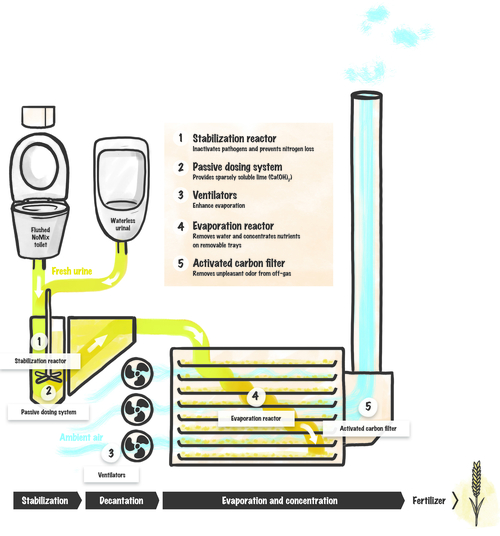
Zur Behandlung des in der Toilette separierten Urins sind zwei Verfahren erforderlich: die Stabilisierung des Urins und die Entfernung des massgeblichen Teil des Wassers.

Hauptziel der Autarky Urinstabilisierung ist die Verhinderung der Harnstoffhydrolyse, bei der Harnstoff zu flüchtigem Ammoniak und Kohlendioxid umgewandelt wird. Durch die Zugabe von Kalziumhydroxid zum frischem Urin steigt der pH auf Werte über 12 und verhindert somit eine mikrobielle Harnstoffhydrolyse. 

Zusätzlich tötet der hohe pH-Wert Krankheitserreger ab und verhindert biologische Prozesse, die unangenehmen Geruch produzieren. Bei der Zugabe von Kalziumhydroxid zum Urin wird nur etwa die Menge gelöst, welche zur Erreichung des hohen pH-Werts benötigt wird. Dies ermöglicht die Bereitstellung eines Reagenzepots im Stabilisierungsreaktor; teure und komplizierte Dosierungsmechanismen werden dadurch überflüssig. Darüber hinaus ist Kalziumhydroxid, auch bekannt als Löschkalk, ein kostengünstiger Zusatzstoff und weltweit einfach erhältlich.

Die direkte Anwendung von menschlichem Urin als Dünger ist in vielen ländlichen Gebieten rund um die Welt üblich. Der hohe Wassergehalt des Urins - egal ob stabilisiert oder nicht - erfordert jedoch eine erhebliche Speicherkapazität und kann die Sammlung und den Transport zu den landwirtschaftlich genutzten Feldern starkt verteuern. Die Volumenreduzierung mindert nicht nur die Kosten für Lagerung und Transport, sondern könnte auch die Feldanwendung des Düngers in seiner konzentrierten Form erleichtern. Standardmässige Verfahren zur Volumenreduktion sind meistens energieintensive Prozesse, da sie eine hohe Temperatur (Destillation) oder hohen Druck (Umkehrosmose) erfordern.

Eine Alternative zu diesen Prozessen bietet unser Ansatz, das Volumen des Urins durch erzwungene Konvektion zu reduzieren. Der Verdunstungsreaktor besteht aus einem System aus gestapelten Flachbehältern, um eine grosse Oberfläche zu erzeugen. Ventilatoren, die einen hohen Luftstrom erzeugen, beschleunigen die Verdunstung des Wassers aus dem stabilisierten Urin. Die Abluft wird durch einen Aktivkohlefilter geleitet, wodurch die Emission von organischen Verunreinigungen oder Gerüchen verhindert wird.

Einmal im Monat ist ein Service des System nötig. Die Aufgaben sind das Nachfüllen des Kalziumhydroxiddepots und die Ernte des hergestellten Endprodukts. Das Konzentrat aus anorganischen und organischen Nährstoffen kann in der Landwirtschaft als Dünger verwendet werden.
Aktuelle Aktivitäten

In der Vergangenheit wurden die Stabilisierungs- und Verdunstungsreaktoren umfangreichen Tests unterzogen. Diese Tests wurden durch Labortests bestimmter Teilprozesse und eine Computersimulation des Systems unterstützt. Auf der Grundlage der gesammelten Informationen wurden die beiden Reaktoren einer umfassenden Neugestaltung unterzogen, die eine erhöhte Verdunstungseffizienz bei gleichzeitiger Verringerung der Gesamtgrösse ermöglichte. Ein weiterer Schwerpunkt des Redesigns war die Integration von Serviceeinrichtungen, beispielsweise zum Ernten des produzierten Nährstoffkonzentrats.

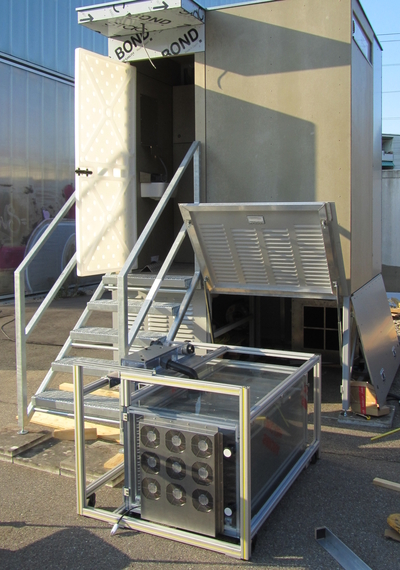
Zur Validierung der Technik in realen Settings wurden mehrere Feldversuche über ein bis vier Monate durchgeführt. Auf dem Eawag Campus in Dübendorf (Schweiz), sowie in einem Grosshaushalt einer Township in Durban (Südafrika) fanden tests des Urinmoduls als Bestandteil des gesammten Autarky Toilettensystems statt. Als eigenständige Behandlungseinheit wurden weitere Feldversuche des Urin-Moduls, angegliedert an ein mobiles Tinihouse (Au, Schweiz) und auf einer Berghütte (Leglerhütte, Schweiz) durchgeführt.

Update: Technische Detaills und alles über die Feldversuche gibt es nun in unserer letzten Publikation (open-access) nachzulesen: https://doi.org/10.1016/j.wroa.2021.100124
 

Publications

Extbase Variable Dump
array(2 items)
   publications => '24043,10403,4514' (16 chars)
   libraryUrl => '' (0 chars)
Extbase Variable Dump
array(3 items)
   0 => Snowflake\Publications\Domain\Model\Publicationprototypepersistent entity (uid=24043, pid=124)
      originalId => protected24043 (integer)
      authors => protected'Riechmann,&nbsp;M.&nbsp;E.; Ndwandwe,&nbsp;B.; Greenwood,&nbsp;E.&nbsp;E.; R
         eynaert,&nbsp;E.; Morgenroth,&nbsp;E.; Udert,&nbsp;K.&nbsp;M.
' (137 chars) title => protected'On-site urine treatment combining Ca(OH)<sub>2</sub> dissolution and dehydra
         tion with ambient air
' (97 chars) journal => protected'Water Research X' (16 chars) year => protected2021 (integer) volume => protected13 (integer) issue => protected'' (0 chars) startpage => protected'100124 (12 pp.)' (15 chars) otherpage => protected'' (0 chars) categories => protected'field testing; resource recovery; urine stabilization; calcium hydroxide; so
         urce separation; Blue Diversion Autarky
' (115 chars) description => protected'We present the results of three field tests and three laboratory tests of a
         new physical-chemical urine treatment system, which can recover all nutrient
         s, while pathogens are inactivated. The system consists of two steps. In the
          first reactor, biological processes including urea hydrolysis are prevented
          by mixing fresh urine with calcium hydroxide (Ca(OH)<sub>2</sub>). Due to t
         he high pH value and the high availability of calcium, phosphate can be reco
         vered by precipitation. The high pH value also fosters the inactivation of m
         icroorganisms, including pathogens. In the second reactor, water is evaporat
         ed at low energy consumption by blowing unheated ambient air over the stabil
         ized urine. Stabilization in the first reactor was successful in all field a
         nd laboratory tests. The pH value remained between 12 and 13, except for sho
         rt dips due to shortages of Ca(OH)<sub>2</sub>. Nearly all phosphorus (92-96
         %) precipitated and could be recovered as calcium phosphate in the first rea
         ctor, while nitrogen and potassium overflowed with the urine into the evapor
         ation reactor. The efficiency of the second treatment step was very differen
         t for field and laboratory experiments and depended on the duration of the e
         xperiment. During a four-day laboratory test, nitrogen recovery was 98%. In
         contrast, nitrogen recovery was only around 20% in the long-term field exper
         iments. The high nitrogen losses occurred, because biological urea hydrolysi
         s was not inhibited anymore, when the pH value in the second reactor decreas
         ed due to the dissolution of high amounts of carbon dioxide from the ambient
          air. Potassium was not subject to any significant loss, and the measured re
         covery in the solid evaporation product was 98%. Evaporation rates ranged be
         tween 50 g m<sup>-2</sup> h<sup>-1</sup> (RH = 82±13%, T = 12±6°C) and 13
         0 g m<sup>-2</sup> h<sup>-1</sup> (RH = 60±19%, T = 24±5°C) in the three
         field tests. Apart from some disturbances due to low supply of Ca(OH)<sub>2<
         /sub>, the urine module ...
' (2324 chars) serialnumber => protected'2589-9147' (9 chars) doi => protected'10.1016/j.wroa.2021.100124' (26 chars) uid => protected24043 (integer) _localizedUid => protected24043 (integer)modified _languageUid => protectedNULL _versionedUid => protected24043 (integer)modified pid => protected124 (integer)
1 => Snowflake\Publications\Domain\Model\Publicationprototypepersistent entity (uid=10403, pid=124) originalId => protected10403 (integer) authors => protected'Randall,&nbsp;D.&nbsp;G.; Krähenbühl,&nbsp;M.; Köpping,&nbsp;I.; Larsen,&
         nbsp;T.&nbsp;A.; Udert,&nbsp;K.&nbsp;M.
' (115 chars) title => protected'A novel approach for stabilizing fresh urine by calcium hydroxide addition' (74 chars) journal => protected'Water Research' (14 chars) year => protected2016 (integer) volume => protected95 (integer) issue => protected'' (0 chars) startpage => protected'361' (3 chars) otherpage => protected'369' (3 chars) categories => protected'urine; source separation; stabilization of urea; inhibition of urease; phosp
         horus recovery
' (90 chars) description => protected'In this study, we investigated the prevention of enzymatic urea hydrolysis i
         n fresh urine by increasing the pH with calcium hydroxide (Ca(OH)<SUB>2</SUB
         >) powder. The amount of Ca(OH)<SUB>2</SUB> dissolving in fresh urine depend
         s significantly on the composition of the urine. The different urine composi
         tions used in our simulations showed that between 4.3 and 5.8 g Ca(OH)<SUB>
         2</SUB> dissolved in 1 liter of urine at 25 °C. At this temperature, the p
         H at saturation is 12.5 and is far above the pH of 11, which we identified a
         s the upper limit for enzymatic urea hydrolysis. However, temperature has a
         strong effect on the saturation pH, with higher values being achieved at low
         er temperatures. Based on our results, we recommend a dosage of 10 g Ca(OH)
         <SUB>2</SUB>·L<SUP>−1</SUP> of fresh urine to ensure solid Ca(OH)<SUB>2</
         SUB> always remains in the urine reactor which ensures sufficiently high pH
         values. Besides providing sufficient Ca(OH)<SUB>2</SUB>, the temperature has
          to be kept in a certain range to prevent chemical urea hydrolysis. At tempe
         ratures below 14 °C, the saturation pH is higher than 13, which favors che
         mical urea hydrolysis. We chose a precautionary upper temperature of 40 °C
          because the rate of chemical urea hydrolysis increases at higher temperatur
         es but this should be confirmed with kinetic studies. By considering the bou
         ndaries for pH and temperature developed in this study, urine can be stabili
         zed effectively with Ca(OH)<SUB>2</SUB> thereby simplifying later treatment
         processes or making direct use easier.
' (1558 chars) serialnumber => protected'0043-1354' (9 chars) doi => protected'10.1016/j.watres.2016.03.007' (28 chars) uid => protected10403 (integer) _localizedUid => protected10403 (integer)modified _languageUid => protectedNULL _versionedUid => protected10403 (integer)modified pid => protected124 (integer)
2 => Snowflake\Publications\Domain\Model\Publicationprototypepersistent entity (uid=4514, pid=124) originalId => protected4514 (integer) authors => protected'Udert,&nbsp;K.&nbsp;M.; Larsen,&nbsp;T.&nbsp;A.; Biebow,&nbsp;M.; Gujer,&nbs
         p;W.
' (80 chars) title => protected'Urea hydrolysis and precipitation dynamics in a urine-collecting system' (71 chars) journal => protected'Water Research' (14 chars) year => protected2003 (integer) volume => protected37 (integer) issue => protected'11' (2 chars) startpage => protected'2571' (4 chars) otherpage => protected'2582' (4 chars) categories => protected'urine separation; NoMix; ureolysis; precipitation; struvite; calcium phospha
         te
' (78 chars) description => protected'Blockages caused by inorganic precipitates are a major problem of urine-coll
         ecting systems. The trigger of precipitation is the hydrolysis of urea by ba
         cterial urease. While the maximum amount of precipitates, i.e. the precipita
         tion potential, can be estimated with equilibrium calculations, little is kn
         own about the dynamics of ureolysis and precipitation. To gain insight in th
         ese processes, we performed batch experiments with precipitated solids and s
         tored urine from a urine-collecting system and later simulated the results w
         ith a computer model. We found that urease-active bacteria mainly grow in th
         e pipes and are flushed into the collection tank. Both, bacteria and free ur
         ease, hydrolyse urea. Only few days are necessary for complete urea depletio
         n in the collection tank. Two experiments with precipitated solids from the
         pipes showed that precipitation sets in soon after ureolysis has started. At
          the end of the experiments, 11% and 24% of urea was hydrolysed while the ma
         ss concentration of newly formed precipitates already corresponded to 87% an
         d 97% of the precipitation potential, respectively. We could simulate ureoly
         sis and precipitation with a computer model based on the surface dislocation
          approach. The simulations showed that struvite and octacalcium phosphate (O
         CP) are the precipitating minerals. While struvite precipitates already at l
         ow supersaturation, OCP precipitation starts not until a high level of super
         saturation is reached. Since measurements and computer simulations show that
          hydroxyapatite (HAP) is the final calcium phosphate mineral in urine soluti
         ons, OCP is only a precursor phase which slowly transforms into HAP.
' (1664 chars) serialnumber => protected'0043-1354' (9 chars) doi => protected'10.1016/S0043-1354(03)00065-4' (29 chars) uid => protected4514 (integer) _localizedUid => protected4514 (integer)modified _languageUid => protectedNULL _versionedUid => protected4514 (integer)modified pid => protected124 (integer)
Riechmann, M. E.; Ndwandwe, B.; Greenwood, E. E.; Reynaert, E.; Morgenroth, E.; Udert, K. M. (2021) On-site urine treatment combining Ca(OH)2 dissolution and dehydration with ambient air, Water Research X, 13, 100124 (12 pp.), doi:10.1016/j.wroa.2021.100124, Institutional Repository
Randall, D. G.; Krähenbühl, M.; Köpping, I.; Larsen, T. A.; Udert, K. M. (2016) A novel approach for stabilizing fresh urine by calcium hydroxide addition, Water Research, 95, 361-369, doi:10.1016/j.watres.2016.03.007, Institutional Repository
Udert, K. M.; Larsen, T. A.; Biebow, M.; Gujer, W. (2003) Urea hydrolysis and precipitation dynamics in a urine-collecting system, Water Research, 37(11), 2571-2582, doi:10.1016/S0043-1354(03)00065-4, Institutional Repository

Decrey, L., and Kohn, T. (2017) Virus inactivation in stored human urine, sludge and animal manure under typical conditions of storage or mesophilic anaerobic digestion.  Environmental Science: Water Research & Technology.

Antonini, S., et al. (2012). "Solar thermal evaporation of human urine for nitrogen and phosphorus recovery in Vietnam." Sci Total Environ 414: 592-599.

Pahore, M. M., et al. (2010). "Rational design of an on-site volume reduction system for source-separated urine." Environ Technol 31(4): 399-408.

Mehr zu Fäkalienbehandlung

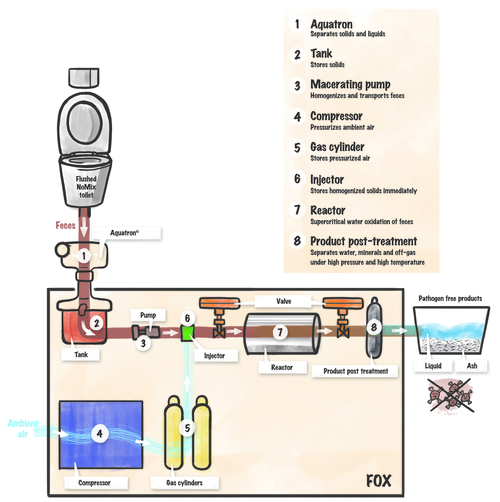
In der Blue Diversion Autarky-Toilette werden die Fäkalien vom Spülwasser getrennt und in einem Behälter am Boden der Toilette gesammelt. Fäkalien können Krankheitserreger enthalten und müssen rasch inaktiviert werden, um anaerobe Zersetzung und die damit verbundene Emission unangenehm riechender Gase zu vermeiden.

Contact


Frédéric Vogel (PSI/ FHNW) frederic.vogel@psi.ch

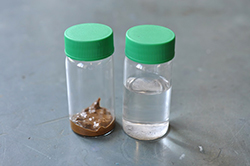
Bei unserem Ansatz wird das im Fäkalschlamm enthaltene organische Material vollständig zu Kohlendioxid, Wasser und Mineralien wie Phosphatsalzen mineralisiert. Die restlichen Ströme sind Abgas und eine Mischung aus Wasser und Mineralien. Das Abgas enthält hauptsächlich Stickstoff, Kohlendioxid und Sauerstoff. Diese Mischung kann sicher in die Atmosphäre abgegeben werden. Der wässrige Strom kann als Düngemittel verwendet werden.
Der zur Behandlung der Fäkalien verwendete Prozess heisst hydrothermale Oxidation (HTO). Der Fäkalschlamm wird dabei mit Luft gemischt und unter hohem Druck auf über 400 ° C erhitzt. Unter diesen Bedingungen zersetzt sich der Schlamm und wird vollständig zu Kohlendioxid und Wasser oxidiert. Das im Schlamm enthaltene Wasser verdampft nicht, sondern vermischt sich mit der Luft und stellt eine geeignete Reaktionsumgebung für eine Umwandlung des organischen Materials innerhalb nur weniger Minuten.
Aktuelle Aktivitäten

Um den Prozess der hydrothermalen Oxidation besser zu verstehen, entwickeln wir ein umfassendes Computermodell des Reaktors. Dieses Computermodell wird mit Daten aus Experimenten versorgt, die in kleinen Autoklaven mit echtem Fäkalschlamm durchgeführt werden. Wir haben dabei festgestellt, dass die Oxidationsreaktion bei Temperaturen über 300 ° C schnell und bei 400 ° C bereits innerhalb weniger Minuten vollständig abläuft.

Wir arbeiten zur Zeit an der Verbesserung der dritten Prototypen-Generation des sogenannten FOX-Reaktors (für Fäkalienoxidation). Dieser soll bald im Rahmen eines Feldversuches mit richtigen Nutzern getestet werden. Daneben arbeiten wir daran, den FOX-Reaktor kompakter zu bauen, damit er in Zukunft als Teil der kompletten Blue Diversion Autarky Toilette getestet werden kann.
Publications

Hübner, T.; Roth, M.; Vogel, F. (2016).  Hydrothermal oxidation of fecal sludge: experimental investigations and kinetic modeling, Ind. Eng. Chem. Res. 55 (46), pp.11910-11922 

Mangold, F.; Pilz, St.; Bjelić, S.; Vogel, F. (2019). Equation of state and thermodynamic properties for mixtures of H2O, O2, N2, and CO2 from ambient up to 1000 K and 280 MPa. The Journal of Supercritical Fluids, Volume 153, 104476

Über uns

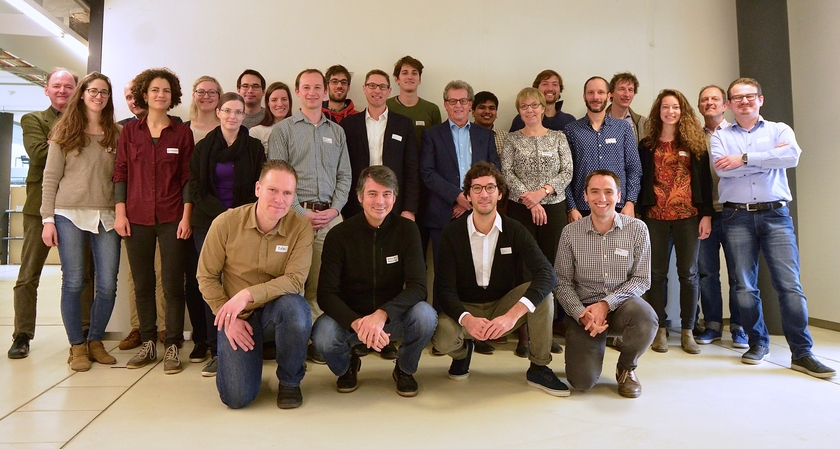
Das Blue Diversion Autarky Team besteht aus Forschern und Experten von der Eidgenössischen Anstalt für Wasserversorgung, Abwasserreinigung und Gewässerschutz (Eawag), dem Paul Scherrer Institut (PSI), der Fachhochschule Nordwestschweiz (FHNW) und von EOOS. Das Projekt wird von einem Beirat bestehend aus sechs internationalen Wirtschaftsunternehmen unterstützt. Die Finanzierung erfolgt durch die Bill and Melinda Gates Foundation (BMGF).
 

Partner Projekte

Blue Diversion Toilet - eine attraktive, sichere und erschwingliche nachhaltige Sanitärlösung

Vuna-Nährstoffrückgewinnung aus Urin
Nest - Gemeinsam an der Zukunft bauen