Governance of Infrastructures
Responsible NN
Governance is a key concept in the social sciences, in particular the political sciences, by which regulation, deregulation, liberalization, and transformation processes can be theoretically and empirically explored. The research focus of the group deals with both essential and currently challenging questions in the governance of infrastructures, how general services of public interests are constituted, governed, organized, and changed. The transformation of governance is a central issue in the research activities. Governance by the state has been transformed during the last decades from the centralization and monopolization of the production of public goods in national institutions to the distribution of these tasks among various other actors, the inclusion of societal actors and the emergence of new institutions and structures. New multilevel systems with new institutional arrangements and actors take over organizational and decision making powers. However, the state still functions as the central prerequisite of multilevel governance systems and has the final responsibility for the services of public interest.
Against this background the research of the group pays special
attention to the following topics:
- Performance of governance modes, processes and structures with respect to legitimacy, effectiveness and efficiency;
- Transformation of the state with regard to technical, political and ideational change;
- Internationalization towards more inter-, supra- and transnational institutions and actors;
- Mechanisms and dynamics of governance regarding regulation, deregulation, privatization, and participation of experts, stakeholders and the public; and
- Integration of new governance actors such as corporations, public-private partnerships, associative networks, regional state actors, EU, and international institutions.
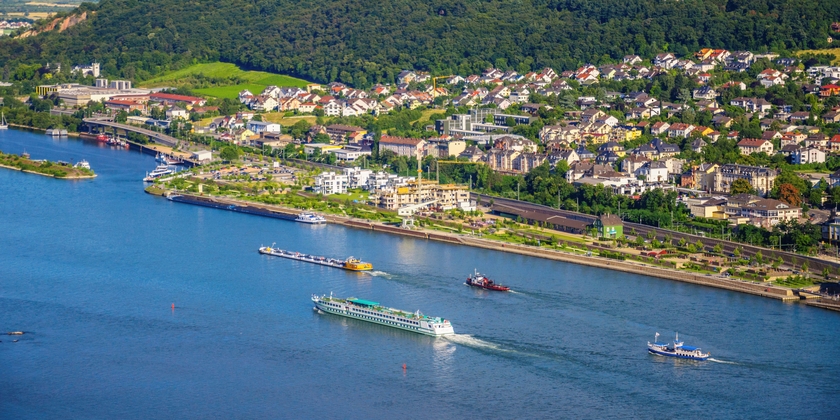
The scope of application for the research on infrastructure governance is dedicated to the public good water in Switzerland and Europe. Here, the questions of ownership as well as steering, control and organization of the allocation and use of the resources are often controversially discussed. The geographical focus also includes OECD countries and in some cases transitional and developing countries. Furthermore, the research activities address other infrastructure politics such as energy as well as environmental and risk governance. The comparison of different scopes of application and political fields allows drawing more generalizing conclusions and implications, which have significance and explanatory power for the governance research with respect to infrastructures and the transformation of the state. We also pursue inter- and transdisciplinary approaches, by bringing together viewpoints and methodological approaches of other social sciences as well as natural and technical sciences.