Wastewater
The wastewater group deals with the development, design, modelling and optimization of novel and existing processes in centralized and decentralized wastewater treatment as well as in water reuse and nutrient recycling. We are also exploring potential processes for nutrient recycling in source separation and its influence on overall wastewater treatment. In cooperation with the chemical, microbiological and eco-toxicological departments at Eawag the fate of trace pollutants in wastewater treatment to improve exposure and risk assessment and potential measures to reduce the load in receiving waters are studied. Current research topics are:
- Application of novel membranes in combination with activated sludge (Biomembrane process) in centralized and decentralized wastewater treatment with water reuse
- Instrumentation and control with novel in-situ sensors and data-mining of WWTP data to optimize nutrient removal, energy consumption, flocculant addition and greenhouse gas emissions
- Heat recovery from wastewater, effect on wastewater temperature and biological treatment of WWTP
- Fate of organic micropollutants and nanoparticles in wastewater treatment and investigation of measures and processes to reduce the load in the receiving waters
- Biological and chemical treatment of digester liquid to improve nitrogen removal and reduce overall energy consumption of wastewater treatment plants
- Comparison of sludge inertisation processes in connection to phosphate recycling and heavy metal content of the solid residue
- Modelling of the aerobic, anoxic and anaerobic processes of wastewater and sewage sludge treatment
- 2 and 3 dimensional hydraulic modeling to evaluate and optimize the hydraulic conditions of chemical and biological reactors in drinking and wastewater treatment
- Technologies for household sanitation and urine separation
Current projects
- EU Project NEPTUNE: New sustainable concepts for optimization and upgrading municipal wastewater treatment
- Dynamic of greenhouse gas emissions in nutrient removal plants
- Sludge liquid treatment with Nitritation/Anammox process
- Sludge inertisation by ultrahigh temperature pyrolysis
- Data mining of WWTP data to optimize plant operation
- Use of reactive tracers for the calibration and validation of 2D and 3D flow models in water and wastewater treatment plants
- Strategy Micropoll (Mass-flux-study, Ozonation Regensdorf, powdered activated carbon)
- PAC dosage to flocculation filtration of WWTP Kloten/Opfikon to improve micropollutant removal
- Flotation instead of Sedimentation for mechanical and biological treatment - modular approach for small and medium treatment plants
- Heat recovery from wastewater
- Production of
fertilizer out of digester supernatant and urine (air stripping)
- Technologies for Decentralized Wastewater Treatment
- Struvite recovery from urine in Nepal (STUN)
- Nitrogen removal from urine with partial nitritation / anammox
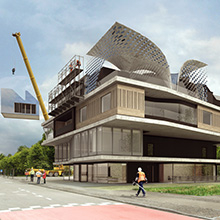
- Greywater treatment in the living module SELF [pdf, 0.7 MB]
- Struvite recovery from urine in Nepal (STUN)
Recently completed projects
- Nitrite dynamic and aeration control in nutrient removal plants with ion selective electrodes
- Use of membranes for municipal wastewater treatment
- POSEIDON: Fate of pharmaceuticals and personal day care products in urban water treatment
- A method for analyzing and designing measurement campaigns on municipal wastewater treatment plants
- Biological treatment of high strength ammonia waste waters
- Comparison of population dynamic and kinetics of nitrifiers in activated sludge treatment with secondary clarifier and membrane separation
- Innovative sensor technology and control concepts in nutrient removal plants
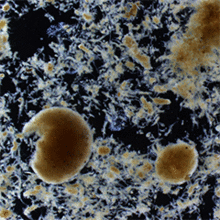
- Cause and control of foam in activated sludge systems
- Innovative press technology for sewage sludge dewatering
- EU Project EUROMBRA: Membrane bioreactor technology with an EU perspective for advanced municipal wastewater treatment strategies for the 21st century
- EU Project RECLAIM WATER: Water reclamation technologies for safe artificial groundwater recharge