Current and Planned Research Projects
CrossWater - Transboundary Micropollution Regulation in Europe: the definition of appropriate management scales
One major challenge faced in environmental management is to adapt the spatial scale of regulation to specific environmental problems. From a natural science perspective, the appropriate scale of management units can be defined by the boundaries beyond which physical, chemical or biological processes have no effect on the environmental problem. However, actual political management units rarely match these ideal states. This is particularly true for transboundary water pollution in general, and micropollution regulation in particular, where different jurisdictions tend to produce diverse policy solutions and implement divergent instruments to tackle the very same problem within the same hydrological catchment area. In this research project we adopt a interdisciplinary approach combining mass flux analysis with political science and economic geography and ask the question: How can the potential mismatch between the physical extent of pollution and the respective political areas of action and regulation towards micropollution be visualized and grasped in order to design effective and efficient micropollution regulation?
- Planned submission: October 1st 2012
- PI: Karin Ingold
- Co-PIs and collaborators:
- EAWAG: Philip Leifeld; Christian Stamm; Hans-Peter Bader
- CEPS Luxembourg: Christophe Sohn, Marc Schneider, Sabine Dörry
How to explain instrument selection in complex policy processes- A comparative network approach of micropollution regulation in the Rhine River Basin
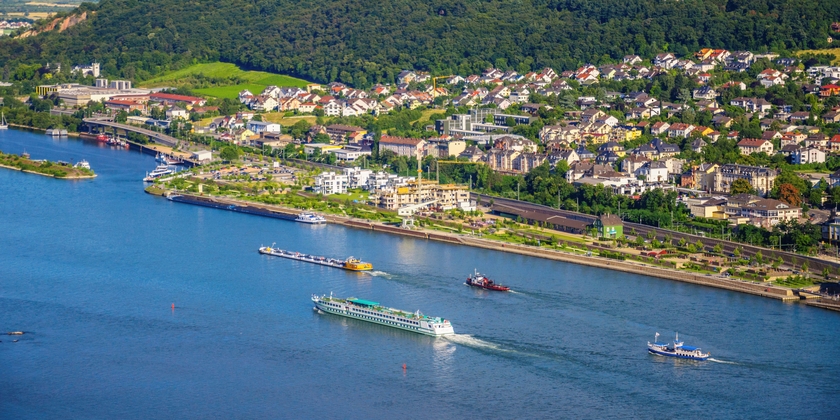
This research project addresses the question of which factors explain governments’ choice of instrument selection. To answer this question, we concentrate on the emerging policy discussion and the formulation processes about micropollution regulation within the Rhine river basin and compare policy options of four riparian countries: Switzerland, Germany, France and the Netherlands.
- Start: April 1st 2012, duration: 3 years,
- Funding: Swiss National Science Foundation
- PI: Karin Ingold
- PhD: Florence Metz, University of Bern
- Partners: H. Bressers UTwente, M. Lubell UDavis, F. Varone UGeneva
Water Supply Structures in the Canton Baselland
Decentralized and small organizational structures dominate Basel-Land’s water supply sector. Each municipality generally has its own waterworks. Only a few larger, joint waterworks exist – i.e., more centralized structures with shared ownership and operation between multiple municipalities. This current situation, however, may not serve as the most optimal means to meet present and future water supply challenges in the canton. Specifically, the small waterworks face increasing difficulties due to rising quality and quantity demands as they often lack funds and know-how. Given this context, the project aims to shed light onto potentially viable future water supply structures in different regions of the canton Basel-Land. (This objective is in line with the canton’s water strategy that aims to professionalize the water supply sector.) To accomplish this objective, the research project involves the following steps: (1) an analysis of the current water supply structures’ strengths and weaknesses for addressing the major present and future challenges that confront the canton’s water supply sector; (2) an evaluation of the pros and cons of alternative structures (e.g., more centralized or cross-sector forms with different financing and regulating means etc.) based on analyzing the few existing joint waterworks in the canton as well as other relevant water supply structures in Switzerland and beyond; (3) the development of recommendations for the canton in terms of the applicability of these alternative structures for Basel-Land, potential obstacles and how to foster their implementation.
- Planned start: Beginning of 2013
- Co-PI: Karin Ingold
- Co-PI and collaborator: Eva Lieberherr
Climate change adaptation strategies in Switzerland: competences and resources allocation in flood preventions and Integrated Water Ressource Management
This project addresses the research question on how Local Climate Change Adaptation Strategies are designed and may evolve. We strongly focus on the impact of extreme events on the design and policy formulation of adaptation measures.
Climate Change Adaptation becomes nowadays particularly crucial in relation with the principles outlined in Integrated Water Resource Management addressing the challenge of coordinating the use of, and the protection of and from the resource water. The protection from the resource water makes the direct link to flood events and natural disasters that may be impacted by global climate change. Furthermore, the integration of user and protectionist principles can be seen as a way how to improve the adaptive capacity within the water sector in combination with a trans-sectoral approach. Thus integrated water resource management constitutes one major challenge of current and future generations when it comes to find sustainable responses to climate change impacts. We therefore compare the case of flood prevention – relatively explicitly driven by climate change adaptation measures – with the integration of environmental protection and user principles in water resource management.
- Planned submission: January 2013
- Co- PI: Karin Ingold
- Partners: Philip Thalmann, EPFL; Oeschger Center for Climate Research, University of Bern