A decision theoretic approach to river assessment
Background
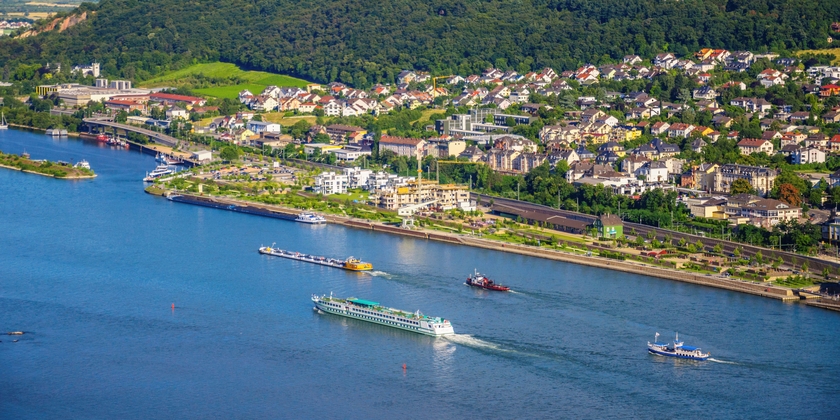
In Europe, many rivers have been subject to human impacts – they are no longer in a natural state. This can adversely affect aquatic biota and can result in a loss of ecosystem services. River restoration can alleviate or reverse unwanted impacts to some extent, but these projects are often expensive. Therefore, it is important to justify them and ensure an effective use of resources. This requires us to formulate clearly defined, quantifiable objectives that enable us to predict the outcome of different restoration measures. The aim of such a systematic procedure is to support the decision makers to make an informed and best possible choice among different restoration alternatives.
Eawag is involved in transdisciplinary river restoration research since many years. Multi-criteria decision analysis (MCDA) has been successfully applied in a Swiss case study with many different stakeholders that have potentially conflicting objectives (www.rhone-thur.eawag.ch). The main advantage of MCDA was seen in its ability to gain insight into the different aspects of the decision problem, to increase transparency, and to identify more consensus-oriented solutions.
In this Rhone-Thur river rehabilitation project, an objectives hierarchy was set up. An objective is something that a decision maker would like to achieve when a rehabilitation measure is carried out. An objectives hierarchy is a stepwise division of the overall objective into sub-objectives that become more and more concrete. To quantify the degree of fulfillment of an objective (or sub-objective), attributes are used – i.e. measurable system properties or ‘indicators’. The different objectives can be of varying importance to a stakeholder. For some, money might be very important, for others, ecological integrity of a river could be of higher value. The valuation of the objectives (i.e. which are more and which are less important) should ideally be a societal process – in the Rhone-Thur project stakeholders were thus involved in the PhD project of Markus Hostmann. However, this project focused on a high level of the objectives hierarchy; the ecological (sub-)objectives were formulated only qualitatively.
Goals
The aim of the current project is to close this gap by generating a well-founded ecological value function. It will contribute to the existing, additive value function that also includes socioeconomic objectives to formulate the trade-off between ecological and other societal goals. Hence, we want to find out from experts (ecologists) how the ecological integrity of a river can be assessed; i.e. which attributes are appropriate characterizations of the ecological state of the river. Furthermore, we want to know how experts value the outcomes or impact on ecological objectives that are a result of rehabilitation measures; i.e. we want to know, how ‘good’ or ‘bad’ a certain condition of a river is judged by our interviewees. The project goals are:
- Test the practicability of the decision analytic approach, in particular, the elicitation of value functions, for ecological river assessment.
- Contribute to improving the methodology of value function elicitation in the context of complicated structured objective hierarchies that involve a large number of attributes.