Archive News

August 24, 2018

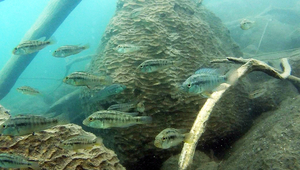
August 24, 2018Cichlids belong to one of the largest fish families, with new species emerging all the time. These colourful, shimmering fish evolve so fast that Eawag researchers have now been able to practically observe them in the process of their evolution.

Read more
August 15, 2018

August 15, 2018Eawag has studied how various pumped-storage hydropower scenarios affect temperature and water quality in the waterbodies concerned. In the case of Sihlsee, which serves as a reservoir for the SBB Etzelwerk plant, the question of withdrawal depth was found to be crucially important. The study also highlighted the fact that the assessment of environmental impacts largely depends on the definition of the reference state: whereas in natural lakes water is discharged from the surface, in reservoirs it is withdrawn from the lower layer. The environmental and aesthetic impacts of pumped-storage operations in the riparian zone were not examined in this study.

Read more
August 6, 2018

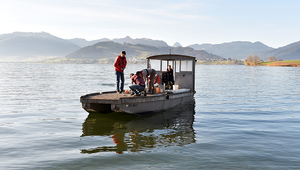
August 6, 2018Lagoons are valuable natural habitats as well as being good for tourism. In the case of the “Mar Menor” in the Spanish province of Murcia, however, such large quantities of nutrients are entering the unique ecosystem via the groundwater that algal blooms are making swimming impossible. Working together with Eawag, Spanish researchers have been modelling the underground water flows in order to develop better cultivation and water management scenarios.

Read more
August 2, 2018

August 2, 2018Eawag, the ETH Zurich and the University of Bern have developed a new instrument: the “Combined Vacuum Crushing and Sieving System” (CVCS). This device makes possible the extraction of minute water and noble gas inclusions that are thousands of years old from the pores of minerals in caves, without distortion by the present atmosphere.

Read more
July 26, 2018

July 26, 2018Roy Brouwer was invited to be part of a panel discussion during the 2018 session of the United Nations High-Level Political Forum on Sustainable Development (HLPF) in New York Mid-July. Brouwer is Executive Director of the Water Institute and Professor of Economics at the University of Waterloo (Canada) and visiting Professor at Eawag.

Read more
July 26, 2018

July 26, 2018Thin mulch films made of polyethylene are used in agriculture in numerous countries, where they cause extensive soil contamination. Researchers at ETH Zurich and Eawag have now identified an alternative: films made of the polymer PBAT biodegrade in soils. 

Read more
July 19, 2018

July 19, 2018Thanks to Copernicus – the EU Earth Observation Programme initiated in 2014 – environmental researchers now have access to vast amounts of high-quality satellite data. As this is also invaluable for aquatic research, Eawag is currently expanding its capacity in the area of remote sensing.

Read more
July 12, 2018

July 12, 2018Researchers from Agroscope and Eawag have discovered that, under certain conditions, the herbicide glyphosate is rapidly degraded in Lake Greifen (Greifensee). The evidence strongly suggests that this is due to cyanobacteria using the substance as an alternative source of phosphorus.

Read more
July 5, 2018

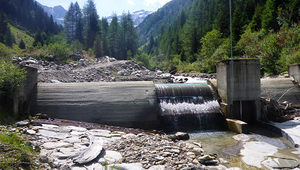
July 5, 2018Small hydropower plants are often constructed on alpine streams, where they may have adverse impacts on sensitive ecosystems. Little is known, however, about the particular effects of individual plants, or the cumulative effects of multiple plants within the same river system. The current state of knowledge has now been reviewed in a study by Eawag researchers. 

Read more
June 19, 2018

June 19, 2018Nanomaterials consist of tiny particles of different composition. They are used, for example, in textiles and can enter aquatic systems directly from the factory, while being worn or disposed of. For years, research groups at Eawag have been investigating the effects of artificially manufactured nanoparticles on human beings and the environment. Their preliminary conclusion: nanoparticles have a reputation worse than they deserve.

Read more