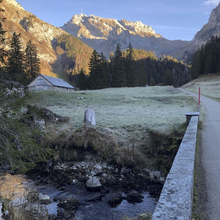
Department Water Resources and Drinking Water
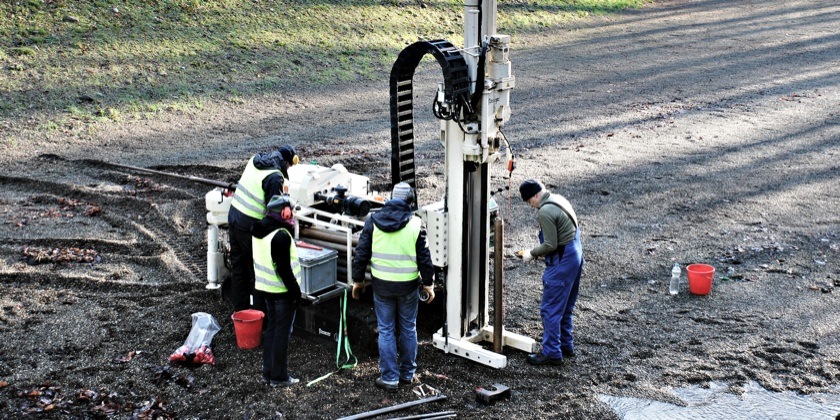
Water Resources & Drinking Water

Our research concentrates on physical and chemical processes in groundwater, surface water and drinking water. We conduct basic and applied research on water resources, water contaminants, and water treatment to contribute to sustainable water management from local to nationwide scales.

Read more

Publications

Kim, Y. J., Kipfer, R., Kaown, D., Kim, J., Shin, J. Y., Lee, S. S., & Lee, K. K. (2026). Quantification of residual DNAPL within aquifer system using atmospheric noble gases and radon: partitioning behavior and field application. Journal of Hazardous Materials, 502, 140984 (11 pp.). doi:10.1016/j.jhazmat.2025.140984, Institutional Repository
Kaegi, R., Sinnet, B., Tolu, J., Kroll, A., Bette, J., Eugster, F., … Durisch-Kaiser, E. (2026). Seltene-Erden-Elemente in Zürcher Abwasser und Gewässern. Aqua & Gas, 106(2), 32-38. , Institutional Repository
Li, K. Y., Podgorski, J., Liang, C. P., Chen, J. S., Chang, J. Y., & Berg, M. (2026). Groundwater arsenic in Taiwan: from mid-20th-century crisis to predictive models for risk mitigation strategies. Environment International, 207, 110049 (12 pp.). doi:10.1016/j.envint.2026.110049, Institutional Repository
Scheidler, S., Christe, P. G., Zechner, E., Walde, M. A., Schilling, O. S., & Epting, J. (2026). 3D thermohydraulic modelling of geologically complex Alpine systems: insights for geothermal resources exploration from simulating the Upper Aarmassif, Switzerland. Hydrogeology Journal. doi:10.1007/s10040-025-02998-w, Institutional Repository

News

February 10, 2026

An investigation in the canton of Zurich has shown that certain rare earth elements can enter bodies of water via wastewater treatment plants in concentrations that pose a risk to aquatic organisms. These elements are gadolinium, which comes from contrast agents used in healthcare facilities, as well as lanthanum and cerium, which are used in a number of wastewater treatment plants to remove phosphorus.

Read more
More news
Events

Research Projects

This project facilitates the exchange of data, maps and information on geogenic contaminants (focussing on arsenic and fluoride) via the web-based Groundwater Assessment Platform (GAP)
ReCLEAN examines the effects of energy decarbonization on the nitrogen balance within Swiss ecosystems. It will serve as a crucial foundation for developing sustainable policies in Switzerland.
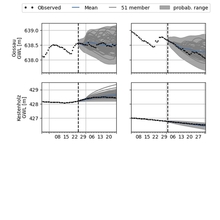
By taking into account the interactions between surface waters and groundwater in real time, we improve operational groundwater modeling for drinking water, energy and agriculture.
This project explores how periodic waterlogging may promote the seasonal release of trace elements from soils into water resources under changing climatic conditions.
This project addresses the release of arsenic and other elements from tunnel excavated material and potential risks to water resources at deposition sites.
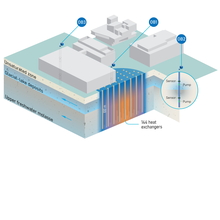
The project investigates the impact of underground heat storage on the subsurface, with focus on groundwater chemistry, microbial activity, and groundwater fauna.
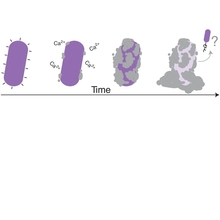
Microbes meet moving worlds: uncovering how tiny organisms shape and respond to dynamic soils and aquifers to drive Earth’s hidden chemistry.
Exploring microbial CO₂ mineralization to achieve safe, permanent carbon storage in deep aquifers under extreme conditions.
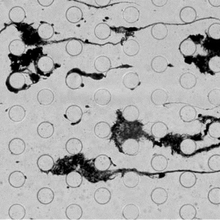
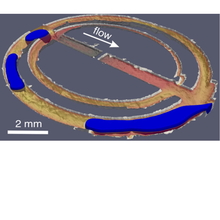
Unraveling how microscale fluid–solid interactions shape contaminant transport and mineral reactions in support of clean solutions.
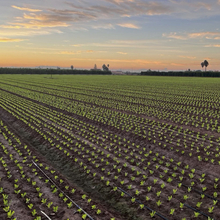
Assessing the effects on water resources and greenhouse gas emissions of fallow versus cover crops.
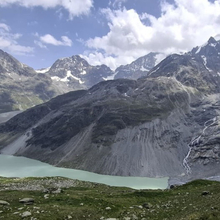
Characterizing groundwater circulation and glacier and snowmelt effects on water availability in the Upper Engadine using multi-tracers and models.
This project uses machine learning to model spatial and temporal occurrence of nitrate in groundwater
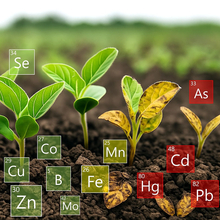
Evaluating spatial patterns of soil arsenic and micronutrients to strengthen environmental risk assessment and guide sustainable agricultural planning.
National monitoring program for substance load in Swiss watercourses (NAWA-Fracht)
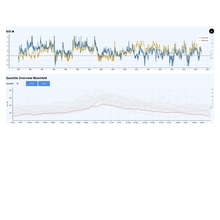
An interactive web-based tool to analyze groundwater time series, revealing droughts, extremes, trends, and human impacts.
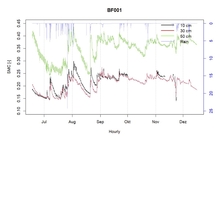
Retain rain with keylines: We measure soil moisture and subsurface processes to improve agricultural water retention.
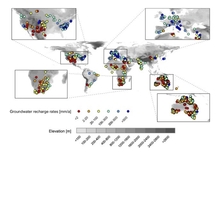
Mapping how climate variability and rising aridity reshape global groundwater recharge—from monthly extremes to decadal trends.
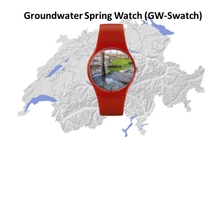
Monitoring and modelling groundwater springs across Switzerland to assess climate vulnerability and support sustainable water management.
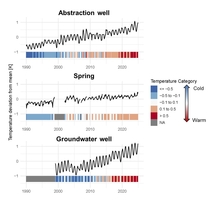
Long-term observations reveal widespread groundwater warming in Switzerland and its links to climate, hydrogeology, and subsurface processes.
How do droughts and climate change affect groundwater recharge? This project quantifies recharge sensitivity using models of varying complexity.
Real-time tools and tracers reveal MAR performance and contaminant pathways, improving safe groundwater recharge and abstraction.
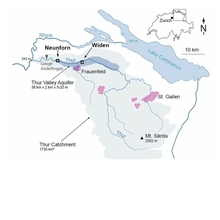
Large-scale artificial groundwater recharge for water supply in a complex environment.
The RECONECT project demonstrates, references and upscales Nature based Solutions in rural and natural areas.
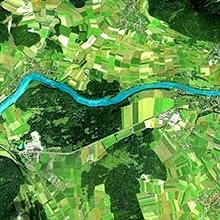
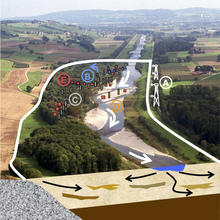
River restoration as essential instrument to achieve “good ecological status” of water courses and fight flooding.
River restoration at the catchment scale to achieve “good ecological status” of water courses and fight flooding.
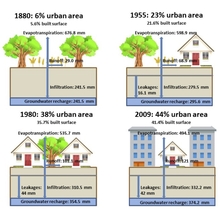
The study highlights a strong positive correlation between groundwater recharge rates and the extent of the urban area.
Interactions between precipitation, groundwater, surface water and the sewer system in an urban catchment
Against common belief, groundwater recharge increases with increasing urbanization.
Water is harvested in times of high flow, stored in basins or as groundwater, to be used at times of water scarcity.