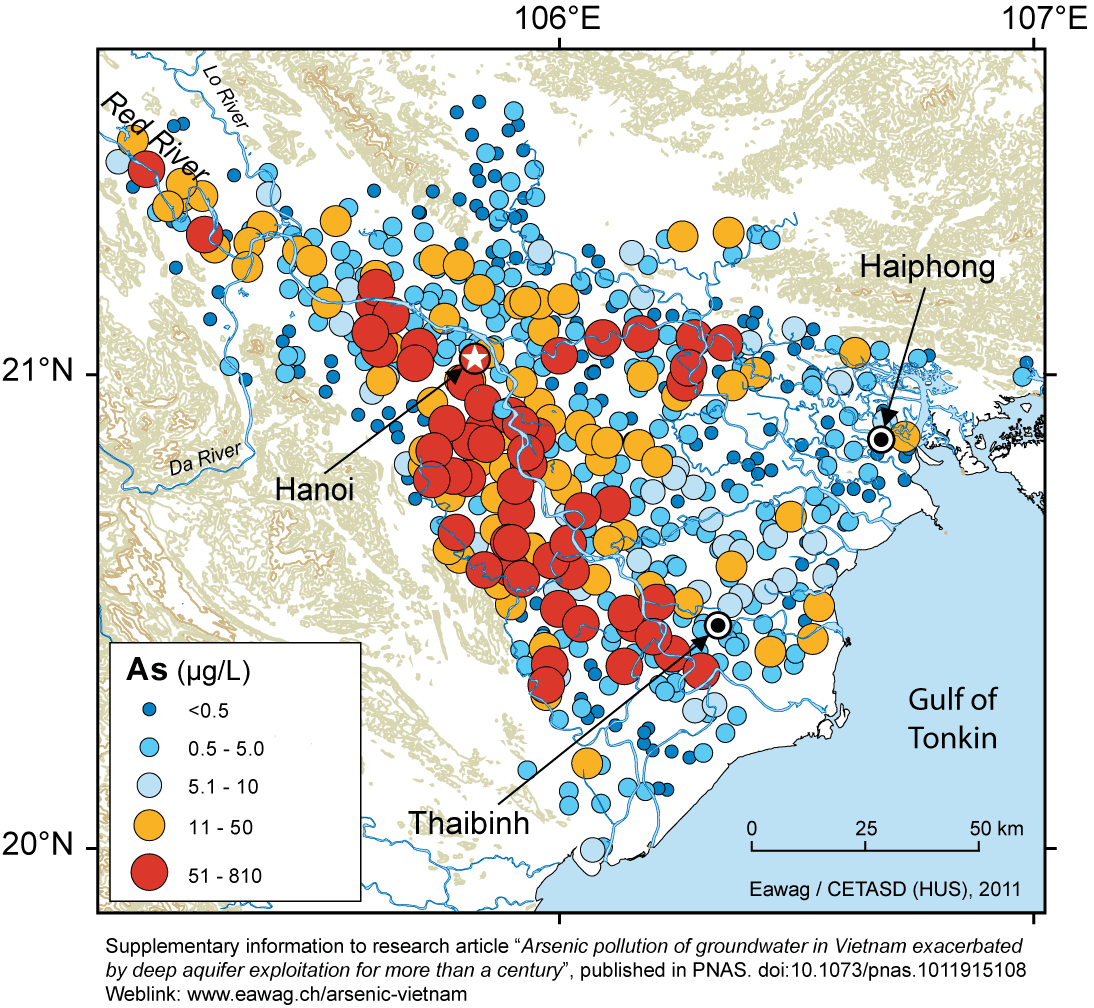
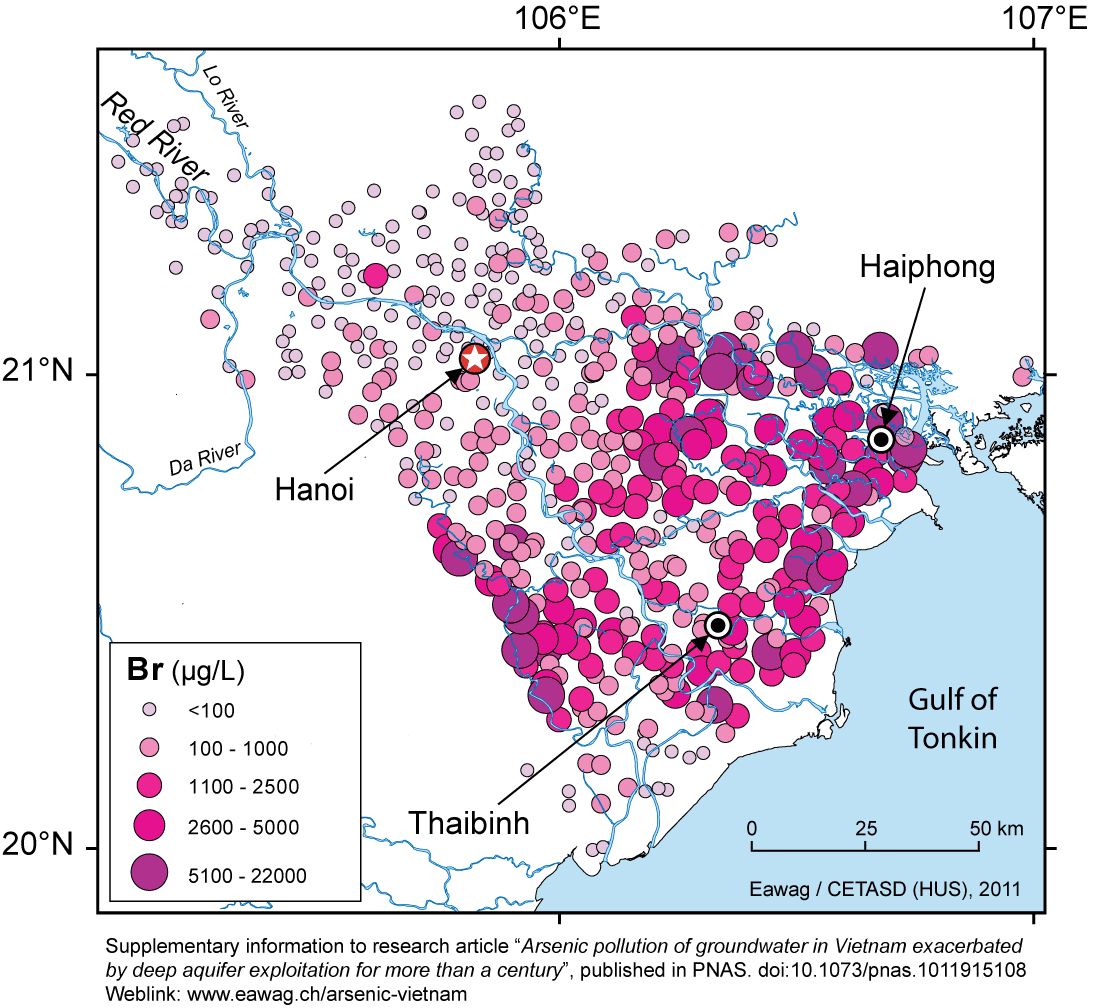
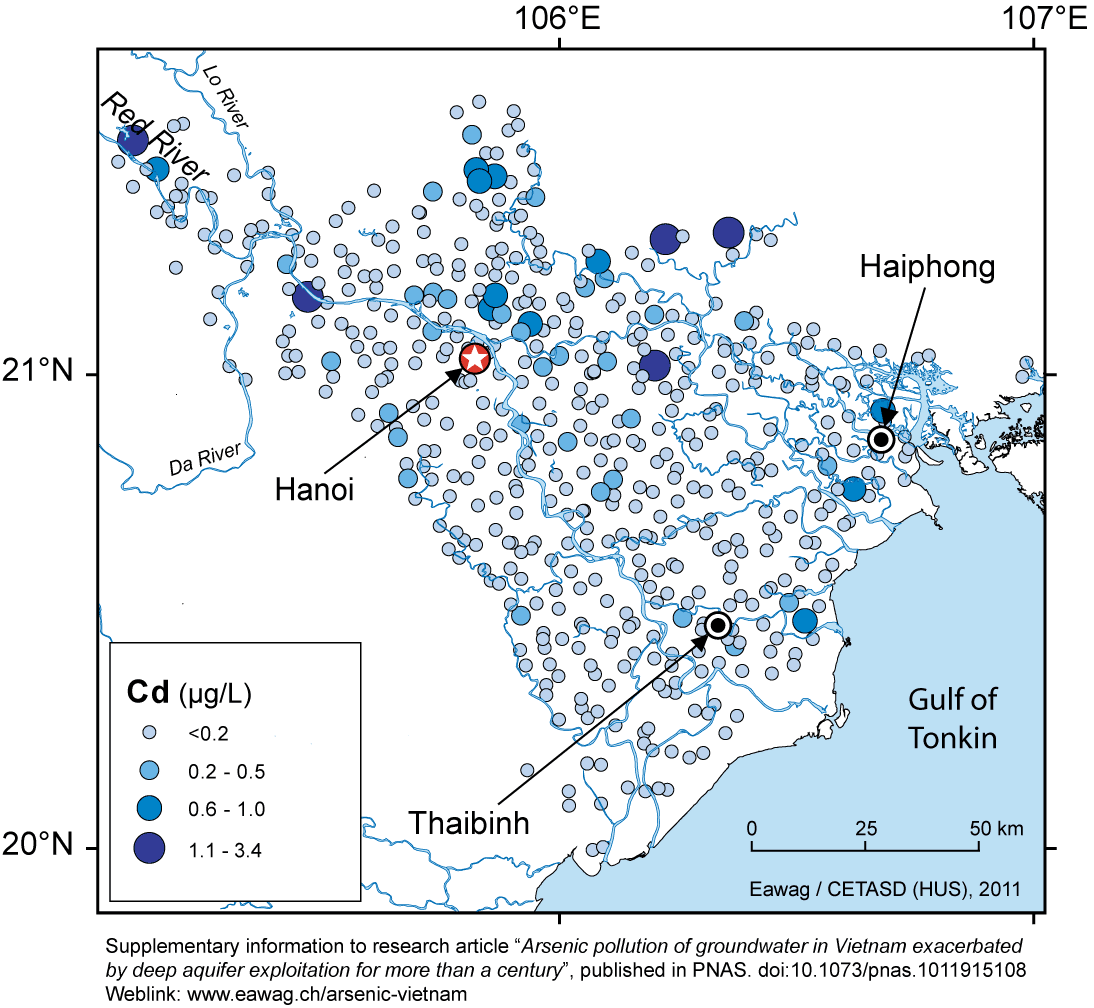
Inorganic arsenic and manganese are the most widespread elemental contaminants of potable water around the world. Being mainly of natural (geogenic) origin, arsenic and manganese are released from sediments in the subsurface as a result of unfavorable geochemical conditions and can occur in groundwater at concentrations of more than 1000 micrograms per liter of water. The safety limits for arsenic in drinking water in most countries are 10 or 50 and, for manganese 400 micrograms per liter (µg/liter).
Arsenic leads to chronic poisoning if ingested regularly in small doses and is an acute problem in Vietnam and many regions of Southern Asia (i.e., Bangladesh, Cambodia, India, Myanmar, Nepal, Pakistan, Sumatra (Indonesia). It is also found in drinking waters of other countries, such as Argentina, China, Croatia, Hungary, Mexico, New Zealand, Romania and the United States. Manifestations of chronic arsenic poisoning are severe health problems, such as skin lesions, hyperkeratosis, melanosis, skin cancer and cancer of internal organs. Manganese is particularly harmful for newborns and children as it hampers the intellectual development of the child.
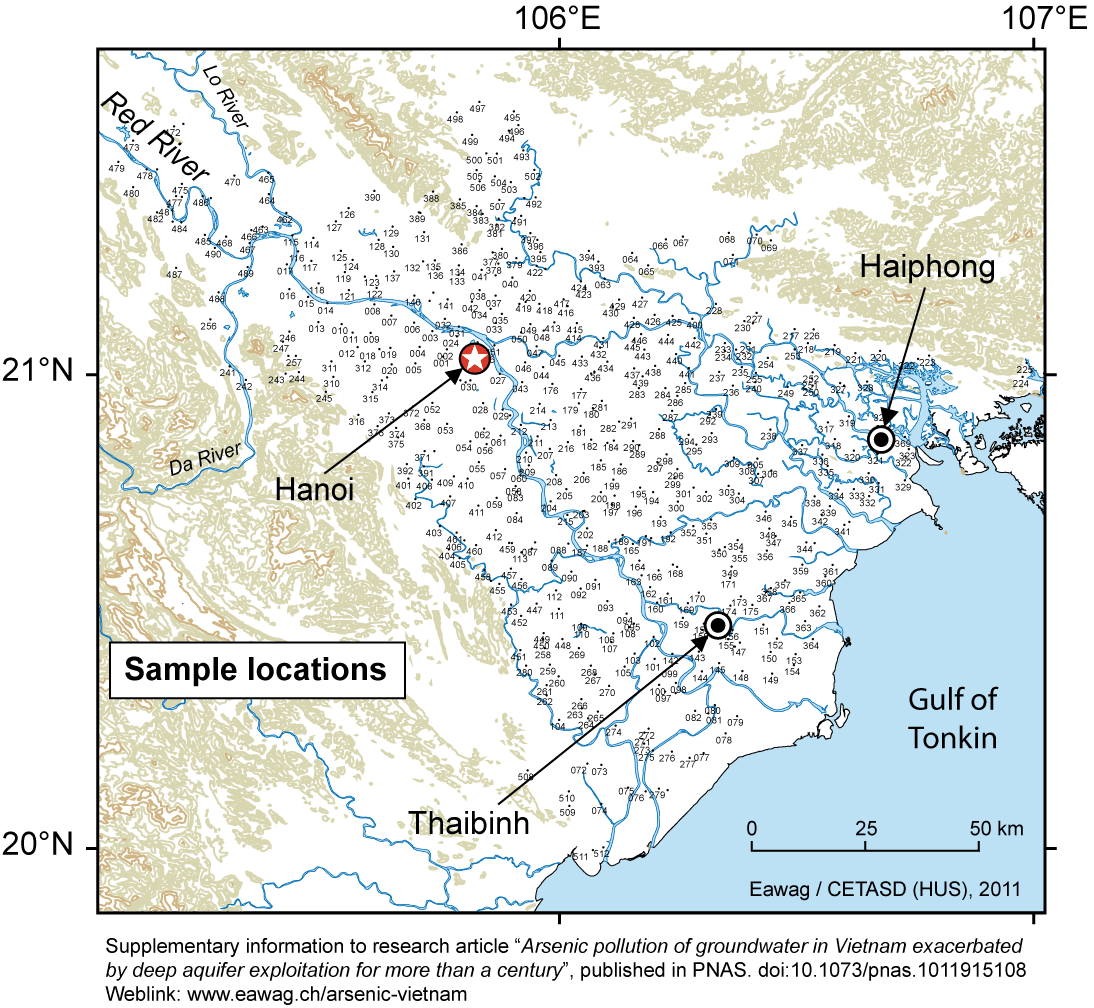
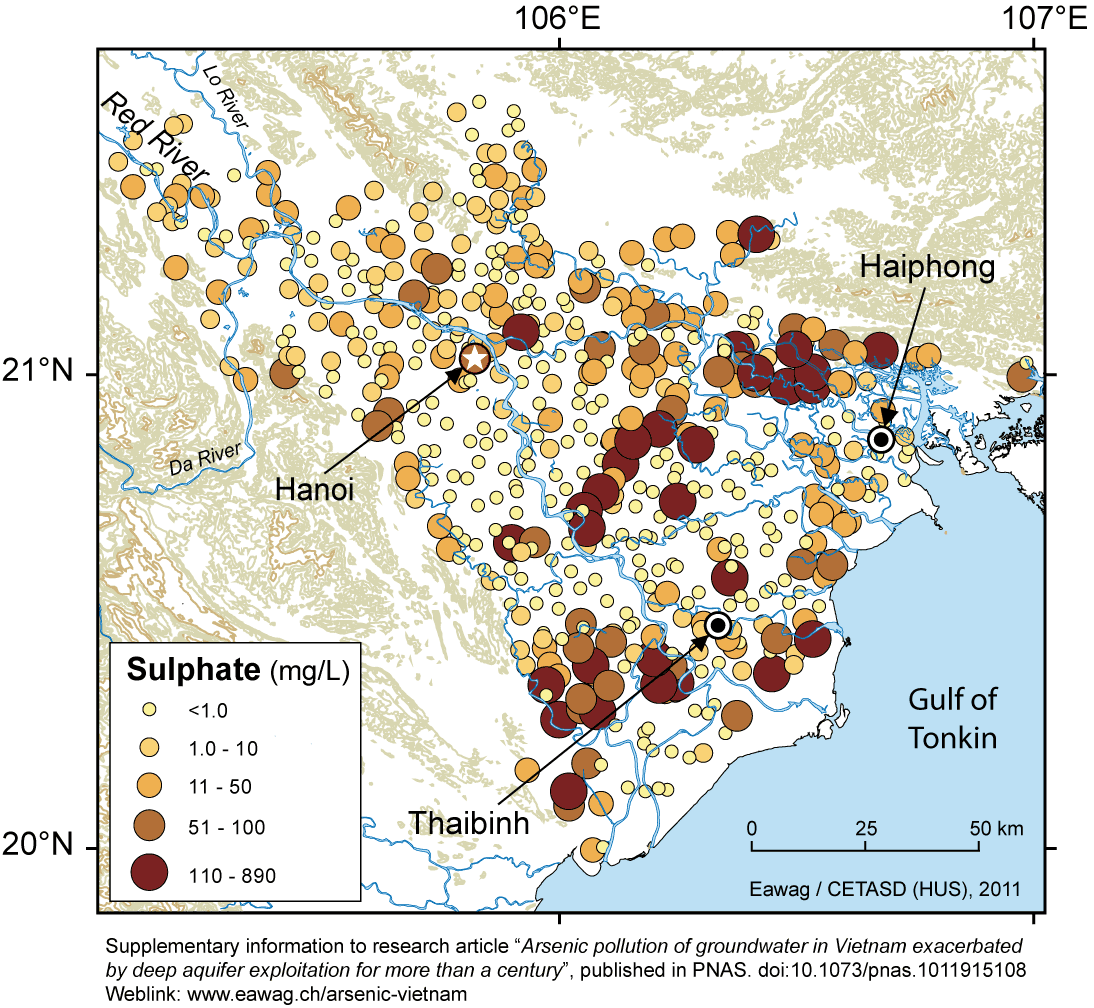
The Red River delta in Vietnam is one of the most densely populated regions in the world. In 1998 the arsenic problem in Vietnam was identified in the capital city of Hanoi and surrounding rural districts and has since been recognized in other locations of the Red River delta [see Berg et al. 2001 and Winkel et al. 2011]. To identify safe and unsafe areas over the entire Red River delta, a large-scale hydrogeochemical groundwater survey was launched in 2005. It included the analysis of arsenic, manganese, selenium, boron, iron, salinity, phosphate, ammonium, sulfate, dissolved organic carbon, and 30 further chemical parameters. Concentration maps and arsenic risk modeling suggest that several million inhabitants of the Red River delta are at risk of chronic arsenic and/or manganese poisoning.
The data, maps and figures presented here to the public are accompanying the comprehensive groundwater analysis and risk modeling (2D and 3D) of the Red River delta published in PNAS (P. Natl. Acad. Sci. USA).
Arsenic pollution of groundwater in Vietnam exacerbated by deep aquifer exploitation for more than a century. PNAS, 108, January 2011.
Lenny Winkel, Pham Thi Kim Trang, Vi Mai Lan, Caroline Stengel, Manouchehr Amini, Nguyen Thi Ha, Pham Hung Viet, Michael Berg*.[...]
This paper is freely available online through the PNAS open access option.
Geogenic Groundwater Pollution
Arsenic-tainted groundwater resources are a major health threat to 50–100 millions of people mainly in Asia. Arsenic originates from sediments in aquifers from where it is released to the groundwater via geochemical mechanisms. Other elements that can be found as geogenic contaminants in groundwater include manganese, fluoride, selenium, chromium and uranium. These elements have in common that they are toxic to humans at specific concentrations. However, arsenic is the most toxic one. Te consumption of groundwater containing this deadly element in high amounts has resulted in serious human health hazards around the globe but especially in Southeast Asia. The World Health Organization recommends a guideline value of 10 µg/liter for arsenic in drinking water. Chronic arsenic poisoning leads to an accumulation of the element in the skin, hair, and nails, resulting in symptoms such as strong pigmentation of the skin, mainly at hands and feet, high blood pressure, and neurological dysfunctions. Beside these effects, long-term exposure to arsenic in drinking water has been found related to increased risks of cancer in the skin, lungs, bladder and kidney.
Further information on arsenic pollution of groundwater can be found through the following links:
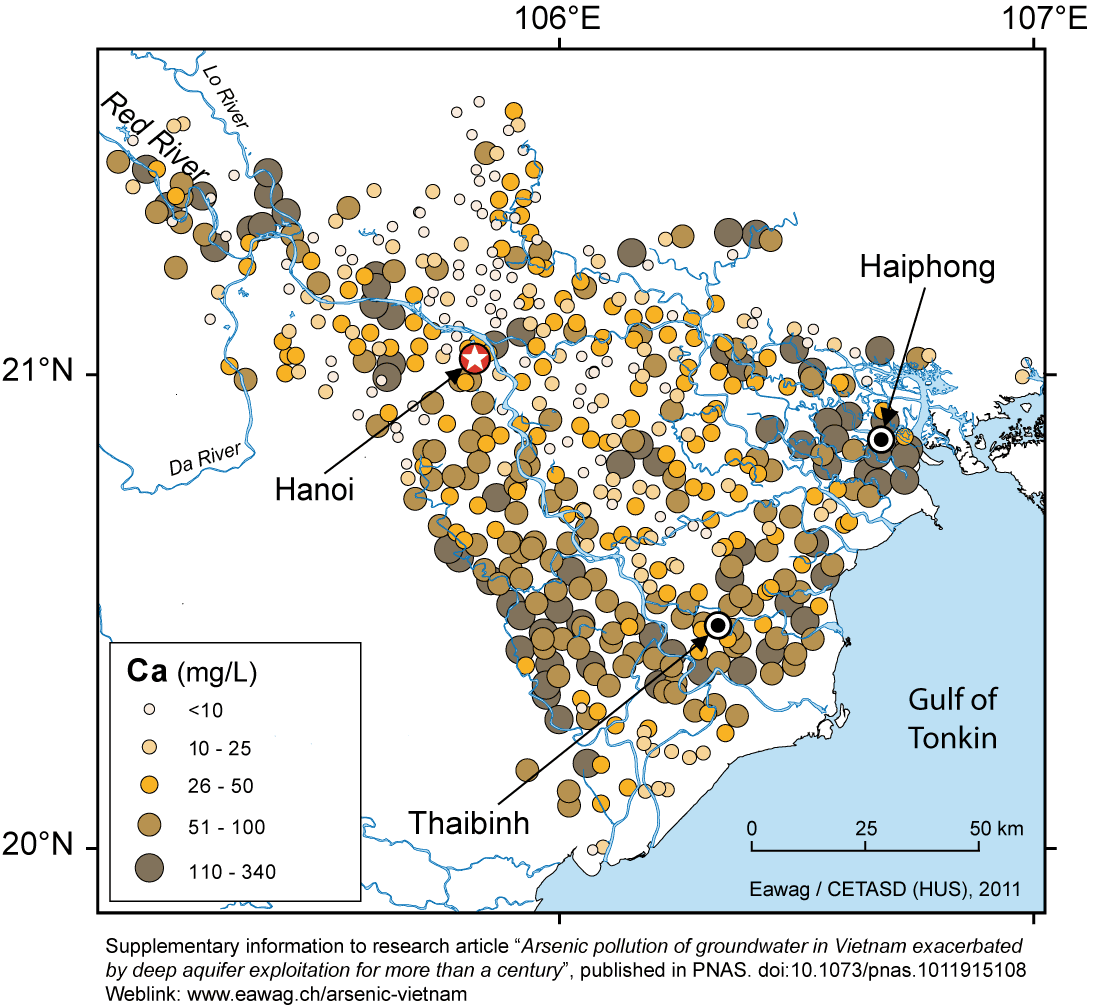
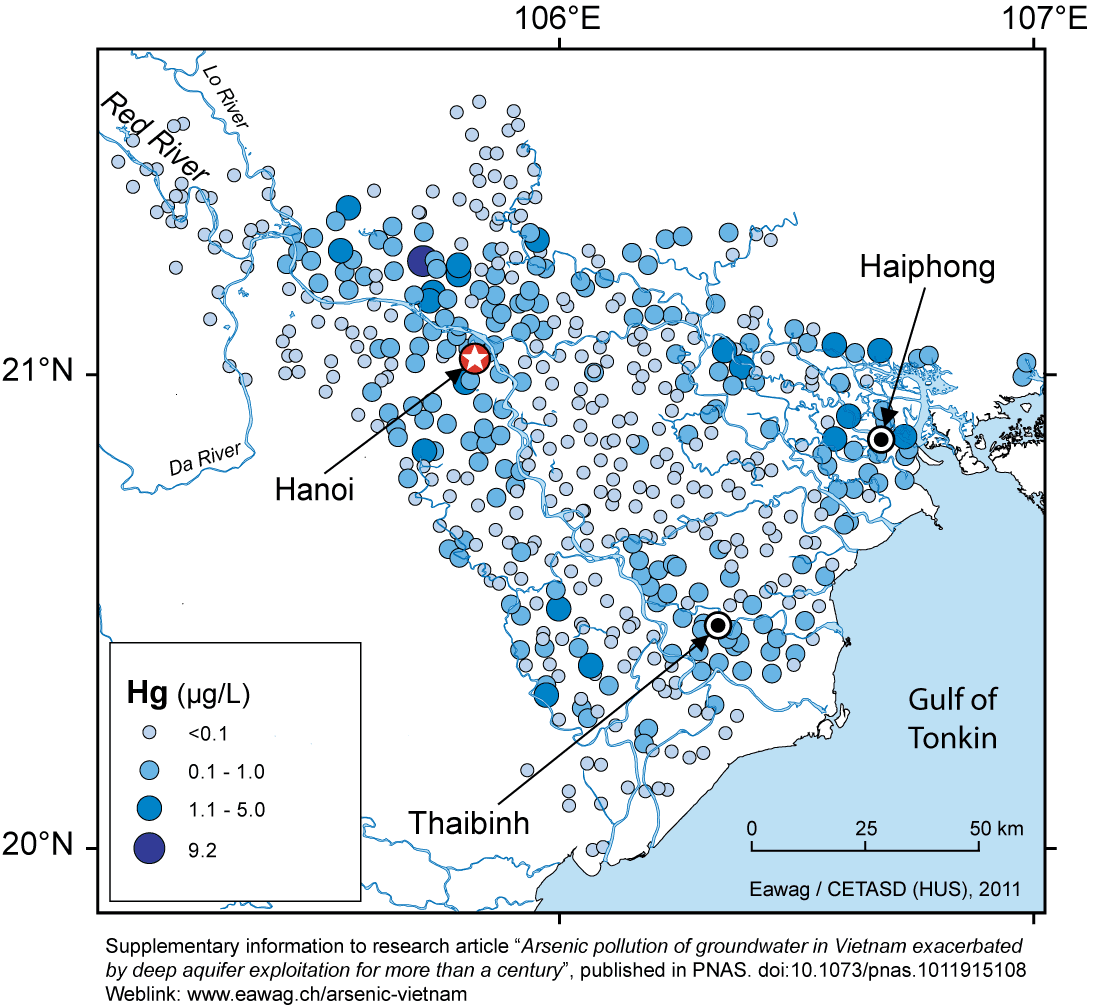
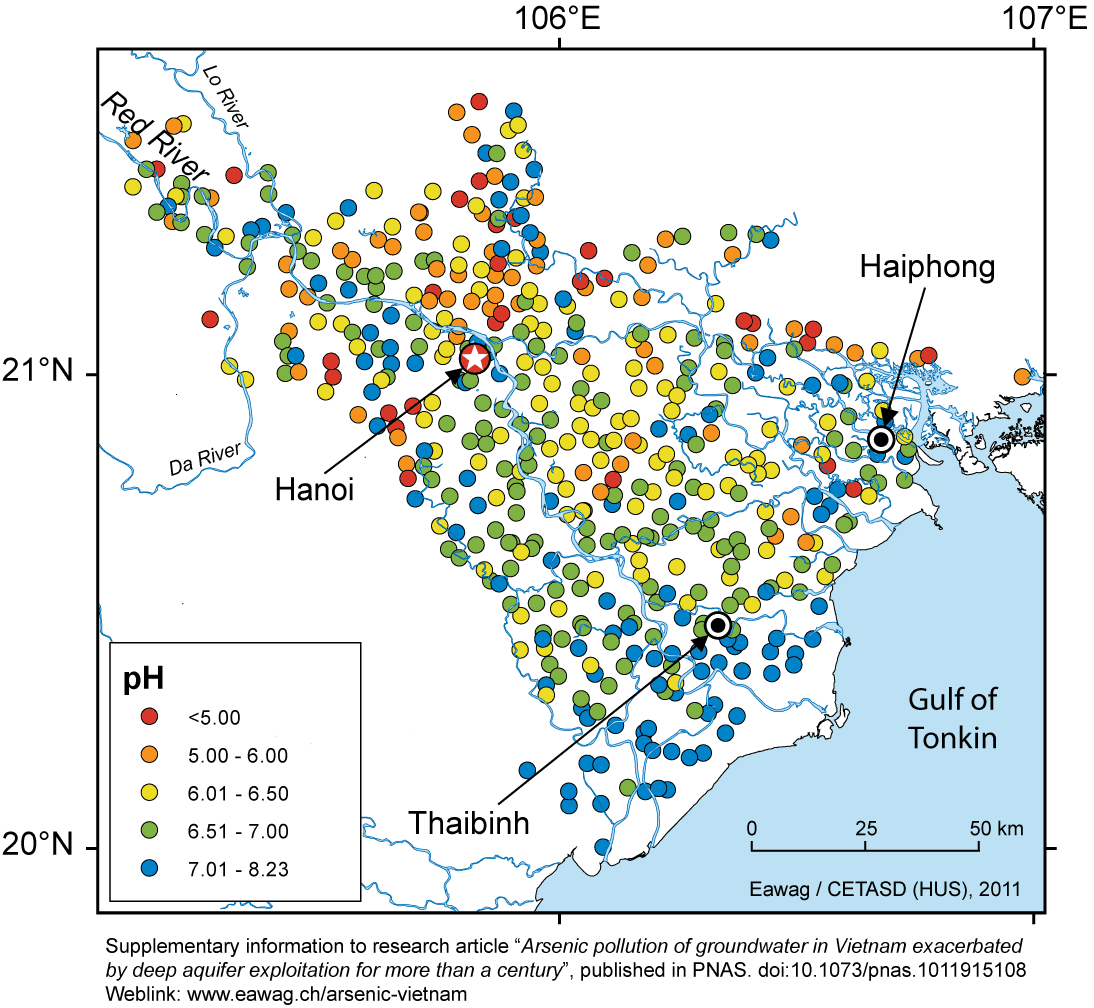
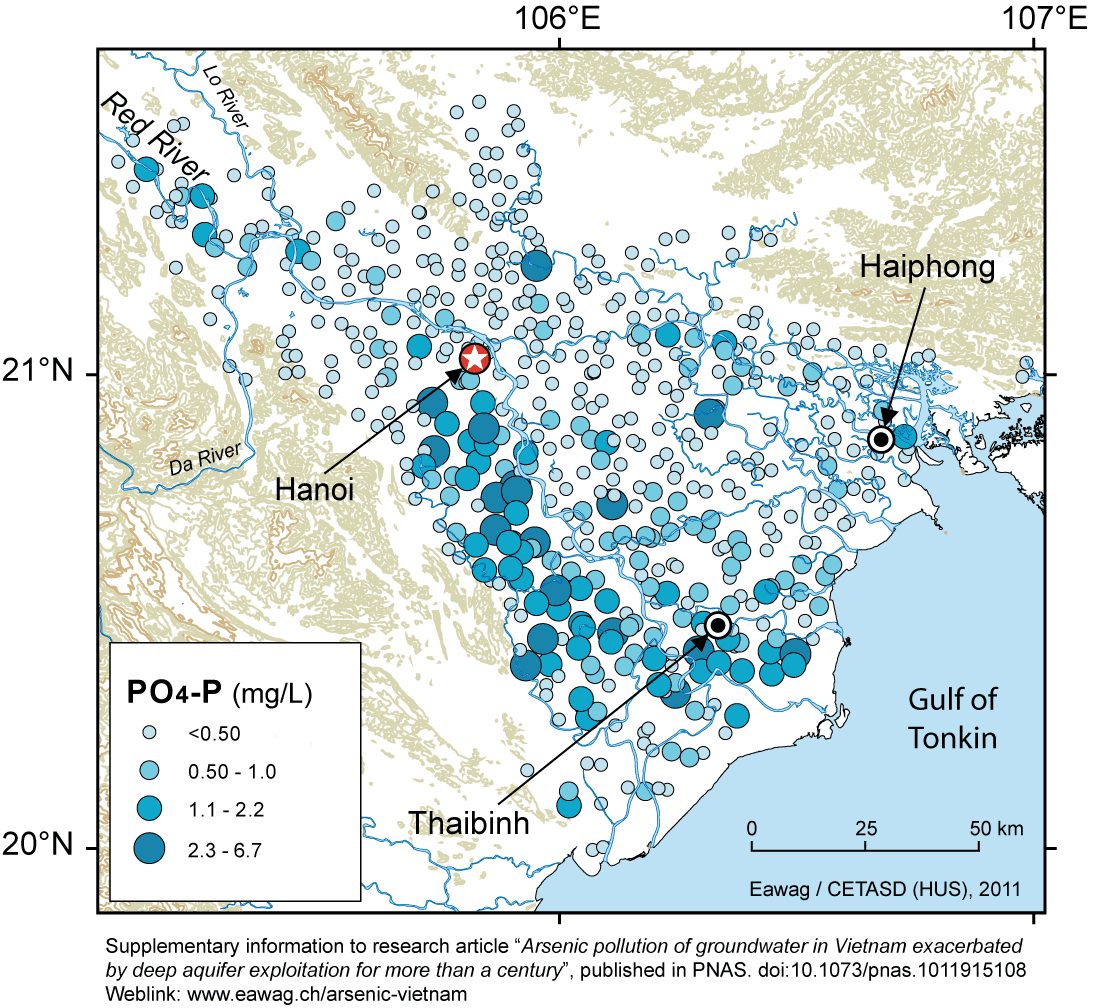
The data of the extensive groundwater survey in the Red River (Vietnam) is presented as a hydrochemical atlas comprising 42 different chemical parameters. We found that 65% of all studied wells exceed the WHO guideline values for arsenic, manganese, barium, selenium or a combination of these elements. Correspondingly, geogenic groundwater pollution in the Red River delta poses a serious long-term health threat to about 7 million people. This is particularly worrying since groundwater is the main source of drinking water.
In a previous study we developed a model using existing 2D surface data (geology and soil properties) for Southeast Asia, which allows areas that are vulnerable to arsenic groundwater contamination to be pinpointed. In the present study we go one step further and create a regional arsenic prediction model for the Red River delta based on a new set of 3D-geological data used as independent variables in the model. This is the first time that a 3D model could be created to pinpoint arsenic contamination of groundwater. Measured arsenic concentrations obtained in the hydrogeochemical study are used as dependent variables in the model.
For details see Winkel et al., PNAS, 108, January 2011 [...]
2D risk map (whole delta)
Arsenic risk map based on surface parameters
Probabilities obtained from the prediction model based on land-surface geology and soil data.
For details see Winkel et al., PNAS, 108, January 2011 [...]
3D risk map (whole delta)
Based on the modeling results, we constructed maps of average probability (for 0-50 m and for 10 m depth intervals). The maps indicate if and where arsenic concentration in the groundwater below or above the WHO guideline value (10 µg/L) can be expected. These maps can be a useful resource for mitigation of arsenic since they indicate where and at which depths tube wells can be expected to produce low arsenic groundwater. We could also use these probability maps in combination with measured As concentrations, to indicate vertically migrated arsenic from shallower Holocene aquifers into naturally uncontaminated Pleistocene aquifers.
For details see Winkel et al., PNAS, 108, January 2011 [...]
Arsenic risk map based on 3D geology
Arsenic risk maps at depth [pdf]
Stacked 3D distribution of arsenic risk [pdf]
Probability of arsenic contamination (0 to -90m) [pdf]
Deep aquifers
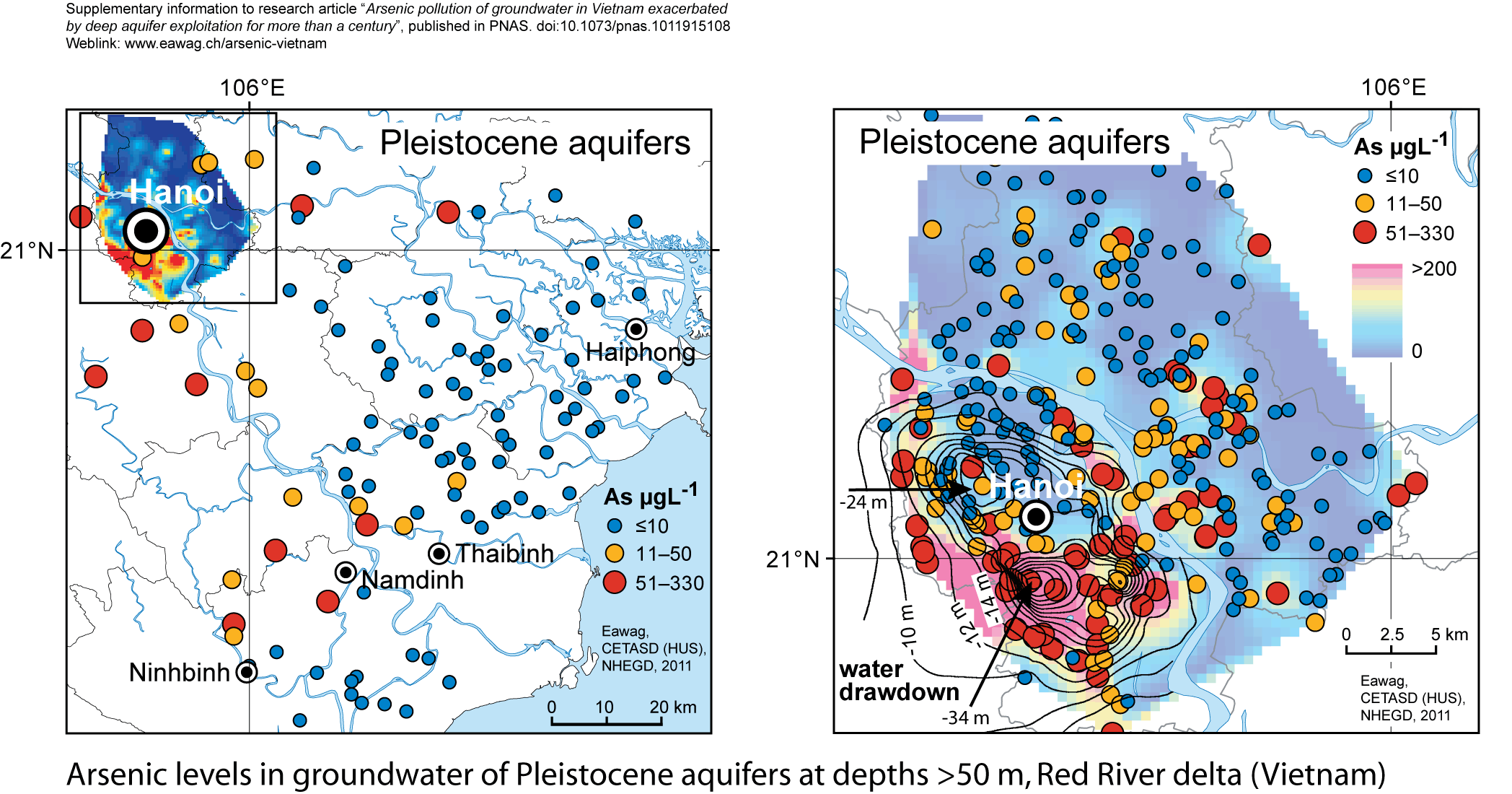
As concentrations in Pleistocene aquifers of the Red River Delta at depths >50 m. Highest As concentrations (up to 330 μgL−1) in the Pleistocene aquifer are found in the same area where high As concentrations are present in shallower, Holocene aquifers. The interpolated As concentration map was obtained by ordinary kriging. Contour lines of piezometric heads (recorded in Dec. 2006) depict the pronounced drawdown of Pleistocene groundwater levels (down to −34 m), caused by extensive groundwater pumping by the Hanoi Water Works.
For details see Winkel et al., PNAS, 108, January 2011 [...]
Arsenic risk map based on 3D geology
Data
The data, maps and figures presented here to the public are accompanying the comprehensive groundwater analysis and risk modeling (2D and 3D) of the Red River delta published in PNAS 108, January 2011.
see: Hydrogeochemical survey
About us
Working group of the research article
"Arsenic pollution of groundwater in Vietnam exacerbated by deep aquifer exploitation for more than a century"
This study was substantially funded by the Swiss Agency for Development and Cooperation within the capacity building project “Environmental Science and Technology in Northern Vietnam.”
array(15 items)0 => Snowflake\Publications\Domain\Model\Publicationprototypepersistent entity (uid=6600, pid=124)originalId => protected6600 (integer)
authors => protected'Winkel, L. H. E.; Trang, P. T. K.; Lan, V . M.; Stengel, C.; Amini, M.; Ha, N. T.; Viet,  ;P. H.; Berg, M.' (178 chars)
title => protected'Arsenic pollution of groundwater in Vietnam exacerbated by deep aquifer expl oitation for more than a century' (108 chars)
journal => protected'Proceedings of the National Academy of Sciences of the United States of Amer ica PNAS' (84 chars)
year => protected2011 (integer)
volume => protected108 (integer)
issue => protected'4' (1 chars)
startpage => protected'1246' (4 chars)
otherpage => protected'1251' (4 chars)
categories => protected'three-dimensional risk modeling; anthropogenic influence; drinking water res ources; geogenic contamination; health threat' (121 chars)
description => protected'Arsenic contamination of shallow groundwater is among the biggest health thr eats in the developing world. Targeting uncontaminated deep aquifers is a po pular mitigation option although its long-term impact remains unknown. Here we present the alarming results of a large-scale groundwater survey covering the entire Red River Delta and a unique probability model based on three-di mensional Quaternary geology. Our unprecedented dataset reveals that ∼7 mi llion delta inhabitants use groundwater contaminated with toxic elements, in cluding manganese, selenium, and barium. Depth-resolved probabilities and ar senic concentrations indicate drawdown of arsenic-enriched waters from Holoc ene aquifers to naturally uncontaminated Pleistocene aquifers as a result of > 100 years of groundwater abstraction. Vertical arsenic migration induced by large-scale pumping from deep aquifers has been discussed to occur elsewh ere, but has never been shown to occur at the scale seen here. The present s ituation in the Red River Delta is a warning for other As-affected regions w here groundwater is extensively pumped from uncontaminated aquifers underlyi ng high arsenic aquifers or zones.' (1174 chars)
serialnumber => protected'0027-8424' (9 chars)
doi => protected'10.1073/pnas.1011915108' (23 chars)
uid => protected6600 (integer)
_localizedUid => protected6600 (integer)modified_languageUid => protectedNULL
_versionedUid => protected6600 (integer)modifiedpid => protected124 (integer)1 => Snowflake\Publications\Domain\Model\Publicationprototypepersistent entity (uid=5403, pid=124)originalId => protected5403 (integer)
authors => protected'Berg, M.; Stengel, C.; Trang, P. T. K.; Hung Viet,& nbsp;P.; Sampson, M. L.; Leng, M.; Samreth, S.; Frederic ks, D.' (163 chars)
title => protected'Magnitude of arsenic pollution in the Mekong and Red River Deltas — Cambod ia and Vietnam' (90 chars)
journal => protected'Science of the Total Environment' (32 chars)
year => protected2007 (integer)
volume => protected372 (integer)
issue => protected'2–3' (5 chars)
startpage => protected'413' (3 chars)
otherpage => protected'425' (3 chars)
categories => protected'arsenic groundwater pollution; Phnom Penh; Hanoi; health risk; hair; urine; reductive dissolution; iron; manganese; ammonium; DOC; Kandal province; An G iang province; Dong Thap province; Bassac River' (199 chars)
description => protected'Large alluvial deltas of the Mekong River in southern Vietnam and Cambodia a nd the Red River in northern Vietnam have groundwaters that are exploited fo r drinking water by private tube-wells, which are of increasing demand since the mid-1990s. This paper presents an overview of groundwater arsenic pollu tion in the Mekong delta: arsenic concentrations ranged from 1-1610 μg/L in Cambodia (average 217 μg/L) and 1-845 μg/L in southern Vietnam (average 3 9 μg/L), respectively. It also evaluates the situation in Red River delta w here groundwater arsenic concentrations vary from 1-3050 μg/L (average 159 μg/L). In addition to rural areas, the drinking water supply of the city of Hanoi has elevated arsenic concentrations. The sediments of 12-40 m deep c ores from the Red River delta contain arsenic levels of 2-33 μg/g (average 7 μg/g, dry weight) and show a remarkable correlation with sediment-bound i ron. In all three areas, the groundwater arsenic pollution seem to be of nat ural origin and caused by reductive dissolution of arsenic-bearing iron phas es buried in aquifers. The population at risk of chronic arsenic poisoning i s estimated to be 10 million in the Red River delta and 0.5–1 million in the Mekong delta. A subset of hair samples collected in Vietnam and Cambodia from residents drinking groundwater with arsenic levels >50 μg/L have a s ignificantly higher arsenic content than control groups (<50 μg/L). Few cas es of arsenic related health problems are recognized in the study areas comp ared to Bangladesh and West Bengal. This difference probably relates to arse nic contaminated tube-well water only being used substantially over the past 7 to 10 years in Vietnam and Cambodia. Because symptoms of chronic arsenic poisoning usually take more than 10 years to develop, the number of future a rsenic related ailments in Cambodia and Vietnam is likely to increase. Early mitigation measures should be a high priority.' (1947 chars)
serialnumber => protected'0048-9697' (9 chars)
doi => protected'10.1016/j.scitotenv.2006.09.010' (31 chars)
uid => protected5403 (integer)
_localizedUid => protected5403 (integer)modified_languageUid => protectedNULL
_versionedUid => protected5403 (integer)modifiedpid => protected124 (integer)2 => Snowflake\Publications\Domain\Model\Publicationprototypepersistent entity (uid=5788, pid=124)originalId => protected5788 (integer)
authors => protected'Buschmann, J.; Berg, M.; Stengel, C.; Winkel, L.; Sampso n, M. L.; Trang, P. T. K.; Hung Viet, P.' (146 chars)
title => protected'Contamination of drinking water resources in the Mekong delta floodplains: a rsenic and other trace metals pose serious health risks to population' (145 chars)
journal => protected'Environment International' (25 chars)
year => protected2008 (integer)
volume => protected34 (integer)
issue => protected'6' (1 chars)
startpage => protected'756' (3 chars)
otherpage => protected'764' (3 chars)
categories => protected'manganese; trace elements; salinity; drinking water; Vietnam; Cambodia' (70 chars)
description => protected'This study presents a transnational groundwater survey of the 62,000 km<SUP> 2</SUP> Mekong delta floodplain (Southern Vietnam and bordering Cambodia) an d assesses human health risks associated with elevated concentrations of dis solved toxic elements. The lower Mekong delta generally features saline grou ndwater. However, where groundwater salinity is <1 g L<SUP>−</SUP> <SUP>1< /SUP> Total Dissolved Solids (TDS), the rural population started exploiting shallow groundwater as drinking water in replacement of microbially contamin ated surface water. In groundwater used as drinking water, arsenic concentra tions ranged from 0.1–1340 µg L<SUP>−</SUP> <SUP>1</SUP>, with 37% of t he studied wells exceeding the WHO guidelines of 10 µg L<SUP>−</SUP> <SUP >1</SUP> arsenic. In addition, 50% exceeded the manganese WHO guideline of 0 .4 mg L<SUP>−</SUP> <SUP>1</SUP>, with concentrations being particularly h igh in Vietnam (range 1.0–34 mg L<SUP>−</SUP> <SUP>1</SUP>). Other eleme nts of (minor) concern are Ba, Cd, Ni, Se, Pb and U. Our measurements imply that groundwater contamination is of geogenic origin and caused by natural a noxic conditions in the aquifers. Chronic arsenic poisoning is the most seri ous health risk for the ~2 million people drinking this groundwater without treatment, followed by malfunction in children's development through excessi ve manganese uptake. Government agencies, water specialists and scientists m ust get aware of the serious situation. Mitigation measures are urgently nee ded to protect the unaware people from such health problems.' (1580 chars)
serialnumber => protected'0160-4120' (9 chars)
doi => protected'10.1016/j.envint.2007.12.025' (28 chars)
uid => protected5788 (integer)
_localizedUid => protected5788 (integer)modified_languageUid => protectedNULL
_versionedUid => protected5788 (integer)modifiedpid => protected124 (integer)3 => Snowflake\Publications\Domain\Model\Publicationprototypepersistent entity (uid=5694, pid=124)originalId => protected5694 (integer)
authors => protected'Berg, M.; Trang, P. T. K.; Stengel, C.; Buschmann,& nbsp;J.; Hung Viet, P.; Van Dan, N.; Giger, W.; Stüben,  ;D.' (155 chars)
title => protected'Hydrological and sedimentary controls leading to arsenic contamination of gr oundwater in the Hanoi area, Vietnam: the impact of iron-arsenic ratios, pea t, river bank deposits, and excessive groundwater abstraction' (213 chars)
journal => protected'Chemical Geology' (16 chars)
year => protected2008 (integer)
volume => protected249 (integer)
issue => protected'1–2' (5 chars)
startpage => protected'91' (2 chars)
otherpage => protected'112' (3 chars)
categories => protected'hydrology; water isotopes; iron-arsenic ratio; sediment extraction; seasonal fluctuations; irrigation' (101 chars)
description => protected'Groundwater contamination by arsenic in Vietnam poses a serious health threa t to millions of people. In the larger Hanoi area, elevated arsenic levels a re present in both, the Holocene and Pleistocene aquifers. Family-based tube wells predominantly tap the Holocene aquifer, while the Hanoi water works ex tract more than 600,000 m<SUP>3</SUP>/day of groundwater from the Pleistocen e aquifer. Detailed groundwater and sediment investigations were conducted a t three locations exhibiting distinct geochemical conditions, i.e., i) high levels of dissolved arsenic (av. 121 µg/L) at the river bank, ii) low level s of dissolved arsenic (av. 21 µg/L) at the river bank and, iii) medium lev els of dissolved arsenic (60 µg/L) in an area of buried peat and excessive groundwater abstraction. Seasonal fluctuations in water chemistry were studi ed over a time span of 14 months. <BR/> Sediment-bound arsenic (1.3–22 µg /g) is in a natural range. Arsenic correlates with iron (<I>r</I><SUP>2</SUP >>0.8) with variation related to grain size. Sediment leaching experiments s howed that arsenic can readily be mobilized at each of the three locations. Low levels of arsenic in groundwater (<10 µg/L) generally exhibit manganese reducing conditions, whereas elevated levels are caused by reductive dissol ution under iron- and sulphate reducing conditions. Average arsenic concentr ations in groundwater are twofold higher at the river bank than in the peat area. The lower levels of arsenic contamination in the peat area are likely controlled by the high abundance of iron present in both the aqueous and sed iment phases. With median molar Fe/As ratios of 350 in water and 8700 in the sediments of the peat area, reduced iron possibly forms new mineral phases that resorb (or sequester) previously released arsenic to the sediment. Desp ite similar redox conditions, resorption is much less significant at the riv er bank (Fe/As(aq)=68, Fe/As(s)=4700), and hence, arsenic concentrations in groundwater reach consid...' (3176 chars)
serialnumber => protected'0009-2541' (9 chars)
doi => protected'10.1016/j.chemgeo.2007.12.007' (29 chars)
uid => protected5694 (integer)
_localizedUid => protected5694 (integer)modified_languageUid => protectedNULL
_versionedUid => protected5694 (integer)modifiedpid => protected124 (integer)4 => Snowflake\Publications\Domain\Model\Publicationprototypepersistent entity (uid=5777, pid=124)originalId => protected5777 (integer)
authors => protected'Winkel, L.; Berg, M.; Amini, M.; Hug, S. J.; Johnso n, C. A.' (94 chars)
title => protected'Predicting groundwater arsenic contamination in Southeast Asia from surface parameters' (86 chars)
journal => protected'Nature Geoscience' (17 chars)
year => protected2008 (integer)
volume => protected1 (integer)
issue => protected'' (0 chars)
startpage => protected'536' (3 chars)
otherpage => protected'542' (3 chars)
categories => protected'' (0 chars)
description => protected'Arsenic contamination of groundwater resources threatens the health of milli ons of people worldwide, particularly in the densely populated river deltas of Southeast Asia. Although many arsenic-affected areas have been identified in recent years, a systematic evaluation of vulnerable areas remains to be carried out. Here we present maps pinpointing areas at risk of groundwater a rsenic concentrations exceeding 10 g l<SUP>-1</SUP>. These maps were produce d by combining geological and surface soil parameters in a logistic regressi on model, calibrated with 1,756 aggregated and geo-referenced groundwater da ta points from the Bengal, Red River and Mekong deltas. We show that Holocen e deltaic and organic-rich surface sediments are key indicators for arsenic risk areas and that the combination of surface parameters is a successful ap proach to predict groundwater arsenic contamination. Predictions are in good agreement with the known spatial distribution of arsenic contamination, and further indicate elevated risks in Sumatra and Myanmar, where no groundwate r studies exist.' (1080 chars)
serialnumber => protected'1752-0894' (9 chars)
doi => protected'10.1038/ngeo254' (15 chars)
uid => protected5777 (integer)
_localizedUid => protected5777 (integer)modified_languageUid => protectedNULL
_versionedUid => protected5777 (integer)modifiedpid => protected124 (integer)5 => Snowflake\Publications\Domain\Model\Publicationprototypepersistent entity (uid=5291, pid=124)originalId => protected5291 (integer)
authors => protected'Berg, M.; Luzi, S.; Trang, P. T. K.; Viet, P.& nbsp;H.; Giger, W.; Stüben, D.' (117 chars)
title => protected'Arsenic removal from groundwater by household sand filters: comparative fiel d study, model calculations, and health benefits' (124 chars)
journal => protected'Environmental Science and Technology' (36 chars)
year => protected2006 (integer)
volume => protected40 (integer)
issue => protected'17' (2 chars)
startpage => protected'5567' (4 chars)
otherpage => protected'5573' (4 chars)
categories => protected'' (0 chars)
description => protected'Arsenic removal efficiencies of 43 household sand filters were studied in ru ral areas of the Red River Delta in Vietnam. Simultaneously, raw groundwater from the same households and additional 31 tubewells was sampled to investi gate arsenic coprecipitation with hydrous ferric iron from solution, i.e., w ithout contact to sand surfaces. From the groundwaters containing 10-382 μg /L As, 99%, 90%, and 71%, respectively. The concentration of dissolved iron in groundwater was the decisive factor for the removal of arsenic. Residual arsenic levels below 50 Ag/L were achieved by 90% of the studied sand filter s, and 40% were even below 10 Ag/L. Fe/As ratios of >= 50 or >= 250 were req uired to ensure arsenic removal to levels below 50 or 10 Ag/L, respectively. Phosphate concentrations > 2.5 mg P/L slightly hampered the sand filter and coprecipitation efficiencies. Interestingly, the overall arsenic eliminatio n was higher than predicted from model calculations based on sorption consta nts determined from coprecipitation experiments with artificial groundwater. This observation is assumed to result from As(III) oxidation involving Mn, microorganisms, and possibly dissolved organic matter present in the natural groundwaters. Clear evidence of lowered arsenic burden for people consuming sand-filtered water is demonstrated from hair analyses. The investigated sa nd filters proved to operate fast and robust for a broad range of groundwate r composition and are thus also a viable option for mitigation in other arse nic affected regions. An estimation conducted for Bangladesh indicates that a median residual level of 25 Ag/L arsenic could be reached in 84% of the po lluted groundwater. The easily observable removal of iron from the pumped wa ter makes the effect of a sand filter immediately recognizable even to peopl e who are not aware of the arsenic problem.' (1867 chars)
serialnumber => protected'0013-936X' (9 chars)
doi => protected'10.1021/es060144z' (17 chars)
uid => protected5291 (integer)
_localizedUid => protected5291 (integer)modified_languageUid => protectedNULL
_versionedUid => protected5291 (integer)modifiedpid => protected124 (integer)6 => Snowflake\Publications\Domain\Model\Publicationprototypepersistent entity (uid=14747, pid=124)originalId => protected14747 (integer)
authors => protected'Luzi, S.; Berg, M.; Trang, P. T. K.; Viet, P.& nbsp;H.; Schertenleib, R.' (106 chars)
title => protected'Household sand filters for arsenic removal. An option to mitigate arsenic fr om iron-rich groundwater' (100 chars)
journal => protected'' (0 chars)
year => protected2004 (integer)
volume => protected0 (integer)
issue => protected'' (0 chars)
startpage => protected'31 p' (9 chars)
otherpage => protected'' (0 chars)
categories => protected'' (0 chars)
description => protected'Arsenic-rich groundwater is currently being used as drinking water by millio ns of households in different parts of the world. The problem of arsenic int oxication by contaminated drinking water emerged in the past two decades, wh en surface water and groundwater from open dug wells, formerly used to cover the drinking water supply in rural areas of many tropical regions, were aba ndoned for groundwater pumped through small-scale tubewells. As documented, chronic arsenic exposure can lead to severe health problems, such as skin le sions, hyperkeratosis, melanosis, skin cancer and cancer of internal organs.' (608 chars)
serialnumber => protected'' (0 chars)
doi => protected'' (0 chars)
uid => protected14747 (integer)
_localizedUid => protected14747 (integer)modified_languageUid => protectedNULL
_versionedUid => protected14747 (integer)modifiedpid => protected124 (integer)7 => Snowflake\Publications\Domain\Model\Publicationprototypepersistent entity (uid=5894, pid=124)originalId => protected5894 (integer)
authors => protected'Hug, S. J.; Leupin, O. X.; Berg, M.' (60 chars)
title => protected'Bangladesh and Vietnam: different groundwater compositions require different approaches to arsenic mitigation' (109 chars)
journal => protected'Environmental Science and Technology' (36 chars)
year => protected2008 (integer)
volume => protected42 (integer)
issue => protected'17' (2 chars)
startpage => protected'6318' (4 chars)
otherpage => protected'6323' (4 chars)
categories => protected'' (0 chars)
description => protected'' (0 chars)
serialnumber => protected'0013-936X' (9 chars)
doi => protected'10.1021/es7028284' (17 chars)
uid => protected5894 (integer)
_localizedUid => protected5894 (integer)modified_languageUid => protectedNULL
_versionedUid => protected5894 (integer)modifiedpid => protected124 (integer)8 => Snowflake\Publications\Domain\Model\Publicationprototypepersistent entity (uid=6071, pid=124)originalId => protected6071 (integer)
authors => protected'Buschmann, J.; Berg, M.' (33 chars)
title => protected'Impact of sulfate reduction on the scale of arsenic contamination in groundw ater of the Mekong, Bengal and Red River deltas' (123 chars)
journal => protected'Applied Geochemistry' (20 chars)
year => protected2009 (integer)
volume => protected24 (integer)
issue => protected'7' (1 chars)
startpage => protected'1278' (4 chars)
otherpage => protected'1286' (4 chars)
categories => protected'' (0 chars)
description => protected'Arsenic-enriched groundwater has been a pressing human health issue for more than a decade, with tens of millions of people worldwide being at risk of c hronic As poisoning through the consumption of As-burdened groundwater. To e lucidate the importance of dissolved S on the scale of As concentrations, th e composition of groundwater samples from 926 locations spanning over the fl oodplains of three severely arsenic affected regions in Asia (Bengal-, Mekon g-, Red River deltas), were assessed. A binary mixing model based on Cl<SUP> −</SUP> or B as conservative tracers implies that two types of water may b e regarded as end-members with respect to groundwater composition in these d eltas, namely surface derived water (approximated by river water) and saline water identical to residual sea water. Six redox zones were distinguished b y comparing the model-calculated concentrations with the measured values. On ly one zone (denoted methanogenic) had very high average As concentrations a nd they were significantly higher than in the other zones – for all three regions, regardless of applying Cl<SUP>−</SUP> or B as a tracer in the mod el. Average As concentrations ± standard error in the methanogenic zone wer e 182 ± 23 μg L<SUP>−1</SUP> (<I>n</I> = 50%), 41 ± 6 μg L<SUP>−1</S UP> (<I>n</I> = 43%), and 61 ± 20 μg L<SUP>−1</SUP> (<I>n</I> = 24%) in the Mekong, Red River and Bengal delta, respectively. Arsenic levels were si gnificantly lower in the SO<SUB>4</SUB>-reducing and the Fe-reducing zones, where averages were 23 ± 7 μg L<SUP>−1</SUP> (<I>n</I> = 27%, zone I), 1 4 ± 3 μg L<SUP>−1</SUP> (<I>n</I> = 48%, zone S) and 26 ± 9 μg L<SUP >−1</SUP> (<I>n</I> = 64%, zone S). These results suggest that a sufficien t supply of inhibits the release of As to groundwater and that reduction may be as important as Fe reduction in controlling the enrichment of As in grou ndwater.' (1908 chars)
serialnumber => protected'0883-2927' (9 chars)
doi => protected'10.1016/j.apgeochem.2009.04.002' (31 chars)
uid => protected6071 (integer)
_localizedUid => protected6071 (integer)modified_languageUid => protectedNULL
_versionedUid => protected6071 (integer)modifiedpid => protected124 (integer)9 => Snowflake\Publications\Domain\Model\Publicationprototypepersistent entity (uid=4160, pid=124)originalId => protected4160 (integer)
authors => protected'Berg, M.; Tran, H. C.; Nguyen, T. C.; Pham, H. V.; Schertenleib, R.; Giger, W.' (123 chars)
title => protected'Arsenic contamination of groundwater and drinking water in Vietnam: a human health threat' (89 chars)
journal => protected'Environmental Science and Technology' (36 chars)
year => protected2001 (integer)
volume => protected35 (integer)
issue => protected'13' (2 chars)
startpage => protected'2621' (4 chars)
otherpage => protected'2626' (4 chars)
categories => protected'' (0 chars)
description => protected'This is the first publication on arsenic contamination of the Red River allu vial tract in the city of Hanoi and in the surrounding rural districts. Due to naturally occurring organic matter in the sediments, the groundwaters are anoxic and rich in iron. With an average arsenic concentration of 159 μg/L , the contamination levels varied from 1 to 3050 μg/L in rural groundwater samples from private smallscale tubewells. In a highly affected rural area, the groundwater used directly as drinking water had an average concentration of 430 μg/L. Analysis of raw groundwater pumped from the lower aquifer for the Hanoi water supply yielded arsenic levels of 240-320 μg/L in three of eight treatment plants and 37-82 μg/L in another five plants. Aeration and sand filtration that are applied in the treatment plants for iron removal lo wered the arsenic concentrations to levels of 25-91 μg/L, but 50% remained above the Vietnamese Standard of 50 μg/L. Extracts of sediment samples from five bore cores showed a correlation of arsenic and iron contents (<I>r</I> <SUP>2</SUP> = 0.700, <I>n</I> = 64). The arsenic in the sediments may be as sociated with iron oxyhydroxides and released to the groundwater by reductiv e dissolution of iron. Oxidation of sulfide phases could also release arseni c to the groundwater, but sulfur concentrations in sediments were below 1 mg /g. The high arsenic concentrations found in the tubewells (48% above 50 μg /L and 20% above 150 μg/L) indicate that several million people consuming u ntreated groundwater might be at a considerable risk of chronic arsenic pois oning.' (1602 chars)
serialnumber => protected'0013-936X' (9 chars)
doi => protected'10.1021/es010027y' (17 chars)
uid => protected4160 (integer)
_localizedUid => protected4160 (integer)modified_languageUid => protectedNULL
_versionedUid => protected4160 (integer)modifiedpid => protected124 (integer)10 => Snowflake\Publications\Domain\Model\Publicationprototypepersistent entity (uid=5911, pid=124)originalId => protected5911 (integer)
authors => protected'Norrman, J.; Sparrenbom, C. J.; Berg, M.; Nhan, D.& nbsp;D.; Nhan, P. Q.; Rosqvist, H.; Jacks, G.; Sigvardss on, E.; Baric, D.; Moreskog, J.; Harms-Ringdahl, P.; Hoa n, N. V.' (246 chars)
title => protected'Arsenic mobilisation in a new well field for drinking water production along the Red River, Nam Du, Hanoi' (105 chars)
journal => protected'Applied Geochemistry' (20 chars)
year => protected2008 (integer)
volume => protected23 (integer)
issue => protected'11' (2 chars)
startpage => protected'3127' (4 chars)
otherpage => protected'3142' (4 chars)
categories => protected'' (0 chars)
description => protected'Arsenic enrichment of groundwater in the Red River (Song Hong) delta in Viet nam was discovered in 1998. Several studies performed in this area found con centrations of As exceeding the WHO-guideline of 10 μg/L. This study focuse s on an area south of Hanoi city, Nam Du, where a new well field came into o peration in 2004. The new well field is situated on the bank along the Red R iver in order to facilitate induced infiltration. The Nam Du area receives s urface water with a high load of nutrients and organic matter from the Hanoi sewage system, and is subject to recently increased groundwater extraction from the Pleistocene aquifer system. The objective of the study was (1) to a ssess the situation in the Nam Du area by mapping the distribution of As, (2 ) to identify possible sources of As in the groundwater and (3) to investiga te the mobilisation processes releasing As into the groundwater. Two main fi eld campaigns were carried out, in 2006 and 2007, both during the dry season . Groundwater and surface water levels were measured and water- and sediment samples were collected. The water in the Pleistocene aquifer shows the same water-level variations as the Red River at a distance of 2.5 km from the ri verbank, while the Holocene aquifer heads are recharged by surface water pon ds and show less seasonal variation. The concentration of As in the groundwa ter in Nam Du exceeded the WHO provisional guideline value at all sampled lo cations. The main conclusions are summarised as (i) the distribution of As i s highly variable but the zones with the highest concentrations of As are ne ar the Red River in the Holocene aquifer and just down gradient from this in the Pleistocene aquifer, (ii) the sediments within the aquifers are conside red to be the source of the As, where the Holocene aquifer is believed to ac t as the main source of As into the Pleistocene aquifer as reduced groundwat er containing As from the Holocene aquifer is flowing downwards due to the d ownward gradient, and (i...' (2710 chars)
serialnumber => protected'0883-2927' (9 chars)
doi => protected'10.1016/j.apgeochem.2008.06.016' (31 chars)
uid => protected5911 (integer)
_localizedUid => protected5911 (integer)modified_languageUid => protectedNULL
_versionedUid => protected5911 (integer)modifiedpid => protected124 (integer)11 => Snowflake\Publications\Domain\Model\Publicationprototypepersistent entity (uid=5907, pid=124)originalId => protected5907 (integer)
authors => protected'Eiche, E.; Neumann, T.; Berg, M.; Weinman, B.; van Geen, A.; Norra, S.; Berner, Z.; Trang, P. T. K.; H ung Viet, P.; Stüben, D.' (187 chars)
title => protected'Geochemical processes underlying a sharp contrast in groundwater arsenic con centrations in a village on the Red River delta, Vietnam' (132 chars)
journal => protected'Applied Geochemistry' (20 chars)
year => protected2008 (integer)
volume => protected23 (integer)
issue => protected'11' (2 chars)
startpage => protected'3143' (4 chars)
otherpage => protected'3154' (4 chars)
categories => protected'' (0 chars)
description => protected'The spatial variability of As concentrations in aquifers of the Red River De lta, Vietnam, was studied in the vicinity of Hanoi. Two sites, only 700 m ap art but with very different As concentrations in groundwater (site L: <10 μ g/L vs. site H: 170–600 μg/L) in the 20–50 m depth range, were characte rized with respect to sediment geochemistry and mineralogy as well as hydroc hemistry. Sequential extractions of the sediment were carried out in order t o understand why As is released to groundwater at one site and not the other . No major differences were observed in the bulk mineralogy and geochemistry of the sediment, with the exception of the redox state of Fe oxyhydroxides inferred from sediment colour and diffuse spectral reflectance. At site H mo st of the As in the sediment was adsorbed to grey sands of mixed Fe(II/III) valence whereas at site L As was more strongly bound to orange-brown Fe(III) oxides. Higher dissolved Fe and low dissolved S concentrations in groundwat er at site H (~14 mg Fe/L, <0.3 mg S/L) suggest more strongly reducing condi tions compared to site L (1–2 mg Fe/L, <3.8 mg S/L). High concentrations o f NH<SUB>4</SUB><SUP>+</SUP> (~10 mg/L), HCO<SUB>3</SUB><SUP>–</SUP> (500 mg/L) and dissolved P (600 mg/L), in addition to elevated As at site H are c onsistent with a release coupled to microbially induced reductive dissolutio n of Fe oxyhydroxides. Other processes such as precipitation of siderite and vivianite, which are strongly supersaturated at site H, or the formation of amorphous Fe(II)/As(III) phases and Fe sulfides, may also influence the par titioning of As between groundwater and aquifer sands.<BR/> The origin of th e redox contrast between the two sites is presently unclear. Peat was observ ed at site L, but it was embedded within a thick clayey silt layer. At site H, instead, organic rich layers were only separated from the underlying aqui fer by thin silt layers. Leaching of organic matter from this source could c ause reducing conditions...' (2240 chars)
serialnumber => protected'0883-2927' (9 chars)
doi => protected'10.1016/j.apgeochem.2008.06.023' (31 chars)
uid => protected5907 (integer)
_localizedUid => protected5907 (integer)modified_languageUid => protectedNULL
_versionedUid => protected5907 (integer)modifiedpid => protected124 (integer)12 => Snowflake\Publications\Domain\Model\Publicationprototypepersistent entity (uid=5908, pid=124)originalId => protected5908 (integer)
authors => protected'van Geen, A.; Radloff, K.; Aziz, Z.; Cheng, Z.; Huq,&nbs p;M. R.; Ahmed, K. M.; Weinman, B.; Goodbred, S.; J ung, H. B.; Zheng, Y.; Berg, M.; Trang, P. T.& nbsp;K.; Charlet, L.; Metral, J.; Tisserand, D.; Guillot,&nbs p;S.; Chakraborty, S.; Gajurel, A. P.; Upreti, B. N .' (381 chars)
title => protected'Comparison of arsenic concentrations in simultaneously-collected groundwater and aquifer particles from Bangladesh, India, Vietnam, and Nepal' (141 chars)
journal => protected'Applied Geochemistry' (20 chars)
year => protected2008 (integer)
volume => protected23 (integer)
issue => protected'11' (2 chars)
startpage => protected'3244' (4 chars)
otherpage => protected'3251' (4 chars)
categories => protected'' (0 chars)
description => protected'One of the reasons the processes resulting in As release to groundwater in s outhern Asia remain poorly understood is the high degree of spatial variabil ity of physical and chemical properties in shallow aquifers. In an attempt t o overcome this difficulty, a simple device that collects groundwater and se diment as a slurry from precisely the same interval was developed in Banglad esh. Recently published results from Bangladesh and India relying on the nee dle-sampler are augmented here with new data from 37 intervals of grey aquif er material of likely Holocene age in Vietnam and Nepal. A total of 145 samp les of filtered groundwater ranging in depth from 3 to 36 m that were analyz ed for As (1–1000 μg/L), Fe (0.01–40 mg/L), Mn (0.2–4 mg/L) and S (0. 04–14 mg/L) are compared. The P-extractable (0.01–36 mg/kg) and HCl-extr actable As (0.04–36 mg/kg) content of the particulate phase was determined in the same suite of samples, in addition to Fe(II)/Fe ratios (0.2–1.0) i n the acid-leachable fraction of the particulate phase. Needle-sampler data from Bangladesh indicated a relationship between dissolved As in groundwater and P-extractable As in the particulate phase that was interpreted as an in dication of adsorptive equilibrium, under sufficiently reducing conditions, across 3 orders of magnitude in concentrations according to a distribution c oefficient of 4 mL/g. The more recent observations from India, Vietnam and N epal show groundwater As concentrations that are often an order of magnitude lower at a given level of P-extractable As compared to Bangladesh, even if only the subset of particularly reducing intervals characterized by leachabl e Fe(II)/Fe >0.5 and dissolved Fe >0.2 mg/L are considered. Without attempti ng to explain why As appears to be particularly mobile in reducing aquifers of Bangladesh compared to the other regions, the consequences of increasing the distribution coefficient for As between the particulate and dissolved ph ase to 40 mL/g for the f...' (2069 chars)
serialnumber => protected'0883-2927' (9 chars)
doi => protected'10.1016/j.apgeochem.2008.07.005' (31 chars)
uid => protected5908 (integer)
_localizedUid => protected5908 (integer)modified_languageUid => protectedNULL
_versionedUid => protected5908 (integer)modifiedpid => protected124 (integer)13 => Snowflake\Publications\Domain\Model\Publicationprototypepersistent entity (uid=5909, pid=124)originalId => protected5909 (integer)
authors => protected'Polya, D. A.; Berg, M.; Gault, A. G.; Takahashi,&nb sp;Y.' (81 chars)
title => protected'Arsenic in groundwaters of South-East Asia: with Emphasis on Cambodia and Vi etnam' (81 chars)
journal => protected'Applied Geochemistry' (20 chars)
year => protected2008 (integer)
volume => protected23 (integer)
issue => protected'11' (2 chars)
startpage => protected'2968' (4 chars)
otherpage => protected'2976' (4 chars)
categories => protected'' (0 chars)
description => protected'' (0 chars)
serialnumber => protected'0883-2927' (9 chars)
doi => protected'10.1016/j.apgeochem.2008.06.024' (31 chars)
uid => protected5909 (integer)
_localizedUid => protected5909 (integer)modified_languageUid => protectedNULL
_versionedUid => protected5909 (integer)modifiedpid => protected124 (integer)14 => Snowflake\Publications\Domain\Model\Publicationprototypepersistent entity (uid=4630, pid=124)originalId => protected4630 (integer)
authors => protected'Giger, W.; Berg, M.; Pham, H. V.; Duong, H. A. ; Tran, H. C.; Cao, T. H.; Schertenleib, R.' (144 chars)
title => protected'Environmental analytical research in Northern Vietnam - a Swiss-Vietnamese c ooperation focusing on arsenic and organic contaminants in aquatic environme nts and drinking water' (174 chars)
journal => protected'Chimia' (6 chars)
year => protected2003 (integer)
volume => protected57 (integer)
issue => protected'9' (1 chars)
startpage => protected'529' (3 chars)
otherpage => protected'536' (3 chars)
categories => protected'arsenic; groundwater; organophosphorus pesticides; trihalomethanes; wastewat er' (78 chars)
description => protected'A long-term education and research partnership has been established between the Swiss Federal Institute for Environmental Science and Technology (EAWAG) and two university institutes in Hanoi. Here we give a summary report on en vironmental analytical investigations conducted in cooperation with the Hano i University of Science focusing on (i) arsenic contamination in ground and drinking water, (ii) volatile organic compounds (VOCs) including disinfectio n by-products and chlorination practice in drinking water, (iii) analysis an d occurrence of organophosphorus pesticides in rice growing areas, and (iv) chlorinated phenols and other chlorinated pollutants in wastewater of a pulp and paper mill. Arsenic concentrations ranged from 1 to 3050 μg/l (average 159 μg/l) in groundwater from the city of Hanoi and surrounding rural area s. The high arsenic levels indicate that several million people consuming un treated groundwater might be at a considerable risk of chronic arsenic poiso ning. Water produced by the Hanoi waterworks is partly affected by arsenic, but VOCs and disinfection by-products were below international guideline lim its. However, the current chlorination practice was found to be critical reg arding water quality issues. Chlorinated pollutants were particularly abunda nt in wastewater effluents of pulp bleaching, suggesting that point-of-sourc e treatment options should be implemented. The high pesticide concentrations measured in rice fields (>500 μg/l) were rapidly flushed into ambient surf ace waters, where beneficial organisms could be affected.' (1577 chars)
serialnumber => protected'0009-4293' (9 chars)
doi => protected'10.2533/000942903777678993' (26 chars)
uid => protected4630 (integer)
_localizedUid => protected4630 (integer)modified_languageUid => protectedNULL
_versionedUid => protected4630 (integer)modifiedpid => protected124 (integer)
Arsenic pollution of groundwater in Vietnam exacerbated by deep aquifer exploitation for more than a century
Arsenic contamination of shallow groundwater is among the biggest health threats in the developing world. Targeting uncontaminated deep aquifers is a popular mitigation option although its long-term impact remains unknown. Here we present the alarming results of a large-scale groundwater survey covering the entire Red River Delta and a unique probability model based on three-dimensional Quaternary geology. Our unprecedented dataset reveals that ∼7 million delta inhabitants use groundwater contaminated with toxic elements, including manganese, selenium, and barium. Depth-resolved probabilities and arsenic concentrations indicate drawdown of arsenic-enriched waters from Holocene aquifers to naturally uncontaminated Pleistocene aquifers as a result of > 100 years of groundwater abstraction. Vertical arsenic migration induced by large-scale pumping from deep aquifers has been discussed to occur elsewhere, but has never been shown to occur at the scale seen here. The present situation in the Red River Delta is a warning for other As-affected regions where groundwater is extensively pumped from uncontaminated aquifers underlying high arsenic aquifers or zones.
Winkel, L. H. E.; Trang, P. T. K.; Lan, V. M.; Stengel, C.; Amini, M.; Ha, N. T.; Viet, P. H.; Berg, M. (2011) Arsenic pollution of groundwater in Vietnam exacerbated by deep aquifer exploitation for more than a century, Proceedings of the National Academy of Sciences of the United States of America PNAS, 108(4), 1246-1251, doi:10.1073/pnas.1011915108, Institutional Repository
Magnitude of arsenic pollution in the Mekong and Red River Deltas — Cambodia and Vietnam
Large alluvial deltas of the Mekong River in southern Vietnam and Cambodia and the Red River in northern Vietnam have groundwaters that are exploited for drinking water by private tube-wells, which are of increasing demand since the mid-1990s. This paper presents an overview of groundwater arsenic pollution in the Mekong delta: arsenic concentrations ranged from 1-1610 μg/L in Cambodia (average 217 μg/L) and 1-845 μg/L in southern Vietnam (average 39 μg/L), respectively. It also evaluates the situation in Red River delta where groundwater arsenic concentrations vary from 1-3050 μg/L (average 159 μg/L). In addition to rural areas, the drinking water supply of the city of Hanoi has elevated arsenic concentrations. The sediments of 12-40 m deep cores from the Red River delta contain arsenic levels of 2-33 μg/g (average 7 μg/g, dry weight) and show a remarkable correlation with sediment-bound iron. In all three areas, the groundwater arsenic pollution seem to be of natural origin and caused by reductive dissolution of arsenic-bearing iron phases buried in aquifers. The population at risk of chronic arsenic poisoning is estimated to be 10 million in the Red River delta and 0.5–1 million in the Mekong delta. A subset of hair samples collected in Vietnam and Cambodia from residents drinking groundwater with arsenic levels >50 μg/L have a significantly higher arsenic content than control groups (<50 μg/L). Few cases of arsenic related health problems are recognized in the study areas compared to Bangladesh and West Bengal. This difference probably relates to arsenic contaminated tube-well water only being used substantially over the past 7 to 10 years in Vietnam and Cambodia. Because symptoms of chronic arsenic poisoning usually take more than 10 years to develop, the number of future arsenic related ailments in Cambodia and Vietnam is likely to increase. Early mitigation measures should be a high priority.
Berg, M.; Stengel, C.; Trang, P. T. K.; Hung Viet, P.; Sampson, M. L.; Leng, M.; Samreth, S.; Fredericks, D. (2007) Magnitude of arsenic pollution in the Mekong and Red River Deltas — Cambodia and Vietnam, Science of the Total Environment, 372(2–3), 413-425, doi:10.1016/j.scitotenv.2006.09.010, Institutional Repository
Contamination of drinking water resources in the Mekong delta floodplains: arsenic and other trace metals pose serious health risks to population
This study presents a transnational groundwater survey of the 62,000 km2 Mekong delta floodplain (Southern Vietnam and bordering Cambodia) and assesses human health risks associated with elevated concentrations of dissolved toxic elements. The lower Mekong delta generally features saline groundwater. However, where groundwater salinity is <1 g L−1 Total Dissolved Solids (TDS), the rural population started exploiting shallow groundwater as drinking water in replacement of microbially contaminated surface water. In groundwater used as drinking water, arsenic concentrations ranged from 0.1–1340 µg L−1, with 37% of the studied wells exceeding the WHO guidelines of 10 µg L−1 arsenic. In addition, 50% exceeded the manganese WHO guideline of 0.4 mg L−1, with concentrations being particularly high in Vietnam (range 1.0–34 mg L−1). Other elements of (minor) concern are Ba, Cd, Ni, Se, Pb and U. Our measurements imply that groundwater contamination is of geogenic origin and caused by natural anoxic conditions in the aquifers. Chronic arsenic poisoning is the most serious health risk for the ~2 million people drinking this groundwater without treatment, followed by malfunction in children's development through excessive manganese uptake. Government agencies, water specialists and scientists must get aware of the serious situation. Mitigation measures are urgently needed to protect the unaware people from such health problems.
Buschmann, J.; Berg, M.; Stengel, C.; Winkel, L.; Sampson, M. L.; Trang, P. T. K.; Hung Viet, P. (2008) Contamination of drinking water resources in the Mekong delta floodplains: arsenic and other trace metals pose serious health risks to population, Environment International, 34(6), 756-764, doi:10.1016/j.envint.2007.12.025, Institutional Repository
Hydrological and sedimentary controls leading to arsenic contamination of groundwater in the Hanoi area, Vietnam: the impact of iron-arsenic ratios, peat, river bank deposits, and excessive groundwater abstraction
Groundwater contamination by arsenic in Vietnam poses a serious health threat to millions of people. In the larger Hanoi area, elevated arsenic levels are present in both, the Holocene and Pleistocene aquifers. Family-based tubewells predominantly tap the Holocene aquifer, while the Hanoi water works extract more than 600,000 m3/day of groundwater from the Pleistocene aquifer. Detailed groundwater and sediment investigations were conducted at three locations exhibiting distinct geochemical conditions, i.e., i) high levels of dissolved arsenic (av. 121 µg/L) at the river bank, ii) low levels of dissolved arsenic (av. 21 µg/L) at the river bank and, iii) medium levels of dissolved arsenic (60 µg/L) in an area of buried peat and excessive groundwater abstraction. Seasonal fluctuations in water chemistry were studied over a time span of 14 months. Sediment-bound arsenic (1.3–22 µg/g) is in a natural range. Arsenic correlates with iron (r2>0.8) with variation related to grain size. Sediment leaching experiments showed that arsenic can readily be mobilized at each of the three locations. Low levels of arsenic in groundwater (<10 µg/L) generally exhibit manganese reducing conditions, whereas elevated levels are caused by reductive dissolution under iron- and sulphate reducing conditions. Average arsenic concentrations in groundwater are twofold higher at the river bank than in the peat area. The lower levels of arsenic contamination in the peat area are likely controlled by the high abundance of iron present in both the aqueous and sediment phases. With median molar Fe/As ratios of 350 in water and 8700 in the sediments of the peat area, reduced iron possibly forms new mineral phases that resorb (or sequester) previously released arsenic to the sediment. Despite similar redox conditions, resorption is much less significant at the river bank (Fe/As(aq)=68, Fe/As(s)=4700), and hence, arsenic concentrations in groundwater reach considerably higher levels. Drawdown of Holocene water to the Pleistocene aquifer in the peat area, caused by the pumping for the Hanoi water works, clearly promotes reducing conditions in Pleistocene groundwater. This demonstrates that excessive abstraction of water from deep wells, i.e., wells tapping water below the arsenic burdened depth, can cause a downward shift of iron-reducing conditions and concurrently mobilize arsenic along the way. Vertical migration of reduced groundwater may also impact aquifers under natural hydrological conditions. Seepage of DOC-enriched groundwater derived from degradation of organic matter in the clayey sediments at the river bank was observed to enhance (and maintain) iron-reducing conditions in the aquifer where organic matter is scarce. Once the aquifer becomes reduced, arsenic is released from the aquifer solid-hosts but additionally derives from the arsenic-enriched groundwater seeping from the clay into the aquifer. This behaviour is an important mechanism for arsenic contamination in aquifers that might not necessarily contain enough organic matter in their sediments to induce reducing conditions independently.
Berg, M.; Trang, P. T. K.; Stengel, C.; Buschmann, J.; Hung Viet, P.; Van Dan, N.; Giger, W.; Stüben, D. (2008) Hydrological and sedimentary controls leading to arsenic contamination of groundwater in the Hanoi area, Vietnam: the impact of iron-arsenic ratios, peat, river bank deposits, and excessive groundwater abstraction, Chemical Geology, 249(1–2), 91-112, doi:10.1016/j.chemgeo.2007.12.007, Institutional Repository
Predicting groundwater arsenic contamination in Southeast Asia from surface parameters
Arsenic contamination of groundwater resources threatens the health of millions of people worldwide, particularly in the densely populated river deltas of Southeast Asia. Although many arsenic-affected areas have been identified in recent years, a systematic evaluation of vulnerable areas remains to be carried out. Here we present maps pinpointing areas at risk of groundwater arsenic concentrations exceeding 10 g l-1. These maps were produced by combining geological and surface soil parameters in a logistic regression model, calibrated with 1,756 aggregated and geo-referenced groundwater data points from the Bengal, Red River and Mekong deltas. We show that Holocene deltaic and organic-rich surface sediments are key indicators for arsenic risk areas and that the combination of surface parameters is a successful approach to predict groundwater arsenic contamination. Predictions are in good agreement with the known spatial distribution of arsenic contamination, and further indicate elevated risks in Sumatra and Myanmar, where no groundwater studies exist.
Winkel, L.; Berg, M.; Amini, M.; Hug, S. J.; Johnson, C. A. (2008) Predicting groundwater arsenic contamination in Southeast Asia from surface parameters, Nature Geoscience, 1, 536-542, doi:10.1038/ngeo254, Institutional Repository
Arsenic removal from groundwater by household sand filters: comparative field study, model calculations, and health benefits
Arsenic removal efficiencies of 43 household sand filters were studied in rural areas of the Red River Delta in Vietnam. Simultaneously, raw groundwater from the same households and additional 31 tubewells was sampled to investigate arsenic coprecipitation with hydrous ferric iron from solution, i.e., without contact to sand surfaces. From the groundwaters containing 10-382 μg/L As, 99%, 90%, and 71%, respectively. The concentration of dissolved iron in groundwater was the decisive factor for the removal of arsenic. Residual arsenic levels below 50 Ag/L were achieved by 90% of the studied sand filters, and 40% were even below 10 Ag/L. Fe/As ratios of >= 50 or >= 250 were required to ensure arsenic removal to levels below 50 or 10 Ag/L, respectively. Phosphate concentrations > 2.5 mg P/L slightly hampered the sand filter and coprecipitation efficiencies. Interestingly, the overall arsenic elimination was higher than predicted from model calculations based on sorption constants determined from coprecipitation experiments with artificial groundwater. This observation is assumed to result from As(III) oxidation involving Mn, microorganisms, and possibly dissolved organic matter present in the natural groundwaters. Clear evidence of lowered arsenic burden for people consuming sand-filtered water is demonstrated from hair analyses. The investigated sand filters proved to operate fast and robust for a broad range of groundwater composition and are thus also a viable option for mitigation in other arsenic affected regions. An estimation conducted for Bangladesh indicates that a median residual level of 25 Ag/L arsenic could be reached in 84% of the polluted groundwater. The easily observable removal of iron from the pumped water makes the effect of a sand filter immediately recognizable even to people who are not aware of the arsenic problem.
Berg, M.; Luzi, S.; Trang, P. T. K.; Viet, P. H.; Giger, W.; Stüben, D. (2006) Arsenic removal from groundwater by household sand filters: comparative field study, model calculations, and health benefits, Environmental Science and Technology, 40(17), 5567-5573, doi:10.1021/es060144z, Institutional Repository
Household sand filters for arsenic removal. An option to mitigate arsenic from iron-rich groundwater
Arsenic-rich groundwater is currently being used as drinking water by millions of households in different parts of the world. The problem of arsenic intoxication by contaminated drinking water emerged in the past two decades, when surface water and groundwater from open dug wells, formerly used to cover the drinking water supply in rural areas of many tropical regions, were abandoned for groundwater pumped through small-scale tubewells. As documented, chronic arsenic exposure can lead to severe health problems, such as skin lesions, hyperkeratosis, melanosis, skin cancer and cancer of internal organs.
Luzi, S.; Berg, M.; Trang, P. T. K.; Viet, P. H.; Schertenleib, R. (2004) Household sand filters for arsenic removal. An option to mitigate arsenic from iron-rich groundwater, 31 p, Institutional Repository
Hug, S. J.; Leupin, O. X.; Berg, M. (2008) Bangladesh and Vietnam: different groundwater compositions require different approaches to arsenic mitigation, Environmental Science and Technology, 42(17), 6318-6323, doi:10.1021/es7028284, Institutional Repository
Impact of sulfate reduction on the scale of arsenic contamination in groundwater of the Mekong, Bengal and Red River deltas
Arsenic-enriched groundwater has been a pressing human health issue for more than a decade, with tens of millions of people worldwide being at risk of chronic As poisoning through the consumption of As-burdened groundwater. To elucidate the importance of dissolved S on the scale of As concentrations, the composition of groundwater samples from 926 locations spanning over the floodplains of three severely arsenic affected regions in Asia (Bengal-, Mekong-, Red River deltas), were assessed. A binary mixing model based on Cl− or B as conservative tracers implies that two types of water may be regarded as end-members with respect to groundwater composition in these deltas, namely surface derived water (approximated by river water) and saline water identical to residual sea water. Six redox zones were distinguished by comparing the model-calculated concentrations with the measured values. Only one zone (denoted methanogenic) had very high average As concentrations and they were significantly higher than in the other zones – for all three regions, regardless of applying Cl− or B as a tracer in the model. Average As concentrations ± standard error in the methanogenic zone were 182 ± 23 μg L−1 (n = 50%), 41 ± 6 μg L−1 (n = 43%), and 61 ± 20 μg L−1 (n = 24%) in the Mekong, Red River and Bengal delta, respectively. Arsenic levels were significantly lower in the SO4-reducing and the Fe-reducing zones, where averages were 23 ± 7 μg L−1 (n = 27%, zone I), 14 ± 3 μg L−1 (n = 48%, zone S) and 26 ± 9 μg L−1 (n = 64%, zone S). These results suggest that a sufficient supply of inhibits the release of As to groundwater and that reduction may be as important as Fe reduction in controlling the enrichment of As in groundwater.
Buschmann, J.; Berg, M. (2009) Impact of sulfate reduction on the scale of arsenic contamination in groundwater of the Mekong, Bengal and Red River deltas, Applied Geochemistry, 24(7), 1278-1286, doi:10.1016/j.apgeochem.2009.04.002, Institutional Repository
Arsenic contamination of groundwater and drinking water in Vietnam: a human health threat
This is the first publication on arsenic contamination of the Red River alluvial tract in the city of Hanoi and in the surrounding rural districts. Due to naturally occurring organic matter in the sediments, the groundwaters are anoxic and rich in iron. With an average arsenic concentration of 159 μg/L, the contamination levels varied from 1 to 3050 μg/L in rural groundwater samples from private smallscale tubewells. In a highly affected rural area, the groundwater used directly as drinking water had an average concentration of 430 μg/L. Analysis of raw groundwater pumped from the lower aquifer for the Hanoi water supply yielded arsenic levels of 240-320 μg/L in three of eight treatment plants and 37-82 μg/L in another five plants. Aeration and sand filtration that are applied in the treatment plants for iron removal lowered the arsenic concentrations to levels of 25-91 μg/L, but 50% remained above the Vietnamese Standard of 50 μg/L. Extracts of sediment samples from five bore cores showed a correlation of arsenic and iron contents (r2 = 0.700, n = 64). The arsenic in the sediments may be associated with iron oxyhydroxides and released to the groundwater by reductive dissolution of iron. Oxidation of sulfide phases could also release arsenic to the groundwater, but sulfur concentrations in sediments were below 1 mg/g. The high arsenic concentrations found in the tubewells (48% above 50 μg/L and 20% above 150 μg/L) indicate that several million people consuming untreated groundwater might be at a considerable risk of chronic arsenic poisoning.
Berg, M.; Tran, H. C.; Nguyen, T. C.; Pham, H. V.; Schertenleib, R.; Giger, W. (2001) Arsenic contamination of groundwater and drinking water in Vietnam: a human health threat, Environmental Science and Technology, 35(13), 2621-2626, doi:10.1021/es010027y, Institutional Repository
Arsenic mobilisation in a new well field for drinking water production along the Red River, Nam Du, Hanoi
Arsenic enrichment of groundwater in the Red River (Song Hong) delta in Vietnam was discovered in 1998. Several studies performed in this area found concentrations of As exceeding the WHO-guideline of 10 μg/L. This study focuses on an area south of Hanoi city, Nam Du, where a new well field came into operation in 2004. The new well field is situated on the bank along the Red River in order to facilitate induced infiltration. The Nam Du area receives surface water with a high load of nutrients and organic matter from the Hanoi sewage system, and is subject to recently increased groundwater extraction from the Pleistocene aquifer system. The objective of the study was (1) to assess the situation in the Nam Du area by mapping the distribution of As, (2) to identify possible sources of As in the groundwater and (3) to investigate the mobilisation processes releasing As into the groundwater. Two main field campaigns were carried out, in 2006 and 2007, both during the dry season. Groundwater and surface water levels were measured and water- and sediment samples were collected. The water in the Pleistocene aquifer shows the same water-level variations as the Red River at a distance of 2.5 km from the riverbank, while the Holocene aquifer heads are recharged by surface water ponds and show less seasonal variation. The concentration of As in the groundwater in Nam Du exceeded the WHO provisional guideline value at all sampled locations. The main conclusions are summarised as (i) the distribution of As is highly variable but the zones with the highest concentrations of As are near the Red River in the Holocene aquifer and just down gradient from this in the Pleistocene aquifer, (ii) the sediments within the aquifers are considered to be the source of the As, where the Holocene aquifer is believed to act as the main source of As into the Pleistocene aquifer as reduced groundwater containing As from the Holocene aquifer is flowing downwards due to the downward gradient, and (iii) two different processes appear to take part in the mobilisation process. In the Holocene aquifer, reductive dissolution of FeOOH and the release of adsorbed As appear to be the main mobilisation processes. In the Pleistocene, however, mobilisation of adsorbed As due to competition from HCO3– ions for surface sites on FeOOH may be a major mechanism of As mobilisation. It is suggested that the drinking water supplier undertakes the following actions to ensure acceptable levels of As in the treated drinking water: (a) to implement a long-term monitoring program, (b) implement alternative treatment technologies; and (c) to possibly consider an alternative drinking water source.
Norrman, J.; Sparrenbom, C. J.; Berg, M.; Nhan, D. D.; Nhan, P. Q.; Rosqvist, H.; Jacks, G.; Sigvardsson, E.; Baric, D.; Moreskog, J.; Harms-Ringdahl, P.; Hoan, N. V. (2008) Arsenic mobilisation in a new well field for drinking water production along the Red River, Nam Du, Hanoi, Applied Geochemistry, 23(11), 3127-3142, doi:10.1016/j.apgeochem.2008.06.016, Institutional Repository
Geochemical processes underlying a sharp contrast in groundwater arsenic concentrations in a village on the Red River delta, Vietnam
The spatial variability of As concentrations in aquifers of the Red River Delta, Vietnam, was studied in the vicinity of Hanoi. Two sites, only 700 m apart but with very different As concentrations in groundwater (site L: <10 μg/L vs. site H: 170–600 μg/L) in the 20–50 m depth range, were characterized with respect to sediment geochemistry and mineralogy as well as hydrochemistry. Sequential extractions of the sediment were carried out in order to understand why As is released to groundwater at one site and not the other. No major differences were observed in the bulk mineralogy and geochemistry of the sediment, with the exception of the redox state of Fe oxyhydroxides inferred from sediment colour and diffuse spectral reflectance. At site H most of the As in the sediment was adsorbed to grey sands of mixed Fe(II/III) valence whereas at site L As was more strongly bound to orange-brown Fe(III) oxides. Higher dissolved Fe and low dissolved S concentrations in groundwater at site H (~14 mg Fe/L, <0.3 mg S/L) suggest more strongly reducing conditions compared to site L (1–2 mg Fe/L, <3.8 mg S/L). High concentrations of NH4+ (~10 mg/L), HCO3– (500 mg/L) and dissolved P (600 mg/L), in addition to elevated As at site H are consistent with a release coupled to microbially induced reductive dissolution of Fe oxyhydroxides. Other processes such as precipitation of siderite and vivianite, which are strongly supersaturated at site H, or the formation of amorphous Fe(II)/As(III) phases and Fe sulfides, may also influence the partitioning of As between groundwater and aquifer sands. The origin of the redox contrast between the two sites is presently unclear. Peat was observed at site L, but it was embedded within a thick clayey silt layer. At site H, instead, organic rich layers were only separated from the underlying aquifer by thin silt layers. Leaching of organic matter from this source could cause reducing conditions and therefore potentially be related to particularly high concentrations of dissolved NH4+, HCO3–, P and DOC in the portion of the aquifer where groundwater As concentrations are also elevated.
Eiche, E.; Neumann, T.; Berg, M.; Weinman, B.; van Geen, A.; Norra, S.; Berner, Z.; Trang, P. T. K.; Hung Viet, P.; Stüben, D. (2008) Geochemical processes underlying a sharp contrast in groundwater arsenic concentrations in a village on the Red River delta, Vietnam, Applied Geochemistry, 23(11), 3143-3154, doi:10.1016/j.apgeochem.2008.06.023, Institutional Repository
Comparison of arsenic concentrations in simultaneously-collected groundwater and aquifer particles from Bangladesh, India, Vietnam, and Nepal
One of the reasons the processes resulting in As release to groundwater in southern Asia remain poorly understood is the high degree of spatial variability of physical and chemical properties in shallow aquifers. In an attempt to overcome this difficulty, a simple device that collects groundwater and sediment as a slurry from precisely the same interval was developed in Bangladesh. Recently published results from Bangladesh and India relying on the needle-sampler are augmented here with new data from 37 intervals of grey aquifer material of likely Holocene age in Vietnam and Nepal. A total of 145 samples of filtered groundwater ranging in depth from 3 to 36 m that were analyzed for As (1–1000 μg/L), Fe (0.01–40 mg/L), Mn (0.2–4 mg/L) and S (0.04–14 mg/L) are compared. The P-extractable (0.01–36 mg/kg) and HCl-extractable As (0.04–36 mg/kg) content of the particulate phase was determined in the same suite of samples, in addition to Fe(II)/Fe ratios (0.2–1.0) in the acid-leachable fraction of the particulate phase. Needle-sampler data from Bangladesh indicated a relationship between dissolved As in groundwater and P-extractable As in the particulate phase that was interpreted as an indication of adsorptive equilibrium, under sufficiently reducing conditions, across 3 orders of magnitude in concentrations according to a distribution coefficient of 4 mL/g. The more recent observations from India, Vietnam and Nepal show groundwater As concentrations that are often an order of magnitude lower at a given level of P-extractable As compared to Bangladesh, even if only the subset of particularly reducing intervals characterized by leachable Fe(II)/Fe >0.5 and dissolved Fe >0.2 mg/L are considered. Without attempting to explain why As appears to be particularly mobile in reducing aquifers of Bangladesh compared to the other regions, the consequences of increasing the distribution coefficient for As between the particulate and dissolved phase to 40 mL/g for the flushing of shallow aquifers of their initial As content are explored.
van Geen, A.; Radloff, K.; Aziz, Z.; Cheng, Z.; Huq, M. R.; Ahmed, K. M.; Weinman, B.; Goodbred, S.; Jung, H. B.; Zheng, Y.; Berg, M.; Trang, P. T. K.; Charlet, L.; Metral, J.; Tisserand, D.; Guillot, S.; Chakraborty, S.; Gajurel, A. P.; Upreti, B. N. (2008) Comparison of arsenic concentrations in simultaneously-collected groundwater and aquifer particles from Bangladesh, India, Vietnam, and Nepal, Applied Geochemistry, 23(11), 3244-3251, doi:10.1016/j.apgeochem.2008.07.005, Institutional Repository
Polya, D. A.; Berg, M.; Gault, A. G.; Takahashi, Y. (2008) Arsenic in groundwaters of South-East Asia: with Emphasis on Cambodia and Vietnam, Applied Geochemistry, 23(11), 2968-2976, doi:10.1016/j.apgeochem.2008.06.024, Institutional Repository
Environmental analytical research in Northern Vietnam - a Swiss-Vietnamese cooperation focusing on arsenic and organic contaminants in aquatic environments and drinking water
A long-term education and research partnership has been established between the Swiss Federal Institute for Environmental Science and Technology (EAWAG) and two university institutes in Hanoi. Here we give a summary report on environmental analytical investigations conducted in cooperation with the Hanoi University of Science focusing on (i) arsenic contamination in ground and drinking water, (ii) volatile organic compounds (VOCs) including disinfection by-products and chlorination practice in drinking water, (iii) analysis and occurrence of organophosphorus pesticides in rice growing areas, and (iv) chlorinated phenols and other chlorinated pollutants in wastewater of a pulp and paper mill. Arsenic concentrations ranged from 1 to 3050 μg/l (average 159 μg/l) in groundwater from the city of Hanoi and surrounding rural areas. The high arsenic levels indicate that several million people consuming untreated groundwater might be at a considerable risk of chronic arsenic poisoning. Water produced by the Hanoi waterworks is partly affected by arsenic, but VOCs and disinfection by-products were below international guideline limits. However, the current chlorination practice was found to be critical regarding water quality issues. Chlorinated pollutants were particularly abundant in wastewater effluents of pulp bleaching, suggesting that point-of-source treatment options should be implemented. The high pesticide concentrations measured in rice fields (>500 μg/l) were rapidly flushed into ambient surface waters, where beneficial organisms could be affected.
Giger, W.; Berg, M.; Pham, H. V.; Duong, H. A.; Tran, H. C.; Cao, T. H.; Schertenleib, R. (2003) Environmental analytical research in Northern Vietnam - a Swiss-Vietnamese cooperation focusing on arsenic and organic contaminants in aquatic environments and drinking water, Chimia, 57(9), 529-536, doi:10.2533/000942903777678993, Institutional Repository
array(3 items)0 => Snowflake\Publications\Domain\Model\Publicationprototypepersistent entity (uid=6287, pid=124)originalId => protected6287 (integer)
authors => protected'Pham, M. H.; Nguyen, T. N.; Nguyen, H. M.; Pha m, H. V.; Berg, M.; Alder, A. C.; Giger, W.' (149 chars)
title => protected'Recent levels of organochlorine pesticides and polychlorinated biphenyls in sediments of the sewer system in Hanoi, Vietnam' (123 chars)
journal => protected'Environmental Pollution' (23 chars)
year => protected2010 (integer)
volume => protected158 (integer)
issue => protected'3' (1 chars)
startpage => protected'913' (3 chars)
otherpage => protected'920' (3 chars)
categories => protected'Vietnam; PCBs; DDTs; HCHs; sediment; temporal trend' (51 chars)
description => protected'The occurrence, temporal trend, sources and toxicity of PCBs and organochlor ine pesticides were investigated in sediment samples from the sewer system o f Hanoi City, including the rivers Nhue, To Lich, Lu, Set, Kim Nguu and the Yen So Lake. In general, the concentrations of the pollutants followed the o rder DDTs > PCBs > HCHs (β-HCH) > HCB. However, the pollution pattern was d ifferent for the DDTs and PCBs when the sampling locations were individually evaluated. The concentrations of the DDTs, PCBs, HCHs, and HCB ranged from 4.4 to 1100, 1.3 to 384, <0.2 to 36 and <0.2 to 22 ng/g d.w., respectively. These levels are higher than at any other location in Vietnam. Compared to m easurements from 1997, the DDTs, PCBs, β-HCH and HCB levels show an increas ing trend with DDT/DDE ratios, indicating very recent inputs into the enviro nment although these persistent compounds are banned in Vietnam since 1995.' (911 chars)
serialnumber => protected'0269-7491' (9 chars)
doi => protected'10.1016/j.envpol.2009.09.018' (28 chars)
uid => protected6287 (integer)
_localizedUid => protected6287 (integer)modified_languageUid => protectedNULL
_versionedUid => protected6287 (integer)modifiedpid => protected124 (integer)1 => Snowflake\Publications\Domain\Model\Publicationprototypepersistent entity (uid=4531, pid=124)originalId => protected4531 (integer)
authors => protected'Duong, H. A.; Berg, M.; Hoang, M. H.; Pham, H. V.; Gallard, H.; Giger, W.; von Gunten, U.' (139 chars)
title => protected'Trihalomethane formation by chlorination of ammonium- and bromide-containing groundwater in water supplies of Hanoi, Vietnam' (124 chars)
journal => protected'Water Research' (14 chars)
year => protected2003 (integer)
volume => protected37 (integer)
issue => protected'13' (2 chars)
startpage => protected'3242' (4 chars)
otherpage => protected'3252' (4 chars)
categories => protected'disinfection by-products; water distribution system; trihalomethane formatio n potential; competition kinetics; chlorine exposure; N-nitrosodimethylamine (NDMA); Hanoi; Vietnam; bromide; ammonium' (194 chars)
description => protected'The occurrence and the fate of trihalomethanes (THMs) in the water supply sy stem of Hanoi City, Vietnam was investigated from 1998 to 2001. The chlorina tion efficiency, THM speciation, and, THM formation potential (THMFP) was de termined in the water works and in tap water. With regard to THM formation, three types of groundwater resources were identified: (I) high bromide, (II) low bromide, and (III) high bromide combined with high ammonia and high dis solved organic carbon (DOC) concentrations. Under typical treatment conditio ns (total chlorine residual 0.5-0.8mg/L), the total THM formation was always below WHO, EU, and USEPA drinking water standards and decreased in the orde r type I>type II>type III, although the THMFP was >400μg/L for type III wat er. The speciation showed >80% of bromo-THMs in type I water due to the noti ceable high bromide level (≤140μg/L). In type II water, the bromo-THMs st ill accounted for some 40% although the bromide concentration is significant
s observation could be explained by competition kinetics of chlorine reactin g with ammonia and bromide. Based on chlorine exposure (CT) estimations, it was concluded that the current chlorination practice for type I and II water s is sufficient for ≥2-log inactivation of <I>Giardia lamblia</I> cysts. H owever, in type III water the applied chlorine is masked as chloramine with a much lower disinfection efficiency. In addition to high levels of ammonia, type III groundwater is also contaminated by arsenic that is not satisfacto ry removed during treatment. N-nitrosodimethylamine, a potential carcinogen suspected to be formed during chloramination processes, was below the detect ion limit of 0.02μg/L in type III water.' (1865 chars)
serialnumber => protected'0043-1354' (9 chars)
doi => protected'10.1016/S0043-1354(03)00138-6' (29 chars)
uid => protected4531 (integer)
_localizedUid => protected4531 (integer)modified_languageUid => protectedNULL
_versionedUid => protected4531 (integer)modifiedpid => protected124 (integer)2 => Snowflake\Publications\Domain\Model\Publicationprototypepersistent entity (uid=5755, pid=124)originalId => protected5755 (integer)
authors => protected'Duong, H. A.; Pham, N. H.; Nguyen, H. T.; Hoan g, T. T.; Pham, H. V.; Pham, V. C.; Berg,  ;M.; Giger, W.; Alder, A. C.' (195 chars)
title => protected'Occurrence, fate and antibiotic resistance of fluoroquinolone antibacterials in hospital wastewaters in Hanoi, Vietnam' (118 chars)
journal => protected'Chemosphere' (11 chars)
year => protected2008 (integer)
volume => protected72 (integer)
issue => protected'6' (1 chars)
startpage => protected'968' (3 chars)
otherpage => protected'973' (3 chars)
categories => protected'fluoroquinolones; ciprofloxacin; norfloxacin; wastewater; wastewater treatme nt; antibiotic resistance' (101 chars)
description => protected'Occurrence and behavior of fluoroquinolone antibacterial agents (FQs) were i nvestigated in hospital wastewaters in Hanoi, Vietnam. Hospital wastewater i n Hanoi is usually not treated and this untreated wastewater is directly dis charged into one of the wastewater channels of the city and eventually reach es the ambient aquatic environment. The concentrations of the FQs, ciproflox acin (CIP) and norfloxacin (NOR) in six hospital wastewaters ranged from 1.1 to 44 and from 0.9 to 17 μg l<SUP>–1</SUP>, respectively. Total FQ loads to the city sewage system varied from 0.3 to 14 g d<SUP>–1</SUP>. Additio nally, the mass flows of CIP and NOR were investigated in the aqueous compar tment in a small wastewater treatment facility of one hospital. The results showed that the FQ removal from the wastewater stream was between 80 and 85% , probably due to sorption on sewage sludge. Simultaneously, the numbers of <I>Escherichia coli</I> (<I>E. coli</I>) were measured and their resistance against CIP and NOR was evaluated by determining the minimum inhibitory conc entration. Biological treatment lead to a 100-fold reduction in the number o f <I>E. coli</I> but still more than a thousand <I>E. coli</I> colonies per 100 ml of wastewater effluent reached the receiving water. The highest resis tance was found in <I>E. coli</I> strains of raw wastewater and the lowest i n isolates of treated wastewater effluent. Thus, wastewater treatment is an efficient barrier to decrease the residual FQ levels and the number of resis tant bacteria entering ambient waters. Due to the lack of municipal wastewat er treatment plants, the onsite treatment of hospital wastewater before disc harging into municipal sewers should be considered as a viable option and co nsequently implemented.' (1771 chars)
serialnumber => protected'0045-6535' (9 chars)
doi => protected'10.1016/j.chemosphere.2008.03.009' (33 chars)
uid => protected5755 (integer)
_localizedUid => protected5755 (integer)modified_languageUid => protectedNULL
_versionedUid => protected5755 (integer)modifiedpid => protected124 (integer)
Recent levels of organochlorine pesticides and polychlorinated biphenyls in sediments of the sewer system in Hanoi, Vietnam
The occurrence, temporal trend, sources and toxicity of PCBs and organochlorine pesticides were investigated in sediment samples from the sewer system of Hanoi City, including the rivers Nhue, To Lich, Lu, Set, Kim Nguu and the Yen So Lake. In general, the concentrations of the pollutants followed the order DDTs > PCBs > HCHs (β-HCH) > HCB. However, the pollution pattern was different for the DDTs and PCBs when the sampling locations were individually evaluated. The concentrations of the DDTs, PCBs, HCHs, and HCB ranged from 4.4 to 1100, 1.3 to 384, <0.2 to 36 and <0.2 to 22 ng/g d.w., respectively. These levels are higher than at any other location in Vietnam. Compared to measurements from 1997, the DDTs, PCBs, β-HCH and HCB levels show an increasing trend with DDT/DDE ratios, indicating very recent inputs into the environment although these persistent compounds are banned in Vietnam since 1995.
Pham, M. H.; Nguyen, T. N.; Nguyen, H. M.; Pham, H. V.; Berg, M.; Alder, A. C.; Giger, W. (2010) Recent levels of organochlorine pesticides and polychlorinated biphenyls in sediments of the sewer system in Hanoi, Vietnam, Environmental Pollution, 158(3), 913-920, doi:10.1016/j.envpol.2009.09.018, Institutional Repository
Trihalomethane formation by chlorination of ammonium- and bromide-containing groundwater in water supplies of Hanoi, Vietnam
The occurrence and the fate of trihalomethanes (THMs) in the water supply system of Hanoi City, Vietnam was investigated from 1998 to 2001. The chlorination efficiency, THM speciation, and, THM formation potential (THMFP) was determined in the water works and in tap water. With regard to THM formation, three types of groundwater resources were identified: (I) high bromide, (II) low bromide, and (III) high bromide combined with high ammonia and high dissolved organic carbon (DOC) concentrations. Under typical treatment conditions (total chlorine residual 0.5-0.8mg/L), the total THM formation was always below WHO, EU, and USEPA drinking water standards and decreased in the order type I>type II>type III, although the THMFP was >400μg/L for type III water. The speciation showed >80% of bromo-THMs in type I water due to the noticeable high bromide level (≤140μg/L). In type II water, the bromo-THMs still accounted for some 40% although the bromide concentration is significantly lower (≤30μg/L). In contrast, only traces of bromo-THMs were formed (∼5%) in type III water, despite bromide levels were high (≤240μg/L). This observation could be explained by competition kinetics of chlorine reacting with ammonia and bromide. Based on chlorine exposure (CT) estimations, it was concluded that the current chlorination practice for type I and II waters is sufficient for ≥2-log inactivation of Giardia lamblia cysts. However, in type III water the applied chlorine is masked as chloramine with a much lower disinfection efficiency. In addition to high levels of ammonia, type III groundwater is also contaminated by arsenic that is not satisfactory removed during treatment. N-nitrosodimethylamine, a potential carcinogen suspected to be formed during chloramination processes, was below the detection limit of 0.02μg/L in type III water.
Duong, H. A.; Berg, M.; Hoang, M. H.; Pham, H. V.; Gallard, H.; Giger, W.; von Gunten, U. (2003) Trihalomethane formation by chlorination of ammonium- and bromide-containing groundwater in water supplies of Hanoi, Vietnam, Water Research, 37(13), 3242-3252, doi:10.1016/S0043-1354(03)00138-6, Institutional Repository
Occurrence, fate and antibiotic resistance of fluoroquinolone antibacterials in hospital wastewaters in Hanoi, Vietnam
Occurrence and behavior of fluoroquinolone antibacterial agents (FQs) were investigated in hospital wastewaters in Hanoi, Vietnam. Hospital wastewater in Hanoi is usually not treated and this untreated wastewater is directly discharged into one of the wastewater channels of the city and eventually reaches the ambient aquatic environment. The concentrations of the FQs, ciprofloxacin (CIP) and norfloxacin (NOR) in six hospital wastewaters ranged from 1.1 to 44 and from 0.9 to 17 μg l–1, respectively. Total FQ loads to the city sewage system varied from 0.3 to 14 g d–1. Additionally, the mass flows of CIP and NOR were investigated in the aqueous compartment in a small wastewater treatment facility of one hospital. The results showed that the FQ removal from the wastewater stream was between 80 and 85%, probably due to sorption on sewage sludge. Simultaneously, the numbers of Escherichia coli (E. coli) were measured and their resistance against CIP and NOR was evaluated by determining the minimum inhibitory concentration. Biological treatment lead to a 100-fold reduction in the number of E. coli but still more than a thousand E. coli colonies per 100 ml of wastewater effluent reached the receiving water. The highest resistance was found in E. coli strains of raw wastewater and the lowest in isolates of treated wastewater effluent. Thus, wastewater treatment is an efficient barrier to decrease the residual FQ levels and the number of resistant bacteria entering ambient waters. Due to the lack of municipal wastewater treatment plants, the onsite treatment of hospital wastewater before discharging into municipal sewers should be considered as a viable option and consequently implemented.
Duong, H. A.; Pham, N. H.; Nguyen, H. T.; Hoang, T. T.; Pham, H. V.; Pham, V. C.; Berg, M.; Giger, W.; Alder, A. C. (2008) Occurrence, fate and antibiotic resistance of fluoroquinolone antibacterials in hospital wastewaters in Hanoi, Vietnam, Chemosphere, 72(6), 968-973, doi:10.1016/j.chemosphere.2008.03.009, Institutional Repository
array(6 items)0 => Snowflake\Publications\Domain\Model\Publicationprototypepersistent entity (uid=5788, pid=124)originalId => protected5788 (integer)
authors => protected'Buschmann, J.; Berg, M.; Stengel, C.; Winkel, L.; Sampso n, M. L.; Trang, P. T. K.; Hung Viet, P.' (146 chars)
title => protected'Contamination of drinking water resources in the Mekong delta floodplains: a rsenic and other trace metals pose serious health risks to population' (145 chars)
journal => protected'Environment International' (25 chars)
year => protected2008 (integer)
volume => protected34 (integer)
issue => protected'6' (1 chars)
startpage => protected'756' (3 chars)
otherpage => protected'764' (3 chars)
categories => protected'manganese; trace elements; salinity; drinking water; Vietnam; Cambodia' (70 chars)
description => protected'This study presents a transnational groundwater survey of the 62,000 km<SUP> 2</SUP> Mekong delta floodplain (Southern Vietnam and bordering Cambodia) an d assesses human health risks associated with elevated concentrations of dis solved toxic elements. The lower Mekong delta generally features saline grou ndwater. However, where groundwater salinity is <1 g L<SUP>−</SUP> <SUP>1< /SUP> Total Dissolved Solids (TDS), the rural population started exploiting shallow groundwater as drinking water in replacement of microbially contamin ated surface water. In groundwater used as drinking water, arsenic concentra tions ranged from 0.1–1340 µg L<SUP>−</SUP> <SUP>1</SUP>, with 37% of t he studied wells exceeding the WHO guidelines of 10 µg L<SUP>−</SUP> <SUP >1</SUP> arsenic. In addition, 50% exceeded the manganese WHO guideline of 0 .4 mg L<SUP>−</SUP> <SUP>1</SUP>, with concentrations being particularly h igh in Vietnam (range 1.0–34 mg L<SUP>−</SUP> <SUP>1</SUP>). Other eleme nts of (minor) concern are Ba, Cd, Ni, Se, Pb and U. Our measurements imply that groundwater contamination is of geogenic origin and caused by natural a noxic conditions in the aquifers. Chronic arsenic poisoning is the most seri ous health risk for the ~2 million people drinking this groundwater without treatment, followed by malfunction in children's development through excessi ve manganese uptake. Government agencies, water specialists and scientists m ust get aware of the serious situation. Mitigation measures are urgently nee ded to protect the unaware people from such health problems.' (1580 chars)
serialnumber => protected'0160-4120' (9 chars)
doi => protected'10.1016/j.envint.2007.12.025' (28 chars)
uid => protected5788 (integer)
_localizedUid => protected5788 (integer)modified_languageUid => protectedNULL
_versionedUid => protected5788 (integer)modifiedpid => protected124 (integer)1 => Snowflake\Publications\Domain\Model\Publicationprototypepersistent entity (uid=5777, pid=124)originalId => protected5777 (integer)
authors => protected'Winkel, L.; Berg, M.; Amini, M.; Hug, S. J.; Johnso n, C. A.' (94 chars)
title => protected'Predicting groundwater arsenic contamination in Southeast Asia from surface parameters' (86 chars)
journal => protected'Nature Geoscience' (17 chars)
year => protected2008 (integer)
volume => protected1 (integer)
issue => protected'' (0 chars)
startpage => protected'536' (3 chars)
otherpage => protected'542' (3 chars)
categories => protected'' (0 chars)
description => protected'Arsenic contamination of groundwater resources threatens the health of milli ons of people worldwide, particularly in the densely populated river deltas of Southeast Asia. Although many arsenic-affected areas have been identified in recent years, a systematic evaluation of vulnerable areas remains to be carried out. Here we present maps pinpointing areas at risk of groundwater a rsenic concentrations exceeding 10 g l<SUP>-1</SUP>. These maps were produce d by combining geological and surface soil parameters in a logistic regressi on model, calibrated with 1,756 aggregated and geo-referenced groundwater da ta points from the Bengal, Red River and Mekong deltas. We show that Holocen e deltaic and organic-rich surface sediments are key indicators for arsenic risk areas and that the combination of surface parameters is a successful ap proach to predict groundwater arsenic contamination. Predictions are in good agreement with the known spatial distribution of arsenic contamination, and further indicate elevated risks in Sumatra and Myanmar, where no groundwate r studies exist.' (1080 chars)
serialnumber => protected'1752-0894' (9 chars)
doi => protected'10.1038/ngeo254' (15 chars)
uid => protected5777 (integer)
_localizedUid => protected5777 (integer)modified_languageUid => protectedNULL
_versionedUid => protected5777 (integer)modifiedpid => protected124 (integer)2 => Snowflake\Publications\Domain\Model\Publicationprototypepersistent entity (uid=6071, pid=124)originalId => protected6071 (integer)
authors => protected'Buschmann, J.; Berg, M.' (33 chars)
title => protected'Impact of sulfate reduction on the scale of arsenic contamination in groundw ater of the Mekong, Bengal and Red River deltas' (123 chars)
journal => protected'Applied Geochemistry' (20 chars)
year => protected2009 (integer)
volume => protected24 (integer)
issue => protected'7' (1 chars)
startpage => protected'1278' (4 chars)
otherpage => protected'1286' (4 chars)
categories => protected'' (0 chars)
description => protected'Arsenic-enriched groundwater has been a pressing human health issue for more than a decade, with tens of millions of people worldwide being at risk of c hronic As poisoning through the consumption of As-burdened groundwater. To e lucidate the importance of dissolved S on the scale of As concentrations, th e composition of groundwater samples from 926 locations spanning over the fl oodplains of three severely arsenic affected regions in Asia (Bengal-, Mekon g-, Red River deltas), were assessed. A binary mixing model based on Cl<SUP> −</SUP> or B as conservative tracers implies that two types of water may b e regarded as end-members with respect to groundwater composition in these d eltas, namely surface derived water (approximated by river water) and saline water identical to residual sea water. Six redox zones were distinguished b y comparing the model-calculated concentrations with the measured values. On ly one zone (denoted methanogenic) had very high average As concentrations a nd they were significantly higher than in the other zones – for all three regions, regardless of applying Cl<SUP>−</SUP> or B as a tracer in the mod el. Average As concentrations ± standard error in the methanogenic zone wer e 182 ± 23 μg L<SUP>−1</SUP> (<I>n</I> = 50%), 41 ± 6 μg L<SUP>−1</S UP> (<I>n</I> = 43%), and 61 ± 20 μg L<SUP>−1</SUP> (<I>n</I> = 24%) in the Mekong, Red River and Bengal delta, respectively. Arsenic levels were si gnificantly lower in the SO<SUB>4</SUB>-reducing and the Fe-reducing zones, where averages were 23 ± 7 μg L<SUP>−1</SUP> (<I>n</I> = 27%, zone I), 1 4 ± 3 μg L<SUP>−1</SUP> (<I>n</I> = 48%, zone S) and 26 ± 9 μg L<SUP >−1</SUP> (<I>n</I> = 64%, zone S). These results suggest that a sufficien t supply of inhibits the release of As to groundwater and that reduction may be as important as Fe reduction in controlling the enrichment of As in grou ndwater.' (1908 chars)
serialnumber => protected'0883-2927' (9 chars)
doi => protected'10.1016/j.apgeochem.2009.04.002' (31 chars)
uid => protected6071 (integer)
_localizedUid => protected6071 (integer)modified_languageUid => protectedNULL
_versionedUid => protected6071 (integer)modifiedpid => protected124 (integer)3 => Snowflake\Publications\Domain\Model\Publicationprototypepersistent entity (uid=5438, pid=124)originalId => protected5438 (integer)
authors => protected'Buschmann, J.; Berg, M.; Stengel, C.; Sampson, M. L .' (77 chars)
title => protected'Arsenic and manganese contamination of drinking water resources in Cambodia: coincidence of risk areas with low relief topography' (129 chars)
journal => protected'Environmental Science and Technology' (36 chars)
year => protected2007 (integer)
volume => protected41 (integer)
issue => protected'7' (1 chars)
startpage => protected'2146' (4 chars)
otherpage => protected'2152' (4 chars)
categories => protected'' (0 chars)
description => protected'Arsenic contamination of groundwater has been identified in Cambodia, where some 100,000 family-based wells are used for drinking water needs. We conduc ted a comprehensive groundwater survey in the Mekong River floodplain, compr ising an area of 3700 km<SUP>2</SUP> (131 samples, 30 parameters). Seasonal fluctuations were also studied. Arsenic ranged from 1 to 1340 μg L<SUP>-1</ SUP> (average 163 μg L<SUP>-1</SUP>), with 48% exceeding 10 μg L<SUP>-1</S UP>. Elevated manganese levels (57% >0.4 mg L<SUP>-1</SUP>) are posing an ad ditional health threat to the 1.2 million people living in this area. With 3 50 people km<SUP>-2</SUP> potentially exposed to chronic arsenic poisoning, the magnitude is similar to that of Bangladesh (200 km<SUP>-2</SUP>). Elevat ed arsenic levels are sharply restricted to the Bassac and Mekong River bank s and the alluvium braided by these rivers (Kandal Province). Arsenic in thi s province averaged 233 μg L<SUP>-1</SUP> (median 100 μg L<SUP>-1</SUP>), while concentrations to the west and east of the rivers were <10 μg L<SUP>- 1</SUP>. Arsenic release from Holocene sediments between the rivers is most likely caused by reductive dissolution of metal oxides. Regions exhibiting l ow and elevated arsenic levels are co-incident with the present low relief t opography featuring gently increasing elevation to the west and east of a sh allow valley - understood as a relict of pre-Holocene topography. The full g eoreferenced database of groundwater analysis is provided as Supporting Info rmation.' (1528 chars)
serialnumber => protected'0013-936X' (9 chars)
doi => protected'10.1021/es062056k' (17 chars)
uid => protected5438 (integer)
_localizedUid => protected5438 (integer)modified_languageUid => protectedNULL
_versionedUid => protected5438 (integer)modifiedpid => protected124 (integer)4 => Snowflake\Publications\Domain\Model\Publicationprototypepersistent entity (uid=5910, pid=124)originalId => protected5910 (integer)
authors => protected'Rodríguez Lado, L.; Polya, D.; Winkel, L.; Berg, M.; He gan, A.' (88 chars)
title => protected'Modelling arsenic hazard in Cambodia: a geostatistical approach using ancill ary data' (84 chars)
journal => protected'Applied Geochemistry' (20 chars)
year => protected2008 (integer)
volume => protected23 (integer)
issue => protected'11' (2 chars)
startpage => protected'3010' (4 chars)
otherpage => protected'3018' (4 chars)
categories => protected'' (0 chars)
description => protected'The As concentration in shallow groundwater in Cambodia was estimated using 1329 georeferenced water samples collected during the period 1999–2004 fro m wells between 16–100 m depth. Arsenic concentrations were estimated usin g block regression-kriging on the log transformed As measurements. Auxiliary raster maps (DEM-parameters, remote sensing images and geology) were conver ted to 16 principal components that were used to explain the distribution of As over the study area. The regression-kriging model was validated using an external set of 276 samples, and the results were compared to those obtaine d by ordinary block kriging. The regression analysis revealed that there is a good correlation between topographic environmental variables and the conte nt of As in groundwater. This result is broadly consistent with the findings of previous studies and is not unexpected given models of microbial mediate d As mobilization in recent low lying sediments. Kândal, Prey Vêng and Kâ mpóng Cham are the provinces with the highest potential As hazard, indicati ng the requirement for development and implementation of policy control meas ures. The regression-kriging model explained 48% of the variability in the v alidation set. However, the model does not show good results for the predict ion of high As concentration. This points to the existence of local environm ental factors, not captured by this model, that highly influence the mobiliz ation of As in groundwater. Even if the results of the validation of regress ion-kriging and ordinary kriging are similar, the regression kriging approac h provides a more realistic description of the distribution of As since it a lso captures the large-scale variation of As in the study area.' (1735 chars)
serialnumber => protected'0883-2927' (9 chars)
doi => protected'10.1016/j.apgeochem.2008.06.028' (31 chars)
uid => protected5910 (integer)
_localizedUid => protected5910 (integer)modified_languageUid => protectedNULL
_versionedUid => protected5910 (integer)modifiedpid => protected124 (integer)5 => Snowflake\Publications\Domain\Model\Publicationprototypepersistent entity (uid=5909, pid=124)originalId => protected5909 (integer)
authors => protected'Polya, D. A.; Berg, M.; Gault, A. G.; Takahashi,&nb sp;Y.' (81 chars)
title => protected'Arsenic in groundwaters of South-East Asia: with Emphasis on Cambodia and Vi etnam' (81 chars)
journal => protected'Applied Geochemistry' (20 chars)
year => protected2008 (integer)
volume => protected23 (integer)
issue => protected'11' (2 chars)
startpage => protected'2968' (4 chars)
otherpage => protected'2976' (4 chars)
categories => protected'' (0 chars)
description => protected'' (0 chars)
serialnumber => protected'0883-2927' (9 chars)
doi => protected'10.1016/j.apgeochem.2008.06.024' (31 chars)
uid => protected5909 (integer)
_localizedUid => protected5909 (integer)modified_languageUid => protectedNULL
_versionedUid => protected5909 (integer)modifiedpid => protected124 (integer)
Contamination of drinking water resources in the Mekong delta floodplains: arsenic and other trace metals pose serious health risks to population
This study presents a transnational groundwater survey of the 62,000 km2 Mekong delta floodplain (Southern Vietnam and bordering Cambodia) and assesses human health risks associated with elevated concentrations of dissolved toxic elements. The lower Mekong delta generally features saline groundwater. However, where groundwater salinity is <1 g L−1 Total Dissolved Solids (TDS), the rural population started exploiting shallow groundwater as drinking water in replacement of microbially contaminated surface water. In groundwater used as drinking water, arsenic concentrations ranged from 0.1–1340 µg L−1, with 37% of the studied wells exceeding the WHO guidelines of 10 µg L−1 arsenic. In addition, 50% exceeded the manganese WHO guideline of 0.4 mg L−1, with concentrations being particularly high in Vietnam (range 1.0–34 mg L−1). Other elements of (minor) concern are Ba, Cd, Ni, Se, Pb and U. Our measurements imply that groundwater contamination is of geogenic origin and caused by natural anoxic conditions in the aquifers. Chronic arsenic poisoning is the most serious health risk for the ~2 million people drinking this groundwater without treatment, followed by malfunction in children's development through excessive manganese uptake. Government agencies, water specialists and scientists must get aware of the serious situation. Mitigation measures are urgently needed to protect the unaware people from such health problems.
Buschmann, J.; Berg, M.; Stengel, C.; Winkel, L.; Sampson, M. L.; Trang, P. T. K.; Hung Viet, P. (2008) Contamination of drinking water resources in the Mekong delta floodplains: arsenic and other trace metals pose serious health risks to population, Environment International, 34(6), 756-764, doi:10.1016/j.envint.2007.12.025, Institutional Repository
Predicting groundwater arsenic contamination in Southeast Asia from surface parameters
Arsenic contamination of groundwater resources threatens the health of millions of people worldwide, particularly in the densely populated river deltas of Southeast Asia. Although many arsenic-affected areas have been identified in recent years, a systematic evaluation of vulnerable areas remains to be carried out. Here we present maps pinpointing areas at risk of groundwater arsenic concentrations exceeding 10 g l-1. These maps were produced by combining geological and surface soil parameters in a logistic regression model, calibrated with 1,756 aggregated and geo-referenced groundwater data points from the Bengal, Red River and Mekong deltas. We show that Holocene deltaic and organic-rich surface sediments are key indicators for arsenic risk areas and that the combination of surface parameters is a successful approach to predict groundwater arsenic contamination. Predictions are in good agreement with the known spatial distribution of arsenic contamination, and further indicate elevated risks in Sumatra and Myanmar, where no groundwater studies exist.
Winkel, L.; Berg, M.; Amini, M.; Hug, S. J.; Johnson, C. A. (2008) Predicting groundwater arsenic contamination in Southeast Asia from surface parameters, Nature Geoscience, 1, 536-542, doi:10.1038/ngeo254, Institutional Repository
Impact of sulfate reduction on the scale of arsenic contamination in groundwater of the Mekong, Bengal and Red River deltas
Arsenic-enriched groundwater has been a pressing human health issue for more than a decade, with tens of millions of people worldwide being at risk of chronic As poisoning through the consumption of As-burdened groundwater. To elucidate the importance of dissolved S on the scale of As concentrations, the composition of groundwater samples from 926 locations spanning over the floodplains of three severely arsenic affected regions in Asia (Bengal-, Mekong-, Red River deltas), were assessed. A binary mixing model based on Cl− or B as conservative tracers implies that two types of water may be regarded as end-members with respect to groundwater composition in these deltas, namely surface derived water (approximated by river water) and saline water identical to residual sea water. Six redox zones were distinguished by comparing the model-calculated concentrations with the measured values. Only one zone (denoted methanogenic) had very high average As concentrations and they were significantly higher than in the other zones – for all three regions, regardless of applying Cl− or B as a tracer in the model. Average As concentrations ± standard error in the methanogenic zone were 182 ± 23 μg L−1 (n = 50%), 41 ± 6 μg L−1 (n = 43%), and 61 ± 20 μg L−1 (n = 24%) in the Mekong, Red River and Bengal delta, respectively. Arsenic levels were significantly lower in the SO4-reducing and the Fe-reducing zones, where averages were 23 ± 7 μg L−1 (n = 27%, zone I), 14 ± 3 μg L−1 (n = 48%, zone S) and 26 ± 9 μg L−1 (n = 64%, zone S). These results suggest that a sufficient supply of inhibits the release of As to groundwater and that reduction may be as important as Fe reduction in controlling the enrichment of As in groundwater.
Buschmann, J.; Berg, M. (2009) Impact of sulfate reduction on the scale of arsenic contamination in groundwater of the Mekong, Bengal and Red River deltas, Applied Geochemistry, 24(7), 1278-1286, doi:10.1016/j.apgeochem.2009.04.002, Institutional Repository
Arsenic and manganese contamination of drinking water resources in Cambodia: coincidence of risk areas with low relief topography
Arsenic contamination of groundwater has been identified in Cambodia, where some 100,000 family-based wells are used for drinking water needs. We conducted a comprehensive groundwater survey in the Mekong River floodplain, comprising an area of 3700 km2 (131 samples, 30 parameters). Seasonal fluctuations were also studied. Arsenic ranged from 1 to 1340 μg L-1 (average 163 μg L-1), with 48% exceeding 10 μg L-1. Elevated manganese levels (57% >0.4 mg L-1) are posing an additional health threat to the 1.2 million people living in this area. With 350 people km-2 potentially exposed to chronic arsenic poisoning, the magnitude is similar to that of Bangladesh (200 km-2). Elevated arsenic levels are sharply restricted to the Bassac and Mekong River banks and the alluvium braided by these rivers (Kandal Province). Arsenic in this province averaged 233 μg L-1 (median 100 μg L-1), while concentrations to the west and east of the rivers were <10 μg L-1. Arsenic release from Holocene sediments between the rivers is most likely caused by reductive dissolution of metal oxides. Regions exhibiting low and elevated arsenic levels are co-incident with the present low relief topography featuring gently increasing elevation to the west and east of a shallow valley - understood as a relict of pre-Holocene topography. The full georeferenced database of groundwater analysis is provided as Supporting Information.
Buschmann, J.; Berg, M.; Stengel, C.; Sampson, M. L. (2007) Arsenic and manganese contamination of drinking water resources in Cambodia: coincidence of risk areas with low relief topography, Environmental Science and Technology, 41(7), 2146-2152, doi:10.1021/es062056k, Institutional Repository
Modelling arsenic hazard in Cambodia: a geostatistical approach using ancillary data
The As concentration in shallow groundwater in Cambodia was estimated using 1329 georeferenced water samples collected during the period 1999–2004 from wells between 16–100 m depth. Arsenic concentrations were estimated using block regression-kriging on the log transformed As measurements. Auxiliary raster maps (DEM-parameters, remote sensing images and geology) were converted to 16 principal components that were used to explain the distribution of As over the study area. The regression-kriging model was validated using an external set of 276 samples, and the results were compared to those obtained by ordinary block kriging. The regression analysis revealed that there is a good correlation between topographic environmental variables and the content of As in groundwater. This result is broadly consistent with the findings of previous studies and is not unexpected given models of microbial mediated As mobilization in recent low lying sediments. Kândal, Prey Vêng and Kâmpóng Cham are the provinces with the highest potential As hazard, indicating the requirement for development and implementation of policy control measures. The regression-kriging model explained 48% of the variability in the validation set. However, the model does not show good results for the prediction of high As concentration. This points to the existence of local environmental factors, not captured by this model, that highly influence the mobilization of As in groundwater. Even if the results of the validation of regression-kriging and ordinary kriging are similar, the regression kriging approach provides a more realistic description of the distribution of As since it also captures the large-scale variation of As in the study area.
Rodríguez Lado, L.; Polya, D.; Winkel, L.; Berg, M.; Hegan, A. (2008) Modelling arsenic hazard in Cambodia: a geostatistical approach using ancillary data, Applied Geochemistry, 23(11), 3010-3018, doi:10.1016/j.apgeochem.2008.06.028, Institutional Repository
Polya, D. A.; Berg, M.; Gault, A. G.; Takahashi, Y. (2008) Arsenic in groundwaters of South-East Asia: with Emphasis on Cambodia and Vietnam, Applied Geochemistry, 23(11), 2968-2976, doi:10.1016/j.apgeochem.2008.06.024, Institutional Repository
array(9 items)0 => Snowflake\Publications\Domain\Model\Publicationprototypepersistent entity (uid=6598, pid=124)originalId => protected6598 (integer)
authors => protected'Rowland, H. A. L.; Omoregie, E. O.; Millot, R. ; Jimenez, C.; Mertens, J.; Baciu, C.; Hug, S. J.; Berg, M.' (165 chars)
title => protected'Geochemistry and arsenic behaviour in groundwater resources of the Pannonian Basin (Hungary and Romania)' (104 chars)
journal => protected'Applied Geochemistry' (20 chars)
year => protected2011 (integer)
volume => protected26 (integer)
issue => protected'1' (1 chars)
startpage => protected'1' (1 chars)
otherpage => protected'17' (2 chars)
categories => protected'' (0 chars)
description => protected'Groundwater resources in the Pannonian Basin (Hungary, Romania, Croatia and Serbia) are known to contain elevated naturally occurring As. Published esti mates suggest nearly 500,000 people are exposed to levels greater than the E U maximum admissible concentration of 10μg/L in their drinking water, makin g it the largest area so affected in Europe. In this study, a variety of gro undwaters were collected from Romania and Hungary to elucidate the general g eochemistry and identify processes controlling As behaviour. Concentrations ranged from <0.5 to 240μg/L As(tot), with As predominantly in the reduced A s(III) form. Using cluster analysis, four main groups of water were identifi ed. Two groups (1 and 2) showed characteristics of water originating from re ducing aquifers of the area with both groups having similar ranges of Fe con centrations, indicating that Fe-reduction occurs in both groups. However, As levels and other redox characteristics were very different. Group 1, indica
eduction containing low As levels (<0.5-58μg/L, mean 11.5μg/L). The remain ing two groups were influenced either by (i) geothermal and saline or (ii) s urface contamination and rain water inputs. Near absence of As in these grou ps, combined with positive correlations between δ<SUP>7</SUP>Li (an indicat or of geothermal inputs) and As(tot) in geothermal/saline influenced waters indicate that elevated As is not from an external input, but is released due to an in-aquifer process. Geochemical reasoning, therefore, implies As mobi lisation is controlled by redox processes, most likely microbially mediated reductive dissolution of As bearing Fe-oxides, known to occur in sediments f rom the area. More important is an overlying retention mechanism determined by the presence or absence of SO<SUB>4</SUB><SUP>2-</SUP>. Ongoing SO<SUB>4< /SUB><SUP>2-</SUP>-reduc...' (3726 chars)
serialnumber => protected'0883-2927' (9 chars)
doi => protected'10.1016/j.apgeochem.2010.10.006' (31 chars)
uid => protected6598 (integer)
_localizedUid => protected6598 (integer)modified_languageUid => protectedNULL
_versionedUid => protected6598 (integer)modifiedpid => protected124 (integer)1 => Snowflake\Publications\Domain\Model\Publicationprototypepersistent entity (uid=6509, pid=124)originalId => protected6509 (integer)
authors => protected'Eiche, E.; Kramar, U.; Berg, M.; Berner, Z.; Norra,  ;S.; Neumann, T.' (97 chars)
title => protected'Geochemical changes in individual sediment grains during sequential arsenic extractions' (87 chars)
journal => protected'Water Research' (14 chars)
year => protected2010 (integer)
volume => protected44 (integer)
issue => protected'19' (2 chars)
startpage => protected'5545' (4 chars)
otherpage => protected'5555' (4 chars)
categories => protected'groundwater arsenic contamination; mobility; sediment leaching; re-precipita tion; micro-synchrotron X-ray fluorescence analysis (µS-XRF); Vietnam' (146 chars)
description => protected'High concentrations of As in groundwater frequently occur throughout the wor ld. The dissolved concentration, however, is not necessarily determined by t he amount of As in the ambient sediment but rather by the partitioning of As between different minerals and the type of fixation. Sequential extractions are commonly applied to determine associations and binding forms of As in s ediments. Due to the operational nature of the extracted fractions, however, the results do not provide insight into how and where precisely As is bound within mineral grains and no information about elemental associations or in volved mineral phases can be gained. Furthermore, little is known about poss ible geochemical alterations that actually occur within a single grain durin g sequential extraction. Therefore, micro-synchrotron X-ray fluorescence ana lysis was applied to study the micro-scale distribution of As and other elem ents in single sediment grains.<BR/> Arsenic was found to be mainly enriched in Fe oxy-hydroxide coatings along with other heavy metals resulting in hig h correlations. Phosphate leached 34–66% of As from the studied grains. Th e release of As in this leaching step was accompanied by the disappearance o f correlations between As and Fe as well as by a higher Fe/As ratio compared to untreated samples. During the Fe-leaching step the coatings were largely dissolved leading to much lower concentrations of As and Fe. The correlatio n between As and Fe was preserved only in association with K, indicating the presence of both elements in silicate structures.<BR/> Several distinctive features were observed such as the release of Fe, Mn and Cr during phosphate leaching as well as the lowering of mean K concentrations due to the Fe-lea ching which indicates that not only target mineral phases were dissolved in these extraction steps. The importance of re-precipitation processes during sequential extraction was indicated by a consistently observed increase of t he Fe/As ratio from the ...' (2036 chars)
serialnumber => protected'0043-1354' (9 chars)
doi => protected'10.1016/j.watres.2010.06.002' (28 chars)
uid => protected6509 (integer)
_localizedUid => protected6509 (integer)modified_languageUid => protectedNULL
_versionedUid => protected6509 (integer)modifiedpid => protected124 (integer)2 => Snowflake\Publications\Domain\Model\Publicationprototypepersistent entity (uid=6071, pid=124)originalId => protected6071 (integer)
authors => protected'Buschmann, J.; Berg, M.' (33 chars)
title => protected'Impact of sulfate reduction on the scale of arsenic contamination in groundw ater of the Mekong, Bengal and Red River deltas' (123 chars)
journal => protected'Applied Geochemistry' (20 chars)
year => protected2009 (integer)
volume => protected24 (integer)
issue => protected'7' (1 chars)
startpage => protected'1278' (4 chars)
otherpage => protected'1286' (4 chars)
categories => protected'' (0 chars)
description => protected'Arsenic-enriched groundwater has been a pressing human health issue for more than a decade, with tens of millions of people worldwide being at risk of c hronic As poisoning through the consumption of As-burdened groundwater. To e lucidate the importance of dissolved S on the scale of As concentrations, th e composition of groundwater samples from 926 locations spanning over the fl oodplains of three severely arsenic affected regions in Asia (Bengal-, Mekon g-, Red River deltas), were assessed. A binary mixing model based on Cl<SUP> −</SUP> or B as conservative tracers implies that two types of water may b e regarded as end-members with respect to groundwater composition in these d eltas, namely surface derived water (approximated by river water) and saline water identical to residual sea water. Six redox zones were distinguished b y comparing the model-calculated concentrations with the measured values. On ly one zone (denoted methanogenic) had very high average As concentrations a nd they were significantly higher than in the other zones – for all three regions, regardless of applying Cl<SUP>−</SUP> or B as a tracer in the mod el. Average As concentrations ± standard error in the methanogenic zone wer e 182 ± 23 μg L<SUP>−1</SUP> (<I>n</I> = 50%), 41 ± 6 μg L<SUP>−1</S UP> (<I>n</I> = 43%), and 61 ± 20 μg L<SUP>−1</SUP> (<I>n</I> = 24%) in the Mekong, Red River and Bengal delta, respectively. Arsenic levels were si gnificantly lower in the SO<SUB>4</SUB>-reducing and the Fe-reducing zones, where averages were 23 ± 7 μg L<SUP>−1</SUP> (<I>n</I> = 27%, zone I), 1 4 ± 3 μg L<SUP>−1</SUP> (<I>n</I> = 48%, zone S) and 26 ± 9 μg L<SUP >−1</SUP> (<I>n</I> = 64%, zone S). These results suggest that a sufficien t supply of inhibits the release of As to groundwater and that reduction may be as important as Fe reduction in controlling the enrichment of As in grou ndwater.' (1908 chars)
serialnumber => protected'0883-2927' (9 chars)
doi => protected'10.1016/j.apgeochem.2009.04.002' (31 chars)
uid => protected6071 (integer)
_localizedUid => protected6071 (integer)modified_languageUid => protectedNULL
_versionedUid => protected6071 (integer)modifiedpid => protected124 (integer)3 => Snowflake\Publications\Domain\Model\Publicationprototypepersistent entity (uid=5777, pid=124)originalId => protected5777 (integer)
authors => protected'Winkel, L.; Berg, M.; Amini, M.; Hug, S. J.; Johnso n, C. A.' (94 chars)
title => protected'Predicting groundwater arsenic contamination in Southeast Asia from surface parameters' (86 chars)
journal => protected'Nature Geoscience' (17 chars)
year => protected2008 (integer)
volume => protected1 (integer)
issue => protected'' (0 chars)
startpage => protected'536' (3 chars)
otherpage => protected'542' (3 chars)
categories => protected'' (0 chars)
description => protected'Arsenic contamination of groundwater resources threatens the health of milli ons of people worldwide, particularly in the densely populated river deltas of Southeast Asia. Although many arsenic-affected areas have been identified in recent years, a systematic evaluation of vulnerable areas remains to be carried out. Here we present maps pinpointing areas at risk of groundwater a rsenic concentrations exceeding 10 g l<SUP>-1</SUP>. These maps were produce d by combining geological and surface soil parameters in a logistic regressi on model, calibrated with 1,756 aggregated and geo-referenced groundwater da ta points from the Bengal, Red River and Mekong deltas. We show that Holocen e deltaic and organic-rich surface sediments are key indicators for arsenic risk areas and that the combination of surface parameters is a successful ap proach to predict groundwater arsenic contamination. Predictions are in good agreement with the known spatial distribution of arsenic contamination, and further indicate elevated risks in Sumatra and Myanmar, where no groundwate r studies exist.' (1080 chars)
serialnumber => protected'1752-0894' (9 chars)
doi => protected'10.1038/ngeo254' (15 chars)
uid => protected5777 (integer)
_localizedUid => protected5777 (integer)modified_languageUid => protectedNULL
_versionedUid => protected5777 (integer)modifiedpid => protected124 (integer)4 => Snowflake\Publications\Domain\Model\Publicationprototypepersistent entity (uid=5733, pid=124)originalId => protected5733 (integer)
authors => protected'Amini, M.; Abbaspour, K. C.; Berg, M.; Winkel, L.; Hug, S. J.; Hoehn, E.; Yang, H.; Johnson, C. A .' (153 chars)
title => protected'Statistical modeling of global geogenic arsenic contamination in groundwater' (76 chars)
journal => protected'Environmental Science and Technology' (36 chars)
year => protected2008 (integer)
volume => protected42 (integer)
issue => protected'10' (2 chars)
startpage => protected'3669' (4 chars)
otherpage => protected'3675' (4 chars)
categories => protected'' (0 chars)
description => protected'Contamination of groundwaters with geogenic arsenic poses a major health ris k to millions of people. Although the main geochemical mechanisms of arsenic mobilization are well understood, the worldwide scale of affected regions i s still unknown. In this study we used a large database of measured arsenic concentration in groundwaters (around 20,000 data points) from around the wo rld as well as digital maps of physical characteristics such as soil, geolog y, climate, and elevation to model probability maps of global arsenic contam ination. A novel rule-based statistical procedure was used to combine the ph ysical data and expert knowledge to delineate two process regions for arseni c mobilization: “reducing” and “high-pH/oxidizing”. Arsenic concentr ations were modeled in each region using regression analysis and adaptive ne uro-fuzzy inferencing followed by Latin hypercube sampling for uncertainty p ropagation to produce probability maps. The derived global arsenic models co uld benefit from more accurate geologic information and aquifer chemical/phy sical information. Using some proxy surface information, however, the models explained 77% of arsenic variation in reducing regions and 68% of arsenic v ariation in high-pH/oxidizing regions. The probability maps based on the abo ve models correspond well with the known contaminated regions around the wor ld and delineate new untested areas that have a high probability of arsenic contamination. Notable among these regions are South East and North West of China in Asia, Central Australia, New Zealand, Northern Afghanistan, and Nor thern Mali and Zambia in Africa.' (1628 chars)
serialnumber => protected'0013-936X' (9 chars)
doi => protected'10.1021/es702859e' (17 chars)
uid => protected5733 (integer)
_localizedUid => protected5733 (integer)modified_languageUid => protectedNULL
_versionedUid => protected5733 (integer)modifiedpid => protected124 (integer)5 => Snowflake\Publications\Domain\Model\Publicationprototypepersistent entity (uid=5912, pid=124)originalId => protected5912 (integer)
authors => protected'Winkel, L.; Berg, M.; Stengel, C.; Rosenberg, T.' (68 chars)
title => protected'Hydrogeological survey assessing arsenic and other groundwater contaminants in the lowlands of Sumatra, Indonesia' (113 chars)
journal => protected'Applied Geochemistry' (20 chars)
year => protected2008 (integer)
volume => protected23 (integer)
issue => protected'11' (2 chars)
startpage => protected'3019' (4 chars)
otherpage => protected'3028' (4 chars)
categories => protected'' (0 chars)
description => protected'Groundwater conditions in the lowlands of Sumatra, where peat swamps are the dominant landscape, were investigated. Based on topography, soil and geolog ical surface properties, this large area (about 100,000 km<SUP>2</SUP>) is v ulnerable to groundwater As enrichment under reducing aquifer conditions. Th e reconnaissance groundwater survey was conducted in the province of South S umatra, covering both presumed low- and high-risk areas of As enrichment. Fi ve distinct types of groundwater were recognized, reflecting a variety of ge ological sources and chemical conditions which are understood to be typical for the whole east coast of Sumatra. Groundwater collected from tubewells in the youngest (Holocene) swamp deposits had elevated As concentrations (>10 μg L<SUP>−1</SUP>) with a maximum of 65 μg L<SUP>−1</SUP>. Other eleme nts exceeding the WHO drinking water guideline values include B, Mn, and Se. In contrast to large deltas of continental South and SE Asia, significantly lower sediment loads are transported by the rivers of Sumatra. The organic- rich Holocene sediments are hence relatively thin. Tubewells tapping the old est geological formations of the study area (middle Miocene to Pliocene) hav e a broad range of redox conditions reflecting variations in aquifer geochem istry. This group is generally characterized by alkaline pH conditions and h igh contents of Na, B, Se, and Sr. Oxic groundwaters were found in regions e levated above 20 m a.s.l. and are characterized by low concentrations of dis solved solids and acidic pH values (average 5.1). To date, groundwater data for the increasingly populated island of Sumatra are non-existent in the int ernational literature and this study thus provides a basis for future in-dep th groundwater studies. The complete georeferenced database of groundwater a nalysis is provided as supplementary material.' (1870 chars)
serialnumber => protected'0883-2927' (9 chars)
doi => protected'10.1016/j.apgeochem.2008.06.021' (31 chars)
uid => protected5912 (integer)
_localizedUid => protected5912 (integer)modified_languageUid => protectedNULL
_versionedUid => protected5912 (integer)modifiedpid => protected124 (integer)6 => Snowflake\Publications\Domain\Model\Publicationprototypepersistent entity (uid=5293, pid=124)originalId => protected5293 (integer)
authors => protected'Buschmann, J.; Kappeler, A.; Lindauer, U.; Kistler, D.; Berg, M.; Sigg, L.' (104 chars)
title => protected'Arsenite and arsenate binding to dissolved humic acids: influence of pH, typ e of humic acid, and aluminum' (105 chars)
journal => protected'Environmental Science and Technology' (36 chars)
year => protected2006 (integer)
volume => protected40 (integer)
issue => protected'19' (2 chars)
startpage => protected'6015' (4 chars)
otherpage => protected'6020' (4 chars)
categories => protected'' (0 chars)
description => protected'The fate of arsenic in the aquatic environment is influenced by dissolved na tural organic matter (DOM). Using an equilibrium dialysis method, conditiona l distribution coefficients (<I>D</I><SUB>om</SUB>) for As(III) and As(V) bi nding onto two commercial humic acids were determined at environmentally rel evant As/dissolved organic carbon (DOC) ratios and as a function of pH. At a ll pH values, As(V) was more strongly bound than As(III). Maximum binding wa s observed around pH 7, which is consistent with H<SUP>+</SUP> competition f or binding sites at low pH values and OH<SUP>-</SUP> competition for the ars enic center at high pH. For both oxidation states, <I>D</I><SUB>om</SUB> val ues increased with decreasing As/DOC ratios. <I>D</I><SUB>om</SUB> values we re fitted as a function of the As/DOC ratio for As(III) and As(V). Compared to the aquatic humic acid, the terrestrial humic acid had a higher affinity for arsenic binding with 1.5-3 times higher <I>D</I><SUB>om</SUB> values und er the same conditions. Al<SUP>3+</SUP> in excess to arsenic successfully co mpeted for strong binding sites at low As/DOC ratios. Under environmentally relevant conditions, about 10% of total As(V) may be bound to DOM, whereas > 10% of As(III) is bound to DOM at very low As/DOC ratios only. Binding of ar senic to DOM should be considered in natural systems.' (1345 chars)
serialnumber => protected'0013-936X' (9 chars)
doi => protected'10.1021/es061057+' (17 chars)
uid => protected5293 (integer)
_localizedUid => protected5293 (integer)modified_languageUid => protectedNULL
_versionedUid => protected5293 (integer)modifiedpid => protected124 (integer)7 => Snowflake\Publications\Domain\Model\Publicationprototypepersistent entity (uid=5232, pid=124)originalId => protected5232 (integer)
authors => protected'Dodd, M. C.; Vu, N. D.; Ammann, A.; Le, V.&nbs p;C.; Kissner, R.; Viet Pham, H.; Cao, T. H.; Berg,  ;M.; von Gunten, U.' (176 chars)
title => protected'Kinetics and mechanistic aspects of As(III) oxidation by aqueous chlorine, c hloramines, and ozone: relevance to drinking water treatment' (136 chars)
journal => protected'Environmental Science and Technology' (36 chars)
year => protected2006 (integer)
volume => protected40 (integer)
issue => protected'10' (2 chars)
startpage => protected'3285' (4 chars)
otherpage => protected'3292' (4 chars)
categories => protected'' (0 chars)
description => protected'Kinetics and mechanisms of As(III) oxidation by free available chlorine (FAC -the sum of HOCl and OCl<SUP>-</SUP>), ozone (O<SUB>3</SUB>), and monochlora mine (NH<SUB>2</SUB>Cl) were investigated in buffered reagent solutions. Eac h reaction was found to be first order in oxidant and in As(III), with 1:1 s toichiometry. FAC-As(III) and O<SUB>3</SUB>-As(III) reactions were extremely fast, with pH-dependent, apparent second-order rate constants, k″<SUB>app </SUB>, of 2.6 (±0.1) × 10<SUP>5</SUP> M <SUP>-1</SUP> s<SUP>-1</SUP> and 1.5 (±0.1) × 10<SUP>6</SUP> M <SUP>-1</SUP> s<SUP>-1</SUP> at pH 7, wherea s the NH<SUB>2</SUB>Cl-As(III) reaction was relatively slow (k″<SUB>app</S UB> = 4.3 (±1.7) × 10<SUP>-1</SUP> M<SUP>-1</SUP> s<SUP>-1</SUP> at pH 7). Experiments conducted in real water samples spiked with 50 μg/L As(III) (6 .7 × 10 <SUP>-7</SUP> M) showed that a 0.1 mg/L Cl<SUB>2</SUB> (1.4 × 10 < SUP>-6</SUP> M) dose as FAC was sufficient to achieve depletion of As(III) t o <1 μg/L As(III) within 10 s of oxidant addition to waters containing negl igible NH<SUB>3</SUB> concentrations and DOC concentrations <2 mg-C/L. Even in a water containing 1 mg-N/L (7.1 × 10<SUP>-5</SUP> M) as NH <SUB>3</SUB> , >75% As(III) oxidation could be achieved within 10 s of dosing 1-2 mg/L Cl <SUB>2</SUB> (1.4-2.8 × 10<SUP>-5</SUP> M) as FAC. As(III) residuals remain ing in NH<SUB>3</SUB>-containing waters 10 s after dosing FAC were slowly ox idized (t<SUB>1/2</SUB> ≥ 4 h) in the presence of NH <SUB>2</SUB>Cl formed by the FAC-NH<SUB>3</SUB> reaction. Ozonation was sufficient to yield >99% depletion of 50 μg/L As(III) within 10 s of dosing 0.25 mg/L O<SUB>3</SUB> (5.2 × 10<SUP>-6</SUP> M) to real waters containing <2 mg-C/L of DOC, while 0.8 mg/L O<SUB>3</SUB> (1.7 × 10<SUP>-5</SUP> M) was sufficient for a wate r containing 5.4 mg-C/L of DOC. NH<SUB>3</SUB> had negligible effect on the efficiency of As(III) oxidation by O<SUB>3</SUB>, due to the slow kinetics o f the O<SUB>3</SUB>-NH<S...' (2215 chars)
serialnumber => protected'0013-936X' (9 chars)
doi => protected'10.1021/es0524999' (17 chars)
uid => protected5232 (integer)
_localizedUid => protected5232 (integer)modified_languageUid => protectedNULL
_versionedUid => protected5232 (integer)modifiedpid => protected124 (integer)8 => Snowflake\Publications\Domain\Model\Publicationprototypepersistent entity (uid=4903, pid=124)originalId => protected4903 (integer)
authors => protected'Pham, T. K. T.; Berg, M.; Pham, H. V.; Nguyen, V. M.; van der Meer, J. R.' (123 chars)
title => protected'Bacterial bioassay for rapid and accurate analysis of arsenic in highly vari able groundwater samples' (100 chars)
journal => protected'Environmental Science and Technology' (36 chars)
year => protected2005 (integer)
volume => protected39 (integer)
issue => protected'19' (2 chars)
startpage => protected'7625' (4 chars)
otherpage => protected'7630' (4 chars)
categories => protected'' (0 chars)
description => protected'In this study, we report the first ever large-scale environmental validation of a microbial reporter-based test to measure arsenic concentrations in nat ural water resources. A bioluminescence-producing arsenic-inducible bacteriu m based on <I>Escherichia coli</I> was used as the reporter organism. Specif ic protocols were developed with the goal to avoid the negative influence of iron in groundwater on arsenic availability to the bioreporter cells. A tot al of 194 groundwater samples were collected in the Red River and Mekong Riv er Delta regions of Vietnam and were analyzed both by atomic absorption spec troscopy (AAS) and by the arsenic bioreporter protocol. The bacterial cells performed well at and above arsenic concentrations in groundwater of 7 μg/L , with an almost linearly proportional increase of the bioluminescence signa l between 10 and 100 μg As/L (<I>r</I><SUP>2</SUP> = 0.997). Comparisons be tween AAS and arsenic bioreporter determinations gave an overall average of 8.0% false negative and 2.4% false positive identifications for the biorepor ter prediction at the WHO recommended acceptable arsenic concentration of 10 μg/L, which is far better than the performance of chemical field test kits . Because of the ease of the measurement protocol and the low application co st, the microbiological arsenic test has a great potential in large screenin g campaigns in Asia and in other areas suffering from arsenic pollution in g roundwater resources.' (1465 chars)
serialnumber => protected'0013-936X' (9 chars)
doi => protected'10.1021/es050992e' (17 chars)
uid => protected4903 (integer)
_localizedUid => protected4903 (integer)modified_languageUid => protectedNULL
_versionedUid => protected4903 (integer)modifiedpid => protected124 (integer)
Geochemistry and arsenic behaviour in groundwater resources of the Pannonian Basin (Hungary and Romania)
Groundwater resources in the Pannonian Basin (Hungary, Romania, Croatia and Serbia) are known to contain elevated naturally occurring As. Published estimates suggest nearly 500,000 people are exposed to levels greater than the EU maximum admissible concentration of 10μg/L in their drinking water, making it the largest area so affected in Europe. In this study, a variety of groundwaters were collected from Romania and Hungary to elucidate the general geochemistry and identify processes controlling As behaviour. Concentrations ranged from <0.5 to 240μg/L As(tot), with As predominantly in the reduced As(III) form. Using cluster analysis, four main groups of water were identified. Two groups (1 and 2) showed characteristics of water originating from reducing aquifers of the area with both groups having similar ranges of Fe concentrations, indicating that Fe-reduction occurs in both groups. However, As levels and other redox characteristics were very different. Group 1, indicative of waters dominated by methanogenesis contained high As levels (23-208μg/L, mean 123μg/L), with group 2 indicative of waters dominated by SO42--reduction containing low As levels (<0.5-58μg/L, mean 11.5μg/L). The remaining two groups were influenced either by (i) geothermal and saline or (ii) surface contamination and rain water inputs. Near absence of As in these groups, combined with positive correlations between δ7Li (an indicator of geothermal inputs) and As(tot) in geothermal/saline influenced waters indicate that elevated As is not from an external input, but is released due to an in-aquifer process. Geochemical reasoning, therefore, implies As mobilisation is controlled by redox processes, most likely microbially mediated reductive dissolution of As bearing Fe-oxides, known to occur in sediments from the area. More important is an overlying retention mechanism determined by the presence or absence of SO42-. Ongoing SO42--reduction will release S2-, removing As from solution either by the formation of As-sulfides, or from sorption onto Fe-sulfide phases. In methanogenic waters, As released by reductive dissolution is not removed from solution and can rise to the high levels observed. Levels of organic C are thought to be the ultimate control on the redox conditions in these 2 groups. High levels of organic C (as found in group 1) would quickly exhaust any SO42- present in the waters, driving the system to methanogenesis and subsequent high levels of As. Group 2 has much lower concentrations of organic C and so SO42- is not exhausted. Therefore, As levels in waters of the Pannonian Basin are controlled not by release but by retention mechanisms, ultimately controlled by levels of TOC and SO42- in the waters.δD and δ18O analysis showed that groundwaters containing elevated As dated mostly from the last ice-age, and are sourced from Late Pliocene to Quaternary aquifers. The importance of TOC and retention capabilities of SO42--reduction have only previously been suggested for recent (Holocene) sediments and groundwater, most notably those in SE Asia as these are the most likely to contain the right combination of factors to drive the system to a redox situation leading to high aqueous As concentrations. In contrast, it is shown here that a much older system containing As bearing Fe-oxides, also has the potential to produce elevated levels of As if the TOC is suitable for the microbial population to drive the system to the correct redox situation and SO42- is either absent or wholly consumed.
Rowland, H. A. L.; Omoregie, E. O.; Millot, R.; Jimenez, C.; Mertens, J.; Baciu, C.; Hug, S. J.; Berg, M. (2011) Geochemistry and arsenic behaviour in groundwater resources of the Pannonian Basin (Hungary and Romania), Applied Geochemistry, 26(1), 1-17, doi:10.1016/j.apgeochem.2010.10.006, Institutional Repository
Geochemical changes in individual sediment grains during sequential arsenic extractions
High concentrations of As in groundwater frequently occur throughout the world. The dissolved concentration, however, is not necessarily determined by the amount of As in the ambient sediment but rather by the partitioning of As between different minerals and the type of fixation. Sequential extractions are commonly applied to determine associations and binding forms of As in sediments. Due to the operational nature of the extracted fractions, however, the results do not provide insight into how and where precisely As is bound within mineral grains and no information about elemental associations or involved mineral phases can be gained. Furthermore, little is known about possible geochemical alterations that actually occur within a single grain during sequential extraction. Therefore, micro-synchrotron X-ray fluorescence analysis was applied to study the micro-scale distribution of As and other elements in single sediment grains. Arsenic was found to be mainly enriched in Fe oxy-hydroxide coatings along with other heavy metals resulting in high correlations. Phosphate leached 34–66% of As from the studied grains. The release of As in this leaching step was accompanied by the disappearance of correlations between As and Fe as well as by a higher Fe/As ratio compared to untreated samples. During the Fe-leaching step the coatings were largely dissolved leading to much lower concentrations of As and Fe. The correlation between As and Fe was preserved only in association with K, indicating the presence of both elements in silicate structures. Several distinctive features were observed such as the release of Fe, Mn and Cr during phosphate leaching as well as the lowering of mean K concentrations due to the Fe-leaching which indicates that not only target mineral phases were dissolved in these extraction steps. The importance of re-precipitation processes during sequential extraction was indicated by a consistently observed increase of the Fe/As ratio from the untreated to the Fe-leached samples.
Eiche, E.; Kramar, U.; Berg, M.; Berner, Z.; Norra, S.; Neumann, T. (2010) Geochemical changes in individual sediment grains during sequential arsenic extractions, Water Research, 44(19), 5545-5555, doi:10.1016/j.watres.2010.06.002, Institutional Repository
Impact of sulfate reduction on the scale of arsenic contamination in groundwater of the Mekong, Bengal and Red River deltas
Arsenic-enriched groundwater has been a pressing human health issue for more than a decade, with tens of millions of people worldwide being at risk of chronic As poisoning through the consumption of As-burdened groundwater. To elucidate the importance of dissolved S on the scale of As concentrations, the composition of groundwater samples from 926 locations spanning over the floodplains of three severely arsenic affected regions in Asia (Bengal-, Mekong-, Red River deltas), were assessed. A binary mixing model based on Cl− or B as conservative tracers implies that two types of water may be regarded as end-members with respect to groundwater composition in these deltas, namely surface derived water (approximated by river water) and saline water identical to residual sea water. Six redox zones were distinguished by comparing the model-calculated concentrations with the measured values. Only one zone (denoted methanogenic) had very high average As concentrations and they were significantly higher than in the other zones – for all three regions, regardless of applying Cl− or B as a tracer in the model. Average As concentrations ± standard error in the methanogenic zone were 182 ± 23 μg L−1 (n = 50%), 41 ± 6 μg L−1 (n = 43%), and 61 ± 20 μg L−1 (n = 24%) in the Mekong, Red River and Bengal delta, respectively. Arsenic levels were significantly lower in the SO4-reducing and the Fe-reducing zones, where averages were 23 ± 7 μg L−1 (n = 27%, zone I), 14 ± 3 μg L−1 (n = 48%, zone S) and 26 ± 9 μg L−1 (n = 64%, zone S). These results suggest that a sufficient supply of inhibits the release of As to groundwater and that reduction may be as important as Fe reduction in controlling the enrichment of As in groundwater.
Buschmann, J.; Berg, M. (2009) Impact of sulfate reduction on the scale of arsenic contamination in groundwater of the Mekong, Bengal and Red River deltas, Applied Geochemistry, 24(7), 1278-1286, doi:10.1016/j.apgeochem.2009.04.002, Institutional Repository
Predicting groundwater arsenic contamination in Southeast Asia from surface parameters
Arsenic contamination of groundwater resources threatens the health of millions of people worldwide, particularly in the densely populated river deltas of Southeast Asia. Although many arsenic-affected areas have been identified in recent years, a systematic evaluation of vulnerable areas remains to be carried out. Here we present maps pinpointing areas at risk of groundwater arsenic concentrations exceeding 10 g l-1. These maps were produced by combining geological and surface soil parameters in a logistic regression model, calibrated with 1,756 aggregated and geo-referenced groundwater data points from the Bengal, Red River and Mekong deltas. We show that Holocene deltaic and organic-rich surface sediments are key indicators for arsenic risk areas and that the combination of surface parameters is a successful approach to predict groundwater arsenic contamination. Predictions are in good agreement with the known spatial distribution of arsenic contamination, and further indicate elevated risks in Sumatra and Myanmar, where no groundwater studies exist.
Winkel, L.; Berg, M.; Amini, M.; Hug, S. J.; Johnson, C. A. (2008) Predicting groundwater arsenic contamination in Southeast Asia from surface parameters, Nature Geoscience, 1, 536-542, doi:10.1038/ngeo254, Institutional Repository
Statistical modeling of global geogenic arsenic contamination in groundwater
Contamination of groundwaters with geogenic arsenic poses a major health risk to millions of people. Although the main geochemical mechanisms of arsenic mobilization are well understood, the worldwide scale of affected regions is still unknown. In this study we used a large database of measured arsenic concentration in groundwaters (around 20,000 data points) from around the world as well as digital maps of physical characteristics such as soil, geology, climate, and elevation to model probability maps of global arsenic contamination. A novel rule-based statistical procedure was used to combine the physical data and expert knowledge to delineate two process regions for arsenic mobilization: “reducing” and “high-pH/oxidizing”. Arsenic concentrations were modeled in each region using regression analysis and adaptive neuro-fuzzy inferencing followed by Latin hypercube sampling for uncertainty propagation to produce probability maps. The derived global arsenic models could benefit from more accurate geologic information and aquifer chemical/physical information. Using some proxy surface information, however, the models explained 77% of arsenic variation in reducing regions and 68% of arsenic variation in high-pH/oxidizing regions. The probability maps based on the above models correspond well with the known contaminated regions around the world and delineate new untested areas that have a high probability of arsenic contamination. Notable among these regions are South East and North West of China in Asia, Central Australia, New Zealand, Northern Afghanistan, and Northern Mali and Zambia in Africa.
Amini, M.; Abbaspour, K. C.; Berg, M.; Winkel, L.; Hug, S. J.; Hoehn, E.; Yang, H.; Johnson, C. A. (2008) Statistical modeling of global geogenic arsenic contamination in groundwater, Environmental Science and Technology, 42(10), 3669-3675, doi:10.1021/es702859e, Institutional Repository
Hydrogeological survey assessing arsenic and other groundwater contaminants in the lowlands of Sumatra, Indonesia
Groundwater conditions in the lowlands of Sumatra, where peat swamps are the dominant landscape, were investigated. Based on topography, soil and geological surface properties, this large area (about 100,000 km2) is vulnerable to groundwater As enrichment under reducing aquifer conditions. The reconnaissance groundwater survey was conducted in the province of South Sumatra, covering both presumed low- and high-risk areas of As enrichment. Five distinct types of groundwater were recognized, reflecting a variety of geological sources and chemical conditions which are understood to be typical for the whole east coast of Sumatra. Groundwater collected from tubewells in the youngest (Holocene) swamp deposits had elevated As concentrations (>10 μg L−1) with a maximum of 65 μg L−1. Other elements exceeding the WHO drinking water guideline values include B, Mn, and Se. In contrast to large deltas of continental South and SE Asia, significantly lower sediment loads are transported by the rivers of Sumatra. The organic-rich Holocene sediments are hence relatively thin. Tubewells tapping the oldest geological formations of the study area (middle Miocene to Pliocene) have a broad range of redox conditions reflecting variations in aquifer geochemistry. This group is generally characterized by alkaline pH conditions and high contents of Na, B, Se, and Sr. Oxic groundwaters were found in regions elevated above 20 m a.s.l. and are characterized by low concentrations of dissolved solids and acidic pH values (average 5.1). To date, groundwater data for the increasingly populated island of Sumatra are non-existent in the international literature and this study thus provides a basis for future in-depth groundwater studies. The complete georeferenced database of groundwater analysis is provided as supplementary material.
Winkel, L.; Berg, M.; Stengel, C.; Rosenberg, T. (2008) Hydrogeological survey assessing arsenic and other groundwater contaminants in the lowlands of Sumatra, Indonesia, Applied Geochemistry, 23(11), 3019-3028, doi:10.1016/j.apgeochem.2008.06.021, Institutional Repository
Arsenite and arsenate binding to dissolved humic acids: influence of pH, type of humic acid, and aluminum
The fate of arsenic in the aquatic environment is influenced by dissolved natural organic matter (DOM). Using an equilibrium dialysis method, conditional distribution coefficients (Dom) for As(III) and As(V) binding onto two commercial humic acids were determined at environmentally relevant As/dissolved organic carbon (DOC) ratios and as a function of pH. At all pH values, As(V) was more strongly bound than As(III). Maximum binding was observed around pH 7, which is consistent with H+ competition for binding sites at low pH values and OH- competition for the arsenic center at high pH. For both oxidation states, Dom values increased with decreasing As/DOC ratios. Dom values were fitted as a function of the As/DOC ratio for As(III) and As(V). Compared to the aquatic humic acid, the terrestrial humic acid had a higher affinity for arsenic binding with 1.5-3 times higher Dom values under the same conditions. Al3+ in excess to arsenic successfully competed for strong binding sites at low As/DOC ratios. Under environmentally relevant conditions, about 10% of total As(V) may be bound to DOM, whereas >10% of As(III) is bound to DOM at very low As/DOC ratios only. Binding of arsenic to DOM should be considered in natural systems.
Buschmann, J.; Kappeler, A.; Lindauer, U.; Kistler, D.; Berg, M.; Sigg, L. (2006) Arsenite and arsenate binding to dissolved humic acids: influence of pH, type of humic acid, and aluminum, Environmental Science and Technology, 40(19), 6015-6020, doi:10.1021/es061057+, Institutional Repository
Kinetics and mechanistic aspects of As(III) oxidation by aqueous chlorine, chloramines, and ozone: relevance to drinking water treatment
Kinetics and mechanisms of As(III) oxidation by free available chlorine (FAC-the sum of HOCl and OCl-), ozone (O3), and monochloramine (NH2Cl) were investigated in buffered reagent solutions. Each reaction was found to be first order in oxidant and in As(III), with 1:1 stoichiometry. FAC-As(III) and O3-As(III) reactions were extremely fast, with pH-dependent, apparent second-order rate constants, k″app, of 2.6 (±0.1) × 105 M -1 s-1 and 1.5 (±0.1) × 106 M -1 s-1 at pH 7, whereas the NH2Cl-As(III) reaction was relatively slow (k″app = 4.3 (±1.7) × 10-1 M-1 s-1 at pH 7). Experiments conducted in real water samples spiked with 50 μg/L As(III) (6.7 × 10 -7 M) showed that a 0.1 mg/L Cl2 (1.4 × 10 -6 M) dose as FAC was sufficient to achieve depletion of As(III) to <1 μg/L As(III) within 10 s of oxidant addition to waters containing negligible NH3 concentrations and DOC concentrations <2 mg-C/L. Even in a water containing 1 mg-N/L (7.1 × 10⁻⁵ M) as NH 3, >75% As(III) oxidation could be achieved within 10 s of dosing 1-2 mg/L Cl2 (1.4-2.8 × 10⁻⁵ M) as FAC. As(III) residuals remaining in NH3-containing waters 10 s after dosing FAC were slowly oxidized (t1/2 ≥ 4 h) in the presence of NH 2Cl formed by the FAC-NH3 reaction. Ozonation was sufficient to yield >99% depletion of 50 μg/L As(III) within 10 s of dosing 0.25 mg/L O3 (5.2 × 10⁻⁶ M) to real waters containing <2 mg-C/L of DOC, while 0.8 mg/L O3 (1.7 × 10⁻⁵ M) was sufficient for a water containing 5.4 mg-C/L of DOC. NH3 had negligible effect on the efficiency of As(III) oxidation by O3, due to the slow kinetics of the O3-NH3 reaction at circumneutral pH. Time-resolved measurements of As(III) loss during chlorination and ozonation of real waters were accurately modeled using the rate constants determined in this investigation.
Dodd, M. C.; Vu, N. D.; Ammann, A.; Le, V. C.; Kissner, R.; Viet Pham, H.; Cao, T. H.; Berg, M.; von Gunten, U. (2006) Kinetics and mechanistic aspects of As(III) oxidation by aqueous chlorine, chloramines, and ozone: relevance to drinking water treatment, Environmental Science and Technology, 40(10), 3285-3292, doi:10.1021/es0524999, Institutional Repository
Bacterial bioassay for rapid and accurate analysis of arsenic in highly variable groundwater samples
In this study, we report the first ever large-scale environmental validation of a microbial reporter-based test to measure arsenic concentrations in natural water resources. A bioluminescence-producing arsenic-inducible bacterium based on Escherichia coli was used as the reporter organism. Specific protocols were developed with the goal to avoid the negative influence of iron in groundwater on arsenic availability to the bioreporter cells. A total of 194 groundwater samples were collected in the Red River and Mekong River Delta regions of Vietnam and were analyzed both by atomic absorption spectroscopy (AAS) and by the arsenic bioreporter protocol. The bacterial cells performed well at and above arsenic concentrations in groundwater of 7 μg/L, with an almost linearly proportional increase of the bioluminescence signal between 10 and 100 μg As/L (r2 = 0.997). Comparisons between AAS and arsenic bioreporter determinations gave an overall average of 8.0% false negative and 2.4% false positive identifications for the bioreporter prediction at the WHO recommended acceptable arsenic concentration of 10 μg/L, which is far better than the performance of chemical field test kits. Because of the ease of the measurement protocol and the low application cost, the microbiological arsenic test has a great potential in large screening campaigns in Asia and in other areas suffering from arsenic pollution in groundwater resources.
Pham, T. K. T.; Berg, M.; Pham, H. V.; Nguyen, V. M.; van der Meer, J. R. (2005) Bacterial bioassay for rapid and accurate analysis of arsenic in highly variable groundwater samples, Environmental Science and Technology, 39(19), 7625-7630, doi:10.1021/es050992e, Institutional Repository