Department Sanitation, Water and Solid Waste for Development
Solid Waste Management
Providing sustainable solid waste services and infrastructure is particularly challenging in low- and middle-income countries. Deficient services lead to severe health risks and environmental pollution.
Our research embraces the concept of a circular economy based on the principles: a) design out waste and pollution, b) keep products and materials in use, c) regenerate natural systems.
One research focus is on biowaste recycling, as in low- and middle-income countries often more than 50% of the total solid waste is organic and this resource is seldom valorized. Our vision for biowaste management is synthesized here:
Biowaste Management: the key to sustainable municipal solid waste management. Policy Brief No. 4 (2017).

Research themes & projects:
Biomass Utilisation by Insects for Green Solutions in Africa (BUGS-Africa)
The BUGS Africa project, supported by the Climate and Clean Air Coalition (CCAC), aims to reduce greenhouse gas emissions, improve food security, and create livelihoods in Côte d'Ivoire, Ethiopia, and Uganda by using BSF biowaste.
Enhancing Waste Segregation Behavior
Separating waste at source is key for improving waste management systems, conserving resources, and mitigating environmental pollution. However, fostering behavioral change among residents towards consistent separation of their waste remains a significant challenge worldwide, which we try [MA2] to overcome by using the systematic behavior change approach RANAS developed at Eawag.
Solid Waste Management in Emergency and Humanitarian Contexts
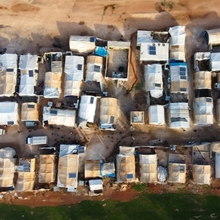
Solid Waste Management in humanitarian contexts is crucial for ensuring public health and minimising environmental impacts. We provide resources and technical support for humanitarian aid projects for the management of solid waste. This includes technical guidelines and factsheets for the design of management and technology solutions, and methods for analysis and monitoring.
Black Soldier Fly Biowaste Processing
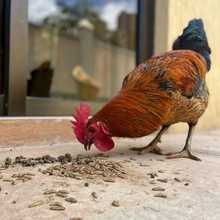
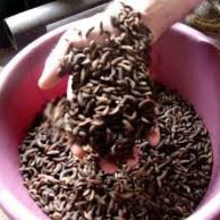
Organic waste sources make an excellent feed substrate for the larvae of the black soldier fly (BSF), Hermetia illucens . The larvae are able to reduce the waste material by 50-80% and generate 20% larval biomass from waste within 14 days. The grown larvae make an excellent protein source for animal feed and revenues lower the overall waste treatment cost and provide an opportunity for income generation and improved livelihoods in the waste sector.
SWIFT-Sustainable Waste-based Insect Farming Technologies in Uganda and Malawi
SWIFT is an innovative and transdisciplinary R&D project funded by the Swiss National Science Foundation and the Swiss Agency for Development and Cooperation (SDC) under the Solution Oriented Research for Development Programme (SOR4D)
Amplifying Waste Recovery Solutions – Towards a Circular Society (AWARE)
AWARE is an applied research project that develops and validates methods focusing on plastics management and on strengthening the circular economy. Implemented in the Phu Yen province in Vietnam, the project will contribute towards better understanding of
1) assessment of plastic sinks and pollution for a city or watershed
2) socio-psychological measures to enhance participation and behaviour change towards more circular waste management practices
3) appropriate technologies for recycling of mixed plastic fractions.
Cost assessment and modelling of waste collection services
Financial sustainability of waste management is a key element for achieving universal, high-quality and sustainable service. In collaboration with Helvetas Bolivia, a cost assessment and modelling tool focusing on collection services in cities was developed.
Zero Waste Schools and Communities
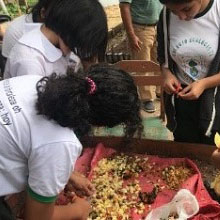
Zero Waste at Schools (ZW@S) is an applied research project that develops and validates methods to foster integrated strategies and technologies leading to a “zero-waste” approach at school level as a model unit, engaging teachers and our future generation – the students – by connecting them to researchers of sustainable development.
SDG monitoring of solid waste collected and managed in controlled facilities
In collaboration with UN-Habitat and Wasteaware, this applied research project develops a systematic approach to measuring the SDG indicator 11.6.1 “Proportion of municipal solid waste collected and managed in controlled facilities”
Waste Flow Diagram (WFD)
In collaboration with GIZ, the University of Leeds and Wasteaware, this research project develops and validates a rapid and observation-based assessment to quantify and map plastic leakage from solid waste management systems.
Carbonization of Urban Biowaste
Carbonization is a process during which biomass is heated in the absence of oxygen; the primary goal is to produce char. This char can be further processed into briquettes and used as household cooking fuel. The objective of our research on slow pyrolysis and hydrothermal carbonization (HTC) is to explore the potential of using organic waste to generate a char product that has a value in the local market as a replacement for wood-based charcoal and thus, could be a financial driver of organic waste processing businesses.
SOWATT - Selecting an Organic Waste Treatment Technology
New approaches for the management of biowaste with respective treatment technologies are becoming more popular (e.g. composting, anaerobic digestion, black soldier fly processing, vermicomposting, etc.). This project provides decision support to help structure and assist in the process of comparing and selecting the most promising biowaste treatment options for a given case study.
Anaerobic digestion of organic solid waste
Besides composting or direct animal feeding, anaerobic digestion (biomethanation) of organic solid waste is considered a promising treatment option for this particular waste fraction. Anaerobic digestion is a natural biological process that converts biomass into energy (biogas) in the absence of oxygen. Biogas – a mixture of CO2 and methane (CH4) – can be used as a renewable energy source for cooking, lighting or to generate electricity, thereby replacing other fuel sources. Biogas digestate is a nutrient-rich fertiliser that can be applied in gardens or agriculture.
Decentralised composting
The existing physical plan and socio-economical situation of many cities in low and middle-income countries strongly favours the implementation of decentralised systems. Decentralised composting systems are less technology dependent. Low cost, locally available materials and simple technology can be used. Our research on composting includes co-composting of organic waste and faecal sludge as well as market demand for compost from organic waste.