Projects
Research Projects of the Environmental Isotopes Group
Overview
Noble gases (He, Ne, Ar, Kr, Xe, Rn), tritium (3H), chloroflurocarbons (CFCs), and sulfur hexafluoride (SF6) are widely used as conservative environmental tracers in lakes, oceans and groundwater. Use of these tracers allows us to study past environmental conditons, the dynamics of surface and subsurface water bodies, and the processes affecting the transport and biogeochemistry of solutes in aquatic environments. Some examples of the fields of application of our tracer methods are:
- Studying mixing processes in lakes, especially deep-water renewal
- Systems analysis by inverse modelling of tracer data
- Investigation of gas-exchange and bubble-mediated transport in the water column
- Influence of climate change on lakes and groundwaters
- Quantification of gas fluxes from the Earth mantle and crust into water bodies
- Dating of groundwater on time scales from minutes (220Rn), days (222Rn), years and decades (3H/3He, CFCs, SF6) to millennia and millions of years (radiogenic 4He)
- Reconstruction of temperature and other environmental conditions prevailing during recharge of (paleo) groundwaters
- Quantification of natural and artificial groundwater recharge, especially in arid regions
- Interactions of groundwater and surface water (rivers, lakes and oceans)
- Transport and biogeochemical transformations in groundwater
- Gas exchange in the unsaturated zone and at the groundwater table (excess air formation)
- Studiying groundwater circulation and pollutant transport, e.g. in organic-contaminated aquifers
These methods have a long record of applications in lakes, oceans and groundwater. Recently, the Environmental Isotopes group has extended these applications to new environments and archives, such as the pore water of lake and ocean sediments and fluid includsions of stalagmites.
Further detailed information:
Ongoing Projects
Vertical mixing and water renewal in lakes
Yama Tomonaga, Matthias Brennwald, Rolf Kipfer
The
environmental isotopes group has had many years of experience in the
3H/3He and SF6 methods to study water exchange and mixing in lakes
around the world (e.g. Lake Baikal, the Caspian Sea, Lake Issyk-Kul).
In
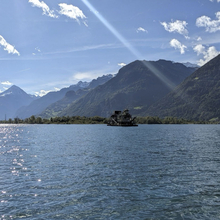
Lake Van (a closed-basin 450 m deep soda lake in eastern Anatolia) the
deep-water residence time in 1989/1990 was determined to be less than 5
years (Kipfer et al. 1994),
indicating rapid mixing and explaining the presence of oxygen in the
deep water. To assess the effects of climate change on the lake, we
re-evaluated the lake dynamics in 2004/2005. We found a strong increase
in the deep-water residence time to about 20 years. As a result of the
deep-water renewal rate, the deep water became anoxic. In the future,
we will monitor the lake further in order to assess the effects of
climate warming on mixing in the lake (e.g. the influence of increased
increased melt-water input from the glaciers surrounding the lake).
Noble gases in pore water of lacustrine and oceanic sediments
Yama Tomonaga, Matthias Brennwald, Rolf Kipfer
During
sediment accumulation in lakes and oceans, water is incorporated into
the pore space of the sediment. The sediment pore water can therefore
be expected to provide a natural archive of past noble gas
concentrations in the overlying water body, from which previously
prevailing climatic and environmental conditions can be reconstructed.
In addition, the noble gases in the pore water can be usefully employed
as tracers to study the transport processes of water and solutes in the
sediment.
In the past few years we have developed an improved
method to extract dissolved (noble) gases from sediment pore water by
centrifuging the sediment samples. The new centrifugation method avoids
difficulties related to uncontrolled He release form the sediment
grains or incomplete extraction from the pore water.
In Lake Van
(see above), the He concentration profiles determined in the sediment
column at different sampling stations indicate that He emanation is
highly heterogeneous in a spatial domain defined by the lake basin.
Estimates of the relevant parameters for the solute transport in the
pore space showed that effective diffusivities are strongly attenuated.
He fluxes are therefore about one order of magnitude lower than the
approximated continental He flux. As the current data are limited to
the upper 2 m of the sediment column, our understanding of He release
from solid earth is confined to the horizontal dimension.
In
2010 an ICDP drilling project will start on Lake Van with the goal of
drilling several 400 m long sediment cores. Using the He data collected
from these cores we aim to get more insight into mechanisms by which He
is transported upwards from deeper strata. In addition, the heavier
noble gases in the pore water of these deep-drilling cores are expected
to yield a proxy record that can be used to reconstruct quantitatively
the palaeoenvorinmental conditions during several glacial/interglacial
cycles.
The limitation of the diffusive transport observed in
the sediments of Lake Van (see above) was also found in a sediment core
form the Stockholm Archipelago. 137Cs dating and noble gas data suggest
that a noble gas excess generated by a past sediment slump was
quantitatively trapped below 40 cm sediment depth during the last 100
years. The sharp concentration change observed at about 40 cm depth
indicates that diffusion is most likely completely suppressed. We plan
a second sampling campaign in the Stockholm Archipelago in order to
better understand the mechanisms leading to the observed strong
attenuation of diffusivities.
In the vicinity of the Hikurangi
subduction zone (off the coast of New Zealand), the noble gas
abundances in the pore water indicate that near the subduction zone He
emanates from a depleted mantle source, while a few kilometers away the
He emanating is mostly of crustal origin.
Noble gas concentrations in fluid inclusions of stalagmites
Yvonne Scheidegger, Matthias Brennwald, Rolf Kipfer
The
concentrations of dissolved atmospheric noble gases in water reflect
the temperature and the salinity of the water as well as the
atmospheric pressure at the time of gas exchange, because the
solubility of noble gases in water is a well-defined function of these
physical variables. We aim to apply this principle to reconstruct
palaeoenvironmental conditions from noble-gas concentrations in fluid
inclusions in stalagmites. Stalagmites are widely used as climate
archives, but a proxy that would allow the direct and quantitative
determination of the cave temperature is still lacking. Noble gases
dissolved in water inclusions can provide this information, as they are
a direct proxy for the temperature prevailing during air-water
partitioning (Scheidegger et al. 2008).
With
the goal to determine past cave temperatures, we developed a new method
to determine noble gas concentrations in stalagmites bearing 0.1% of
water in fluid inclusions. The method includes a manometrical
determination of the extracted water mass (1-3 mg, precision 1.5%) and
precise mass-spectrometric measurements of noble gas amounts. Also, we
developed suitable extraction methods to separate noble gases liberated
from water inclusions and those liberated by air inclusions, which are
also abundant in stalagmites. Such a separation constitutes the basis
for the determination of noble gas temperatures from the measured noble
gas concentrations.
Our results indicate that the determination
of cave temperatures using the currently available least-squares
fitting models works only for exceptional samples. For such samples we
determined cave temperatures that agree well with the present cave
temperature. However, most samples are enriched in He and Ne relative
to a simple mixture of noble gases from air and air-saturated water.
The most plausible explanation for the He and Ne excess is the presence
of an a lattice-bound noble gas component, that is incorporated into
the calcite crystal lattice during the growth of the stalagmite.
In
future we plan to apply our analytical protocol to other solid samples
which contain water in fluid inclusions and where noble gas
concentrations are of interest. For instance shells and corals can
potentially be used to determine the water temperature of lakes and
oceans. In addition, the analysis of pore waters from consolidated
sediments may allow us to study the gas-transport processes in these
sediments.
Radon and thoron in groundwater
Stephan Huxol, Edi Hoehn, Rolf Kipfer
The
noble gas radon has two major radioactive isotopes: 222Rn, with a
half-life of 3.6 d; and 220Rn, with a half-life of 55.6 s (thoron).
These nuclides are natural decay products from the 238U and 232Th decay
series, respectively. After decay, radon emanates (by means of recoil
and diffusion processes) from permeable rocks to voids (pores,
fractures. Both radon isotopes are found in the air above the soil
surface and in soil gas. Furthermore, 222Rn is known to occur in
groundwater. Under certain hydraulic conditions, this radioisotope can
be used to estimate the age of very young groundwater, i.e., up to 15
days (Hoehn and von Gunten, 1989).
We
also expect to find thoron in natural waters. If so, the simultaneous
determination of radon and thoron in groundwater would improve the
radon age dating method. 222Rn/220Rn isotope ratios in groundwater
samples would allow us to assess possible mixing processes along a flow
path without having to resort to other geochemical mixing tracers.
Preliminary measurements confirm the feasibility of sampling thoron in
aquatic systems, in spite of its very short half-life. Measurable
thoron concentrations have been found in the presence of iron and
manganese precipitates (e.g. anoxic spring water in Rothenbrunnen,
Switzerland). Here we expect the presence of co-precipitated radium,
i.e. the thoron precursor radionuclides in the 232Th decay series
(228Ra, 224Ra).
Dynamics of oxygen consumption in groundwater
Lars Mächler, Matthias Brennwald, Rolf Kipfer
A
knowledge of oxygen dynamics in groundwater is fundamental to
understanding biogeochemical processes there. However oxygen dynamics
can only be studied if the underlying physical gas exchange processes
are understood in a mechanistic and quantitative way.
In recent years, we conducted thorough studies of gas-exchange processes in porous media (see below).
The resulting conceptual and quantitative models describe gas/water
partitioning in groundwater and yield mechanistic insights into the
formation of excess air, a commonly observed super saturation of
dissolved atmospheric gases (e.g. oxygen or noble gases) in
groundwaters. The initial oxygen concentrations typically exceed the
atmospheric equilibrium concentration considerably (>20%).
Quantification of excess air is therefore crucial to study the
biogeochemical turnover of oxygen in natural groundwaters.
The
solubility and diffusion coefficients of O2 in water are similar to
those of Ar. However, Ar concentrations in the groundwater is
unaffected by the biogeochemical processes of oxygen turnover. Hence,
the concentration of dissolved Ar is a direct proxy that allows
quantification of the initial oxygen concentration at recharge. The
difference of the initial oxygen concentration with the concentration
observed in a groundwater sample corresponds to the oxygen consumed
since the groundwater was recharged.
We developed a
mass-spectrometric system for in-situ analysis of O2 and Ar
concentrations in groundwater in the field. The gas probe consists of a
membrane inlet that is immersed in the groundwater and separates the
water from the gas phase to be analysed. The probe is connected to a
quadrupole mass spectrometer via a tube several meters long to allow
in-situ analyses in groundwater wells. A continous flow of water vapour
transports the gases to be analysed (Ar, O2, N2, and possibly also CH4
and CO2) from the probe to the mass spectrometer. The short response
time of the system (seconds to minutes) allows continuous analysis of
the dissolved gas concentrations in groundwaters. This enables us to
study the O2 dynamics, e.g. during bank infiltration of groundwater in
response to the hydraulic conditions of the infiltrating river.
The origin of arsenic in groundwater
Groundwater
contamination by geogenic arsenic is a widespread problem, e.g. in
South Asia and Southeast Asia. One of the most severely affected
countries is Bangladesh. Groundwater dating by environmental tracers
(noble gases, tritium) provides important information on groundwater
dynamics and therefore contributes to the understanding of arsenic
mobilisation. One important and controversial question concerns the
possibility that As contamination might be related to the extraction of
groundwater for irrigation purposes. If As were mobilised by the inflow
of re-infiltrating irrigation water rich in labile organic carbon,
As-contaminated groundwater would have been recharged after the
introduction of groundwater irrigation 20-40 years ago. However, our
environmental tracer studies call into question the validity of this
hypothesis, because we found As contaminated water which is more than
40 years (Klump et al. 2006).
In addition to the project in Bangladesh, we are also investigating
groundwater contaminated by geogenic arsenic in the Hanoi area of the
Red River Delta in Vietnam using environmental tracer methods. The
joint project is carried out in collaboration with the Contaminant
Hydrology Group at Eawag.
The influence of climatic forcing and climate change on lakes and rivers
David Livingstone
Regardless
of its ultimate cause, the existence of large-scale climate change is
now considered by most responsible environmental scientists to be
established beyond reasonable doubt. This raises important questions
with regard to the potential impact of such climate change on our water
resources. The major effect of climate forcing on almost all chemical
and biological variables in lakes is indirect, being mediated in most
cases by the lake surface water temperature, by the structure of the
temperature profile, and, in high-latitude and high-altitude lakes, by
the timing of ice-on (freeze-up) and ice-off (break-up). In rivers too,
water temperature plays a major role in transferring the impact of
climate change from the physical to the biological level. The primary
link between climatic forcing and almost all lake and river variables
is therefore physical, implying that an understanding of the physical
response of water bodies to climate change is a prerequisite to
understanding their chemical and biological responses.
Research conducted by the Environmental Isotopes group into the impact of climatic forcing and climate change on lakes and rivers includes:
- The influence of long-term climate change on physical lake variables. Understanding the physical response of water bodies to large-scale climate forcing is of paramount importance. The Environmental Isotopes group conducts research into the influence of large-scale climate influence on lake water temperatures and ice phenology (the timing and duration of ice cover) with a view to assessing the potential effect of climate change on these important variables in the future (e.g., Hari et al. 2006; Jankowski et al. 2006[Limnol.Oceanogr.]; Livingstone 2003, 2008; Peeters et al. 2002[Limnol.Oceanogr.]).
- Regional coherence of limnological variables. Although lakes have traditionally been viewed as isolated points in the landscape, it is becoming increasingly clear that they can also be considered as local manifestations of a spatial continuum, exhibiting a common response to large-scale climate. The Environmental Isotopes group conducts research aimed at determining the degree to which variables such as lake surface water temperature and the timing and duration of ice cover respond coherently to climatic forcing on regional, synoptic, hemispheric and global scales (e.g., Blenckner et al. 2007; Livingstone 2000[Verh.Int.Verein.Limnol.]; Livingstone and Dokulil 2001[Limnol.Oceanogr.]; Livingstone and Kernan 2009; Livingstone and Padisak 2007[Limnol.Oceanogr.]; Sporka et al. 2006).
- Lake and river ice phenology. The Environmental Isotopes group investigates the extent to which historical lake ice cover observations reflect interannual climatic variability with a view to using such historical ice as an indicator of climate change (e.g., Livingstone 1997, 1999[Limnol.Oceanogr.], 2000; Livingstone and Adrian 2009[Limnol.Oceanogr.]; Magnuson et al. 2000; Weyhenmeyer et al. 2004).
- Influence of the North Atlantic Oscillation on physical lake variables. The winter climate in Europe is strongly related to the climatic phenomenon known as the North Atlantic Oscillation (NAO), a regional manifestation of the Arctic Oscillation or Northern Annular Mode. Research carried out by the Environmental Isotopes group investigates extent to which the winter NAO determine the behaviour of lakes in Europe and other parts of the globe (e.g., Livingstone 1999[Limnol.Oceanogr.], 2000; Livingstone and Dokulil 2001[Limnol.Oceanogr.]; Straile et al. 2003).
- Studies of remote high-altitude lakes. Remote high-altitude lakes are especially important in climate-change research because they respond particularly sensitively to climatic forcing. Studies of such lakes are necessary to improve our understanding of the mechanisms of this response (e.g., Blass et al. 2008; Catalan et al. 2002; Livingstone 1997, 2005; Livingstone et al. 1999, 2005[Limnol.Oceanogr.], 2005[Verh.Int.Verein.Limnol.]; Lotter et al. 2002; Ohlendorf et al. 2000).
With
respect to groundwater, the current state of empirical knowledge is
much less satisfactory than in the case of surface waters. As in the
case of lakes and rivers, empirical, data-based research on the impacts
of climate change on groundwater on decadal time-scales is essential,
but such research has been comparatively scarce because of the paucity
of available decadal-scale groundwater data. Specifically for
Switzerland, on a practical level, the issue of the influence of
climate change on groundwater quality is at least as important as the
issue of its influence on groundwater quantity. The Environmental
Isotopes group is now initiating research into the influence of
climatic forcing and climate change on groundwaters in Switzerland. A
joint working group has been established with other institutions to
conduct a survey of existing long-term Swiss groundwater monitoring
data, and preliminary pilot studies have been conducted based on some
of these data.
Comleted Projects
Vertical mixing in lakes
For 30 to 40 years, the deep northern
basin of Lake Lugano (Ticino, Switzerland) was meromictic, with
seasonal mixing and deep-water renewal being strongly inhibited by
permanent stratification due to strong eutrophication. This lake has
been studied using noble gases, SF6 and CFCs since 1990. These studies
have revealed a gradual increase in the deep-water residence time and
accumulation of terrigenic He in the stagnant water layers
(Aeschbach-Hertig et al.
2007 and Holzner et al.
2009). This trend ended in the winter of 2004/2005, when the entire
water body underwent mixing, leading to a strong decrease in the
deep-water residence time and dramatic changes in He and SF6
concentration profiles. An even more pronounced mixing event took place
during the winter of 2005/2006; this can be seen as another big step
towards "healthier" conditions in Lake Lugano.
Noble gases in pore water of lacustrine and oceanic sediments
To
enable research to be conducted into the geochemistry of noble gases in
sediment pore water, we developed a physical model for the transport of
solutes in the sediment pore space
(Strassmann et al.
2005), and a method for the determination of noble gas concentrations
in sediment pore water
(Brennwald et
al. 2003). This method allowed noble gas concentrations in sediment
pore water to be analysed reliably for the first time. We applied these
new methods to several case studies in lakes:
In Lake
Issykul (a closed-basin saline lake in Kyrgyzstan), the noble gas
concentration profiles in the pore water indicate that during the
mid-Holocene the salinity was more than twice its present value, and
that the lake level was several hundred metres lower than it is at
present (Brennwald et al.
2004).
In Soppensee (a small hypertrophic lake in Switzerland),
gas bubbles are released from the sediment due to supersaturation of
methane in the pore water ("ebullition"). We observed that due to
degassing into these gas bubbles, the pore water becomes depleted in
noble gases. This allowed us (i) to estimate the amount of methane
released by ebullition and (ii) to reconstruct the rate of ebullition
throughout the Holocene
(Brennwald et al.
2005).
Gas bubbles in the Black Sea
Noble gases can be
employed as highly sensitive tracers for the transport and gas exchange
associated with the rising of bubbles through a water body. Within the
framework of the international research project CRIMEA, we examined and
quantified the methane release at the sea floor (gas seeps) and its
contribution to the atmospheric methane emissions in the Black Sea. The
noble-gas signatures of the open water body and the sediment pore water
allowed us to study the bubble dynamics and to distinguish between
different geochemical sources of methane
(Holzner et al.
2006).
These natural gas seep systems were compared to
artificial aeration systems in Swiss lakes; e.g., Lake Hallwil. These
technical plants are examined as model systems in comparison with the
natural gas seeps in the Black Sea (Graser 2006).
Groundwater dating and paleotemperature reconstruction
Residence
time is a very important parameter in many groundwater studies. Noble
gases and tritium as well as CFCs and SF6 are used as environmental
tracers to determine the residence time of young groundwater (Klump et
al. 2006, Lehmann et al.
2003, Holocher et
al. 2001, Mattle
et al. 2001, Beyerle et al.
1998,
1999, Aeschbach-Hertig
et al. 1998, Hoehn
2007).
Noble gases can also be used to reconstruct past
environmental conditions that prevailed during groundwater recharge.
They have been used successfully to reconstruct palaeoclimate
conditions (e.g. palaetemperature) in a number of studies. In
combination with groundwater dating by 14C or radiogenic 4He, these
methods allow aquifers to be exploited as paleoclimate archives. For
example, noble gas data from the "Continental Terminal Aquifer" system
in the Sahel (Niger) indicate cooler and wetter climate during "Green
Sahara" events (6 ka to 40 ka BP), when the soil was covered by plants
(Beyerle et al. 2003).
Further publications by members of our group on noble gases and
plaeoclimate reconstruction include Aeschbach-Hertig et al. 1999,
2000,
2002, Beyerle et al. 1998, and Peeters et al.
2002.
Excess air formation
Gaseous atmospheric tracers
are transported from the atmosphere into the groundwater by gas
exchange between seepage water and soil air. The dissolution of
entrapped air bubbles in the quasi-saturated zone yields
supersaturations of atmospheric gases relative to the atmospheric
solubility equilibrium (Excess Air). In order to interpret tracer
concentrations in groundwater reliably, we developed a sound physical
understanding of the processes controlling the excess air formation by
combining theoretical models and experiments carried out in the
laboratory and in the field (e.g. Aeschbach et al. 2000,
Holocher et al. 2001, 2002, 2003, Peeters et al.
2002 and Klump et al. 2007, 2008).
The dynamics and fate of organic pollutants in groundwater
Environmental
tracers (3H/3He, SF6, CFCs) were employed to determine the dynamics and
fate of organic pollutants in groundwater. In combination with
compound-specific stable-isotope methods, these tracer studies allowed
the degradation rates of organic pollutant in natural systems to be
determined, thus providing insight into the degradation processes
(Amaral 2009, Aeppli 2009). Within
the framework of this research project, we increased the sensitivity of
the available compound-specific isotope analyses in order to extend
compoound-specific isotope analysis to groundwater systems with a low
abundance of organic pollutants. The joint project was carried out in
collaboration with the
Contaminant
Hydrology Group at Eawag.
The influence of climatic forcing and climate change on lakes and rivers
Selected
international projects on the influence of climatic forcing and climate
change on lakes and rivers with major involvement of the Environmental
Isotopes group:
- Euro-limpacs (Integrated project to evaluate impacts of global change on European freshwater ecosystems). Euro-limpacs was concerned with the science required to understand and manage the ecological consequences of climate change for freshwater ecosystems (lakes, rivers and wetlands). It was an unusually large project involving 37 main contractors from 19 countries. The objectives of Euro-limpacs were: (i) to improve our understanding of how global change (especially climate change, interacting with other drivers such as land-use change, nutrient loading, acid deposition and toxic pollution) is changing and will change the structure and functioning of European freshwater ecosystems; (ii) to encapsulate this understanding in the form of testable predictive models; (iii) to identify key taxa, structures or processes (indicators of aquatic ecosystem health) that clearly indicate impending or realised global change through their loss, occurrence or behaviour; (iv) to identify better approaches for the renaturalisation of ecosystems and habitats within the context of global change that will lead to the successful fulfilment of the EU Water Framework Directive in achieving good ecological status in freshwater habitats; (v) to provide guidance, in the form of usable models, decision support systems and other appropriate tools to respond to the interactions between climate change and other changes, in the best interests of conservation of the goods and services provided to the community by its freshwater systems; and (vi) to communicate this information and understanding to users, stakeholders and the wider public.
- CLIME (Climate and Lake IMpacts in Europe) Limnologists believe that a continuation of climate change at its present rate will have a major effect on the dynamics of lakes throughout Europe. Possible problems that may result include increases in lake productivity, increases in water colour and increases in the frequency and severity of algal blooms. The aim of the CLIME project was to assess the direct and indirect impacts of regional climate change on the dynamics of lakes in Europe. This assessment rested on the one hand on the development of a suite of models to simulate the response of lakes to predicted climate change, and on the other hand on the analysis of historical patterns of change in a network of lakes distributed throughout three regions of Europe: a northern region (Estonia, Finland, Sweden); a western region (Ireland, UK); and a central region (Austria, Germany, Switzerland).
- EMERGE (European Mountain lake Ecosystems: Regionalisation, diaGnostics and socio-economic Evaluation). The aim of the EMERGE project was to assess the status of remote mountain lake ecosystems throughout Europe, to provide findings in ecological, environmental and socio-economic terms, and to provide decision-makers with an overall understanding of remote mountain lakes so that appropriate policy and management decisions can be taken to ensure the future sustainability of such ecosystems.
- REFLECT (Response of European Freshwater Lakes to Environmental and ClimaTic change). Interannual and interdecadal variations in the physics and biology of lakes are driven to a large extent by regional variations in climate rather than local variations in weather. The REFLECT project focused on studying the large-scale climatic factors influencing the long-term dynamics of lakes, with particular emphasis on the North Atlantic Oscillation (NAO). The lakes studied were situated in northern Europe (Finland, Sweden), western Europe (Ireland, UK) and central Europe (Austria, Germany, Switzerland). The project included historical studies of the long-term changes recorded in these lakes during the last half of the 20th century, and modelling studies designed to assess the sensitivity of the lakes to future changes in the weather. The NAO, which is the most important factor influencing the winter weather over much of Europe, was found to have a strong influence on the behaviour of lakes in all three regions in winter and early spring.
- MOLAR (Measuring and Modelling the Dynamic Response of Remote Mountain Lake Ecosystems to Environmental Change: A Programme of MOuntain LAke Research). The aim of MOLAR was to measure and model the following in remote mountain lake ecosystems: (i) response to acid deposition; (ii) fluxes and pathways of pollutants and their uptake by fish; and (iii) response to climate variability. The third aim involved linking sediment archives to instrumental climate data measured over the last 200 years. The Eawag lake site in MOLAR was Hagelseewli, located at 2339 m a.s.l. in the Bernese Oberland. During MOLAR, numerous chemical, biological and sedimentological samples were taken at Hagelseewli; simultaneously, lake water temperatures and meteorological variables were measured at high temporal resolution with a thermistor chain and an automatic weather station.