Color
Conversion of Organic Refuse by Saprophages (CORS)

Conversion of Organic Refuse by Saprophages (CORS)


Saprophages are all organisms feeding of dead or decaying matter. Typical examples are earthworms, millipedes or insect larvae.

Conversion of organic refuse by saprophages is an innovative technique to treat organic waste in low and middle-income countries, with degraded organic matter and saprophage organisms themselves as treatment products.

Black Soldier Flies (Hermetia illucens) as “ecological engineers” in low- and middle-income countries

Introduction

In developing countries, typically one to two thirds of the solid waste generated is not collected. Organic waste contributes up to 50% of this waste. Often mixed with human and animal excreta, organic waste is dumped arbitrarily in streets and drains. Hence, it contributes to flooding, creates breeding places for disease transmitting insects and rodents, and causes olfactory nuisance. Treatment of organic waste by the larvae of the black soldier fly, Hermetia illucens L., could make collection and management of organic waste economically attractive and could potentially contribute to improved public health in low- and middle-income countries.

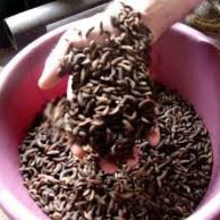
During its larval stage, the non-pest H. illucens reduces organic waste at a high proportion and its presence repels house flies from laying eggs. Prepupae self harvest as they migrate to find pupation sites. They consist of 42% protein and 35% fat which makes them a valuable source of feedstuff.

  Poster CORS
     
Activities
   
This study has the objective to establish a sustainable “technology” of efficient waste degradation by H. illucens.
  • In laboratory experiments, the waste degradation process will be analysed in detail.
  • Since pathogens present in the organic soil additives in the form of compost may pose a health risk, their reduction by digestion shall be investigated.
  • To ensure a safe use of the harvested prepupae as animal feedstuff, the accumulation of toxic substances (i.e. pesticides, heavy metals) within the larvae will be analysed.
  • In Costa Rica, a pilot plant will be implemented to test the applicability of this technology in practice, handling 90 kg of organic material each day.
  bsf_fish.jpg


See what black soldier fly larvae can do with

- Two rainbow trouts
- A hamburger


Geographical Focus

Laboratory experiments will be performed at Eawag, Switzerland.
The pilot plant will be set up in Cartago, Costa Rica

Donors and Partners

The study will be carried out within the framework of a PhD thesis, sponsored by the Velux Foundation and in close collaboration with the Instituto Tecnológico de Costa Rica.

For more information please contact Stefan Diener