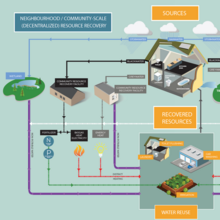
Water Hub at NEST – decentralised resource-oriented sanitation
The Water Hub is part of the NEST building, a living laboratory by Empa and Eawag. This modular building consists of replaceable units, which provide functioning and used apartments, offices, meeting rooms and a fitness and wellness unit. NEST is in constant evolution. Innovative and sustainable building solutions are developed, built, tested and displayed under real conditions. This Living Lab approach helps to bridge the gap between research and industry and thereby accelerates the market entry of innovative technologies.
In the basement of NEST, Eawag researchers run the Water Hub. Wastewater from NEST is collected here to be handled as a resource rather than a waste: we treat wastewater to recover nutrients, clean water, and energy. This allows to reduce pressure on the environment and its resources. Our approach is decentralised: we separate wastewater streams at the source and treat them within the building, which increases efficiency of treatment and recovery. Decentralised treatment can be especially useful where sewer networks and treatment plants cannot be built or to reduce pressure on these infrastructures, particularly in areas with rapid urban growth. Decentralisation also allows for a systemic approach when designing sanitation solutions for different contexts, making the most of the resources made locally available by treating wastewater.
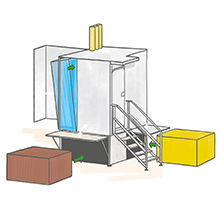
In NEST special toilets separate undiluted urine from flushwater, faeces and toilet paper; which together constitute blackwater. Other wastewater streams are kept apart using separate piping networks. These networks transport to the water hub the so called light greywater, coming from washing machines and bathroom drains; and heavy greywater, coming from the kitchens. Rainwater is also collected, stored and reused to flush the toilets in NEST.
The Water Hub is also a platform for researchers and partners from industry and practice to collaborate. Technologies enabling decentralised resource-oriented sanitation can be installed in units within NEST or tested in the Water Hub. The Water Hub is open for collaboration with industry and makes seed funding available to initiate small projects to assess the potential of novel concepts and technologies.
Furthermore, the Water Hub is interested in exchange with actors of the sanitation, construction, energy and agriculture sectors, to discuss the influence of decentralised resource-oriented sanitation on their domains and the integration in their projects.
The Water Hub’s focus comprises the following ongoing and concluded projects:
NoMix Toilets
Thanks to NoMix toilets it is possible to separate urine and faeces to treat them separately. Urine is produced in small volumes and relatively free of pathogens. Humans excrete most of the nutrients, antibiotics and micropollutants through urine. Faeces, discharged with flush water, consist mostly of organics and have a much higher pathogen content. It is advantageous to treat the two streams separately.
Contact
For 20 years, Eawag has tested under real-life conditions different prototypes of NoMix toilets, with separation mechanisms ranging from mechanical to sensor-based. These tests highlighted the need for a more robust separation mechanism and a user-friendlier toilet.
The Austrian designer Harald Gründl from EOOS next has developed a novel NoMix toilet with an innovative separation mechanism, invisible to the user and functioning without any mechanical part or sensor. The toilet uses surface tension and the different speed at which urine and flush water flow down the toilet bowl to separate the two streams. The geometry was optimized in collaboration with Laufen and ETH Zurich. These novel toilets are now installed and tested in NEST.
This system is more robust and efficient than previous solutions and promises to revolutionise urine-diversion
Humans excrete the largest proportion of nutrients with urine. In the Water Hub, the nutrients from urine are recovered in the fertilizer "Aurin" using the VUNA process : after storage, volatilization of ammonia from urine is prevented with the help of nitrifying bacteria. Next, pharmaceuticals are removed in an activated carbon filter. Finally, the treated urine is concentrated and pathogens are killed during distillation.
Domestic wastewater consists of greywater and waste streams from the toilet. Instead of mixing these streams and discharging them to the sewer, there are opportunities to treat and reuse greywater within the building for applications such as toilet flushing and irrigation, to showering and handwashing. The intended reuse dictates the required quality of the treated greywater . It also dictates how robust, reliable and closely monitored the treatment will have to be.
In the Water Hub, Eawag researchers compare the performance of distinct greywater treatment systems. This allows to design flexible treatment systems which produce different water qualities depending on the intended end use. It also allows our researchers to adapt the system to the research question they want to answer. Current foci are on:
Advanced treatment using a sequence of membrane bioreactor and biologically activated carbon followed by disinfection (UV or chlorine) and potentially nanofiltration (for advanced reuse)
Predicting microbial safety using simple sensors
During the testing of new treatment processes the treated water is discharged into the sewer. But the ultimate goal is to reuse the treated water within the building.
Graphic: Peter Penicka, Eawag
Microbial Greywater Quality
Enteric pathogens
Greywater too can contain significant concentrations of enteric pathogens. It must therefore be treated to reduce human health risks to an acceptable level. Eawag researchers are currently validating the capability of individual and combined treatment processes to reduce pathogens under a range of operating conditions. This treatment validation procedure will guide the design of whole treatment process trains to ensure that greywater can be safely reused for different applications.
Building-scale reuse of greywater will require treatment, storage, and re-distribution. During these steps, water must remain safe for re-use from the perspectives of both human health and system performance. Within the Water Hub, Eawag researchers are monitoring and evaluating the impact of greywater treatment on microbial and chemical quality during subsequent storage and distribution. In particular, we want to:
monitor physicochemical characteristics of treated water during storage and treatment,
monitor microbiological growth and/or stability,
identify methods for monitoring, predicting, and preventing microbial water degradation,
investigate factors influencing growth and community-shift potential
Blackwater consists of faeces, urine, toilet paper and flushwater. The high nutrient and energy content of faeces offers a great potential for resource recovery. Additionally, flush water could be treated and reused. In order to safely recover nutrients, energy and water from blackwater, solid-liquid separation (dewatering) is required.
Extensive research exists on dewatering of sludge from municipal wastewater treatment. However, scaling existing technologies to non-sewered systems has proven difficult, due to the high variability in blackwater characteristics.
In the Water Hub, blackwater is used for both fundamental research and for practical technology development:
Current research focuses on gaining understanding of dewatering behaviour to develop better monitoring and control during treatment.
Blackwater collected in the Water Hub is used to test and develop various dewatering technologies, which are suitable for treatment and resource recovery in NEST and at a global scale.
Possible resource recovery from the dewatered solid fraction of blackwater includes energy, nutrients and organic matter, biomass, and water.
Systems providing hot water for domestic use consume large amounts of energy. Upcoming technologies show significant potential to optimize energy consumption. Several of these technologies are being tested in NEST: the DFAB House unit displays showers, which recycle heat contained in greywater. Additionally, an innovative water distribution system reduces energy and water losses by emptying the drinking water pipes when no water is needed.
Contact
While these technologies are promising, their integration into complex domestic hot water systems must be investigated carefully, as interactions with other parts of the system may limit their energetic and economic potential due to intricate relationships between energy and water consumption called the water-energy nexus.
Eawag researchers have developed a model to better integrate combinations of technologies in a domestic hot water system. They have applied the model at multiple scales to investigate the influence of these technologies on the entire urban water cycle: from the households, through the sewer network, down to the wastewater treatment plant. As part of this project, a study showed for instance that recovering – and reusing – heat within a building is often a better option rather than recovering it in the sewer network. This is due to lower impacts on biological processes in the wastewater treatment plant.
array(27 items)0 => Snowflake\Publications\Domain\Model\Publicationprototypepersistent entity (uid=33039, pid=124)originalId => protected33039 (integer)
authors => protected'Binz, C.; Sedlak, D.; O’Callaghan, P.; Truffer, B.; Ne si, M.; Morgenroth, E.; Lesch, D.; Miörner, J.; Maurer, M.; Narayan, A.; Schelbert, V.; Lüthi, C.; Aalbu,  ;S.; Wellauer, S.' (250 chars)
title => protected'Mainstreaming decentralized urban water management solutions for sustainable cities' (83 chars)
journal => protected'' (0 chars)
year => protected2024 (integer)
volume => protected0 (integer)
issue => protected'' (0 chars)
startpage => protected'27 p' (9 chars)
otherpage => protected'' (0 chars)
categories => protected'' (0 chars)
description => protected'Climate change, rapid urbanization and other grand challenges increasingly f orce cities to rethink their urban (water) infrastructure. In particular, de centralized urban water management solutions, which can recover valuable res ources close to the source are increasingly applied to remediate water scarc ity, sanitation or environmental pollution challenges. Yet, although interes ting demonstration projects with decentralized solutions (from here on label ed ‘decentralized UWM solutions’) are underway in several world regions, actors developing and implementing this transformative innovation are not e ffectively coordinating their efforts and sharing the latest knowledge. Whil e effective technologies, business models, or regulative frameworks increasi ngly exist that could inform, inspire and improve similar activities elsewhe re, details of local successes and failures are still (too) rarely shared or transferred across space. Drawing from experience on the mainstreaming of o ther transformative infrastructure solutions (like renewable energies, elect ric mobility or circular waste management), we posit that the global diffusi on of decentralized UWM solutions has been significantly slowed down by this lack of interaction among key stakeholders, and the resulting lack of an ef fective innovation ecosystem.' (1321 chars)
serialnumber => protected'' (0 chars)
doi => protected'10.55408/eawag:33039' (20 chars)
uid => protected33039 (integer)
_localizedUid => protected33039 (integer)modified_languageUid => protectedNULL
_versionedUid => protected33039 (integer)modifiedpid => protected124 (integer)1 => Snowflake\Publications\Domain\Model\Publicationprototypepersistent entity (uid=33030, pid=124)originalId => protected33030 (integer)
authors => protected'Strande, L.' (16 chars)
title => protected'Integrating recent scientific advances to enhance non-sewered sanitation in urban areas' (87 chars)
journal => protected'Nature Water' (12 chars)
year => protected2024 (integer)
volume => protected2 (integer)
issue => protected'5' (1 chars)
startpage => protected'405' (3 chars)
otherpage => protected'418' (3 chars)
categories => protected'' (0 chars)
description => protected'Half of the world’s population is now served by non-sewered sanitation, ye t the field remains fragmented, with a focus on individual research agendas, and prevalence of imprecise terminology that hinders scientific learnings a nd leads to misconceptions. The field is at a decisive juncture, with scient ific knowledge taking off that holds the potential to fulfil the urgent need for inclusive sanitation in a rapidly urbanizing world. In this critical Re view, relevant and diverse research results are assembled with findings tran slated to one consistent terminology, to provide scientific evidence to draw out interlinkages and learnings, debunk common misconceptions and identify key research needs. Properties of non-sewered wastewater are highly variable , and degradation during storage has a direct impact on greenhouse gas emiss ions and downstream treatment processes, which facilitate different resource recovery. New technologies and wastewater-based epidemiology can help to ad dress the lack of monitoring. The findings are presented by wastewater prope rties, biological processes during storage, treatment processes and monitori ng.' (1143 chars)
serialnumber => protected'' (0 chars)
doi => protected'10.1038/s44221-024-00240-7' (26 chars)
uid => protected33030 (integer)
_localizedUid => protected33030 (integer)modified_languageUid => protectedNULL
_versionedUid => protected33030 (integer)modifiedpid => protected124 (integer)2 => Snowflake\Publications\Domain\Model\Publicationprototypepersistent entity (uid=32131, pid=124)originalId => protected32131 (integer)
authors => protected'Strande, L.; Evans, B.; von Sperling, M.; Bartram, J.; H arada, H.; Nakagiri, A.; Nguyen, V.-A.' (129 chars)
title => protected'Urban sanitation: new terminology for globally relevant solutions?' (66 chars)
journal => protected'Environmental Science and Technology' (36 chars)
year => protected2023 (integer)
volume => protected57 (integer)
issue => protected'42' (2 chars)
startpage => protected'15771' (5 chars)
otherpage => protected'15779' (5 chars)
categories => protected'city-wide inclusive sanitation; fecal sludge; onsite; septic tank; pit latri ne; sewer; sustainable development goals; wastewater' (128 chars)
description => protected'Progress toward Sustainable Development Goals for global access to safe sani tation is lagging significantly. In this Feature, we propose that misleading terminology leads to errors of categorization and hinders progress toward s anitation service provision in urban areas. Binary classifications such as " offsite/onsite" and "sewered/nonsewered" do not capture the need for "transp ort to treatment" or the complexity of urban sanitation and should be discar ded. "Fecal sludge management" is used only in the development context of lo w- or middle-income countries, implying separate solutions for "poor" or "so uthern" contexts, which is unhelpful. Terminology alone does not solve probl ems, but rather than using outdated or "special" terminology, we argue that a robust terminology that is globally relevant across low-, middle-, and upp er-income contexts is required to overcome increasingly unhelpful assumption s and stereotypes. The use of accurate, technically robust vocabulary and de finitions can improve decisions about management and selection of treatment, promote a circular economy, provide a basis for evidence-based science and technology research, and lead to critical shifts and transformations to set policy goals around truly safely managed sanitation. In this Feature, the th ree current modes of sanitation are defined, examples of misconceptions base d on existing terminology are presented, and a new terminology for collectio n and conveyance is proposed: (I) fully road transported, (II) source-separa ted mixed transport, (III) mixed transport, and (IV) fully pipe transported.' (1596 chars)
serialnumber => protected'0013-936X' (9 chars)
doi => protected'10.1021/acs.est.3c04431' (23 chars)
uid => protected32131 (integer)
_localizedUid => protected32131 (integer)modified_languageUid => protectedNULL
_versionedUid => protected32131 (integer)modifiedpid => protected124 (integer)3 => Snowflake\Publications\Domain\Model\Publicationprototypepersistent entity (uid=31924, pid=124)originalId => protected31924 (integer)
authors => protected'Heusser, A.; Dax, A.; McArdell, C. S.; Udert, K.&nb sp;M.' (81 chars)
title => protected'High content of low molecular weight organics does not always affect pharmac eutical adsorption on activated carbon: the case of acetate, propionate and ethanol in source-separated urine' (185 chars)
journal => protected'Water Research X' (16 chars)
year => protected2023 (integer)
volume => protected21 (integer)
issue => protected'' (0 chars)
startpage => protected'100199 (10 pp.)' (15 chars)
otherpage => protected'' (0 chars)
categories => protected'carbon usage rate; pharmaceutical removal; micropollutants; competing adsorp tion' (80 chars)
description => protected'Adsorption on activated carbon is a common process to remove pharmaceuticals in wastewater treatment. Activated carbon adsorption is usually applied to wastewater with a low content of biological degradable organics, i.e. after biological treatment. Especially low molecular weight (LMW) compounds are kn own to compete with pharmaceuticals for adsorption sites. The goal of this s tudy was to test the hypothesis that biological treatment is necessary for e fficient pharmaceutical removal. Source-separated urine after anaerobic stor age (anaerobically stored urine) and after aerobic biological removal of org anics without nitrification (organics-depleted urine) were used in this stud y. In anaerobically stored urine 60% of the organic compounds were LMW organ ics, of which about 40% were acetate and propionate. 74% of the DOC and 100% of acetate and propionate were removed during aerobic biological treatment. To investigate the effect of the organic compounds on pharmaceutical remova l, sorption experiments with 19 spiked pharmaceuticals and one artificial sw eetener were conducted with powdered activated carbon. Ethanol, another LMW organic, was included in the study, as it is regularly used for pharmaceutic al spiking thereby strongly increasing the DOC content. The experiments show ed that the adsorption of the pharmaceuticals and the sweetener were hardly affected by the easily biodegradable LMW organics or ethanol. Therefore, it was concluded that biological pre-treatment is not necessary for efficient p harmaceutical adsorption. Since acetate, propionate and ethanol contribute s ubstantially to the DOC content but do not absorb UV light, the latter is re commended as indicator for pharmaceutical removal in solutions with high con tents of biodegradable LMW organics.' (1784 chars)
serialnumber => protected'2589-9147' (9 chars)
doi => protected'10.1016/j.wroa.2023.100199' (26 chars)
uid => protected31924 (integer)
_localizedUid => protected31924 (integer)modified_languageUid => protectedNULL
_versionedUid => protected31924 (integer)modifiedpid => protected124 (integer)4 => Snowflake\Publications\Domain\Model\Publicationprototypepersistent entity (uid=23554, pid=124)originalId => protected23554 (integer)
authors => protected'Hadengue, B.; Morgenroth, E.; Larsen, T. A.; Baldini,&nb sp;L.' (81 chars)
title => protected'Performance and dynamics of active greywater heat recovery in buildings' (71 chars)
journal => protected'Applied Energy' (14 chars)
year => protected2022 (integer)
volume => protected305 (integer)
issue => protected'' (0 chars)
startpage => protected'117677 (13 pp.)' (15 chars)
otherpage => protected'' (0 chars)
categories => protected'greywater heat recovery; decentralized; heat pump; domestic hot water; waste water; energy efficiency' (100 chars)
description => protected'In the effort to de-carbonize the building stock, heat pumps are increasingl y utilized in Switzerland, with 70% of the fast-growing heat pump market usi ng ambient air as heat source. Inexpensive and easy to implement, these heat pumps are, however, less efficient than their ground- or water-source count erparts. In this modeling study, we aim at increasing the efficiency of air- source heat pumps using domestic greywater-contained heat. We assess the per formance improvement relative to standard heat pump configurations across va rious climates, seasons, building envelopes, and domestic hot water consumpt ion patterns. The results show that the annually-averaged coefficient of per formance improves by 4.1% on average - ranging from 0.6% to 7.5%. This effic iency gain translates on average to 1.8 kWh/week of compressor electricity s avings. Although attractive due to its simplicity, the proposed open-loop co nfiguration - preheating of an external heat source - only leads to moderate performance improvement of air-source heat pumps. Based on these results, w e extensively discuss and compare alternative system configurations and iden tify several fundamental differences in the heat recovery dynamics of each c onfiguration. We show that closed-loop systems - using greywater as direct h eat source - show the largest performance improvement potential, although be ing more expensive and complex to implement.' (1412 chars)
serialnumber => protected'0306-2619' (9 chars)
doi => protected'10.1016/j.apenergy.2021.117677' (30 chars)
uid => protected23554 (integer)
_localizedUid => protected23554 (integer)modified_languageUid => protectedNULL
_versionedUid => protected23554 (integer)modifiedpid => protected124 (integer)5 => Snowflake\Publications\Domain\Model\Publicationprototypepersistent entity (uid=23878, pid=124)originalId => protected23878 (integer)
authors => protected'Larsen, T. A.; Riechmann, M. E.; Udert, K. M.' (75 chars)
title => protected'State of the art of urine treatment technologies: a critical review.' (68 chars)
journal => protected'Water Research X' (16 chars)
year => protected2021 (integer)
volume => protected13 (integer)
issue => protected'' (0 chars)
startpage => protected'100114 (20 pp.)' (15 chars)
otherpage => protected'' (0 chars)
categories => protected'nitrogen recovery; phosphorus recovery; pharmaceutical removal; environmenta l protection; volume reduction; energy production' (125 chars)
description => protected'Over the last 15 years, urine treatment technologies have developed from lab studies of a few pioneers to an interesting innovation, attracting attentio n from a growing number of process engineers. In this broad review, we prese nt literature from more than a decade on biological, physical-chemical and e lectrochemical urine treatment processes. Like in the first review on urine treatment from 2006, we categorize the technologies according to the followi ng objectives: stabilization, volume reduction, targeted N-recovery, targete d P-recovery, nutrient removal, sanitization, and handling of organic microp ollutants. We add energy recovery as a new objective, because extensive work has been done on electrochemical energy harvesting, especially with bio-ele ctrochemical systems. Our review reveals that biological processes are a goo d choice for urine stabilization. They have the advantage of little demand f or chemicals and energy. Due to instabilities, however, they are not suited for bathroom applications and they cannot provide the desired volume reducti on on their own. A number of physical-chemical treatment technologies are ap plicable at bathroom scale and can provide the necessary volume reduction, b ut only with a steady supply of chemicals and often with high demand for ene rgy and maintenance. Electrochemical processes is a recent, but rapidly grow ing field, which could give rise to exciting technologies at bathroom scale, although energy production might only be interesting for niche applications . The review includes a qualitative assessment of all unit processes. A quan titative comparison of treatment performance was not the goal of the study a nd could anyway only be done for complete treatment trains. An important nex t step in urine technology research and development will be the combination of unit processes to set up and test robust treatment trains. We hope that t he present review will help guide these efforts to accelerate the developmen t towards a mature techn...' (2065 chars)
serialnumber => protected'2589-9147' (9 chars)
doi => protected'10.1016/j.wroa.2021.100114' (26 chars)
uid => protected23878 (integer)
_localizedUid => protected23878 (integer)modified_languageUid => protectedNULL
_versionedUid => protected23878 (integer)modifiedpid => protected124 (integer)6 => Snowflake\Publications\Domain\Model\Publicationprototypepersistent entity (uid=22336, pid=124)originalId => protected22336 (integer)
authors => protected'Ward, B. J.; Andriessen, N.; Tembo, J. M.; Kabika,& nbsp;J.; Grau, M.; Scheidegger, A.; Morgenroth, E.; Strande,& nbsp;L.' (159 chars)
title => protected'Predictive models using "cheap and easy" field measurements: can they fill a gap in planning, monitoring, and implementing fecal sludge management solut ions?' (157 chars)
journal => protected'Water Research' (14 chars)
year => protected2021 (integer)
volume => protected196 (integer)
issue => protected'' (0 chars)
startpage => protected'116997 (12 pp.)' (15 chars)
otherpage => protected'' (0 chars)
categories => protected'random forest; machine learning; image analysis; sanitation; wash; fecal slu dge' (79 chars)
description => protected'The characteristics of fecal sludge delivered to treatment plants are highly variable. Adapting treatment process operations accordingly is challenging due to a lack of analytical capacity for characterization and monitoring at many treatment plants. Cost-efficient and simple field measurements such as photographs and probe readings could be proxies for process control paramete rs that normally require laboratory analysis. To investigate this, we evalua ted questionnaire data, expert assessments, and simple analytical measuremen ts for fecal sludge collected from 421 onsite containments. This data served as inputs to models of varying complexity. Random forest and linear regress ion models were able to predict physical-chemical characteristics including total solids (TS) and ammonium (NH<sub>4</sub><sup>+</sup>-N) concentrations , and solid-liquid separation performance including settling efficiency and filtration time (R<sup>2</sup> from 0.51-0.66) based on image analysis of ph otographs (sludge color, supernatant color, and texture) and probe readings (conductivity (EC) and pH). Supernatant color was the best predictor of sett ling efficiency and filtration time, EC was the best predictor of NH<sub>4</ sub><sup>+</sup>-N, and texture was the best predictor of TS. Predictive mod els have the potential to be applied for real-time monitoring and process co ntrol if a database of measurements is developed and models are validated in other cities. Simple decision tree models based on the single classifier of containment type can also be used to make predictions about citywide planni ng, where a lower degree of accuracy is required.' (1645 chars)
serialnumber => protected'0043-1354' (9 chars)
doi => protected'10.1016/j.watres.2021.116997' (28 chars)
uid => protected22336 (integer)
_localizedUid => protected22336 (integer)modified_languageUid => protectedNULL
_versionedUid => protected22336 (integer)modifiedpid => protected124 (integer)7 => Snowflake\Publications\Domain\Model\Publicationprototypepersistent entity (uid=23961, pid=124)originalId => protected23961 (integer)
authors => protected'Hess, A.; Baum, C.; Schiessl, K.; Besmer, M. D.; Ha mmes, F.; Morgenroth, E.' (110 chars)
title => protected'Stagnation leads to short-term fluctuations in the effluent water quality of biofilters: a problem for greywater reuse?' (119 chars)
journal => protected'Water Research X' (16 chars)
year => protected2021 (integer)
volume => protected13 (integer)
issue => protected'' (0 chars)
startpage => protected'100120 (9 pp.)' (14 chars)
otherpage => protected'' (0 chars)
categories => protected'biological activated carbon; greywater reuse; automated flow cytometry; deta chment; stagnation' (94 chars)
description => protected'A key characteristic of decentralized greywater treatment and reuse is high variability in both nutrient concentrations and flow. This variability in fl ow leads to stagnant water in the system and causes short-term fluctuations in the effluent water quality. Automated monitoring tools provide data to un derstand the mechanisms underlying the dynamics and to adapt control strateg ies accordingly. We investigated the fluctuations in a building-scale greywa ter treatment system comprising a membrane bioreactor followed by a biologic al activated carbon filter. Short-term dynamics in the effluent of the biolo gical activated carbon filter were monitored with automated flow cytometry a nd turbidity, and the impact of these fluctuations on various hygiene-releva nt parameters in the reuse water was evaluated. Continuous biofilm detachmen t into the stagnant water in the biological activated carbon filter led to t emporarily increased turbidity and cell concentrations in the effluent after periods of stagnation. The fluctuations in cell concentrations were consist ent with a model assuming higher detachment rates during flow than during ti mes with stagnant water. For this system, total cell concentration and turbi dity were strongly correlated. We also showed that the observed increase in cell concentration was not related to either an increase of organic carbon c oncentration or the concentration of two opportunistic pathogens, <em>P. ae ruginosa</em> and <em>L. pneumophila.</em> Our findings demonstrate that tu rbidity measurements are sensitive to changes in the effluent water quality and can be used to monitor the fluctuations caused by intermittent flow. Int ermittent flow did not lead to an increase in opportunistic pathogens, and t his study provides no indications that stagnant water in biological activate d carbon filters need be prevented.' (1859 chars)
serialnumber => protected'2589-9147' (9 chars)
doi => protected'10.1016/j.wroa.2021.100120' (26 chars)
uid => protected23961 (integer)
_localizedUid => protected23961 (integer)modified_languageUid => protectedNULL
_versionedUid => protected23961 (integer)modifiedpid => protected124 (integer)8 => Snowflake\Publications\Domain\Model\Publicationprototypepersistent entity (uid=23959, pid=124)originalId => protected23959 (integer)
authors => protected'Hess, A.; Morgenroth, E.' (34 chars)
title => protected'Biological activated carbon filter for greywater post-treatment: Long-term T OC removal with adsorption and biodegradation' (121 chars)
journal => protected'Water Research X' (16 chars)
year => protected2021 (integer)
volume => protected13 (integer)
issue => protected'' (0 chars)
startpage => protected'100113 (9 pp.)' (14 chars)
otherpage => protected'' (0 chars)
categories => protected'biological activated carbon; greywater reuse; adsorption; biodegradation; ba ckwashing' (85 chars)
description => protected'Biological activated carbon (BAC) filters can be used to remove residual tot al organic carbon (TOC) from greywater after a membrane bioreactor. The two main TOC removal processes are adsorption to the granular activated carbon ( GAC) and biological degradation. Biodegradation leads to the growth of micro organisms in the filter bed, which can lead to increased pressure loss over the filter bed. However, the roles of sorption and biodegradation in long-te rm TOC removal and how they complement each other are unclear. We monitored TOC removal from greywater in a BAC filter installed following a membrane bi oreactor over more than 900 days. Removal performance depended on the opera tional time of the BAC filter, the influent TOC concentration, and in the up per part of the filter on the empty bed contact time (EBCT). Across the over all filter, the EBCT did not significantly influence TOC removal, showing th at the filter was sufficiently large for the range of flow rates observed. A nalysis of the long-term data revealed the equal importance of sorption and biodegradation over the whole operation period and the whole filter bed. Mos t of the TOC was removed in the upper part of the filter, where biodegradati on was the dominant mechanism. In the lower part of the filter, sorption cap acity remained and allowed high influent TOC concentrations to be buffered. The generous filter design with low average filtration rates ensured long-te rm TOC removal. The only maintenance needed was backwashing, which was requi red only after more than 800 days of operation. Backwashing effectively redu ced the pressure loss but had no significant influence on the effluent water quality. Our study shows that BAC filters are a suitable post-treatment ste p for the treatment of greywater with highly variable flow and TOC concentra tions.' (1830 chars)
serialnumber => protected'2589-9147' (9 chars)
doi => protected'10.1016/j.wroa.2021.100113' (26 chars)
uid => protected23959 (integer)
_localizedUid => protected23959 (integer)modified_languageUid => protectedNULL
_versionedUid => protected23959 (integer)modifiedpid => protected124 (integer)9 => Snowflake\Publications\Domain\Model\Publicationprototypepersistent entity (uid=23527, pid=124)originalId => protected23527 (integer)
authors => protected'Hadengue, B.; Joshi, P.; Figueroa, A.; Larsen, T. A .; Blumensaat, F.' (98 chars)
title => protected'In-building heat recovery mitigates adverse temperature effects on biologica l wastewater treatment: a network-scale analysis of thermal-hydraulics in se wers' (156 chars)
journal => protected'Water Research' (14 chars)
year => protected2021 (integer)
volume => protected204 (integer)
issue => protected'' (0 chars)
startpage => protected'117552 (11 pp.)' (15 chars)
otherpage => protected'' (0 chars)
categories => protected'energy harvesting; household wastewater; private connection; sewer networks; thermal-hydraulic analysis; wastewater temperature' (127 chars)
description => protected'Heat recovery from wastewater is a robust and straightforward strategy to re duce water-related energy consumption. Its implementation, though, requires a careful assessment of its impacts across the entire wastewater system as a dverse effects on the water and resource recovery facility and competition a mong heat recovery strategies may arise. A model-based assessment of heat re covery from wastewater therefore implies extending the modeling spatial scop e, with the aim of enabling thermal-hydraulic simulations from the household tap along its entire flow path down to the wastewater resource recovery fac ility. With this aim in mind, we propose a new modeling framework interfacin g thermal-hydraulic simulations of (i) households, (ii) private lateral conn ections, and (iii) the main public sewer network. Applying this framework to analyze the fate of wastewater heat budgets in a Swiss catchment, we find t hat heat losses in lateral connections are large and cannot be overlooked in any thermal-hydraulic analysis, due to the high-temperature, low-flow waste water characteristics maximizing heat losses to the environment. Further, we find that implementing shower drain heat recovery devices in 50% of the cat chment's households lower the wastewater temperature at the recovery facilit y significantly less – only 0.3 K – than centralized in-sewer heat recov ery, due to a significant thermal damping effect induced by lateral connecti ons and secondary sewer lines. In-building technologies are thus less likely to adversely affect biological wastewater treatment processes. The proposed open-source modeling framework can be applied to any other catchment. We th ereby hope to enable more efficient heat recovery strategies, maximizing ene rgy harvesting while minimising impacts on biological wastewater treatment.' (1823 chars)
serialnumber => protected'0043-1354' (9 chars)
doi => protected'10.1016/j.watres.2021.117552' (28 chars)
uid => protected23527 (integer)
_localizedUid => protected23527 (integer)modified_languageUid => protectedNULL
_versionedUid => protected23527 (integer)modifiedpid => protected124 (integer)10 => Snowflake\Publications\Domain\Model\Publicationprototypepersistent entity (uid=21029, pid=124)originalId => protected21029 (integer)
authors => protected'Köpping, I.; McArdell, C. S.; Borowska, E.; Böhler,&nb sp;M. A.; Udert, K. M.' (113 chars)
title => protected'Removal of pharmaceuticals from nitrified urine by adsorption on granular ac tivated carbon' (90 chars)
journal => protected'Water Research X' (16 chars)
year => protected2020 (integer)
volume => protected9 (integer)
issue => protected'' (0 chars)
startpage => protected'100057 (10 pp.)' (15 chars)
otherpage => protected'' (0 chars)
categories => protected'source separation; organic micropollutants; resource recovery; recycling fer tilizer; carbon usage rate' (102 chars)
description => protected'Nitrification and distillation of urine allow for the recovery of all nutrie nts in a highly concentrated fertilizer solution. However, pharmaceuticals e xcreted with urine are only partially removed during these two process steps . For a sustainable and safe application, more extensive removal of pharmace uticals is necessary. To enhance the pharmaceutical removal, which is alread y occurring during urine storage, nitrification and distillation, an adsorpt ion column with granular activated carbon (GAC) can be included in the treat ment train. We executed a pilot-scale study to investigate the adsorption of eleven indicator pharmaceuticals on GAC. During 74 days, we treated roughly 1000 L of pre-filtered and nitrified urine spiked with pharmaceuticals in t wo flow-through GAC columns filled with different grain sizes. We compared t he performance of these columns by calculating the number of treated bed vol umes until breakthrough and carbon usage rates. The eleven spiked pharmaceut icals were candesartan, carbamazepine, clarithromycin, diclofenac, emtricita bine, hydrochlorothiazide, irbesartan, metoprolol, N<sub>4</sub>-acetylsulfa methoxazole, sulfamethoxazole and trimethoprim. At the shortest empty bed co ntact time (EBCT) of 25 min, immediate breakthrough was observed in both col umns shortly after the start of the experiments. Strong competition by natur al organic material (NOM) could have caused the low pharmaceutical removal a t the EBCT of 25 min. At EBCTs of 70, 92 and 115 min, more than 660 bed volu mes could be treated until breakthrough in the column with fine GAC. The ear liest breakthrough was observed for candesartan and clarithromycin. On coars e GAC, only half the number of bed volumes could be treated until breakthrou gh compared to fine GAC. The probable reason for the later breakthrough with fine GAC is the smaller intraparticle diffusive path length. DOC and UV abs orbance measurements at 265 nm indicated that both parameters can be used as indicators for the brea...' (2462 chars)
serialnumber => protected'2589-9147' (9 chars)
doi => protected'10.1016/j.wroa.2020.100057' (26 chars)
uid => protected21029 (integer)
_localizedUid => protected21029 (integer)modified_languageUid => protectedNULL
_versionedUid => protected21029 (integer)modifiedpid => protected124 (integer)11 => Snowflake\Publications\Domain\Model\Publicationprototypepersistent entity (uid=22955, pid=124)originalId => protected22955 (integer)
authors => protected'Larsen, T. A.; Gruendl, H.; Binz, C.' (56 chars)
title => protected'The potential contribution of urine source separation to the SDG agenda - a review of the progress so far and future development options' (136 chars)
journal => protected'Environmental Science: Water Research and Technology' (52 chars)
year => protected2021 (integer)
volume => protected7 (integer)
issue => protected'7' (1 chars)
startpage => protected'1161' (4 chars)
otherpage => protected'1176' (4 chars)
categories => protected'' (0 chars)
description => protected'Sanitation and wastewater management are highly relevant for reaching a numb er of interconnected sustainable development goals (SDGs), especially SDG 6, the provision of safe drinking water and adequate sanitation for all as wel l as protection of water resources against pollution, and SDG 14.1, reducing nutrient emissions to the marine environment. Recent evidence increasingly shows that conventional sewer-based wastewater management will not be able t o reach these targets. Rather than further optimizing and diffusing this age ing infrastructure paradigm, radical innovations like urine source separatio n technologies could help to leapfrog towards faster achievement of the SDGs . The technology would simplify on-site sanitation and develop a closed-loop nutrient cycle, thereby allowing for exceptionally high nutrient removal fr om wastewater and direct reuse in agriculture from the first day of implemen tation. Radical innovations, however, need decades to materialize. Based on a review of relevant academic and grey literature, we show how the past thre e decades of development of urine source separation have brought breakthroug hs in toilet design and treatment processes, enabling the technology's value chain to reach the brink of maturity. In a short outlook, we discuss how th e technology may reach global diffusion over the next decade, with the main remaining challenges relating to the creation of mass-markets for urine-dive rting toilets, automation and mass-production of treatment systems, and the legitimation of fertilizer produced from urine in the agricultural sector.' (1594 chars)
serialnumber => protected'2053-1400' (9 chars)
doi => protected'10.1039/D0EW01064B' (18 chars)
uid => protected22955 (integer)
_localizedUid => protected22955 (integer)modified_languageUid => protectedNULL
_versionedUid => protected22955 (integer)modifiedpid => protected124 (integer)12 => Snowflake\Publications\Domain\Model\Publicationprototypepersistent entity (uid=22375, pid=124)originalId => protected22375 (integer)
authors => protected'Reynaert, E.; Hess, A.; Morgenroth, E.' (53 chars)
title => protected'Making waves: why water reuse frameworks need to co-evolve with emerging sma ll-scale technologies' (97 chars)
journal => protected'Water Research X' (16 chars)
year => protected2021 (integer)
volume => protected11 (integer)
issue => protected'' (0 chars)
startpage => protected'100094 (5 pp.)' (14 chars)
otherpage => protected'' (0 chars)
categories => protected'on-site non-potable water reuse; decentralized; regulatory and legal framewo rks; guidelines; standards; field test' (114 chars)
description => protected'Novel technologies allow to reuse or recycle water for on-site applications such as toilet flushing, showering, or hand washing at the household- or bui lding-scale. Many of these technologies have now reached technology readines s levels that require for verification and validation testing in the field. Results from such field tests of decentralized water reuse systems have been published over the past few years, and observed performance is often compar ed to quality targets from water reuse frameworks (WRFs). An inspection of t en recent journal publications reveals that targets from WRFs are often misi nterpreted, and the emphasis of these publications is too often on demonstra ting successful aspects of the technologies rather than critically evaluatin g the quality of the produced water. We hypothesize that some of these misin terpretations are due to ambiguous definition of scopes of WRFs (e.g., "unre stricted urban reuse") and unclear applicability for novel recycling systems that treat the water for applications that go beyond the reuse scopes defin ed in current WRFs. Additional challenges are linked to the verification of WRF quality targets in small-scale and decentralized systems under economic and organizational constraints. Current WRFs are not suitable for all possib le reuse cases, and there is need for a critical discussion of quality targe ts and associated monitoring methods. As the scope of water reuse has expand ed greatly over the past years, WRFs need to address new applications and ad vances in technology, including in monitoring capacities.' (1577 chars)
serialnumber => protected'2589-9147' (9 chars)
doi => protected'10.1016/j.wroa.2021.100094' (26 chars)
uid => protected22375 (integer)
_localizedUid => protected22375 (integer)modified_languageUid => protectedNULL
_versionedUid => protected22375 (integer)modifiedpid => protected124 (integer)13 => Snowflake\Publications\Domain\Model\Publicationprototypepersistent entity (uid=21901, pid=124)originalId => protected21901 (integer)
authors => protected'Özel Duygan, B. D.; Udert, K. M.; Remmele, A.; McA rdell, C. S.' (98 chars)
title => protected'Removal of pharmaceuticals from human urine during storage, aerobic biologic al treatment, and activated carbon adsorption to produce a safe fertilizer' (150 chars)
journal => protected'Resources, Conservation and Recycling' (37 chars)
year => protected2021 (integer)
volume => protected166 (integer)
issue => protected'' (0 chars)
startpage => protected'105341 (10 pp.)' (15 chars)
otherpage => protected'' (0 chars)
categories => protected'biotransformation; ecotoxicity assessment; moving bed biofilm reactor; nitri fication; powdered activated carbon; source separation' (130 chars)
description => protected'Urine has great potential to be an effective fertilizer due to its high nutr ient content, however, it can contain potentially worrying pharmaceuticals. Our objective was to study whether urine storage and aerobic biological trea tment, i.e. nitrification, was sufficient to remove pharmaceuticals or an ad ditional treatment with activated carbon was necessary to produce a fertiliz er from urine. We investigated the abatement of twelve pharmaceuticals, incl uding antibiotics and antivirals, in laboratory experiments representing the treatment steps of anaerobic storage of source-separated human urine, stabi lization using partial and full nitrification under acclimatized and non-acc limatized conditions, and treatment of nitrified urine using powdered activa ted carbon (PAC). Two-month-long-term storage of urine was insufficient to s ubstantially degrade the pharmaceuticals, except for hydrochlorothiazide (&g t;90%). In the partial and full nitrification fed-batch reactors, atazanavir , ritonavir, and clarithromycin were rapidly removed, with biotransformation rate constants greater than 10 L g<sub>SS</sub><sup>−1</sup>d<sup>−1< /sup>. Darunavir, emtricitabine, trimethoprim, N4-acetylsulfamethoxazole, su lfamethoxazole, atenolol, diclofenac, and hydrochlorothiazide were degraded slowly, with biotransformation rate constants of < 1 L g<sub>SS</sub>< sup>−1</sup>d<sup>−1</sup>. With 200 mg PAC L<sup>−1</sup>, at leas t 90% of each investigated pharmaceutical was removed. Yeast estrogen screen tests and bioluminescence inhibition tests revealed efficient removal of es trogenicity (99%) and toxicity (56%) using nitrification, and a reduction of 89% and 64%, respectively, using 200 mg PAC L<sup>−1</sup>. With our s tudy, we provide biotransformation rate constants of compounds never previou sly investigated. We also show that a combination of nitrification and PAC a dsorption enables the production of a safe fertilizer with sufficiently low pharmaceutical concentra...' (2045 chars)
serialnumber => protected'0921-3449' (9 chars)
doi => protected'10.1016/j.resconrec.2020.105341' (31 chars)
uid => protected21901 (integer)
_localizedUid => protected21901 (integer)modified_languageUid => protectedNULL
_versionedUid => protected21901 (integer)modifiedpid => protected124 (integer)14 => Snowflake\Publications\Domain\Model\Publicationprototypepersistent entity (uid=21019, pid=124)originalId => protected21019 (integer)
authors => protected'Hadengue, B.; Scheidegger, A.; Morgenroth, E.; Larsen, T . A.' (85 chars)
title => protected'Modeling the water-energy nexus in households' (45 chars)
journal => protected'Energy and Buildings' (20 chars)
year => protected2020 (integer)
volume => protected225 (integer)
issue => protected'' (0 chars)
startpage => protected'110262 (10 pp.)' (15 chars)
otherpage => protected'' (0 chars)
categories => protected'water-energy nexus; modelica; domestic hot water systems' (56 chars)
description => protected'One third of the global carbon emissions are emitted by the building sector. Over the last decades, space heating loads have decreased in modern buildin gs, and domestic hot water (DHW) is now oftentimes the largest energy consum er in the household. We developed the WaterHub modeling framework to assess the potential of technologies or measures targeting DHW energy demand. The f ramework combines process-based technological models and stochastic water de mand modeling in a modular way to allow for holistic simulations of complex DHW systems. In two rigorous tests of the modeling framework, we demonstrate d the importance of water consumption dynamics in the modeling of DHW system s, showing that static modeling leads to underestimated heat losses and wron g energy consumption predictions. In an exemplary case study, we identified and quantified the synergistic interactions between water boiler temperature s and a drain water heat recovery device, demonstrating the strength of this methodology for optimizing strategies targeting DHW systems. With its modul ar structure, this open-source modeling framework can be extended to include any DHW-related technology, providing a useful common platform for collabor ation between technology developers and water experts.' (1270 chars)
serialnumber => protected'0378-7788' (9 chars)
doi => protected'10.1016/j.enbuild.2020.110262' (29 chars)
uid => protected21019 (integer)
_localizedUid => protected21019 (integer)modified_languageUid => protectedNULL
_versionedUid => protected21019 (integer)modifiedpid => protected124 (integer)15 => Snowflake\Publications\Domain\Model\Publicationprototypepersistent entity (uid=21740, pid=124)originalId => protected21740 (integer)
authors => protected'Hess, A.; Bettex, C.; Morgenroth, E.' (51 chars)
title => protected'Influence of intermittent flow on removal of organics in a biological activa ted carbon filter (BAC) used as post-treatment for greywater' (136 chars)
journal => protected'Water Research X' (16 chars)
year => protected2020 (integer)
volume => protected9 (integer)
issue => protected'' (0 chars)
startpage => protected'100078 (10 pp.)' (15 chars)
otherpage => protected'' (0 chars)
categories => protected'biologically activated carbon (BAC); intermittent flow; bioregeneration; bio filtration; greywater' (97 chars)
description => protected'Highly variable flow has to be expected in decentralized greywater treatment and can lead to intermittent operation of the treatment system. However, fe w studies have addressed the influence of variable flow on the treatment per formance of a biological activated carbon filter (BAC). In this study, we in vestigated the influence of intermittent flow using small-scale BAC columns, which treat greywater as a second treatment step following a membrane biore actor (MBR). Three operating strategies to respond to variable flow were eva luated. The activated carbon was characterized before and after the experime nts in terms of biological activity and sorption capacity. The performance o f the BAC filters was assessed based on total organic carbon (TOC) removal, TOC fractions and growth potential. No significant differences were observed between constant flow compared to on-off operation with intermittent flow o ver the range of tested influent concentrations. Peaks with high TOC during 24 h periods were attenuated by sorption and biological degradation. Adsorb ed TOC was released after switching back to normal concentrations for influe nt concentrations more than 5 times higher than usually observed, the BAC fu nctioned as a temporary sink. In line with these results, the high influent TOC values led to increased biological activity in the filter but did not in fluence the sorption capacity. The experiments showed that intermittent flow does not negatively impact the performance of a BAC and that there is no ne ed for additional equalization tanks to buffer the variable flow, for exampl e in household-scale greywater treatment.' (1637 chars)
serialnumber => protected'2589-9147' (9 chars)
doi => protected'10.1016/j.wroa.2020.100078' (26 chars)
uid => protected21740 (integer)
_localizedUid => protected21740 (integer)modified_languageUid => protectedNULL
_versionedUid => protected21740 (integer)modifiedpid => protected124 (integer)16 => Snowflake\Publications\Domain\Model\Publicationprototypepersistent entity (uid=20080, pid=124)originalId => protected20080 (integer)
authors => protected'Doll, C.; Larsen, T. A.; Strande, L.; Udert, K.&nbs p;M.; Morgenroth, E.' (101 chars)
title => protected'Water Hub im NEST-Gebäude. Eine Plattform zum Testen von innovativen ressou rcenorientierten Sanitärsystemen' (109 chars)
journal => protected'Aqua & Gas' (10 chars)
year => protected2020 (integer)
volume => protected100 (integer)
issue => protected'2' (1 chars)
startpage => protected'52' (2 chars)
otherpage => protected'57' (2 chars)
categories => protected'' (0 chars)
description => protected'Mit innovativen Technologien werden im Water Hub unter realen Bedingungen Re ssourcen aus dem Abwasser gewonnen und Kreisläufe geschlossen. Die Forschun g in diesem Living Lab erlaubt es, praxisnahe Erfahrungen zu machen, Schwach stellen schnell zu identifizieren und das System zu optimieren. Bei der Impl ementierung dieser dezentralen Technologien spielen die lokalen Herausforder ungen und Begebenheiten stets eine wichtige Rolle.' (430 chars)
serialnumber => protected'2235-5197' (9 chars)
doi => protected'' (0 chars)
uid => protected20080 (integer)
_localizedUid => protected20080 (integer)modified_languageUid => protectedNULL
_versionedUid => protected20080 (integer)modifiedpid => protected124 (integer)17 => Snowflake\Publications\Domain\Model\Publicationprototypepersistent entity (uid=10590, pid=124)originalId => protected10590 (integer)
authors => protected'Larsen, T. A.; Hoffmann, S.; Lüthi, C.; Truffer, B .; Maurer, M.' (94 chars)
title => protected'Emerging solutions to the water challenges of an urbanizing world' (65 chars)
journal => protected'Science' (7 chars)
year => protected2016 (integer)
volume => protected352 (integer)
issue => protected'6288' (4 chars)
startpage => protected'928' (3 chars)
otherpage => protected'933' (3 chars)
categories => protected'' (0 chars)
description => protected'The top priorities for urban water sustainability include the provision of s afe drinking water, wastewater handling for public health, and protection ag ainst flooding. However, rapidly aging infrastructure, population growth, an d increasing urbanization call into question current urban water management strategies, especially in the fast-growing urban areas in Asia and Africa. W e review innovative approaches in urban water management with the potential to provide locally adapted, resource-efficient alternative solutions. Promis ing examples include new concepts for stormwater drainage, increased water p roductivity, distributed or on-site treatment of wastewater, source separati on of human waste, and institutional and organizational reforms. We conclude that there is an urgent need for major transdisciplinary efforts in researc h, policy, and practice to develop alternatives with implications for cities and aquatic ecosystems alike.' (942 chars)
serialnumber => protected'0036-8075' (9 chars)
doi => protected'10.1126/science.aad8641' (23 chars)
uid => protected10590 (integer)
_localizedUid => protected10590 (integer)modified_languageUid => protectedNULL
_versionedUid => protected10590 (integer)modifiedpid => protected124 (integer)18 => Snowflake\Publications\Domain\Model\Publicationprototypepersistent entity (uid=18906, pid=124)originalId => protected18906 (integer)
authors => protected'Andriessen, N.; Ward, B. J.; Strande, L.' (60 chars)
title => protected'To char or not to char? Review of technologies to produce solid fuels for re source recovery from faecal sludge' (110 chars)
journal => protected'Journal of Water, Sanitation and Hygiene for Development' (56 chars)
year => protected2019 (integer)
volume => protected9 (integer)
issue => protected'2' (1 chars)
startpage => protected'210' (3 chars)
otherpage => protected'224' (3 chars)
categories => protected'carbonization; energy recovery; faecal sludge; fecal sludge; onsite sanitati on; pyrolysis' (89 chars)
description => protected'Resource recovery from faecal sludge can take many forms, including as a fue l, soil amendment, building material, protein, animal fodder, and water for irrigation. Resource recovery as a solid fuel has been found to have high ma rket potential in Sub-Saharan Africa. Laboratory- and pilot-scale research o n faecal sludge solid fuel production exists, but it is unclear which techno logy option is most suitable in which conditions. This review offers an over view and critical analysis of the current state of technologies that can pro duce a dried or carbonized solid fuel, including drying, pelletizing, hydrot hermal carbonization, and slow-pyrolysis. Carbonization alters fuel properti es, and in faecal sludge, it concentrates the ash content and decreases the calorific value. Overall, a non-carbonized faecal sludge fuel is recommended , unless a carbonized product is specifically required by the combustion tec hnology or end user. Carbonized and non-carbonized fuels have distinct chara cteristics, and deciding whether to char or not to char is a key judgement i n determining the optimal solid fuel technology option. Based on the existin g evidence, this review provides a decision-making structure for selecting t he optimal technology to produce a faecal sludge solid fuel and identifies t he top research needs prior to full-scale implementation.' (1349 chars)
serialnumber => protected'2043-9083' (9 chars)
doi => protected'10.2166/washdev.2019.184' (24 chars)
uid => protected18906 (integer)
_localizedUid => protected18906 (integer)modified_languageUid => protectedNULL
_versionedUid => protected18906 (integer)modifiedpid => protected124 (integer)19 => Snowflake\Publications\Domain\Model\Publicationprototypepersistent entity (uid=16563, pid=124)originalId => protected16563 (integer)
authors => protected'Penn, R.; Ward, B. J.; Strande, L.; Maurer, M.' (71 chars)
title => protected'Review of synthetic human faeces and faecal sludge for sanitation and wastew ater research' (89 chars)
journal => protected'Water Research' (14 chars)
year => protected2018 (integer)
volume => protected132 (integer)
issue => protected'' (0 chars)
startpage => protected'222' (3 chars)
otherpage => protected'240' (3 chars)
categories => protected'fecal sludge; fecal sludge simulant; feces; feces simulants; onsite wastewat er treatment; sewers' (96 chars)
description => protected'Investigations involving human faeces and faecal sludge are of great importa nce for urban sanitation, such as operation and maintenance of sewer systems , or implementation of faecal sludge management. However, working with real faecal matter is difficult as it not only involves working with a pathogenic , malodorous material but also individual faeces and faecal sludge samples a re highly variable, making it difficult to execute repeatable experiments. S ynthetic faeces and faecal sludge can provide consistently reproducible subs trate and alleviate these challenges. A critical literature review of simula nts developed for various wastewater and faecal sludge related research is p rovided. Most individual studies sought to develop a simulant representative of specific physical, chemical, or thermal properties depending on their re search objectives. Based on the review, a suitable simulant can be chosen an d used or further developed according to the research needs. As an example, the authors present such a modification for the development of a simulant th at can be used for investigating the motion (movement, settling and sediment ation) of faeces and their physical and biological disintegration in sewers and in on-site sanitation systems.' (1250 chars)
serialnumber => protected'0043-1354' (9 chars)
doi => protected'10.1016/j.watres.2017.12.063' (28 chars)
uid => protected16563 (integer)
_localizedUid => protected16563 (integer)modified_languageUid => protectedNULL
_versionedUid => protected16563 (integer)modifiedpid => protected124 (integer)20 => Snowflake\Publications\Domain\Model\Publicationprototypepersistent entity (uid=19272, pid=124)originalId => protected19272 (integer)
authors => protected'Ward, B. J.; Traber, J.; Gueye, A.; Diop, B.; Morge nroth, E.; Strande, L.' (108 chars)
title => protected'Evaluation of conceptual model and predictors of faecal sludge dewatering pe rformance in Senegal and Tanzania' (109 chars)
journal => protected'Water Research' (14 chars)
year => protected2019 (integer)
volume => protected167 (integer)
issue => protected'' (0 chars)
startpage => protected'115101 (13 pp.)' (15 chars)
otherpage => protected'' (0 chars)
categories => protected'fecal sludge; EPS; CST; stabilization; public toilet' (52 chars)
description => protected'Unpredictable dewatering performance is a barrier to the effective managemen t and treatment of faecal sludge. While mechanisms of dewatering in sludges from wastewater treatment are well understood, it is not clear how dewaterin g of faecal sludge fits into the framework of existing knowledge. We evaluat e physical-chemical parameters, including EPS and cations, and demographic ( source), environmental (microbial community), and technical factors (residen ce time) as possible predictors of dewatering performance in faecal sludge, and make comparisons to the existing conceptual model for wastewater sludge. Faecal sludge from public toilets took longer to dewater than sludge from o ther sources, and had turbid supernatant after settling. Slow dewatering and turbid supernatant corresponded to high EPS and monovalent cation concentra tions, conductivity, and pH, but cake solids after dewatering was not correl ated with EPS or other factors. Faecal sludges with higher EPS appeared less stabilised than those with lower EPS, potentially a result of inhibition of biological degradation due to high urine concentrations. However, distinct microbial community compositions were also observed in samples with higher a nd lower EPS concentrations. Higher EPS faecal sludge was comparable in dewa tering behaviour and EPS content to anaerobically digested and primary waste water sludges. However lower EPS faecal sludges had different dewatering beh aviour than wastewater sludges and may be governed by different mechanisms.' (1519 chars)
serialnumber => protected'0043-1354' (9 chars)
doi => protected'10.1016/j.watres.2019.115101' (28 chars)
uid => protected19272 (integer)
_localizedUid => protected19272 (integer)modified_languageUid => protectedNULL
_versionedUid => protected19272 (integer)modifiedpid => protected124 (integer)21 => Snowflake\Publications\Domain\Model\Publicationprototypepersistent entity (uid=17193, pid=124)originalId => protected17193 (integer)
authors => protected'Ziemba, C.; Larivé, O.; Reynaert, E.; Morgenroth, E.' (73 chars)
title => protected'Chemical composition, nutrient-balancing and biological treatment of hand wa shing greywater' (91 chars)
journal => protected'Water Research' (14 chars)
year => protected2018 (integer)
volume => protected144 (integer)
issue => protected'' (0 chars)
startpage => protected'752' (3 chars)
otherpage => protected'762' (3 chars)
categories => protected'soap; nitrogen; micro-nutrients; biologically activated membrane bioreactor (BAMBi); gravity-driven membrane (GDM); handwashing' (127 chars)
description => protected'On-site biological hand washing water treatment can improve global access to safe hand washing water, but requires a thorough understanding of the chemi cal composition of the water to be treated, and an effective treatment strat egy. This study first presents a detailed characterization of the individual inputs to hand washing water. We demonstrate (1) that soap is likely the mo st significant input in hand washing water, representing ∼90% of mass load ing, and (2) that inputs to hand washing water have low concentrations of bi ologically-essential macro- and micro-nutrients (nitrogen, phosphorus, potas sium, copper, zinc, molybdenum and cobalt) with respect to carbon, which may impair biological carbon removal. This study next formulates a recipe that recreates a representative composition of hand washing water and develops a procedure to identify and supplement nutrients in which this recipe is estim ated to be deficient. Batch testing of the nutrient-supplemented hand washin g water with an inoculum of planktonic bacteria demonstrated improved assimi lable organic carbon removal (99% vs. 86% removal) and produced lower final DOC concentrations (1.7 mg<sub>C</sub>/L vs. 3.5 mg<sub>C</sub>/L) compared to realistic (nutrient-deficient) washing water. Supplementing nutrients did promote cell growth (50x higher final total cell count). Full-scale testing
eration (100 days) can deliver effective carbon removal (95%) without detrim ental fouling or other disruptions caused by cell growth. This work demonstr ates that biological treatment in a BAMBi system, operated with appropriate nutrient-balancing offers an effective solution for decentralized treatment of light greywater.' (1843 chars)
serialnumber => protected'0043-1354' (9 chars)
doi => protected'10.1016/j.watres.2018.07.005' (28 chars)
uid => protected17193 (integer)
_localizedUid => protected17193 (integer)modified_languageUid => protectedNULL
_versionedUid => protected17193 (integer)modifiedpid => protected124 (integer)22 => Snowflake\Publications\Domain\Model\Publicationprototypepersistent entity (uid=18717, pid=124)originalId => protected18717 (integer)
authors => protected'Ziemba, C.; Larivé, O.; Deck, S.; Huisman, T.; Morgenro th, E.' (87 chars)
title => protected'Comparing the anti-bacterial performance of chlorination and electrolysis po st-treatments in a hand washing water recycling system' (130 chars)
journal => protected'Water Research X' (16 chars)
year => protected2019 (integer)
volume => protected2 (integer)
issue => protected'' (0 chars)
startpage => protected'100020 (10 pp.)' (15 chars)
otherpage => protected'' (0 chars)
categories => protected'greywater; regrowth; decentralized; assimilable organic carbon (AOC); biolog ically activated membrane bioreactor (BAMBi); hydroxyl radical' (138 chars)
description => protected'Innovative solutions are necessary to enable the decentralized recycling of greywater for applications requiring high-quality water, such as hand washin g. While physical barriers such as ultrafiltration membranes effectively pre vent the passage of bacteria, and chemical and biological treatments can eff ectively reduce the carbon content of the treated water, there exists a know ledge gap regarding the application of anti-bacterial strategies to prevent the growth of harmful bacteria following treatment. In this study, the efflu ent water from a household-scale greywater treatment system was fed to seven parallel experimental post-treatment tanks: three receiving direct chlorina tion with free chlorine residuals of 0.2, 1 or 5 mg Cl<sub>2</sub>/L, three with chlorine produced through electrolysis at the same residual concentrati ons, and one control with no chlorine added. For increasing concentrations o f direct chlorination, the median total cell count (TCC) values were 9 × 10 <sup>4</sup>, 2.9 × 10<sup>4</sup> and 1.8 × 10<sup>3</sup> cells/mL, resp ectively. Electrolysis treatment produced very similar TCC concentrations, 8 .8 × 10<sup>4</sup>, 1.1 × 10<sup>4</sup> and 2.3 × 10<sup>3</sup> cells/ mL. The TCC concentrations were lower than the concentration of the water en tering each tank (~3 × 10<sup>5</sup> cells/mL). Intact cell count (ICC) me asurements indicated that the viable cell concentrations, were less than 10% of the TCC values. Though electrolysis treatment can produce powerful oxida nts, such as hydroxyl radical, there was no evidence that electrolysis in th is system provided additional benefits beyond chlorine production for contro l of total or intact cell counts. Oxidation of bacteria by chlorine was the dominant anti-bacterial mechanism in our system. Monitoring of dissolved org anic carbon (DOC) and assimilable organic carbon (AOC) did not suggest that carbon-limitation significantly impacted cell counts when chlorination or el ectrolysis treatment was...' (2497 chars)
serialnumber => protected'2589-9147' (9 chars)
doi => protected'10.1016/j.wroa.2018.100020' (26 chars)
uid => protected18717 (integer)
_localizedUid => protected18717 (integer)modified_languageUid => protectedNULL
_versionedUid => protected18717 (integer)modifiedpid => protected124 (integer)23 => Snowflake\Publications\Domain\Model\Publicationprototypepersistent entity (uid=16812, pid=124)originalId => protected16812 (integer)
authors => protected'Hong, P.-Y.; Julian, T. R.; Pype, M.-L.; Jiang, S.& nbsp;C.; Nelson, K. L.; Graham, D.; Pruden, A.; Manaia,& nbsp;C. M.' (167 chars)
title => protected'Reusing treated wastewater: consideration of the safety aspects associated w ith antibiotic-resistant bacteria and antibiotic resistance genes' (141 chars)
journal => protected'Water' (5 chars)
year => protected2018 (integer)
volume => protected10 (integer)
issue => protected'3' (1 chars)
startpage => protected'244 (22 pp.)' (12 chars)
otherpage => protected'' (0 chars)
categories => protected'water reuse; wastewater treatment; source prevention; monitoring and surveil lance; risk assessment' (98 chars)
description => protected'As more countries engage in water reuse, either intended or de facto, there is an urgent need to more comprehensively evaluate resulting environmental a nd public health concerns. While antibiotic-resistant bacteria (ARB) and ant ibiotic resistance genes (ARGs) are increasingly coming under the spotlight, as emerging contaminants, existing water reuse regulations and guidelines d o not adequately address these concerns. This perspectives paper seeks to fr ame the various challenges that need to be resolved to identify meaningful a nd realistic target types and levels of antibiotic resistance benchmarks for water reuse. First, there is the need for standardized and agreed-upon meth odologies to identify and quantify ARB and ARGs. Second, even if methodologi es are available, identifying which ARB and ARGs to monitor that would best relate to the occurrence of disease burden remains unknown. Third, a framewo rk tailored to assessing the risks associated with ARB and ARGs during reuse is urgently needed. Fourth, similar to protecting drinking water sources, s trategies to prevent dissemination of ARB and ARGs via wastewater treatment and reuse are required to ensure that appropriate barriers are emplaced. Fin ally, current wastewater treatment technologies could benefit from modificat ion or retrofit to more effectively remove ARB and ARGs while also producing a high quality product for water and resource recovery. This perspectives p aper highlights the need to consider ARB and ARGs when evaluating the overal l safety aspects of water reuse and ways by which this may be accomplished.' (1595 chars)
serialnumber => protected'2073-4441' (9 chars)
doi => protected'10.3390/w10030244' (17 chars)
uid => protected16812 (integer)
_localizedUid => protected16812 (integer)modified_languageUid => protectedNULL
_versionedUid => protected16812 (integer)modifiedpid => protected124 (integer)24 => Snowflake\Publications\Domain\Model\Publicationprototypepersistent entity (uid=16816, pid=124)originalId => protected16816 (integer)
authors => protected'Nguyen, M. T.; Allemann, L.; Ziemba, C.; Larivé, O .; Morgenroth, E.; Julian, T. R.' (123 chars)
title => protected'Controlling bacterial pathogens in water for reuse: treatment technologies f or water recirculation in the Blue Diversion Autarky Toilet' (135 chars)
journal => protected'Frontiers in Environmental Science' (34 chars)
year => protected2017 (integer)
volume => protected5 (integer)
issue => protected'' (0 chars)
startpage => protected'90 (13 pp.)' (11 chars)
otherpage => protected'' (0 chars)
categories => protected'water for reuse; pathogen; inactivation; regrowth; biologically active membr ane bioreactor; biostability' (104 chars)
description => protected'The Blue Diversion AUTARKY Toilet is a urine-diverting toilet with on-site t reatment. The toilet is being developed to provide a safe and affordable san itation technology for people who lack access to sewer-based sanitation. Wat er used for personal hygiene, hand washing, and flushing to rinse urine- and feces-collection bowls is treated, stored, and recycled for reuse to reduce reliance on external water supplies. The system provides an opportunity to investigate hygiene of water for reuse following treatment. Treatment in the toilet includes a Biologically Activated Membrane Bioreactor (BAMBi) follow ed by a secondary treatment technology. To identify effective secondary trea tment, three options, including granular activated carbon (GAC) only, GAC+ch lorine (sodium hypochlorite), and GAC+electrolysis are considered based on t he bacterial inactivation and growth inhibition efficiency. Four different h ygiene-relevant bacteria are tested: <i>Escherichia coli, Enterococcus faeca lis, Pseudomonas aeruginosa, and Salmonella typhimurium</i>. Our evaluation demonstrates that—despite treatment of water with the BAMBi—<i>E. coli</ i>, P. aeruginosa, and S. typhimurium have the potential to grow during stor age in the absence of microbial competition. Including the indigenous microb ial community influences bacterial growth in different ways: <i>E. coli</i> growth decreases but P. aeruginosa growth increases relative to no competiti on. The addition of the secondary treatment options considerably improves wa ter quality. A column of GAC after the BAMBi reduces <i>E. coli</i> growth p otential by 2 log<sub>10</sub>, likely due to the reduction of carbon source s. Additional treatments including chlorination and electrolysis provide fur ther safety margins, with more than 5 log<sub>10</sub> inactivation of <i>E. coli</i>. However, reactivation and/or regrowth of <i>E. coli</i> and P. ae ruginosa occurs under in the absence of residual disinfectant. Treatment inc luding the BAMBi, GAC, a...' (2123 chars)
serialnumber => protected'' (0 chars)
doi => protected'10.3389/fenvs.2017.00090' (24 chars)
uid => protected16816 (integer)
_localizedUid => protected16816 (integer)modified_languageUid => protectedNULL
_versionedUid => protected16816 (integer)modifiedpid => protected124 (integer)25 => Snowflake\Publications\Domain\Model\Publicationprototypepersistent entity (uid=18418, pid=124)originalId => protected18418 (integer)
authors => protected'Verbyla, M. E.; Pitol, A. K.; Navab-Daneshmand, T.; Marks, S. J.; Julian, T. R.' (124 chars)
title => protected'Safely managed hygiene: a risk-based assessment of handwashing water quality' (76 chars)
journal => protected'Environmental Science and Technology' (36 chars)
year => protected2019 (integer)
volume => protected53 (integer)
issue => protected'5' (1 chars)
startpage => protected'2852' (4 chars)
otherpage => protected'2861' (4 chars)
categories => protected'' (0 chars)
description => protected'Sustainable Development Goal (SDG) Indicator 6.2.1 requires household handwa shing facilities to have soap and water, but there are no guidelines for han dwashing water quality. In contrast, drinking water quality guidelines are d efined: water must be “free from contamination” to be defined as “safe ly managed” (SDG Indicator 6.1.1). We modeled the hypothesized mechanism o f infection due to contaminated handwashing water to inform risk-based guide lines for microbial quality of handwashing water. We defined two scenarios t hat should not occur: (1) if handwashing caused fecal contamination, indicat ed using <em>Escherichia coli</em>, on a person’s hands to increase rather than decrease and (2) if hand-to-mouth contacts following handwashing cause d an infection risk greater than an acceptable threshold. We found water con taining <1000 <em>E. coli</em> colony-forming units (CFU) per 100 mL remo ves <em>E. coli</em> from hands with>99.9% probability. However, for the annual probability of infection to be <1:1000, handwashing water must con tain <2 × 10<sup>−6</sup> focus-forming units of rotavirus, <1 × 1 0<sup>−4</sup> CFU of <em>Vibrio cholerae</em>, and <9 × 10<sup>−6</ sup><em>Cryptosporidium</em> oocysts per 100 mL. Our model suggests that han dwashing with nonpotable water will generally reduce fecal contamination on hands but may be unable to lower the annual probability of infection risks f rom hand-to-mouth contacts below 1:1000.' (1484 chars)
serialnumber => protected'0013-936X' (9 chars)
doi => protected'10.1021/acs.est.8b06156' (23 chars)
uid => protected18418 (integer)
_localizedUid => protected18418 (integer)modified_languageUid => protectedNULL
_versionedUid => protected18418 (integer)modifiedpid => protected124 (integer)26 => Snowflake\Publications\Domain\Model\Publicationprototypepersistent entity (uid=6669, pid=124)originalId => protected6669 (integer)
authors => protected'Larsen, T. A.' (23 chars)
title => protected'Redesigning wastewater infrastructure to improve resource efficiency' (68 chars)
journal => protected'Water Science and Technology' (28 chars)
year => protected2011 (integer)
volume => protected63 (integer)
issue => protected'11' (2 chars)
startpage => protected'2535' (4 chars)
otherpage => protected'2541' (4 chars)
categories => protected'global; wastewater; source separation; acceptance; compliance; resources; ur ine' (79 chars)
description => protected'Resource efficiency of wastewater management is a question of optimizing at the same time the management of resources in wastewater (e.g. water), the re sources spent on treatment and transport (e.g. energy), the natural resource s to protect (e.g. the receiving waters), and the anthropogenic resources (e .g. capital). For instance, wastewater can be treated to any given quality, but only at the expense of energy and investment costs. Today, many up-comin g problems are solved incrementally, leading to resource consuming solutions optimized for water pollution control in well off countries, whereas large parts of the world have at the best very simple wastewater treatment. From a global point of view, a system change is necessary in order to solve the im mense problems arising from global population growth, urban development and climate change. Source separation is a promising concept for resource effici ent wastewater management, but a more concerted effort is necessary from the international community in order to develop competitive technologies and ov ercome the inflexibility of the present end-of-pipe technology. Much more re search and development are necessary, not only in the area of engineering, b ut also with respect to the socio-economic dimensions, especially in the are a of regulation, suitable governance and management models, and concerning t he involvement of industrial partners.' (1406 chars)
serialnumber => protected'0273-1223' (9 chars)
doi => protected'10.2166/wst.2011.502' (20 chars)
uid => protected6669 (integer)
_localizedUid => protected6669 (integer)modified_languageUid => protectedNULL
_versionedUid => protected6669 (integer)modifiedpid => protected124 (integer)
Mainstreaming decentralized urban water management solutions for sustainable cities
Climate change, rapid urbanization and other grand challenges increasingly force cities to rethink their urban (water) infrastructure. In particular, decentralized urban water management solutions, which can recover valuable resources close to the source are increasingly applied to remediate water scarcity, sanitation or environmental pollution challenges. Yet, although interesting demonstration projects with decentralized solutions (from here on labeled ‘decentralized UWM solutions’) are underway in several world regions, actors developing and implementing this transformative innovation are not effectively coordinating their efforts and sharing the latest knowledge. While effective technologies, business models, or regulative frameworks increasingly exist that could inform, inspire and improve similar activities elsewhere, details of local successes and failures are still (too) rarely shared or transferred across space. Drawing from experience on the mainstreaming of other transformative infrastructure solutions (like renewable energies, electric mobility or circular waste management), we posit that the global diffusion of decentralized UWM solutions has been significantly slowed down by this lack of interaction among key stakeholders, and the resulting lack of an effective innovation ecosystem.
Binz, C.; Sedlak, D.; O’Callaghan, P.; Truffer, B.; Nesi, M.; Morgenroth, E.; Lesch, D.; Miörner, J.; Maurer, M.; Narayan, A.; Schelbert, V.; Lüthi, C.; Aalbu, S.; Wellauer, S. (2024) Mainstreaming decentralized urban water management solutions for sustainable cities, 27 p, doi:10.55408/eawag:33039, Institutional Repository
Integrating recent scientific advances to enhance non-sewered sanitation in urban areas
Half of the world’s population is now served by non-sewered sanitation, yet the field remains fragmented, with a focus on individual research agendas, and prevalence of imprecise terminology that hinders scientific learnings and leads to misconceptions. The field is at a decisive juncture, with scientific knowledge taking off that holds the potential to fulfil the urgent need for inclusive sanitation in a rapidly urbanizing world. In this critical Review, relevant and diverse research results are assembled with findings translated to one consistent terminology, to provide scientific evidence to draw out interlinkages and learnings, debunk common misconceptions and identify key research needs. Properties of non-sewered wastewater are highly variable, and degradation during storage has a direct impact on greenhouse gas emissions and downstream treatment processes, which facilitate different resource recovery. New technologies and wastewater-based epidemiology can help to address the lack of monitoring. The findings are presented by wastewater properties, biological processes during storage, treatment processes and monitoring.
Urban sanitation: new terminology for globally relevant solutions?
Progress toward Sustainable Development Goals for global access to safe sanitation is lagging significantly. In this Feature, we propose that misleading terminology leads to errors of categorization and hinders progress toward sanitation service provision in urban areas. Binary classifications such as "offsite/onsite" and "sewered/nonsewered" do not capture the need for "transport to treatment" or the complexity of urban sanitation and should be discarded. "Fecal sludge management" is used only in the development context of low- or middle-income countries, implying separate solutions for "poor" or "southern" contexts, which is unhelpful. Terminology alone does not solve problems, but rather than using outdated or "special" terminology, we argue that a robust terminology that is globally relevant across low-, middle-, and upper-income contexts is required to overcome increasingly unhelpful assumptions and stereotypes. The use of accurate, technically robust vocabulary and definitions can improve decisions about management and selection of treatment, promote a circular economy, provide a basis for evidence-based science and technology research, and lead to critical shifts and transformations to set policy goals around truly safely managed sanitation. In this Feature, the three current modes of sanitation are defined, examples of misconceptions based on existing terminology are presented, and a new terminology for collection and conveyance is proposed: (I) fully road transported, (II) source-separated mixed transport, (III) mixed transport, and (IV) fully pipe transported.
Strande, L.; Evans, B.; von Sperling, M.; Bartram, J.; Harada, H.; Nakagiri, A.; Nguyen, V.-A. (2023) Urban sanitation: new terminology for globally relevant solutions?, Environmental Science and Technology, 57(42), 15771-15779, doi:10.1021/acs.est.3c04431, Institutional Repository
High content of low molecular weight organics does not always affect pharmaceutical adsorption on activated carbon: the case of acetate, propionate and ethanol in source-separated urine
Adsorption on activated carbon is a common process to remove pharmaceuticals in wastewater treatment. Activated carbon adsorption is usually applied to wastewater with a low content of biological degradable organics, i.e. after biological treatment. Especially low molecular weight (LMW) compounds are known to compete with pharmaceuticals for adsorption sites. The goal of this study was to test the hypothesis that biological treatment is necessary for efficient pharmaceutical removal. Source-separated urine after anaerobic storage (anaerobically stored urine) and after aerobic biological removal of organics without nitrification (organics-depleted urine) were used in this study. In anaerobically stored urine 60% of the organic compounds were LMW organics, of which about 40% were acetate and propionate. 74% of the DOC and 100% of acetate and propionate were removed during aerobic biological treatment. To investigate the effect of the organic compounds on pharmaceutical removal, sorption experiments with 19 spiked pharmaceuticals and one artificial sweetener were conducted with powdered activated carbon. Ethanol, another LMW organic, was included in the study, as it is regularly used for pharmaceutical spiking thereby strongly increasing the DOC content. The experiments showed that the adsorption of the pharmaceuticals and the sweetener were hardly affected by the easily biodegradable LMW organics or ethanol. Therefore, it was concluded that biological pre-treatment is not necessary for efficient pharmaceutical adsorption. Since acetate, propionate and ethanol contribute substantially to the DOC content but do not absorb UV light, the latter is recommended as indicator for pharmaceutical removal in solutions with high contents of biodegradable LMW organics.
Heusser, A.; Dax, A.; McArdell, C. S.; Udert, K. M. (2023) High content of low molecular weight organics does not always affect pharmaceutical adsorption on activated carbon: the case of acetate, propionate and ethanol in source-separated urine, Water Research X, 21, 100199 (10 pp.), doi:10.1016/j.wroa.2023.100199, Institutional Repository
Performance and dynamics of active greywater heat recovery in buildings
In the effort to de-carbonize the building stock, heat pumps are increasingly utilized in Switzerland, with 70% of the fast-growing heat pump market using ambient air as heat source. Inexpensive and easy to implement, these heat pumps are, however, less efficient than their ground- or water-source counterparts. In this modeling study, we aim at increasing the efficiency of air-source heat pumps using domestic greywater-contained heat. We assess the performance improvement relative to standard heat pump configurations across various climates, seasons, building envelopes, and domestic hot water consumption patterns. The results show that the annually-averaged coefficient of performance improves by 4.1% on average - ranging from 0.6% to 7.5%. This efficiency gain translates on average to 1.8 kWh/week of compressor electricity savings. Although attractive due to its simplicity, the proposed open-loop configuration - preheating of an external heat source - only leads to moderate performance improvement of air-source heat pumps. Based on these results, we extensively discuss and compare alternative system configurations and identify several fundamental differences in the heat recovery dynamics of each configuration. We show that closed-loop systems - using greywater as direct heat source - show the largest performance improvement potential, although being more expensive and complex to implement.
Hadengue, B.; Morgenroth, E.; Larsen, T. A.; Baldini, L. (2022) Performance and dynamics of active greywater heat recovery in buildings, Applied Energy, 305, 117677 (13 pp.), doi:10.1016/j.apenergy.2021.117677, Institutional Repository
State of the art of urine treatment technologies: a critical review.
Over the last 15 years, urine treatment technologies have developed from lab studies of a few pioneers to an interesting innovation, attracting attention from a growing number of process engineers. In this broad review, we present literature from more than a decade on biological, physical-chemical and electrochemical urine treatment processes. Like in the first review on urine treatment from 2006, we categorize the technologies according to the following objectives: stabilization, volume reduction, targeted N-recovery, targeted P-recovery, nutrient removal, sanitization, and handling of organic micropollutants. We add energy recovery as a new objective, because extensive work has been done on electrochemical energy harvesting, especially with bio-electrochemical systems. Our review reveals that biological processes are a good choice for urine stabilization. They have the advantage of little demand for chemicals and energy. Due to instabilities, however, they are not suited for bathroom applications and they cannot provide the desired volume reduction on their own. A number of physical-chemical treatment technologies are applicable at bathroom scale and can provide the necessary volume reduction, but only with a steady supply of chemicals and often with high demand for energy and maintenance. Electrochemical processes is a recent, but rapidly growing field, which could give rise to exciting technologies at bathroom scale, although energy production might only be interesting for niche applications. The review includes a qualitative assessment of all unit processes. A quantitative comparison of treatment performance was not the goal of the study and could anyway only be done for complete treatment trains. An important next step in urine technology research and development will be the combination of unit processes to set up and test robust treatment trains. We hope that the present review will help guide these efforts to accelerate the development towards a mature technology with pilot scale and eventually full-scale implementations.
Larsen, T. A.; Riechmann, M. E.; Udert, K. M. (2021) State of the art of urine treatment technologies: a critical review., Water Research X, 13, 100114 (20 pp.), doi:10.1016/j.wroa.2021.100114, Institutional Repository
Predictive models using "cheap and easy" field measurements: can they fill a gap in planning, monitoring, and implementing fecal sludge management solutions?
The characteristics of fecal sludge delivered to treatment plants are highly variable. Adapting treatment process operations accordingly is challenging due to a lack of analytical capacity for characterization and monitoring at many treatment plants. Cost-efficient and simple field measurements such as photographs and probe readings could be proxies for process control parameters that normally require laboratory analysis. To investigate this, we evaluated questionnaire data, expert assessments, and simple analytical measurements for fecal sludge collected from 421 onsite containments. This data served as inputs to models of varying complexity. Random forest and linear regression models were able to predict physical-chemical characteristics including total solids (TS) and ammonium (NH4+-N) concentrations, and solid-liquid separation performance including settling efficiency and filtration time (R2 from 0.51-0.66) based on image analysis of photographs (sludge color, supernatant color, and texture) and probe readings (conductivity (EC) and pH). Supernatant color was the best predictor of settling efficiency and filtration time, EC was the best predictor of NH4+-N, and texture was the best predictor of TS. Predictive models have the potential to be applied for real-time monitoring and process control if a database of measurements is developed and models are validated in other cities. Simple decision tree models based on the single classifier of containment type can also be used to make predictions about citywide planning, where a lower degree of accuracy is required.
Ward, B. J.; Andriessen, N.; Tembo, J. M.; Kabika, J.; Grau, M.; Scheidegger, A.; Morgenroth, E.; Strande, L. (2021) Predictive models using "cheap and easy" field measurements: can they fill a gap in planning, monitoring, and implementing fecal sludge management solutions?, Water Research, 196, 116997 (12 pp.), doi:10.1016/j.watres.2021.116997, Institutional Repository
Stagnation leads to short-term fluctuations in the effluent water quality of biofilters: a problem for greywater reuse?
A key characteristic of decentralized greywater treatment and reuse is high variability in both nutrient concentrations and flow. This variability in flow leads to stagnant water in the system and causes short-term fluctuations in the effluent water quality. Automated monitoring tools provide data to understand the mechanisms underlying the dynamics and to adapt control strategies accordingly. We investigated the fluctuations in a building-scale greywater treatment system comprising a membrane bioreactor followed by a biological activated carbon filter. Short-term dynamics in the effluent of the biological activated carbon filter were monitored with automated flow cytometry and turbidity, and the impact of these fluctuations on various hygiene-relevant parameters in the reuse water was evaluated. Continuous biofilm detachment into the stagnant water in the biological activated carbon filter led to temporarily increased turbidity and cell concentrations in the effluent after periods of stagnation. The fluctuations in cell concentrations were consistent with a model assuming higher detachment rates during flow than during times with stagnant water. For this system, total cell concentration and turbidity were strongly correlated. We also showed that the observed increase in cell concentration was not related to either an increase of organic carbon concentration or the concentration of two opportunistic pathogens, P. aeruginosa and L. pneumophila. Our findings demonstrate that turbidity measurements are sensitive to changes in the effluent water quality and can be used to monitor the fluctuations caused by intermittent flow. Intermittent flow did not lead to an increase in opportunistic pathogens, and this study provides no indications that stagnant water in biological activated carbon filters need be prevented.
Hess, A.; Baum, C.; Schiessl, K.; Besmer, M. D.; Hammes, F.; Morgenroth, E. (2021) Stagnation leads to short-term fluctuations in the effluent water quality of biofilters: a problem for greywater reuse?, Water Research X, 13, 100120 (9 pp.), doi:10.1016/j.wroa.2021.100120, Institutional Repository
Biological activated carbon filter for greywater post-treatment: Long-term TOC removal with adsorption and biodegradation
Biological activated carbon (BAC) filters can be used to remove residual total organic carbon (TOC) from greywater after a membrane bioreactor. The two main TOC removal processes are adsorption to the granular activated carbon (GAC) and biological degradation. Biodegradation leads to the growth of microorganisms in the filter bed, which can lead to increased pressure loss over the filter bed. However, the roles of sorption and biodegradation in long-term TOC removal and how they complement each other are unclear. We monitored TOC removal from greywater in a BAC filter installed following a membrane bioreactor over more than 900 days. Removal performance depended on the operational time of the BAC filter, the influent TOC concentration, and in the upper part of the filter on the empty bed contact time (EBCT). Across the overall filter, the EBCT did not significantly influence TOC removal, showing that the filter was sufficiently large for the range of flow rates observed. Analysis of the long-term data revealed the equal importance of sorption and biodegradation over the whole operation period and the whole filter bed. Most of the TOC was removed in the upper part of the filter, where biodegradation was the dominant mechanism. In the lower part of the filter, sorption capacity remained and allowed high influent TOC concentrations to be buffered. The generous filter design with low average filtration rates ensured long-term TOC removal. The only maintenance needed was backwashing, which was required only after more than 800 days of operation. Backwashing effectively reduced the pressure loss but had no significant influence on the effluent water quality. Our study shows that BAC filters are a suitable post-treatment step for the treatment of greywater with highly variable flow and TOC concentrations.
Hess, A.; Morgenroth, E. (2021) Biological activated carbon filter for greywater post-treatment: Long-term TOC removal with adsorption and biodegradation, Water Research X, 13, 100113 (9 pp.), doi:10.1016/j.wroa.2021.100113, Institutional Repository
In-building heat recovery mitigates adverse temperature effects on biological wastewater treatment: a network-scale analysis of thermal-hydraulics in sewers
Heat recovery from wastewater is a robust and straightforward strategy to reduce water-related energy consumption. Its implementation, though, requires a careful assessment of its impacts across the entire wastewater system as adverse effects on the water and resource recovery facility and competition among heat recovery strategies may arise. A model-based assessment of heat recovery from wastewater therefore implies extending the modeling spatial scope, with the aim of enabling thermal-hydraulic simulations from the household tap along its entire flow path down to the wastewater resource recovery facility. With this aim in mind, we propose a new modeling framework interfacing thermal-hydraulic simulations of (i) households, (ii) private lateral connections, and (iii) the main public sewer network. Applying this framework to analyze the fate of wastewater heat budgets in a Swiss catchment, we find that heat losses in lateral connections are large and cannot be overlooked in any thermal-hydraulic analysis, due to the high-temperature, low-flow wastewater characteristics maximizing heat losses to the environment. Further, we find that implementing shower drain heat recovery devices in 50% of the catchment's households lower the wastewater temperature at the recovery facility significantly less – only 0.3 K – than centralized in-sewer heat recovery, due to a significant thermal damping effect induced by lateral connections and secondary sewer lines. In-building technologies are thus less likely to adversely affect biological wastewater treatment processes. The proposed open-source modeling framework can be applied to any other catchment. We thereby hope to enable more efficient heat recovery strategies, maximizing energy harvesting while minimising impacts on biological wastewater treatment.
Hadengue, B.; Joshi, P.; Figueroa, A.; Larsen, T. A.; Blumensaat, F. (2021) In-building heat recovery mitigates adverse temperature effects on biological wastewater treatment: a network-scale analysis of thermal-hydraulics in sewers, Water Research, 204, 117552 (11 pp.), doi:10.1016/j.watres.2021.117552, Institutional Repository
Removal of pharmaceuticals from nitrified urine by adsorption on granular activated carbon
Nitrification and distillation of urine allow for the recovery of all nutrients in a highly concentrated fertilizer solution. However, pharmaceuticals excreted with urine are only partially removed during these two process steps. For a sustainable and safe application, more extensive removal of pharmaceuticals is necessary. To enhance the pharmaceutical removal, which is already occurring during urine storage, nitrification and distillation, an adsorption column with granular activated carbon (GAC) can be included in the treatment train. We executed a pilot-scale study to investigate the adsorption of eleven indicator pharmaceuticals on GAC. During 74 days, we treated roughly 1000 L of pre-filtered and nitrified urine spiked with pharmaceuticals in two flow-through GAC columns filled with different grain sizes. We compared the performance of these columns by calculating the number of treated bed volumes until breakthrough and carbon usage rates. The eleven spiked pharmaceuticals were candesartan, carbamazepine, clarithromycin, diclofenac, emtricitabine, hydrochlorothiazide, irbesartan, metoprolol, N4-acetylsulfamethoxazole, sulfamethoxazole and trimethoprim. At the shortest empty bed contact time (EBCT) of 25 min, immediate breakthrough was observed in both columns shortly after the start of the experiments. Strong competition by natural organic material (NOM) could have caused the low pharmaceutical removal at the EBCT of 25 min. At EBCTs of 70, 92 and 115 min, more than 660 bed volumes could be treated until breakthrough in the column with fine GAC. The earliest breakthrough was observed for candesartan and clarithromycin. On coarse GAC, only half the number of bed volumes could be treated until breakthrough compared to fine GAC. The probable reason for the later breakthrough with fine GAC is the smaller intraparticle diffusive path length. DOC and UV absorbance measurements at 265 nm indicated that both parameters can be used as indicators for the breakthrough of pharmaceuticals. In contrast to pharmaceuticals and DOC, the nutrient compounds ammonium, nitrate, phosphate, potassium and sulfate were not removed significantly. A comparison with literature values suggests that the amount of GAC needed to remove pharmaceuticals from human excreta could be reduced by nearly two orders of magnitude, if urine were treated on site instead of being discharged and treated in a centralized wastewater treatment plant.
Köpping, I.; McArdell, C. S.; Borowska, E.; Böhler, M. A.; Udert, K. M. (2020) Removal of pharmaceuticals from nitrified urine by adsorption on granular activated carbon, Water Research X, 9, 100057 (10 pp.), doi:10.1016/j.wroa.2020.100057, Institutional Repository
The potential contribution of urine source separation to the SDG agenda - a review of the progress so far and future development options
Sanitation and wastewater management are highly relevant for reaching a number of interconnected sustainable development goals (SDGs), especially SDG 6, the provision of safe drinking water and adequate sanitation for all as well as protection of water resources against pollution, and SDG 14.1, reducing nutrient emissions to the marine environment. Recent evidence increasingly shows that conventional sewer-based wastewater management will not be able to reach these targets. Rather than further optimizing and diffusing this ageing infrastructure paradigm, radical innovations like urine source separation technologies could help to leapfrog towards faster achievement of the SDGs. The technology would simplify on-site sanitation and develop a closed-loop nutrient cycle, thereby allowing for exceptionally high nutrient removal from wastewater and direct reuse in agriculture from the first day of implementation. Radical innovations, however, need decades to materialize. Based on a review of relevant academic and grey literature, we show how the past three decades of development of urine source separation have brought breakthroughs in toilet design and treatment processes, enabling the technology's value chain to reach the brink of maturity. In a short outlook, we discuss how the technology may reach global diffusion over the next decade, with the main remaining challenges relating to the creation of mass-markets for urine-diverting toilets, automation and mass-production of treatment systems, and the legitimation of fertilizer produced from urine in the agricultural sector.
Larsen, T. A.; Gruendl, H.; Binz, C. (2021) The potential contribution of urine source separation to the SDG agenda - a review of the progress so far and future development options, Environmental Science: Water Research and Technology, 7(7), 1161-1176, doi:10.1039/D0EW01064B, Institutional Repository
Making waves: why water reuse frameworks need to co-evolve with emerging small-scale technologies
Novel technologies allow to reuse or recycle water for on-site applications such as toilet flushing, showering, or hand washing at the household- or building-scale. Many of these technologies have now reached technology readiness levels that require for verification and validation testing in the field. Results from such field tests of decentralized water reuse systems have been published over the past few years, and observed performance is often compared to quality targets from water reuse frameworks (WRFs). An inspection of ten recent journal publications reveals that targets from WRFs are often misinterpreted, and the emphasis of these publications is too often on demonstrating successful aspects of the technologies rather than critically evaluating the quality of the produced water. We hypothesize that some of these misinterpretations are due to ambiguous definition of scopes of WRFs (e.g., "unrestricted urban reuse") and unclear applicability for novel recycling systems that treat the water for applications that go beyond the reuse scopes defined in current WRFs. Additional challenges are linked to the verification of WRF quality targets in small-scale and decentralized systems under economic and organizational constraints. Current WRFs are not suitable for all possible reuse cases, and there is need for a critical discussion of quality targets and associated monitoring methods. As the scope of water reuse has expanded greatly over the past years, WRFs need to address new applications and advances in technology, including in monitoring capacities.
Reynaert, E.; Hess, A.; Morgenroth, E. (2021) Making waves: why water reuse frameworks need to co-evolve with emerging small-scale technologies, Water Research X, 11, 100094 (5 pp.), doi:10.1016/j.wroa.2021.100094, Institutional Repository
Removal of pharmaceuticals from human urine during storage, aerobic biological treatment, and activated carbon adsorption to produce a safe fertilizer
Urine has great potential to be an effective fertilizer due to its high nutrient content, however, it can contain potentially worrying pharmaceuticals. Our objective was to study whether urine storage and aerobic biological treatment, i.e. nitrification, was sufficient to remove pharmaceuticals or an additional treatment with activated carbon was necessary to produce a fertilizer from urine. We investigated the abatement of twelve pharmaceuticals, including antibiotics and antivirals, in laboratory experiments representing the treatment steps of anaerobic storage of source-separated human urine, stabilization using partial and full nitrification under acclimatized and non-acclimatized conditions, and treatment of nitrified urine using powdered activated carbon (PAC). Two-month-long-term storage of urine was insufficient to substantially degrade the pharmaceuticals, except for hydrochlorothiazide (>90%). In the partial and full nitrification fed-batch reactors, atazanavir, ritonavir, and clarithromycin were rapidly removed, with biotransformation rate constants greater than 10 L gSS−1d−1. Darunavir, emtricitabine, trimethoprim, N4-acetylsulfamethoxazole, sulfamethoxazole, atenolol, diclofenac, and hydrochlorothiazide were degraded slowly, with biotransformation rate constants of < 1 L gSS−1d−1. With 200 mg PAC L−1, at least 90% of each investigated pharmaceutical was removed. Yeast estrogen screen tests and bioluminescence inhibition tests revealed efficient removal of estrogenicity (99%) and toxicity (56%) using nitrification, and a reduction of 89% and 64%, respectively, using 200 mg PAC L−1. With our study, we provide biotransformation rate constants of compounds never previously investigated. We also show that a combination of nitrification and PAC adsorption enables the production of a safe fertilizer with sufficiently low pharmaceutical concentrations and no removal of beneficial nutrients.
Özel Duygan, B. D.; Udert, K. M.; Remmele, A.; McArdell, C. S. (2021) Removal of pharmaceuticals from human urine during storage, aerobic biological treatment, and activated carbon adsorption to produce a safe fertilizer, Resources, Conservation and Recycling, 166, 105341 (10 pp.), doi:10.1016/j.resconrec.2020.105341, Institutional Repository
Modeling the water-energy nexus in households
One third of the global carbon emissions are emitted by the building sector. Over the last decades, space heating loads have decreased in modern buildings, and domestic hot water (DHW) is now oftentimes the largest energy consumer in the household. We developed the WaterHub modeling framework to assess the potential of technologies or measures targeting DHW energy demand. The framework combines process-based technological models and stochastic water demand modeling in a modular way to allow for holistic simulations of complex DHW systems. In two rigorous tests of the modeling framework, we demonstrated the importance of water consumption dynamics in the modeling of DHW systems, showing that static modeling leads to underestimated heat losses and wrong energy consumption predictions. In an exemplary case study, we identified and quantified the synergistic interactions between water boiler temperatures and a drain water heat recovery device, demonstrating the strength of this methodology for optimizing strategies targeting DHW systems. With its modular structure, this open-source modeling framework can be extended to include any DHW-related technology, providing a useful common platform for collaboration between technology developers and water experts.
Influence of intermittent flow on removal of organics in a biological activated carbon filter (BAC) used as post-treatment for greywater
Highly variable flow has to be expected in decentralized greywater treatment and can lead to intermittent operation of the treatment system. However, few studies have addressed the influence of variable flow on the treatment performance of a biological activated carbon filter (BAC). In this study, we investigated the influence of intermittent flow using small-scale BAC columns, which treat greywater as a second treatment step following a membrane bioreactor (MBR). Three operating strategies to respond to variable flow were evaluated. The activated carbon was characterized before and after the experiments in terms of biological activity and sorption capacity. The performance of the BAC filters was assessed based on total organic carbon (TOC) removal, TOC fractions and growth potential. No significant differences were observed between constant flow compared to on-off operation with intermittent flow over the range of tested influent concentrations. Peaks with high TOC during 24 h periods were attenuated by sorption and biological degradation. Adsorbed TOC was released after switching back to normal concentrations for influent concentrations more than 5 times higher than usually observed, the BAC functioned as a temporary sink. In line with these results, the high influent TOC values led to increased biological activity in the filter but did not influence the sorption capacity. The experiments showed that intermittent flow does not negatively impact the performance of a BAC and that there is no need for additional equalization tanks to buffer the variable flow, for example in household-scale greywater treatment.
Hess, A.; Bettex, C.; Morgenroth, E. (2020) Influence of intermittent flow on removal of organics in a biological activated carbon filter (BAC) used as post-treatment for greywater, Water Research X, 9, 100078 (10 pp.), doi:10.1016/j.wroa.2020.100078, Institutional Repository
Water Hub im NEST-Gebäude. Eine Plattform zum Testen von innovativen ressourcenorientierten Sanitärsystemen
Mit innovativen Technologien werden im Water Hub unter realen Bedingungen Ressourcen aus dem Abwasser gewonnen und Kreisläufe geschlossen. Die Forschung in diesem Living Lab erlaubt es, praxisnahe Erfahrungen zu machen, Schwachstellen schnell zu identifizieren und das System zu optimieren. Bei der Implementierung dieser dezentralen Technologien spielen die lokalen Herausforderungen und Begebenheiten stets eine wichtige Rolle.
Doll, C.; Larsen, T. A.; Strande, L.; Udert, K. M.; Morgenroth, E. (2020) Water Hub im NEST-Gebäude. Eine Plattform zum Testen von innovativen ressourcenorientierten Sanitärsystemen, Aqua & Gas, 100(2), 52-57, Institutional Repository
Emerging solutions to the water challenges of an urbanizing world
The top priorities for urban water sustainability include the provision of safe drinking water, wastewater handling for public health, and protection against flooding. However, rapidly aging infrastructure, population growth, and increasing urbanization call into question current urban water management strategies, especially in the fast-growing urban areas in Asia and Africa. We review innovative approaches in urban water management with the potential to provide locally adapted, resource-efficient alternative solutions. Promising examples include new concepts for stormwater drainage, increased water productivity, distributed or on-site treatment of wastewater, source separation of human waste, and institutional and organizational reforms. We conclude that there is an urgent need for major transdisciplinary efforts in research, policy, and practice to develop alternatives with implications for cities and aquatic ecosystems alike.
Larsen, T. A.; Hoffmann, S.; Lüthi, C.; Truffer, B.; Maurer, M. (2016) Emerging solutions to the water challenges of an urbanizing world, Science, 352(6288), 928-933, doi:10.1126/science.aad8641, Institutional Repository
To char or not to char? Review of technologies to produce solid fuels for resource recovery from faecal sludge
Resource recovery from faecal sludge can take many forms, including as a fuel, soil amendment, building material, protein, animal fodder, and water for irrigation. Resource recovery as a solid fuel has been found to have high market potential in Sub-Saharan Africa. Laboratory- and pilot-scale research on faecal sludge solid fuel production exists, but it is unclear which technology option is most suitable in which conditions. This review offers an overview and critical analysis of the current state of technologies that can produce a dried or carbonized solid fuel, including drying, pelletizing, hydrothermal carbonization, and slow-pyrolysis. Carbonization alters fuel properties, and in faecal sludge, it concentrates the ash content and decreases the calorific value. Overall, a non-carbonized faecal sludge fuel is recommended, unless a carbonized product is specifically required by the combustion technology or end user. Carbonized and non-carbonized fuels have distinct characteristics, and deciding whether to char or not to char is a key judgement in determining the optimal solid fuel technology option. Based on the existing evidence, this review provides a decision-making structure for selecting the optimal technology to produce a faecal sludge solid fuel and identifies the top research needs prior to full-scale implementation.
Andriessen, N.; Ward, B. J.; Strande, L. (2019) To char or not to char? Review of technologies to produce solid fuels for resource recovery from faecal sludge, Journal of Water, Sanitation and Hygiene for Development, 9(2), 210-224, doi:10.2166/washdev.2019.184, Institutional Repository
Review of synthetic human faeces and faecal sludge for sanitation and wastewater research
Investigations involving human faeces and faecal sludge are of great importance for urban sanitation, such as operation and maintenance of sewer systems, or implementation of faecal sludge management. However, working with real faecal matter is difficult as it not only involves working with a pathogenic, malodorous material but also individual faeces and faecal sludge samples are highly variable, making it difficult to execute repeatable experiments. Synthetic faeces and faecal sludge can provide consistently reproducible substrate and alleviate these challenges. A critical literature review of simulants developed for various wastewater and faecal sludge related research is provided. Most individual studies sought to develop a simulant representative of specific physical, chemical, or thermal properties depending on their research objectives. Based on the review, a suitable simulant can be chosen and used or further developed according to the research needs. As an example, the authors present such a modification for the development of a simulant that can be used for investigating the motion (movement, settling and sedimentation) of faeces and their physical and biological disintegration in sewers and in on-site sanitation systems.
Penn, R.; Ward, B. J.; Strande, L.; Maurer, M. (2018) Review of synthetic human faeces and faecal sludge for sanitation and wastewater research, Water Research, 132, 222-240, doi:10.1016/j.watres.2017.12.063, Institutional Repository
Evaluation of conceptual model and predictors of faecal sludge dewatering performance in Senegal and Tanzania
Unpredictable dewatering performance is a barrier to the effective management and treatment of faecal sludge. While mechanisms of dewatering in sludges from wastewater treatment are well understood, it is not clear how dewatering of faecal sludge fits into the framework of existing knowledge. We evaluate physical-chemical parameters, including EPS and cations, and demographic (source), environmental (microbial community), and technical factors (residence time) as possible predictors of dewatering performance in faecal sludge, and make comparisons to the existing conceptual model for wastewater sludge. Faecal sludge from public toilets took longer to dewater than sludge from other sources, and had turbid supernatant after settling. Slow dewatering and turbid supernatant corresponded to high EPS and monovalent cation concentrations, conductivity, and pH, but cake solids after dewatering was not correlated with EPS or other factors. Faecal sludges with higher EPS appeared less stabilised than those with lower EPS, potentially a result of inhibition of biological degradation due to high urine concentrations. However, distinct microbial community compositions were also observed in samples with higher and lower EPS concentrations. Higher EPS faecal sludge was comparable in dewatering behaviour and EPS content to anaerobically digested and primary wastewater sludges. However lower EPS faecal sludges had different dewatering behaviour than wastewater sludges and may be governed by different mechanisms.
Ward, B. J.; Traber, J.; Gueye, A.; Diop, B.; Morgenroth, E.; Strande, L. (2019) Evaluation of conceptual model and predictors of faecal sludge dewatering performance in Senegal and Tanzania, Water Research, 167, 115101 (13 pp.), doi:10.1016/j.watres.2019.115101, Institutional Repository
Chemical composition, nutrient-balancing and biological treatment of hand washing greywater
On-site biological hand washing water treatment can improve global access to safe hand washing water, but requires a thorough understanding of the chemical composition of the water to be treated, and an effective treatment strategy. This study first presents a detailed characterization of the individual inputs to hand washing water. We demonstrate (1) that soap is likely the most significant input in hand washing water, representing ∼90% of mass loading, and (2) that inputs to hand washing water have low concentrations of biologically-essential macro- and micro-nutrients (nitrogen, phosphorus, potassium, copper, zinc, molybdenum and cobalt) with respect to carbon, which may impair biological carbon removal. This study next formulates a recipe that recreates a representative composition of hand washing water and develops a procedure to identify and supplement nutrients in which this recipe is estimated to be deficient. Batch testing of the nutrient-supplemented hand washing water with an inoculum of planktonic bacteria demonstrated improved assimilable organic carbon removal (99% vs. 86% removal) and produced lower final DOC concentrations (1.7 mgC/L vs. 3.5 mgC/L) compared to realistic (nutrient-deficient) washing water. Supplementing nutrients did promote cell growth (50x higher final total cell count). Full-scale testing in a biologically activated membrane bioreactor (BAMBi) system treating 75 L/day of nutrient-supplemented hand washing water showed that long-term operation (100 days) can deliver effective carbon removal (95%) without detrimental fouling or other disruptions caused by cell growth. This work demonstrates that biological treatment in a BAMBi system, operated with appropriate nutrient-balancing offers an effective solution for decentralized treatment of light greywater.
Ziemba, C.; Larivé, O.; Reynaert, E.; Morgenroth, E. (2018) Chemical composition, nutrient-balancing and biological treatment of hand washing greywater, Water Research, 144, 752-762, doi:10.1016/j.watres.2018.07.005, Institutional Repository
Comparing the anti-bacterial performance of chlorination and electrolysis post-treatments in a hand washing water recycling system
Innovative solutions are necessary to enable the decentralized recycling of greywater for applications requiring high-quality water, such as hand washing. While physical barriers such as ultrafiltration membranes effectively prevent the passage of bacteria, and chemical and biological treatments can effectively reduce the carbon content of the treated water, there exists a knowledge gap regarding the application of anti-bacterial strategies to prevent the growth of harmful bacteria following treatment. In this study, the effluent water from a household-scale greywater treatment system was fed to seven parallel experimental post-treatment tanks: three receiving direct chlorination with free chlorine residuals of 0.2, 1 or 5 mg Cl2/L, three with chlorine produced through electrolysis at the same residual concentrations, and one control with no chlorine added. For increasing concentrations of direct chlorination, the median total cell count (TCC) values were 9 × 10⁴, 2.9 × 10⁴ and 1.8 × 10³ cells/mL, respectively. Electrolysis treatment produced very similar TCC concentrations, 8.8 × 10⁴, 1.1 × 10⁴ and 2.3 × 10³ cells/mL. The TCC concentrations were lower than the concentration of the water entering each tank (~3 × 10⁵ cells/mL). Intact cell count (ICC) measurements indicated that the viable cell concentrations, were less than 10% of the TCC values. Though electrolysis treatment can produce powerful oxidants, such as hydroxyl radical, there was no evidence that electrolysis in this system provided additional benefits beyond chlorine production for control of total or intact cell counts. Oxidation of bacteria by chlorine was the dominant anti-bacterial mechanism in our system. Monitoring of dissolved organic carbon (DOC) and assimilable organic carbon (AOC) did not suggest that carbon-limitation significantly impacted cell counts when chlorination or electrolysis treatment was applied. This work demonstrates that either direct chlorination or electrolysis treatment are able to reduce bacteria concentrations over long-term operation of a hand washing water treatment system. We recommend selecting chlorine residual targets such that a chlorine residual is maintained during periods of challenging operating conditions. We observed that a target residual of 1 mg Cl2/L, in our system, maintained the TCC below the concentration found in Zürich drinking water.
Ziemba, C.; Larivé, O.; Deck, S.; Huisman, T.; Morgenroth, E. (2019) Comparing the anti-bacterial performance of chlorination and electrolysis post-treatments in a hand washing water recycling system, Water Research X, 2, 100020 (10 pp.), doi:10.1016/j.wroa.2018.100020, Institutional Repository
Reusing treated wastewater: consideration of the safety aspects associated with antibiotic-resistant bacteria and antibiotic resistance genes
As more countries engage in water reuse, either intended or de facto, there is an urgent need to more comprehensively evaluate resulting environmental and public health concerns. While antibiotic-resistant bacteria (ARB) and antibiotic resistance genes (ARGs) are increasingly coming under the spotlight, as emerging contaminants, existing water reuse regulations and guidelines do not adequately address these concerns. This perspectives paper seeks to frame the various challenges that need to be resolved to identify meaningful and realistic target types and levels of antibiotic resistance benchmarks for water reuse. First, there is the need for standardized and agreed-upon methodologies to identify and quantify ARB and ARGs. Second, even if methodologies are available, identifying which ARB and ARGs to monitor that would best relate to the occurrence of disease burden remains unknown. Third, a framework tailored to assessing the risks associated with ARB and ARGs during reuse is urgently needed. Fourth, similar to protecting drinking water sources, strategies to prevent dissemination of ARB and ARGs via wastewater treatment and reuse are required to ensure that appropriate barriers are emplaced. Finally, current wastewater treatment technologies could benefit from modification or retrofit to more effectively remove ARB and ARGs while also producing a high quality product for water and resource recovery. This perspectives paper highlights the need to consider ARB and ARGs when evaluating the overall safety aspects of water reuse and ways by which this may be accomplished.
Hong, P.-Y.; Julian, T. R.; Pype, M.-L.; Jiang, S. C.; Nelson, K. L.; Graham, D.; Pruden, A.; Manaia, C. M. (2018) Reusing treated wastewater: consideration of the safety aspects associated with antibiotic-resistant bacteria and antibiotic resistance genes, Water, 10(3), 244 (22 pp.), doi:10.3390/w10030244, Institutional Repository
Controlling bacterial pathogens in water for reuse: treatment technologies for water recirculation in the Blue Diversion Autarky Toilet
The Blue Diversion AUTARKY Toilet is a urine-diverting toilet with on-site treatment. The toilet is being developed to provide a safe and affordable sanitation technology for people who lack access to sewer-based sanitation. Water used for personal hygiene, hand washing, and flushing to rinse urine- and feces-collection bowls is treated, stored, and recycled for reuse to reduce reliance on external water supplies. The system provides an opportunity to investigate hygiene of water for reuse following treatment. Treatment in the toilet includes a Biologically Activated Membrane Bioreactor (BAMBi) followed by a secondary treatment technology. To identify effective secondary treatment, three options, including granular activated carbon (GAC) only, GAC+chlorine (sodium hypochlorite), and GAC+electrolysis are considered based on the bacterial inactivation and growth inhibition efficiency. Four different hygiene-relevant bacteria are tested: Escherichia coli, Enterococcus faecalis, Pseudomonas aeruginosa, and Salmonella typhimurium. Our evaluation demonstrates that—despite treatment of water with the BAMBi—E. coli, P. aeruginosa, and S. typhimurium have the potential to grow during storage in the absence of microbial competition. Including the indigenous microbial community influences bacterial growth in different ways: E. coli growth decreases but P. aeruginosa growth increases relative to no competition. The addition of the secondary treatment options considerably improves water quality. A column of GAC after the BAMBi reduces E. coli growth potential by 2 log10, likely due to the reduction of carbon sources. Additional treatments including chlorination and electrolysis provide further safety margins, with more than 5 log10 inactivation of E. coli. However, reactivation and/or regrowth of E. coli and P. aeruginosa occurs under in the absence of residual disinfectant. Treatment including the BAMBi, GAC, and electrolysis appear to be promising technologies to control bacterial growth during storage in water intended for reuse.
Nguyen, M. T.; Allemann, L.; Ziemba, C.; Larivé, O.; Morgenroth, E.; Julian, T. R. (2017) Controlling bacterial pathogens in water for reuse: treatment technologies for water recirculation in the Blue Diversion Autarky Toilet, Frontiers in Environmental Science, 5, 90 (13 pp.), doi:10.3389/fenvs.2017.00090, Institutional Repository
Safely managed hygiene: a risk-based assessment of handwashing water quality
Sustainable Development Goal (SDG) Indicator 6.2.1 requires household handwashing facilities to have soap and water, but there are no guidelines for handwashing water quality. In contrast, drinking water quality guidelines are defined: water must be “free from contamination” to be defined as “safely managed” (SDG Indicator 6.1.1). We modeled the hypothesized mechanism of infection due to contaminated handwashing water to inform risk-based guidelines for microbial quality of handwashing water. We defined two scenarios that should not occur: (1) if handwashing caused fecal contamination, indicated using Escherichia coli, on a person’s hands to increase rather than decrease and (2) if hand-to-mouth contacts following handwashing caused an infection risk greater than an acceptable threshold. We found water containing <1000 E. coli colony-forming units (CFU) per 100 mL removes E. coli from hands with>99.9% probability. However, for the annual probability of infection to be <1:1000, handwashing water must contain <2 × 10⁻⁶ focus-forming units of rotavirus, <1 × 10⁻⁴ CFU of Vibrio cholerae, and <9 × 10⁻⁶Cryptosporidium oocysts per 100 mL. Our model suggests that handwashing with nonpotable water will generally reduce fecal contamination on hands but may be unable to lower the annual probability of infection risks from hand-to-mouth contacts below 1:1000.
Verbyla, M. E.; Pitol, A. K.; Navab-Daneshmand, T.; Marks, S. J.; Julian, T. R. (2019) Safely managed hygiene: a risk-based assessment of handwashing water quality, Environmental Science and Technology, 53(5), 2852-2861, doi:10.1021/acs.est.8b06156, Institutional Repository
Redesigning wastewater infrastructure to improve resource efficiency
Resource efficiency of wastewater management is a question of optimizing at the same time the management of resources in wastewater (e.g. water), the resources spent on treatment and transport (e.g. energy), the natural resources to protect (e.g. the receiving waters), and the anthropogenic resources (e.g. capital). For instance, wastewater can be treated to any given quality, but only at the expense of energy and investment costs. Today, many up-coming problems are solved incrementally, leading to resource consuming solutions optimized for water pollution control in well off countries, whereas large parts of the world have at the best very simple wastewater treatment. From a global point of view, a system change is necessary in order to solve the immense problems arising from global population growth, urban development and climate change. Source separation is a promising concept for resource efficient wastewater management, but a more concerted effort is necessary from the international community in order to develop competitive technologies and overcome the inflexibility of the present end-of-pipe technology. Much more research and development are necessary, not only in the area of engineering, but also with respect to the socio-economic dimensions, especially in the area of regulation, suitable governance and management models, and concerning the involvement of industrial partners.
An inter- and transdisciplinary strategic research program that strives to develop novel non-gridconnected water and sani- tation systems that can function as comparable alternatives to network-based systems.
Is a space research program, aiming to develop a bioregenerative life support system for long-term space missions and space habitations for example on Mars.
The Lighthouse Project focuses on visible examples of onsite and decentralised urban water management systems, which will play a key role in enabling sustainability transitions.
Communities across the world face water supply challenges due to increasing demand, drought, groundwater depletion and contamination, dependence on single sources of supply, and ageing infrastructure
Eawag has a long history of developing innovative processes for separating wastewater at source. These technologies include one whereby urine is separated out using the NoMix Toilet.