Welcome to the website about the research project VUNA (2010-2015). In 2016, the Eawag spin-off Vuna Ltd was created: www.vuna.ch
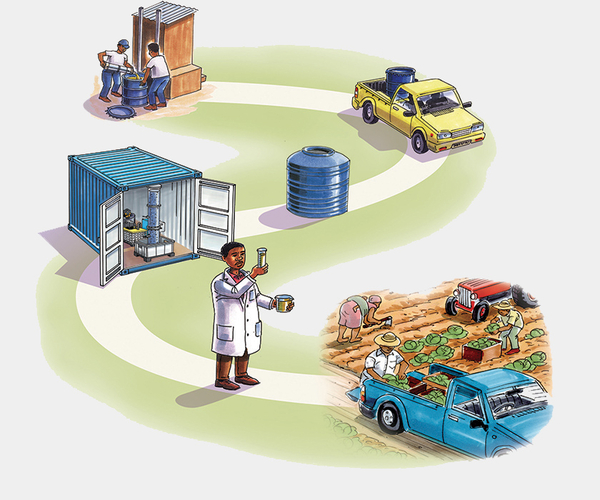
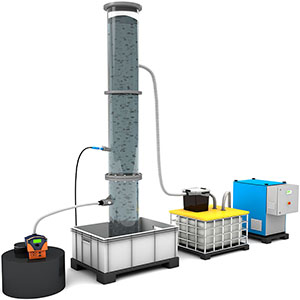
The VUNA Project aimed at recovering nutrients from urine, by developing a dry sanitation system, which is affordable, produces a valuable fertiliser, promotes entrepreneurship and reduces pollution of water resources.
Research within the VUNA Project
The VUNA Project researched on the following topics. Download the VUNA Final Report for a detailed overview on our results. Also visit our publications list below, to access numerous publications free of charge.
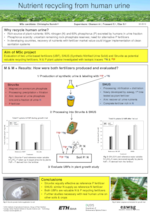
Nutrient Recovery from Urine
Our body excretes the majority of nutrients in the urine (and not in the faeces). By collecting urine separately, we can recover valuable nutrients, e.g. nitrogen, phosphorus, potassium. At the same time, we prevent pollution of surface waters with high nutrient loads.
The foremost goals of urine treatment are the recovery of nutrients for beneficial use. However, the urine treatment processes must also ensure that the end-products are safe to use, provide adequate human and environmental health protection, and are of adequate quality to ensure optimal market value. Pathogens and pharmaceuticals could potentially impact the quality of end products.
Research activities:
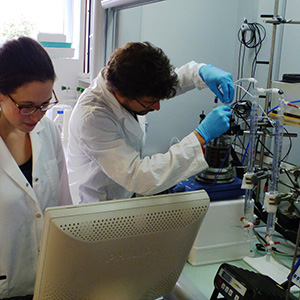
Removing pharmaceuticals: The majority of pharmaceutical residues are excreted in the urine (and not the faeces). Hence, the separate collection of urine isolates pharmaceuticals and prevents them from entering the environment. Experiments showed that long-term storage is not sufficient to remove pharmaceuticals. Nevertheless, processes occurring during nitrification, are suitable to remove certain pharmaceuticals. Virtually all pharmaceuticals can be removed in an activated carbon filter.
Inactivating pathogens: Whereas some pathogens can be excreted in the urine, others are introduced from cross-contamination with faeces during urine collection. We evaluated the viability of representative pathogens during urine treatment. We observed partial disinfection through urine storage and nitrification. Distillation is assumed to eliminate all pathogens due to high temperatures. Research partners: Environmental Chemistry Laboratory at EPFL.
Fertiliser from Urine
Testing VUNA fertilisers on crops
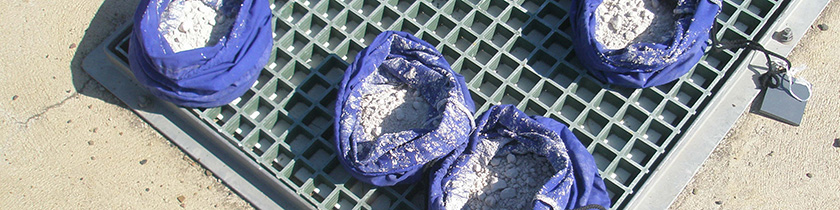
In VUNA affiliated projects, our fertilisers are being tested in South Africa and Switzerland. At the UKZN Agricultural Engineering Department in Pietermaritzburg, crop scientists fertilised maize in a pot trial with struvite, dehydrated and pasteurised latrine faecal sludge pellets and commercial superphosphate.
At ETH in Zurich, the Plant Nutrition Group produced isotope-marked struvite and nitrification/distillation product. The tests in ETHZ's greenhouse showed that plants assimilate nutrients from VUNA fertilisers at least as readily as from commercial fertilisers.
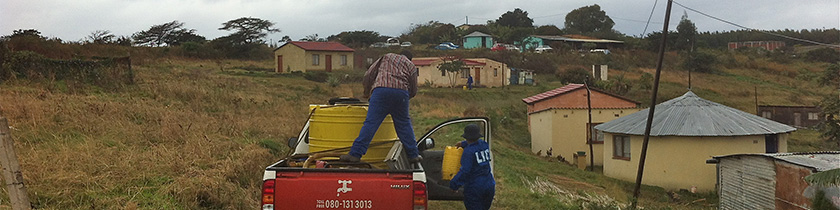
eThekwini Water and Sanitation introduced urine-diverting toilets as a system to supply sanitation to unserved regions, where water is scarce and water-borne sewer systems are too costly. Therefore a cost-efficient and optimised urine collection approach is necessary to harvest the valuable nutrients in urine.
Research activities:
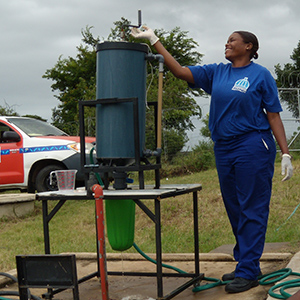
Optimising urine collection: We aim to make urine collection more cost efficient. Therefore, we implemented a pilot urine collection scheme to gain experiences and suggest improvements. Based on the evaluated costs, we are currently developing a business plan.
Performance Modelling: The entire system of urine collection, transport and decentralised treatment consists of a large number of interconnected elements (e.g. toilets, storage tanks, treatment reactors) which influence the overall system performance (e.g. pollution control, urban hygiene, fertilizer production). Using a combination of system analysis and mathematical modelling we identified critical elements, evaluated the value of particular measurement schemes and estimated the overall system performance.
Social and Economic Aspects of Urine-Diverting Toilets
The success of any sanitation programme depends on people's willingness to accept it. Urine-diverting toilets are still not well accepted by many. In order to increase acceptance, health and hygiene education is needed.
Research activities:
Social acceptance: We accompanied the introduction of the VUNA technologies with studies, which investigated the socio-cultural perceptions and factors influencing users’ acceptance.
Campaigning for health & hyigene: Based on our findings from the acceptance studies, we developed appropriate educational activities and awareness material, e.g. for households and schools.
Incentives for urine production: By giving urine a financial value, we tested how to increase toilet use, improve hygiene, reduce loss of valuable nutrients and augment household income for the poorest.
Business model: To better understand the value chain from urine to fertiliser, we analysed the various components of the nutrient recovery system with a business perspective.
About us
An acronym, name and motto at the same time, VUNA stands for Valorisation of Urine Nutrients in Africa, and is the name of our project. In isiZulu, the language of the project area in the municipality of eThekwini, South Africa, the word 'vuna' means harvest. A healthy harvest follows a balanced nutrient application to the crops. And, in the case of the VUNA project, we harvest the necessary nutrients from urine.
Complete Recovery: Michael Wächter, Mathias Mosberger, Maximilian Grau, Sara Rhoton
Nitrification: Alexandra Florin, Corine Uhlmann, Gabriel Kämpf
Distillation: Michael Wächter, Samuel Huber, Mischa Schwaninger, Thomas Gmeinwieser
Electrolysis: Christina Fritzsche, Annette Remmele, Anja Sutter
Struvite: Maximilian Grau, Sara Rhoton, Merlien Reddy, Sibongile Maqubela, Mlungisi Mthembu, Samukelisiwe ‘Thandi’ Cele, Musawenkosi ‘Moussa’ Ndlovu
Process Control: Ana Santos, Lorenzo Garbani Marcantini, Angelika Hess, Elisabeth Grimon
Pharmaceuticals: Birge D. Oezel Duygan, Annette Remmele
Pathogens: Manfred Schoger, Ariane Schertenleib, Sara Oppenheimer, Simon Schindelholz
Urine Collection: Peter Spohn, Lucky Sibiya
Performance Modelling: Theresa Rossboth, Thomas Hug, Andreas Scheidegger
Social Acceptance: Elisa Roma, Marietjie Coertzen
Incentives: Leeanne MacGregor
Business model: Luzius Etter
BMGF: Alyse Schrecongost
Documentation: Corine Uhlmann, Nina Gubser, Susan Mercer
Documentation
For an overview on the VUNA Project, download the VUNA Final Report 2015. For more in-depth information, have a look at the news articles, videos, and publications below.
Videos
VUNA on YouTube
VUNA on TV
VUNA at the Faecal Sludge Management Conference 2012
Media coverage
Pour la revue de presse en langue française, veuillez visiter le site en français.
Für das deutschsprachige Medienecho besuchen sie bitte unsere Seite auf deutsch.
array(15 items)0 => Snowflake\Publications\Domain\Model\Publicationprototypepersistent entity (uid=12934, pid=124)originalId => protected12934 (integer)
authors => protected'Florin, A.' (15 chars)
title => protected'Full nitrification of urine by adding a base' (44 chars)
journal => protected'' (0 chars)
year => protected2013 (integer)
volume => protected0 (integer)
issue => protected'' (0 chars)
startpage => protected'38 p' (9 chars)
otherpage => protected'' (0 chars)
categories => protected'' (0 chars)
description => protected'With the goal of nutrient recovery, full nitrification of human urine is inv estigated for its stabilization in simple, decentralized reactors. In a firs t part of this work, undiluted urine was completely nitrified in a laborator y-scale moving-bed biofilm reactor (MBBR), with automated dosage of a KHCO<s ub>3</sub> solution keeping the pH at 7.0-7.1. The effluent contained up to 2706 mg-N/L of nitrate; on average > 99% of the total nitrogen. Maintaini ng low concentrations of ammonium and nitrite (generally below 1 ‰ and 4.7 ‰ respectively of the influent total ammonia) proved to reduce the risks o f dramatic process instabilities due to inhibition with nitrous acid and fre e ammonia. Although full nitrification by adding a base presents several adv antages, for decentralized applications, it is recommended to add alkalinity in a way requiring less expensive and complex material than by dosing a bas ic solution.<br /> Hoping that calcite (CaCO<sub>3</sub>) could be a simple alternative to buffer nitrification, in a second part we studied the dissolu tion of chalk powder in synthetic urine solutions, both in the presence and absence of phosphate. Experiments and simulations with PHREEQC verified the hypothesis that phosphate may precipitate on the surface of calcite, and thu s slow down dissolution. In the absence of phosphate, calcite dissolved rapi dly until saturation of the solution. By contrast, with the high phosphate c oncentrations in stored urine (around 200-250 mg<sub>P</sub>/L), calcite dis solution was inhibited by the rapid formation of amorphous calcium-phospha te (ACP; eventually converting into hydroxyapatite, HAP) directly on the par ticle’s surface, as was revealed by XRD and REM analysis. To prevent calci te passivation, precipitation of struvite (MgNH<sub>4</sub>PO<sub>4</sub>• 6H<sub>2</sub>O) is suggested before the full nitrification reactor. In re al urine, the effect of biofilm growth directly on calcite may be of advanta ge to compensate possibl...' (2063 chars)
serialnumber => protected'' (0 chars)
doi => protected'' (0 chars)
uid => protected12934 (integer)
_localizedUid => protected12934 (integer)modified_languageUid => protectedNULL
_versionedUid => protected12934 (integer)modifiedpid => protected124 (integer)1 => Snowflake\Publications\Domain\Model\Publicationprototypepersistent entity (uid=12976, pid=124)originalId => protected12976 (integer)
authors => protected'Fritzsche, C.' (18 chars)
title => protected'The formation of chlorinated organics during electrolytic urine treatment' (73 chars)
journal => protected'' (0 chars)
year => protected2012 (integer)
volume => protected0 (integer)
issue => protected'' (0 chars)
startpage => protected'74 p' (9 chars)
otherpage => protected'' (0 chars)
categories => protected'' (0 chars)
description => protected'This master thesis is part of the VUNA project which aims for nutrient recov ery and treatment of urine in decentralized treatment facilities. Electrolys is is used to remove nitrogen through electrolytic ammonia oxidation. It is a promising treatment option because it is not susceptible to inflow variati ons. However, a disadvantage of electrolysis is that chlorinated organics, w hich are dangerous for environmental and human health, might be formed.<br / > The overall goal of this master thesis is to analyze the processes of chlo rinated organics formation during electrolytic treatment of stored urine. Th e subgoals are to choose four chlorinated, organic substances of interest, t o develop a measurement method for these substances, to quantify the current efficiency in experiments with urine and to either accept or reject the fol lowing hypotheses: 1) Chlorinated organics are formed during the electrolyti c treatment of stored urine. 2) If the electrode potential applied in electr olytic urine treatment is lower than the potential needed for chloride oxida tion, no chlorinated organics are formed. [...]' (1111 chars)
serialnumber => protected'' (0 chars)
doi => protected'' (0 chars)
uid => protected12976 (integer)
_localizedUid => protected12976 (integer)modified_languageUid => protectedNULL
_versionedUid => protected12976 (integer)modifiedpid => protected124 (integer)2 => Snowflake\Publications\Domain\Model\Publicationprototypepersistent entity (uid=10502, pid=124)originalId => protected10502 (integer)
authors => protected'Fumasoli, A.; Etter, B.; Sterkele, B.; Morgenroth, E.; U dert, K. M.' (97 chars)
title => protected'Operating a pilot-scale nitrification/distillation plant for complete nutrie nt recovery from urine' (98 chars)
journal => protected'Water Science and Technology' (28 chars)
year => protected2016 (integer)
volume => protected73 (integer)
issue => protected'1' (1 chars)
startpage => protected'215' (3 chars)
otherpage => protected'222' (3 chars)
categories => protected'distillation; nitrification; nutrient recovery; source separation; urine tre atment; VUNA' (88 chars)
description => protected'Source-separated urine contains most of the excreted nutrients, which can be recovered by using nitrification to stabilize the urine before concentratin g the nutrient solution with distillation. The aim of this study was to test this process combination at pilot scale. The nitrification process was effi
up>−1</sup> after switching to more concentrated urine. At high nitrificat ion rates (640 mg N L<sup>−1</sup> d<sup>−1</sup>) and low total ammonia concentrations (1,790 mg NH<sub>4</sub>-N L<sup>−1</sup> in influent) dis tillation caused the main primary energy demand of 71 W cap<sup>−1</sup> ( nitrification: 13 W cap<sup>−1</sup>) assuming a nitrogen production of 8. 8 g N cap<sup>−1</sup> d<sup>−1</sup>. Possible process failures include the accumulation of the nitrification intermediate nitrite and the selectio n of acid-tolerant ammonia-oxidizing bacteria. Especially during reactor sta rt-up, the process must therefore be carefully supervised. The concentrate p roduced by the nitrification/distillation process is low in heavy metals, bu t high in nutrients, suggesting a good suitability as an integral fertilizer .' (1293 chars)
serialnumber => protected'0273-1223' (9 chars)
doi => protected'10.2166/wst.2015.485' (20 chars)
uid => protected10502 (integer)
_localizedUid => protected10502 (integer)modified_languageUid => protectedNULL
_versionedUid => protected10502 (integer)modifiedpid => protected124 (integer)3 => Snowflake\Publications\Domain\Model\Publicationprototypepersistent entity (uid=9203, pid=124)originalId => protected9203 (integer)
authors => protected'Fumasoli, A.; Morgenroth, E.; Udert, K. M.' (62 chars)
title => protected'Modeling the low pH limit of <I>Nitrosomonas eutropha</I> in high-strength n itrogen wastewaters' (95 chars)
journal => protected'Water Research' (14 chars)
year => protected2015 (integer)
volume => protected83 (integer)
issue => protected'' (0 chars)
startpage => protected'161' (3 chars)
otherpage => protected'170' (3 chars)
categories => protected'bioenergetics; intracellular pH; chemical speciation; buffer intensity; nitr ifiers' (82 chars)
description => protected'In wastewater treatment, the rate of ammonia oxidation decreases with pH and stops very often slightly below a pH of 6. Free ammonia (NH<SUB>3</SUB>) li mitation, inhibition by nitrous acid (HNO<SUB>2</SUB>), limitation by inorga nic carbon or direct effect of high proton concentrations have been proposed to cause the rate decrease with pH as well as the cessation of ammonia oxid ation. In this study, we compare an exponential pH term common for food micr obiology with conventionally applied rate laws based on Monod-type kinetics for NH<SUB>3</SUB> limitation and non-competitive HNO<SUB>2</SUB> inhibition as well as sigmoidal pH functions to model the low pH limit of ammonia oxid izing bacteria (AOB). For this purpose we conducted well controlled batch ex periments which were then simulated with a computer model. The results showe d that kinetics based on NH<SUB>3</SUB> limitation and HNO<SUB>2</SUB> inhib ition can explain the rate decrease of ammonia oxidation between pH 7 and 6, but fail in predicting the pH limit of <I>Nitrosomonas eutropha</I> at pH 5 .4 and rates close to that limit. This is where the exponential pH term beco mes important: this term decreases the rate of ammonia oxidation to zero, as the pH limit approaches. Previously proposed sigmoidal pH functions that af fect large pH regions, however, led to an overestimation of the pH effect an d could therefore not be applied successfully. We show that the proposed exp onential pH term can be explained quantitatively with thermodynamic principl es: at low pH values, the energy available from the proton motive force is t oo small for the NADH production in <I>Nitrosomonas eutropha</I> and related AOB causing an energy limited state of the bacterial cell. Hence, energy li mitation and not inhibition or limitation of enzymes is responsible for the cessation of the AOB activity at low pH values.' (1871 chars)
serialnumber => protected'0043-1354' (9 chars)
doi => protected'10.1016/j.watres.2015.06.013' (28 chars)
uid => protected9203 (integer)
_localizedUid => protected9203 (integer)modified_languageUid => protectedNULL
_versionedUid => protected9203 (integer)modifiedpid => protected124 (integer)4 => Snowflake\Publications\Domain\Model\Publicationprototypepersistent entity (uid=13135, pid=124)originalId => protected13135 (integer)
authors => protected'Huber, S. J.' (22 chars)
title => protected'Temperature dependent removal of sodium chloride (NaCl) from synthetic nitri fied urine' (86 chars)
journal => protected'' (0 chars)
year => protected2011 (integer)
volume => protected0 (integer)
issue => protected'' (0 chars)
startpage => protected'46 p' (9 chars)
otherpage => protected'' (0 chars)
categories => protected'' (0 chars)
description => protected'Urine is the source of the major part of plant nutrients in municipal wastew ater. Therefore, full nutrient recovery from source-separated urine is an at tractive option for both treating wastewater and gaining a valuable fertiliz er product. Full nutrient recovery can be achieved by first stabilizing coll ected urine by nitrification and then concentrating the urine by distillatio n. Since concentrations of all salts in urine increase with increasing remov al of water also the sodium chloride (NaCl) content is high in the end. Ther e are two problems related to NaCl, the first being the synergistic decompos ition of ammonium nitrate by chloride and the second being soil salinity and sodicity related problems when applying the product as fertilizer. [...]' (757 chars)
serialnumber => protected'' (0 chars)
doi => protected'' (0 chars)
uid => protected13135 (integer)
_localizedUid => protected13135 (integer)modified_languageUid => protectedNULL
_versionedUid => protected13135 (integer)modifiedpid => protected124 (integer)5 => Snowflake\Publications\Domain\Model\Publicationprototypepersistent entity (uid=8239, pid=124)originalId => protected8239 (integer)
authors => protected'Mašić, A.; Santos, A. T. L.; Etter, B.; Udert,&nb sp;K. M.; Villez, K.' (106 chars)
title => protected'Estimation of nitrite in source-separated nitrified urine with UV spectropho tometry' (83 chars)
journal => protected'Water Research' (14 chars)
year => protected2015 (integer)
volume => protected85 (integer)
issue => protected'' (0 chars)
startpage => protected'244' (3 chars)
otherpage => protected'254' (3 chars)
categories => protected'nitrification; online nitrite measurement; principal component regression; s ource-separated urine; UV spectrophotometry' (119 chars)
description => protected'Monitoring of nitrite is essential for an immediate response and prevention of irreversible failure of decentralized biological urine nitrification reac tors. Although a few sensors are available for nitrite measurement, none of them are suitable for applications in which both nitrite and nitrate are pre sent in very high concentrations. Such is the case in collected source-separ ated urine, stabilized by nitrification for long-term storage. Ultraviolet ( UV) spectrophotometry in combination with chemometrics is a promising option for monitoring of nitrite. In this study, an immersible in situ UV sensor i s investigated for the first time so to establish a relationship between UV absorbance spectra and nitrite concentrations in nitrified urine. The study focuses on the effects of suspended particles and saturation on the absorban ce spectra and the chemometric model performance. Detailed analysis indicate s that suspended particles in nitrified urine have a negligible effect on ni trite estimation, concluding that sample filtration is not necessary as pret reatment. In contrast, saturation due to very high concentrations affects th e model performance severely, suggesting dilution as an essential sample pre paration step. However, this can also be mitigated by simple removal of the saturated, lower end of the UV absorbance spectra, and extraction of informa tion from the secondary, weaker nitrite absorbance peak. This approach allow s for estimation of nitrite with a simple chemometric model and without samp le dilution. These results are promising for a practical application of the UV sensor as an in situ nitrite measurement in a urine nitrification reactor given the exceptional quality of the nitrite estimates in comparison to pre vious studies.' (1762 chars)
serialnumber => protected'0043-1354' (9 chars)
doi => protected'10.1016/j.watres.2015.08.031' (28 chars)
uid => protected8239 (integer)
_localizedUid => protected8239 (integer)modified_languageUid => protectedNULL
_versionedUid => protected8239 (integer)modifiedpid => protected124 (integer)6 => Snowflake\Publications\Domain\Model\Publicationprototypepersistent entity (uid=12950, pid=124)originalId => protected12950 (integer)
authors => protected'Remmele, A.' (16 chars)
title => protected'The influence of anode material and current density on the emissions of disi nfection by-products (DBPs) during electrolytic treatment of stored urine' (149 chars)
journal => protected'' (0 chars)
year => protected2013 (integer)
volume => protected0 (integer)
issue => protected'' (0 chars)
startpage => protected'33 p' (9 chars)
otherpage => protected'' (0 chars)
categories => protected'' (0 chars)
description => protected'Electrolysis of source separated urine is an efficient technology for COD an d ammonia removal. Despite a huge of research about electrochemical treatmen t of wastewater the formation and emission of toxic and carcinogenic disinfe ction by-products (DBPs), is still not understoood in detail. The aim of thi s masterthesis is to contribute to the optimisation of the electrolysis of s tored urine by a better understanding of the DBP formation.<br /> For this p urpose two control variables, anode material and current density, are invest igated. DBP formation was analysed in nine galvanostatic experiments with th e anode materials boron-doped diamond (BDD), iridium dioxide (Ti/IrO<sub>2</ sub>) and graphite. Current densities of 5, 10, 15 and 20 mA cm<sup>-2</sup> were applied to a discontinuous electrolysis cell filled with 350 mL of sto red urine. The gas above the electrolyte was extracted and drawn through two traps in series filled with dodecane by a gas pump. Periodically taken samp les from the reactor were analysed with GCMS, IC and Hach Dr. Lange tests fo r concentrations of six selected DBPs, COD, ammonia, Chloride and Chlorate. Samples from the raps were analysed for DBP concentrations. [...]' (1205 chars)
serialnumber => protected'' (0 chars)
doi => protected'' (0 chars)
uid => protected12950 (integer)
_localizedUid => protected12950 (integer)modified_languageUid => protectedNULL
_versionedUid => protected12950 (integer)modifiedpid => protected124 (integer)7 => Snowflake\Publications\Domain\Model\Publicationprototypepersistent entity (uid=6826, pid=124)originalId => protected6826 (integer)
authors => protected'Udert, K. M.; Wächter, M.' (41 chars)
title => protected'Complete nutrient recovery from source-separated urine by nitrification and distillation' (88 chars)
journal => protected'Water Research' (14 chars)
year => protected2012 (integer)
volume => protected46 (integer)
issue => protected'2' (1 chars)
startpage => protected'453' (3 chars)
otherpage => protected'464' (3 chars)
categories => protected'membrane-aerated biofilm reactor (MABR); evaporation; primary energy demand; nutrient recovery; fertilizer; ammonium nitrate; NoMix technology' (142 chars)
description => protected'In this study we present a method to recover all nutrients from source-separ ated urine in a dry solid by combining biological nitrification with distill ation. In a first process step, a membrane-aerated biofilm reactor was opera ted stably for more than 12 months, producing a nutrient solution with a pH between 6.2 and 7.0 (depending on the pH set-point), and an ammonium to nitr ate ratio between 0.87 and 1.15 gN gN<SUP>−1</SUP>. The maximum nitrificat ion rate was 1.8 ± 0.3 gN m<SUP>−2</SUP> d<SUP>−1</SUP>. Process stabil ity was achieved by controlling the pH via the influent. In the second proce ss step, real nitrified urine and synthetic solutions were concentrated in l ab-scale distillation reactors. All nutrients were recovered in a dry powder except for some ammonia (less than 3% of total nitrogen). We estimate that the primary energy demand for a simple nitrification/distillation process is four to five times higher than removing nitrogen and phosphorus in a conven tional wastewater treatment plant and producing the equivalent amount of pho sphorus and nitrogen fertilizers. However, the primary energy demand can be reduced to values very close to conventional treatment, if 80% of the water is removed with reverse osmosis and distillation is operated with vapor comp ression. The ammonium nitrate content of the solid residue is below the limi t at which stringent EU safety regulations for fertilizers come into effect; nevertheless, we propose some additional process steps that will increase t he thermal stability of the solid product.' (1562 chars)
serialnumber => protected'0043-1354' (9 chars)
doi => protected'10.1016/j.watres.2011.11.020' (28 chars)
uid => protected6826 (integer)
_localizedUid => protected6826 (integer)modified_languageUid => protectedNULL
_versionedUid => protected6826 (integer)modifiedpid => protected124 (integer)8 => Snowflake\Publications\Domain\Model\Publicationprototypepersistent entity (uid=9171, pid=124)originalId => protected9171 (integer)
authors => protected'Udert, K. M.; Buckley, C. A.; Wächter, M.; McArdel l, C. S.; Kohn, T.; Strande, L.; Zöllig, H.; Fumas oli, A.; Oberson, A.; Etter, B.' (198 chars)
title => protected'Technologies for the treatment of source-separated urine in the eThekwini Mu nicipality' (86 chars)
journal => protected'Water SA' (8 chars)
year => protected2015 (integer)
volume => protected41 (integer)
issue => protected'2' (1 chars)
startpage => protected'212' (3 chars)
otherpage => protected'221' (3 chars)
categories => protected'sanitation; source separation; nutrient recovery; eutrophication; hygiene; h uman health' (87 chars)
description => protected'In recent years, a large number of urine-diverting dehydration toilets (UDDT s) have been installed in eThekwini to ensure access to adequate sanitation. The initial purpose of these toilets was to facilitate faeces drying, while the urine was diverted into a soak pit. This practice can lead to environme ntal pollution, since urine contains high amounts of nutrients. Instead of p olluting the environment, these nutrients should be recovered and used as fe rtiliser. In 2010 the international and transdisciplinary research project V UNA was initiated in order to explore technologies and management methods fo r better urine management in eThekwini. Three treatment technologies have be en chosen for the VUNA project. The first is struvite precipitation, a techn ology which has already been tested in multiple projects on urine treatment. Struvite precipitation is a simple and fast process for phosphorus recovery . Other nutrients, such as nitrogen and potassium, remain in the effluent an d pathogens are not completely inactivated. Therefore, struvite precipitatio n has to be combined with other treatment processes to prevent environmental pollution and hygiene risks. The second process is a combination of nitrifi cation and distillation. This process combination is more complex than struv ite precipitation, but it recovers all nutrients in one concentrated solutio n, ensures safe sanitisation and produces only distilled water and a small a mount of sludge as by-products. The third process is electrolysis. This proc ess could be used for very small on-site reactors, because conversion rates are high and the operation is simple, as long as appropriate electrodes and voltages are used. However, nitrogen is removed and not recovered and chlori nated by-products are formed, which can be hazardous for human health. While urine electrolysis requires further research in the laboratory, struvite pr ecipitation and nitrification/distillation have already been operated at pil ot scale.' (1985 chars)
serialnumber => protected'0378-4738' (9 chars)
doi => protected'10.4314/wsa.v41i2.06' (20 chars)
uid => protected9171 (integer)
_localizedUid => protected9171 (integer)modified_languageUid => protectedNULL
_versionedUid => protected9171 (integer)modifiedpid => protected124 (integer)9 => Snowflake\Publications\Domain\Model\Publicationprototypepersistent entity (uid=12971, pid=124)originalId => protected12971 (integer)
authors => protected'Uhlmann, C.' (16 chars)
title => protected'Dynamics of complete and partial nitrification of source-separated urine' (72 chars)
journal => protected'' (0 chars)
year => protected2014 (integer)
volume => protected0 (integer)
issue => protected'' (0 chars)
startpage => protected'32 p' (9 chars)
otherpage => protected'' (0 chars)
categories => protected'' (0 chars)
description => protected'In this thesis the resilience of complete and partial nitrification of sourc e-separated urine under dynamic conditions were investigated and compared. T he process stability of nitrification reactors is important for their commer cial application. In partial nitrification the alkalinity contained in urine allows nitrifying 50% of the ammonia whereas in complete nitrification the dosage of a base allows the nitrification of almost 100% of the ammonia. Due to considerations about Monod kinetic substrate limitation of Ammonia Oxidi zing Bacteria (AOB) it was hypothesized that complete nitrification is more prone to nitrite accumulation and therefore less stable than partial nitrifi cation. A computer model based on Monod kinetics should help to understand t he processes and the resilience of urine nitrification reactors. Laboratory experiments were conducted in 7 L moving bed biofilm reactors (MBBR) to anal yze the behavior of the two processes in respect to changes in temperature a nd inflow. The total ammonia concentration in the inflow was on average 1750 ±150 mg N L<sup>-1</sup>. Complete nitrification has at same conditions a l ower nitrification rate than partial nitrification due to the lower ammonia concentration in the reactor. In order to reach comparable nitrification rat es complete and partial nitrification reactors were therefore operated at tw o different pH values of 7 and 6 respectively. The average nitrification rat e in complete nitrification was 1.08±0.17 g N m-2 d-1 and in parital nitrif ication 0.90±0.25 g N m-2 d-1 with regard to biofilm carrier surface (Kaldn es<sup>®</sup>). During all experiments no essential difference of process stability between complete and partial nitrification were observed. Both pro cesses remained stable during temperature fluctuations between 20 °C and 32 °C when urine inflow was constant. pH-diven inflow control led to substant ial nitrite accumulation and to a break down of nitrification due to an incr ease of the inflow cause...' (2577 chars)
serialnumber => protected'' (0 chars)
doi => protected'' (0 chars)
uid => protected12971 (integer)
_localizedUid => protected12971 (integer)modified_languageUid => protectedNULL
_versionedUid => protected12971 (integer)modifiedpid => protected124 (integer)10 => Snowflake\Publications\Domain\Model\Publicationprototypepersistent entity (uid=14275, pid=124)originalId => protected14275 (integer)
authors => protected'Zöllig, H.; Remmele, A.; Morgenroth, E.; Udert, K.  ;M.' (79 chars)
title => protected'Removal rates and energy demand of the electrochemical oxidation of ammonia and organic substances in real stored urine' (119 chars)
journal => protected'Environmental Science: Water Research and Technology' (52 chars)
year => protected2017 (integer)
volume => protected3 (integer)
issue => protected'3' (1 chars)
startpage => protected'480' (3 chars)
otherpage => protected'491' (3 chars)
categories => protected'' (0 chars)
description => protected'The separate collection and treatment of urine allows for an environmentally friendly and cost-efficient management of the nutrients contained in urine. The primary goal should be to recover all these nutrients. However, in some cases it will be economically or ecologically more sensitive to recover onl y the phosphorus, while nitrogen is removed together with organic substances (measured as chemical oxygen demand, COD) and pathogens. In this study, we investigated the use of galvanostatic electrolysis for the removal of nitrog en and COD from real stored urine. Non-active type boron-doped diamond (BDD) and active type thermally decomposed iridium oxide film (TDIROF) anodes wer e evaluated using batch experiments. On both anodes, ammonia was exclusively removed by indirect oxidation with active chlorine (AC: Cl<SUB>2</SUB>, HCl O, and ClO<SUP>−</SUP>). As a consequence, ammonia was not completely remo ved, if chlorine was consumed by competing processes. While COD was present,
UP> d<SUP>−1</SUP> at 20 mA cm<SUP>−2</SUP>). The reason for the slower ammonia removal on BDD was the enhanced reaction of AC with organic molecule s. In fact, hydroxyl radicals broke organic molecules down to shorter chain molecules which reacted with most of the AC leaving only little AC for the o xidation of ammonia. This preferential oxidation of organics resulted in ver y high COD removal rates on BDD (above 420 gCOD m<SUP>−2</SUP> d<SUP>−1< /SUP> at 20 mA cm<SUP>−2</SUP> for COD concentrations above 1000 mgCOD L<S UP>−1</SUP>). A main drawback of electrolysis with both anodes was the hig h energy demand (BDD: 55 W h gCOD<SUP>−1</SUP> and 766 W h gN<SUP>−1</SU P> for 90% and 6% removal, respectively. TDIROF: 67 W h gCOD<SUP>−1</SUP>
' (2226 chars)
serialnumber => protected'2053-1400' (9 chars)
doi => protected'10.1039/c7ew00014f' (18 chars)
uid => protected14275 (integer)
_localizedUid => protected14275 (integer)modified_languageUid => protectedNULL
_versionedUid => protected14275 (integer)modifiedpid => protected124 (integer)11 => Snowflake\Publications\Domain\Model\Publicationprototypepersistent entity (uid=8021, pid=124)originalId => protected8021 (integer)
authors => protected'Zöllig, H.; Fritzsche, C.; Morgenroth, E.; Udert, K.&nb sp;M.' (81 chars)
title => protected'Direct electrochemical oxidation of ammonia on graphite as a treatment optio n for stored source-separated urine' (111 chars)
journal => protected'Water Research' (14 chars)
year => protected2015 (integer)
volume => protected69 (integer)
issue => protected'' (0 chars)
startpage => protected'284' (3 chars)
otherpage => protected'294' (3 chars)
categories => protected'NoMix technology; nitrogen removal; decentralized; on-site; potential contro lled electrolysis; chlorinated by-products' (118 chars)
description => protected'Electrolysis can be a viable technology for ammonia removal from source-sepa rated urine. Compared to biological nitrogen removal, electrolysis is more r obust and is highly amenable to automation, which makes it especially attrac tive for on-site reactors. In electrolytic wastewater treatment, ammonia is usually removed by indirect oxidation through active chlorine which is produ ced in-situ at elevated anode potentials. However, the evolution of chlorine can lead to the formation of chlorate, perchlorate, chlorinated organic by- products and chloramines that are toxic. This study focuses on using direct ammonia oxidation on graphite at low anode potentials in order to overcome t he formation of toxic by-products. With the aid of cyclic voltammetry, we de monstrated that graphite is active for direct ammonia oxidation without conc omitant chlorine formation if the anode potential is between 1.1 and 1.6 V vs. SHE (standard hydrogen electrode). A comparison of potentiostatic bulk e lectrolysis experiments in synthetic stored urine with and without chloride confirmed that ammonia was removed exclusively by continuous direct oxidatio n. Direct oxidation required high pH values (pH > 9) because free ammonia was the actual reactant. In real stored urine (pH = 9.0), an ammonia remov al rate of 2.9 ± 0.3 gN·m<SUP>−2</SUP>·d<SUP>−1</SUP> was achieved and the specific energy demand was 42 Wh·gN<SUP>−1</SUP> at an anode po tential of 1.31 V vs. SHE. The measurements of chlorate and perchlorate as well as selected chlorinated organic by-products confirmed that no chlorinat ed by-products were formed in real urine. Electrode corrosion through graphi te exfoliation was prevented and the surface was not poisoned by intermediat e oxidation products. We conclude that direct ammonia oxidation on graphite electrodes is a treatment option for source-separated urine with three major advantages: The formation of chlorinated by-products is prevented, less ene rgy is consumed than in ...' (2106 chars)
serialnumber => protected'0043-1354' (9 chars)
doi => protected'10.1016/j.watres.2014.11.031' (28 chars)
uid => protected8021 (integer)
_localizedUid => protected8021 (integer)modified_languageUid => protectedNULL
_versionedUid => protected8021 (integer)modifiedpid => protected124 (integer)12 => Snowflake\Publications\Domain\Model\Publicationprototypepersistent entity (uid=9174, pid=124)originalId => protected9174 (integer)
authors => protected'Zöllig, H.; Morgenroth, E.; Udert, K. M.' (61 chars)
title => protected'Inhibition of direct electrolytic ammonia oxidation due to a change in local pH' (79 chars)
journal => protected'Electrochimica Acta' (19 chars)
year => protected2015 (integer)
volume => protected165 (integer)
issue => protected'' (0 chars)
startpage => protected'348' (3 chars)
otherpage => protected'355' (3 chars)
categories => protected'iridium dioxide; low alkalinity; water treatment; Nernstian diffusion layer; acid-base equilibrium' (98 chars)
description => protected'Electrochemical ammonia oxidation has gained a lot of attention recently as an efficient method for ammonia removal from wastewater, for the use in ammo nia-based fuel cells and the production of high purity hydrogen. Thermally d ecomposed iridium oxide films (TDIROF) have been shown to be catalytically a ctive for direct ammonia oxidation in aqueous solutions if NH<SUB>3</SUB> is present. However, the process was reported to be rapidly inhibited on TDIRO F. Herein, we show that this fast inhibition of direct ammonia oxidation doe s not result from surface poisoning by adsorbed elemental nitrogen (N<SUB>ad s</SUB>). Instead, we propose that direct ammonia oxidation and oxygen evolu tion can lead to a drop of the local pH at the electrode resulting in a low availability of the actual reactant, NH<SUB>3</SUB>. The hypothesis was test ed with cyclic voltammetry (CV) experiments on stagnant and rotating disk el ectrodes (RDE). The CV experiments on the stagnant electrode revealed that t he decrease of the ammonia oxidation peaks was considerably reduced by intro ducing an idle phase at open circuit potential between subsequent scans. Fur thermore, the polarization of the TDIROF electrode into the hydrogen evoluti on region (HER) resulted in increased ammonia oxidation peaks in the followi ng anodic scans which can be explained with an increased local pH after the consumption of protons in the HER. On the RDE, the ammonia oxidation peaks d id not decrease in immediately consecutive scans. These findings would not b e expected if surface poisoning was responsible for the fast inhibition but they are in good agreement with the proposed mechanism of pH induced limitat ion by the reactant, NH<SUB>3</SUB>. The plausibility of the mechanism was a lso supported by our numerical simulations of the processes in the Nernstian diffusion layer. The knowledge about this inhibition mechanism of direct am monia oxidation is especially important for the design of electrochemical ce lls for wastewater treat...' (2131 chars)
serialnumber => protected'0013-4686' (9 chars)
doi => protected'10.1016/j.electacta.2015.02.162' (31 chars)
uid => protected9174 (integer)
_localizedUid => protected9174 (integer)modified_languageUid => protectedNULL
_versionedUid => protected9174 (integer)modifiedpid => protected124 (integer)13 => Snowflake\Publications\Domain\Model\Publicationprototypepersistent entity (uid=13606, pid=124)originalId => protected13606 (integer)
authors => protected'Zöllig, H.' (16 chars)
title => protected'Electrolysis for the treatment of stored source-separated urine' (63 chars)
journal => protected'' (0 chars)
year => protected2015 (integer)
volume => protected0 (integer)
issue => protected'' (0 chars)
startpage => protected'147 p' (10 chars)
otherpage => protected'' (0 chars)
categories => protected'' (0 chars)
description => protected'Electrolysis is a promising technology for the on-site treatment of source-s eparated urine. It is the many degrees of freedom (electrode material, elect rode potential, current density, cell design), the electrical conductivity o f urine and the high amenability to automation which make electrolysis attra ctive. It was the objective of this thesis to understand the electro-oxidati on of organic substances and ammonia to apply electrolysis successfully for the removal of these compounds from stored source-separated urine. To achiev e this goal, a variety of electrochemical experiments were conducted with an odes consisting of boron-doped diamond (BDD), thermally decomposed iridium o xide film (TDIROF) or graphite and a new experimental procedure was develope d to assess the time dependent production of volatile organic chlorination b y-products (OCBPs). [...]<br /><br />Die Elektrolyse ist eine vielverspreche nde Technologie für die Behandlung von Urin. Es sind die vielen Freiheitsgr ade (Elektrodenmaterialien, Elektrodenpotential, Stromdichte, Zellendesign), die elektrische Leitfähigkeit des Urins sowie das hohe Automatisierungspot ential, welche die Elektrolyse attraktiv machen. Es war das Ziel dieser Arbe it, die elektrochemische Oxidation von organischen Substanzen und Ammoniak z u verstehen, um diese für die dezentrale Behandlung von gelagertem Urin anz uwenden. Es wurden elektrochemische Experimente mit Bor-versetzten Diamant-( BDD), thermisch hergestellten Iridiumoxidfilm- (TDIROF) und Graphitanoden du rchgeführt. Um dabei die Entstehung von leichtflüchtigen, chlorierten Nebe nprodukten (CNPs) zu verfolgen, wurde eine neue experimentelle Methode entwi ckelt. [...]' (1684 chars)
serialnumber => protected'' (0 chars)
doi => protected'10.3929/ethz-a-010549050' (24 chars)
uid => protected13606 (integer)
_localizedUid => protected13606 (integer)modified_languageUid => protectedNULL
_versionedUid => protected13606 (integer)modifiedpid => protected124 (integer)14 => Snowflake\Publications\Domain\Model\Publicationprototypepersistent entity (uid=9219, pid=124)originalId => protected9219 (integer)
authors => protected'Zöllig, H.; Remmele, A.; Fritzsche, C.; Morgenroth, E.; Udert, K. M.' (99 chars)
title => protected'Formation of chlorination byproducts and their emission pathways in chlorine mediated electro-oxidation of urine on active and nonactive type anodes' (148 chars)
journal => protected'Environmental Science and Technology' (36 chars)
year => protected2015 (integer)
volume => protected49 (integer)
issue => protected'18' (2 chars)
startpage => protected'11062' (5 chars)
otherpage => protected'11069' (5 chars)
categories => protected'' (0 chars)
description => protected'Chlorination byproducts (CBPs) are harmful to human health and the environme nt. Their formation in chlorine mediated electro-oxidation is a concern for electrochemical urine treatment. We investigated the formation of chlorate, perchlorate, and organic chlorination byproducts (OCBPs) during galvanostati c (10, 15, 20 mA·cm<SUP>–2</SUP>) electro-oxidation of urine on boron-dop ed diamond (BDD) and thermally decomposed iridium oxide film (TDIROF) anodes . In the beginning of the batch experiments, the production of perchlorate w as prevented by competing active chlorine and chlorate formation as well as by direct oxidation of organic substances. Perchlorate was only formed at hi gher specific charges (>17 Ah·L<SUP>–1</SUP> on BDD and >29 Ah·L<SUP>– 1</SUP> on TDIROF) resulting in chlorate and perchlorate being the dominant CBPs (>90% of initial chloride). BDD produced mainly short chained OCBPs (di chloromethane, trichloromethane, and tetrachloromethane), whereas longer cha ined OCBPs (1,2-dichloropropane and 1,2-dichloroethane) were more frequently found on TDIROF. The OCBPs were primarily eliminated by electrochemical str ipping: On BDD, this pathway accounted for 40% (dichloromethane) to 100% (te trachloromethane) and on TDIROF for 90% (1,2-dichloroethane) to 100% (trichl oromethane) of what was produced. A post-treatment of the liquid as well as the gas phase should be foreseen if CBP formation cannot be prevented by eli minating chloride or organic substances in a pretreatment.' (1502 chars)
serialnumber => protected'0013-936X' (9 chars)
doi => protected'10.1021/acs.est.5b01675' (23 chars)
uid => protected9219 (integer)
_localizedUid => protected9219 (integer)modified_languageUid => protectedNULL
_versionedUid => protected9219 (integer)modifiedpid => protected124 (integer)
Full nitrification of urine by adding a base
With the goal of nutrient recovery, full nitrification of human urine is investigated for its stabilization in simple, decentralized reactors. In a first part of this work, undiluted urine was completely nitrified in a laboratory-scale moving-bed biofilm reactor (MBBR), with automated dosage of a KHCO3 solution keeping the pH at 7.0-7.1. The effluent contained up to 2706 mg-N/L of nitrate; on average > 99% of the total nitrogen. Maintaining low concentrations of ammonium and nitrite (generally below 1 ‰ and 4.7‰ respectively of the influent total ammonia) proved to reduce the risks of dramatic process instabilities due to inhibition with nitrous acid and free ammonia. Although full nitrification by adding a base presents several advantages, for decentralized applications, it is recommended to add alkalinity in a way requiring less expensive and complex material than by dosing a basic solution. Hoping that calcite (CaCO3) could be a simple alternative to buffer nitrification, in a second part we studied the dissolution of chalk powder in synthetic urine solutions, both in the presence and absence of phosphate. Experiments and simulations with PHREEQC verified the hypothesis that phosphate may precipitate on the surface of calcite, and thus slow down dissolution. In the absence of phosphate, calcite dissolved rapidly until saturation of the solution. By contrast, with the high phosphate concentrations in stored urine (around 200-250 mgP/L), calcite dissolution was inhibited by the rapid formation of amorphous calcium-phosphate (ACP; eventually converting into hydroxyapatite, HAP) directly on the particle’s surface, as was revealed by XRD and REM analysis. To prevent calcite passivation, precipitation of struvite (MgNH4PO4•6H2O) is suggested before the full nitrification reactor. In real urine, the effect of biofilm growth directly on calcite may be of advantage to compensate possibly too slow calcite dissolution, and should inform further work.
The formation of chlorinated organics during electrolytic urine treatment
This master thesis is part of the VUNA project which aims for nutrient recovery and treatment of urine in decentralized treatment facilities. Electrolysis is used to remove nitrogen through electrolytic ammonia oxidation. It is a promising treatment option because it is not susceptible to inflow variations. However, a disadvantage of electrolysis is that chlorinated organics, which are dangerous for environmental and human health, might be formed. The overall goal of this master thesis is to analyze the processes of chlorinated organics formation during electrolytic treatment of stored urine. The subgoals are to choose four chlorinated, organic substances of interest, to develop a measurement method for these substances, to quantify the current efficiency in experiments with urine and to either accept or reject the following hypotheses: 1) Chlorinated organics are formed during the electrolytic treatment of stored urine. 2) If the electrode potential applied in electrolytic urine treatment is lower than the potential needed for chloride oxidation, no chlorinated organics are formed. [...]
Fritzsche, C. (2012) The formation of chlorinated organics during electrolytic urine treatment, 74 p, Institutional Repository
Operating a pilot-scale nitrification/distillation plant for complete nutrient recovery from urine
Source-separated urine contains most of the excreted nutrients, which can be recovered by using nitrification to stabilize the urine before concentrating the nutrient solution with distillation. The aim of this study was to test this process combination at pilot scale. The nitrification process was efficient in a moving bed biofilm reactor with maximal rates of 930 mg N L−1 d−1. Rates decreased to 120 mg N L−1 d−1 after switching to more concentrated urine. At high nitrification rates (640 mg N L−1 d−1) and low total ammonia concentrations (1,790 mg NH4-N L−1 in influent) distillation caused the main primary energy demand of 71 W cap−1 (nitrification: 13 W cap−1) assuming a nitrogen production of 8.8 g N cap−1 d−1. Possible process failures include the accumulation of the nitrification intermediate nitrite and the selection of acid-tolerant ammonia-oxidizing bacteria. Especially during reactor start-up, the process must therefore be carefully supervised. The concentrate produced by the nitrification/distillation process is low in heavy metals, but high in nutrients, suggesting a good suitability as an integral fertilizer.
Fumasoli, A.; Etter, B.; Sterkele, B.; Morgenroth, E.; Udert, K. M. (2016) Operating a pilot-scale nitrification/distillation plant for complete nutrient recovery from urine, Water Science and Technology, 73(1), 215-222, doi:10.2166/wst.2015.485, Institutional Repository
Modeling the low pH limit of Nitrosomonas eutropha in high-strength nitrogen wastewaters
In wastewater treatment, the rate of ammonia oxidation decreases with pH and stops very often slightly below a pH of 6. Free ammonia (NH3) limitation, inhibition by nitrous acid (HNO2), limitation by inorganic carbon or direct effect of high proton concentrations have been proposed to cause the rate decrease with pH as well as the cessation of ammonia oxidation. In this study, we compare an exponential pH term common for food microbiology with conventionally applied rate laws based on Monod-type kinetics for NH3 limitation and non-competitive HNO2 inhibition as well as sigmoidal pH functions to model the low pH limit of ammonia oxidizing bacteria (AOB). For this purpose we conducted well controlled batch experiments which were then simulated with a computer model. The results showed that kinetics based on NH3 limitation and HNO2 inhibition can explain the rate decrease of ammonia oxidation between pH 7 and 6, but fail in predicting the pH limit of Nitrosomonas eutropha at pH 5.4 and rates close to that limit. This is where the exponential pH term becomes important: this term decreases the rate of ammonia oxidation to zero, as the pH limit approaches. Previously proposed sigmoidal pH functions that affect large pH regions, however, led to an overestimation of the pH effect and could therefore not be applied successfully. We show that the proposed exponential pH term can be explained quantitatively with thermodynamic principles: at low pH values, the energy available from the proton motive force is too small for the NADH production in Nitrosomonas eutropha and related AOB causing an energy limited state of the bacterial cell. Hence, energy limitation and not inhibition or limitation of enzymes is responsible for the cessation of the AOB activity at low pH values.
Fumasoli, A.; Morgenroth, E.; Udert, K. M. (2015) Modeling the low pH limit of Nitrosomonas eutropha in high-strength nitrogen wastewaters, Water Research, 83, 161-170, doi:10.1016/j.watres.2015.06.013, Institutional Repository
Temperature dependent removal of sodium chloride (NaCl) from synthetic nitrified urine
Urine is the source of the major part of plant nutrients in municipal wastewater. Therefore, full nutrient recovery from source-separated urine is an attractive option for both treating wastewater and gaining a valuable fertilizer product. Full nutrient recovery can be achieved by first stabilizing collected urine by nitrification and then concentrating the urine by distillation. Since concentrations of all salts in urine increase with increasing removal of water also the sodium chloride (NaCl) content is high in the end. There are two problems related to NaCl, the first being the synergistic decomposition of ammonium nitrate by chloride and the second being soil salinity and sodicity related problems when applying the product as fertilizer. [...]
Huber, S. J. (2011) Temperature dependent removal of sodium chloride (NaCl) from synthetic nitrified urine, 46 p, Institutional Repository
Estimation of nitrite in source-separated nitrified urine with UV spectrophotometry
Monitoring of nitrite is essential for an immediate response and prevention of irreversible failure of decentralized biological urine nitrification reactors. Although a few sensors are available for nitrite measurement, none of them are suitable for applications in which both nitrite and nitrate are present in very high concentrations. Such is the case in collected source-separated urine, stabilized by nitrification for long-term storage. Ultraviolet (UV) spectrophotometry in combination with chemometrics is a promising option for monitoring of nitrite. In this study, an immersible in situ UV sensor is investigated for the first time so to establish a relationship between UV absorbance spectra and nitrite concentrations in nitrified urine. The study focuses on the effects of suspended particles and saturation on the absorbance spectra and the chemometric model performance. Detailed analysis indicates that suspended particles in nitrified urine have a negligible effect on nitrite estimation, concluding that sample filtration is not necessary as pretreatment. In contrast, saturation due to very high concentrations affects the model performance severely, suggesting dilution as an essential sample preparation step. However, this can also be mitigated by simple removal of the saturated, lower end of the UV absorbance spectra, and extraction of information from the secondary, weaker nitrite absorbance peak. This approach allows for estimation of nitrite with a simple chemometric model and without sample dilution. These results are promising for a practical application of the UV sensor as an in situ nitrite measurement in a urine nitrification reactor given the exceptional quality of the nitrite estimates in comparison to previous studies.
Mašić, A.; Santos, A. T. L.; Etter, B.; Udert, K. M.; Villez, K. (2015) Estimation of nitrite in source-separated nitrified urine with UV spectrophotometry, Water Research, 85, 244-254, doi:10.1016/j.watres.2015.08.031, Institutional Repository
The influence of anode material and current density on the emissions of disinfection by-products (DBPs) during electrolytic treatment of stored urine
Electrolysis of source separated urine is an efficient technology for COD and ammonia removal. Despite a huge of research about electrochemical treatment of wastewater the formation and emission of toxic and carcinogenic disinfection by-products (DBPs), is still not understoood in detail. The aim of this masterthesis is to contribute to the optimisation of the electrolysis of stored urine by a better understanding of the DBP formation. For this purpose two control variables, anode material and current density, are investigated. DBP formation was analysed in nine galvanostatic experiments with the anode materials boron-doped diamond (BDD), iridium dioxide (Ti/IrO2) and graphite. Current densities of 5, 10, 15 and 20 mA cm-2 were applied to a discontinuous electrolysis cell filled with 350 mL of stored urine. The gas above the electrolyte was extracted and drawn through two traps in series filled with dodecane by a gas pump. Periodically taken samples from the reactor were analysed with GCMS, IC and Hach Dr. Lange tests for concentrations of six selected DBPs, COD, ammonia, Chloride and Chlorate. Samples from the raps were analysed for DBP concentrations. [...]
Remmele, A. (2013) The influence of anode material and current density on the emissions of disinfection by-products (DBPs) during electrolytic treatment of stored urine, 33 p, Institutional Repository
Complete nutrient recovery from source-separated urine by nitrification and distillation
In this study we present a method to recover all nutrients from source-separated urine in a dry solid by combining biological nitrification with distillation. In a first process step, a membrane-aerated biofilm reactor was operated stably for more than 12 months, producing a nutrient solution with a pH between 6.2 and 7.0 (depending on the pH set-point), and an ammonium to nitrate ratio between 0.87 and 1.15 gN gN−1. The maximum nitrification rate was 1.8 ± 0.3 gN m−2 d−1. Process stability was achieved by controlling the pH via the influent. In the second process step, real nitrified urine and synthetic solutions were concentrated in lab-scale distillation reactors. All nutrients were recovered in a dry powder except for some ammonia (less than 3% of total nitrogen). We estimate that the primary energy demand for a simple nitrification/distillation process is four to five times higher than removing nitrogen and phosphorus in a conventional wastewater treatment plant and producing the equivalent amount of phosphorus and nitrogen fertilizers. However, the primary energy demand can be reduced to values very close to conventional treatment, if 80% of the water is removed with reverse osmosis and distillation is operated with vapor compression. The ammonium nitrate content of the solid residue is below the limit at which stringent EU safety regulations for fertilizers come into effect; nevertheless, we propose some additional process steps that will increase the thermal stability of the solid product.
Technologies for the treatment of source-separated urine in the eThekwini Municipality
In recent years, a large number of urine-diverting dehydration toilets (UDDTs) have been installed in eThekwini to ensure access to adequate sanitation. The initial purpose of these toilets was to facilitate faeces drying, while the urine was diverted into a soak pit. This practice can lead to environmental pollution, since urine contains high amounts of nutrients. Instead of polluting the environment, these nutrients should be recovered and used as fertiliser. In 2010 the international and transdisciplinary research project VUNA was initiated in order to explore technologies and management methods for better urine management in eThekwini. Three treatment technologies have been chosen for the VUNA project. The first is struvite precipitation, a technology which has already been tested in multiple projects on urine treatment. Struvite precipitation is a simple and fast process for phosphorus recovery. Other nutrients, such as nitrogen and potassium, remain in the effluent and pathogens are not completely inactivated. Therefore, struvite precipitation has to be combined with other treatment processes to prevent environmental pollution and hygiene risks. The second process is a combination of nitrification and distillation. This process combination is more complex than struvite precipitation, but it recovers all nutrients in one concentrated solution, ensures safe sanitisation and produces only distilled water and a small amount of sludge as by-products. The third process is electrolysis. This process could be used for very small on-site reactors, because conversion rates are high and the operation is simple, as long as appropriate electrodes and voltages are used. However, nitrogen is removed and not recovered and chlorinated by-products are formed, which can be hazardous for human health. While urine electrolysis requires further research in the laboratory, struvite precipitation and nitrification/distillation have already been operated at pilot scale.
Udert, K. M.; Buckley, C. A.; Wächter, M.; McArdell, C. S.; Kohn, T.; Strande, L.; Zöllig, H.; Fumasoli, A.; Oberson, A.; Etter, B. (2015) Technologies for the treatment of source-separated urine in the eThekwini Municipality, Water SA, 41(2), 212-221, doi:10.4314/wsa.v41i2.06, Institutional Repository
Dynamics of complete and partial nitrification of source-separated urine
In this thesis the resilience of complete and partial nitrification of source-separated urine under dynamic conditions were investigated and compared. The process stability of nitrification reactors is important for their commercial application. In partial nitrification the alkalinity contained in urine allows nitrifying 50% of the ammonia whereas in complete nitrification the dosage of a base allows the nitrification of almost 100% of the ammonia. Due to considerations about Monod kinetic substrate limitation of Ammonia Oxidizing Bacteria (AOB) it was hypothesized that complete nitrification is more prone to nitrite accumulation and therefore less stable than partial nitrification. A computer model based on Monod kinetics should help to understand the processes and the resilience of urine nitrification reactors. Laboratory experiments were conducted in 7 L moving bed biofilm reactors (MBBR) to analyze the behavior of the two processes in respect to changes in temperature and inflow. The total ammonia concentration in the inflow was on average 1750±150 mg N L-1. Complete nitrification has at same conditions a lower nitrification rate than partial nitrification due to the lower ammonia concentration in the reactor. In order to reach comparable nitrification rates complete and partial nitrification reactors were therefore operated at two different pH values of 7 and 6 respectively. The average nitrification rate in complete nitrification was 1.08±0.17 g N m-2 d-1 and in parital nitrification 0.90±0.25 g N m-2 d-1 with regard to biofilm carrier surface (Kaldnes®). During all experiments no essential difference of process stability between complete and partial nitrification were observed. Both processes remained stable during temperature fluctuations between 20 °C and 32 °C when urine inflow was constant. pH-diven inflow control led to substantial nitrite accumulation and to a break down of nitrification due to an increase of the inflow caused by increasing AOB activity at higher temperatures. It could be shown that the dynamics of bacterial growth due to temperature changes are damped when pH is not controlled. Instantaneous increase of the inflow caused severe nitrite accumulations in both processes. A reliable process control should therefore consider the effects of temperature and restrict load fluctuations to a minimum. The developed model was able to describe the dynamics of nitrogen conversion due to temperature changes but failed in the prediction of process instabilities caused by increasing inflow.
Uhlmann, C. (2014) Dynamics of complete and partial nitrification of source-separated urine, 32 p, Institutional Repository
Removal rates and energy demand of the electrochemical oxidation of ammonia and organic substances in real stored urine
The separate collection and treatment of urine allows for an environmentally friendly and cost-efficient management of the nutrients contained in urine. The primary goal should be to recover all these nutrients. However, in some cases it will be economically or ecologically more sensitive to recover only the phosphorus, while nitrogen is removed together with organic substances (measured as chemical oxygen demand, COD) and pathogens. In this study, we investigated the use of galvanostatic electrolysis for the removal of nitrogen and COD from real stored urine. Non-active type boron-doped diamond (BDD) and active type thermally decomposed iridium oxide film (TDIROF) anodes were evaluated using batch experiments. On both anodes, ammonia was exclusively removed by indirect oxidation with active chlorine (AC: Cl2, HClO, and ClO−). As a consequence, ammonia was not completely removed, if chlorine was consumed by competing processes. While COD was present, ammonia removal was faster on TDIROF (227 ± 16 gN m−2 d−1 at 20 mA cm−2) than on BDD (43 ± 20 gN m−2 d−1 at 20 mA cm−2). The reason for the slower ammonia removal on BDD was the enhanced reaction of AC with organic molecules. In fact, hydroxyl radicals broke organic molecules down to shorter chain molecules which reacted with most of the AC leaving only little AC for the oxidation of ammonia. This preferential oxidation of organics resulted in very high COD removal rates on BDD (above 420 gCOD m−2 d−1 at 20 mA cm−2 for COD concentrations above 1000 mgCOD L−1). A main drawback of electrolysis with both anodes was the high energy demand (BDD: 55 W h gCOD−1 and 766 W h gN−1 for 90% and 6% removal, respectively. TDIROF: 67 W h gCOD−1 and 77 W h gN−1 for 30% and 40% removal. All at 20 mA cm−2). It can be concluded that BDD and TDIROF anodes could be combined in series for a fast, complete, and more energy efficient electrochemical urine treatment: COD could be removed on BDD before the residual ammonia would be removed on TDIROF.
Zöllig, H.; Remmele, A.; Morgenroth, E.; Udert, K. M. (2017) Removal rates and energy demand of the electrochemical oxidation of ammonia and organic substances in real stored urine, Environmental Science: Water Research and Technology, 3(3), 480-491, doi:10.1039/c7ew00014f, Institutional Repository
Direct electrochemical oxidation of ammonia on graphite as a treatment option for stored source-separated urine
Electrolysis can be a viable technology for ammonia removal from source-separated urine. Compared to biological nitrogen removal, electrolysis is more robust and is highly amenable to automation, which makes it especially attractive for on-site reactors. In electrolytic wastewater treatment, ammonia is usually removed by indirect oxidation through active chlorine which is produced in-situ at elevated anode potentials. However, the evolution of chlorine can lead to the formation of chlorate, perchlorate, chlorinated organic by-products and chloramines that are toxic. This study focuses on using direct ammonia oxidation on graphite at low anode potentials in order to overcome the formation of toxic by-products. With the aid of cyclic voltammetry, we demonstrated that graphite is active for direct ammonia oxidation without concomitant chlorine formation if the anode potential is between 1.1 and 1.6 V vs. SHE (standard hydrogen electrode). A comparison of potentiostatic bulk electrolysis experiments in synthetic stored urine with and without chloride confirmed that ammonia was removed exclusively by continuous direct oxidation. Direct oxidation required high pH values (pH > 9) because free ammonia was the actual reactant. In real stored urine (pH = 9.0), an ammonia removal rate of 2.9 ± 0.3 gN·m−2·d−1 was achieved and the specific energy demand was 42 Wh·gN−1 at an anode potential of 1.31 V vs. SHE. The measurements of chlorate and perchlorate as well as selected chlorinated organic by-products confirmed that no chlorinated by-products were formed in real urine. Electrode corrosion through graphite exfoliation was prevented and the surface was not poisoned by intermediate oxidation products. We conclude that direct ammonia oxidation on graphite electrodes is a treatment option for source-separated urine with three major advantages: The formation of chlorinated by-products is prevented, less energy is consumed than in indirect ammonia oxidation and readily available and cheap graphite can be used as the electrode material.
Zöllig, H.; Fritzsche, C.; Morgenroth, E.; Udert, K. M. (2015) Direct electrochemical oxidation of ammonia on graphite as a treatment option for stored source-separated urine, Water Research, 69, 284-294, doi:10.1016/j.watres.2014.11.031, Institutional Repository
Inhibition of direct electrolytic ammonia oxidation due to a change in local pH
Electrochemical ammonia oxidation has gained a lot of attention recently as an efficient method for ammonia removal from wastewater, for the use in ammonia-based fuel cells and the production of high purity hydrogen. Thermally decomposed iridium oxide films (TDIROF) have been shown to be catalytically active for direct ammonia oxidation in aqueous solutions if NH3 is present. However, the process was reported to be rapidly inhibited on TDIROF. Herein, we show that this fast inhibition of direct ammonia oxidation does not result from surface poisoning by adsorbed elemental nitrogen (Nads). Instead, we propose that direct ammonia oxidation and oxygen evolution can lead to a drop of the local pH at the electrode resulting in a low availability of the actual reactant, NH3. The hypothesis was tested with cyclic voltammetry (CV) experiments on stagnant and rotating disk electrodes (RDE). The CV experiments on the stagnant electrode revealed that the decrease of the ammonia oxidation peaks was considerably reduced by introducing an idle phase at open circuit potential between subsequent scans. Furthermore, the polarization of the TDIROF electrode into the hydrogen evolution region (HER) resulted in increased ammonia oxidation peaks in the following anodic scans which can be explained with an increased local pH after the consumption of protons in the HER. On the RDE, the ammonia oxidation peaks did not decrease in immediately consecutive scans. These findings would not be expected if surface poisoning was responsible for the fast inhibition but they are in good agreement with the proposed mechanism of pH induced limitation by the reactant, NH3. The plausibility of the mechanism was also supported by our numerical simulations of the processes in the Nernstian diffusion layer. The knowledge about this inhibition mechanism of direct ammonia oxidation is especially important for the design of electrochemical cells for wastewater treatment. The mechanism is not only valid for TDIROF but also for other electrodes because it is independent of the electrode material.
Electrolysis for the treatment of stored source-separated urine
Electrolysis is a promising technology for the on-site treatment of source-separated urine. It is the many degrees of freedom (electrode material, electrode potential, current density, cell design), the electrical conductivity of urine and the high amenability to automation which make electrolysis attractive. It was the objective of this thesis to understand the electro-oxidation of organic substances and ammonia to apply electrolysis successfully for the removal of these compounds from stored source-separated urine. To achieve this goal, a variety of electrochemical experiments were conducted with anodes consisting of boron-doped diamond (BDD), thermally decomposed iridium oxide film (TDIROF) or graphite and a new experimental procedure was developed to assess the time dependent production of volatile organic chlorination by-products (OCBPs). [...]
Die Elektrolyse ist eine vielversprechende Technologie für die Behandlung von Urin. Es sind die vielen Freiheitsgrade (Elektrodenmaterialien, Elektrodenpotential, Stromdichte, Zellendesign), die elektrische Leitfähigkeit des Urins sowie das hohe Automatisierungspotential, welche die Elektrolyse attraktiv machen. Es war das Ziel dieser Arbeit, die elektrochemische Oxidation von organischen Substanzen und Ammoniak zu verstehen, um diese für die dezentrale Behandlung von gelagertem Urin anzuwenden. Es wurden elektrochemische Experimente mit Bor-versetzten Diamant-(BDD), thermisch hergestellten Iridiumoxidfilm- (TDIROF) und Graphitanoden durchgeführt. Um dabei die Entstehung von leichtflüchtigen, chlorierten Nebenprodukten (CNPs) zu verfolgen, wurde eine neue experimentelle Methode entwickelt. [...]
Formation of chlorination byproducts and their emission pathways in chlorine mediated electro-oxidation of urine on active and nonactive type anodes
Chlorination byproducts (CBPs) are harmful to human health and the environment. Their formation in chlorine mediated electro-oxidation is a concern for electrochemical urine treatment. We investigated the formation of chlorate, perchlorate, and organic chlorination byproducts (OCBPs) during galvanostatic (10, 15, 20 mA·cm–2) electro-oxidation of urine on boron-doped diamond (BDD) and thermally decomposed iridium oxide film (TDIROF) anodes. In the beginning of the batch experiments, the production of perchlorate was prevented by competing active chlorine and chlorate formation as well as by direct oxidation of organic substances. Perchlorate was only formed at higher specific charges (>17 Ah·L–1 on BDD and >29 Ah·L–1 on TDIROF) resulting in chlorate and perchlorate being the dominant CBPs (>90% of initial chloride). BDD produced mainly short chained OCBPs (dichloromethane, trichloromethane, and tetrachloromethane), whereas longer chained OCBPs (1,2-dichloropropane and 1,2-dichloroethane) were more frequently found on TDIROF. The OCBPs were primarily eliminated by electrochemical stripping: On BDD, this pathway accounted for 40% (dichloromethane) to 100% (tetrachloromethane) and on TDIROF for 90% (1,2-dichloroethane) to 100% (trichloromethane) of what was produced. A post-treatment of the liquid as well as the gas phase should be foreseen if CBP formation cannot be prevented by eliminating chloride or organic substances in a pretreatment.
Zöllig, H.; Remmele, A.; Fritzsche, C.; Morgenroth, E.; Udert, K. M. (2015) Formation of chlorination byproducts and their emission pathways in chlorine mediated electro-oxidation of urine on active and nonactive type anodes, Environmental Science and Technology, 49(18), 11062-11069, doi:10.1021/acs.est.5b01675, Institutional Repository
array(4 items)0 => Snowflake\Publications\Domain\Model\Publicationprototypepersistent entity (uid=8240, pid=124)originalId => protected8240 (integer)
authors => protected'Bischel, H. N.; Özel Duygan, B. D.; Strande, L.; M cArdell, C. S.; Udert, K. M.; Kohn, T.' (139 chars)
title => protected'Pathogens and pharmaceuticals in source-separated urine in eThekwini, South Africa' (82 chars)
journal => protected'Water Research' (14 chars)
year => protected2015 (integer)
volume => protected85 (integer)
issue => protected'' (0 chars)
startpage => protected'57' (2 chars)
otherpage => protected'65' (2 chars)
categories => protected'urine nutrient recovery; health hazards; risk; sustainable sanitation' (69 chars)
description => protected'In eThekwini, South Africa, the production of agricultural fertilizers from human urine collected from urine-diverting dry toilets is being evaluated at a municipality scale as a way to help finance a decentralized, dry sanitati on system. The present study aimed to assess a range of human and environmen tal health hazards in source-separated urine, which was presumed to be conta minated with feces, by evaluating the presence of human pathogens, pharmaceu ticals, and an antibiotic resistance gene. Composite urine samples from hous eholds enrolled in a urine collection trial were obtained from urine storage tanks installed in three regions of eThekwini. Polymerase chain reaction (P CR) assays targeted 9 viral and 10 bacterial human pathogens transmitted by the fecal–oral route. The most frequently detected viral pathogens were JC polyomavirus, rotavirus, and human adenovirus in 100%, 34% and 31% of sampl es, respectively. <I>Aeromonas</I> spp. and <I>Shigella</I> spp. were freque ntly detected gram negative bacteria, in 94% and 61% of samples, respectivel y. The gram positive bacterium, <I>Clostridium perfringens</I>, which is kno wn to survive for extended times in urine, was found in 72% of samples. A sc reening of 41 trace organic compounds in the urine facilitated selection of 12 priority pharmaceuticals for further evaluation. The antibiotics sulfamet hoxazole and trimethoprim, which are frequently prescribed as prophylaxis fo r HIV-positive patients, were detected in 95% and 85% of samples, reaching m aximum concentrations of 6800 μg/L and 1280 μg/L, respectively. The anti retroviral drug emtricitabine was also detected in 40% of urine samples. A s ulfonamide antibiotic resistance gene (<I>sul1</I>) was detected in 100% of urine samples. By coupling analysis of pathogens and pharmaceuticals in geog raphically dispersed samples in eThekwini, this study reveals a range of hum an and environmental health hazards in urine intended for fertilizer product ion. Collection of urine...' (2323 chars)
serialnumber => protected'0043-1354' (9 chars)
doi => protected'10.1016/j.watres.2015.08.022' (28 chars)
uid => protected8240 (integer)
_localizedUid => protected8240 (integer)modified_languageUid => protectedNULL
_versionedUid => protected8240 (integer)modifiedpid => protected124 (integer)1 => Snowflake\Publications\Domain\Model\Publicationprototypepersistent entity (uid=9211, pid=124)originalId => protected9211 (integer)
authors => protected'Bischel, H. N.; Schertenleib, A.; Fumasoli, A.; Udert,&n bsp;K. M.; Kohn, T.' (105 chars)
title => protected'Inactivation kinetics and mechanisms of viral and bacterial pathogen surroga tes during urine nitrification' (106 chars)
journal => protected'Environmental Science: Water Research and Technology' (52 chars)
year => protected2015 (integer)
volume => protected1 (integer)
issue => protected'1' (1 chars)
startpage => protected'65' (2 chars)
otherpage => protected'76' (2 chars)
categories => protected'' (0 chars)
description => protected'This paper assesses the inactivation performance and mechanisms in urine nit rification reactors using bacteria and bacteriophages as surrogates for huma n pathogens. Two parallel continuous-flow moving bed biofilm reactors (MBBRs ) were operated over a two-month period. One MBBR was used to conduct a cont inuous spike experiment with bacteriophage MS2. The second reactor provided the matrix for a series of batch experiments conducted to investigate the in activation of <I>Salmonella typhimurium</I>, <I>Enterococcus</I> spp., MS2, Qβ, and ΦX174 during urine nitrification. The roles of aeration, biologica l activity, and solution composition in inactivation were evaluated. Whereas bacteriophages ΦX174 and MS2 remained infective following urine nitrificat ion, partial inactivation of bacteriophage Qβ was observed. Qβ inactivatio n was attributed primarily to aeration with a potential additive effect of b iological processes, <I>i.e.</I>, processes that are attributable to the pre sence of other microorganisms such as sorption to biomass, predation or enzy matic activity. Tailing of Qβ inactivation to a plateau indicated a protect ive effect of the solution components in aerated nitrification reactors. In contrast to the bacteriophages, <I>S</I>. <I>typhimurium</I> and <I>Enteroco ccus</I> spp. were mainly affected by biological processes: they were inacti vated in biologically active nitrification reactors while remaining stable i n chemically equivalent filtered controls. The tested bacteria could, for ex ample, be out-competed by other microbial communities or sorbed to biomass i n the reactor. Microbial communities did not adapt to inactivate bacteriopha ge MS2 (<I>e.g.</I>, <I>via</I> increased prevalence of virus predators) in the experimental time-scale evaluated, with no observed inactivation of MS2 during continuous input for 51 days in the flow-through MBBR. The compilatio n of these results suggests that biological nitrification as a fertilizer pr oduction process remains...' (2089 chars)
serialnumber => protected'2053-1400' (9 chars)
doi => protected'10.1039/c4ew00065j' (18 chars)
uid => protected9211 (integer)
_localizedUid => protected9211 (integer)modified_languageUid => protectedNULL
_versionedUid => protected9211 (integer)modifiedpid => protected124 (integer)2 => Snowflake\Publications\Domain\Model\Publicationprototypepersistent entity (uid=8069, pid=124)originalId => protected8069 (integer)
authors => protected'Decrey, L.; Kazama, S.; Udert, K. M.; Kohn, T.' (71 chars)
title => protected'Ammonia as an in situ sanitizer: inactivation kinetics and mechanisms of the ssRNA virus MS2 by NH<SUB>3</SUB>' (110 chars)
journal => protected'Environmental Science and Technology' (36 chars)
year => protected2015 (integer)
volume => protected49 (integer)
issue => protected'2' (1 chars)
startpage => protected'1060' (4 chars)
otherpage => protected'1067' (4 chars)
categories => protected'' (0 chars)
description => protected'Sanitizing human and animal waste (e.g., urine, fecal sludge, or grey water) is a critical step in reducing the spread of disease and ensuring microbial ly safe reuse of waste materials. Viruses are particularly persistent pathog ens and can be transmitted through inadequately sanitized waste. However, ad equate storage or digestion of waste can strongly reduce the number of virus es due to increases in pH and uncharged aqueous ammonia (NH<SUB>3</SUB>), a known biocide. In this study we investigated the kinetics and mechanisms of inactivation of the single-stranded RNA virus MS2 under temperature, pH and NH<SUB>3</SUB> conditions representative of waste storage. MS2 inactivation was mainly controlled by the activity of NH<SUB>3</SUB> over a pH range of 7 .0–9.5 and temperatures lower than 40 °C. Other bases (e.g., hydroxide, c arbonate) additionally contributed to the observed reduction of infective MS 2. The loss in MS2 infectivity could be rationalized by a loss in genome int egrity, which was attributed to genome cleavage via alkaline transesterifica tion. The contribution of each base to genome transesterification, and hence inactivation, could be related to the base p<I>K</I><SUB>a</SUB> by means o f a Bronsted relationship. The Bronsted relationship in conjunction with the activity of bases in solution enabled an accurate prediction of MS2 inactiv ation rates.' (1380 chars)
serialnumber => protected'0013-936X' (9 chars)
doi => protected'10.1021/es5044529' (17 chars)
uid => protected8069 (integer)
_localizedUid => protected8069 (integer)modified_languageUid => protectedNULL
_versionedUid => protected8069 (integer)modifiedpid => protected124 (integer)3 => Snowflake\Publications\Domain\Model\Publicationprototypepersistent entity (uid=6772, pid=124)originalId => protected6772 (integer)
authors => protected'Decrey, L.; Udert, K. M.; Tilley, E.; Pecson, B.&nb sp;M.; Kohn, T.' (96 chars)
title => protected'Fate of the pathogen indicators phage ΦX174 and <I>Ascaris suum</I> eggs du ring the production of struvite fertilizer from source-separated urine' (146 chars)
journal => protected'Water Research' (14 chars)
year => protected2011 (integer)
volume => protected45 (integer)
issue => protected'16' (2 chars)
startpage => protected'4960' (4 chars)
otherpage => protected'4972' (4 chars)
categories => protected'struvite; urine separation; Ascaris; phage; filter cake; moisture content' (73 chars)
description => protected'Human urine has the potential to be a sustainable, locally and continuously available source of nutrients for agriculture. Phosphate can be efficiently recovered from human urine in the form of the mineral struvite (MgNH<SUB>4</ SUB>PO<SUB>4</SUB>·6H<SUB>2</SUB>O). However, struvite formation may be cou pled with the precipitation of other constituents present in urine including pathogens, pharmaceuticals, and heavy metals. To determine if struvite fert ilizer presents a microbiological health risk to producers and end users, we characterized the fate of a human virus surrogate (phage ΦX174) and the eg gs of the helminth <I>Ascaris suum</I> during a low-cost struvite recovery p rocess. While the concentration of phages was similar in both the struvite a nd the urine, <I>Ascaris</I> eggs accumulated within the solid during the pr ecipitation and filtration process. Subsequent air-drying of the struvite fi lter cake partially inactivated both microorganisms; however, viable <I>Asca ris</I> eggs and infective phages were still detected after several days of drying. The infectivity of both viruses and eggs was affected by the specifi c struvite drying conditions: higher inactivation generally occurred with in creased air temperature and decreased relative humidity. On a log–log scal e, phage inactivation increased linearly with decreasing moisture content of the struvite, while <I>Ascaris</I> inactivation occurred only after achievi ng a minimum moisture threshold. Sunlight exposure did not directly affect t he infectivity of phages or <I>Ascaris</I> eggs in struvite cakes, though th e resultant rise in temperature accelerated the drying of the struvite cake, which contributed to inactivation.' (1707 chars)
serialnumber => protected'0043-1354' (9 chars)
doi => protected'10.1016/j.watres.2011.06.042' (28 chars)
uid => protected6772 (integer)
_localizedUid => protected6772 (integer)modified_languageUid => protectedNULL
_versionedUid => protected6772 (integer)modifiedpid => protected124 (integer)
Pathogens and pharmaceuticals in source-separated urine in eThekwini, South Africa
In eThekwini, South Africa, the production of agricultural fertilizers from human urine collected from urine-diverting dry toilets is being evaluated at a municipality scale as a way to help finance a decentralized, dry sanitation system. The present study aimed to assess a range of human and environmental health hazards in source-separated urine, which was presumed to be contaminated with feces, by evaluating the presence of human pathogens, pharmaceuticals, and an antibiotic resistance gene. Composite urine samples from households enrolled in a urine collection trial were obtained from urine storage tanks installed in three regions of eThekwini. Polymerase chain reaction (PCR) assays targeted 9 viral and 10 bacterial human pathogens transmitted by the fecal–oral route. The most frequently detected viral pathogens were JC polyomavirus, rotavirus, and human adenovirus in 100%, 34% and 31% of samples, respectively. Aeromonas spp. and Shigella spp. were frequently detected gram negative bacteria, in 94% and 61% of samples, respectively. The gram positive bacterium, Clostridium perfringens, which is known to survive for extended times in urine, was found in 72% of samples. A screening of 41 trace organic compounds in the urine facilitated selection of 12 priority pharmaceuticals for further evaluation. The antibiotics sulfamethoxazole and trimethoprim, which are frequently prescribed as prophylaxis for HIV-positive patients, were detected in 95% and 85% of samples, reaching maximum concentrations of 6800 μg/L and 1280 μg/L, respectively. The antiretroviral drug emtricitabine was also detected in 40% of urine samples. A sulfonamide antibiotic resistance gene (sul1) was detected in 100% of urine samples. By coupling analysis of pathogens and pharmaceuticals in geographically dispersed samples in eThekwini, this study reveals a range of human and environmental health hazards in urine intended for fertilizer production. Collection of urine offers the benefit of sequestering contaminants from environmental release and allows for targeted treatment of potential health hazards prior to agricultural application. The efficacy of pathogen and pharmaceutical inactivation, transformation or removal during urine nutrient recovery processes is thus briefly reviewed.
Bischel, H. N.; Özel Duygan, B. D.; Strande, L.; McArdell, C. S.; Udert, K. M.; Kohn, T. (2015) Pathogens and pharmaceuticals in source-separated urine in eThekwini, South Africa, Water Research, 85, 57-65, doi:10.1016/j.watres.2015.08.022, Institutional Repository
Inactivation kinetics and mechanisms of viral and bacterial pathogen surrogates during urine nitrification
This paper assesses the inactivation performance and mechanisms in urine nitrification reactors using bacteria and bacteriophages as surrogates for human pathogens. Two parallel continuous-flow moving bed biofilm reactors (MBBRs) were operated over a two-month period. One MBBR was used to conduct a continuous spike experiment with bacteriophage MS2. The second reactor provided the matrix for a series of batch experiments conducted to investigate the inactivation of Salmonella typhimurium, Enterococcus spp., MS2, Qβ, and ΦX174 during urine nitrification. The roles of aeration, biological activity, and solution composition in inactivation were evaluated. Whereas bacteriophages ΦX174 and MS2 remained infective following urine nitrification, partial inactivation of bacteriophage Qβ was observed. Qβ inactivation was attributed primarily to aeration with a potential additive effect of biological processes, i.e., processes that are attributable to the presence of other microorganisms such as sorption to biomass, predation or enzymatic activity. Tailing of Qβ inactivation to a plateau indicated a protective effect of the solution components in aerated nitrification reactors. In contrast to the bacteriophages, S. typhimurium and Enterococcus spp. were mainly affected by biological processes: they were inactivated in biologically active nitrification reactors while remaining stable in chemically equivalent filtered controls. The tested bacteria could, for example, be out-competed by other microbial communities or sorbed to biomass in the reactor. Microbial communities did not adapt to inactivate bacteriophage MS2 (e.g., via increased prevalence of virus predators) in the experimental time-scale evaluated, with no observed inactivation of MS2 during continuous input for 51 days in the flow-through MBBR. The compilation of these results suggests that biological nitrification as a fertilizer production process remains insufficient as a stand-alone technology for the sanitization of source-separated urine.
Bischel, H. N.; Schertenleib, A.; Fumasoli, A.; Udert, K. M.; Kohn, T. (2015) Inactivation kinetics and mechanisms of viral and bacterial pathogen surrogates during urine nitrification, Environmental Science: Water Research and Technology, 1(1), 65-76, doi:10.1039/c4ew00065j, Institutional Repository
Ammonia as an in situ sanitizer: inactivation kinetics and mechanisms of the ssRNA virus MS2 by NH3
Sanitizing human and animal waste (e.g., urine, fecal sludge, or grey water) is a critical step in reducing the spread of disease and ensuring microbially safe reuse of waste materials. Viruses are particularly persistent pathogens and can be transmitted through inadequately sanitized waste. However, adequate storage or digestion of waste can strongly reduce the number of viruses due to increases in pH and uncharged aqueous ammonia (NH3), a known biocide. In this study we investigated the kinetics and mechanisms of inactivation of the single-stranded RNA virus MS2 under temperature, pH and NH3 conditions representative of waste storage. MS2 inactivation was mainly controlled by the activity of NH3 over a pH range of 7.0–9.5 and temperatures lower than 40 °C. Other bases (e.g., hydroxide, carbonate) additionally contributed to the observed reduction of infective MS2. The loss in MS2 infectivity could be rationalized by a loss in genome integrity, which was attributed to genome cleavage via alkaline transesterification. The contribution of each base to genome transesterification, and hence inactivation, could be related to the base pKa by means of a Bronsted relationship. The Bronsted relationship in conjunction with the activity of bases in solution enabled an accurate prediction of MS2 inactivation rates.
Decrey, L.; Kazama, S.; Udert, K. M.; Kohn, T. (2015) Ammonia as an in situ sanitizer: inactivation kinetics and mechanisms of the ssRNA virus MS2 by NH3, Environmental Science and Technology, 49(2), 1060-1067, doi:10.1021/es5044529, Institutional Repository
Fate of the pathogen indicators phage ΦX174 and Ascaris suum eggs during the production of struvite fertilizer from source-separated urine
Human urine has the potential to be a sustainable, locally and continuously available source of nutrients for agriculture. Phosphate can be efficiently recovered from human urine in the form of the mineral struvite (MgNH4PO4·6H2O). However, struvite formation may be coupled with the precipitation of other constituents present in urine including pathogens, pharmaceuticals, and heavy metals. To determine if struvite fertilizer presents a microbiological health risk to producers and end users, we characterized the fate of a human virus surrogate (phage ΦX174) and the eggs of the helminth Ascaris suum during a low-cost struvite recovery process. While the concentration of phages was similar in both the struvite and the urine, Ascaris eggs accumulated within the solid during the precipitation and filtration process. Subsequent air-drying of the struvite filter cake partially inactivated both microorganisms; however, viable Ascaris eggs and infective phages were still detected after several days of drying. The infectivity of both viruses and eggs was affected by the specific struvite drying conditions: higher inactivation generally occurred with increased air temperature and decreased relative humidity. On a log–log scale, phage inactivation increased linearly with decreasing moisture content of the struvite, while Ascaris inactivation occurred only after achieving a minimum moisture threshold. Sunlight exposure did not directly affect the infectivity of phages or Ascaris eggs in struvite cakes, though the resultant rise in temperature accelerated the drying of the struvite cake, which contributed to inactivation.
Decrey, L.; Udert, K. M.; Tilley, E.; Pecson, B. M.; Kohn, T. (2011) Fate of the pathogen indicators phage ΦX174 and Ascaris suum eggs during the production of struvite fertilizer from source-separated urine, Water Research, 45(16), 4960-4972, doi:10.1016/j.watres.2011.06.042, Institutional Repository
array(1 item)0 => Snowflake\Publications\Domain\Model\Publicationprototypepersistent entity (uid=9162, pid=124)originalId => protected9162 (integer)
authors => protected'Bonvin, C.; Etter, B.; Udert, K. M.; Frossard, E.; Nanzer, S.; Tamburini, F.; Oberson, A.' (129 chars)
title => protected'Plant uptake of phosphorus and nitrogen recycled from synthetic source-separ ated urine' (86 chars)
journal => protected'Ambio' (5 chars)
year => protected2015 (integer)
volume => protected44 (integer)
issue => protected'Suppl. 2' (8 chars)
startpage => protected'S217' (4 chars)
otherpage => protected'S227' (4 chars)
categories => protected'human urine; struvite; nitrified urine fertilizer; phosphorus; 33P and 15N l abeling; nutrient use efficiency' (108 chars)
description => protected'Urine contains about 50 % of the phosphorus (P) and about 90 % of the nitr ogen (N) excreted by humans and is therefore an interesting substrate for nu trient recovery. Source-separated urine can be used to precipitate struvite or, through a newly developed technology, nitrified urine fertilizer (NUF). In this study, we prepared <SUP>33</SUP>P radioisotope- and stable <SUP>15</ SUP>N isotope-labeled synthetic NUF (SNUF) and struvite using synthetic urin e and determined P and N uptake by greenhouse-grown ryegrass (<I>Lolium mult iflorum</I> var. Gemini) fertilized with these products. The P and N in the urine-based fertilizers were as readily plant-available in a slightly acidic soil as the P and N in reference mineral fertilizers. The ryegrass crop rec overed 26 % of P applied with both urine-based fertilizers and 72 and 75 % of N applied as struvite and SNUF, respectively. Thus, NUF and urine-derive d struvite are valuable N and P recycling fertilizers.' (966 chars)
serialnumber => protected'0044-7447' (9 chars)
doi => protected'10.1007/s13280-014-0616-6' (25 chars)
uid => protected9162 (integer)
_localizedUid => protected9162 (integer)modified_languageUid => protectedNULL
_versionedUid => protected9162 (integer)modifiedpid => protected124 (integer)
Plant uptake of phosphorus and nitrogen recycled from synthetic source-separated urine
Urine contains about 50 % of the phosphorus (P) and about 90 % of the nitrogen (N) excreted by humans and is therefore an interesting substrate for nutrient recovery. Source-separated urine can be used to precipitate struvite or, through a newly developed technology, nitrified urine fertilizer (NUF). In this study, we prepared 33P radioisotope- and stable 15N isotope-labeled synthetic NUF (SNUF) and struvite using synthetic urine and determined P and N uptake by greenhouse-grown ryegrass (Lolium multiflorum var. Gemini) fertilized with these products. The P and N in the urine-based fertilizers were as readily plant-available in a slightly acidic soil as the P and N in reference mineral fertilizers. The ryegrass crop recovered 26 % of P applied with both urine-based fertilizers and 72 and 75 % of N applied as struvite and SNUF, respectively. Thus, NUF and urine-derived struvite are valuable N and P recycling fertilizers.
Bonvin, C.; Etter, B.; Udert, K. M.; Frossard, E.; Nanzer, S.; Tamburini, F.; Oberson, A. (2015) Plant uptake of phosphorus and nitrogen recycled from synthetic source-separated urine, Ambio, 44(Suppl. 2), S217-S227, doi:10.1007/s13280-014-0616-6, Institutional Repository
array(3 items)0 => Snowflake\Publications\Domain\Model\Publicationprototypepersistent entity (uid=6901, pid=124)originalId => protected6901 (integer)
authors => protected'Hug, T.; Maurer, M.' (29 chars)
title => protected'Stochastic modeling to identify requirements for centralized monitoring of d istributed wastewater treatment' (107 chars)
journal => protected'Water Science and Technology' (28 chars)
year => protected2012 (integer)
volume => protected65 (integer)
issue => protected'6' (1 chars)
startpage => protected'1067' (4 chars)
otherpage => protected'1075' (4 chars)
categories => protected'distributed wastewater treatment; failure rate; monitoring; on-line sensor; stochastic modeling; treatment performance' (118 chars)
description => protected'Distributed wastewater treatment is increasingly considered as an alternativ e to the predominantly transport based combination of sewer network and cent ralized wastewater treatment plant. If substantial amount of wastewater of a particular area is processed in small distributed treatment units, the sum of these units must be considered as one system providing an overall service . This paper focuses on the monitoring for centralized operation of such dis tributed units. We present a simple stochastic model to calculate probabilit y distributions of process performance. We thereby simulated a fleet of simp le treatment units with stochastic failure rates, unreliable sensors and reg ular routine inspections. All calculated performance indicators exhibit a co nsiderable difference between the true performance and the perceived that is based on sensor observations. The results also show that there is a trade-o ff between investing into more reliable technology or into more frequent hum an interventions to achieve a certain performance. The simulations can quant ify both effects and thereby support the identification of requirements for centralized monitoring of distributed treatment units. The model approach is generic and can be extended and applied to various distributed wastewater t reatment technologies and contexts.' (1327 chars)
serialnumber => protected'0273-1223' (9 chars)
doi => protected'10.2166/wst.2012.945' (20 chars)
uid => protected6901 (integer)
_localizedUid => protected6901 (integer)modified_languageUid => protectedNULL
_versionedUid => protected6901 (integer)modifiedpid => protected124 (integer)1 => Snowflake\Publications\Domain\Model\Publicationprototypepersistent entity (uid=12302, pid=124)originalId => protected12302 (integer)
authors => protected'Hug, T.; Maurer, M.' (29 chars)
title => protected'Stochastic modeling to identify requirements for centralized monitoring of d istributed wastewater treatment' (107 chars)
journal => protected'' (0 chars)
year => protected2011 (integer)
volume => protected0 (integer)
issue => protected'' (0 chars)
startpage => protected'(8 pp.)' (7 chars)
otherpage => protected'' (0 chars)
categories => protected'distributed wastewater treatment; failure rate; monitoring; reliability engi neering; stochastic modeling; treatment performance' (127 chars)
description => protected'Distributed wastewater treatment is increasingly considered as an alternativ e to the predominantly transport based combination of sewer network and cent ralized wastewater treatment plant. If substantial amount of wastewater of a particular area is processed in small distributed treatment units, the sum of these units must be considered as one system providing an overall service . This paper focuses on the monitoring for centralized operation of such dis tributed units. We present a simple stochastic model to calculate probabilit y distributions of process performance. We thereby simulated a fleet of simp le treatment units with stochastic failure rates, unreliable sensors and reg ular routine inspections. All calculated performance indicators exhibit a co nsiderable difference between the true performance and the perceived that is based on sensor observations. The results also show that there is a trade-o ff between investing into more reliable technology or into more frequent hum an interventions to achieve a certain performance. The simulations can quant ify both effects and thereby support the identification of requirements for centralized monitoring of distributed treatment units. The model approach is generic and can be extended and applied to various distributed wastewater t reatment technologies and contexts.' (1327 chars)
serialnumber => protected'' (0 chars)
doi => protected'' (0 chars)
uid => protected12302 (integer)
_localizedUid => protected12302 (integer)modified_languageUid => protectedNULL
_versionedUid => protected12302 (integer)modifiedpid => protected124 (integer)2 => Snowflake\Publications\Domain\Model\Publicationprototypepersistent entity (uid=13159, pid=124)originalId => protected13159 (integer)
authors => protected'Rossboth, T.' (17 chars)
title => protected'Model-based systems analysis of the collection management of source-separate d urine in Ethekwini Municipality/South Africa' (122 chars)
journal => protected'' (0 chars)
year => protected2013 (integer)
volume => protected0 (integer)
issue => protected'' (0 chars)
startpage => protected'51 p' (9 chars)
otherpage => protected'' (0 chars)
categories => protected'' (0 chars)
description => protected'Source-separating sanitation technologies aim at handling urine separately f rom other wastewater streams. Source-separation is seen as a promising solut ion in terms of pollution control and allows the reuse of urine as a fertili zer. Recovery of these nutrients is one of the primary objectives of urine d iversion toilets installed in developing regions. However, the economical op eration of nutrient recovery reactors requires a medium to large scale urine collection system. Establishing such a system poses a challenge, especially in developing regions. The DeSaM model was developed to assist in the plann ing of a sanitation product transport scheme. It is a stochastic model used for calculating volume flows, mass flows and performing simple cost assessme nts.<br /> For the work on this Master’s thesis DeSaM was applied to a cas e study for the first time. Two potential collection setups were defined for the situation in eThekwini Municipality; one setup is based on a centralize d collection, while the other setup additionally includes local collection a nd intermediate storage. The performance of the setups and alternative schem es were assessed and compared. Systems analysis was employed to identify col lection scheme constraints, limiting factors and the potential for improveme nt, achievable by varying the collection scheme input parameters and through the (conceived) effects of interventions. It was shown that the collection scheme performance is affected by conditions such as urine flow to toilet or working capacity. The base collection scheme of Setup A had more potential to improve the performance by increasing urine flow to toilet. However, coll ection schemes that allow the collection of urine at a lower price and with better performance (+80% collected urine) were identified.<br /> The benefit s of the DeSaM application for the collection scheme planning were demonstra ted. It was shown that the simulation results support the refinement and sub sequent selection of an ...' (3805 chars)
serialnumber => protected'' (0 chars)
doi => protected'' (0 chars)
uid => protected13159 (integer)
_localizedUid => protected13159 (integer)modified_languageUid => protectedNULL
_versionedUid => protected13159 (integer)modifiedpid => protected124 (integer)
Stochastic modeling to identify requirements for centralized monitoring of distributed wastewater treatment
Distributed wastewater treatment is increasingly considered as an alternative to the predominantly transport based combination of sewer network and centralized wastewater treatment plant. If substantial amount of wastewater of a particular area is processed in small distributed treatment units, the sum of these units must be considered as one system providing an overall service. This paper focuses on the monitoring for centralized operation of such distributed units. We present a simple stochastic model to calculate probability distributions of process performance. We thereby simulated a fleet of simple treatment units with stochastic failure rates, unreliable sensors and regular routine inspections. All calculated performance indicators exhibit a considerable difference between the true performance and the perceived that is based on sensor observations. The results also show that there is a trade-off between investing into more reliable technology or into more frequent human interventions to achieve a certain performance. The simulations can quantify both effects and thereby support the identification of requirements for centralized monitoring of distributed treatment units. The model approach is generic and can be extended and applied to various distributed wastewater treatment technologies and contexts.
Hug, T.; Maurer, M. (2012) Stochastic modeling to identify requirements for centralized monitoring of distributed wastewater treatment, Water Science and Technology, 65(6), 1067-1075, doi:10.2166/wst.2012.945, Institutional Repository
Stochastic modeling to identify requirements for centralized monitoring of distributed wastewater treatment
Distributed wastewater treatment is increasingly considered as an alternative to the predominantly transport based combination of sewer network and centralized wastewater treatment plant. If substantial amount of wastewater of a particular area is processed in small distributed treatment units, the sum of these units must be considered as one system providing an overall service. This paper focuses on the monitoring for centralized operation of such distributed units. We present a simple stochastic model to calculate probability distributions of process performance. We thereby simulated a fleet of simple treatment units with stochastic failure rates, unreliable sensors and regular routine inspections. All calculated performance indicators exhibit a considerable difference between the true performance and the perceived that is based on sensor observations. The results also show that there is a trade-off between investing into more reliable technology or into more frequent human interventions to achieve a certain performance. The simulations can quantify both effects and thereby support the identification of requirements for centralized monitoring of distributed treatment units. The model approach is generic and can be extended and applied to various distributed wastewater treatment technologies and contexts.
Hug, T.; Maurer, M. (2011) Stochastic modeling to identify requirements for centralized monitoring of distributed wastewater treatment, (8 pp.), Institutional Repository
Model-based systems analysis of the collection management of source-separated urine in Ethekwini Municipality/South Africa
Source-separating sanitation technologies aim at handling urine separately from other wastewater streams. Source-separation is seen as a promising solution in terms of pollution control and allows the reuse of urine as a fertilizer. Recovery of these nutrients is one of the primary objectives of urine diversion toilets installed in developing regions. However, the economical operation of nutrient recovery reactors requires a medium to large scale urine collection system. Establishing such a system poses a challenge, especially in developing regions. The DeSaM model was developed to assist in the planning of a sanitation product transport scheme. It is a stochastic model used for calculating volume flows, mass flows and performing simple cost assessments. For the work on this Master’s thesis DeSaM was applied to a case study for the first time. Two potential collection setups were defined for the situation in eThekwini Municipality; one setup is based on a centralized collection, while the other setup additionally includes local collection and intermediate storage. The performance of the setups and alternative schemes were assessed and compared. Systems analysis was employed to identify collection scheme constraints, limiting factors and the potential for improvement, achievable by varying the collection scheme input parameters and through the (conceived) effects of interventions. It was shown that the collection scheme performance is affected by conditions such as urine flow to toilet or working capacity. The base collection scheme of Setup A had more potential to improve the performance by increasing urine flow to toilet. However, collection schemes that allow the collection of urine at a lower price and with better performance (+80% collected urine) were identified. The benefits of the DeSaM application for the collection scheme planning were demonstrated. It was shown that the simulation results support the refinement and subsequent selection of an optimum system.
Bei urinseparierenden Toiletten wird Urin getrennt von anderen Abwasserströmen gesammelt. Durch ein solches System wird eine separate Behandlung und die Wiederverwendung der im Urin enthaltenen Nährstoffe möglich. Um Reaktoren zur effizienten Nährstoffrückgewinnung ökonomisch betreiben zu können, bedarf es einer großen Menge an Urin. In Entwicklungsregionen kann der Bedarf und die Planung einer großflächigen Urinsammlung zur Herausforderung werden. Das stochastische Computermodel DeSaM wurde als unterstützendes Instrument für diesen Planungs- und Entscheidungsprozess entwickelt. In der vorliegenden Masterarbeit findet das Modell erstmals Anwendung. Angelehnt an die Situation in der südafrikanischen Gemeinde eThekwini wurden zwei mögliche Sammelsysteme – eine zentrale Sammlung und eine Sammlung mit zusätzlicher lokaler Sammelaktivität und Zwischenspeichern – modelliert, analysiert und verglichen. Mit Hilfe einer Systemanalyse wurden die Grenzen und das Verbesserungspotential von bestimmten Sammelansätzen analysiert und die (fiktiven) Auswirkungen von Eingriffen in das Sammelsystem untersucht. Es wird aufgezeigt, dass die Leistung eines Sammelansatzes durch den Urinfluss zum Toilettentank und die Arbeitsleistung der Sammelteams beeinflusst werden kann. Der ursprüngliche Sammelansatz von System A (= Setup A) kann bei gesteigertem Urinfluss zu den Toilettentanks eine bessere Leistungssteigerung erzielen. Durch eine Anpassung des Sammelansatzes könnte jedoch deutlich mehr Urin (+80%) zu einem besseren Preis gesammelt werden. Der Nutzen einer Anwendung von DeSaM im Planungsprozess wurde aufgezeigt und es wurde bewiesen, dass mit Hilfe der Simulationsergebnisse eine Identifikation des optimalen Systems erleichtert wird.
Rossboth, T. (2013) Model-based systems analysis of the collection management of source-separated urine in Ethekwini Municipality/South Africa, 51 p, Institutional Repository
array(4 items)0 => Snowflake\Publications\Domain\Model\Publicationprototypepersistent entity (uid=14131, pid=124)originalId => protected14131 (integer)
authors => protected'Tilley, E.; Logar, I.; Günther, I.' (50 chars)
title => protected'The effect of giving respondents time to think in a choice experiment: a con ditional cash transfer programme in South Africa' (124 chars)
journal => protected'Environment and Development Economics' (37 chars)
year => protected2017 (integer)
volume => protected22 (integer)
issue => protected'2' (1 chars)
startpage => protected'202' (3 chars)
otherpage => protected'227' (3 chars)
categories => protected'' (0 chars)
description => protected'We conducted a choice experiment (CE) to estimate willingness to accept (WTA ) values for a planned conditional cash transfer (CCT) programme designed to increase toilet use in South Africa. The payment is made conditional on usi ng a toilet and bringing urine to a central collection point. In a split-sam ple approach, a segment of respondents were given time to think (TTT) (24 ho urs) about their responses, while the remaining respondents had to answer im mediately. We found significant differences in the choice behaviour between the subsamples. To validate the stated preferences with actual behaviour, a CCT programme was implemented afterwards. The stated WTA estimates were far below those revealed by actual behaviour for both subsamples. Contrary to ou r expectations, the TTT group had underestimated their actual WTA values by an even larger margin. The preferences for various attributes were neverthel ess useful in informing the design of the real intervention.' (972 chars)
serialnumber => protected'1355-770X' (9 chars)
doi => protected'10.1017/S1355770X16000280' (25 chars)
uid => protected14131 (integer)
_localizedUid => protected14131 (integer)modified_languageUid => protectedNULL
_versionedUid => protected14131 (integer)modifiedpid => protected124 (integer)1 => Snowflake\Publications\Domain\Model\Publicationprototypepersistent entity (uid=10494, pid=124)originalId => protected10494 (integer)
authors => protected'Tilley, E.; Günther, I.' (34 chars)
title => protected'The impact of conditional cash transfer on toilet use in eThekwini, South Af rica' (80 chars)
journal => protected'Sustainability' (14 chars)
year => protected2016 (integer)
volume => protected8 (integer)
issue => protected'10' (2 chars)
startpage => protected'1' (1 chars)
otherpage => protected'16' (2 chars)
categories => protected'sanitation; urine; South Africa; CCT; incentives; economics; cash transfer' (74 chars)
description => protected'In the developing world, having access to a toilet does not necessarily impl y use: infrequent or non-use limits the desired health outcomes of improved sanitation. We examine the sanitation situation in a rural part of South Afr ica where recipients of novel, waterless “urine-diverting dry toilets” a re not regularly using them. In order to determine if small, conditional cas h transfers (CCT) could motivate families to use their toilets more, we paid for urine via different incentive-based interventions: two were based on vo lumetric pricing and the third was a flat-rate payment (irrespective of volu me). A flat-rate payment (approx. €1) resulted in the highest rates of reg ular (weekly) participation at 59%. The low volumetric payment (approx. €0 .05/L) led to regular participation rates of only 12% and no increase in toi let use. The high volumetric payment (approx. €0.1/L) resulted in lower ra tes of regular participation (35%), but increased the average urine producti on per household per day by 74%. As a first example of conditional cash tran sfers being used in the sanitation sector, we show that they are an accepted and effective tool for increasing toilet use, while putting small cash paym ents in the hands of poor, largely unemployed populations in rural South Afr ica.' (1296 chars)
serialnumber => protected'' (0 chars)
doi => protected'10.3390/su8101070' (17 chars)
uid => protected10494 (integer)
_localizedUid => protected10494 (integer)modified_languageUid => protectedNULL
_versionedUid => protected10494 (integer)modifiedpid => protected124 (integer)2 => Snowflake\Publications\Domain\Model\Publicationprototypepersistent entity (uid=10422, pid=124)originalId => protected10422 (integer)
authors => protected'Tilley, E.' (15 chars)
title => protected'Cost-effectiveness and community impacts of two urine-collection programs in rural South Africa' (95 chars)
journal => protected'Environmental Science: Water Research and Technology' (52 chars)
year => protected2016 (integer)
volume => protected2 (integer)
issue => protected'' (0 chars)
startpage => protected'320' (3 chars)
otherpage => protected'335' (3 chars)
categories => protected'' (0 chars)
description => protected'As the number of technologies and programming approaches for improving globa l sanitation grows, there is an increasing need to evaluate the cost-effecti veness of each so that policy can be driven by informed decisions that consi der cost as well as impact. I use data from two different urine-collection p rograms that were implemented in rural South Africa to model the cost-effect iveness of each in terms of the cost per litre of urine collected and the co st per household, over a range of operational values. One program was based on conditional cash transfers with the aim of increasing toilet use, while t he second program was centrally managed and designed to be logistically simp le for the municipality. In comparing the results of the two models I find a paradox. Urine that is collected from households by the municipality is les s expensive than incentivized urine collection on both a volumetric and hous ehold basis, but only at urine collection rates that cannot be achieved with out incentives. Conversely, the incentivized collection is more cost effecti ve when the collection rates are low, but at rates that would correspond to very low incentive prices, rendering the incentive scheme useless. My result s illustrate the importance of cost-effectiveness analysis as a tool in sani tation programming but I also highlight the need to view the data with a mor e nuanced approach that considers the complexities of program implementation in poor, rural communities as the mathematical optimal may not correspond t o a realistic, or socially desirable one.' (1561 chars)
serialnumber => protected'2053-1400' (9 chars)
doi => protected'10.1039/C5EW00237K' (18 chars)
uid => protected10422 (integer)
_localizedUid => protected10422 (integer)modified_languageUid => protectedNULL
_versionedUid => protected10422 (integer)modifiedpid => protected124 (integer)3 => Snowflake\Publications\Domain\Model\Publicationprototypepersistent entity (uid=9547, pid=124)originalId => protected9547 (integer)
authors => protected'Tilley, E.; Günther, I.' (34 chars)
title => protected'Data collection made easier?: Choosing between mobile phones and paper' (70 chars)
journal => protected'Sandec News' (11 chars)
year => protected2014 (integer)
volume => protected15 (integer)
issue => protected'' (0 chars)
startpage => protected'18' (2 chars)
otherpage => protected'19' (2 chars)
categories => protected'' (0 chars)
description => protected'Collecting field data is essential for Sandec’s research; yet, paper-based data can be difficult to collect and manage. Mobile phones offer advantages , but are not always the best option. This article looks at the ways mobile phones can help with water and sanitation-related data collection in low-inc ome countries.' (318 chars)
serialnumber => protected'1420-5572' (9 chars)
doi => protected'' (0 chars)
uid => protected9547 (integer)
_localizedUid => protected9547 (integer)modified_languageUid => protectedNULL
_versionedUid => protected9547 (integer)modifiedpid => protected124 (integer)
The effect of giving respondents time to think in a choice experiment: a conditional cash transfer programme in South Africa
We conducted a choice experiment (CE) to estimate willingness to accept (WTA) values for a planned conditional cash transfer (CCT) programme designed to increase toilet use in South Africa. The payment is made conditional on using a toilet and bringing urine to a central collection point. In a split-sample approach, a segment of respondents were given time to think (TTT) (24 hours) about their responses, while the remaining respondents had to answer immediately. We found significant differences in the choice behaviour between the subsamples. To validate the stated preferences with actual behaviour, a CCT programme was implemented afterwards. The stated WTA estimates were far below those revealed by actual behaviour for both subsamples. Contrary to our expectations, the TTT group had underestimated their actual WTA values by an even larger margin. The preferences for various attributes were nevertheless useful in informing the design of the real intervention.
Tilley, E.; Logar, I.; Günther, I. (2017) The effect of giving respondents time to think in a choice experiment: a conditional cash transfer programme in South Africa, Environment and Development Economics, 22(2), 202-227, doi:10.1017/S1355770X16000280, Institutional Repository
The impact of conditional cash transfer on toilet use in eThekwini, South Africa
In the developing world, having access to a toilet does not necessarily imply use: infrequent or non-use limits the desired health outcomes of improved sanitation. We examine the sanitation situation in a rural part of South Africa where recipients of novel, waterless “urine-diverting dry toilets” are not regularly using them. In order to determine if small, conditional cash transfers (CCT) could motivate families to use their toilets more, we paid for urine via different incentive-based interventions: two were based on volumetric pricing and the third was a flat-rate payment (irrespective of volume). A flat-rate payment (approx. €1) resulted in the highest rates of regular (weekly) participation at 59%. The low volumetric payment (approx. €0.05/L) led to regular participation rates of only 12% and no increase in toilet use. The high volumetric payment (approx. €0.1/L) resulted in lower rates of regular participation (35%), but increased the average urine production per household per day by 74%. As a first example of conditional cash transfers being used in the sanitation sector, we show that they are an accepted and effective tool for increasing toilet use, while putting small cash payments in the hands of poor, largely unemployed populations in rural South Africa.
Tilley, E.; Günther, I. (2016) The impact of conditional cash transfer on toilet use in eThekwini, South Africa, Sustainability, 8(10), 1-16, doi:10.3390/su8101070, Institutional Repository
Cost-effectiveness and community impacts of two urine-collection programs in rural South Africa
As the number of technologies and programming approaches for improving global sanitation grows, there is an increasing need to evaluate the cost-effectiveness of each so that policy can be driven by informed decisions that consider cost as well as impact. I use data from two different urine-collection programs that were implemented in rural South Africa to model the cost-effectiveness of each in terms of the cost per litre of urine collected and the cost per household, over a range of operational values. One program was based on conditional cash transfers with the aim of increasing toilet use, while the second program was centrally managed and designed to be logistically simple for the municipality. In comparing the results of the two models I find a paradox. Urine that is collected from households by the municipality is less expensive than incentivized urine collection on both a volumetric and household basis, but only at urine collection rates that cannot be achieved without incentives. Conversely, the incentivized collection is more cost effective when the collection rates are low, but at rates that would correspond to very low incentive prices, rendering the incentive scheme useless. My results illustrate the importance of cost-effectiveness analysis as a tool in sanitation programming but I also highlight the need to view the data with a more nuanced approach that considers the complexities of program implementation in poor, rural communities as the mathematical optimal may not correspond to a realistic, or socially desirable one.
Tilley, E. (2016) Cost-effectiveness and community impacts of two urine-collection programs in rural South Africa, Environmental Science: Water Research and Technology, 2, 320-335, doi:10.1039/C5EW00237K, Institutional Repository
Data collection made easier?: Choosing between mobile phones and paper
Collecting field data is essential for Sandec’s research; yet, paper-based data can be difficult to collect and manage. Mobile phones offer advantages, but are not always the best option. This article looks at the ways mobile phones can help with water and sanitation-related data collection in low-income countries.
Tilley, E.; Günther, I. (2014) Data collection made easier?: Choosing between mobile phones and paper, Sandec News, 15, 18-19, Institutional Repository
Publications – Not (yet) referenced
VUNA in General
Udert, K.M., Etter, B., Gounden, T. (2016) Promoting Sanitation in South Africa through Nutrient Recovery from Urine. GAIA - Ecological Perspectives for Science and Society, 25(3), 194-196.
Urine Treatment Processes
Fumasoli, A. (2016) Nitrification of urine as pretreatment for nutrient recovery. PhD thesis, ETH Zurich.
Fumasoli, A., Weissbrodt, D., Wells, G.F., Bürgmann, H., Mohn, J., Morgenroth E., Udert K.M. (2015) Low pH selects for nitrosococcus in high and nitrosospira in low salt environments. In preparation.
Grimon, E. (2015) Sensor characterization & monitoring for soft-sensing of urine nitrification systems. Master’s thesis, ETH Zurich.
Hess, A. (2015) Feasibility of UV-Vis spectrophotometry for nitrite estimation in urine nitrification systems. Master’s thesis, ETH Zurich.
Santos, A.T.L. (2014) Evaluation of UV spectrophotometry for estimation of nitrite and nitrate in nitrified urine. Master's thesis. Universidade Nova de Lisboa.
Wächter, M., Huber, S., Kluge, J., Mazzotti, M., Udert, K.M. (2015) Selective crystallization of sodium chloride (NaCl) from partially nitrified urine. In preparation.
Wächter, M., Schwaninger, M., Gmeinwieser, T., Udert K.M. (2015) Safety assessment for production and storage of nitrified and concentrated fertilizer from human urine. In preparation.
Risks of Using Urine
Bischel, H.N., Schindelholz, S., Schoger, M., Decrey, L., Bosshard, F., Udert, K.M., Kohn, T. (2015) Bacteria inactivation during drying of struvite fertilizers produced from stored urine. In preparation.
Decrey, L., Kohn, T. (2017) Virus inactivation in stored human urine, sludge and animal manure under typical conditions of storage or mesophilic anaerobic digestion. Environmental Science: Water Research & Technology, DOI: 10.1039/c6ew00311g
Decrey, L., Kazama, S., Kohn, T. (2016) Ammonia as an In Situ Sanitizer: Influence of Virus Genome Type on Inactivation. Applied Environmental Microbiology, 82, 4909–4920.
Decrey, L. (2015) Virus inactivation in human excreta and animal manure. PhD thesis, EPF Lausanne.
Oezel Duygan, B.D., Udert, K.M., Remmele, A., McArdell, C.S. (2015) Fate of pharmaceuticals in source-separated urine during storage, biological treatment and powdered activated carbon adsorption. In preparation.
Oezel, B.D. (2013) Fate of pharmaceuticals during urine treatment in laboratory batch experiments: can urine be used as fertilizer in South Africa? Master’s thesis, ETH Zurich.
Schertenleib, A. (2014) Inactivation of pathogens in urine nitrification reactors. Master’s thesis, EPF Lausanne.
Schoger, M. (2011) Bacterial inactivation in struvite recovered from urine in South Africa. Master’s thesis, EPF Lausanne.
Agriculture
Bonvin, C. (2013) Recycling of phosphorus & nitrogen from human urine: evaluation of urine based fertilizers in a pot experiment. Master’s thesis, ETH Zurich.
Urine Collection Networks
Joseph, H.R. (2015) Develop and describe a suitable logistic collection system for urine harvesting in eThekwini. Master’s thesis, University of KwaZulu-Natal. In preparation.
Rossboth,T., Udert, K.M., Maurer, M. (2015) Using stochastic modelling to support urine collection scheme planning in South Africa. In preparation.
Social and Economic Aspects
Etter, B., Etter, L., Joseph, H.R., Grau, M.G.P., Chetty, S., Gounden, T., Gebauer, H., Udert, K.M. (2015) Financial opportunities for complete nutrient recovery from source-separated urine in eThekwini, South Africa. In preparation.
Mkhize, N., Taylor, M., Ramsay, L.F., Buckley C.A., Gounden, T. (2015) Urine-diverting toilets acceptance, use and maintenance: through users eyes. In preparation.
Okem, A.E., Xulu, S., Tilley, E., Buckley, C., Roma E. (2013) Assessing perceptions and willingness to use urine in agriculture: a case study from rural areas of eThekwini municipality, South Africa. Journal of Water Sanitation and Hygiene for Development 3(4), 582-591.
Ramsay, L.F., Coertzen, M., Buckley, C.A., Gounden, T. (2015) The power of perception: views and practices related to urine diversion toilets in the eThekwini Municipality, South Africa. In preparation.