Department Aquatic Ecology

Aquatic Ecology

The Aquatic Ecology department at Eawag consists of eight research groups and covers a wide range of different disciplines in ecology and evolutionary biology, ranging from the individual level to associations and ecosystems. Learn more

The latest news from our department
January 27, 2026 –

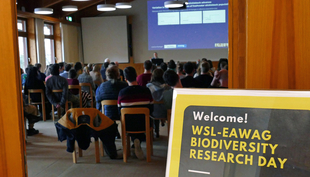
WSL and Eawag join forces: the new WSL-Eawag Biodiversity Center links research on biodiversity on land and in water.

WSL and Eawag join forces: the new WSL-Eawag Biodiversity Center links research on biodiversity on land and in water.

Read more
January 23, 2026 –

Aquatic ecosystems are fragile. But just how fragile they are has been revealed in a new study by the Swiss Federal Institute of Aquatic Science and Technology (Eawag) and the University of Zurich. Researchers investigated how...

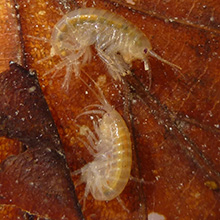
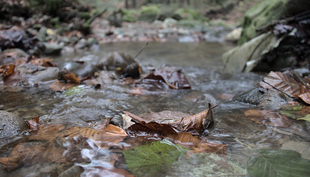
Aquatic ecosystems are fragile. But just how fragile they are has been revealed in a new study by the Swiss Federal Institute of Aquatic Science and Technology (Eawag) and the University of Zurich. Researchers investigated how climate change is affecting amphipods by shifting the timing of leaf fall in autumn. These creatures feed on leaves and, as the base of the food chain, have an impact on the entire ecosystem.

Read more
January 16, 2026 –

The Biodiversity Forum of the Swiss Academy of Sciences, together with over 50 experts, has compiled and recently published a report entitled ‘Understanding and shaping biodiversity in Switzerland’. Several Eawag researchers...

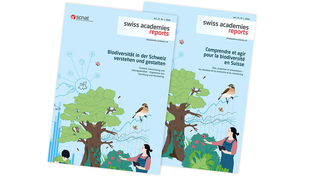
The Biodiversity Forum of the Swiss Academy of Sciences, together with over 50 experts, has compiled and recently published a report entitled ‘Understanding and shaping biodiversity in Switzerland’. Several Eawag researchers contributed to the report, sharing their expertise in the publication.

Read more

Join our events

25.03.​2026,
11.00 am
Eawag Dübendorf, Forum Chriesbach FC-C20
08.04.​2026,

SNSF Starting Grants and Ambizione Fellowships


Research Projects

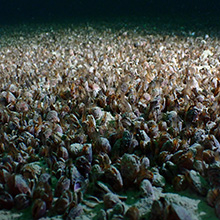
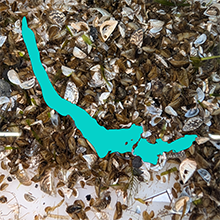
Quagga mussels thrive at depths of over 200 meters but do they reproduce there too? We investigate whether deep-water populations are quietly fuelling the invasion.
In late summer 2024, the quagga mussel was found in Lake Zurich for the first time we are documenting the invasion from day one and tracking how it is already changing the lake bottom.
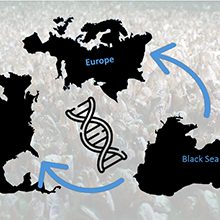
Where do the quagga mussels in our lakes come from and how did they get here? Using state-of-the-art genomics, we trace their origins and uncover previously unknown intro-duction routes.
Understanding the ecosystem behind our most important drinking water resource
Temporal fluctuations are ubiquitous in ecological systems, shaping how organisms and ecosystems function across multiple scales.
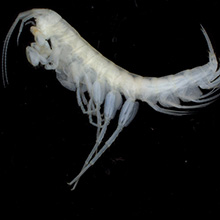
When do leaves fall and what impact does that have on aquatic communities?
Developing eDNA indicators for future-oriented, national aquatic biodiversity monitoring
Sustainable pathways towards net zero Switzerland – a joint initiative within the ETH Domaine.

Latest publications

Altermatt, F., Boissezon, A., Hug Peter, D., Matthews, B., Peter, A., Schindler, W., & Schmidt, B. (2026). Biodiversität der Gewässer. In Akademie der Naturwissenschaften Schweiz (SCNAT), Forum Biodiversität Schweiz (Ed.), Swiss Academies reports: Vol. 21(1). Biodiversität in der Schweiz verstehen und gestalten. Zustand, Entwicklung und Lösungsansätze - Ergebnisse aus Forschung und Monitoring (pp. 158-190). Bern: Akademie der Naturwissenschaften Schweiz. , Institutional Repository
Altermatt, F., Boissezon, A., Hug Peter, D., Matthews, B., Peter, A., Schindler, W., & Schmidt, B. (2026). Biodiversité des milieux aquatiques. In Académie suisse des sciences naturelles (SCNAT), Forum Biodiversité Suisse (Ed.), Swiss Academies reports: Vol. 21(1). Comprendre et agir pour la biodiversité en Suisse. État, évolution et orientations – les résultats de la recherche et du monitoring (pp. 158-190). doi:10.5281/zenodo.17774813, Institutional Repository
Baldan, D., Chauvier-Mendes, Y., Panzeri, D., Cossarini, G., Solidoro, C., & Bandelj, V. (2026). The geography of mediterranean benthic communities under climate change. Global Change Biology, 32(2), e70725 (16 pp.). doi:10.1111/gcb.70725, Institutional Repository