Department Aquatic Ecology
Lake Zurich under change
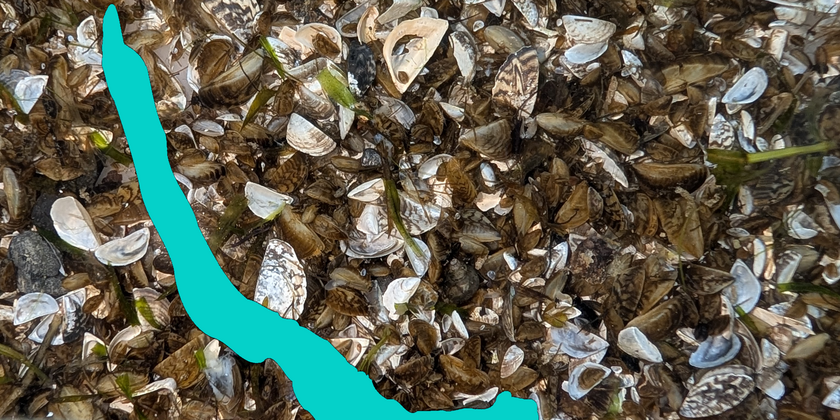
In late summer 2024, during a routine sampling campaign, we found something unexpected: the quagga mussel detected in Lake Zurich for the very first time. The species is still rare and spatially restricted, suggesting an early invasion stage. But what has been observed in Lake Constance gives reason for concern: there, the mussel has spread to great depths and reached very high densities in some areas.
To understand what this invasion means, we first need to know what was there before. That is the core of this project. We study the small animals living in and on the sediment of the lake's shoreline zone they recycle nutrients and form the foundation of important food webs. More than 113,000 individuals were counted and identified across three depth zones (1 m, 5 m, 15 m) and in both basins of the lake the Upper and Lower Lake.
We don't just look at which species are present, but also what role each species plays in the ecosystem. The results already reveal clear differences: the Lower Lake is more strongly dominated by invasive species, while the Upper Lake retains a greater variety of ecological functions. Shoreline modifications such as harbors and artificial structures reinforce this effect more sensitive species decline, while more tolerant and often invasive species benefit.
We now know what Lake Zurich looked like at the start of the quagga invasion. This baseline is crucial only with it can we detect, in the years to come, what is truly changing.