Department Aquatic Ecology

Current Projects

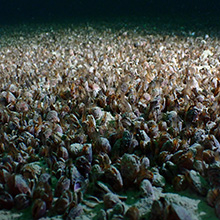
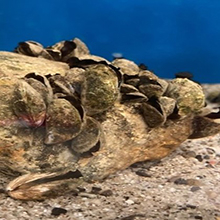
Quagga mussels thrive at depths of over 200 meters but do they reproduce there too? We investigate whether deep-water populations are quietly fuelling the invasion.
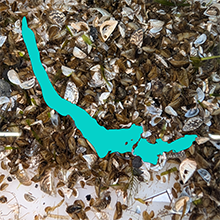
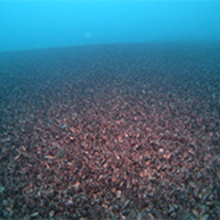
In late summer 2024, the quagga mussel was found in Lake Zurich for the first time we are documenting the invasion from day one and tracking how it is already changing the lake bottom.
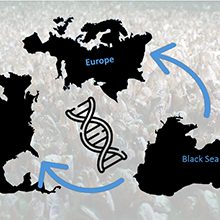
Where do the quagga mussels in our lakes come from and how did they get here? Using state-of-the-art genomics, we trace their origins and uncover previously unknown intro-duction routes.
Understanding the ecosystem behind our most important drinking water resource
Temporal fluctuations are ubiquitous in ecological systems, shaping how organisms and ecosystems function across multiple scales.
When do leaves fall and what impact does that have on aquatic communities?
Developing eDNA indicators for future-oriented, national aquatic biodiversity monitoring
Sustainable pathways towards net zero Switzerland – a joint initiative within the ETH Domaine.
Swiss National Assessment of Lake Biodiversity and Ecosystem Services (SNALBES)
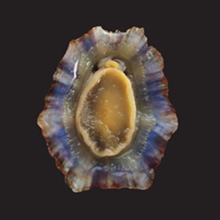
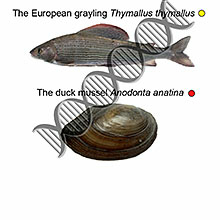
Investigation of (epi)genomic signatures in adaptation to ocean acidification in limpets
Establishing a framework for conservation genomics of freshwater biodiversity
Investigation of the Resilience and Adaptability of Quagga Mussels
Sex ratio as a potential tool for genetic biocontrol
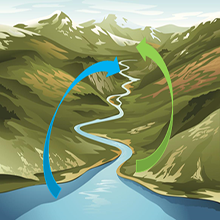
Dieses Projekt leistet einen Beitrag zur Blue Green Biodiversity Research Initiative - einer Eawag-WSL-Kollaboration, die sich auf die Biodiversität an der Schnittstelle von aquatischen und terrestrischen Ökosystemen konzentriert.
Temperature competition in phytoplankton
Impact of climate change on the biological water assessment
Interactive effects of temperature and resource availability on the metabolism of phytoplankton
A multi phase research program by Eawag and the Swiss Federal Office for the Environment (FOEN)
Together with climate change, biodiversity loss is the most pressing environmental crisis of our time. The "Translational Centre Biodiversity Conservation" bundles knowledge and makes it generally available. In collaboration with key Swiss stakeholders, the Centre identifies topics for knowledge exchange, translation, and synthesis, and communicates and distributes the resulting synthesis products.
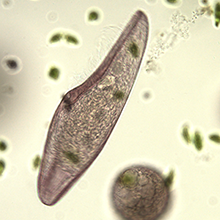
Why do toxic cyanobacteria bloom? A gene to ecosystem approach...
Laboratory experiments under controlled chemostat conditions have indicated that evolution of algal populations can occur on ecological time-scales and can significantly alter community dynamics and ecosystem ...

Algal eco-evolutionary dynamics in nature

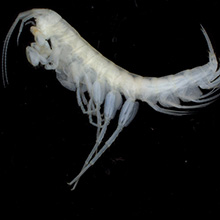
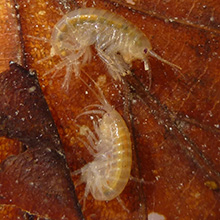
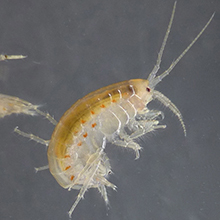
Distribution and genetic structure of amphipod species in Swiss riverine ecosystems
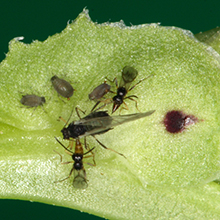
Understanding how facultative endosymbiotic bacteria that increase host resistance shape coevolution between aphid hosts and their hymenopteran parasitoids.
An Eawag-WSL collaboration focusing on Biodiversity at the interface of aquatic and terrestrial ecosystems.
Advancing tools and protocols for eDNA biomonitoring in aquatic ecosystems
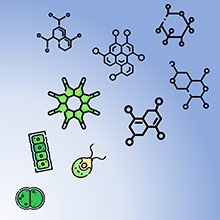
Identification of transformation products and assessment of environmental relevance
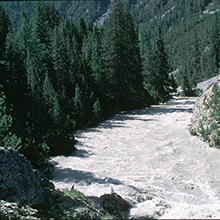
An ecological longterm study of the Spöl River, Swiss National Park, to experimental high flows since 1999, including redd counts of brown trout, macroinvertebrates, periphyton and water physico-chemistry at periodic times during each year.
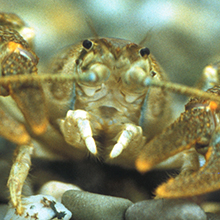
Population genetics approaches to investigate how the massive level of habitat fragmentation affects population connectivity of crayfish, and if technical countermeasures effectively mitigate the negative effects of fragmentation.
Combining innovative approaches to phytoplankton and lake-ecosystem monitoring with community and ecosystem theory to to understand ...

Linking small-scale phytoplankton dynamics to aquatic ecosystems ...

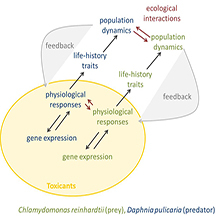
One of the most important challenges in environmental toxicology is to understand how responses to chemical pollutants scale through levels of biological complexity...
New tools to monitor changes in ecosystem conditions and to quantify genetic changes of populations in (semi-)natural environments to predict how human mediated environmental change will influence stability and resilience of ecosystems.
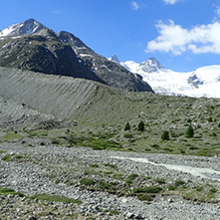
Understanding and measuring how flow intermittency drives biodiversity and river functions in an alpine environment
A project for monitoring the spread of the quagga mussel in Swiss lakes and supporting prevention and protection measures in Switzerland
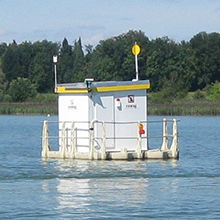
This Interreg project aims to understand the responses of Lake Constance to changing environmental conditions.
Modelling the consequences of climate change and neobiota for Lake Constance