Archiv Detail

Blue Diversion Autarky Toilette im Praxistest

29. Januar 2021 | Karin Stäheli

Drei Monate lang hat eine Grossfamilie in Südafrika das unabhängige Toilettenhäuschen Autarky getestet. Alle waren zufrieden mit dem stillen Örtchen.

«Ich bin sehr stolz auf unsere Technologien und sehe darin grosses Potenzial» sagt Eva Reynaert, welche am Projekt beteiligt war und die Feldtests mitbetreut hat. Die Blue Diversion Autarky Toilette bietet gerade in wenig entwickelten Gebieten grosse Vorteile: Sie funktioniert ohne Wasseranschluss und benötigt auch keine Kanalisation. Durch die Trennung von Spülwasser, Urin und Fäkalien lassen sich zudem wertvolle Ressourcen zurückgewinnen, zum Beispiel Wasser oder Nährstoffe. «Nun wollten wir das Autarky unter realen Bedingungen testen», erklärt Reynaert.  

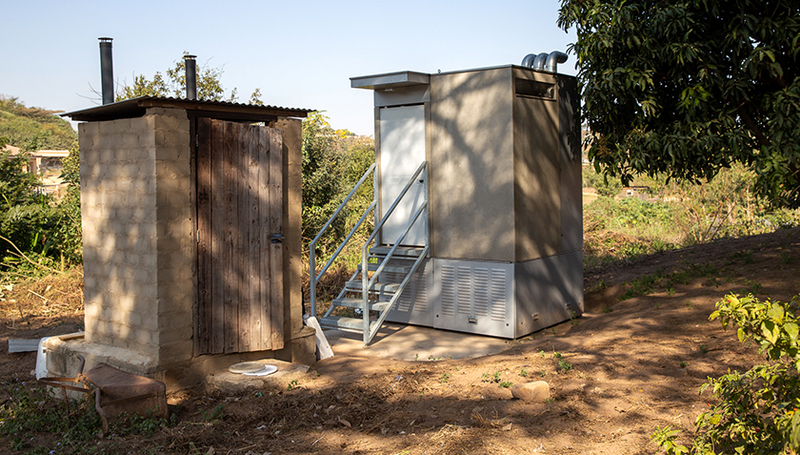
Gemeinsam mit einem Team von Forschenden hat Reynaert die Blue Diversion Autarky Toilette neben einer bestehenden Trockentoilette auf dem Grundstück einer vierzehnköpfigen Familie aufgebaut, ausserhalb von Durban in einer Gegend ohne Kanalisationsanschluss. Die Toilette funktionierte dort selbstständig und weitgehend störungsfrei. Teil der Tests waren neben den Technologien im Hintergrund auch die Sanitärobjekte wie Lavabo, Urinal und einer neu entwickelten wassergespülten Urin-Trenntoilette. Nebst der technischen Leistung der Behandlungsmodule stand auch die soziale Akzeptanz eines solchen Toilettensystems im Fokus des Tests.

Die Vorteile eines stillen Örtchens

Im Unterschied zu der bisherigen Trockentoilette bietet die Blue Diversion Autarky Toilette den Benutzern die Vorteile einer modernen Toilette mit Privatsphäre, abschliessbarer Tür, elektrischem Licht, Fenster und eigenem Lavabo mit Seife und Spiegel. Die Wasserspülung ermöglicht eine geruchsfreie Umgebung. Dies wurde von den Bewohnerinnen und Bewohnern besonders geschätzt und das Toilettenhäuschen wurde gerne genutzt – auch um einfach einmal einen kurzen Moment für sich alleine zu sein.
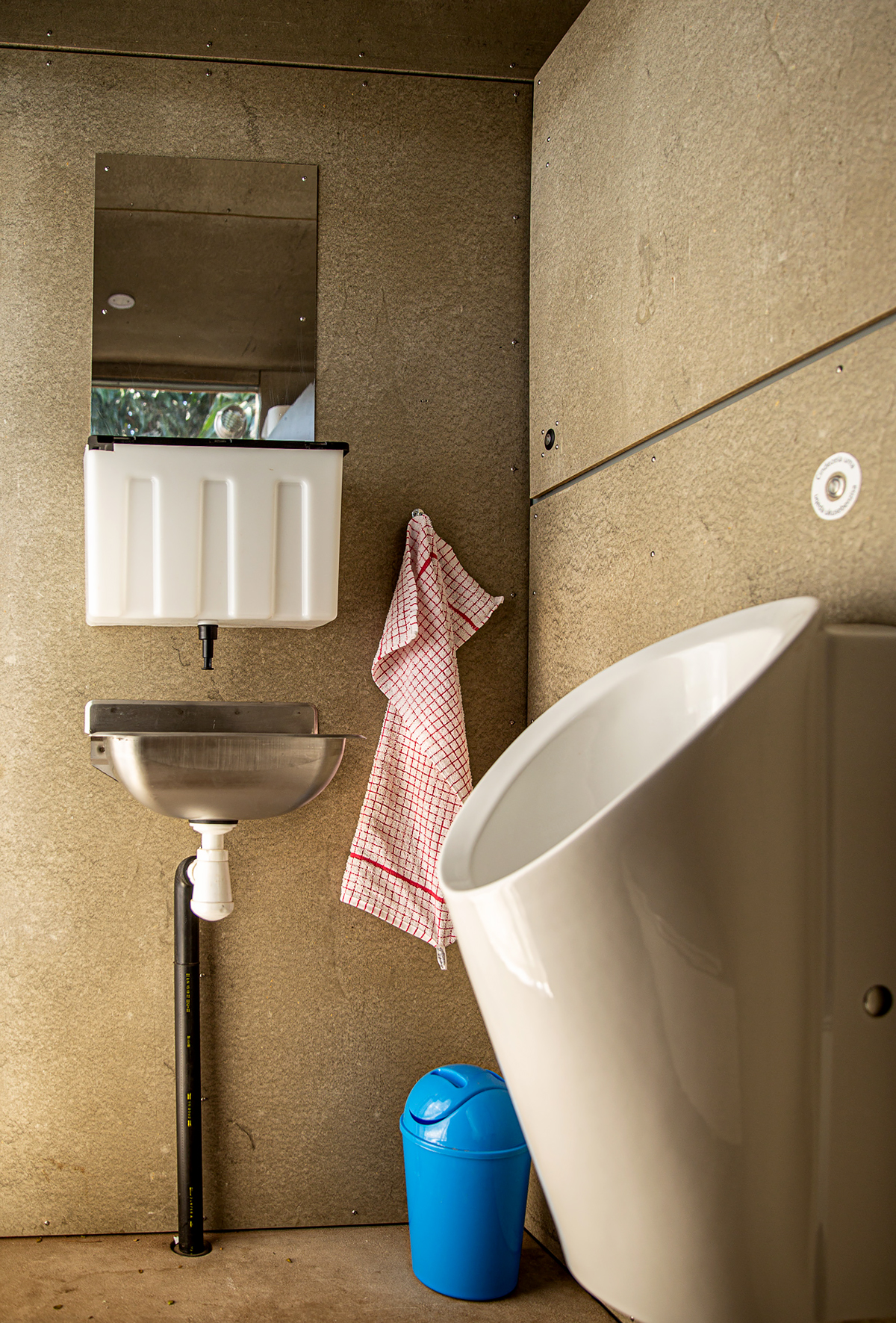
 

Urinal und Waschbecken im Blue Diversion Autarky Toilettenhäuschen in Durban.
Die Trenntoilette ist nicht zu sehen.
(Foto: Autarky, Eawag)

Urin- und Wassermodul haben sich bewährt

Getestet wurden das Wasser- und Urinmodul, da die Entwicklung des Fäkalienmoduls noch nicht abgeschlossen war. Ein Techniker prüfte zwei bis dreimal wöchentlich die Systemteile und füllte Wasser nach, das durch die Verdunstung und bei der Trennung von Feststoffen und Urin verloren ging. Ausserdem entnahm er Proben von Wasser und Urin, um sie im Labor zu analysieren.

Das Wassermodul, welches das Wasser von der Toilettenspülung reinigt und wieder ausgibt, funktionierte weitgehend störungsfrei. «Ein mehrstündiger Stromunterbruch führte zu einer höheren Nitritbelastung des Wassers, was für das Toilettenspülen aber kein Problem darstellte», erklärt Reynaert. «Einmal vergass der Techniker, eine Pumpe wieder einzuschalten, und ganz am Anfang war eine Leitungsverbindung nicht dicht angezogen, deshalb tropfte es leicht. Die Technologie an sich hat super funktioniert»

Das Urinmodul wandelt den von Fäkalien und Spülwasser getrennten Urin in Dünger um, indem er stabilisiert und getrocknet wird. Durch die Stabilisierung werden wichtige, zum Teil leicht flüchtige Pflanzennährstoffe im Urin fixiert, krankheitserregende Keime abgetötet und Geruchsbildung verhindert. Dieses System hat während den drei Monaten ohne Störungen funktioniert. Einmal monatlich konnte das konzentrierte Urinprodukt entnommen werden. «Was die Qualität des zukünftigen Düngers anbelangt, haben wir noch Verbesserungspotenzial erkannt, da in diesem Feldtest noch ein substantieller Teil des Nährstoffs Stickstoff im Prozess verloren ging» sagt Michel Riechmann, der in Durban für den Test des Urinmoduls zuständig war.
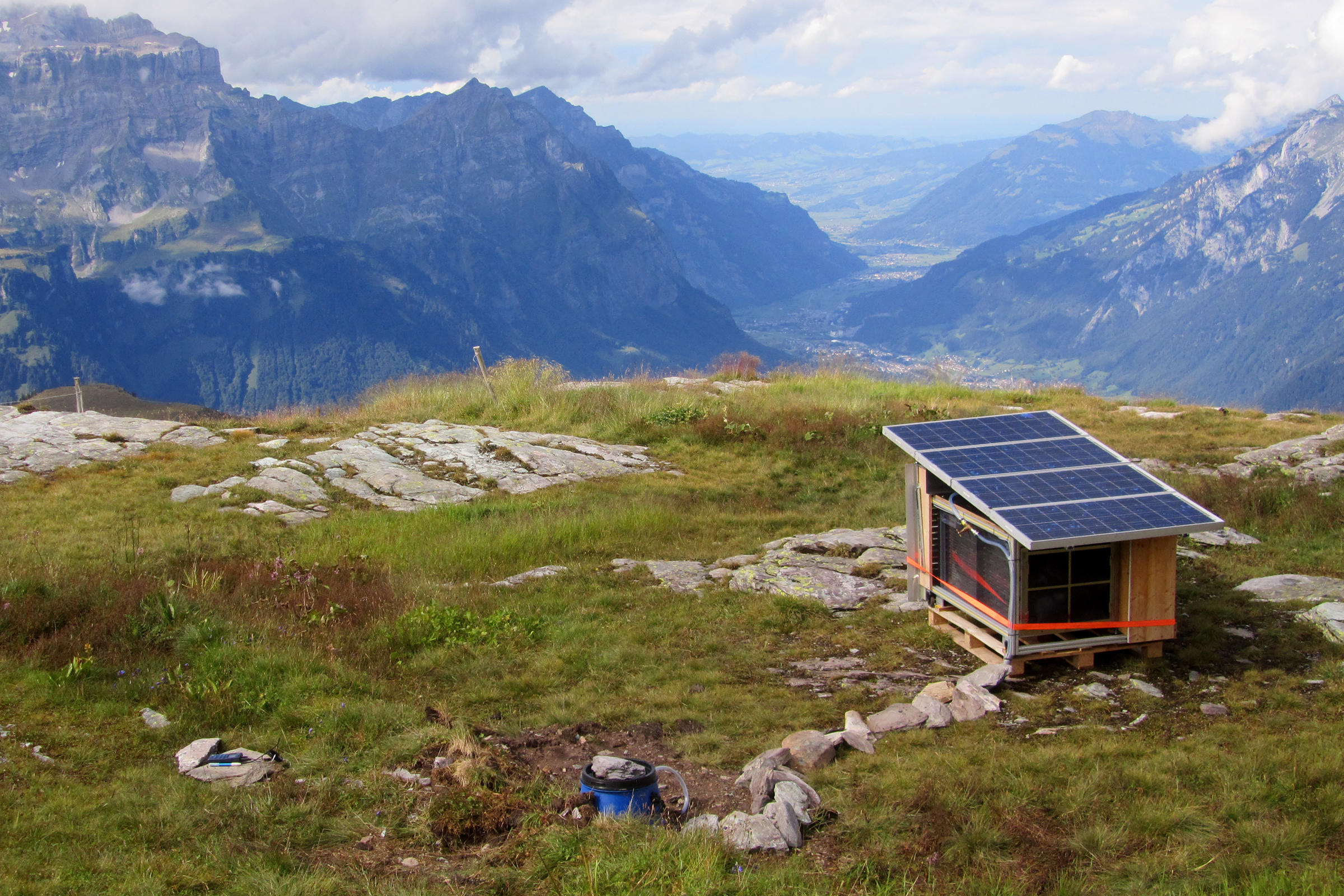
 

Urinbehandlung auf 2200 Metern Höhe – Auch der SAC ist interessiert an neuen Abwasserbehandlungslösungen für seine Hütten, wie dieses gemeinsame Pilotprojekt mit dem Ingenieurbüro Vuna und der Eawag zeigt.
(Foto: Michel Riechmann, Eawag)

Auch in der Schweiz erfolgreich getestet

Das Urinmodul wurde nicht nur in Durban, sondern auch als einzelnes Modul in Kombination mit Trockentoiletten in Au am Zürichsee und auf der Leglerhütte in den Glarner Alpen Praxistests unterzogen. Grundsätzlich konnte auch hier der automatisierte Betrieb erfolgreich wiederholt werden. Die zum Teil tiefen Temperaturen führten jedoch zu einem verlangsamten Trocknungsprozess. Dank zusätzlich eingebauter Photovoltaikmodule funktionierte das Urinmodul auf 2200 Metern Höhe dafür sogar komplett energieautark.
 

Die Forschung für das autarke Toilettenhäuschen Blue Diversion Autarky startete bereits 2011 mit der «Reinvent the Toilet Challenge», welche von der Bill und Melinda Gates Stiftung ausgerufen wurde. Im Projekt Blue Diversion wurden die Grundlagen für eine mobile Trenntoilette gelegt, welche Wasser für das Händewaschen und die WC-Spülung rezykliert. In der neuen Autarky Toilette sollen neben Wasser auch Urin und Fäkalien vor Ort behandelt werden und eine separate Entsorgung unnötig machen. Es ist möglich, die Elemente Wassermodul, Urinmodul und Fäkalienmodul je nach Anwendung einzeln oder in Kombination mit anderen Technologien einzusetzen.

Sehen Sie sich das Video auf Youtube an.

Titelbild: Autarky, Eawag

Originalpublikationen

Extbase Variable Dump
array(2 items)
   publications => '21700,20895' (11 chars)
   libraryUrl => '' (0 chars)
Extbase Variable Dump
array(2 items)
   0 => Snowflake\Publications\Domain\Model\Publicationprototypepersistent entity (uid=21700, pid=124)
      originalId => protected21700 (integer)
      authors => protected'Sutherland, C.; Reynaert, E.; Dhlamini, S.; Magwaza, F.;
          Lienert, J.; Riechmann, M. E.; Buthelezi, S.; Khumalo,&
         nbsp;D.; Morgenroth, E.; Udert, K. M.; Sindall, R. 
         C.
' (230 chars) title => protected'Socio-technical analysis of a sanitation innovation in a peri-urban househol
         d in Durban, South Africa
' (101 chars) journal => protected'Science of the Total Environment' (32 chars) year => protected2021 (integer) volume => protected755 (integer) issue => protected'' (0 chars) startpage => protected'143284 (12 pp.)' (15 chars) otherpage => protected'' (0 chars) categories => protected'field test; water reuse; source separation; service delivery; social accepta
         nce; transdisciplinary research
' (107 chars) description => protected'The provision of water and sanitation for all that is safe, dignified, relia
         ble, affordable and sustainable is a major global challenge. While centraliz
         ed sewer-based sanitation systems remain the dominant approach to providing
         sanitation, the benefits of non-sewered onsite sanitation systems are increa
         singly being recognised. This paper presents the outcomes of the testing of
         the Blue Diversion Autarky Toilet (BDAT), a sanitation system providing hygi
         ene and dignity without relying on water and wastewater infrastructure, in a
          peri-urban household in Durban, South Africa. The BDAT was used by a single
          household as their only form of sanitation during three months of technical
          and social testing. An analysis based on technical data in combination with
          interpretive, qualitative research methods revealed that the BDAT functione
         d well and achieved high levels of social acceptance in the test household.
         The flushing, cleanliness and odour-free nature of the sanitation technology
         , its functionality, the household's previous sanitation experience, and the
         ir experience with and understanding of water scarcity, were the main factor
         s underpinning their positive response to this innovation in sanitation. The
          testing process resulted in broader developmental benefits for the househol
         d, including improved basic services due to the upgrading of the electrical
         and existing sanitation system, social learning, and improved relationships
         between household members and the local state. A transdisciplinary research
         process, which emerged through the assessment, enabled the integration of di
         fferent forms of knowledge from multiple actors to address the complexity of
          problems related to the development of socially just sanitation. The benefi
         t of engaging with societal actors in sanitation innovation and assessing it
         s outcomes using both the technical and social sciences is evident in this p
         aper.
' (1905 chars) serialnumber => protected'0048-9697' (9 chars) doi => protected'10.1016/j.scitotenv.2020.143284' (31 chars) uid => protected21700 (integer) _localizedUid => protected21700 (integer)modified _languageUid => protectedNULL _versionedUid => protected21700 (integer)modified pid => protected124 (integer)
1 => Snowflake\Publications\Domain\Model\Publicationprototypepersistent entity (uid=20895, pid=124) originalId => protected20895 (integer) authors => protected'Reynaert, E.; Greenwood, E. E.; Ndwandwe, B.; Riechmann,
          M. E.; Sindall, R. C.; Udert, K. M.; Morgenro
         th, E.
' (163 chars) title => protected'Practical implementation of true on-site water recycling systems for hand wa
         shing and toilet flushing
' (101 chars) journal => protected'Water Research X' (16 chars) year => protected2020 (integer) volume => protected7 (integer) issue => protected'' (0 chars) startpage => protected'100051 (13 pp.)' (15 chars) otherpage => protected'' (0 chars) categories => protected'field test; water recycling; hand washing; toilet flushing; wastewater reuse
         ; biologically activated membrane bioreactor (BAMBI)
' (128 chars) description => protected'On-site wastewater reuse can improve global access to clean water, sanitatio
         n and hygiene. We developed a treatment system (aerated bioreactor, ultrafil
         tration membrane, granular activated carbon and electrolysis for chlorine di
         sinfection) that recycles hand washing and toilet flush water.<br /> Three p
         rototypes were field-tested in non-sewered areas, one in Switzerland (hand w
         ashing) and two in South Africa (hand washing, toilet flushing), over period
         s of 63, 74 and 94 days, respectively.<br /> We demonstrated that the system
          is able to recycle sufficient quantities of safe and appealing hand washing
          and toilet flush water for domestic or public use in real-life applications
         . Chemical contaminants were effectively removed from the used water in all
         prototypes. Removal efficiencies were 99.7% for the chemical oxygen demand (
         COD), 98.5% for total nitrogen (TN) and 99.9% for phosphate in a prototype t
         reating hand washing water, and 99.8% for COD, 95.7% for TN and 89.6% for ph
         osphate in a prototype treating toilet flush water. While this system allowe
         d for true recycling for the same application, most on-site wastewater reuse
          systems downcycle the treated water, i.e., reuse it for an application requ
         iring lower water quality. An analysis of 18 selected wastewater reuse speci
         fications revealed that at best these guidelines are only partially applicab
         le to innovative recycling systems as they are focused on the downcycling of
          water to the environment (e.g., use for irrigation). We believe that a para
         digm shift is necessary and advocate for the implementation of risk-based (a
         nd thus end-use dependent) system performance targets to evaluate water trea
         tment systems, which recycle and not only downcycle water.
' (1730 chars) serialnumber => protected'2589-9147' (9 chars) doi => protected'10.1016/j.wroa.2020.100051' (26 chars) uid => protected20895 (integer) _localizedUid => protected20895 (integer)modified _languageUid => protectedNULL _versionedUid => protected20895 (integer)modified pid => protected124 (integer)
Sutherland, C.; Reynaert, E.; Dhlamini, S.; Magwaza, F.; Lienert, J.; Riechmann, M. E.; Buthelezi, S.; Khumalo, D.; Morgenroth, E.; Udert, K. M.; Sindall, R. C. (2021) Socio-technical analysis of a sanitation innovation in a peri-urban household in Durban, South Africa, Science of the Total Environment, 755, 143284 (12 pp.), doi:10.1016/j.scitotenv.2020.143284, Institutional Repository
Reynaert, E.; Greenwood, E. E.; Ndwandwe, B.; Riechmann, M. E.; Sindall, R. C.; Udert, K. M.; Morgenroth, E. (2020) Practical implementation of true on-site water recycling systems for hand washing and toilet flushing, Water Research X, 7, 100051 (13 pp.), doi:10.1016/j.wroa.2020.100051, Institutional Repository