Bei Entscheidungen im Umweltbereich prallen oft unterschiedliche Interessen, Bedürfnisse und Ziele aufeinander. Die Eawag entwickelt Konzepte, wie Entscheidungsprozesse optimal gestaltet werden können. Sie untersucht zudem, wie die Transformation hin zu einer nachhaltigen Gesellschaft gelingen kann und welche Rolle die Forschung in der gesellschaftlichen Entscheidungsfindung spielen kann.
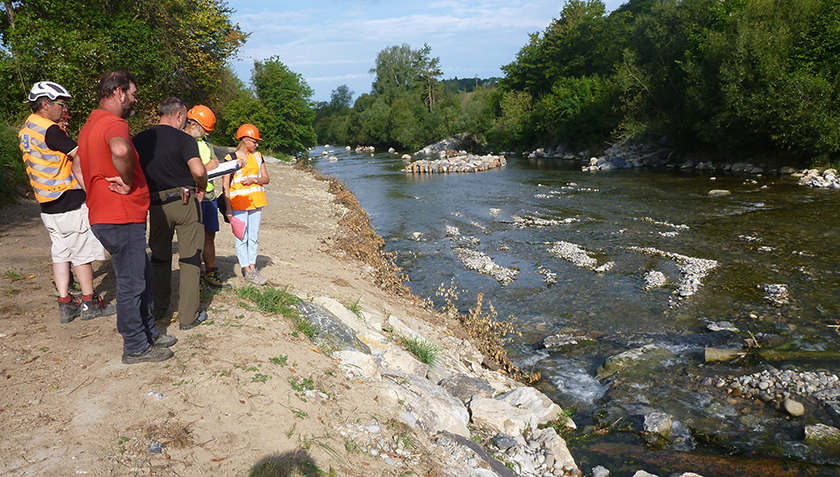
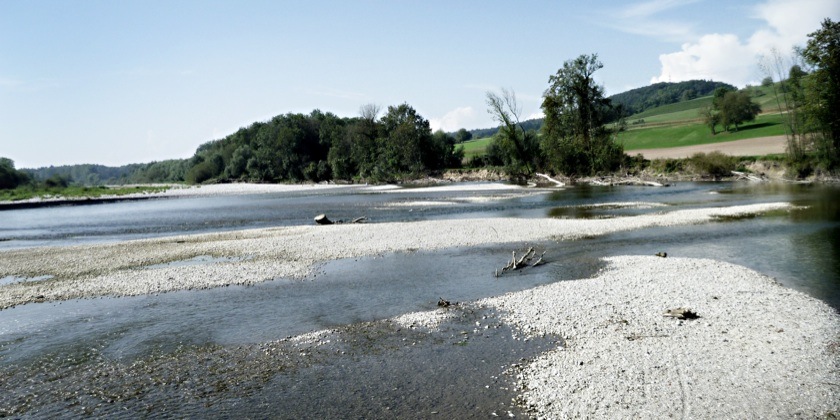
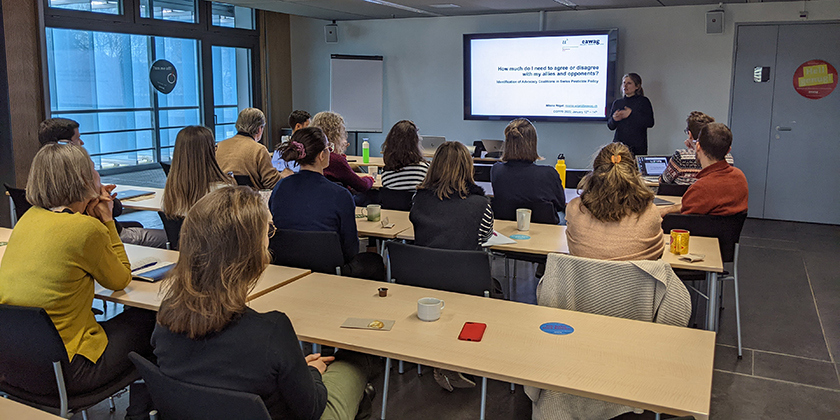
Besprechung mehrerer Akteure bei einer Revitalisierung an der Töss.
(Foto: Eawag, Andri Bryner)
Nachhaltige Kompromisse rund ums Wasser finden
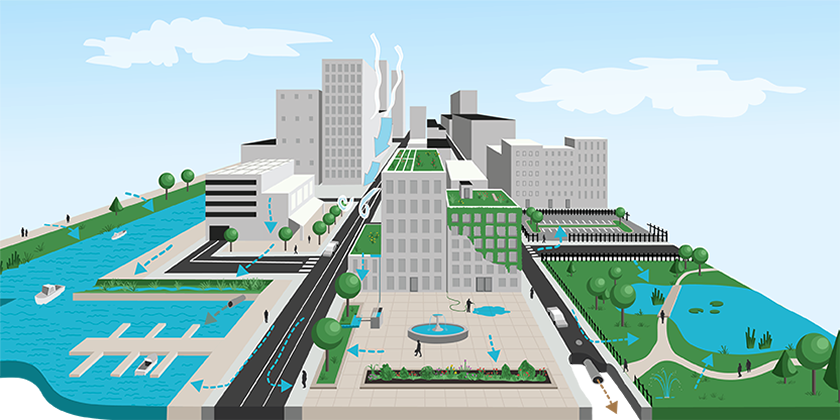
Die Nachfrage nach Wasser steigt. Doch die Interessen sind sehr unterschiedlich. Während die einen sauberes Trinkwasser wollen, nutzen andere Gewässer zur Energiegewinnung und Nahrungsmittelproduktion. Seen und Flüsse dienen aber auch als Lebensraum für Pflanzen und Tiere und als Erholungsraum für den Menschen. Wasser in Kombination mit Pflanzen gewinnt in Siedlungsgebieten zudem an Bedeutung, um die Überhitzung der Städte als Folge des Klimawandels abzumildern – man spricht von blau-grünen Infrastrukturen. Der nachhaltige Umgang mit Wasser und Gewässern erfordert daher oft komplexe Entscheidungsprozesse und Kompromisse, um Wasser und Gewässer nachhaltig zu managen. Wie dieser Dialog erfolgreich gestaltet werden kann, untersucht die Eawag in ihren Forschungsprojekten.
Menschen und ihre Netzwerke verstehen
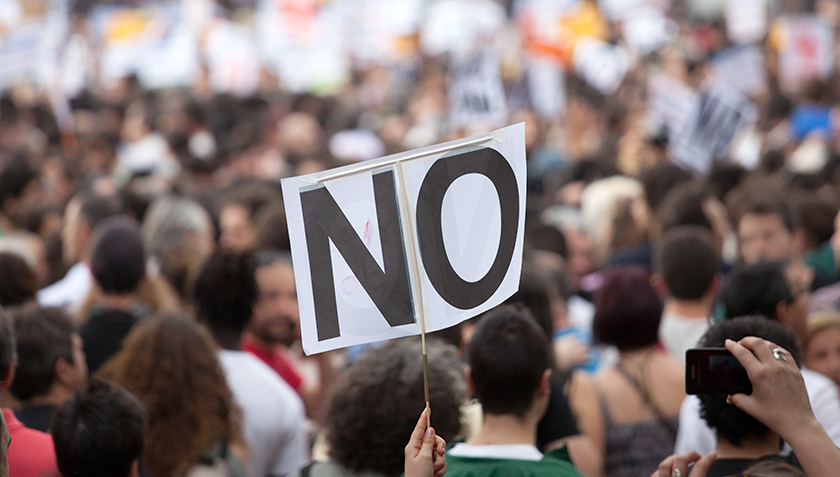
Um den grossen globalen Herausforderungen wie dem Klimawandel oder der Pestizidbelastung erfolgreich begegnen zu können, ist es wichtig zu verstehen, wie Menschen Entscheidungen treffen und wie die verschiedenen Akteure zusammenwirken. Was motiviert Menschen, ihr Verhalten zu überdenken und anzupassen? Und was hindert sie daran? Wie arbeiten die verschiedenen Interessensgruppen zusammen: Bevölkerung, Politik, Verwaltung, Wirtschaft, Verbände oder NGOs? Welchen Stellenwert hat die Umwelt in den sozialen Netzwerken? Und welche Rolle kann und soll die Wissenschaft in diesen Netzwerken spielen?
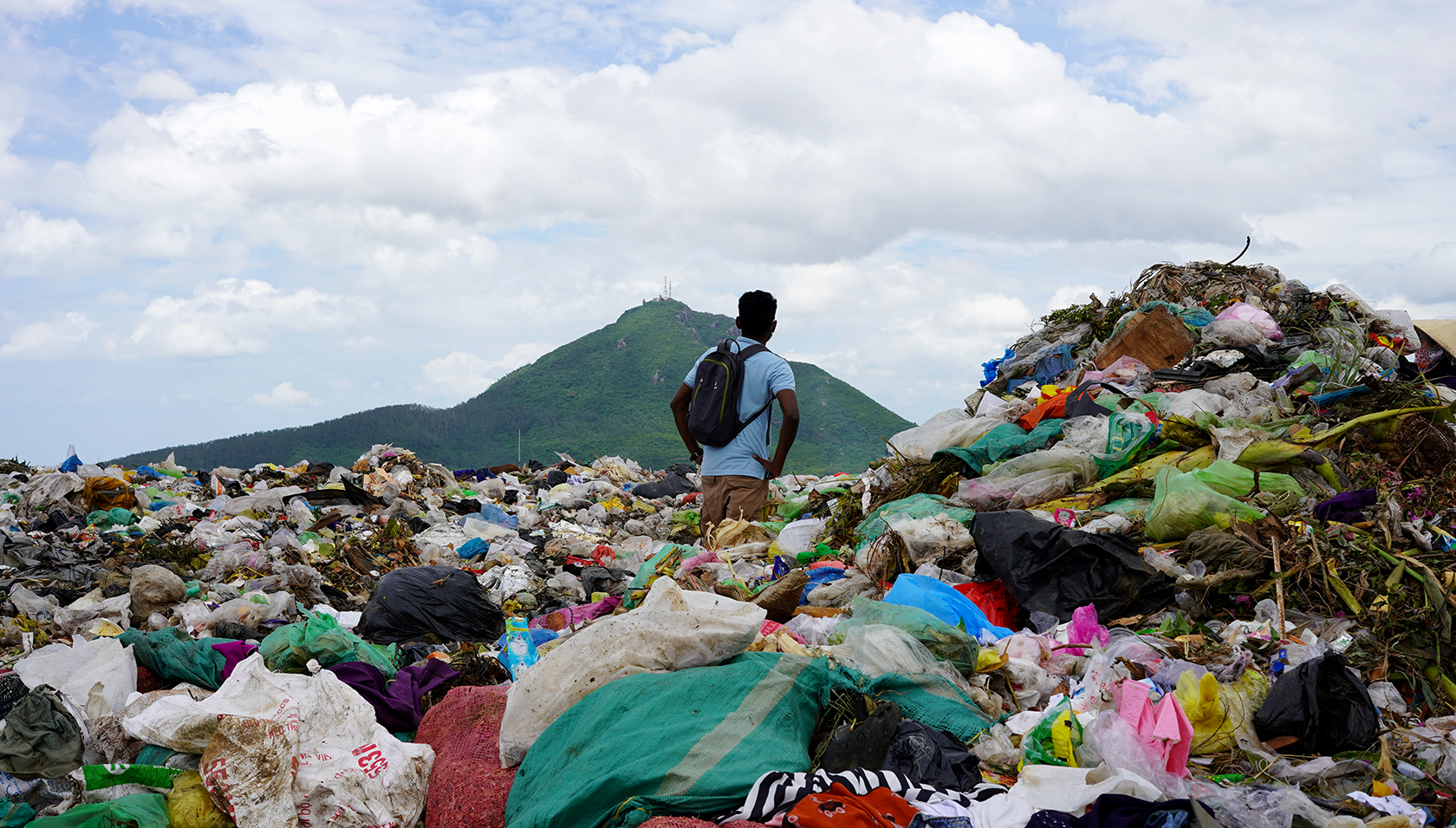
Foto: Ericcrama, Istock
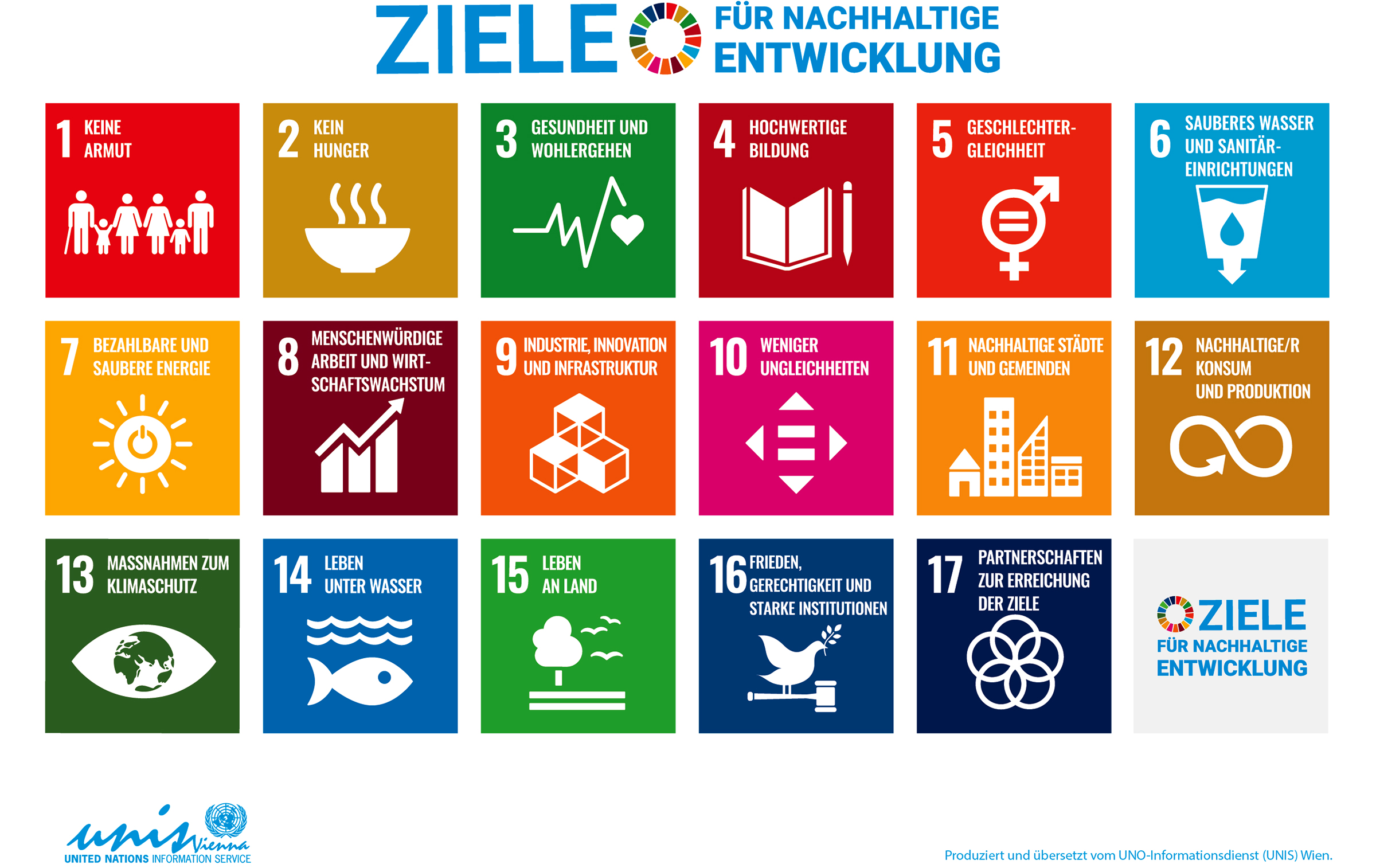
Im Jahr 2015 haben die Vereinten Nationen mit der Agenda 2030 17 Ziele verabschiedet. Sie sollen weltweit die nachhaltige Entwicklung voranbringen.
Transformation hin zu nachhaltiger Entwicklung
Viele gesellschaftliche Bereiche stehen heute vor einer Wende. Beispiele sind die Energieerzeugung oder die Wasserversorgung und -aufbereitung. Ein tiefgreifender Umbau hin zu nachhaltigen Nutzung und Wiederverwendung der natürlichen Ressourcen ist notwendig. Gleichzeitig haben die Vereinten Nationen 17 Ziele für nachhaltige Entwicklung verabschiedet, um weltweit den Frieden und Wohlstand zu fördern, darunter das Ziel 6: «Verfügbarkeit und nachhaltige Bewirtschaftung von Wasser und Sanitärversorgung für alle gewährleisten». Wie die Transformation zu mehr Nachhaltigkeit gelingen kann und wie die Nachhaltigkeitsziele erreicht werden können, analysieren Forschende der Eawag aus den Ingenieur-, Sozial- und Umweltwissenschaften in inter- und transdisziplinären Projekten.
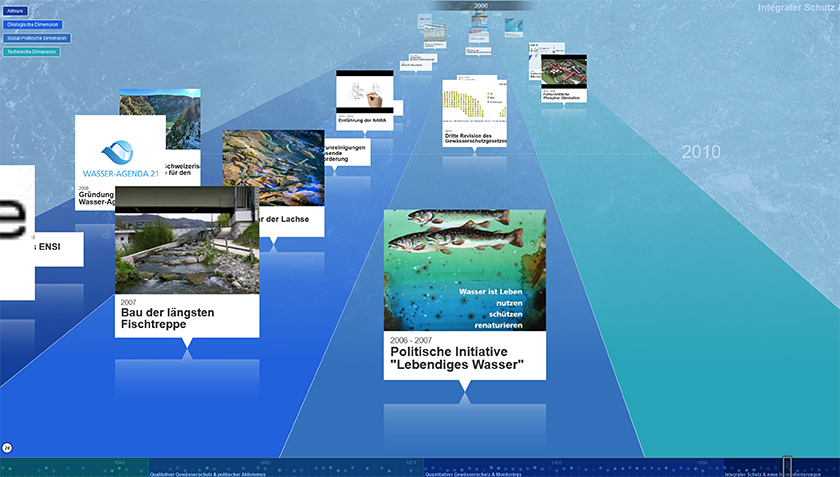
Der Verband Schweizer Abwasser- und Gewässerschutzfachleute ist Vollzugspartner für Bund, Kantone und Gemeinden und setzt sich für saubere und lebendige Gewässer in der Schweiz ein.
Das Netzwerk für Nachhaltigkeitslösungen verbindet Wissenschaft, Wirtschaft, Zivilgesellschaft, Politik und Verwaltung, um die Umsetzung der 17 Ziele für Nachhaltige Entwicklung voranzutreiben.
array(3 items)0 => Snowflake\Publications\Domain\Model\Publicationprototypepersistent entity (uid=34726, pid=124)originalId => protected34726 (integer)
authors => protected'Miorner, J.; Schelbert, V.; Binz, C.' (51 chars)
title => protected'How transformative innovations travel: tracing the diffusion of circular dis trict-scale sanitation systems in Europe' (116 chars)
journal => protected'Economic Geography' (18 chars)
year => protected2025 (integer)
volume => protected101 (integer)
issue => protected'2-3' (3 chars)
startpage => protected'93' (2 chars)
otherpage => protected'121' (3 chars)
categories => protected'circular district-scale sanitation systems; configurational template; diffus ion; geography of transitions; transformative innovation; transitions' (145 chars)
description => protected'Current models for understanding the spatial diffusion of innovation exhibit significant limitations when it comes to explaining how transformative inno vations in sectors of the foundational economy travel between cities and cou ntries. Transformative innovations in infrastructure sectors like water, ene rgy, or waste management are typically not reducible to single products or t echnologies but rely on a set of complementary organizational, social, polic y, and demand-side innovations. Their spatial diffusion thus requires nonlin ear socially embedded institutionalization processes that include regulative , political, and cultural changes, extending well beyond the knowledge- and market formation dynamics emphasized in conventional diffusion models. This article develops a conceptual model that specifies the socio-technical conte xtualization and de-contextualization processes that take place every time a n innovative infrastructure innovation travels between places. It disentangl es the spatial complexities involved in the packaging of social and technica l elements into coherent configurational templates that enable the spatial d iffusion of transformative innovations. We apply our framework to a case stu dy of the diffusion of circular district-scale sanitation systems (CDSS) in Europe, drawing on fifty-four expert interviews and an extensive database of secondary material. Our findings show how a template for CDSS was continuou sly optimized and standardized through spatially scattered experiments, pilo t and demonstration projects, and high-profile lighthouse initiatives spread across Europe. Based on our findings, we elaborate a three-stage phase mode l for the institutionalization of configurational templates. The model provi des inroads for assessing diffusion challenges in other sectors where transf ormative innovation is intimately coupled with socio-technical reconfigurati on.' (1903 chars)
serialnumber => protected'0013-0095' (9 chars)
doi => protected'10.1080/00130095.2025.2489965' (29 chars)
uid => protected34726 (integer)
_localizedUid => protected34726 (integer)modified_languageUid => protectedNULL
_versionedUid => protected34726 (integer)modifiedpid => protected124 (integer)1 => Snowflake\Publications\Domain\Model\Publicationprototypepersistent entity (uid=34705, pid=124)originalId => protected34705 (integer)
authors => protected'Cristofari, H.; Asse, D.; Chanteloup, L.; Guisan, A.; Ot ero, I.; Reynard, E.; Urbach, D.; Randin, C.' (140 chars)
title => protected'A model of mountain social-ecological systems to catalyze multi-actor collab orations toward sustainability' (106 chars)
journal => protected'Earth's Future' (14 chars)
year => protected2025 (integer)
volume => protected13 (integer)
issue => protected'4' (1 chars)
startpage => protected'e2024EF004818 (18 pp.)' (22 chars)
otherpage => protected'' (0 chars)
categories => protected'co-production; interdisciplinarity; mountains; social-ecological systems; tr ansdisciplinarity' (93 chars)
description => protected'Addressing sustainability challenges in mountain regions where human activit ies strongly overlap requires multi-actor collaboration and interdisciplinar y methods. Yet, such collaborative processes need to account for the existen ce of diverse representations of mountain social-ecological systems amongst actors. Here we first explore and describe diverse representations of mounta in social-ecological systems using picture-based interviews with local actor s. We then develop a conceptual model of such systems that can help actors a cknowledge and share their representations. This model integrates the human and natural components of mountain social-ecological systems as well as thei r interactions. To further support reflexivity, it also specifies an individ ual's personal stance with respect to the system.' (809 chars)
serialnumber => protected'2328-4277' (9 chars)
doi => protected'10.1029/2024EF004818' (20 chars)
uid => protected34705 (integer)
_localizedUid => protected34705 (integer)modified_languageUid => protectedNULL
_versionedUid => protected34705 (integer)modifiedpid => protected124 (integer)2 => Snowflake\Publications\Domain\Model\Publicationprototypepersistent entity (uid=35256, pid=124)originalId => protected35256 (integer)
authors => protected'Palomo-Vélez, G.; Perlaviciute, G.; Contzen, N.; Steg, L.' (78 chars)
title => protected'How company history and hydrogen type shape public trust and acceptability: a reputation management perspective' (111 chars)
journal => protected'Energy Research and Social Science' (34 chars)
year => protected2025 (integer)
volume => protected127 (integer)
issue => protected'' (0 chars)
startpage => protected'104279 (12 pp.)' (15 chars)
otherpage => protected'' (0 chars)
categories => protected'trust; reputation management; public acceptability; hydrogen; energy company' (76 chars)
description => protected'Hydrogen is gaining interest as a clean energy source from both governments and fossil fuel companies. For hydrogen projects to succeed, securing public acceptability is crucial, with trust in the implementing actors playing a c entral role. Drawing from reputation management and attribution theory, we e xperimentally evaluated whether people's perceptions of energy companies wan ting to start producing hydrogen for sustainability reasons differ based on two features of hydrogen production. Specifically, we examined the influence of (1) the type of hydrogen (blue versus green) and (2) the energy company' s history in energy production (fossil fuels versus renewables) on perceptio ns about the companies' reputation management efforts —that is, the belief that companies adopt hydrogen primarily to improve their public image— as well as on levels of trust, both overall and specifically in terms of integ rity and competence. We further explored whether perceived reputation manage ment explains the effects on trust, and whether these factors also shape pub lic acceptability of hydrogen production itself. Results indicated that peop le perceived the company with a history of working with fossil fuels as tryi ng to improve its reputation more than one associated with renewables, and t rusted it less. Furthermore, perceived reputation management explained the l ower (general and integrity-based) trust people had in companies with a past in fossil fuels. For public acceptability of hydrogen, the company's histor y was not relevant, with green hydrogen being more acceptable than blue, reg ardless of which company produced it. We discuss these findings in relation to the literature on public perceptions of hydrogen.' (1724 chars)
serialnumber => protected'2214-6296' (9 chars)
doi => protected'10.1016/j.erss.2025.104279' (26 chars)
uid => protected35256 (integer)
_localizedUid => protected35256 (integer)modified_languageUid => protectedNULL
_versionedUid => protected35256 (integer)modifiedpid => protected124 (integer)
How transformative innovations travel: tracing the diffusion of circular district-scale sanitation systems in Europe
Current models for understanding the spatial diffusion of innovation exhibit significant limitations when it comes to explaining how transformative innovations in sectors of the foundational economy travel between cities and countries. Transformative innovations in infrastructure sectors like water, energy, or waste management are typically not reducible to single products or technologies but rely on a set of complementary organizational, social, policy, and demand-side innovations. Their spatial diffusion thus requires nonlinear socially embedded institutionalization processes that include regulative, political, and cultural changes, extending well beyond the knowledge- and market formation dynamics emphasized in conventional diffusion models. This article develops a conceptual model that specifies the socio-technical contextualization and de-contextualization processes that take place every time an innovative infrastructure innovation travels between places. It disentangles the spatial complexities involved in the packaging of social and technical elements into coherent configurational templates that enable the spatial diffusion of transformative innovations. We apply our framework to a case study of the diffusion of circular district-scale sanitation systems (CDSS) in Europe, drawing on fifty-four expert interviews and an extensive database of secondary material. Our findings show how a template for CDSS was continuously optimized and standardized through spatially scattered experiments, pilot and demonstration projects, and high-profile lighthouse initiatives spread across Europe. Based on our findings, we elaborate a three-stage phase model for the institutionalization of configurational templates. The model provides inroads for assessing diffusion challenges in other sectors where transformative innovation is intimately coupled with socio-technical reconfiguration.
Miorner, J.; Schelbert, V.; Binz, C. (2025) How transformative innovations travel: tracing the diffusion of circular district-scale sanitation systems in Europe, Economic Geography, 101(2-3), 93-121, doi:10.1080/00130095.2025.2489965, Institutional Repository
A model of mountain social-ecological systems to catalyze multi-actor collaborations toward sustainability
Addressing sustainability challenges in mountain regions where human activities strongly overlap requires multi-actor collaboration and interdisciplinary methods. Yet, such collaborative processes need to account for the existence of diverse representations of mountain social-ecological systems amongst actors. Here we first explore and describe diverse representations of mountain social-ecological systems using picture-based interviews with local actors. We then develop a conceptual model of such systems that can help actors acknowledge and share their representations. This model integrates the human and natural components of mountain social-ecological systems as well as their interactions. To further support reflexivity, it also specifies an individual's personal stance with respect to the system.
Cristofari, H.; Asse, D.; Chanteloup, L.; Guisan, A.; Otero, I.; Reynard, E.; Urbach, D.; Randin, C. (2025) A model of mountain social-ecological systems to catalyze multi-actor collaborations toward sustainability, Earth's Future, 13(4), e2024EF004818 (18 pp.), doi:10.1029/2024EF004818, Institutional Repository
How company history and hydrogen type shape public trust and acceptability: a reputation management perspective
Hydrogen is gaining interest as a clean energy source from both governments and fossil fuel companies. For hydrogen projects to succeed, securing public acceptability is crucial, with trust in the implementing actors playing a central role. Drawing from reputation management and attribution theory, we experimentally evaluated whether people's perceptions of energy companies wanting to start producing hydrogen for sustainability reasons differ based on two features of hydrogen production. Specifically, we examined the influence of (1) the type of hydrogen (blue versus green) and (2) the energy company's history in energy production (fossil fuels versus renewables) on perceptions about the companies' reputation management efforts —that is, the belief that companies adopt hydrogen primarily to improve their public image— as well as on levels of trust, both overall and specifically in terms of integrity and competence. We further explored whether perceived reputation management explains the effects on trust, and whether these factors also shape public acceptability of hydrogen production itself. Results indicated that people perceived the company with a history of working with fossil fuels as trying to improve its reputation more than one associated with renewables, and trusted it less. Furthermore, perceived reputation management explained the lower (general and integrity-based) trust people had in companies with a past in fossil fuels. For public acceptability of hydrogen, the company's history was not relevant, with green hydrogen being more acceptable than blue, regardless of which company produced it. We discuss these findings in relation to the literature on public perceptions of hydrogen.
Palomo-Vélez, G.; Perlaviciute, G.; Contzen, N.; Steg, L. (2025) How company history and hydrogen type shape public trust and acceptability: a reputation management perspective, Energy Research and Social Science, 127, 104279 (12 pp.), doi:10.1016/j.erss.2025.104279, Institutional Repository