Archive News

May 30, 2023

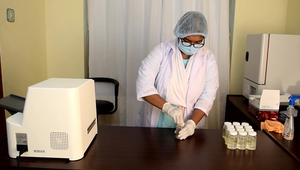
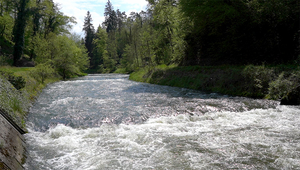
May 30, 2023Trainees from Eawag’s analytical and training laboratory assist in the analysis of a wide variety of water samples. A prominent example is the National River Monitoring and Survey Programme (NADUF). In a video, we take a look behind the scenes of the laboratory and show its role for the NADUF programme.

Read more
May 25, 2023

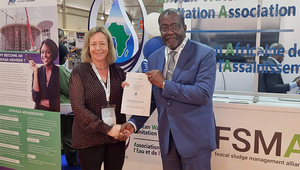
May 25, 2023At the recent joint 21st AfWASA International Congress and Exhibition and 7th Conference on Faecal Sludge Management (FSM7), Eawag signed a Memorandum of Understanding agreement with the African Water and Sanitation Association. The two conferences took place under one roof in Abidjan, Ivory Coast.

Read more
May 23, 2023

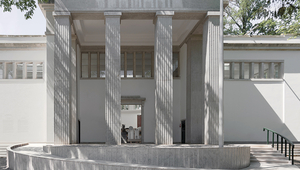
May 23, 2023On Saturday, 20 May, the 18th Biennale of Architecture in Venice opened its doors. In the German pavilion, which focuses on building in existing contexts and the recycling economy, also the Nutrient Harvester developed at Eawag is demonstrated. It processes the urine from two on-site dry separation toilets into fertiliser.

Read more
February 24, 2026

February 24, 2026Estimates as to how much more electricity could be generated from hydropower in the absence of residual flow requirements vary widely, and they have previously been based on inadequate data. A team of researchers from WSL, the University of Bern and Eawag has now used a new database and simulations to show that, between now and 2050, the additional decrease in production due to residual flow requirements – amounting to barely 2% – is likely to be much lower than feared.

Read more
February 19, 2026

February 19, 2026The Swiss Federal Institute of Aquatic Science and Technology (Eawag) has been newly commissioned by the Federal Office of Public Health as the National Reference Centre for Wastewater Monitoring. This work centres around the collection of health data from municipal wastewater, and particularly that of viruses that are known to be pathogenic. A new national mandate has also been introduced for the analysis of substances related to pharmaceutical and illicit drug use.

Read more
February 10, 2026

February 10, 2026An investigation in the canton of Zurich has shown that certain rare earth elements can enter bodies of water via wastewater treatment plants in concentrations that pose a risk to aquatic organisms. These elements are gadolinium, which comes from contrast agents used in healthcare facilities, as well as lanthanum and cerium, which are used in a number of wastewater treatment plants to remove phosphorus.

Read more
January 27, 2026

January 27, 2026WSL and Eawag join forces: the new WSL-Eawag Biodiversity Center links research on biodiversity on land and in water.

Read more
January 26, 2026

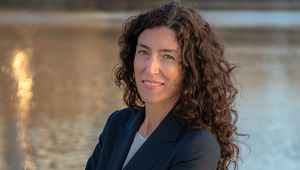
January 26, 2026Sociologist and political scientist Lisa Deutsch was awarded the ETH Medal for her doctoral thesis written at Eawag and ETH Zurich. Her research demonstrated how interdisciplinary and transdisciplinary research can be successful and how theory and practice can be effectively combined in research.

Read more
January 23, 2026

January 23, 2026To mark the 2026 World Economic Forum (WEF), the ETH Domain presented highlights from its research, demonstrating how artificial intelligence is paving the way for greater sustainability. Policymakers and business leaders learned about practical AI applications for the environment and society.

Read more
January 23, 2026

January 23, 2026Aquatic ecosystems are fragile. But just how fragile they are has been revealed in a new study by the Swiss Federal Institute of Aquatic Science and Technology (Eawag) and the University of Zurich. Researchers investigated how climate change is affecting amphipods by shifting the timing of leaf fall in autumn. These creatures feed on leaves and, as the base of the food chain, have an impact on the entire ecosystem.

Read more