Abteilung Umweltsozialwissenschaften

CrossWater – Regulierung grenzüberschreitender Mikroverunreinigung in Europa: Die Definition angemessener Managementmassstäbe
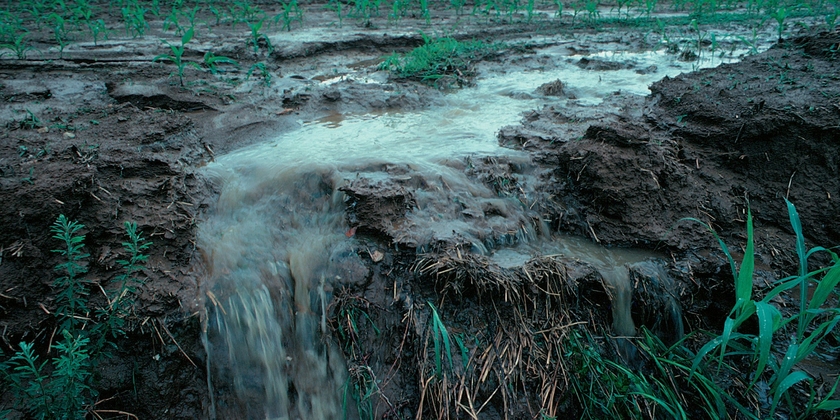
 

Eine grosse Herausforderung für das Umweltmanagement besteht darin, den räumlichen Rahmen von Regulierungen den spezifischen Umweltproblemen anzupassen. Von einer naturwissenschaftlichen Perspektive kann der geeignete Massstab von Managementeinheiten durch die Grenzen, über welche hinaus physische, chemische und biologische Prozesse keinen Effekt mehr auf das Umweltproblem haben, definiert werden. Tatsächliche politische Managementeinheiten stimmen allerdings nur selten mit diesen Idealzuständen überein. Dies gilt insbesondere für grenzüberschreitende Wasserverunreinigung im Allgemeinen, und Regulierung von Mikroverunreinigung im Besonderen, wo unterschiedliche Rechtsprechungen dazu tendieren, verschiedene politische Lösungen hervorzubringen und divergierende Instrumente eingesetzt werden, um das exakt gleiche Problem innerhalb des gleichen hydrologischen Einzugsgebietes anzugehen. In diesem Forschungsprojekt wenden wir einen interdisziplinären Ansatz an, in dem wir eine „Mass Flux“-Analyse mit Politikwissenschaft und Wirtschaftsgeographie kombinieren und uns folgende Frage stellen: Wie kann die potenzielle Diskrepanz zwischen dem physischen Umfang der Verschmutzung  und den entsprechenden politischen Handlungsbereichen und der Regulierung von Mikroverunreinigung visualisiert und erfasst werden, um eine effektive und effiziente Regulierung von Mikroverunreinigung auszugestalten?

Verwandtes Dissertations-Projekt von Florence MetzHow to explain instrument selection in complex policy processes

Projektteam

Dr. Christian Stamm Stellvertretender Direktor Tel. +41 58 765 5565 Inviare e-mail

Publikationen

Extbase Variable Dump
array(2 items)
   publications => '6956,10645,9059' (15 chars)
   libraryUrl => '' (0 chars)
Extbase Variable Dump
array(3 items)
   0 => Snowflake\Publications\Domain\Model\Publicationprototypepersistent entity (uid=6956, pid=124)
      originalId => protected6956 (integer)
      authors => protected'Hering, J. G.; Ingold, K. M.' (48 chars)
      title => protected'Water resources management: what should be integrated?' (54 chars)
      journal => protected'Science' (7 chars)
      year => protected2012 (integer)
      volume => protected336 (integer)
      issue => protected'6086' (4 chars)
      startpage => protected'1234' (4 chars)
      otherpage => protected'1235' (4 chars)
      categories => protected'' (0 chars)
      description => protected'' (0 chars)
      serialnumber => protected'0036-8075' (9 chars)
      doi => protected'10.1126/science.1218230' (23 chars)
      uid => protected6956 (integer)
      _localizedUid => protected6956 (integer)modified
      _languageUid => protectedNULL
      _versionedUid => protected6956 (integer)modified
      pid => protected124 (integer)
   1 => Snowflake\Publications\Domain\Model\Publicationprototypepersistent entity (uid=10645, pid=124)
      originalId => protected10645 (integer)
      authors => protected'Ingold, K.; Fischer, M.; de Boer, C.; Mollinga, P. 
         P.
' (78 chars) title => protected'Water management across borders, scales and sectors: recent developments and
          future challenges in water policy analysis
' (119 chars) journal => protected'Environmental Policy and Governance' (35 chars) year => protected2016 (integer) volume => protected26 (integer) issue => protected'4' (1 chars) startpage => protected'223' (3 chars) otherpage => protected'228' (3 chars) categories => protected'water policy; policy analysis; multi-level and transboundary governance; int
         egrated water resource management
' (109 chars) description => protected'Integrated water resource management (IWRM) is widely accepted and has been
         implemented though international, national and regional water management gui
         delines. Nonetheless, concrete implementation of IWRM gives rise to new ques
         tions for policy analysis. Scholars interested in water regulation, the desi
         gn of effective and efficient policy instruments, and structures of particip
         ative and multi-level policy processes face challenges regarding research de
         sign, concepts and empirical approaches. This special issue integrates resea
         rch about regional, national and transboundary policy perspectives on water
         management in seven countries, four continents and two transnational water b
         odies. From the six articles presented in this special issue, we learn more
         about how to define integration, to think about borders and scales and to th
         eoretically and empirically study collaborative management in water policy a
         nalysis.
' (920 chars) serialnumber => protected'1756-932X' (9 chars) doi => protected'10.1002/eet.1713' (16 chars) uid => protected10645 (integer) _localizedUid => protected10645 (integer)modified _languageUid => protectedNULL _versionedUid => protected10645 (integer)modified pid => protected124 (integer)
2 => Snowflake\Publications\Domain\Model\Publicationprototypepersistent entity (uid=9059, pid=124) originalId => protected9059 (integer) authors => protected'Metz, F.; Ingold, K.' (30 chars) title => protected'Sustainable wastewater management: is it possible to regulate micropollution
          in the future by learning from the Past? A policy analysis
' (135 chars) journal => protected'Sustainability' (14 chars) year => protected2014 (integer) volume => protected6 (integer) issue => protected'4' (1 chars) startpage => protected'1992' (4 chars) otherpage => protected'2012' (4 chars) categories => protected'micropollution regulation; water quality; policy analysis; policy instrument
         s
' (77 chars) description => protected'This paper applies a policy analysis approach to the question of how to effe
         ctively regulate micropollution in a sustainable manner. Micropollution is a
          complex policy problem characterized by a huge number and diversity of chem
         ical substances, as well as various entry paths into the aquatic environment
         . It challenges traditional water quality management by calling for new tech
         nologies in wastewater treatment and behavioral changes in industry, agricul
         ture and civil society. In light of such challenges, the question arises as
         to how to regulate such a complex phenomenon to ensure water quality is main
         tained in the future? What can we learn from past experiences in water quali
         ty regulation? To answer these questions, policy analysis strongly focuses o
         n the design and choice of policy instruments and the mix of such measures.
         In this paper, we review instruments commonly used in past water quality reg
         ulation. We evaluate their ability to respond to the characteristics of a mo
         re recent water quality problem, <I>i.e.</I>, micropollution, in a sustainab
         le way. This way, we develop a new framework that integrates both the proble
         m dimension (<I>i.e.</I>, causes and effects of a problem) as well as the su
         stainability dimension (e.g., long-term, cross-sectoral and multi-level) to
         assess which policy instruments are best suited to regulate micropollution.
         We thus conclude that sustainability criteria help to identify an appropriat
         e instrument mix of end-of-pipe and source-directed measures to reduce aquat
         ic micropollution.
' (1538 chars) serialnumber => protected'' (0 chars) doi => protected'10.3390/su6041992' (17 chars) uid => protected9059 (integer) _localizedUid => protected9059 (integer)modified _languageUid => protectedNULL _versionedUid => protected9059 (integer)modified pid => protected124 (integer)
Hering, J. G.; Ingold, K. M. (2012) Water resources management: what should be integrated?, Science, 336(6086), 1234-1235, doi:10.1126/science.1218230, Institutional Repository
Ingold, K.; Fischer, M.; de Boer, C.; Mollinga, P. P. (2016) Water management across borders, scales and sectors: recent developments and future challenges in water policy analysis, Environmental Policy and Governance, 26(4), 223-228, doi:10.1002/eet.1713, Institutional Repository
Metz, F.; Ingold, K. (2014) Sustainable wastewater management: is it possible to regulate micropollution in the future by learning from the Past? A policy analysis, Sustainability, 6(4), 1992-2012, doi:10.3390/su6041992, Institutional Repository