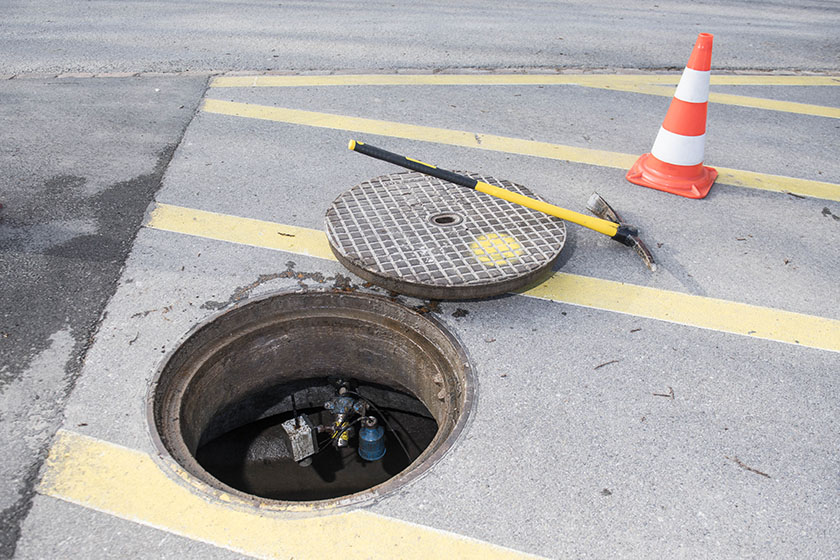
Moderne Städte sehen in vielerlei Hinsicht ähnlich aus. Probleme in der Energie- und Wasserversorgung oder im Transportwesen werden weltweit sehr ähnlich gelöst. Dies steht im krassen Gegensatz zu den Variationen der lokalen materiellen und kulturellen Bedingungen, in die die verschiedenen Städte eingebettet sind. Im Projekt GLORIWA untersuchen wir diesen Kontrast am Beispiel der urbanen Wasserwirtschaft.Die Idee globaler soziotechnischer Regime liefert einen Hinweis darauf, warum Städte in trockenen Regionen der Welt (z.B. Peking) sehr ähnliche wasserwirtschaftliche Strategien verfolgen wie die viel wasserreichere Stadt Zürich. Ein soziotechnisches Regime ist die Konstellation von Technologien und sozialen Strukturen, die sich um diese Technologien herum etabliert haben. Im Wassersektor ist das Kanalisationssystem eine Visualisierung des sozio-technischen Regimebegriffs.In der Kanalisation wird Wasser unter anderem als Transportmittel für verschiedene Schadstoffe genutzt, was zu spezifischen Nutzgewohnheiten und anderen sozialen Strukturen führt. In den Weltstädten ist die soziotechnische Lösung der Nutzung von Wasser durch ein Abwassersystem als Transportmittel für verschiedene Schadstoffarten so dominant, dass nicht einmal die visionärsten Unternehmer einen Durchbruch zu nachhaltigeren und lokal angepassten Lösungen erzielen können.Diese globale Dominanz der soziotechnischen Konstellationen lässt sich unter dem wissenschaftlichen Konzept der soziotechnischen Systeme zusammenfassen. In GLORIWA verfolgen wir die weltweit dominierendsten soziotechnischen Systeme in der städtischen Wasserversorgung und untersuchen sie, um herauszufinden, wie sie sich gegen potenziell nachhaltigere, lokal angepasste Lösungen durchsetzen können.
array(5 items)0 => Snowflake\Publications\Domain\Model\Publicationprototypepersistent entity (uid=32301, pid=124)originalId => protected32301 (integer)
authors => protected'Lesch, D.; Miörner, J.; Binz, C.' (48 chars)
title => protected'The role of global actors in sustainability transitions – tracing the emer gence of a novel infrastructure paradigm in the sanitation sector' (141 chars)
journal => protected'Environmental Innovation and Societal Transitions' (49 chars)
year => protected2023 (integer)
volume => protected49 (integer)
issue => protected'' (0 chars)
startpage => protected'100787 (22 pp.)' (15 chars)
otherpage => protected'' (0 chars)
categories => protected'geography of sustainability transitions; multi-scalar transitions; distribut ed agency; socio-technical configuration analysis; citywide inclusive sanita tion' (156 chars)
description => protected'The literature on sustainability transitions increasingly recognizes that se ctoral structures transcending national boundaries can both hinder and promo te sustainability transitions. Yet there is only limited evidence on the rol es of global actors in transforming entrenched socio-technical structures di rectly at the global scale. To explore the mechanisms of agency at the globa l scale, we develop a conceptual framework and illustrate it with a case stu dy of the World Bank's engagement in the sanitation sector. Based on a Socio -Technical Configuration Analysis of World Bank project documents combined w ith expert interviews, we demonstrate how a paradigm shift in the global san itation sector was initiated by a coalition of global advocates and subseque ntly promoted by the World Bank in its role as an amplifier. The paper thus further conceptualizes and illustrates a multi-scalar transition trajectory that depends strongly on advocacy by global actors.' (963 chars)
serialnumber => protected'2210-4224' (9 chars)
doi => protected'10.1016/j.eist.2023.100787' (26 chars)
uid => protected32301 (integer)
_localizedUid => protected32301 (integer)modified_languageUid => protectedNULL
_versionedUid => protected32301 (integer)modifiedpid => protected124 (integer)1 => Snowflake\Publications\Domain\Model\Publicationprototypepersistent entity (uid=25107, pid=124)originalId => protected25107 (integer)
authors => protected'Miörner, J.; Heiberg, J.; Binz, C.' (50 chars)
title => protected'How global regimes diffuse in space - Explaining a missed transition in San Diego's water sector' (96 chars)
journal => protected'Environmental Innovation and Societal Transitions' (49 chars)
year => protected2022 (integer)
volume => protected44 (integer)
issue => protected'' (0 chars)
startpage => protected'29' (2 chars)
otherpage => protected'47' (2 chars)
categories => protected'global regimes; regime diffusion; regional discourse dynamics; desalination; San Diego; socio-technical configuration analysis' (126 chars)
description => protected'Socio-technical regimes are highly institutionalized rationalities that have co-evolved with actors, technologies and institutions over extended periods of time and become taken for granted across geographical contexts. Transiti on studies feature an extensive focus on regime dynamics within specific ter ritorial contexts. However, we know surprisingly little of how regime ration alities are constructed, diffused and reproduced across space. This is a key gap in the geography of sustainability transitions literature. This paper i ntroduces a conceptual model to analyze transformative opportunities in regi ons and how regime actors strategically diffuse and implement global regime solutions through combinations of discursive and substantive system reconfig uration activities. The empirical analysis draws upon a combination of Socio -Technical Configuration Analysis (STCA) of 354 newspaper articles and 10 in -depth expert interviews to illuminate how regime actors prevailed in diffus ing and legitimizing the water sector's dominant socio-technical configurati on in San Diego during a period of substantial transformative opportunities.' (1140 chars)
serialnumber => protected'2210-4224' (9 chars)
doi => protected'10.1016/j.eist.2022.05.005' (26 chars)
uid => protected25107 (integer)
_localizedUid => protected25107 (integer)modified_languageUid => protectedNULL
_versionedUid => protected25107 (integer)modifiedpid => protected124 (integer)2 => Snowflake\Publications\Domain\Model\Publicationprototypepersistent entity (uid=23625, pid=124)originalId => protected23625 (integer)
authors => protected'Heiberg, J.; Truffer, B.; Binz, C.' (49 chars)
title => protected'Assessing transitions through socio-technical configuration analysis – a m ethodological framework and a case study in the water sector' (136 chars)
journal => protected'Research Policy' (15 chars)
year => protected2022 (integer)
volume => protected51 (integer)
issue => protected'1' (1 chars)
startpage => protected'104363 (19 pp.)' (15 chars)
otherpage => protected'' (0 chars)
categories => protected'socio-technical configuration analysis; geography of transitions; socio-tech nical alignments; discourse; modular water technologies' (131 chars)
description => protected'Classic accounts of transitions research have predominantly built on reconst ructions of historical transition processes and in-depth case studies to ide ntify and conceptualize socio-technical change. While such approaches have s ubstantively improved our understanding of transitions, they often suffer fr om methodological nationalism and a lack of generalizability beyond spatial and sectoral boundaries. To address this gap, we propose a novel methodology – socio-technical configuration analysis (STCA) – to map and measure so cio-technical alignment processes across time and space. STCA provides a con figurational and dynamic perspective on how social and technical elements ge t aligned into "configurations that work", allowing for the identification o f differentiated transition trajectories at and across spatial and sectoral contexts. The methodology's value is illustrated with the empirical case of an ongoing shift from centralized to more modular infrastructure configurati ons in the global water sector. Building on this illustration, we outline po tential contributions of STCA to configurational theorizing in transition st udies, sketching the contours of what we believe could become a generative e pistemological approach for this field.' (1255 chars)
serialnumber => protected'0048-7333' (9 chars)
doi => protected'10.1016/j.respol.2021.104363' (28 chars)
uid => protected23625 (integer)
_localizedUid => protected23625 (integer)modified_languageUid => protectedNULL
_versionedUid => protected23625 (integer)modifiedpid => protected124 (integer)3 => Snowflake\Publications\Domain\Model\Publicationprototypepersistent entity (uid=23120, pid=124)originalId => protected23120 (integer)
authors => protected'Miörner, J.; Binz, C.' (32 chars)
title => protected'Towards a multi-scalar perspective on transition trajectories' (61 chars)
journal => protected'Environmental Innovation and Societal Transitions' (49 chars)
year => protected2021 (integer)
volume => protected40 (integer)
issue => protected'' (0 chars)
startpage => protected'172' (3 chars)
otherpage => protected'188' (3 chars)
categories => protected'geography of transitions; scale; socio-technical system; standardization; no n-sewered sanitation' (96 chars)
description => protected'This paper contributes to the geography of transitions literature by concept ualizing transition trajectories from a multi-scalar perspective. It combine s an institutional perspective of transitions with conceptions of scale from human geography to derive a framework which explicates how (de-)institution alization and re-scaling mechanisms condition different transition trajector ies. Our conceptual elaborations show that the traditional local-global nich e cumulation and upscaling trajectory can be complemented with two alternati ve trajectories that build on analytically different sequences of institutio nalization and re-scaling processes. This is illustrated through a case stud y of technology standardization in the sanitation sector, more specifically the development of the ISO 30500 standard for non-sewered sanitation systems , which was initiated by a consortium led by the Bill and Melinda Gates Foun dation. The observed transition trajectory departs from key assumptions of t he local-global niche model, with actors engaging in direct institutionaliza tion at the global level, followed by re-scaling global rationalities into d ifferent (sub-)national contexts.' (1173 chars)
serialnumber => protected'2210-4224' (9 chars)
doi => protected'10.1016/j.eist.2021.06.004' (26 chars)
uid => protected23120 (integer)
_localizedUid => protected23120 (integer)modified_languageUid => protectedNULL
_versionedUid => protected23120 (integer)modifiedpid => protected124 (integer)4 => Snowflake\Publications\Domain\Model\Publicationprototypepersistent entity (uid=16879, pid=124)originalId => protected16879 (integer)
authors => protected'Fuenfschilling, L.; Binz, C.' (38 chars)
title => protected'Global socio-technical regimes' (30 chars)
journal => protected'Research Policy' (15 chars)
year => protected2018 (integer)
volume => protected47 (integer)
issue => protected'4' (1 chars)
startpage => protected'735' (3 chars)
otherpage => protected'749' (3 chars)
categories => protected'socio-technical regime; globalization; geography of transitions; institution al change' (85 chars)
description => protected'This paper addresses the question why socio-technical transitions follow sim ilar trajectories in various parts of the world, even though the relevant ma terial preconditions and institutional contexts vary greatly between differe nt regions and countries. It takes a critical stance on the implicit methodo logical nationalism in transition studies' socio-technical regime concept an d proposes an alternative 'global' regime perspective that embraces the incr easingly multi-scalar actor networks and institutional rationalities, which influence transition dynamics beyond national or regional borders. By drawin g on globalization theories from sociology and human geography, we show that socio-technical systems often develop institutional rationalities that are diffused via international networks and thus become influential in various p laces around the world. In so doing, we shed light on the multi-scalar inter relatedness of institutional structures and actors in socio-technical system s and elaborate on the implications for the conceptualization of transition dynamics. The paper illustrates this with the case study of an unsuccessful transition in the Chinese wastewater sector. Recent studies indicate that ke y decisions on wastewater infrastructure expansion were not only influenced by path-dependencies stemming from China's national context, but equally (or even more critically) by the dominant rationality of the water sector's glo bal socio-technical regime. We conclude by discussing the contours of a new research agenda around the notion of global socio-technical regimes.' (1588 chars)
serialnumber => protected'0048-7333' (9 chars)
doi => protected'10.1016/j.respol.2018.02.003' (28 chars)
uid => protected16879 (integer)
_localizedUid => protected16879 (integer)modified_languageUid => protectedNULL
_versionedUid => protected16879 (integer)modifiedpid => protected124 (integer)
The role of global actors in sustainability transitions – tracing the emergence of a novel infrastructure paradigm in the sanitation sector
The literature on sustainability transitions increasingly recognizes that sectoral structures transcending national boundaries can both hinder and promote sustainability transitions. Yet there is only limited evidence on the roles of global actors in transforming entrenched socio-technical structures directly at the global scale. To explore the mechanisms of agency at the global scale, we develop a conceptual framework and illustrate it with a case study of the World Bank's engagement in the sanitation sector. Based on a Socio-Technical Configuration Analysis of World Bank project documents combined with expert interviews, we demonstrate how a paradigm shift in the global sanitation sector was initiated by a coalition of global advocates and subsequently promoted by the World Bank in its role as an amplifier. The paper thus further conceptualizes and illustrates a multi-scalar transition trajectory that depends strongly on advocacy by global actors.
Lesch, D.; Miörner, J.; Binz, C. (2023) The role of global actors in sustainability transitions – tracing the emergence of a novel infrastructure paradigm in the sanitation sector, Environmental Innovation and Societal Transitions, 49, 100787 (22 pp.), doi:10.1016/j.eist.2023.100787, Institutional Repository
How global regimes diffuse in space - Explaining a missed transition in San Diego's water sector
Socio-technical regimes are highly institutionalized rationalities that have co-evolved with actors, technologies and institutions over extended periods of time and become taken for granted across geographical contexts. Transition studies feature an extensive focus on regime dynamics within specific territorial contexts. However, we know surprisingly little of how regime rationalities are constructed, diffused and reproduced across space. This is a key gap in the geography of sustainability transitions literature. This paper introduces a conceptual model to analyze transformative opportunities in regions and how regime actors strategically diffuse and implement global regime solutions through combinations of discursive and substantive system reconfiguration activities. The empirical analysis draws upon a combination of Socio-Technical Configuration Analysis (STCA) of 354 newspaper articles and 10 in-depth expert interviews to illuminate how regime actors prevailed in diffusing and legitimizing the water sector's dominant socio-technical configuration in San Diego during a period of substantial transformative opportunities.
Miörner, J.; Heiberg, J.; Binz, C. (2022) How global regimes diffuse in space - Explaining a missed transition in San Diego's water sector, Environmental Innovation and Societal Transitions, 44, 29-47, doi:10.1016/j.eist.2022.05.005, Institutional Repository
Assessing transitions through socio-technical configuration analysis – a methodological framework and a case study in the water sector
Classic accounts of transitions research have predominantly built on reconstructions of historical transition processes and in-depth case studies to identify and conceptualize socio-technical change. While such approaches have substantively improved our understanding of transitions, they often suffer from methodological nationalism and a lack of generalizability beyond spatial and sectoral boundaries. To address this gap, we propose a novel methodology – socio-technical configuration analysis (STCA) – to map and measure socio-technical alignment processes across time and space. STCA provides a configurational and dynamic perspective on how social and technical elements get aligned into "configurations that work", allowing for the identification of differentiated transition trajectories at and across spatial and sectoral contexts. The methodology's value is illustrated with the empirical case of an ongoing shift from centralized to more modular infrastructure configurations in the global water sector. Building on this illustration, we outline potential contributions of STCA to configurational theorizing in transition studies, sketching the contours of what we believe could become a generative epistemological approach for this field.
Heiberg, J.; Truffer, B.; Binz, C. (2022) Assessing transitions through socio-technical configuration analysis – a methodological framework and a case study in the water sector, Research Policy, 51(1), 104363 (19 pp.), doi:10.1016/j.respol.2021.104363, Institutional Repository
Towards a multi-scalar perspective on transition trajectories
This paper contributes to the geography of transitions literature by conceptualizing transition trajectories from a multi-scalar perspective. It combines an institutional perspective of transitions with conceptions of scale from human geography to derive a framework which explicates how (de-)institutionalization and re-scaling mechanisms condition different transition trajectories. Our conceptual elaborations show that the traditional local-global niche cumulation and upscaling trajectory can be complemented with two alternative trajectories that build on analytically different sequences of institutionalization and re-scaling processes. This is illustrated through a case study of technology standardization in the sanitation sector, more specifically the development of the ISO 30500 standard for non-sewered sanitation systems, which was initiated by a consortium led by the Bill and Melinda Gates Foundation. The observed transition trajectory departs from key assumptions of the local-global niche model, with actors engaging in direct institutionalization at the global level, followed by re-scaling global rationalities into different (sub-)national contexts.
This paper addresses the question why socio-technical transitions follow similar trajectories in various parts of the world, even though the relevant material preconditions and institutional contexts vary greatly between different regions and countries. It takes a critical stance on the implicit methodological nationalism in transition studies' socio-technical regime concept and proposes an alternative 'global' regime perspective that embraces the increasingly multi-scalar actor networks and institutional rationalities, which influence transition dynamics beyond national or regional borders. By drawing on globalization theories from sociology and human geography, we show that socio-technical systems often develop institutional rationalities that are diffused via international networks and thus become influential in various places around the world. In so doing, we shed light on the multi-scalar interrelatedness of institutional structures and actors in socio-technical systems and elaborate on the implications for the conceptualization of transition dynamics. The paper illustrates this with the case study of an unsuccessful transition in the Chinese wastewater sector. Recent studies indicate that key decisions on wastewater infrastructure expansion were not only influenced by path-dependencies stemming from China's national context, but equally (or even more critically) by the dominant rationality of the water sector's global socio-technical regime. We conclude by discussing the contours of a new research agenda around the notion of global socio-technical regimes.