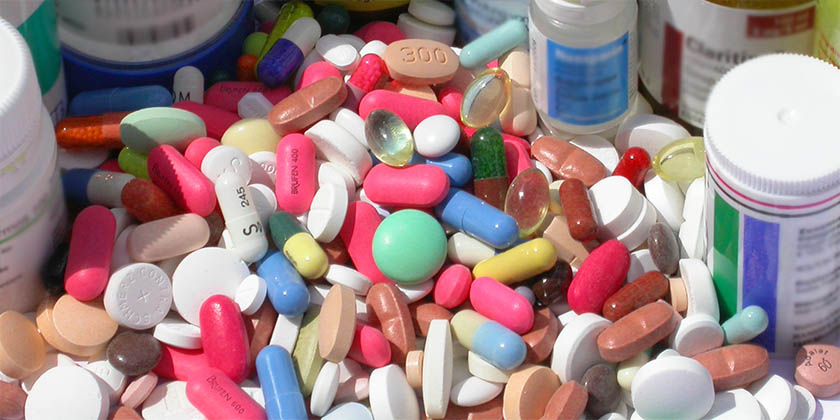
Mikroverunreinigungen (z. B. Pharmazeutika) werden zunehmend in Gewässern gefunden: ihre Entfernung in konventionellen Kläranlagen ist unvollständig. Pharmazeutika können schon an der Quelle entfernt werden, indem man technische Massnahmen in Spitälern einführt oder indem man unterschiedliche Stoffströme sammelt. Solche Handlungsoptionen können die Menge an Mikroverunreinigungen wesentlich reduzieren. Dieses Projekt hat sich mit zwei exemplarischen kantonalen Krankenhäusern in der Schweiz befasst, einem allgemeinen Kantonsspital und einer psychiatrischen Klinik. Mit Hilfe einer Multikriteriellen Entscheidungsanalyse (MCDA) wurden 26 Akteure in den Entscheidungsprozess einbezogen. Die Resultate deuten auf eine potenziell hohe Akzeptanz von lokalen Massnahmen an der Quelle hin, wenn das Verhältnis zwischen guter Leistung einer Option zur Entfernung der Pharmazeutika und Kosten vernünftig ist.
Hintergrund
Mikroverunreinigungen (z. B. Pharmazeutika) werden zunehmend in Gewässern gemessen; sie werden nur teilweise in Kläranlagen entfernt. In der Regel besteht grosse Unsicherheit darüber, ob solche Stoffe negative Auswirkungen auf aquatische Ökosysteme haben. Es gibt aber auch Ausnahmen, man weiss zum Beispiel, dass Östrogene (weibliche Hormone) in die Fortpflanzung von Fischen eingreifen können. In solch komplexen Entscheidungssituationen mit hoher Unsicherheit und vielen Beteiligten können Entscheidungen nicht alleine durch die Wissenschaft gefällt werden; es braucht dazu partizipative und transdisziplinäre Ansätze. Beispielsweise sind Technologien, welche Pharmazeutika auf den Kläranlagen entfernen könnten teuer, und letztendlich muss die Gesellschaft entscheiden, ob allfällige Risiken die hohen Kosten rechtfertigen.
Mikroverunreinigungen können entfernt werden indem man neue Technologien auf Kläranlagen einbaut oder aber indem man Massnahmen an der Quelle einführt. Spitäler können eine relevante Punktquelle sein und eine Möglichkeit ist, dort Massnahmen zur Entfernung von Medikamentenresten im Abwasser einzuführen. Als Option kommt die Behandlung des gesamten Spitalabwassers in Frage, aber auch die Behandlung nur eines Teilstromes (z.B. Onkologiestation, um Zytostatika (Krebsmedikamente) zu entfernen). Weiter könnte nur der Urin abgetrennt und behandelt werden, da Urin etwa 60–70% der durch den menschlichen Körper ausgeschiedenen Medikamente enthält. Urinseparierung wurde im Projekt Novaquatis intensiv erforscht. Auf Europäischer Ebene wurde die Entfernung von Medikamentenresten aus Abwasser im Projekt PILLS und noPILLS erforscht.
Dieses Projekt konzentrierte sich auf eine klar definierte Entscheidungssituation: Als Fallstudie wurden ein Kantonsspital (Krankenhaus) und eine kantonale psychiatrische Klinik betrachtet. Eine Multikriterielle Entscheidungsanalyse (MCDA) wurde dazu benutzt, um Expertenwissen (z. B. Kosten, Massenflussanalysen von Pharmazeutika, ökotoxikologisches Risiko, Entfernung von Pathogenen) mit den subjektiven Präferenzen von 26 Akteuren zu kombinieren. Das Beispiel diente auch dazu, generelle Forschungsfragen im Zusammenhang mit der praktischen Anwendung von MCDA bei Umweltproblemen anzugehen.
Vorgehen
Im Kantonsspital wurden 68 technische und organisatorische Entscheidungsoptionen analysiert, und deren 50 in der psychiatrischen Klinik. Eine organisatorische Option war z. B. die separate Sammlung von Urin, technische Optionen waren z. B. die Behandlung des Abwassers mit Aktivkohle, Ozonierung oder Umkehrosmose. Die Vorhersage der Leistung jeder Option wurde von Expertinnen geschätzt, z. B. bezüglich Entfernung von Pathogenen, Reduktion der Menge von Pharmazeutika und ökologisches Risiko – und natürlich auch bezüglich der Kosten. Die Vorhersagen betrafen zusätzlich auch Schätzungen über den Aufwand für Pflegepersonal und Patienten sowie öffentliche Meinung.
Es wurden Interviews mit 26 Akteuren durchgeführt. Diese waren Vertreterinnen und Vertreter der Krankenhäuser, aber auch der Umwelt- und Gesundheitsbehörden. Sie wurden um ihre Meinung bezüglich Kosten-Nutzen-Abwägungen bei dieser Entscheidung gebeten. Die Standardmethode zur Erhebung der Gewichte wurde abgeändert, indem eine ‘Umkehr-Swing Methode’ eingeführt wurde, welche in diesem Fall realistischer zu sein schien. Das MCDA-Verfahren war ein Kompromiss zwischen Zeitaufwand und Ausführlichkeit; und wurde mit sorgfältiger Sensitivitätsanalyse getestet.
Hauptergebnisse
Das allgemeine Spital steuert einen substanziellen Beitrag zur Gesamtlast an Pharmazeutika bei, welche auf der Kläranlage ankommt. Hingegen war der Beitrag der psychiatrischen Klinik in diesem Fall relativ klein. Das weist darauf hin, dass eine sorgfältige Analyse von jedem Einzelfall nötig ist. Die 100 meistgebrauchten Medikamente unterschieden sich stark zwischen den beiden Krankenhäusern, und es kam in dieser Top-100 Liste bei nur 37 Medikamenten zu einer Überschneidung in beiden Spitälern. Nur ein Teil der Top-100 Medikamente trug auch wirklich zum Umweltrisiko der emittierten Pharmazeutika-Mischung bei; spezifisch waren es vier Wirkstoffe (Amiodarone, Ritonavir, Clotrimazole und Diclofenac), die am stärksten zum Risiko beitrugen. Die Menge an Pharmazeutika allein ist folglich nicht aussagekräftig genug, um das Umweltrisiko vorherzusagen.
Beim Vergleich von verschiedenen Entscheidungsoptionen zur Entfernung von Pharmazeutika zeigte die MCDA, dass im allgemeinen Krankenhaus jene technischen Optionen systematisch am besten abschnitten, wenn sie die Gesamtlast an Pharmazeutika entfernen konnten, verglichen mit billigeren Optionen, die nur einen Teil der Pharmazeutika entfernen können. Das Ergebnis war für die psychiatrische Klinik weniger deutlich. Die Resultate über die besten Optionen waren für alle Akteure sehr ähnlich und stabil, obwohl diese individuellen Personen unterschiedliche Präferenzen hatten. Der Einbezug von Akteuren mit MCDA ist vielversprechend und das Feedback der Interviewpartnerinnen und -partner war generell sehr positiv. Die Resultate zeigen, dass der Schutz der Ressource Wasser sehr wichtig ist. Lokale Massnahmen an der Quelle bei Spitälern könnten sich hoher Akzeptanz erfreuen, wenn das Verhältnis zwischen Entfernung von Pharmazeutika und Kosten vernünftig ist.
array(2 items)0 => Snowflake\Publications\Domain\Model\Publicationprototypepersistent entity (uid=6652, pid=124)originalId => protected6652 (integer)
authors => protected'Lienert, J.; Koller, M.; Konrad, J.; McArdell, C. S .; Schuwirth, N.' (97 chars)
title => protected'Multiple-criteria decision analysis reveals high stakeholder preference to r emove pharmaceuticals from hospital wastewater' (122 chars)
journal => protected'Environmental Science and Technology' (36 chars)
year => protected2011 (integer)
volume => protected45 (integer)
issue => protected'9' (1 chars)
startpage => protected'3848' (4 chars)
otherpage => protected'3857' (4 chars)
categories => protected'' (0 chars)
description => protected'Point-source measures have been suggested to decrease pharmaceuticals in wat er bodies. We analyzed 68 and 50 alternatives, respectively, for a typical S wiss general and psychiatric hospital to decrease pharmaceutical discharge. Technical alternatives included reverse osmosis, ozonation, and activated ca rbon; organizational alternatives included urine separation. To handle this complex decision, we used Multiple-Criteria Decision Analysis (MCDA) and com bined expert predictions (e.g., costs, pharmaceutical mass flows, ecotoxicol ogical risk, pathogen removal) with subjective preference-valuations from 26 stakeholders (authorities, hospital-internal actors, experts). The general hospital contributed ca. 38% to the total pharmaceutical load at the wastewa ter treatment plant, the psychiatry contributed 5%. For the general hospital , alternatives removing all pharmaceuticals (especially reverse osmosis, or vacuum-toilets and incineration), performed systematically better than the s tatus quo or urine separation, despite higher costs. They now require closer scrutiny. To remove X-ray contrast agents, introducing roadbags is promisin g. For the psychiatry with a lower pharmaceutical load, costs were more crit ical. Stakeholder feedback concerning MCDA was very positive, especially bec ause the results were robust across different stakeholder-types. Our MCDA re sults provide insight into an important water protection issue: implementing measures to decrease pharmaceuticals will likely meet acceptance. Hospital point-sources merit consideration if the trade-off between costs and pharmac eutical removal is reasonable.' (1626 chars)
serialnumber => protected'0013-936X' (9 chars)
doi => protected'10.1021/es1031294' (17 chars)
uid => protected6652 (integer)
_localizedUid => protected6652 (integer)modified_languageUid => protectedNULL
_versionedUid => protected6652 (integer)modifiedpid => protected124 (integer)1 => Snowflake\Publications\Domain\Model\Publicationprototypepersistent entity (uid=6914, pid=124)originalId => protected6914 (integer)
authors => protected'Schuwirth, N.; Reichert, P.; Lienert, J.' (55 chars)
title => protected'Methodological aspects of multi-criteria decision analysis for policy suppor t: a case study on pharmaceutical removal from hospital wastewater' (142 chars)
journal => protected'European Journal of Operational Research' (40 chars)
year => protected2012 (integer)
volume => protected220 (integer)
issue => protected'2' (1 chars)
startpage => protected'472' (3 chars)
otherpage => protected'483' (3 chars)
categories => protected'decision analysis; multi-attribute utility theory; elicitation; uncertainty modeling; sensitivity analysis; source control' (122 chars)
description => protected'Decision making in public and political contexts can be complex. Multi-attri bute value/utility theory (MAVT/MAUT) can support such decision processes by providing a transparent framework that helps focusing on objectives and cor responding degrees of achievement by different alternatives.<BR/> Eliciting preferences with MAVT/MAUT can be time consuming and cognitively challenging . Therefore, it might not be feasible to elicit full preference functions wi th standard methods. To deal with this problem, we suggest a simplified elic itation procedure that combines (a) the elicitation of values instead of uti lities at lower-levels of the objectives hierarchy and conversion to utiliti es to consider risk attitudes at appropriate higher levels, (b) the use of l inear value functions for sub-objectives with minor effects on the overall v alue, and (c) sensitivity analyses to check the robustness of results regard ing these assumptions and the elicitation process in general. Furthermore, w e developed a modified Swing procedure ("Reversed Swing2) to elicit weights for cases in which the hypothetical alternatives of the conventional Swing t echnique are unrealistic.<BR/> We applied this procedure to a case study on pharmaceutical removal from wastewater of a typical Swiss hospital involving 13 stakeholders. Aim of the interdisciplinary research group was to assess a large bundle of combinations of novel point source measures. The ultimate policy objective was to develop consensus solutions which are acceptable to all important stakeholder groups. We hope that the suggested simplified proc edure stimulates the application of transparent and conceptually satisfying decision support methods in environmental management, which is needed to jus tify policy decisions to the public.' (1784 chars)
serialnumber => protected'0377-2217' (9 chars)
doi => protected'10.1016/j.ejor.2012.01.055' (26 chars)
uid => protected6914 (integer)
_localizedUid => protected6914 (integer)modified_languageUid => protectedNULL
_versionedUid => protected6914 (integer)modifiedpid => protected124 (integer)
Multiple-criteria decision analysis reveals high stakeholder preference to remove pharmaceuticals from hospital wastewater
Point-source measures have been suggested to decrease pharmaceuticals in water bodies. We analyzed 68 and 50 alternatives, respectively, for a typical Swiss general and psychiatric hospital to decrease pharmaceutical discharge. Technical alternatives included reverse osmosis, ozonation, and activated carbon; organizational alternatives included urine separation. To handle this complex decision, we used Multiple-Criteria Decision Analysis (MCDA) and combined expert predictions (e.g., costs, pharmaceutical mass flows, ecotoxicological risk, pathogen removal) with subjective preference-valuations from 26 stakeholders (authorities, hospital-internal actors, experts). The general hospital contributed ca. 38% to the total pharmaceutical load at the wastewater treatment plant, the psychiatry contributed 5%. For the general hospital, alternatives removing all pharmaceuticals (especially reverse osmosis, or vacuum-toilets and incineration), performed systematically better than the status quo or urine separation, despite higher costs. They now require closer scrutiny. To remove X-ray contrast agents, introducing roadbags is promising. For the psychiatry with a lower pharmaceutical load, costs were more critical. Stakeholder feedback concerning MCDA was very positive, especially because the results were robust across different stakeholder-types. Our MCDA results provide insight into an important water protection issue: implementing measures to decrease pharmaceuticals will likely meet acceptance. Hospital point-sources merit consideration if the trade-off between costs and pharmaceutical removal is reasonable.
Lienert, J.; Koller, M.; Konrad, J.; McArdell, C. S.; Schuwirth, N. (2011) Multiple-criteria decision analysis reveals high stakeholder preference to remove pharmaceuticals from hospital wastewater, Environmental Science and Technology, 45(9), 3848-3857, doi:10.1021/es1031294, Institutional Repository
Methodological aspects of multi-criteria decision analysis for policy support: a case study on pharmaceutical removal from hospital wastewater
Decision making in public and political contexts can be complex. Multi-attribute value/utility theory (MAVT/MAUT) can support such decision processes by providing a transparent framework that helps focusing on objectives and corresponding degrees of achievement by different alternatives. Eliciting preferences with MAVT/MAUT can be time consuming and cognitively challenging. Therefore, it might not be feasible to elicit full preference functions with standard methods. To deal with this problem, we suggest a simplified elicitation procedure that combines (a) the elicitation of values instead of utilities at lower-levels of the objectives hierarchy and conversion to utilities to consider risk attitudes at appropriate higher levels, (b) the use of linear value functions for sub-objectives with minor effects on the overall value, and (c) sensitivity analyses to check the robustness of results regarding these assumptions and the elicitation process in general. Furthermore, we developed a modified Swing procedure ("Reversed Swing2) to elicit weights for cases in which the hypothetical alternatives of the conventional Swing technique are unrealistic. We applied this procedure to a case study on pharmaceutical removal from wastewater of a typical Swiss hospital involving 13 stakeholders. Aim of the interdisciplinary research group was to assess a large bundle of combinations of novel point source measures. The ultimate policy objective was to develop consensus solutions which are acceptable to all important stakeholder groups. We hope that the suggested simplified procedure stimulates the application of transparent and conceptually satisfying decision support methods in environmental management, which is needed to justify policy decisions to the public.
Schuwirth, N.; Reichert, P.; Lienert, J. (2012) Methodological aspects of multi-criteria decision analysis for policy support: a case study on pharmaceutical removal from hospital wastewater, European Journal of Operational Research, 220(2), 472-483, doi:10.1016/j.ejor.2012.01.055, Institutional Repository
array(1 item)0 => Snowflake\Publications\Domain\Model\Publicationprototypepersistent entity (uid=6474, pid=124)originalId => protected6474 (integer)
authors => protected'Escher, B. I.; Baumgartner, R.; Koller, M.; Treyer,  ;K.; Lienert, J.; McArdell, C. S.' (124 chars)
title => protected'Environmental toxicology and risk assessment of pharmaceuticals from hospita l wastewater' (88 chars)
journal => protected'Water Research' (14 chars)
year => protected2011 (integer)
volume => protected45 (integer)
issue => protected'1' (1 chars)
startpage => protected'75' (2 chars)
otherpage => protected'92' (2 chars)
categories => protected'pharmaceuticals; quantitative structure-activity relationship; predicted no- effect concentration; risk quotient; elimination; source separation; wastewa ter; hospital' (165 chars)
description => protected'In this paper, we evaluated the ecotoxicological potential of the 100 pharma ceuticals expected to occur in highest quantities in the wastewater of a gen eral hospital and a psychiatric center in Switzerland. We related the toxici ty data to predicted concentrations in different wastewater streams to asses s the overall risk potential for different scenarios, including conventional biological pretreatment in the hospital and urine source separation. The co ncentrations in wastewater were estimated with pharmaceutical usage informat ion provided by the hospitals and literature data on human excretion into fe ces and urine. Environmental concentrations in the effluents of the exposure scenarios were predicted by estimating dilution in sewers and with literatu re data on elimination during wastewater treatment. Effect assessment was pe rformed using quantitative structure-activity relationships because experime ntal ecotoxicity data were only available for less than 20% of the 100 pharm aceuticals with expected highest loads. As many pharmaceuticals are acids or bases, a correction for the speciation was implemented in the toxicity pred iction model.<BR/>The lists of Top-100 pharmaceuticals were distinctly diffe rent between the two hospital types with only 37 pharmaceuticals overlapping in both datasets. 31 Pharmaceuticals in the general hospital and 42 pharmac euticals in the psychiatric center had a risk quotient above 0.01 and thus c ontributed to the mixture risk quotient. However, together they constituted only 14% (hospital) and 30% (psychiatry) of the load of pharmaceuticals. Hen ce, medical consumption data alone are insufficient predictors of environmen tal risk. The risk quotients were dominated by amiodarone, ritonavir, clotri mazole, and diclofenac. Only diclofenac is well researched in ecotoxicology, while amiodarone, ritonavir, and clotrimazole have no or very limited exper imental fate or toxicity data available. The presented computational analysi s thus helps setting pri...' (2431 chars)
serialnumber => protected'0043-1354' (9 chars)
doi => protected'10.1016/j.watres.2010.08.019' (28 chars)
uid => protected6474 (integer)
_localizedUid => protected6474 (integer)modified_languageUid => protectedNULL
_versionedUid => protected6474 (integer)modifiedpid => protected124 (integer)
Environmental toxicology and risk assessment of pharmaceuticals from hospital wastewater
In this paper, we evaluated the ecotoxicological potential of the 100 pharmaceuticals expected to occur in highest quantities in the wastewater of a general hospital and a psychiatric center in Switzerland. We related the toxicity data to predicted concentrations in different wastewater streams to assess the overall risk potential for different scenarios, including conventional biological pretreatment in the hospital and urine source separation. The concentrations in wastewater were estimated with pharmaceutical usage information provided by the hospitals and literature data on human excretion into feces and urine. Environmental concentrations in the effluents of the exposure scenarios were predicted by estimating dilution in sewers and with literature data on elimination during wastewater treatment. Effect assessment was performed using quantitative structure-activity relationships because experimental ecotoxicity data were only available for less than 20% of the 100 pharmaceuticals with expected highest loads. As many pharmaceuticals are acids or bases, a correction for the speciation was implemented in the toxicity prediction model. The lists of Top-100 pharmaceuticals were distinctly different between the two hospital types with only 37 pharmaceuticals overlapping in both datasets. 31 Pharmaceuticals in the general hospital and 42 pharmaceuticals in the psychiatric center had a risk quotient above 0.01 and thus contributed to the mixture risk quotient. However, together they constituted only 14% (hospital) and 30% (psychiatry) of the load of pharmaceuticals. Hence, medical consumption data alone are insufficient predictors of environmental risk. The risk quotients were dominated by amiodarone, ritonavir, clotrimazole, and diclofenac. Only diclofenac is well researched in ecotoxicology, while amiodarone, ritonavir, and clotrimazole have no or very limited experimental fate or toxicity data available. The presented computational analysis thus helps setting priorities for further testing. Separate treatment of hospital wastewater would reduce the pharmaceutical load of wastewater treatment plants, and the risk from the newly identified priority pharmaceuticals. However, because high-risk pharmaceuticals are excreted mainly with feces, urine source separation is not a viable option for reducing the risk potential from hospital wastewater, while a sorption step could be beneficial.
Escher, B. I.; Baumgartner, R.; Koller, M.; Treyer, K.; Lienert, J.; McArdell, C. S. (2011) Environmental toxicology and risk assessment of pharmaceuticals from hospital wastewater, Water Research, 45(1), 75-92, doi:10.1016/j.watres.2010.08.019, Institutional Repository
array(7 items)0 => Snowflake\Publications\Domain\Model\Publicationprototypepersistent entity (uid=5698, pid=124)originalId => protected5698 (integer)
authors => protected'Borsuk, M. E.; Maurer, M.; Lienert, J.; Larsen, T.& nbsp;A.' (83 chars)
title => protected'Charting a path for innovative toilet technology using multicriteria decisio n analysis' (86 chars)
journal => protected'Environmental Science and Technology' (36 chars)
year => protected2008 (integer)
volume => protected42 (integer)
issue => protected'6' (1 chars)
startpage => protected'1855' (4 chars)
otherpage => protected'1862' (4 chars)
categories => protected'' (0 chars)
description => protected'Practical and theoretically sound methods for analyzing innovative environme ntal technologies are needed to inform public and private decisions regardin g research and development, risk management, and stakeholder communication. By integrating scientific assessments with a characterization of values, mul ticriteria decision analysis (MCDA) supports the ranking of alternative tech nology pathways on the basis of technical, financial, and social concerns. W e applied MCDA to evaluate the use of NoMix urine separating toilets for man aging environmental risk and postponing expensive upgrades to a large wastew ater treatment plant near Zürich, Switzerland. Results indicate that, given current priorities, no single, fixed course of action (including the status quo) will be desirable to all stakeholders over the considered time horizon . However, a path forward is suggested that is not significantly disadvantag eous to any stakeholder now and leaves open future options, allowing society to achieve overall greater benefits if priorities change, new environmental risks are revealed, or technology improves. While our analysis focuses on a particular catchment in Switzerland, many communities worldwide are faced w ith an aging and inefficient wastewater treatment infrastructure while also experiencing growth and development. Our framework can help these communitie s balance the conflicting objectives of diverse stakeholders and gain insigh t into the role that urine separation can play in transitioning to a more co mprehensive and sustainable urban water management system.' (1578 chars)
serialnumber => protected'0013-936X' (9 chars)
doi => protected'10.1021/es702184p' (17 chars)
uid => protected5698 (integer)
_localizedUid => protected5698 (integer)modified_languageUid => protectedNULL
_versionedUid => protected5698 (integer)modifiedpid => protected124 (integer)1 => Snowflake\Publications\Domain\Model\Publicationprototypepersistent entity (uid=5363, pid=124)originalId => protected5363 (integer)
authors => protected'Escher, B. I.; Bramaz, N.; Richter, M.; Lienert, J.' (76 chars)
title => protected'Comparative ecotoxicological hazard assessment of beta-blockers and their hu man metabolites using a mode-of-action-based test battery and a QSAR approac h' (153 chars)
journal => protected'Environmental Science and Technology' (36 chars)
year => protected2006 (integer)
volume => protected40 (integer)
issue => protected'23' (2 chars)
startpage => protected'7402' (4 chars)
otherpage => protected'7408' (4 chars)
categories => protected'' (0 chars)
description => protected'We analyzed nontarget effects of the β-blockers propranolol, metoprolol, an d atenolol with a screening test battery encompassing nonspecific, receptor- mediated, and reactive modes of toxic action. All β-blockers were baseline toxicants and showed no specific effects on energy transduction nor endocrin e activity in the yeast estrogen and androgen screen, and no reactive toxici ty toward proteins and DNA. However, in a phytotoxicity assay based on the i nhibition of the photosynthesis efficiency in green algae, all β-blockers w ere 10 times more toxic than their modeled baseline toxicity. Baseline- and phytotoxicity effects increased with hydrophobicity. The β-blockers showed concentration addition in mixture experiments, indicating a mutual specific nontarget effect on algae. Using literature data and quantitative structure- activity relationships (QSAR), we modeled the total toxic potential of mixtu res of the β-blockers and their associated human metabolites for the phytot oxicity endpoint with two scenarios. The realistic scenario (I) assumes that the metabolites lose their specific activity and act as baseline toxicants. In the worst-case scenario (II) the metabolites exhibit the same specific m ode of action as their parent drug. For scenario (II), metabolism hardly aff ected the overall toxicity of atenolol and metoprolol, whereas propranolol's hazard potential decreased significantly. In scenario (I), metabolism reduc ed the apparent EC50 of the mixture of parent drug and metabolite even furth er. The proposed method is a simple approach to initial hazard assessment of pharmaceuticals and can guide higher tier testing. It can be applied to oth er classes of pollutants, e.g., biocides, as well as to environmental transf ormation products of pollutants.' (1780 chars)
serialnumber => protected'0013-936X' (9 chars)
doi => protected'10.1021/es052572v' (17 chars)
uid => protected5363 (integer)
_localizedUid => protected5363 (integer)modified_languageUid => protectedNULL
_versionedUid => protected5363 (integer)modifiedpid => protected124 (integer)2 => Snowflake\Publications\Domain\Model\Publicationprototypepersistent entity (uid=9861, pid=124)originalId => protected9861 (integer)
authors => protected'Escher, B.; Lienert, J.' (33 chars)
title => protected'Can NoMix help to prevent environmental problems caused by medicines?' (69 chars)
journal => protected'Eawag News [engl. ed.]' (22 chars)
year => protected2007 (integer)
volume => protected63 (integer)
issue => protected'' (0 chars)
startpage => protected'23' (2 chars)
otherpage => protected'25' (2 chars)
categories => protected'' (0 chars)
description => protected'One of the aims of the NoMix system is to produce fertilizers from source-se parated urine. But urine also contains traces of pharmaceuticals and hormone s, which need to be completely removed during treatment. To assess the effic iency of treatment processes, we developed a procedure combining chemical an d ecotoxicological analytical methods.' (342 chars)
serialnumber => protected'1440-5289' (9 chars)
doi => protected'' (0 chars)
uid => protected9861 (integer)
_localizedUid => protected9861 (integer)modified_languageUid => protectedNULL
_versionedUid => protected9861 (integer)modifiedpid => protected124 (integer)3 => Snowflake\Publications\Domain\Model\Publicationprototypepersistent entity (uid=4837, pid=124)originalId => protected4837 (integer)
authors => protected'Larsen, T. A.; Lienert, J.; Joss, A.; Siegrist, H.' (75 chars)
title => protected'How to avoid pharmaceuticals in the aquatic environment' (55 chars)
journal => protected'Journal of Biotechnology' (24 chars)
year => protected2004 (integer)
volume => protected113 (integer)
issue => protected'1-3' (3 chars)
startpage => protected'295' (3 chars)
otherpage => protected'304' (3 chars)
categories => protected'cleaner production; micropollutants; precautionary principle; wastewater tre atment; sustainability; urine source separation' (123 chars)
description => protected'Pharmaceuticals and other micropollutants in wastewater pose a new challenge to wastewater professionals as well as to the pharmaceutical industry. Alth ough there is a great deal of uncertainty concerning the possible detrimenta l effects on the aquatic ecosystems, the precautionary principle — or poss ibly new scientific evidence — may give rise to more stringent demands on wastewater treatment in the future. In conventional wastewater treatment pla nts, a combination of biological treatment with high sludge residence times and ozonation of the effluent seems to be the most promising technology. Ozo nation, however, is an energy-intensive technology. Moreover, in conventiona l end-of-pipe systems a large part of the pollutants will always be lost to the environment due to leaking, primarily during rain. In the long term, sou rce separation offers the more sustainable solution to the entire wastewater problem, including organic micropollutants. Urine source separation is an e legant solution to the problems of nutrients and pharmaceuticals alike and l osses of untreated pollutants to the environment can be minimized. Although few technologies for the separate treatment of urine have been developed to date, the 100-500 times higher concentrations of micropollutants promise mor e efficient conditions for all removal technologies known from conventional wastewater treatment.' (1389 chars)
serialnumber => protected'0168-1656' (9 chars)
doi => protected'10.1016/j.jbiotec.2004.03.033' (29 chars)
uid => protected4837 (integer)
_localizedUid => protected4837 (integer)modified_languageUid => protectedNULL
_versionedUid => protected4837 (integer)modifiedpid => protected124 (integer)4 => Snowflake\Publications\Domain\Model\Publicationprototypepersistent entity (uid=5580, pid=124)originalId => protected5580 (integer)
authors => protected'Lienert, J.; Bürki, T.; Escher, B. I.' (58 chars)
title => protected'Reducing micropollutants with source control: substance flow analysis of 212 pharmaceuticals in faeces and urine' (112 chars)
journal => protected'Water Science and Technology' (28 chars)
year => protected2007 (integer)
volume => protected56 (integer)
issue => protected'5' (1 chars)
startpage => protected'87' (2 chars)
otherpage => protected'96' (2 chars)
categories => protected'excretion; NoMix toilets; pharmaceuticals; screening; urine source separatio n; wastewater' (89 chars)
description => protected'Pharmaceuticals in the aquatic environment are raising concern. It is expect ed that many anthropogenic pharmaceuticals are largely excreted via urine; a popular argument for introducing urine source separation. However, to date, this assumption lacks verification. We close this gap with quantitative scr eening of official pharmaceutical data. We analysed the excretion pathways o f 212 pharmaceuticals' active ingredients (Al), equalling 1,409 products. On average, 64% (± 27%) of each Al was excreted via urine, and 35% (± 26%) v ia faeces. In urine, 42% (± 28%) of each Al was excreted as metabolites. Ho wever, these numbers need cautious interpretation. We found an extreme varia bility (1) between different therapeutic groups, (2) within some groups and (3) sometimes even between products of the same Al. We discuss various thera peutic groups and include Swiss sales' quantities. For instance, urine sourc e separation could very effectively remove the highly sold and non-degradabl e x-ray contrast media: 94% (± 4%) are excreted via urine. However, for dif ferent pharmaceuticals belonging to cytostatics, excretion via urine was 6-9 8%. Because of such large variability we advise caution to introduce the sti ll imperfect urine separation technology solely because of pharmaceuticals. Nonetheless, together with other good arguments for this innovation, removal of pharmaceuticals is a welcome side effect.' (1413 chars)
serialnumber => protected'0273-1223' (9 chars)
doi => protected'10.2166/wst.2007.560' (20 chars)
uid => protected5580 (integer)
_localizedUid => protected5580 (integer)modified_languageUid => protectedNULL
_versionedUid => protected5580 (integer)modifiedpid => protected124 (integer)5 => Snowflake\Publications\Domain\Model\Publicationprototypepersistent entity (uid=5495, pid=124)originalId => protected5495 (integer)
authors => protected'Lienert, J.; Güdel, K.; Escher, B. I.' (58 chars)
title => protected'Screening method for ecotoxicological hazard assessment of 42 pharmaceutical s considering human metabolism and excretory routes' (127 chars)
journal => protected'Environmental Science and Technology' (36 chars)
year => protected2007 (integer)
volume => protected41 (integer)
issue => protected'12' (2 chars)
startpage => protected'4471' (4 chars)
otherpage => protected'4478' (4 chars)
categories => protected'' (0 chars)
description => protected'We assessed the ecotoxicological hazard potential of 42 pharmaceuticals from 22 therapeutic groups, including metabolites formed in humans. We treated e ach parent drug and its metabolites as a mixture of similarly acting compoun ds. If physicochemical or effect literature data were missing, we estimated these with quantitative structure-activity relationships (QSAR). Additionall y, we estimated micropollutant removal efficiency of urine source separation using pharmaceutical information. On average, 50% of a parent drug was meta bolized, and 70% was excreted with urine, albeit with large variations among drugs. Metabolism reduced the toxic potential of all but eight drugs. The s ubsequently modeled risk quotient was mostly below the threshold of one. How ever, ibuprofen and its metabolites in a mixture could pose an ecotoxicologa l risk; and possibly also acetylsalicylic acid, bezafibrate, carbamazepine, diclofenac, fenofibrate, and paracetamol. Lipophilicity and sale quantities of parent drugs alone were insufficient to estimate their ecotoxicological r isk. Urine separation could decrease the ecotoxicological risk of some, but not all drugs. The estimated risk quotients were equal in urine and feces, a gain with large variations among compounds. Because of scientific limitation s of the model and inconsistent literature data the results are somewhat unc ertain. However, this new approach allows first tier screening of single dru gs, thus supporting decision-making.' (1480 chars)
serialnumber => protected'0013-936X' (9 chars)
doi => protected'10.1021/es0627693' (17 chars)
uid => protected5495 (integer)
_localizedUid => protected5495 (integer)modified_languageUid => protectedNULL
_versionedUid => protected5495 (integer)modifiedpid => protected124 (integer)6 => Snowflake\Publications\Domain\Model\Publicationprototypepersistent entity (uid=15026, pid=124)originalId => protected15026 (integer)
authors => protected'Lienert, J.; Escher, B. I.' (41 chars)
title => protected'Verringerung der Schadstoffbelastung durch Pharmaka mittels Urinseparierung und ökotoxikologischer Relevanz' (108 chars)
journal => protected'In: Gälli, R.; Ort, C.; Schärer, M. (Eds.), Mikroverunreini gungen in den Gewässern. Bewertung und Reduktion der Schadstoffbelastung au s der Siedlungsentwässerung' (180 chars)
year => protected2009 (integer)
volume => protected0 (integer)
issue => protected'' (0 chars)
startpage => protected'67' (2 chars)
otherpage => protected'70' (2 chars)
categories => protected'' (0 chars)
description => protected'' (0 chars)
serialnumber => protected'' (0 chars)
doi => protected'' (0 chars)
uid => protected15026 (integer)
_localizedUid => protected15026 (integer)modified_languageUid => protectedNULL
_versionedUid => protected15026 (integer)modifiedpid => protected124 (integer)
Charting a path for innovative toilet technology using multicriteria decision analysis
Practical and theoretically sound methods for analyzing innovative environmental technologies are needed to inform public and private decisions regarding research and development, risk management, and stakeholder communication. By integrating scientific assessments with a characterization of values, multicriteria decision analysis (MCDA) supports the ranking of alternative technology pathways on the basis of technical, financial, and social concerns. We applied MCDA to evaluate the use of NoMix urine separating toilets for managing environmental risk and postponing expensive upgrades to a large wastewater treatment plant near Zürich, Switzerland. Results indicate that, given current priorities, no single, fixed course of action (including the status quo) will be desirable to all stakeholders over the considered time horizon. However, a path forward is suggested that is not significantly disadvantageous to any stakeholder now and leaves open future options, allowing society to achieve overall greater benefits if priorities change, new environmental risks are revealed, or technology improves. While our analysis focuses on a particular catchment in Switzerland, many communities worldwide are faced with an aging and inefficient wastewater treatment infrastructure while also experiencing growth and development. Our framework can help these communities balance the conflicting objectives of diverse stakeholders and gain insight into the role that urine separation can play in transitioning to a more comprehensive and sustainable urban water management system.
Borsuk, M. E.; Maurer, M.; Lienert, J.; Larsen, T. A. (2008) Charting a path for innovative toilet technology using multicriteria decision analysis, Environmental Science and Technology, 42(6), 1855-1862, doi:10.1021/es702184p, Institutional Repository
Comparative ecotoxicological hazard assessment of beta-blockers and their human metabolites using a mode-of-action-based test battery and a QSAR approach
We analyzed nontarget effects of the β-blockers propranolol, metoprolol, and atenolol with a screening test battery encompassing nonspecific, receptor-mediated, and reactive modes of toxic action. All β-blockers were baseline toxicants and showed no specific effects on energy transduction nor endocrine activity in the yeast estrogen and androgen screen, and no reactive toxicity toward proteins and DNA. However, in a phytotoxicity assay based on the inhibition of the photosynthesis efficiency in green algae, all β-blockers were 10 times more toxic than their modeled baseline toxicity. Baseline- and phytotoxicity effects increased with hydrophobicity. The β-blockers showed concentration addition in mixture experiments, indicating a mutual specific nontarget effect on algae. Using literature data and quantitative structure-activity relationships (QSAR), we modeled the total toxic potential of mixtures of the β-blockers and their associated human metabolites for the phytotoxicity endpoint with two scenarios. The realistic scenario (I) assumes that the metabolites lose their specific activity and act as baseline toxicants. In the worst-case scenario (II) the metabolites exhibit the same specific mode of action as their parent drug. For scenario (II), metabolism hardly affected the overall toxicity of atenolol and metoprolol, whereas propranolol's hazard potential decreased significantly. In scenario (I), metabolism reduced the apparent EC50 of the mixture of parent drug and metabolite even further. The proposed method is a simple approach to initial hazard assessment of pharmaceuticals and can guide higher tier testing. It can be applied to other classes of pollutants, e.g., biocides, as well as to environmental transformation products of pollutants.
Escher, B. I.; Bramaz, N.; Richter, M.; Lienert, J. (2006) Comparative ecotoxicological hazard assessment of beta-blockers and their human metabolites using a mode-of-action-based test battery and a QSAR approach, Environmental Science and Technology, 40(23), 7402-7408, doi:10.1021/es052572v, Institutional Repository
Can NoMix help to prevent environmental problems caused by medicines?
One of the aims of the NoMix system is to produce fertilizers from source-separated urine. But urine also contains traces of pharmaceuticals and hormones, which need to be completely removed during treatment. To assess the efficiency of treatment processes, we developed a procedure combining chemical and ecotoxicological analytical methods.
Escher, B.; Lienert, J. (2007) Can NoMix help to prevent environmental problems caused by medicines?, Eawag News [engl. ed.], 63, 23-25, Institutional Repository
How to avoid pharmaceuticals in the aquatic environment
Pharmaceuticals and other micropollutants in wastewater pose a new challenge to wastewater professionals as well as to the pharmaceutical industry. Although there is a great deal of uncertainty concerning the possible detrimental effects on the aquatic ecosystems, the precautionary principle — or possibly new scientific evidence — may give rise to more stringent demands on wastewater treatment in the future. In conventional wastewater treatment plants, a combination of biological treatment with high sludge residence times and ozonation of the effluent seems to be the most promising technology. Ozonation, however, is an energy-intensive technology. Moreover, in conventional end-of-pipe systems a large part of the pollutants will always be lost to the environment due to leaking, primarily during rain. In the long term, source separation offers the more sustainable solution to the entire wastewater problem, including organic micropollutants. Urine source separation is an elegant solution to the problems of nutrients and pharmaceuticals alike and losses of untreated pollutants to the environment can be minimized. Although few technologies for the separate treatment of urine have been developed to date, the 100-500 times higher concentrations of micropollutants promise more efficient conditions for all removal technologies known from conventional wastewater treatment.
Reducing micropollutants with source control: substance flow analysis of 212 pharmaceuticals in faeces and urine
Pharmaceuticals in the aquatic environment are raising concern. It is expected that many anthropogenic pharmaceuticals are largely excreted via urine; a popular argument for introducing urine source separation. However, to date, this assumption lacks verification. We close this gap with quantitative screening of official pharmaceutical data. We analysed the excretion pathways of 212 pharmaceuticals' active ingredients (Al), equalling 1,409 products. On average, 64% (± 27%) of each Al was excreted via urine, and 35% (± 26%) via faeces. In urine, 42% (± 28%) of each Al was excreted as metabolites. However, these numbers need cautious interpretation. We found an extreme variability (1) between different therapeutic groups, (2) within some groups and (3) sometimes even between products of the same Al. We discuss various therapeutic groups and include Swiss sales' quantities. For instance, urine source separation could very effectively remove the highly sold and non-degradable x-ray contrast media: 94% (± 4%) are excreted via urine. However, for different pharmaceuticals belonging to cytostatics, excretion via urine was 6-98%. Because of such large variability we advise caution to introduce the still imperfect urine separation technology solely because of pharmaceuticals. Nonetheless, together with other good arguments for this innovation, removal of pharmaceuticals is a welcome side effect.
Lienert, J.; Bürki, T.; Escher, B. I. (2007) Reducing micropollutants with source control: substance flow analysis of 212 pharmaceuticals in faeces and urine, Water Science and Technology, 56(5), 87-96, doi:10.2166/wst.2007.560, Institutional Repository
Screening method for ecotoxicological hazard assessment of 42 pharmaceuticals considering human metabolism and excretory routes
We assessed the ecotoxicological hazard potential of 42 pharmaceuticals from 22 therapeutic groups, including metabolites formed in humans. We treated each parent drug and its metabolites as a mixture of similarly acting compounds. If physicochemical or effect literature data were missing, we estimated these with quantitative structure-activity relationships (QSAR). Additionally, we estimated micropollutant removal efficiency of urine source separation using pharmaceutical information. On average, 50% of a parent drug was metabolized, and 70% was excreted with urine, albeit with large variations among drugs. Metabolism reduced the toxic potential of all but eight drugs. The subsequently modeled risk quotient was mostly below the threshold of one. However, ibuprofen and its metabolites in a mixture could pose an ecotoxicologal risk; and possibly also acetylsalicylic acid, bezafibrate, carbamazepine, diclofenac, fenofibrate, and paracetamol. Lipophilicity and sale quantities of parent drugs alone were insufficient to estimate their ecotoxicological risk. Urine separation could decrease the ecotoxicological risk of some, but not all drugs. The estimated risk quotients were equal in urine and feces, again with large variations among compounds. Because of scientific limitations of the model and inconsistent literature data the results are somewhat uncertain. However, this new approach allows first tier screening of single drugs, thus supporting decision-making.
Lienert, J.; Güdel, K.; Escher, B. I. (2007) Screening method for ecotoxicological hazard assessment of 42 pharmaceuticals considering human metabolism and excretory routes, Environmental Science and Technology, 41(12), 4471-4478, doi:10.1021/es0627693, Institutional Repository
Lienert, J.; Escher, B. I. (2009) Verringerung der Schadstoffbelastung durch Pharmaka mittels Urinseparierung und ökotoxikologischer Relevanz, In: Gälli, R.; Ort, C.; Schärer, M. (Eds.), Mikroverunreinigungen in den Gewässern. Bewertung und Reduktion der Schadstoffbelastung aus der Siedlungsentwässerung, 67-70, Institutional Repository