Abteilung Umweltsozialwissenschaften

Praxisorientierte Entscheidungsanalyse für eine wertefokussierte Planung von Abwasserinfrastrukturen
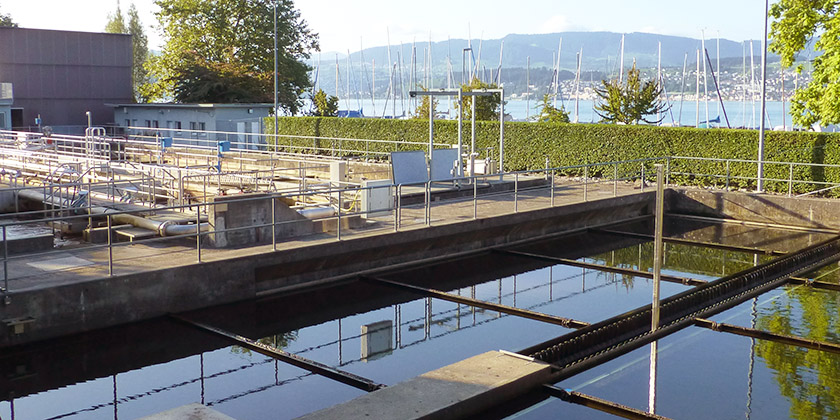
Wie können Entscheidungen in der Siedlungswasserwirtschaft besser abgestützt werden? Wie kann man mit unterschiedlichen Zielen und Zielkonflikten umgehen? Wie können lokalen Akteure einbezogen werden? Mit diesen übergeordneten Fragestellungen befasst sich dieses Dissertations-Projekts, mit dem Ziel, Entscheidungen in der Siedlungswasserwirtschaft künftig besser unterstützen zu können. Hierfür wird ein strukturiertes Entscheidungsverfahren und ein Ansatz zur Bewertung von Handlungsoptionen praxisnah weiterentwickelt. Dabei bauen wir auf das Projekt „Langfristige Planung nachhaltiger Wasserinfrastrukturen“ (SWIP) auf. Die theoretische Basis bildet die multikriterielle Entscheidungsanalyse (MCDA).

Forschungsfragen

Folgende Fragen leiten unsere Forschung:
•    Wie lassen sich die Ziele, die in einer Entscheidung erreicht werden sollen, strukturieren? Wie beeinflussen verschiedene Zielhierarchien die Präferenzen der Akteure und ihre Erhebung?
•    Welche Attribute (Indikatoren) sind geeignet, die Konsequenzen einer Entscheidung zu messen? Welche sind geeignet in der Kommunikation mit Akteuren?
•    Wie können wir Vorhersagen bezüglich der Auswirkungen von Abwassereinleitungen auf Gewässer verbessern?
•    Wie bilden wir die Präferenzen von Akteuren am besten in einem MCDA-Modell ab? Wie erheben wir diese Präferenzen?

Unsere Forschungsfragen untersuchen wir in Fallstudien in der Praxis. Konkret befassen wir uns mit der strategischen Planung bezüglich möglichen Zusammenlegungen von Kläranlagen. Diese Entscheidungen sind oft komplex. Sie betreffen verschiedene, teils miteinander im Konflikt stehende Ziele, sind auf lange Zeit ausgelegt und berühren eine Reihe von Interessen. Unser Verfahren ist ein vielversprechender Ansatz, mit solchen Entscheidungsproblemen besser umzugehen.

Team

Dr. Fridolin Haag

PD Dr. Judit Lienert Gruppenleiterin, Gruppe: DA Tel. +41 58 765 5574 Inviare e-mail

Publikationen

Extbase Variable Dump
array(2 items)
   publications => '24490,19344,19038,17109,18693' (29 chars)
   libraryUrl => '' (0 chars)
Extbase Variable Dump
array(5 items)
   0 => Snowflake\Publications\Domain\Model\Publicationprototypepersistent entity (uid=24490, pid=124)
      originalId => protected24490 (integer)
      authors => protected'Haag, F.; Aubert, A. H.; Lienert, J.' (56 chars)
      title => protected'ValueDecisions, a web app to support decisions with conflicting objectives, 
         multiple stakeholders, and uncertainty
' (114 chars) journal => protected'Environmental Modelling and Software' (36 chars) year => protected2022 (integer) volume => protected150 (integer) issue => protected'' (0 chars) startpage => protected'105361 (19 pp.)' (15 chars) otherpage => protected'' (0 chars) categories => protected'multi criteria decision analysis; MCDA software; multi-attribute value theor
         y; environmental decision analysis; open source; population survey
' (142 chars) description => protected'Complex environmental and public policy decisions profit from structured pro
         cedures such as multi-criteria decision analysis (MCDA). To support such dec
         isions, the new open source application ValueDecisions provides advanced ana
         lysis and visualization with no programming expected from users. Based on mu
         lti-attribute value theory (MAVT), it offers analysis for decisions with con
         flicting and interacting objectives, multiple stakeholders, and uncertain co
         nsequences of options. Programmed in R, the shiny web framework makes it acc
         essible via a graphical user interface in the browser. We exemplify using Va
         lueDecisions for a wastewater infrastructure planning case in the Paris regi
         on. We surveyed preferences of 655 citizens and conducted sensitivity analys
         is of preference parameters. The best management options were robust across
         a range of preference profiles and assumptions. To evaluate the app, we deve
         loped a novel usability test based on the ISO standard for software quality
         and surveyed students using ValueDecisions for case studies.
' (1048 chars) serialnumber => protected'1364-8152' (9 chars) doi => protected'10.1016/j.envsoft.2022.105361' (29 chars) uid => protected24490 (integer) _localizedUid => protected24490 (integer)modified _languageUid => protectedNULL _versionedUid => protected24490 (integer)modified pid => protected124 (integer)
1 => Snowflake\Publications\Domain\Model\Publicationprototypepersistent entity (uid=19344, pid=124) originalId => protected19344 (integer) authors => protected'Haag, F.; Reichert, P.; Maurer, M.; Lienert, J.' (67 chars) title => protected'Integrating uncertainty of preferences and predictions in decision models: a
         n application to regional wastewater planning
' (121 chars) journal => protected'Journal of Environmental Management' (35 chars) year => protected2019 (integer) volume => protected252 (integer) issue => protected'' (0 chars) startpage => protected'109652 (16 pp.)' (15 chars) otherpage => protected'' (0 chars) categories => protected'multi-criteria decision analysis; urban water management; uncertainty; stake
         holder preferences; multi-attribute utility theory; adaptive utility
' (144 chars) description => protected'Decision-making in environmental management requires eliciting preferences o
         f stakeholders and predicting outcomes of decision alternatives. Usually, pr
         eferences and predictions are both uncertain. Uncertainty of predictions can
          be tackled by multi-attribute utility theory, but the uncertainty of prefer
         ences remains a challenge. We demonstrate an approach for including both unc
         ertainties in a multi-criteria decision analysis (MCDA), using utility theor
         y and the concept of expected expected utility. For a decision regarding a r
         egional merger of wastewater infrastructure in Switzerland, we constructed p
         reference models for four stakeholders. These models also allowed for non-ad
         ditive interactions between objectives. We evaluated the performance of elev
         en decision alternatives for which we predicted potential outcomes. Even tho
         ugh uncertainties were high, we could draw conclusions based on the expected
          expected utility of alternatives. Building a pipeline to discharge treated
         wastewater to a larger river emerged as a potential consensus alternative to
          mitigate the problem of micropollutants in a small stream. We investigated
         the robustness of the findings with sensitivity analysis regarding the prefe
         rence parameters and the included objectives. In their actual decision, the
         stakeholders partly preferred other alternatives than those proposed by the
         model. Their choices could be explained by reduced decision models in which
         only few objectives were included. This may indicate the use of simplified c
         hoice heuristics by the stakeholders. The presented approach is feasible for
          supporting other difficult environmental or engineering decisions in practi
         ce, for which we give a number of recommendations.
' (1722 chars) serialnumber => protected'0301-4797' (9 chars) doi => protected'10.1016/j.jenvman.2019.109652' (29 chars) uid => protected19344 (integer) _localizedUid => protected19344 (integer)modified _languageUid => protectedNULL _versionedUid => protected19344 (integer)modified pid => protected124 (integer)
2 => Snowflake\Publications\Domain\Model\Publicationprototypepersistent entity (uid=19038, pid=124) originalId => protected19038 (integer) authors => protected'Haag, F.; Zürcher, S.; Lienert, J.' (50 chars) title => protected'Enhancing the elicitation of diverse decision objectives for public planning' (76 chars) journal => protected'European Journal of Operational Research' (40 chars) year => protected2019 (integer) volume => protected279 (integer) issue => protected'3' (1 chars) startpage => protected'912' (3 chars) otherpage => protected'928' (3 chars) categories => protected'behavioural OR; decision analysis; online elicitation; urban water managemen
         t; environmental decision
' (101 chars) description => protected'Identifying objectives is essential for decision making, but individuals hav
         e difficulties stating their important objectives. In public and environment
         al decisions, the diverse views of stakeholders should be included, but elic
         iting a broad set of objectives is challenging. We (1) study the effectivene
         ss of individual brainstorming for eliciting objectives in a real-world sett
         ing; (2) test three interventions to support individuals in generating objec
         tives; (3) investigate which and how many stakeholders are necessary to gene
         rate a comprehensive set of objectives; and (4) develop a feasible elicitati
         on procedure for practice. In an experimental test, 71 stakeholders particip
         ated in five decisions about regional wastewater infrastructure planning in
         Switzerland. Three interventions were tested with an online survey procedure
         : (i) providing category cues, (ii) a perspective-taking task, and (iii) pro
         viding a predefined master list of objectives. In simple brainstorming, part
         icipants stated few objectives (<em>M</em> = 3.3) associated with 2.9 di
         fferent categories on average. Participants consistently missed objectives t
         hey later considered important. Providing a master list was the only interve
         ntion that substantially increased the number and breadth of objectives (<em
         >M</em> = 12 objectives in <em>M</em> = 5.3 categories). With the he
         lp of our survey, participants generated between 30 and 38 distinct objectiv
         es for each decision case. Between five and nine participants were sufficien
         t to generate these; more participants did not contribute new objectives. Mo
         st decision makers need help generating their objectives; combining simple b
         rainstorming with a master list is a straightforward improvement that does n
         ot require a facilitator. An online process is promising for involving a lar
         ge group of stakeholders.
' (1849 chars) serialnumber => protected'0377-2217' (9 chars) doi => protected'10.1016/j.ejor.2019.06.002' (26 chars) uid => protected19038 (integer) _localizedUid => protected19038 (integer)modified _languageUid => protectedNULL _versionedUid => protected19038 (integer)modified pid => protected124 (integer)
3 => Snowflake\Publications\Domain\Model\Publicationprototypepersistent entity (uid=17109, pid=124) originalId => protected17109 (integer) authors => protected'Haag,&nbsp;F.; Lienert,&nbsp;J.; Schuwirth,&nbsp;N.; Reichert,&nbsp;P.' (70 chars) title => protected'Identifying non-additive multi-attribute value functions based on uncertain
         indifference statements
' (99 chars) journal => protected'Omega: the international journal of management science' (54 chars) year => protected2019 (integer) volume => protected85 (integer) issue => protected'' (0 chars) startpage => protected'49' (2 chars) otherpage => protected'67' (2 chars) categories => protected'decision making/process; preference modeling; multi-attribute value theory;
         uncertainty; aggregation; environmental assessment
' (126 chars) description => protected'Multi-criteria decision analysis (MCDA) requires an accurate representation
         of the preferences of decision-makers, for instance in the form of a multi-a
         ttribute value function. Typically, additivity or other stringent assumption
         s about the preferences are made to facilitate elicitation by assuming a sim
         ple parametric form. When relaxing such assumptions, parameters cannot be el
         icited easily with standard methods. We present a novel approach for identif
         ying multi-attribute value functions which can have any shape. As preference
          information indifference statements are used that can be elicited by trade-
         off questions. Instead of asking one indifference statement for each pair of
          attributes, we ask for multiple trade-offs at different points in the attri
         bute space. This allows inferring parameters of complex value functions desp
         ite the simplicity of the preference statements. Parameters are estimated by
          taking into account preference and elicitation uncertainty with a probabili
         stic model. Statistical inference supports identifying the most adequate pre
         ference model out of several candidate models through quantifying the uncert
         ainty and assessing the need for non-additivity. The approach is elaborated
         for determining value functions by hierarchical aggregation. We apply it to
         an assessment of the ecological state of rivers, which is used to support en
         vironmental management decisions in Switzerland. Preference models of four e
         xperts were quantified, confirming the feasibility of the approach and the r
         elevance of considering non-additive functions. The method suggests a promis
         ing direction for improving the representation of preferences.
' (1658 chars) serialnumber => protected'0305-0483' (9 chars) doi => protected'10.1016/j.omega.2018.05.011' (27 chars) uid => protected17109 (integer) _localizedUid => protected17109 (integer)modified _languageUid => protectedNULL _versionedUid => protected17109 (integer)modified pid => protected124 (integer)
4 => Snowflake\Publications\Domain\Model\Publicationprototypepersistent entity (uid=18693, pid=124) originalId => protected18693 (integer) authors => protected'Marttunen,&nbsp;M.; Haag,&nbsp;F.; Belton,&nbsp;V.; Mustajoki,&nbsp;J.; Lien
         ert,&nbsp;J.
' (88 chars) title => protected'Methods to inform the development of concise objectives hierarchies in multi
         -criteria decision analysis
' (103 chars) journal => protected'European Journal of Operational Research' (40 chars) year => protected2019 (integer) volume => protected277 (integer) issue => protected'2' (1 chars) startpage => protected'604' (3 chars) otherpage => protected'620' (3 chars) categories => protected'problem structuring; multiple criteria analysis; OR in environment; behaviou
         ral OR
' (82 chars) description => protected'Building a well-structured objectives hierarchy is central to multi-criteria
          decision analysis (MCDA). However, in the absence of a systematic methodolo
         gy to support the process, this task has been described as "more art than sc
         ience". Objectives hierarchies often tend to become large and constraining t
         he size of a hierarchy can be challenging. This paper proposes and illustrat
         es the use of a set of methods to support the simplification of the hierarch
         ies in contexts that are "data rich" and characterised by many objectives. T
         he aim of using the proposed approach is to support decision analysts in dev
         eloping an appropriately concise decision model for the further interactions
          with the stakeholders. Using data from two completed environmental cases we
          show retrospectively how qualitative (means-ends networks), semi-quantitati
         ve (relevancy analysis) and quantitative (correlation analysis, principal co
         mponent analysis, local sensitivity analysis of weights) methods, used alone
          or in combination, can inform hierarchy development. We evaluate the potent
         ial benefits and challenges of each method and discuss the advantages and di
         sadvantages of the simplification of an objectives hierarchy. Questionnaire-
         based relevancy analysis can be a useful method to identify and communicate
         important objectives in the early phases of an MCDA process with stakeholder
         s, while correlation analysis can help to identify overlapping objectives, p
         articularly in cases having many objectives and alternatives. It is intended
          that the methods support a facilitator in developing a clear understanding
         of the problem and also prompt deeper thinking about and discussion of the a
         ppropriate structure and content of an objectives hierarchy with the stakeho
         lders involved.
' (1763 chars) serialnumber => protected'0377-2217' (9 chars) doi => protected'10.1016/j.ejor.2019.02.039' (26 chars) uid => protected18693 (integer) _localizedUid => protected18693 (integer)modified _languageUid => protectedNULL _versionedUid => protected18693 (integer)modified pid => protected124 (integer)
Haag, F.; Aubert, A. H.; Lienert, J. (2022) ValueDecisions, a web app to support decisions with conflicting objectives, multiple stakeholders, and uncertainty, Environmental Modelling and Software, 150, 105361 (19 pp.), doi:10.1016/j.envsoft.2022.105361, Institutional Repository
Haag, F.; Reichert, P.; Maurer, M.; Lienert, J. (2019) Integrating uncertainty of preferences and predictions in decision models: an application to regional wastewater planning, Journal of Environmental Management, 252, 109652 (16 pp.), doi:10.1016/j.jenvman.2019.109652, Institutional Repository
Haag, F.; Zürcher, S.; Lienert, J. (2019) Enhancing the elicitation of diverse decision objectives for public planning, European Journal of Operational Research, 279(3), 912-928, doi:10.1016/j.ejor.2019.06.002, Institutional Repository
Haag, F.; Lienert, J.; Schuwirth, N.; Reichert, P. (2019) Identifying non-additive multi-attribute value functions based on uncertain indifference statements, Omega: the international journal of management science, 85, 49-67, doi:10.1016/j.omega.2018.05.011, Institutional Repository
Marttunen, M.; Haag, F.; Belton, V.; Mustajoki, J.; Lienert, J. (2019) Methods to inform the development of concise objectives hierarchies in multi-criteria decision analysis, European Journal of Operational Research, 277(2), 604-620, doi:10.1016/j.ejor.2019.02.039, Institutional Repository

Kontakt

PD Dr. Judit Lienert Gruppenleiterin, Gruppe: DA Tel. +41 58 765 5574 Inviare e-mail

Projektdauer

2015-2019