Abteilung Umweltchemie

Bioakkumulations- und Biotransformationsprozesse polarer organischer Schadstoffe in aquatischen Invertebraten - Die Verknüpfung von Exposition und Effekten
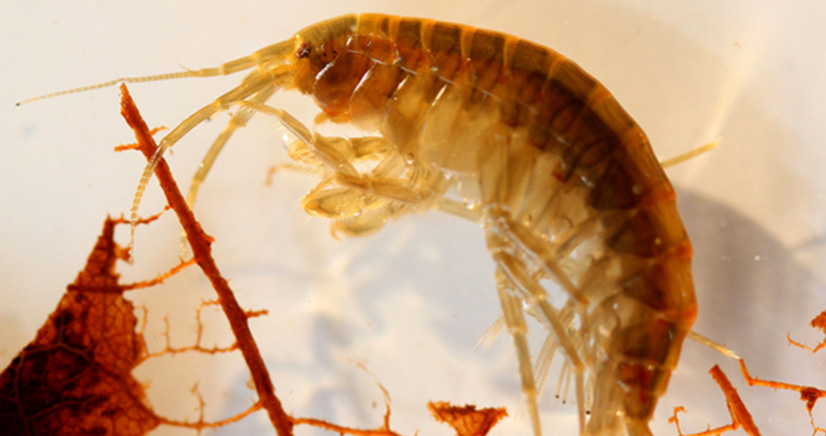

Monitoring-Studien mit aquatischen Invertebraten zeigen, dass die Gewebekonzentrationen vieler Schadstoffe wesentlich höher sind als anhand von Modellen, basierend auf Laborstudien und gemessenen Wasserkonzentrationen, vorhergesagt. Dies ist insbesondere bei (semi-) polaren Verbindungen, einschließlich Pharmazeutika und systemischer Pestizide der Fall. Solche Abweichungen können zu Unterschätzungen in der Umweltrisikobewertung führen, da letztendlich interne Konzentrationen die Ursache für toxikologische Effekte sind. Das Verständnis toxikokinetischer Prozesse ist daher unerlässlich, um die Übertragbarkeit von Labordaten auf die Umwelt zu verbessern und Exposition sowie Effekt mechanistisch miteinander zu verknüpfen.

Dieses Projekt zielt auf die Aufklärung von Bioakkumulations- und Biotransformationsprozessen sowie Parametern ab, die möglicherweise für die beobachtete Diskrepanz verantwortlich sind und in die Modelle aufgenommen werden könnten. Die Untersuchungen werden mit den beiden Süßwasseramphipoden Gammarus pulex (Europa) und Hyalella azteca (Nordamerika) durchgeführt und umfassen folgende toxikokinetische Prozesse:
 

  • Aufnahmepfad Nahrung
    Bioakkumulations- sowie Sorptions- und Auslaugungsexperimente werden mit Laub              durchgeführt, das von mit systemischen Pestiziden exponierten Bäumen stammmt (Zusammenarbeit mit der Universität Koblenz-Landau )
     
  • Räumliche Verteilung
    In Zusammenarbeit mit der Universität Kopenhagen wird die Methode der bildgebenden Massenspektrometrie verwendet, um den Zugang zu molekularen Wirkorten und die Senken von angereicherten Schadstoffen zu bestimmen
     
  • Temperatur
    In Mikrokosmenstudien quantifizieren wir den Einfluss von Temperatur - ein wesentlicher Antrieb chemischer und biologischer Prozesse - auf die Toxikokonetik von Schadstoffen
     
  • Rezeptor Bindung
    Eine Kombination aus toxikokinetischen Experimenten und Rezeptorbindungsassays wird angewendet, um Multi-Kompartiment toxikokinetische und toxikodynamische Modellierung zu ermöglichen. Ausserdem haben wir die Rezeptorbindung als Ursache für Kontaminationsrückstände identifiziert, die gegenüber der Eliminierung aus Geweben resistent sind.
     

  • Aktiver Transport
    Die aktiven Aufnahme- und Eliminationsprozesse kationischer psychoaktiver Medikamente mit Hilfe von Transporter-Inhibitor-Assays aufgeklärt.

Publikationen

Extbase Variable Dump
array(2 items)
   publications => '31058,26212,30985,31950,24072' (29 chars)
   libraryUrl => '' (0 chars)
Extbase Variable Dump
array(5 items)
   0 => Snowflake\Publications\Domain\Model\Publicationprototypepersistent entity (uid=31058, pid=124)
      originalId => protected31058 (integer)
      authors => protected'Raths, J.; Schinz, L.; Mangold-Döring, A.; Hollender, J
         .
' (77 chars) title => protected'Elimination resistance: characterizing multi-compartment toxicokinetics of t
         he neonicotinoid thiacloprid in the amphipod <em>Gammarus pulex</em> using b
         ioconcentration and receptor-binding assays
' (195 chars) journal => protected'Environmental Science and Technology' (36 chars) year => protected2023 (integer) volume => protected57 (integer) issue => protected'24' (2 chars) startpage => protected'8890' (4 chars) otherpage => protected'8901' (4 chars) categories => protected'bioaccumulation; invertebrates; micropollutants; organic contaminants; insec
         ticides
' (83 chars) description => protected'Delayed toxicity is a phenomenon observed for aquatic invertebrates exposed
         to nicotinic acetylcholine receptor (nAChR) agonists, such as neonicotinoids
         . Furthermore, recent studies have described an incomplete elimination of ne
         onicotinoids by exposed amphipods. However, a mechanistic link between recep
         tor binding and toxicokinetic modeling has not been demonstrated yet. The el
         imination of the neonicotinoid thiacloprid in the freshwater amphipod <em>Ga
         mmarus pulex</em> was studied in several toxicokinetic exposure experiments,
          complemented with in vitro and in vivo receptor-binding assays. Based on th
         e results, a two-compartment model was developed to predict the uptake and e
         limination kinetics of thiacloprid in <em>G. pulex</em>. An incomplete elimi
         nation of thiacloprid, independent of elimination phase duration, exposure c
         oncentrations, and pulses, was observed. Additionally, the receptor-binding
         assays indicated irreversible binding of thiacloprid to the nAChRs. Accordin
         gly, a toxicokinetic-receptor model consisting of a structural and a membran
         e protein (including nAChRs) compartment was developed. The model successful
         ly predicted internal thiacloprid concentrations across various experiments.
          Our results help in understanding the delayed toxic and receptor-mediated e
         ffects toward arthropods caused by neonicotinoids. Furthermore, the results
         suggest that more awareness toward long-term toxic effects of irreversible r
         eceptor binding is needed in a regulatory context. The developed model suppo
         rts the future toxicokinetic assessment of receptor-binding contaminants.
' (1593 chars) serialnumber => protected'0013-936X' (9 chars) doi => protected'10.1021/acs.est.3c01891' (23 chars) uid => protected31058 (integer) _localizedUid => protected31058 (integer)modified _languageUid => protectedNULL _versionedUid => protected31058 (integer)modified pid => protected124 (integer)
1 => Snowflake\Publications\Domain\Model\Publicationprototypepersistent entity (uid=26212, pid=124) originalId => protected26212 (integer) authors => protected'Raths,&nbsp;J.; Švara,&nbsp;V.; Lauper,&nbsp;B.; Fu,&nbsp;Q.; Hollender,&nb
         sp;J.
' (81 chars) title => protected'Speed it up: how temperature drives toxicokinetics of organic contaminants i
         n freshwater amphipods
' (98 chars) journal => protected'Global Change Biology' (21 chars) year => protected2023 (integer) volume => protected29 (integer) issue => protected'5' (1 chars) startpage => protected'1390' (4 chars) otherpage => protected'1406' (4 chars) categories => protected'aquatic invertebrates; Arrhenius; bioconcentration; biotransformation; Gamma
         rus pulex; Hyalella azteca; micropollutants
' (119 chars) description => protected'The acceleration of global climate change draws increasing attention towards
          interactive effects of temperature and organic contaminants. Many studies r
         eported a higher sensitivity of aquatic invertebrates towards contaminant ex
         posure with increasing or fluctuating temperatures. The hypothesis of this s
         tudy was that the higher sensitivity of invertebrates is associated with the
          changes of toxicokinetic processes that determine internal concentrations o
         f contaminants and consequently toxic effects. Therefore, the influence of t
         emperature on toxicokinetic processes and the underlying mechanisms were stu
         died in two key amphipod species (<em>Gammarus pulex</em> and <em>Hyalella a
         zteca</em>). Bioconcentration experiments were carried out at four different
          temperatures with a mixture of 12 exposure relevant polar organic contamina
         nts. Tissue and medium samples were taken in regular intervals and analysed
         by online solid-phase extraction liquid chromatography high-resolution tande
         m mass spectrometry. Subsequently, toxicokinetic rates were modelled and ana
         lysed in dependence of the exposure temperature using the Arrhenius equation
         . An exponential relationship between toxicokinetic rates versus temperature
          was observed and could be well depicted by applying the Arrhenius equation.
          Due to a similar Arrhenius temperature of uptake and elimination rates, the
          bioconcentration factors of the contaminants were generally constant across
          the temperature range. Furthermore, the Arrhenius temperature of the toxico
         kinetic rates and respiration was mostly similar. However, in some cases (ci
         talopram, cyprodinil), the bioconcentration factor appeared to be temperatur
         e dependent, which could potentially be explained by the influence of temper
         ature on active uptake mechanisms or biotransformation. The observed tempera
         ture effects on toxicokinetics may be particularly relevant in non-equilibra
         ted systems, such as exposure peaks in summer as exemplified by the exposure
          modelling of a field me...
' (2302 chars) serialnumber => protected'1354-1013' (9 chars) doi => protected'10.1111/gcb.16542' (17 chars) uid => protected26212 (integer) _localizedUid => protected26212 (integer)modified _languageUid => protectedNULL _versionedUid => protected26212 (integer)modified pid => protected124 (integer)
2 => Snowflake\Publications\Domain\Model\Publicationprototypepersistent entity (uid=30985, pid=124) originalId => protected30985 (integer) authors => protected'Raths,&nbsp;J.; Schnurr,&nbsp;J.; Bundschuh,&nbsp;M.; Pinto,&nbsp;F.&nbsp;E.
         ; Janfelt,&nbsp;C.; Hollender,&nbsp;J.
' (114 chars) title => protected'Importance of dietary uptake for in situ bioaccumulation of systemic fungici
         des using <em>Gammarus pulex</em> as a model organism
' (129 chars) journal => protected'Environmental Toxicology and Chemistry' (38 chars) year => protected2023 (integer) volume => protected42 (integer) issue => protected'9' (1 chars) startpage => protected'1993' (4 chars) otherpage => protected'2006' (4 chars) categories => protected'aquatic invertebrates; biomagnification; micropollutants; plant imaging; pla
         nt uptake; trophic transfer
' (103 chars) description => protected'Bioaccumulation of organic contaminants from contaminated food sources might
          pose an underestimated risk toward shredding invertebrates. This assumption
          is substantiated by monitoring studies observing discrepancies of predicted
          tissue concentrations determined from laboratory-based experiments compared
          with measured concentrations of systemic pesticides in gammarids. To elucid
         ate the role of dietary uptake in bioaccumulation, gammarids were exposed to
          leaf material from trees treated with a systemic fungicide mixture (azoxyst
         robin, cyprodinil, fluopyram, and tebuconazole), simulating leaves entering
         surface waters in autumn. Leaf concentrations, spatial distribution, and lea
         ching behavior of fungicides were characterized using liquid chromatography
         coupled with high-resolution tandem mass spectrometry (LC-HRMS/MS) and matri
         x-assisted laser desorption ionization-mass spectrometric imaging. The contr
         ibution of leached fungicides and fungicides taken up from feeding was asses
         sed by assembling caged (no access) and uncaged (access to leaves) gammarids
         . The fungicide dynamics in the test system were analyzed using LC-HRMS/MS a
         nd toxicokinetic modeling. In addition, a summer scenario was simulated wher
         e water was the initial source of contamination and leaves contaminated by s
         orption. The uptake, translocation, and biotransformation of systemic fungic
         ides by trees were compound-dependent. Internal fungicide concentrations of
         gammarids with access to leaves were much higher than in caged gammarids of
         the autumn scenario, but the difference was minimal in the summer scenario.
         In food choice and dissectioning experiments gammarids did not avoid contami
         nated leaves and efficiently assimilated contaminants from leaves, indicatin
         g the relevance of this exposure pathway in the field. The present study dem
         onstrates the potential impact of dietary uptake on in situ bioaccumulation
         for shredders in autumn, outside the main application period. The toxicokine
         tic parameters obtained ...
' (2201 chars) serialnumber => protected'0730-7268' (9 chars) doi => protected'10.1002/etc.5615' (16 chars) uid => protected30985 (integer) _localizedUid => protected30985 (integer)modified _languageUid => protectedNULL _versionedUid => protected30985 (integer)modified pid => protected124 (integer)
3 => Snowflake\Publications\Domain\Model\Publicationprototypepersistent entity (uid=31950, pid=124) originalId => protected31950 (integer) authors => protected'Raths,&nbsp;J.; Pinto,&nbsp;F.&nbsp;E.; Janfelt,&nbsp;C.; Hollender,&nbsp;J.' (76 chars) title => protected'Elucidating the spatial distribution of organic contaminants and their biotr
         ansformation products in amphipod tissue by MALDI- and DESI-MS-imaging
' (146 chars) journal => protected'Ecotoxicology and Environmental Safety' (38 chars) year => protected2023 (integer) volume => protected264 (integer) issue => protected'' (0 chars) startpage => protected'115468 (10 pp.)' (15 chars) otherpage => protected'' (0 chars) categories => protected'aquatic invertebrates; bioaccumulation; cryosectioning; dissection; Gammarus
          pulex; micropollutants; whole body cross sections
' (126 chars) description => protected'The application of mass spectrometry imaging (MSI) is a promising tool to an
         alyze the spatial distribution of organic contaminants in organisms and ther
         eby improve the understanding of toxicokinetic and toxicodynamic processes.
         MSI is a common method in medical research but has been rarely applied in en
         vironmental science. In the present study, the suitability of MSI to assess
         the spatial distribution of organic contaminants and their biotransformation
          products (BTPs) in the aquatic invertebrate key species <em>Gammarus pulex<
         /em> was studied. Gammarids were exposed to a mixture of common organic cont
         aminants (carbamazepine, citalopram, cyprodinil, efavirenz, fluopyram and te
         rbutryn). The distribution of the parent compounds and their BTPs in the org
         anisms was analyzed by two MSI methods (MALDI- and DESI-HRMSI) after cryo-se
         ctioning, and by LC-HRMS/MS after dissection into different organ compartmen
         ts. The spatial distribution of contaminats in gammarid tissue could be succ
         essfully analyzed by the different analytical methods. The intestinal system
          was identified as the main site of biotransformation, possibly due to the p
         resence of biotransforming enzymes. LC-HRMS/MS was more sensitive and provid
         ed higher confidence in BTP identification due to chromatographic separation
          and MS/MS. DESI was found to be the more sensitive MSI method for the analy
         zed contaminants, whereas additional biomarkers were found using MALDI. The
         results demonstrate the suitability of MSI for investigations on the spatial
          distribution of accumulated organic contaminants. However, both MSI methods
          required high exposure concentrations. Further improvements of ionization m
         ethods would be needed to address environmentally relevant concentrations.
' (1746 chars) serialnumber => protected'0147-6513' (9 chars) doi => protected'10.1016/j.ecoenv.2023.115468' (28 chars) uid => protected31950 (integer) _localizedUid => protected31950 (integer)modified _languageUid => protectedNULL _versionedUid => protected31950 (integer)modified pid => protected124 (integer)
4 => Snowflake\Publications\Domain\Model\Publicationprototypepersistent entity (uid=24072, pid=124) originalId => protected24072 (integer) authors => protected'Lauper,&nbsp;B.&nbsp;B.; Anthamatten,&nbsp;E.; Raths,&nbsp;J.; Arlos,&nbsp;M
         .; Hollender,&nbsp;J.
' (97 chars) title => protected'Systematic underestimation of pesticide burden for invertebrates under field
          conditions: comparing the influence of dietary uptake and aquatic exposure
         dynamics
' (160 chars) journal => protected'ACS Environmental Au' (20 chars) year => protected2022 (integer) volume => protected2 (integer) issue => protected'2' (1 chars) startpage => protected'166' (3 chars) otherpage => protected'175' (3 chars) categories => protected'aquatic invertebrates; gammarids; pesticides; toxicokinetics; bioaccumulatio
         n; field study; dietary uptake; modeling
' (116 chars) description => protected'Pesticides used in agriculture can end up in nearby streams and can have a n
         egative impact on nontarget organisms such as aquatic invertebrates. During
         registration, bioaccumulation potential is often investigated using laborato
         ry tests only. Recent studies showed that the magnitude of bioaccumulation i
         n the field substantially differs from laboratory conditions. To investigate
          this discrepancy, we conducted a field bioaccumulation study in a stream kn
         own to receive pollutant loadings from agriculture. Our work incorporates me
         asurements of stream pesticide concentrations at high temporal resolution (e
         very 20 min), as well as sediment, leaves, and caged gammarid analyses (ever
         y 2-24 h) over several weeks. Of 49 investigated pesticides, 14 were detecte
         d in gammarids with highly variable concentrations of up to 140 ± 28 ng/g<s
         ub>ww</sub>. Toxicokinetic modeling using laboratory-derived uptake and depu
         ration rate constants for azoxystrobin, cyprodinil, and fluopyram showed tha
         t despite the highly resolved water concentrations measured, the pesticide b
         urden on gammarids remains underestimated by a factor of 1.9 ± 0.1 to 31 ±
          3.0, with the highest underestimations occurring after rain events. Includi
         ng dietary uptake from polluted detritus leaves and sediment in the model ex
         plained this underestimation only to a minor proportion. However, suspended
         solids analyzed during rain events had high pesticide concentrations, and up
         take from them could partially explain the underestimation after rain events
         . Additional comparison between the measured and modeled data showed that th
         e pesticide depuration in gammarids is slower in the field. This observation
          suggests that several unknown mechanisms may play a role, including lowered
          enzyme expression and mixture effects. Thus, it is important to conduct suc
         h retrospective risk assessments based on field investigations and adapt the
          registration accordingly.
' (1926 chars) serialnumber => protected'' (0 chars) doi => protected'10.1021/acsenvironau.1c00023' (28 chars) uid => protected24072 (integer) _localizedUid => protected24072 (integer)modified _languageUid => protectedNULL _versionedUid => protected24072 (integer)modified pid => protected124 (integer)
Raths, J.; Schinz, L.; Mangold-Döring, A.; Hollender, J. (2023) Elimination resistance: characterizing multi-compartment toxicokinetics of the neonicotinoid thiacloprid in the amphipod Gammarus pulex using bioconcentration and receptor-binding assays, Environmental Science and Technology, 57(24), 8890-8901, doi:10.1021/acs.est.3c01891, Institutional Repository
Raths, J.; Švara, V.; Lauper, B.; Fu, Q.; Hollender, J. (2023) Speed it up: how temperature drives toxicokinetics of organic contaminants in freshwater amphipods, Global Change Biology, 29(5), 1390-1406, doi:10.1111/gcb.16542, Institutional Repository
Raths, J.; Schnurr, J.; Bundschuh, M.; Pinto, F. E.; Janfelt, C.; Hollender, J. (2023) Importance of dietary uptake for in situ bioaccumulation of systemic fungicides using Gammarus pulex as a model organism, Environmental Toxicology and Chemistry, 42(9), 1993-2006, doi:10.1002/etc.5615, Institutional Repository
Raths, J.; Pinto, F. E.; Janfelt, C.; Hollender, J. (2023) Elucidating the spatial distribution of organic contaminants and their biotransformation products in amphipod tissue by MALDI- and DESI-MS-imaging, Ecotoxicology and Environmental Safety, 264, 115468 (10 pp.), doi:10.1016/j.ecoenv.2023.115468, Institutional Repository
Lauper, B. B.; Anthamatten, E.; Raths, J.; Arlos, M.; Hollender, J. (2022) Systematic underestimation of pesticide burden for invertebrates under field conditions: comparing the influence of dietary uptake and aquatic exposure dynamics, ACS Environmental Au, 2(2), 166-175, doi:10.1021/acsenvironau.1c00023, Institutional Repository