Der mTOR-Signalweg und seine Rolle in der Regulierung
von chemischen Effekten auf das Fischwachstum
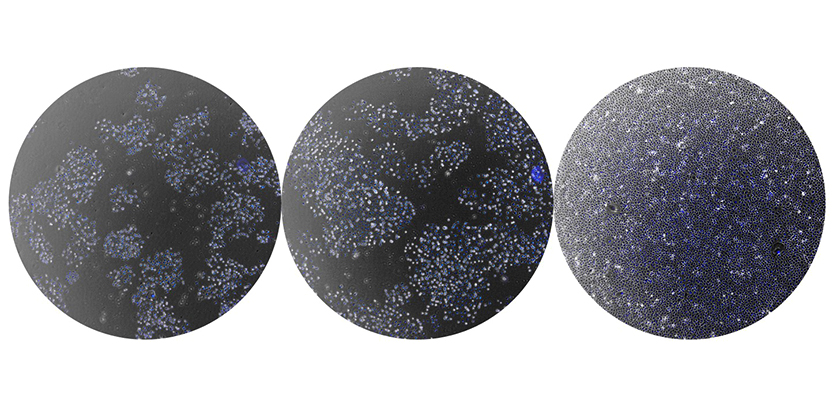
Zebrafisch-Embryonalzelllinie PAC2 bei niedriger Wachstumsdichte bis zur Konfluenz (Foto: Nikolai Huwa)
Bislang werden jährlich Tausende von Fischen für Toxizitätstests, die für die Umweltrisikobewertung von Chemikalien erforderlich sind, eingesetzt. Um den Einsatz von Tieren zu reduzieren, müssen alternative (tierfreie) Toxizitätstestmethoden entwickelt werden.
Wir verwenden permanente Fischzelllinien, um chemisch induzierte molekulare Veränderungen während des Zellwachstums und der Zellproliferation zu ermitteln. Die erhaltenen Erkenntnisse können wiederum zur Vorhersage der Auswirkungen von Chemikalien auf das Wachstum von Tieren verwendet werden. Wir konzentrieren uns dabei auf den mTOR-Signalweg (Engslisch: mechanistic target of rapamycin; mechanistische Ziel des Rapamycins), da (i) dieser einen wichtigen zellulären Signalweg darstellt, der an der Regulierung des Zellwachstums und der Zellproliferation in Eukaryonten beteiligt ist und (ii) es Hinweise gibt, dass der mTOR-Signalweg an der Vermittlung von chemikalieninduzierten Wachstumseffekten beteiligt sein könnte. Diese Wechselwirkungen wurden jedoch noch nicht systematisch erforscht, insbesondere bei aquatischen Organismen wie Fischen.
In unserem Projekt "Funktionalität des mTOR-Signalwegs in kultivierten Fischzellen und seine Rolle bei der Regulierung chemischer Effekte auf das Zell- und Populationswachstum den molekularen Mechanismen, die den Auswirkungen von Chemikalien auf das Wachstum von Zellpopulationen zugrunde liegen" verwenden wir in vitro kultivierte PAC2-Zellen des Zebrabärblings (Danio rerio) als Modell. Mit diesem Modell können wir die Architektur und Funktionalität des mTOR-Signalwegs sowie seine Anfälligkeit gegenüber Chemikalien und die damit verbundenen Auswirkungen auf das Wachstum und die Vermehrung von Fischzellen untersuchen. Die Aktivität des mTOR-Signalwegs wird hauptsächlich durch Proteinphosphorylierung reguliert. Eine umfassende Untersuchung der Aktivität des mTOR-Signalwegs in Fischen war bisher kaum möglich, da fischspezifische Antikörper für (de)phosphorylierte Proteine oft nicht verfügbar sind. Wir möchten dieses Problem lösen, indem wir einen massenspektrometriebasierten Arbeitsablauf für die gezielte Analyse der Phosphorylierungsdynamik ausgewählter Proteine innerhalb des mTOR-Signalwegs entwickeln. Diese Methode umfasst die Proteinextraktion und -verdauung, gefolgt von der Phosphopeptid-Anreicherung und massenspektrometrischen Analyse zur Quantifizierung von phosphorylierten und dephosphorylierten Proteinen unter Verwendung von isotopenmarkierten Peptidstandards.
Der etablierte Arbeitsablauf wird ein wertvolles Verfahren darstellen, um die phosphorylierungsbasierte molekulare Signalübertragung innerhalb des mTOR-Signalwegs in Fischzellen und somit in Fischen im Allgemeinen zu untersuchen. Dies könnte einen bedeutenden methodischen Fortschritt ermöglichen, da die entsprechenden Antikörper für Nicht-Säugetierproteine sonst nur selten verfügbar sind.
Die Phosphoprotein-Dynamik wird durch gezielte Modulation des mTOR-Signalwegs (d. h. De- oder Aktivierung des mTOR-Signalwegs unter Verwendung spezifischer pharmakologischer Inhibitoren oder Aktivatoren) sowie als Reaktion auf eine chemische Exposition gemessen. Die dadurch erhaltenen Erkenntnisse werden mit wachstumsbezogenen Ergebnissen und weiteren relevanten physiologischen Parametern in Fischzellen untersucht. Ein besseres Verständnis des mTOR-Signalwegs in Fischzellen hinsichtlich der Rolle bei der Regulierung des Zellwachstums und potenziellen Störung durch Chemikalien könnte einen Weg zur Entwicklung von neuen Toxizitätstests ohne Tierversuche eröffnen. Solche alternativen Testmethoden könnten zur Vorhersage von Chemikalien und dessen Wirkung auf das Fischwachstum verwendet werden, ohne dass dabei Fische verwendet werden müssen.
array(6 items)0 => Snowflake\Publications\Domain\Model\Publicationprototypepersistent entity (uid=34827, pid=124)originalId => protected34827 (integer)
authors => protected'Huwa, N.; Schönenberger, R.; Groh, K. J.' (61 chars)
title => protected'Development and application of a targeted phosphoproteomics method for analy sing the mTOR pathway dynamics in zebrafish PAC2 cell line' (134 chars)
journal => protected'Journal of Proteomics' (21 chars)
year => protected2025 (integer)
volume => protected319 (integer)
issue => protected'' (0 chars)
startpage => protected'105469 (11 pp.)' (15 chars)
otherpage => protected'' (0 chars)
categories => protected'phosphoproteomics; mTOR signalling; zebrafish; LC-MS/MS; phosphopeptide enri chment' (82 chars)
description => protected'The mechanistic target of rapamycin (mTOR) signalling pathway plays a crucia l role in regulating cellular growth and proliferation. While extensively st udied in mammals, the phosphorylation dynamics of this pathway in non-mammal ian model organisms remain largely unexplored, often due to the scarcity of suitable antibodies to measure (phosphorylated) proteins of interest. To add ress this gap, we developed an antibody-independent targeted phosphoproteomi cs method applying liquid chromatography-tandem mass spectrometry (LC-MS/MS) to quantify the abundance and phosphorylation levels of mTOR pathway-relate d proteins in zebrafish (<em>Danio rerio</em>), using the permanent cell lin e PAC2 as a model system. With optimized sample processing and data analysis strategies, we could successfully quantify 10 endogenous phosphosites and 1 5 endogenous proteins at different cell culture growth phases, revealing com plex phosphorylation dynamics for both the upstream regulators (e.g., AKT, A MPK) and downstream effectors (e.g., eIF4EBP1, RPS6) of the mTOR pathway, wh ich reflected transition from exponential growth to stationary subsistence. Our findings confirm the overall similarity of the mTOR pathway structure an d functionality between zebrafish and mammals. Furthermore, this work demons trates the high potential of the LC-MS/MS-based analytical approaches for st udying phosphorylation-governed signalling in diverse organisms of interest, thus paving the way for further investigations in comparative physiology an d toxicology across species.<br />Significance: We demonstrate the feasibili ty of using LC-MS/MS-based targeted phosphoproteomics to quantify protein ph osphorylation dynamics of a specific pathway of interest – mTOR – in a n on-mammalian model organism, zebrafish. This antibody-independent approach c an enable the performance of further hypothesis-driven studies of phosphoryl ation-based signalling in diverse non-mammalian, non-model species. This too l could thus prove valua...' (2665 chars)
serialnumber => protected'1874-3919' (9 chars)
doi => protected'10.1016/j.jprot.2025.105469' (27 chars)
uid => protected34827 (integer)
_localizedUid => protected34827 (integer)modified_languageUid => protectedNULL
_versionedUid => protected34827 (integer)modifiedpid => protected124 (integer)1 => Snowflake\Publications\Domain\Model\Publicationprototypepersistent entity (uid=21600, pid=124)originalId => protected21600 (integer)
authors => protected'Groh, K. J.; Suter, M. F. -J.' (54 chars)
title => protected'Mass spectrometry in ecotoxicology' (34 chars)
journal => protected'In: Sidona, G.; Banoub, J. H.; Di Gioia, M. L. (Eds .), Toxic chemical and biological agents. Detection, diagnosis and health co ncerns' (158 chars)
year => protected2020 (integer)
volume => protected0 (integer)
issue => protected'' (0 chars)
startpage => protected'93' (2 chars)
otherpage => protected'108' (3 chars)
categories => protected'chemical analysis; mass spectrometry; search for unknowns; environmental che mistry; ecotoxicology; risk assessment; -omics techniques' (133 chars)
description => protected'Risk assessment of chemical effects in the environment requires the understa nding of the fate and behavior of anthropogenic chemicals in natural and tec hnical systems, which is the focus of environmental chemistry. The exposure data obtained by environmental chemists are in turn used to evaluate the sig nificance of toxicological effects in organisms, as studied by environmental toxicologists. Mass spectrometry-based techniques are frequently applied to monitor the exposure or investigate the effects of chemicals, particularly their mechanism of action. These techniques include, for example, targeted a nd non-targeted chemical analytics as well as diverse –omics methods. This chapter illustrates the application of mass spectrometry in environmental c hemistry and toxicology using research projects carried out at our institute , with a particular focus on the aquatic environment.' (889 chars)
serialnumber => protected'' (0 chars)
doi => protected'10.1007/978-94-024-2041-8_6' (27 chars)
uid => protected21600 (integer)
_localizedUid => protected21600 (integer)modified_languageUid => protectedNULL
_versionedUid => protected21600 (integer)modifiedpid => protected124 (integer)2 => Snowflake\Publications\Domain\Model\Publicationprototypepersistent entity (uid=21420, pid=124)originalId => protected21420 (integer)
authors => protected'Tierbach, A.; Groh, K. J.; Schoenenberger, R.; Schirmer, K.; Suter, M. J. -F.' (117 chars)
title => protected'Characterization of the mercapturic acid pathway, an important phase II biot ransformation route, in a zebrafish embryo cell line' (128 chars)
journal => protected'Chemical Research in Toxicology' (31 chars)
year => protected2020 (integer)
volume => protected33 (integer)
issue => protected'11' (2 chars)
startpage => protected'2863' (4 chars)
otherpage => protected'2871' (4 chars)
categories => protected'' (0 chars)
description => protected'In view of the steadily increasing number of chemical compounds used in vari ous products and applications, high-throughput toxicity screening techniques can help meeting the needs of 21st century risk assessment. Zebrafish (<em> Danio rerio</em>), especially its early life stages, are increasingly used i n such screening efforts. In contrast, cell lines derived from this model or ganism have received less attention so far. A conceivable reason is the limi ted knowledge about their overall capacity to biotransform chemicals and the spectrum of expressed biotransformation pathways. One important biotransfor mation route is the mercapturic acid pathway, which protects organisms from harmful electrophilic compounds. The fully functional pathway involves a suc cession of several enzymatic reactions. To investigate the mercapturic acid pathway performance in the zebrafish embryonic cell line, PAC2, we analyzed the biotransformation products of the reactions comprising this pathway in t he cells exposed to a nontoxic concentration of the reference substrate, 1-c hloro-2,4-dinitrobenzene (CDNB). Additionally, we used targeted proteomics t o measure the expression of cytosolic glutathione S-transferases (GSTs), the enzyme family catalyzing the first reaction in this pathway. Our results re veal that the PAC2 cell line expresses a fully functional mercapturic acid p athway. All but one of the intermediate CDNB biotransformation products were identified. The presence of the active mercapturic acid pathway in this cel l line was further supported by the expression of a large palette of GST enz yme classes. Although the enzymes of the class alpha, one of the dominant GS T classes in the zebrafish embryo, were not detected, this did not seem to a ffect the capacity of the PAC2 cells to biotransform CDNB. Our data provide an important contribution toward using zebrafish cell lines, specifically PA C2, for animal-free high-throughput screening in toxicology and chemical haz ard assessment.' (1991 chars)
serialnumber => protected'0893-228X' (9 chars)
doi => protected'10.1021/acs.chemrestox.0c00315' (30 chars)
uid => protected21420 (integer)
_localizedUid => protected21420 (integer)modified_languageUid => protectedNULL
_versionedUid => protected21420 (integer)modifiedpid => protected124 (integer)3 => Snowflake\Publications\Domain\Model\Publicationprototypepersistent entity (uid=16497, pid=124)originalId => protected16497 (integer)
authors => protected'Tierbach, A.; Groh, K. J.; Schönenberger, R.; Schirmer, K.; Suter, M. J. -F.' (117 chars)
title => protected'Glutathione S-transferase protein expression in different life stages of zeb rafish (<i>Danio rerio</i>)' (103 chars)
journal => protected'Toxicological Sciences' (22 chars)
year => protected2018 (integer)
volume => protected162 (integer)
issue => protected'2' (1 chars)
startpage => protected'702' (3 chars)
otherpage => protected'712' (3 chars)
categories => protected'GST; biotransformation; mass spectrometry; multiple reaction monitoring; tar geted proteomics' (92 chars)
description => protected'Zebrafish is a widely used animal model in biomedical sciences and toxicolog y. Although evidence for the presence of phases I and II xenobiotic defense mechanisms in zebrafish exists on the transcriptional and enzyme activity le vel, little is known about the protein expression of xenobiotic metabolizing enzymes. Given the important role of glutathione S-transferases (GSTs) in p hase II biotransformation, we analyzed cytosolic GST proteins in zebrafish e arly life stages and different organs of adult male and female fish, using a targeted proteomics approach. The established multiple reaction monitoring- based assays enable the measurement of the relative abundance of specific GS T isoenzymes and GST classes in zebrafish through a combination of proteotyp ic peptides and peptides shared within the same class. GSTs of the classes a lpha, mu, pi and rho are expressed in zebrafish embryo as early as 4 h postf ertilization (hpf). The majority of GST enzymes are present at 72 hpf follow ed by a continuous increase in expression thereafter. In adult zebrafish, GS T expression is organ dependent, with most of the GST classes showing the hi ghest expression in the liver. The expression of a wide range of cytosolic G ST isoenzymes and classes in zebrafish early life stages and adulthood suppo rts the use of zebrafish as a model organism in chemical-related investigati ons.' (1372 chars)
serialnumber => protected'1096-6080' (9 chars)
doi => protected'10.1093/toxsci/kfx293' (21 chars)
uid => protected16497 (integer)
_localizedUid => protected16497 (integer)modified_languageUid => protectedNULL
_versionedUid => protected16497 (integer)modifiedpid => protected124 (integer)4 => Snowflake\Publications\Domain\Model\Publicationprototypepersistent entity (uid=9132, pid=124)originalId => protected9132 (integer)
authors => protected'Groh, K. J.; Carvalho, R. N.; Chipman, J. K.; Denslow, N. D.; Halder, M.; Murphy, C. A.; Roelofs, D.; Rolaki, A.; Schirmer, K.; Watanabe, K. H.' (223 chars)
title => protected'Development and application of the adverse outcome pathway framework for und erstanding and predicting chronic toxicity: II. a focus on growth impairment in fish' (160 chars)
journal => protected'Chemosphere' (11 chars)
year => protected2015 (integer)
volume => protected120 (integer)
issue => protected'' (0 chars)
startpage => protected'778' (3 chars)
otherpage => protected'792' (3 chars)
categories => protected'adverse outcome pathway; 3R (replacement, reduction, refinement); behavior; pyrethroid; selective serotonin reuptake inhibitor; cadmium' (135 chars)
description => protected'Adverse outcome pathways (AOPs) organize knowledge on the progression of tox icity through levels of biological organization. By determining the linkages between toxicity events at different levels, AOPs lay the foundation for me chanism-based alternative testing approaches to hazard assessment. Here, we focus on growth impairment in fish to illustrate the initial stages in the p rocess of AOP development for chronic toxicity outcomes. Growth is an apical endpoint commonly assessed in chronic toxicity tests for which a replacemen t is desirable. Based on several criteria, we identified reduction in food i ntake to be a suitable key event for initiation of middle-out AOP developmen t. To start exploring the upstream and downstream links of this key event, w e developed three AOP case studies, for pyrethroids, selective serotonin reu ptake inhibitors (SSRIs) and cadmium. Our analysis showed that the effect of pyrethroids and SSRIs on food intake is strongly linked to growth impairmen t, while cadmium causes a reduction in growth due to increased metabolic dem ands rather than changes in food intake. Locomotion impairment by pyrethroid s is strongly linked to their effects on food intake and growth, while for S SRIs their direct influence on appetite may play a more important role. We f urther discuss which alternative tests could be used to inform on the predic tive key events identified in the case studies. In conclusion, our work demo nstrates how the AOP concept can be used in practice to assess critically th e knowledge available for specific chronic toxicity cases and to identify ex isting knowledge gaps and potential alternative tests.' (1650 chars)
serialnumber => protected'0045-6535' (9 chars)
doi => protected'10.1016/j.chemosphere.2014.10.006' (33 chars)
uid => protected9132 (integer)
_localizedUid => protected9132 (integer)modified_languageUid => protectedNULL
_versionedUid => protected9132 (integer)modifiedpid => protected124 (integer)5 => Snowflake\Publications\Domain\Model\Publicationprototypepersistent entity (uid=7861, pid=124)originalId => protected7861 (integer)
authors => protected'Groh, K. J.; Suter, M. J. -F.' (54 chars)
title => protected'Stressor-induced proteome alterations in zebrafish: a meta-analysis of respo nse patterns' (88 chars)
journal => protected'Aquatic Toxicology' (18 chars)
year => protected2015 (integer)
volume => protected159 (integer)
issue => protected'' (0 chars)
startpage => protected'1' (1 chars)
otherpage => protected'12' (2 chars)
categories => protected'ecotoxicology; mechanism of toxicity; Danio rerio; gel-based proteomics; gel -free proteomics; proteome coverage' (111 chars)
description => protected'Proteomics approaches are being increasingly applied in ecotoxicology on the premise that the identification of specific protein expression changes in r esponse to a particular chemical would allow elucidation of the underlying m olecular pathways leading to an adverse effect. This in turn is expected to promote the development of focused testing strategies for specific groups of toxicants. Although both gel-based and gel-free global characterization tec hniques provide limited proteome coverage, the conclusions regarding the cel lular processes affected are still being drawn based on the few changes dete cted. To investigate how specific the detected responses are, we analyzed a set of studies that characterized proteome alterations induced by various ph ysiological, chemical and biological stressors in zebrafish, a popular model organism. Our analysis highlights several proteins and protein groups, incl uding heat shock and oxidative stress defense proteins, energy metabolism en zymes and cytoskeletal proteins, to be most frequently identified as respond ing to diverse stressors. In contrast, other potentially more specifically r esponding protein groups are detected much less frequently. Thus, zebrafish proteome responses to stress reported by different studies appear to depend mostly on the level of stress rather than on the specific stressor itself. T his suggests that the most broadly used current proteomics technologies do n ot provide sufficient proteome coverage to allow in-depth investigation of s pecific mechanisms of toxicant action. We suggest that the results of any di fferential proteomics experiment performed with zebrafish should be interpre ted keeping in mind the list of the most frequent responders that we have id entified. Similar reservations should apply to any other species where prote ome responses are analyzed by global proteomics methods. Careful considerati on of the reliability and significance of observed changes is necessary in o rder not to over-interpr...' (2600 chars)
serialnumber => protected'0166-445X' (9 chars)
doi => protected'10.1016/j.aquatox.2014.11.013' (29 chars)
uid => protected7861 (integer)
_localizedUid => protected7861 (integer)modified_languageUid => protectedNULL
_versionedUid => protected7861 (integer)modifiedpid => protected124 (integer)
Development and application of a targeted phosphoproteomics method for analysing the mTOR pathway dynamics in zebrafish PAC2 cell line
The mechanistic target of rapamycin (mTOR) signalling pathway plays a crucial role in regulating cellular growth and proliferation. While extensively studied in mammals, the phosphorylation dynamics of this pathway in non-mammalian model organisms remain largely unexplored, often due to the scarcity of suitable antibodies to measure (phosphorylated) proteins of interest. To address this gap, we developed an antibody-independent targeted phosphoproteomics method applying liquid chromatography-tandem mass spectrometry (LC-MS/MS) to quantify the abundance and phosphorylation levels of mTOR pathway-related proteins in zebrafish (Danio rerio), using the permanent cell line PAC2 as a model system. With optimized sample processing and data analysis strategies, we could successfully quantify 10 endogenous phosphosites and 15 endogenous proteins at different cell culture growth phases, revealing complex phosphorylation dynamics for both the upstream regulators (e.g., AKT, AMPK) and downstream effectors (e.g., eIF4EBP1, RPS6) of the mTOR pathway, which reflected transition from exponential growth to stationary subsistence. Our findings confirm the overall similarity of the mTOR pathway structure and functionality between zebrafish and mammals. Furthermore, this work demonstrates the high potential of the LC-MS/MS-based analytical approaches for studying phosphorylation-governed signalling in diverse organisms of interest, thus paving the way for further investigations in comparative physiology and toxicology across species. Significance: We demonstrate the feasibility of using LC-MS/MS-based targeted phosphoproteomics to quantify protein phosphorylation dynamics of a specific pathway of interest – mTOR – in a non-mammalian model organism, zebrafish. This antibody-independent approach can enable the performance of further hypothesis-driven studies of phosphorylation-based signalling in diverse non-mammalian, non-model species. This tool could thus prove valuable for the fields of, e.g., comparative physiology and (eco)toxicology, where such investigations were previously limited due to the scarcity of suitable antibodies for specific proteins of interest in less frequently studied organisms. Moreover, thanks to the lower costs and higher throughput of targeted compared to global proteomics quantification methods, this approach can also be employed in studies aiming to validate the use of specific phosphosites as biomarkers of disease, stress or toxic chemical exposure in laboratory models or sentinel species in the environment, thus supporting future applications in toxicity testing or environmental monitoring.
Huwa, N.; Schönenberger, R.; Groh, K. J. (2025) Development and application of a targeted phosphoproteomics method for analysing the mTOR pathway dynamics in zebrafish PAC2 cell line, Journal of Proteomics, 319, 105469 (11 pp.), doi:10.1016/j.jprot.2025.105469, Institutional Repository
Mass spectrometry in ecotoxicology
Risk assessment of chemical effects in the environment requires the understanding of the fate and behavior of anthropogenic chemicals in natural and technical systems, which is the focus of environmental chemistry. The exposure data obtained by environmental chemists are in turn used to evaluate the significance of toxicological effects in organisms, as studied by environmental toxicologists. Mass spectrometry-based techniques are frequently applied to monitor the exposure or investigate the effects of chemicals, particularly their mechanism of action. These techniques include, for example, targeted and non-targeted chemical analytics as well as diverse –omics methods. This chapter illustrates the application of mass spectrometry in environmental chemistry and toxicology using research projects carried out at our institute, with a particular focus on the aquatic environment.
Groh, K. J.; Suter, M. F. -J. (2020) Mass spectrometry in ecotoxicology, In: Sidona, G.; Banoub, J. H.; Di Gioia, M. L. (Eds.), Toxic chemical and biological agents. Detection, diagnosis and health concerns, 93-108, doi:10.1007/978-94-024-2041-8_6, Institutional Repository
Characterization of the mercapturic acid pathway, an important phase II biotransformation route, in a zebrafish embryo cell line
In view of the steadily increasing number of chemical compounds used in various products and applications, high-throughput toxicity screening techniques can help meeting the needs of 21st century risk assessment. Zebrafish (Danio rerio), especially its early life stages, are increasingly used in such screening efforts. In contrast, cell lines derived from this model organism have received less attention so far. A conceivable reason is the limited knowledge about their overall capacity to biotransform chemicals and the spectrum of expressed biotransformation pathways. One important biotransformation route is the mercapturic acid pathway, which protects organisms from harmful electrophilic compounds. The fully functional pathway involves a succession of several enzymatic reactions. To investigate the mercapturic acid pathway performance in the zebrafish embryonic cell line, PAC2, we analyzed the biotransformation products of the reactions comprising this pathway in the cells exposed to a nontoxic concentration of the reference substrate, 1-chloro-2,4-dinitrobenzene (CDNB). Additionally, we used targeted proteomics to measure the expression of cytosolic glutathione S-transferases (GSTs), the enzyme family catalyzing the first reaction in this pathway. Our results reveal that the PAC2 cell line expresses a fully functional mercapturic acid pathway. All but one of the intermediate CDNB biotransformation products were identified. The presence of the active mercapturic acid pathway in this cell line was further supported by the expression of a large palette of GST enzyme classes. Although the enzymes of the class alpha, one of the dominant GST classes in the zebrafish embryo, were not detected, this did not seem to affect the capacity of the PAC2 cells to biotransform CDNB. Our data provide an important contribution toward using zebrafish cell lines, specifically PAC2, for animal-free high-throughput screening in toxicology and chemical hazard assessment.
Tierbach, A.; Groh, K. J.; Schoenenberger, R.; Schirmer, K.; Suter, M. J. -F. (2020) Characterization of the mercapturic acid pathway, an important phase II biotransformation route, in a zebrafish embryo cell line, Chemical Research in Toxicology, 33(11), 2863-2871, doi:10.1021/acs.chemrestox.0c00315, Institutional Repository
Glutathione S-transferase protein expression in different life stages of zebrafish (Danio rerio)
Zebrafish is a widely used animal model in biomedical sciences and toxicology. Although evidence for the presence of phases I and II xenobiotic defense mechanisms in zebrafish exists on the transcriptional and enzyme activity level, little is known about the protein expression of xenobiotic metabolizing enzymes. Given the important role of glutathione S-transferases (GSTs) in phase II biotransformation, we analyzed cytosolic GST proteins in zebrafish early life stages and different organs of adult male and female fish, using a targeted proteomics approach. The established multiple reaction monitoring-based assays enable the measurement of the relative abundance of specific GST isoenzymes and GST classes in zebrafish through a combination of proteotypic peptides and peptides shared within the same class. GSTs of the classes alpha, mu, pi and rho are expressed in zebrafish embryo as early as 4 h postfertilization (hpf). The majority of GST enzymes are present at 72 hpf followed by a continuous increase in expression thereafter. In adult zebrafish, GST expression is organ dependent, with most of the GST classes showing the highest expression in the liver. The expression of a wide range of cytosolic GST isoenzymes and classes in zebrafish early life stages and adulthood supports the use of zebrafish as a model organism in chemical-related investigations.
Tierbach, A.; Groh, K. J.; Schönenberger, R.; Schirmer, K.; Suter, M. J. -F. (2018) Glutathione S-transferase protein expression in different life stages of zebrafish (Danio rerio), Toxicological Sciences, 162(2), 702-712, doi:10.1093/toxsci/kfx293, Institutional Repository
Development and application of the adverse outcome pathway framework for understanding and predicting chronic toxicity: II. a focus on growth impairment in fish
Adverse outcome pathways (AOPs) organize knowledge on the progression of toxicity through levels of biological organization. By determining the linkages between toxicity events at different levels, AOPs lay the foundation for mechanism-based alternative testing approaches to hazard assessment. Here, we focus on growth impairment in fish to illustrate the initial stages in the process of AOP development for chronic toxicity outcomes. Growth is an apical endpoint commonly assessed in chronic toxicity tests for which a replacement is desirable. Based on several criteria, we identified reduction in food intake to be a suitable key event for initiation of middle-out AOP development. To start exploring the upstream and downstream links of this key event, we developed three AOP case studies, for pyrethroids, selective serotonin reuptake inhibitors (SSRIs) and cadmium. Our analysis showed that the effect of pyrethroids and SSRIs on food intake is strongly linked to growth impairment, while cadmium causes a reduction in growth due to increased metabolic demands rather than changes in food intake. Locomotion impairment by pyrethroids is strongly linked to their effects on food intake and growth, while for SSRIs their direct influence on appetite may play a more important role. We further discuss which alternative tests could be used to inform on the predictive key events identified in the case studies. In conclusion, our work demonstrates how the AOP concept can be used in practice to assess critically the knowledge available for specific chronic toxicity cases and to identify existing knowledge gaps and potential alternative tests.
Groh, K. J.; Carvalho, R. N.; Chipman, J. K.; Denslow, N. D.; Halder, M.; Murphy, C. A.; Roelofs, D.; Rolaki, A.; Schirmer, K.; Watanabe, K. H. (2015) Development and application of the adverse outcome pathway framework for understanding and predicting chronic toxicity: II. a focus on growth impairment in fish, Chemosphere, 120, 778-792, doi:10.1016/j.chemosphere.2014.10.006, Institutional Repository
Stressor-induced proteome alterations in zebrafish: a meta-analysis of response patterns
Proteomics approaches are being increasingly applied in ecotoxicology on the premise that the identification of specific protein expression changes in response to a particular chemical would allow elucidation of the underlying molecular pathways leading to an adverse effect. This in turn is expected to promote the development of focused testing strategies for specific groups of toxicants. Although both gel-based and gel-free global characterization techniques provide limited proteome coverage, the conclusions regarding the cellular processes affected are still being drawn based on the few changes detected. To investigate how specific the detected responses are, we analyzed a set of studies that characterized proteome alterations induced by various physiological, chemical and biological stressors in zebrafish, a popular model organism. Our analysis highlights several proteins and protein groups, including heat shock and oxidative stress defense proteins, energy metabolism enzymes and cytoskeletal proteins, to be most frequently identified as responding to diverse stressors. In contrast, other potentially more specifically responding protein groups are detected much less frequently. Thus, zebrafish proteome responses to stress reported by different studies appear to depend mostly on the level of stress rather than on the specific stressor itself. This suggests that the most broadly used current proteomics technologies do not provide sufficient proteome coverage to allow in-depth investigation of specific mechanisms of toxicant action. We suggest that the results of any differential proteomics experiment performed with zebrafish should be interpreted keeping in mind the list of the most frequent responders that we have identified. Similar reservations should apply to any other species where proteome responses are analyzed by global proteomics methods. Careful consideration of the reliability and significance of observed changes is necessary in order not to over-interpret the experimental results and to prevent the proliferation of false positive linkages between the chemical and the cellular functions it perturbs. We further discuss the implications of the identified "top lists" of frequently responding proteins and protein families, and suggest further directions for proteomics research in ecotoxicology. Apart from improving the proteome coverage, further research should focus on defining the significance of the observed stress response patterns for organism phenotypes and on searching for common upstream regulators that can be targeted by specific assays.