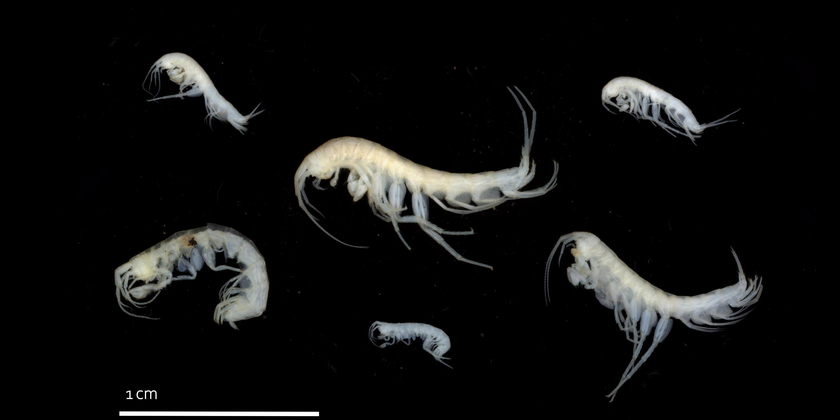
Grundwasser ist nicht nur die wichtigste Trinkwasserressource der Schweiz, sondern auch ein Ökosystem. Die dort lebenden Organismen reichen von Mikroben bis hin zu grösseren Wirbellosen wie Grundwasserflohkrebsen (Amphipoden). Ihre Anwesenheit und Aktivität können die Funktion des Ökosystems und die Erhaltung der Wasserqualität fördern. Dennoch ist über die Schweizer Grundwasserfauna nur wenig bekannt. In unserem Forschungsprojekt kombinieren wir innovative Citizen Science Ansätze, eDNA-Methoden und molekulare Werkzeuge, um die Vielfalt und Biogeografie der Grundwasserfauna mit Schwerpunkt auf Grundwasserflohkrebse zu verstehen. Viele dieser Arten haben kleine Verbreitungsgebiete, und einige von ihnen kommen ausschliesslich in der Schweiz vor. Darüber hinaus sind einige Grundwasserflohkrebse Relikte aus der Zeit vor der letzteiszeitlichen Vergletscherung, was sie zu einem wichtigen Teil des Naturerbes der Schweiz macht. Im Rahmen des Projekts haben wir bereits mehrere Arten der Gattung Niphargus entdeckt und als neu für die Wissenschaft beschrieben.
array(5 items)0 => Snowflake\Publications\Domain\Model\Publicationprototypepersistent entity (uid=33091, pid=124)originalId => protected33091 (integer)
authors => protected'Knüsel, M.; Alther, R.; Locher, N.; Ozgul, A.; Fišer,& nbsp;C.; Altermatt, F.' (103 chars)
title => protected'Systematic and highly resolved modelling of biodiversity in inherently rare groundwater amphipods' (97 chars)
journal => protected'Journal of Biogeography' (23 chars)
year => protected2024 (integer)
volume => protected51 (integer)
issue => protected'11' (2 chars)
startpage => protected'2094' (4 chars)
otherpage => protected'2108' (4 chars)
categories => protected'citizen science; Niphargus; occupancy model; species distribution; stygofaun a; subterranean; Switzerland' (104 chars)
description => protected'Aim: groundwater ecosystems harbour a unique biodiversity, but remain poorly studied, mainly due to difficulties in accessibility and imperfect species detection. Consequently, knowledge on the state and change of groundwater bi odiversity remains highly deficient. In the context of global warming and ex cessive groundwater extraction, understanding groundwater from an ecosystem- perspective, including organism diversity and distribution, is essential. Th is study presents the largest ever systematic assessment of groundwater amph ipods, which are a key component of European groundwater biodiversity.<br /> Location: Switzerland (41,285 km<sup>2</sup>), including data from 906 sam pling sites.<br />Taxon: groundwater amphipods, genera <em>Niphargus</em> an d <em>Crangonyx</em> (Crustacea, Amphipoda).<br />Methods: we applied a high ly standardized citizen science approach to collect repeated groundwater fau na samples in collaboration with municipal drinking water providers. Using d etection–nondetection data of the genetically identified groundwater amphi pod species, we assessed the overall species diversity of both rare and comm on species. The distribution of commonly found species was predicted using m ultispecies occupancy modelling.<br />Results: we retrieved 3882 samples fro m 906 sites, yielding 2350 groundwater amphipod individuals. We identified a remarkable species diversity, comprising few commonly and many rarely found species. Considering commonly found species, we identified distinct distrib ution ranges, low local species richness and a predominance of negative co-o ccurrences. In contrast, a major portion of species were found rarely (gener ally at just one or two sites each), distributed uniformly throughout the st udy area and unrelated to common species' recognized hotspots. Many of these rarely found species are not yet formally described.<br />Main conclusions: Our results give robust emphasis on the rare occurrence and narrow distribu tion of many groundwater...' (2312 chars)
serialnumber => protected'0305-0270' (9 chars)
doi => protected'10.1111/jbi.14975' (17 chars)
uid => protected33091 (integer)
_localizedUid => protected33091 (integer)modified_languageUid => protectedNULL
_versionedUid => protected33091 (integer)modifiedpid => protected124 (integer)1 => Snowflake\Publications\Domain\Model\Publicationprototypepersistent entity (uid=32125, pid=124)originalId => protected32125 (integer)
authors => protected'Couton, M.; Studer, A.; Hürlemann, S.; Locher, N.; Knü sel, M.; Alther, R.; Altermatt, F.' (125 chars)
title => protected'Integrating citizen science and environmental DNA metabarcoding to study bio diversity of groundwater amphipods in Switzerland' (125 chars)
journal => protected'Scientific Reports' (18 chars)
year => protected2023 (integer)
volume => protected13 (integer)
issue => protected'1' (1 chars)
startpage => protected'18097 (13 pp.)' (14 chars)
otherpage => protected'' (0 chars)
categories => protected'' (0 chars)
description => protected'Groundwater is the physically largest freshwater ecosystem, yet one of the l east explored habitats on earth, both because of accessing difficulties and the scarcity of the organisms inhabiting it. Here, we demonstrate how a two- fold approach provides complementary information on the occurrence and diver sity of groundwater amphipods. Firstly, we used a citizen science approach i n collaboration with municipal water providers who sampled groundwater organ isms in their spring catchment boxes over multiple weeks, followed by DNA ba rcoding. Secondly, we collected four 10 L water samples at each site, in one sampling event, for environmental DNA (eDNA) metabarcoding. We found that c itizen science was very effective in describing the distribution and abundan ce of groundwater amphipods. Although the single time-point of eDNA sampling did not detect as many amphipods, it allowed the assessment of the entire g roundwater community, including microorganisms. By combining both methods, w e found different amphipod species co-occurring with distinct sequences from the eDNA-metabarcoding dataset, representing mainly micro-eukaryotic specie s. We also found a distinct correlation between the diversity of amphipods a nd the overall biodiversity of groundwater organisms detected by eDNA at eac h site. We thus suggest that these approaches can be used to get a better un derstanding of subterranean biodiversity.' (1409 chars)
serialnumber => protected'2045-2322' (9 chars)
doi => protected'10.1038/s41598-023-44908-8' (26 chars)
uid => protected32125 (integer)
_localizedUid => protected32125 (integer)modified_languageUid => protectedNULL
_versionedUid => protected32125 (integer)modifiedpid => protected124 (integer)2 => Snowflake\Publications\Domain\Model\Publicationprototypepersistent entity (uid=30943, pid=124)originalId => protected30943 (integer)
authors => protected'Couton, M.; Hürlemann, S.; Studer, A.; Alther, R.; Alte rmatt, F.' (90 chars)
title => protected'Groundwater environmental DNA metabarcoding reveals hidden diversity and ref lects land-use and geology' (102 chars)
journal => protected'Molecular Ecology' (17 chars)
year => protected2023 (integer)
volume => protected32 (integer)
issue => protected'13' (2 chars)
startpage => protected'3497' (4 chars)
otherpage => protected'3512' (4 chars)
categories => protected'biodiversity; eDNA; metazoans; reference databases; stygofauna; taxonomic as signment' (84 chars)
description => protected'Despite being the most important source of liquid freshwater on the planet, groundwater is severely threatened by climate change, agriculture, or indust rial mining. It is thus extensively monitored for pollutants and declines in quantity. The organisms living in groundwater, however, are rarely the targ et of surveillance programmes and little is known about the fauna inhabiting underground habitats. The difficulties accessing groundwater, the lack of e xpertise, and the apparent scarcity of these organisms challenge sampling an d prohibit adequate knowledge on groundwater fauna. Environmental DNA (eDNA) metabarcoding provides an approach to overcome these limitations but is lar gely unexplored. Here, we sampled water in 20 communal spring catchment boxe s used for drinking water provisioning in Switzerland, with a high level of replication at both filtration and amplification steps. We sequenced a porti on of the COI mitochondrial gene, which resulted in 4917 ASVs, yet only 3% o f the reads could be assigned to a species, genus, or family with more than 90% identity. Careful evaluation of the unassigned reads corroborated that t hese sequences were true COI sequences belonging mostly to diverse eukaryoti c groups, not present in the reference databases. Principal component analys es showed a strong correlation of the community composition with the surface land-use (agriculture vs. forest) and geology (fissured rock vs. unconsolid ated sediment). While incomplete reference databases limit the assignment of taxa in groundwater eDNA metabarcoding, we showed that taxonomy-free approa ches can reveal large hidden diversity and couple it with major land-use dri vers, revealing their imprint on chemical and biological properties of groun dwater.' (1755 chars)
serialnumber => protected'0962-1083' (9 chars)
doi => protected'10.1111/mec.16955' (17 chars)
uid => protected30943 (integer)
_localizedUid => protected30943 (integer)modified_languageUid => protectedNULL
_versionedUid => protected30943 (integer)modifiedpid => protected124 (integer)3 => Snowflake\Publications\Domain\Model\Publicationprototypepersistent entity (uid=33018, pid=124)originalId => protected33018 (integer)
authors => protected'Knüsel, M.; Alther, R.; Altermatt, F.' (53 chars)
title => protected'Pronounced changes of subterranean biodiversity patterns along a Late Pleist ocene glaciation gradient' (101 chars)
journal => protected'Ecography' (9 chars)
year => protected2024 (integer)
volume => protected2024 (integer)
issue => protected'8' (1 chars)
startpage => protected'e07321 (10 pp.)' (15 chars)
otherpage => protected'' (0 chars)
categories => protected'alps; community dissimilarity; distribution; groundwater; Last Glacial Maxim um (LGM); stygofauna' (96 chars)
description => protected'Understanding spatial patterns of biodiversity within the context of long-te rm climatic shifts is of high importance, particularly in the face of contem porary climate change. In comparison to aboveground taxa, subterranean organ isms respond to changing climates with generally much lower dispersal and re colonization potential, yet possible persistence in refugial groundwater hab itats under ice-shields. However, knowledge on general and geographically la rge-scale effects of glaciation on contemporary groundwater biodiversity pat terns is still very limited. Here, we tested how Late Pleistocene glaciation influenced the diversity and distribution of 36 groundwater amphipod specie s in Alpine and peri-Alpine regions, characterized by extensive glaciation c ycles, and how its legacy explains contemporary diversity patterns. We based our analysis on an unprecedented density of ~ 1000 systematic sampling site s across Switzerland. Using presence–absence data, we assessed biodiversit y and species' ranges, and calculated for each site within-catchment distanc e to the Last Glacial Maximum (LGM) glacier extent. We then applied a slidin g window approach along the obtained distance gradient from LGM ice-covered to ice-free sites to compute biodiversity indices reflecting local richness, regional richness, and differentiation, respectively. We found a strong sig nal of the LGM ice extent on the present-day distribution of groundwater amp hipods. Our findings revealed pronounced species turnover and spatial envelo pes of individual species' occurrences in formerly ice-covered, ice-free, or transitional zones, respectively. While local richness remained constant an d low along the LGM distance gradient, groundwater communities in LGM ice-co vered areas were more similar to each other and had lower gamma diversities and decreased occurrence probabilities per sliding window compared to commun ities in Pleistocene ice-free areas. These results highlight the significant impact of Pleistocene g...' (2137 chars)
serialnumber => protected'0906-7590' (9 chars)
doi => protected'10.1111/ecog.07321' (18 chars)
uid => protected33018 (integer)
_localizedUid => protected33018 (integer)modified_languageUid => protectedNULL
_versionedUid => protected33018 (integer)modifiedpid => protected124 (integer)4 => Snowflake\Publications\Domain\Model\Publicationprototypepersistent entity (uid=33476, pid=124)originalId => protected33476 (integer)
authors => protected'Knüsel, M.; Alther, R.; Altermatt, F.' (53 chars)
title => protected'Terrestrial land use signals on groundwater fauna beyond current protection buffers' (83 chars)
journal => protected'Ecological Applications' (23 chars)
year => protected2024 (integer)
volume => protected34 (integer)
issue => protected'8' (1 chars)
startpage => protected'e3040 (13 pp.)' (14 chars)
otherpage => protected'' (0 chars)
categories => protected'land cover; meta-ecosystem; Niphargus; pollution; stygofauna; subterranean; water quality' (89 chars)
description => protected'Terrestrial and aquatic ecosystems are tightly linked, with direct implicati ons for applied resource management and conservation. It is well known that human land use change and intensification of terrestrial systems can have la rge impacts on surface freshwater ecosystems. Contrastingly, the study and u nderstanding of such land use impacts on groundwater communities is lagging behind. Both the impact strength of land use on groundwater communities and the spatial extents at which such interlinkages are operating are largely un known, despite our reliance on groundwater for drinking water extraction as a key ecosystem service. Here, we analyzed groundwater amphipod occurrence f rom several hundred shallow groundwater aquifers used for drinking water ext raction across a region of varying agricultural intensity and human populati on density in Switzerland. Despite drinking water extraction sites being gen erally built at locations with expected minimal aboveground impacts on water quality, we found a direct correlation between land use type and intensity within the surrounding catchment area and the locally measured nitrate conce ntrations, which is a direct proxy for drinking water quality. Furthermore, groundwater amphipods were more likely to be found at sites with higher fore st coverage than at sites with higher crop and intensive pasture coverages, clearly indicating a tight connection between aboveground land use and groun dwater biodiversity. Our results indicate that land use type effects on grou ndwater communities are most relevant and pronounced to spatial scales of ab out 400–1000 m around the groundwater sampling site. Importantly, the he re identified spatial scale is 1.2- to 3-fold exceeding the average extent o f currently defined groundwater protection zones. We postulate that incorpor ating an ecosystem perspective into groundwater management strategies is nee ded for effective protection of groundwater quality and biodiversity.' (1969 chars)
serialnumber => protected'1051-0761' (9 chars)
doi => protected'10.1002/eap.3040' (16 chars)
uid => protected33476 (integer)
_localizedUid => protected33476 (integer)modified_languageUid => protectedNULL
_versionedUid => protected33476 (integer)modifiedpid => protected124 (integer)
Systematic and highly resolved modelling of biodiversity in inherently rare groundwater amphipods
Aim: groundwater ecosystems harbour a unique biodiversity, but remain poorly studied, mainly due to difficulties in accessibility and imperfect species detection. Consequently, knowledge on the state and change of groundwater biodiversity remains highly deficient. In the context of global warming and excessive groundwater extraction, understanding groundwater from an ecosystem-perspective, including organism diversity and distribution, is essential. This study presents the largest ever systematic assessment of groundwater amphipods, which are a key component of European groundwater biodiversity. Location: Switzerland (41,285 km2), including data from 906 sampling sites. Taxon: groundwater amphipods, genera Niphargus and Crangonyx (Crustacea, Amphipoda). Methods: we applied a highly standardized citizen science approach to collect repeated groundwater fauna samples in collaboration with municipal drinking water providers. Using detection–nondetection data of the genetically identified groundwater amphipod species, we assessed the overall species diversity of both rare and common species. The distribution of commonly found species was predicted using multispecies occupancy modelling. Results: we retrieved 3882 samples from 906 sites, yielding 2350 groundwater amphipod individuals. We identified a remarkable species diversity, comprising few commonly and many rarely found species. Considering commonly found species, we identified distinct distribution ranges, low local species richness and a predominance of negative co-occurrences. In contrast, a major portion of species were found rarely (generally at just one or two sites each), distributed uniformly throughout the study area and unrelated to common species' recognized hotspots. Many of these rarely found species are not yet formally described. Main conclusions: Our results give robust emphasis on the rare occurrence and narrow distribution of many groundwater dwellers. Our systematic and standardized sampling data of groundwater amphipods suggest that rarity is particularly prominent and inherent to groundwater organisms. We emphasize the need of systematic data to integrate rare groundwater species in biodiversity assessments, especially in times of global change.
Knüsel, M.; Alther, R.; Locher, N.; Ozgul, A.; Fišer, C.; Altermatt, F. (2024) Systematic and highly resolved modelling of biodiversity in inherently rare groundwater amphipods, Journal of Biogeography, 51(11), 2094-2108, doi:10.1111/jbi.14975, Institutional Repository
Integrating citizen science and environmental DNA metabarcoding to study biodiversity of groundwater amphipods in Switzerland
Groundwater is the physically largest freshwater ecosystem, yet one of the least explored habitats on earth, both because of accessing difficulties and the scarcity of the organisms inhabiting it. Here, we demonstrate how a two-fold approach provides complementary information on the occurrence and diversity of groundwater amphipods. Firstly, we used a citizen science approach in collaboration with municipal water providers who sampled groundwater organisms in their spring catchment boxes over multiple weeks, followed by DNA barcoding. Secondly, we collected four 10 L water samples at each site, in one sampling event, for environmental DNA (eDNA) metabarcoding. We found that citizen science was very effective in describing the distribution and abundance of groundwater amphipods. Although the single time-point of eDNA sampling did not detect as many amphipods, it allowed the assessment of the entire groundwater community, including microorganisms. By combining both methods, we found different amphipod species co-occurring with distinct sequences from the eDNA-metabarcoding dataset, representing mainly micro-eukaryotic species. We also found a distinct correlation between the diversity of amphipods and the overall biodiversity of groundwater organisms detected by eDNA at each site. We thus suggest that these approaches can be used to get a better understanding of subterranean biodiversity.
Couton, M.; Studer, A.; Hürlemann, S.; Locher, N.; Knüsel, M.; Alther, R.; Altermatt, F. (2023) Integrating citizen science and environmental DNA metabarcoding to study biodiversity of groundwater amphipods in Switzerland, Scientific Reports, 13(1), 18097 (13 pp.), doi:10.1038/s41598-023-44908-8, Institutional Repository
Groundwater environmental DNA metabarcoding reveals hidden diversity and reflects land-use and geology
Despite being the most important source of liquid freshwater on the planet, groundwater is severely threatened by climate change, agriculture, or industrial mining. It is thus extensively monitored for pollutants and declines in quantity. The organisms living in groundwater, however, are rarely the target of surveillance programmes and little is known about the fauna inhabiting underground habitats. The difficulties accessing groundwater, the lack of expertise, and the apparent scarcity of these organisms challenge sampling and prohibit adequate knowledge on groundwater fauna. Environmental DNA (eDNA) metabarcoding provides an approach to overcome these limitations but is largely unexplored. Here, we sampled water in 20 communal spring catchment boxes used for drinking water provisioning in Switzerland, with a high level of replication at both filtration and amplification steps. We sequenced a portion of the COI mitochondrial gene, which resulted in 4917 ASVs, yet only 3% of the reads could be assigned to a species, genus, or family with more than 90% identity. Careful evaluation of the unassigned reads corroborated that these sequences were true COI sequences belonging mostly to diverse eukaryotic groups, not present in the reference databases. Principal component analyses showed a strong correlation of the community composition with the surface land-use (agriculture vs. forest) and geology (fissured rock vs. unconsolidated sediment). While incomplete reference databases limit the assignment of taxa in groundwater eDNA metabarcoding, we showed that taxonomy-free approaches can reveal large hidden diversity and couple it with major land-use drivers, revealing their imprint on chemical and biological properties of groundwater.
Couton, M.; Hürlemann, S.; Studer, A.; Alther, R.; Altermatt, F. (2023) Groundwater environmental DNA metabarcoding reveals hidden diversity and reflects land-use and geology, Molecular Ecology, 32(13), 3497-3512, doi:10.1111/mec.16955, Institutional Repository
Pronounced changes of subterranean biodiversity patterns along a Late Pleistocene glaciation gradient
Understanding spatial patterns of biodiversity within the context of long-term climatic shifts is of high importance, particularly in the face of contemporary climate change. In comparison to aboveground taxa, subterranean organisms respond to changing climates with generally much lower dispersal and recolonization potential, yet possible persistence in refugial groundwater habitats under ice-shields. However, knowledge on general and geographically large-scale effects of glaciation on contemporary groundwater biodiversity patterns is still very limited. Here, we tested how Late Pleistocene glaciation influenced the diversity and distribution of 36 groundwater amphipod species in Alpine and peri-Alpine regions, characterized by extensive glaciation cycles, and how its legacy explains contemporary diversity patterns. We based our analysis on an unprecedented density of ~ 1000 systematic sampling sites across Switzerland. Using presence–absence data, we assessed biodiversity and species' ranges, and calculated for each site within-catchment distance to the Last Glacial Maximum (LGM) glacier extent. We then applied a sliding window approach along the obtained distance gradient from LGM ice-covered to ice-free sites to compute biodiversity indices reflecting local richness, regional richness, and differentiation, respectively. We found a strong signal of the LGM ice extent on the present-day distribution of groundwater amphipods. Our findings revealed pronounced species turnover and spatial envelopes of individual species' occurrences in formerly ice-covered, ice-free, or transitional zones, respectively. While local richness remained constant and low along the LGM distance gradient, groundwater communities in LGM ice-covered areas were more similar to each other and had lower gamma diversities and decreased occurrence probabilities per sliding window compared to communities in Pleistocene ice-free areas. These results highlight the significant impact of Pleistocene glaciation on shaping biodiversity patterns of subterranean communities and imprinting contemporary distribution of groundwater organisms.
Knüsel, M.; Alther, R.; Altermatt, F. (2024) Pronounced changes of subterranean biodiversity patterns along a Late Pleistocene glaciation gradient, Ecography, 2024(8), e07321 (10 pp.), doi:10.1111/ecog.07321, Institutional Repository
Terrestrial land use signals on groundwater fauna beyond current protection buffers
Terrestrial and aquatic ecosystems are tightly linked, with direct implications for applied resource management and conservation. It is well known that human land use change and intensification of terrestrial systems can have large impacts on surface freshwater ecosystems. Contrastingly, the study and understanding of such land use impacts on groundwater communities is lagging behind. Both the impact strength of land use on groundwater communities and the spatial extents at which such interlinkages are operating are largely unknown, despite our reliance on groundwater for drinking water extraction as a key ecosystem service. Here, we analyzed groundwater amphipod occurrence from several hundred shallow groundwater aquifers used for drinking water extraction across a region of varying agricultural intensity and human population density in Switzerland. Despite drinking water extraction sites being generally built at locations with expected minimal aboveground impacts on water quality, we found a direct correlation between land use type and intensity within the surrounding catchment area and the locally measured nitrate concentrations, which is a direct proxy for drinking water quality. Furthermore, groundwater amphipods were more likely to be found at sites with higher forest coverage than at sites with higher crop and intensive pasture coverages, clearly indicating a tight connection between aboveground land use and groundwater biodiversity. Our results indicate that land use type effects on groundwater communities are most relevant and pronounced to spatial scales of about 400–1000 m around the groundwater sampling site. Importantly, the here identified spatial scale is 1.2- to 3-fold exceeding the average extent of currently defined groundwater protection zones. We postulate that incorporating an ecosystem perspective into groundwater management strategies is needed for effective protection of groundwater quality and biodiversity.
Knüsel, M.; Alther, R.; Altermatt, F. (2024) Terrestrial land use signals on groundwater fauna beyond current protection buffers, Ecological Applications, 34(8), e3040 (13 pp.), doi:10.1002/eap.3040, Institutional Repository