Projet Lac - den Fischen in unseren Seen auf der Spur
Ein Inventar der Schweizer Fischfauna
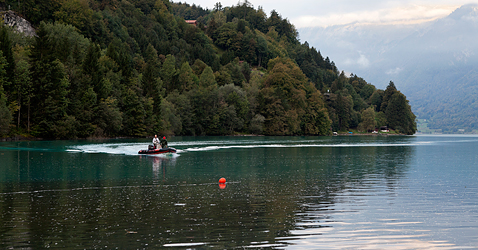
Fast zwei Drittel der einheimischen Fischarten sind vom Aussterben bedroht. Um die aquatische Artenvielfalt und die nötigen Lebensräume zu erhalten oder gezielt aufzuwerten, ist eine Bestandesaufnahme der bestehenden Arten in den Schweizer Seen notwendig. Die Eawag und ihre Partner, das Bundesamt für Umwelt (BAFU), die kantonalen Fischereibehörden und das Office national des eaux et des milieux aquatiques (ONEMA), Fédération de pêche du Doubs et du Jurain Frankreich führen im Projet Lac daher zum ersten Mal eine standardisierte Inventur der Fischfauna der tiefen voralpinen Seen durch.
Ziele
Das Projet Lac ist ein wichtiges Forschungsprojekt, es liefert aber auch wichtige Daten für die Praxis. Die Ziele von Projet Lac sind
Erfassung der Artenvielfalt und innerartliche Vielfalt der Fische in den Schweizer Seen
Korrelation und Auswertung von aktuellen und historischen Umweltdaten, um Schlüsselfaktoren für die Entwicklung von Artenvielfalt zu ermitteln
Beiträge zu einer nationale Monitoringstrategie für Seen (z.B. Modulstufenkonzept für Seen)
Bildung einer Referenzsammlung im Naturhistorischen Museum der Burgergemeinde Bern und in der Eawag als Basis für zukünftige Forschung
Publikation der wissenschaftlichen Erkenntnisse für angewandte Fragestellungen im Bereich der Ökologie- und Evolutionsforschung
Annäherung von Forschung und Praxis auf dem Gebiet des Artenschutzes und des Managements von Fischbeständen
Zur Verfügung stellen von Daten über der aktuellen ökologischen Status der untersuchten Seen mit speziellen Fokus auf Fischbestände
Vertikale und horizontale Multimaschennetze ( = Netze mit verschiedenen, normierten Maschenweiten ) werden in Übereinstimmung mit der EU-Wasserrahmenrichtlinie in allen Tiefen gesetzt. So sind die Resultate aus dem «Projet Lac» mit denen aus dem EU Raum vergleichbar und es lassen sich daraus Zusammenhänge mit dem Habitat ableiten.
Biometrie
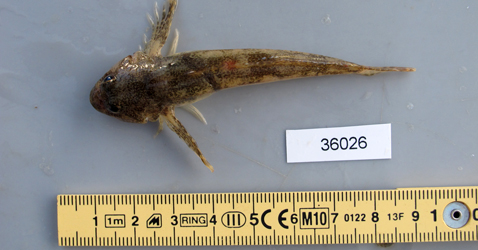
Alle gefangenen Fische werden vermessen, gewogen und für morphologische Messungen fotografiert. Zudem werden spezielle Merkmale beschrieben und Gewebeproben für genetische und ökologische Analysen zurückbehalten. Sämtliche Daten kommen in eine Datenbank, die mit dem Schweizer Zentrum für die Kartografie der Fauna koordiniert ist. Nach Abschluss des «Projet Lac» werden alle Daten frei zugänglich sein
Referenzsammlung
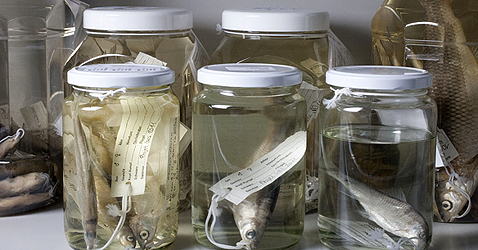
Mindestens 30 Individuen pro Art und pro See werden für eine dauerhafte Lagerung im Naturhistorischen Museum der Burgergemeinde Bern präpariert. Sie bleiben so für künftige Forschungsprojekte erhalten.
Hydroakustik
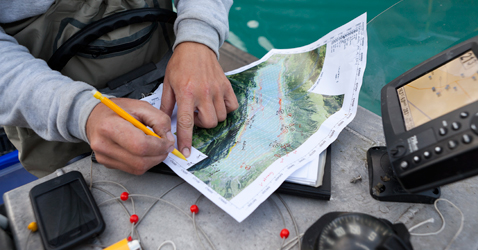
Sowohl tags- als auch nachtsüber werden Hydroakustik Aufnahmen gemacht. Der See wird dabei in regelmässigen Abschnitten abgefahren. Das ermöglicht es, die Fischbiomasse abzuschätzen, ohne dass Fische gefangen werden.
Publikationen
Ein Ziel von Projet Lac ist es, die wissenschaftlichen Erkenntnissen in Form von Publikationen in Fachmagazinen zu veröffentlichen. Daneben werden die wichtigsten Ergebnisse auch der Öffentlichkeit vorgestellt.
array(8 items)0 => Snowflake\Publications\Domain\Model\Publicationprototypepersistent entity (uid=25593, pid=124)originalId => protected25593 (integer)
authors => protected'Jardim de Queiroz, L.; Doenz, C. J.; Altermatt, F.; Alth er, R.; Borko, Š.; Brodersen, J.; Gossner, M. M.; Graham, C.; Matthews, B.; McFadden, I. R.; Pellissier,&n bsp;L.; Schmitt, T.; Selz, O. M.; Villalba, S.; Rüber,& nbsp;L.; Zimmermann, N. E.; Seehausen, O.' (360 chars)
title => protected'Climate, immigration and speciation shape terrestrial and aquatic biodiversi ty in the European Alps' (99 chars)
journal => protected'Proceedings of the Royal Society B: Biological Sciences' (55 chars)
year => protected2022 (integer)
volume => protected289 (integer)
issue => protected'1980' (4 chars)
startpage => protected'20221020 (10 pp.)' (17 chars)
otherpage => protected'' (0 chars)
categories => protected'time for speciation; allopatric speciation; adaptive radiation; Pleistocene refugia; glacial species pump; European Alps' (120 chars)
description => protected'Quaternary climate fluctuations can affect speciation in regional biodiversi ty assembly in two non-mutually exclusive ways: a glacial species pump, wher e isolation in glacial refugia accelerates allopatric speciation, and adapti ve radiation in underused adaptive zones during ice-free periods. We detecte d biogeographic and genetic signatures associated with both mechanisms in th e assembly of the biota of the European Alps. Age distributions of endemic a nd widespread species within aquatic and terrestrial taxa (amphipods, fishes , amphibians, butterflies and flowering plants) revealed that endemic fish e volved only in lakes, are highly sympatric, and mainly of Holocene age, cons istent with adaptive radiation. Endemic amphipods are ancient, suggesting pr eglacial radiation with limited range expansion and local Pleistocene surviv al, perhaps facilitated by a groundwater-dwelling lifestyle. Terrestrial end emics are mostly of Pleistocene age and are thus more consistent with the gl acial species pump. The lack of evidence for Holocene adaptive radiation in the terrestrial biome is consistent with faster recolonization through range expansion of these taxa after glacial retreats. More stable and less season al ecological conditions in lakes during the Holocene may also have contribu ted to Holocene speciation in lakes. The high proportion of young, endemic s pecies makes the Alpine biota vulnerable to climate change, but the mechanis ms and consequences of species loss will likely differ between biomes becaus e of their distinct evolutionary histories.' (1563 chars)
serialnumber => protected'0962-8452' (9 chars)
doi => protected'10.1098/rspb.2022.1020' (22 chars)
uid => protected25593 (integer)
_localizedUid => protected25593 (integer)modified_languageUid => protectedNULL
_versionedUid => protected25593 (integer)modifiedpid => protected124 (integer)1 => Snowflake\Publications\Domain\Model\Publicationprototypepersistent entity (uid=24051, pid=124)originalId => protected24051 (integer)
authors => protected'Alexander, T.; Seehausen, O.' (38 chars)
title => protected'Diversity, distribution and community composition of fish in perialpine lake s. "Projet Lac" synthesis report' (108 chars)
journal => protected'' (0 chars)
year => protected2021 (integer)
volume => protected0 (integer)
issue => protected'' (0 chars)
startpage => protected'284 p' (10 chars)
otherpage => protected'' (0 chars)
categories => protected'lake; fish; biodiversity; conservation; endemism; environmental change; moni toring; fisheries; biogeography; climate change' (123 chars)
description => protected'Das Projet Lac war ein grosses Projekt der Eawag und der Universität Bern z ur erstmaligen quantitativen Erfassung ganzer Fischgemeinschaften in grossen und tiefen Seen in und um die europäischen Alpen mit standardisierten Prob enahmeverfahren. Ab 2010 wurden insgesamt 35 Seen in der Schweiz, Italien, F rankreich, Deutschland und Österreich untersucht und über 106 Fischarten e rfasst. Dieser Bericht fasst die wichtigsten Ergebnisse zusammen, vergleicht die Fischgemeinschaften der einzelnen Seen, untersucht ihre Beziehung zu Um weltparametern und gibt einen Überblick über die Faktoren, welche die biol ogische Vielfalt und die Struktur der Gemeinschaften in diesem wichtigen Ök osystem beeinflussen.<br /><br />Le Projet Lac était un grand projet de l'E awag et de l'Université de Berne visant à recenser pour la première fois< br />de manière quantitative des communautés entières de poissons dans le s grands et profonds lacs des Alpes européennes et de leurs environs, à l'aide de méthodes d'échantillonnage standardisées. A partir de 2010, 35 lacs au total ont été étudiés en Suisse, en Italie, en France, en Allema gne et en Autriche et plus de 106 espèces de poissons ont été recensées. Ce rapport résume les principaux résultats, compare les communautés de p oissons des différents lacs, examine leur relation avec les paramètres env ironnementaux et donne un aperçu des facteurs qui influencent la diversité biologique et la structure des communautés dans cet écosystème important .<br /><br />Il Projet Lac era un progetto su larga scala dell'Eawag e dell' Università di Berna per la prima indagine quantitativa di intere comunità di pesci in laghi grandi e profondi nelle Alpi europee e dintorni, utilizzan do metodi di campionamento standardizzati. A partire dal 2010, un totale di 35 laghi in Svizzera, Italia, Francia, Germania e Austria sono stati studiat i e sono state registrate oltre 106 specie di pesci. Questo rapporto riassum e i risultati principali...' (2908 chars)
serialnumber => protected'' (0 chars)
doi => protected'10.55408/eawag:24051' (20 chars)
uid => protected24051 (integer)
_localizedUid => protected24051 (integer)modified_languageUid => protectedNULL
_versionedUid => protected24051 (integer)modifiedpid => protected124 (integer)2 => Snowflake\Publications\Domain\Model\Publicationprototypepersistent entity (uid=17421, pid=124)originalId => protected17421 (integer)
authors => protected'Doenz, C. J.; Bittner, D.; Vonlanthen, P.; Wagner, C. E.; Seehausen, O.' (106 chars)
title => protected'Rapid buildup of sympatric species diversity in Alpine whitefish' (64 chars)
journal => protected'Ecology and Evolution' (21 chars)
year => protected2018 (integer)
volume => protected8 (integer)
issue => protected'18' (2 chars)
startpage => protected'9398' (4 chars)
otherpage => protected'9412' (4 chars)
categories => protected'adaptive radiation; Coregonus; evolutionary community assembly; niche partit ioning; speciation; stocking' (104 chars)
description => protected'Adaptive radiations in postglacial fish offer excellent settings to study th e evolutionary mechanisms involved in the rapid buildup of sympatric species diversity from a single lineage. Here, we address this by exploring the gen etic and ecological structure of the largest Alpine whitefish radiation know n, that of Lakes Brienz and Thun, using microsatellite data of more than 200 0 whitefish caught during extensive species-targeted and habitat-randomized fishing campaigns. We find six strongly genetically and ecologically differe ntiated species, four of which occur in both lakes, and one of which was pre viously unknown. These four exhibit clines of genetic differentiation that a re paralleled in clines of eco-morphological and reproductive niche differen tiation, consistent with models of sympatric ecological speciation along env ironmental gradients. In Lake Thun, we find two additional species, a profun dal specialist and a species introduced in the 1930s from another Alpine whi tefish radiation. Strong genetic differentiation between this introduced spe cies and all native species of Lake Thun suggests that reproductive isolatio n can evolve among allopatric whitefish species within 15,000 years and pers ist in secondary sympatry. Consistent with speciation theory, we find strong er correlations between genetic and ecological differentiation for sympatric ally than for allopatrically evolved species.' (1413 chars)
serialnumber => protected'2045-7758' (9 chars)
doi => protected'10.1002/ece3.4375' (17 chars)
uid => protected17421 (integer)
_localizedUid => protected17421 (integer)modified_languageUid => protectedNULL
_versionedUid => protected17421 (integer)modifiedpid => protected124 (integer)3 => Snowflake\Publications\Domain\Model\Publicationprototypepersistent entity (uid=14121, pid=124)originalId => protected14121 (integer)
authors => protected'Alexander, T. J.; Vonlanthen, P.; Seehausen, O.' (67 chars)
title => protected'Does eutrophication-driven evolution change aquatic ecosystems?' (63 chars)
journal => protected'Philosophical Transactions of the Royal Society B: Biological Sciences' (70 chars)
year => protected2017 (integer)
volume => protected372 (integer)
issue => protected'1712' (4 chars)
startpage => protected'20160041 (10 pp.)' (17 chars)
otherpage => protected'' (0 chars)
categories => protected'eutrophication; eco-evolutionary dynamics; whitefish; lakes' (59 chars)
description => protected'Eutrophication increases primary production and changes the relative abundan ce, taxonomic composition and spatial distribution of primary producers with in an aquatic ecosystem. The changes in composition and location of resource s alter the distribution and flow of energy and biomass throughout the foodw eb. Changes in productivity also alter the physico-chemical environment, whi ch has further effects on the biota. Such ecological changes influence the d irection and strength of natural and sexual selection experienced by populat ions. Besides altering selection, they can also erode the habitat gradients and/or behavioural mechanisms that maintain ecological separation and reprod uctive isolation among species. Consequently, eutrophication of lakes common ly results in reduced ecological specialization as well as genetic and pheno typic homogenization among lakes and among niches within lakes. We argue tha t the associated loss in functional diversity and niche differentiation may lead to decreased carrying capacity and lower resource-use efficiency by con sumers. We show that in central European whitefish species radiations, the f unctional diversity affected by eutrophication-induced speciation reversal c orrelates with community-wide trophic transfer efficiency (fisheries yield p er unit phosphorus). We take this as an example of how evolutionary dynamics driven by anthropogenic environmental change can have lasting effects on bi odiversity and ecosystem functioning.<BR/>This article is part of the themed issue ‘Human influences on evolution, and the ecological and societal con sequences’.' (1609 chars)
serialnumber => protected'0962-8436' (9 chars)
doi => protected'10.1098/rstb.2016.0041' (22 chars)
uid => protected14121 (integer)
_localizedUid => protected14121 (integer)modified_languageUid => protectedNULL
_versionedUid => protected14121 (integer)modifiedpid => protected124 (integer)4 => Snowflake\Publications\Domain\Model\Publicationprototypepersistent entity (uid=13969, pid=124)originalId => protected13969 (integer)
authors => protected'Alexander, T. J.; Vonlanthen, P.; Périat, G.; Degiorgi, F.; Raymond, J. C.; Seehausen, O.' (130 chars)
title => protected'Estimating whole-lake fish catch per unit effort' (48 chars)
journal => protected'Fisheries Research' (18 chars)
year => protected2015 (integer)
volume => protected172 (integer)
issue => protected'' (0 chars)
startpage => protected'287' (3 chars)
otherpage => protected'303' (3 chars)
categories => protected'lake fish; multimesh gillnet; volume-weighting; whole-lake CPUE; CEN standar d; vertical gill net; perch; coregonus; roach' (121 chars)
description => protected'The European standard for gillnet sampling to characterize lake fish communi ties stratifies sampling effort (<I>i.e.</I>, number of nets) within depth s trata. Nets to sample benthic habitats are randomly distributed throughout t he lake within each depth strata. Pelagic nets are also stratified by depth, but are set only at the deepest point of the lake. Multiple authors have su ggested that this design under-represents pelagic habitats, resulting in est imates of whole-lake CPUE and community composition which are disproportiona tely influenced by ecological conditions of littoral and benthic habitats. T o address this issue, researchers have proposed estimating whole-lake CPUE b y weighting the catch rate in each depth-compartment by the proportion of th e volume of the lake contributed by the compartment. Our study aimed to asse ss the effectiveness of volume-weighting by applying it to fish communities sampled according to the European standard (CEN), and by a second whole-lake gillnetting protocol (VERT), which prescribes additional fishing effort in pelagic habitats. We assume that convergence between the protocols indicates that volume-weighting provides a more accurate estimate of whole-lake catch rate and community composition. Our results indicate that volume-weighting improves agreement between the protocols for whole-lake total CPUE, estimate d proportion of perch and roach and the overall fish community composition. Discrepancies between the protocols remaining after volume-weighting may be because sampling under the CEN protocol overlooks horizontal variation in pe lagic fish communities. Analyses based on multiple pelagic-set VERT nets ide ntified gradients in the density and biomass of pelagic fish communities in almost half the lakes that corresponded with the depth of water at net-setti ng location and distance along the length of a lake. Additional CEN pelagic sampling effort allocated across water depths and distributed throughout the lake would therefore he...' (2170 chars)
serialnumber => protected'0165-7836' (9 chars)
doi => protected'10.1016/j.fishres.2015.07.024' (29 chars)
uid => protected13969 (integer)
_localizedUid => protected13969 (integer)modified_languageUid => protectedNULL
_versionedUid => protected13969 (integer)modifiedpid => protected124 (integer)5 => Snowflake\Publications\Domain\Model\Publicationprototypepersistent entity (uid=13954, pid=124)originalId => protected13954 (integer)
authors => protected'Alexander, T. J.; Vonlanthen, P.; Périat, G.; Degiorgi, F.; Raymond, J.-C.; Seehausen, O.' (125 chars)
title => protected'Evaluating gillnetting protocols to characterize lacustrine fish communities' (76 chars)
journal => protected'Fisheries Research' (18 chars)
year => protected2015 (integer)
volume => protected161 (integer)
issue => protected'' (0 chars)
startpage => protected'320' (3 chars)
otherpage => protected'329' (3 chars)
categories => protected'multimesh gillnets; CEN standard; vertical net protocol; perch; coregonus' (73 chars)
description => protected'Ecological research and monitoring of lacustrine ecosystems often requires a whole-lake assessment of fish communities. Gillnet sampling offers an effic ient means of estimating abundance, biomass and fish community composition. However the choice of gillnet sampling protocol may influence lake character ization via physical properties of the nets and allocation of sampling effor t between littoral, benthic and pelagic habitats. This paper compares two co mmonly used, whole-lake sampling protocols applied across 17 prealpine, suba lpine and alpine European lakes ranging widely in size, depth and altitude t o determine their relative strength for research and management applications . Effort-corrected estimates of abundance, biomass and species richness were correlated between the protocols and both distinguished the trout-dominated alpine communities from subalpine and prealpine lakes dominated by whitefis h and perch. A considerable amount of variance remained unexplained between the two protocols however, which seemed to correspond with differences in th e proportion of effort among benthic and pelagic habitats. We suggest that b oth the European standard (CEN) and vertical (VERT) netting protocols are su itable for assessing ecological status and monitoring changes in lake fish c ommunities through time. However the details of each protocol should be kept in mind when comparing fish communities between lakes. Mesh sizes used in C EN nets produce a more even size frequency distribution, suggesting that thi s protocol is most appropriate for assessing size structure of fish assembla ges. The high proportion of netting effort in benthic habitats shallower tha n 70 m depth under the CEN protocol means that, particularly in larger lakes , outcomes will be disproportionately influenced by the ecological condition of this habitat. The VERT protocol presumably provides a more accurate esti mate of whole-lake CPUE and community composition because effort, in terms o f net area, is more even...' (2175 chars)
serialnumber => protected'0165-7836' (9 chars)
doi => protected'10.1016/j.fishres.2014.08.009' (29 chars)
uid => protected13954 (integer)
_localizedUid => protected13954 (integer)modified_languageUid => protectedNULL
_versionedUid => protected13954 (integer)modifiedpid => protected124 (integer)6 => Snowflake\Publications\Domain\Model\Publicationprototypepersistent entity (uid=25069, pid=124)originalId => protected25069 (integer)
authors => protected'Seehausen, O.; Alexander, T.; Egloff, N.; Vonlanthen, P.' (76 chars)
title => protected'Unerwartete Artenvielfalt in Seen des Alpenraums. Project Lac' (61 chars)
journal => protected'Aqua & Gas' (10 chars)
year => protected2022 (integer)
volume => protected102 (integer)
issue => protected'7-8' (3 chars)
startpage => protected'64' (2 chars)
otherpage => protected'71' (2 chars)
categories => protected'' (0 chars)
description => protected'Die grossen Seen des Alpenraums weisen eine einzigartige und bisher nur unvo llständig bekannte Fischartenvielfalt auf. Mit dem Projet Lac wurden erstma ls systematisch die Fischbestände in 35 Seen des Alpenraums aufgenommen. Di e standardisierte Erfassung der Fischgemeinschaften, die Charakterisierung a ller Arten und deren korrekte Bestimmung, das Wissen über ihre Ökologie so wie die rechtliche Verankerung ihres Schutzes bilden die Grundlage für dere n langfristigen Erhalt.' (479 chars)
serialnumber => protected'2235-5197' (9 chars)
doi => protected'' (0 chars)
uid => protected25069 (integer)
_localizedUid => protected25069 (integer)modified_languageUid => protectedNULL
_versionedUid => protected25069 (integer)modifiedpid => protected124 (integer)7 => Snowflake\Publications\Domain\Model\Publicationprototypepersistent entity (uid=25070, pid=124)originalId => protected25070 (integer)
authors => protected'Seehausen, O.; Alexander, T.; Vonlanthen, P.; Egloff, N.' (76 chars)
title => protected'Einfluss von Umwelt-Faktoren auf Fischartengemeinschaften. Projet Lac' (69 chars)
journal => protected'Aqua & Gas' (10 chars)
year => protected2022 (integer)
volume => protected102 (integer)
issue => protected'7-8' (3 chars)
startpage => protected'72' (2 chars)
otherpage => protected'79' (2 chars)
categories => protected'' (0 chars)
description => protected'Mit dem «Projet Lac» wurden erstmals systematisch die Fischbestände in 35 Seen des Alpenraums aufgenommen. Die Ergebnisse zeigen: Die vorherrschenden Umweltbedingungen beeinflussen die Artenzusammensetzung und die Häufigkeit en der Fischgemeinschaften massgeblich. Menschliche Einflüsse verändern di ese Umweltbedingungen, mit einschneidenden Konsequenzen für die Fischgemein schaften. Der Schutz und die Wiederherstellung von wichtigen Lebensräumen v on einheimischen Arten, insbesondere in der Tiefe, bei Flussmündungen und a m Ufer der Seen muss deshalb vorangetrieben werden.' (583 chars)
serialnumber => protected'2235-5197' (9 chars)
doi => protected'' (0 chars)
uid => protected25070 (integer)
_localizedUid => protected25070 (integer)modified_languageUid => protectedNULL
_versionedUid => protected25070 (integer)modifiedpid => protected124 (integer)
Climate, immigration and speciation shape terrestrial and aquatic biodiversity in the European Alps
Quaternary climate fluctuations can affect speciation in regional biodiversity assembly in two non-mutually exclusive ways: a glacial species pump, where isolation in glacial refugia accelerates allopatric speciation, and adaptive radiation in underused adaptive zones during ice-free periods. We detected biogeographic and genetic signatures associated with both mechanisms in the assembly of the biota of the European Alps. Age distributions of endemic and widespread species within aquatic and terrestrial taxa (amphipods, fishes, amphibians, butterflies and flowering plants) revealed that endemic fish evolved only in lakes, are highly sympatric, and mainly of Holocene age, consistent with adaptive radiation. Endemic amphipods are ancient, suggesting preglacial radiation with limited range expansion and local Pleistocene survival, perhaps facilitated by a groundwater-dwelling lifestyle. Terrestrial endemics are mostly of Pleistocene age and are thus more consistent with the glacial species pump. The lack of evidence for Holocene adaptive radiation in the terrestrial biome is consistent with faster recolonization through range expansion of these taxa after glacial retreats. More stable and less seasonal ecological conditions in lakes during the Holocene may also have contributed to Holocene speciation in lakes. The high proportion of young, endemic species makes the Alpine biota vulnerable to climate change, but the mechanisms and consequences of species loss will likely differ between biomes because of their distinct evolutionary histories.
Jardim de Queiroz, L.; Doenz, C. J.; Altermatt, F.; Alther, R.; Borko, Š.; Brodersen, J.; Gossner, M. M.; Graham, C.; Matthews, B.; McFadden, I. R.; Pellissier, L.; Schmitt, T.; Selz, O. M.; Villalba, S.; Rüber, L.; Zimmermann, N. E.; Seehausen, O. (2022) Climate, immigration and speciation shape terrestrial and aquatic biodiversity in the European Alps, Proceedings of the Royal Society B: Biological Sciences, 289(1980), 20221020 (10 pp.), doi:10.1098/rspb.2022.1020, Institutional Repository
Diversity, distribution and community composition of fish in perialpine lakes. "Projet Lac" synthesis report
Das Projet Lac war ein grosses Projekt der Eawag und der Universität Bern zur erstmaligen quantitativen Erfassung ganzer Fischgemeinschaften in grossen und tiefen Seen in und um die europäischen Alpen mit standardisierten Probenahmeverfahren. Ab 2010 wurden insgesamt 35 Seen in der Schweiz, Italien, Frankreich, Deutschland und Österreich untersucht und über 106 Fischarten erfasst. Dieser Bericht fasst die wichtigsten Ergebnisse zusammen, vergleicht die Fischgemeinschaften der einzelnen Seen, untersucht ihre Beziehung zu Umweltparametern und gibt einen Überblick über die Faktoren, welche die biologische Vielfalt und die Struktur der Gemeinschaften in diesem wichtigen Ökosystem beeinflussen.
Le Projet Lac était un grand projet de l'Eawag et de l'Université de Berne visant à recenser pour la première fois de manière quantitative des communautés entières de poissons dans les grands et profonds lacs des Alpes européennes et de leurs environs, à l'aide de méthodes d'échantillonnage standardisées. A partir de 2010, 35 lacs au total ont été étudiés en Suisse, en Italie, en France, en Allemagne et en Autriche et plus de 106 espèces de poissons ont été recensées. Ce rapport résume les principaux résultats, compare les communautés de poissons des différents lacs, examine leur relation avec les paramètres environnementaux et donne un aperçu des facteurs qui influencent la diversité biologique et la structure des communautés dans cet écosystème important.
Il Projet Lac era un progetto su larga scala dell'Eawag e dell'Università di Berna per la prima indagine quantitativa di intere comunità di pesci in laghi grandi e profondi nelle Alpi europee e dintorni, utilizzando metodi di campionamento standardizzati. A partire dal 2010, un totale di 35 laghi in Svizzera, Italia, Francia, Germania e Austria sono stati studiati e sono state registrate oltre 106 specie di pesci. Questo rapporto riassume i risultati principali, confronta le comunità di pesci di ogni lago, esamina la loro relazione con i parametri ambientali e fornisce una panoramica dei fattori che influenzano la biodiversità e la struttura della comunità in questo importante ecosistema.
Projet Lac was a large project conducted by Eawag and the University of Bern to quantitatively survey, for the first time, whole-lake fish communities in the large and deep lakes in and around the European Alps using multiple, standardised sampling methods. Starting in 2010, in total 35 lakes were investigated across Switzerland, Italy, France, Germany and Austria, with more than 106 fish species recorded. This report brings together key findings, compares fish communities among lakes, investigates their relationship to environmental parameters, and provides an overview of drivers of biodiversity and community structure in this important ecosystem.
Alexander, T.; Seehausen, O. (2021) Diversity, distribution and community composition of fish in perialpine lakes. "Projet Lac" synthesis report, 284 p, doi:10.55408/eawag:24051, Institutional Repository
Rapid buildup of sympatric species diversity in Alpine whitefish
Adaptive radiations in postglacial fish offer excellent settings to study the evolutionary mechanisms involved in the rapid buildup of sympatric species diversity from a single lineage. Here, we address this by exploring the genetic and ecological structure of the largest Alpine whitefish radiation known, that of Lakes Brienz and Thun, using microsatellite data of more than 2000 whitefish caught during extensive species-targeted and habitat-randomized fishing campaigns. We find six strongly genetically and ecologically differentiated species, four of which occur in both lakes, and one of which was previously unknown. These four exhibit clines of genetic differentiation that are paralleled in clines of eco-morphological and reproductive niche differentiation, consistent with models of sympatric ecological speciation along environmental gradients. In Lake Thun, we find two additional species, a profundal specialist and a species introduced in the 1930s from another Alpine whitefish radiation. Strong genetic differentiation between this introduced species and all native species of Lake Thun suggests that reproductive isolation can evolve among allopatric whitefish species within 15,000 years and persist in secondary sympatry. Consistent with speciation theory, we find stronger correlations between genetic and ecological differentiation for sympatrically than for allopatrically evolved species.
Doenz, C. J.; Bittner, D.; Vonlanthen, P.; Wagner, C. E.; Seehausen, O. (2018) Rapid buildup of sympatric species diversity in Alpine whitefish, Ecology and Evolution, 8(18), 9398-9412, doi:10.1002/ece3.4375, Institutional Repository
Does eutrophication-driven evolution change aquatic ecosystems?
Eutrophication increases primary production and changes the relative abundance, taxonomic composition and spatial distribution of primary producers within an aquatic ecosystem. The changes in composition and location of resources alter the distribution and flow of energy and biomass throughout the foodweb. Changes in productivity also alter the physico-chemical environment, which has further effects on the biota. Such ecological changes influence the direction and strength of natural and sexual selection experienced by populations. Besides altering selection, they can also erode the habitat gradients and/or behavioural mechanisms that maintain ecological separation and reproductive isolation among species. Consequently, eutrophication of lakes commonly results in reduced ecological specialization as well as genetic and phenotypic homogenization among lakes and among niches within lakes. We argue that the associated loss in functional diversity and niche differentiation may lead to decreased carrying capacity and lower resource-use efficiency by consumers. We show that in central European whitefish species radiations, the functional diversity affected by eutrophication-induced speciation reversal correlates with community-wide trophic transfer efficiency (fisheries yield per unit phosphorus). We take this as an example of how evolutionary dynamics driven by anthropogenic environmental change can have lasting effects on biodiversity and ecosystem functioning. This article is part of the themed issue ‘Human influences on evolution, and the ecological and societal consequences’.
Alexander, T. J.; Vonlanthen, P.; Seehausen, O. (2017) Does eutrophication-driven evolution change aquatic ecosystems?, Philosophical Transactions of the Royal Society B: Biological Sciences, 372(1712), 20160041 (10 pp.), doi:10.1098/rstb.2016.0041, Institutional Repository
Estimating whole-lake fish catch per unit effort
The European standard for gillnet sampling to characterize lake fish communities stratifies sampling effort (i.e., number of nets) within depth strata. Nets to sample benthic habitats are randomly distributed throughout the lake within each depth strata. Pelagic nets are also stratified by depth, but are set only at the deepest point of the lake. Multiple authors have suggested that this design under-represents pelagic habitats, resulting in estimates of whole-lake CPUE and community composition which are disproportionately influenced by ecological conditions of littoral and benthic habitats. To address this issue, researchers have proposed estimating whole-lake CPUE by weighting the catch rate in each depth-compartment by the proportion of the volume of the lake contributed by the compartment. Our study aimed to assess the effectiveness of volume-weighting by applying it to fish communities sampled according to the European standard (CEN), and by a second whole-lake gillnetting protocol (VERT), which prescribes additional fishing effort in pelagic habitats. We assume that convergence between the protocols indicates that volume-weighting provides a more accurate estimate of whole-lake catch rate and community composition. Our results indicate that volume-weighting improves agreement between the protocols for whole-lake total CPUE, estimated proportion of perch and roach and the overall fish community composition. Discrepancies between the protocols remaining after volume-weighting may be because sampling under the CEN protocol overlooks horizontal variation in pelagic fish communities. Analyses based on multiple pelagic-set VERT nets identified gradients in the density and biomass of pelagic fish communities in almost half the lakes that corresponded with the depth of water at net-setting location and distance along the length of a lake. Additional CEN pelagic sampling effort allocated across water depths and distributed throughout the lake would therefore help to reconcile differences between the sampling protocols and, in combination with volume-weighting, converge on a more accurate estimate of whole-lake fish communities.
Alexander, T. J.; Vonlanthen, P.; Périat, G.; Degiorgi, F.; Raymond, J. C.; Seehausen, O. (2015) Estimating whole-lake fish catch per unit effort, Fisheries Research, 172, 287-303, doi:10.1016/j.fishres.2015.07.024, Institutional Repository
Evaluating gillnetting protocols to characterize lacustrine fish communities
Ecological research and monitoring of lacustrine ecosystems often requires a whole-lake assessment of fish communities. Gillnet sampling offers an efficient means of estimating abundance, biomass and fish community composition. However the choice of gillnet sampling protocol may influence lake characterization via physical properties of the nets and allocation of sampling effort between littoral, benthic and pelagic habitats. This paper compares two commonly used, whole-lake sampling protocols applied across 17 prealpine, subalpine and alpine European lakes ranging widely in size, depth and altitude to determine their relative strength for research and management applications. Effort-corrected estimates of abundance, biomass and species richness were correlated between the protocols and both distinguished the trout-dominated alpine communities from subalpine and prealpine lakes dominated by whitefish and perch. A considerable amount of variance remained unexplained between the two protocols however, which seemed to correspond with differences in the proportion of effort among benthic and pelagic habitats. We suggest that both the European standard (CEN) and vertical (VERT) netting protocols are suitable for assessing ecological status and monitoring changes in lake fish communities through time. However the details of each protocol should be kept in mind when comparing fish communities between lakes. Mesh sizes used in CEN nets produce a more even size frequency distribution, suggesting that this protocol is most appropriate for assessing size structure of fish assemblages. The high proportion of netting effort in benthic habitats shallower than 70 m depth under the CEN protocol means that, particularly in larger lakes, outcomes will be disproportionately influenced by the ecological condition of this habitat. The VERT protocol presumably provides a more accurate estimate of whole-lake CPUE and community composition because effort, in terms of net area, is more evenly distributed across the entire volume of the lake. This is particularly important in large and deep lakes where pelagic habitats occupy a high proportion of the lake volume.
Alexander, T. J.; Vonlanthen, P.; Périat, G.; Degiorgi, F.; Raymond, J.-C.; Seehausen, O. (2015) Evaluating gillnetting protocols to characterize lacustrine fish communities, Fisheries Research, 161, 320-329, doi:10.1016/j.fishres.2014.08.009, Institutional Repository
Unerwartete Artenvielfalt in Seen des Alpenraums. Project Lac
Die grossen Seen des Alpenraums weisen eine einzigartige und bisher nur unvollständig bekannte Fischartenvielfalt auf. Mit dem Projet Lac wurden erstmals systematisch die Fischbestände in 35 Seen des Alpenraums aufgenommen. Die standardisierte Erfassung der Fischgemeinschaften, die Charakterisierung aller Arten und deren korrekte Bestimmung, das Wissen über ihre Ökologie sowie die rechtliche Verankerung ihres Schutzes bilden die Grundlage für deren langfristigen Erhalt.
Seehausen, O.; Alexander, T.; Egloff, N.; Vonlanthen, P. (2022) Unerwartete Artenvielfalt in Seen des Alpenraums. Project Lac, Aqua & Gas, 102(7-8), 64-71, Institutional Repository
Einfluss von Umwelt-Faktoren auf Fischartengemeinschaften. Projet Lac
Mit dem «Projet Lac» wurden erstmals systematisch die Fischbestände in 35 Seen des Alpenraums aufgenommen. Die Ergebnisse zeigen: Die vorherrschenden Umweltbedingungen beeinflussen die Artenzusammensetzung und die Häufigkeiten der Fischgemeinschaften massgeblich. Menschliche Einflüsse verändern diese Umweltbedingungen, mit einschneidenden Konsequenzen für die Fischgemeinschaften. Der Schutz und die Wiederherstellung von wichtigen Lebensräumen von einheimischen Arten, insbesondere in der Tiefe, bei Flussmündungen und am Ufer der Seen muss deshalb vorangetrieben werden.
Seehausen, O.; Alexander, T.; Vonlanthen, P.; Egloff, N. (2022) Einfluss von Umwelt-Faktoren auf Fischartengemeinschaften. Projet Lac, Aqua & Gas, 102(7-8), 72-79, Institutional Repository
Périat,G.; Vonlanthen,P.; Dagani,D.; [con la participazione di:; Brodersen,J.; Seehausen,O.; Degiorgi,F.; Raymond,J.C.; Guillard,J.; ] (2014) Studio della fauna ittica del Lago di Ceresio. Rapporto definitivo., 41 pp
Périat,G.; Vonlanthen,P.; [avec la participation de:; Alexander,T.; Seehausen,O.; Raymond,J.C.; Degiorgi,F.; Guillard,J.; Colon,M.; ] (2014) Etude du peuplement pisciaire du Lac Léman. Rapport définitif Août 2014, 48 pp
Périat,G.; [avec la participation de:; Vonlanthen,P.; Seehausen,O.; Degiorgi,F.; Raymond,J.C.; Büttiker,B.; Guillard,J.; ] (2012) Etude du peuplement pisciaire du Lac de Morat. Rapport définitif., 47 pp