Abteilung Umweltchemie

Blüten von Cyanobakterien (Blaualgen)
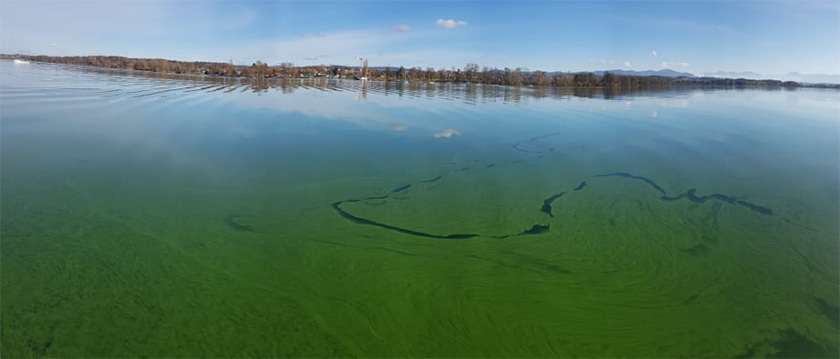
Warum blühen giftige Cyanbakterien? Ein Ansatz über Genen bis zum Ökosystem.

In diesem Projekt möchten wir die ökologischen und evolutionären Mechanismen besser verstehen, die zu giftigen Blüten der Cyanobakterien (CyanoHABs) in Seen führen und dazu Vorhersagemodelle entwickeln. Wir verfolgen einen synergistischen Forschungsansatz mit einem interdisziplinären Team aus der Ökologie, Mikrobiologie, Umweltchemie und Systemtheorie, um die zentralen Forschungsfragen der Mechanismen, die zu CyanoHABs führen, zu verfolgen. Wir verbinden Feldbeobachtungen mit Laborversuchen und Modellierung (daten-getrieben und mechanistisch) um eine breiten Skala von temporären und biologische Prozessen, die zu CyanoHABs führen, einzufangen.

Hierbei konzentrieren wir uns auf die Interaktionen von physiologischen, ökologischen und evolutionären MechnismenBesonder interessiert uns die relativen Kosten und Vorteile die CyanoHAB Taxa, auf Grund der Produktion von Giftstoffen und anderen non-ribosomalen Peptiden (NRPs). Diese Interaktionen schauen wir uns in einem Kontext der gesamten Lebensgemeinschaft im See und entlang natürlichen Gradienten in der Umwelt an.

Weitere Information unter: www.cyanobloom.ch


Involvierte Forschungsgruppen:

Elisabeth Janssen: Umweltchemie von Biomolekülen

David Johnson: Synthetische Mikrobiologie

Rudolf Rohr: Theoretische Ökologie und Evolution

Francesco Pomati: Plankton Ökologie
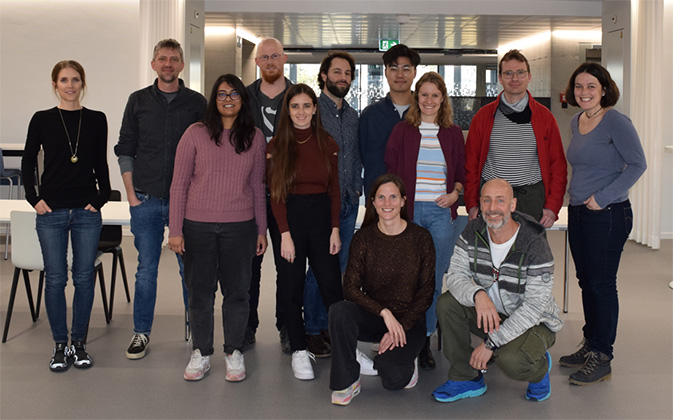
Externe Zusammenarbeit mit:

Dr. Rodolf Rohr (UniFr)
Dr. Phoung Nguyen (UniFr)


Andere Cooperationen:

Olga Schubert, Eawag, Abteilung Umweltmikrobiologie

Publikationen

Extbase Variable Dump
array(2 items)
   publications => '35348,35086,33271' (17 chars)
   libraryUrl => '' (0 chars)
Extbase Variable Dump
array(3 items)
   0 => Snowflake\Publications\Domain\Model\Publicationprototypepersistent entity (uid=35348, pid=124)
      originalId => protected35348 (integer)
      authors => protected'Wang, X.; Ingold, A.; Janssen, E. M. -L.' (65 chars)
      title => protected'Biotransformation dynamics and products of cyanobacterial secondary metaboli
         tes in surface waters
' (97 chars) journal => protected'Environmental Science and Technology' (36 chars) year => protected2025 (integer) volume => protected59 (integer) issue => protected'38' (2 chars) startpage => protected'20726' (5 chars) otherpage => protected'20737' (5 chars) categories => protected'microcystins; anabaenopeptins; transformation products; reaction pathways; h
         armful bloom
' (88 chars) description => protected'Cyanobacteria produce toxic and bioactive secondary metabolites, posing risk
         s to ecosystems and human health, yet their transformation pathways in surfa
         ce waters remain unclear. We assessed biotransformation for 40 cyanopeptides
          including microcystins, anabaenopeptins and cyanopeptolins in surface water
         s and <em>in situ</em> enriched biofilm suspensions. In surface waters, most
          cyanopeptides did not degrade significantly over the course of 7 days. A wi
         de range of biodegradability across cyanopeptides was apparent in biofilm su
         spensions from three rivers. Increasing the biofilm density shortened the la
         g time and increased initial removal of cyanopeptides. Increasing the initia
         l cyanopeptide concentration lengthened the lag time and decreased their ini
         tial removal, supporting inhibitory effects of cyanopeptides toward enzymes
         involved in their own transformation. Transformation kinetics and product an
         alysis demonstrated a structure–reactivity relationship across and within
         cyanopeptide classes. Anabaenopeptins were hydrolyzed at the C-terminus when
          arginine, tyrosine and (iso)leucine were present, but not when phenylalanin
         e or tryptophan was present. Microcystins showed tetrapeptide formation when
          adda linked to arginine but not when it linked to alanine, leucine, or tyro
         sine. Oxidation of tyrosine and deamination of arginine residues showed an i
         nterdependence across cyanopeptide classes. These novel insights into biotra
         nsformation products and pathways of a wide range of cyanopeptides facilitat
         e assessment of exposure scenarios in surface waters and inform about kineti
         cs and product formation in biological water treatment.
' (1651 chars) serialnumber => protected'0013-936X' (9 chars) doi => protected'10.1021/acs.est.5c09247' (23 chars) uid => protected35348 (integer) _localizedUid => protected35348 (integer)modified _languageUid => protectedNULL _versionedUid => protected35348 (integer)modified pid => protected124 (integer)
1 => Snowflake\Publications\Domain\Model\Publicationprototypepersistent entity (uid=35086, pid=124) originalId => protected35086 (integer) authors => protected'Nguyen,&nbsp;P.&nbsp;L.; Pomati,&nbsp;F.; Rohr,&nbsp;R.&nbsp;P.' (63 chars) title => protected'Inferring coexistence likelihood in changing environments from ecological ti
         me series
' (85 chars) journal => protected'Proceedings of the National Academy of Sciences of the United States of Amer
         ica PNAS
' (84 chars) year => protected2025 (integer) volume => protected122 (integer) issue => protected'28' (2 chars) startpage => protected'e2417905122 (8 pp.)' (19 chars) otherpage => protected'' (0 chars) categories => protected'Lotka–Volterra map; intrinsic growth rate; per capita interaction strength
         ; time-series data; coexistence metrics
' (115 chars) description => protected'Inferring coexistence metrics, such as niche and fitness differences, in cha
         nging environments is key for understanding the mechanism behind species coe
         xistence and predicting its likelihood. However, it first requires estimatin
         g the per capita interactions between organisms and their intrinsic growth r
         ates-parameters that are typically measured by isolating organisms from thei
         r natural context. Here, we first use weighted multivariate regression on th
         e per capita growth rates of populations to estimate these key ecological pa
         rameters directly from time-series data of species-rich communities. Second,
          we infer niche differences and species resistance, which are two important
         metrics for understanding species coexistence. Our approach allows these met
         rics to vary over time and under different environmental conditions. We vali
         date our approach using synthetic data and apply it to both experimental and
          observational data as a proof of concept. Experimental results show an expe
         cted allocative trade-off between grazing resistance and rapid growth in alg
         ae. Moreover, coexistence likelihood decreases, and coexistence balance is d
         isturbed under stressful environmental conditions. Observational data sugges
         ts variations in intrinsic growth rates and per capita interactions among au
         totrophic guilds with respect to seasonal patterns. In addition, interaction
         s between cyanobacteria with green algae and chrysophytes might indicate a p
         otential cause for bloom development. Our approach offers a powerful toolbox
          to gain insight into the mechanisms underlying ecological dynamics, species
          coexistence, and community structures under varying environments. Such an u
         nderstanding will help us address important ecological and evolutionary ques
         tions, such as explaining biodiversity patterns and solving the problem of c
         yanobacteria bloom.
' (1843 chars) serialnumber => protected'0027-8424' (9 chars) doi => protected'10.1073/pnas.2417905122' (23 chars) uid => protected35086 (integer) _localizedUid => protected35086 (integer)modified _languageUid => protectedNULL _versionedUid => protected35086 (integer)modified pid => protected124 (integer)
2 => Snowflake\Publications\Domain\Model\Publicationprototypepersistent entity (uid=33271, pid=124) originalId => protected33271 (integer) authors => protected'Wang,&nbsp;X.; Wullschleger,&nbsp;S.; Jones,&nbsp;M.; Reyes,&nbsp;M.; Bossar
         t,&nbsp;R.; Pomati,&nbsp;F.; Janssen,&nbsp;E.&nbsp;M.&nbsp;-L.
' (138 chars) title => protected'Tracking extensive portfolio of cyanotoxins in five-year lake survey and ide
         ntifying indicator metabolites of cyanobacterial taxa
' (129 chars) journal => protected'Environmental Science and Technology' (36 chars) year => protected2024 (integer) volume => protected58 (integer) issue => protected'37' (2 chars) startpage => protected'16560' (5 chars) otherpage => protected'16569' (5 chars) categories => protected'microcystin; suspect screening; monitoring; cyanopepetides; harmful algal bl
         oom
' (79 chars) description => protected'Cyanobacterial blooms require monitoring, as they pose a threat to ecosystem
         s and human health, especially by the release of toxins. Along with widely r
         eported microcystins, cyanobacteria coproduce other bioactive metabolites; h
         owever, information about their dynamics in surface waters is sparse. We inv
         estigated dynamics across full bloom successions throughout a five-year lake
          monitoring campaign (Greifensee, Switzerland) spanning 150 sampling dates.
         We conducted extensive suspect screening of cyanobacterial metabolites using
          the database CyanoMetDB. Across all 850 samples, 35 metabolites regularly c
         o-occurred. Microcystins were present in 70% of samples, with [d-Asp<sup>3</
         sup>,(<em>E</em>)-Dhb<sup>7</sup>]MC-RR reaching concentrations of 70 ng/L.
         Anabaenopeptins, meanwhile, were detected in 95% of all samples with concent
         rations of Oscillamide Y up to 100-fold higher than microcystins. Based on L
         C-MS response and frequency, we identified indicator metabolites exclusively
          produced by one of three cyanobacteria isolated from the lake, these being
         [d-Asp<sup>3</sup>,(<em>E</em>)-Dhb<sup>7</sup>]MC-RR from <em>Planktothrix<
         /em> sp. G2020, Microginin 761B from <em>Microcystis</em> sp. G2011, and Fer
         intoic acid B from <em>Microcystis</em> sp. G2020. These indicators showed d
         istinct temporal trends and peaking seasons that reflect the variance in eit
         her the abundance of the producing cyanobacteria or their toxin production d
         ynamics. Our approach demonstrates that selecting high LC-MS response and fr
         equent and species-specific indicator metabolites can be advantageous for cy
         anobacterial monitoring.
' (1620 chars) serialnumber => protected'0013-936X' (9 chars) doi => protected'10.1021/acs.est.4c04813' (23 chars) uid => protected33271 (integer) _localizedUid => protected33271 (integer)modified _languageUid => protectedNULL _versionedUid => protected33271 (integer)modified pid => protected124 (integer)
Wang, X.; Ingold, A.; Janssen, E. M. -L. (2025) Biotransformation dynamics and products of cyanobacterial secondary metabolites in surface waters, Environmental Science and Technology, 59(38), 20726-20737, doi:10.1021/acs.est.5c09247, Institutional Repository
Nguyen, P. L.; Pomati, F.; Rohr, R. P. (2025) Inferring coexistence likelihood in changing environments from ecological time series, Proceedings of the National Academy of Sciences of the United States of America PNAS, 122(28), e2417905122 (8 pp.), doi:10.1073/pnas.2417905122, Institutional Repository
Wang, X.; Wullschleger, S.; Jones, M.; Reyes, M.; Bossart, R.; Pomati, F.; Janssen, E. M. -L. (2024) Tracking extensive portfolio of cyanotoxins in five-year lake survey and identifying indicator metabolites of cyanobacterial taxa, Environmental Science and Technology, 58(37), 16560-16569, doi:10.1021/acs.est.4c04813, Institutional Repository