EcoImpact – Untersuchung der ökologischen Auswirkungen von Mikroverunreinigungen in Fliessgewässern
EcoImpact ist eine Eawag-weite interdisziplinäre Forschungsinitiative. Das Projekt zielt darauf ab, die ökologischen Auswirkungen von Mikroverunreinigungen aus Kläranlagen (ARAs) in Gewässern besser zu verstehen. Es steht im Zusammenhang mit der laufenden Aufrüstung der Schweizer ARAs mit einer zusätzlichen Reinigungsstufe.
EcoImpact 1
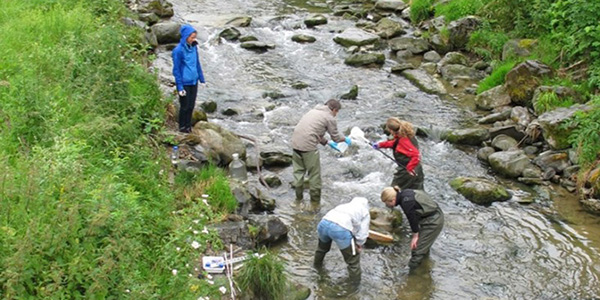
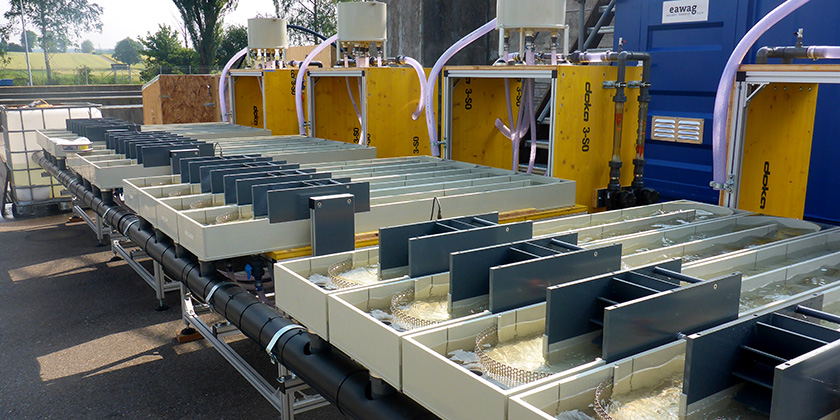
EcoImpact 1 wurde von 2013 bis 2016 durchgeführt. An 24 ARAs im Schweizer Mittelland und im Jura wurden die Gewässer oberhalb und unterhalb der ARAs untersucht. Zusätzlich wurden Rinnenexperimente entwickelt, um die Bedeutung verschiedener Abwasserinhaltsstoffe (Nährstoffe, Mikroverunreinigungen) auseinanderhalten zu können.
EcoImpact 2.0 startet im Frühling 2019. Es baut auf die Ergebnisse der vorangehenden Phase auf und fokussiert auf Rinnenexperimente. Das Projekt untersucht, wie der Biofilm in Gewässern – die Lebensgemeinschaften bestehend aus Algen, Bakterien und Pilzen mit wichtigen ökologischen Funktionen – auf Mikroverunreinigungen reagiert.
array(6 items)0 => Snowflake\Publications\Domain\Model\Publicationprototypepersistent entity (uid=23923, pid=124)originalId => protected23923 (integer)
authors => protected'Tamminen, M.; Spaak, J.; Tlili, A.; Eggen, R.; Stamm,&nb sp;C.; Räsänen, K.' (101 chars)
title => protected'Wastewater constituents impact biofilm microbial community in receiving stre ams' (79 chars)
journal => protected'Science of the Total Environment' (32 chars)
year => protected2022 (integer)
volume => protected807 (integer)
issue => protected'3' (1 chars)
startpage => protected'151080 (8 pp.)' (14 chars)
otherpage => protected'' (0 chars)
categories => protected'biofilm; wastewater treatment; bacterial community; diatom; micropollutant' (74 chars)
description => protected'Microbial life in natural biofilms is dominated by prokaryotes and microscop ic eukaryotes living in dense association. In stream ecosystems, microbial b iofilms influence primary production, elemental cycles, food web interaction s as well as water quality. Understanding how biofilm communities respond to anthropogenic impacts, such as wastewater treatment plant (WWTP) effluent, is important given the key role of biofilms in stream ecosystem function. He re, we implemented 16S and 18S rRNA gene sequencing of stream biofilms upstr eam (US) and downstream (DS) of WWTP effluents in four Swiss streams to test how bacterial and eukaryotic communities respond to wastewater constituents
munity members was related to micropollutants in the wastewater – among ba cteria, micropollutant-associated members were found e.g. in <em>Alphaproteo bacteria</em>, and among eukaryotes e.g. in <em>Bacillariophyta</em> (algal diatoms). This study corroborates several previously characterized responses (e.g. as seen in diatoms), but also reveals previously unknown community re sponses – such as seen in <em>Alphaproteobacteria</em>. This study advance s our understanding of the ecological impact of the current wastewater treat ment practices and provides information about potential new marker organisms to assess ecological change in stream biofilms.' (1492 chars)
serialnumber => protected'0048-9697' (9 chars)
doi => protected'10.1016/j.scitotenv.2021.151080' (31 chars)
uid => protected23923 (integer)
_localizedUid => protected23923 (integer)modified_languageUid => protectedNULL
_versionedUid => protected23923 (integer)modifiedpid => protected124 (integer)1 => Snowflake\Publications\Domain\Model\Publicationprototypepersistent entity (uid=23265, pid=124)originalId => protected23265 (integer)
authors => protected'Carles, L.; Wullschleger, S.; Joss, A.; Eggen, R. I . L.; Schirmer, K.; Schuwirth, N.; Stamm, C.; Tlili,&nbs p;A.' (156 chars)
title => protected'Impact of wastewater on the microbial diversity of periphyton and its tolera nce to micropollutants in an engineered flow-through channel system' (143 chars)
journal => protected'Water Research' (14 chars)
year => protected2021 (integer)
volume => protected203 (integer)
issue => protected'' (0 chars)
startpage => protected'117486 (14 pp.)' (15 chars)
otherpage => protected'' (0 chars)
categories => protected'pollution-induced community tolerance; aquatic biofilm; passive sampler; org anic micropollutants; microbial diversity; 16S and 18S rRNA gene sequencing' (151 chars)
description => protected'Wastewater treatment plants (WWTPs) play an important role in retaining orga nic matter and nutrients but to a lesser extent micropollutants. Therefore, treated wastewater is recognized as a major source of multiple stressors, in cluding complex mixtures of micropollutants. These can potentially affect mi crobial communities in the receiving water bodies and the ecological functio ns they provide. In this study, we evaluated in flow-through channels the co nsequences of an exposure to a mixture of stream water and different percent ages of urban WWTP effluent, ranging from 0% to 80%, on the microbial divers ity and function of periphyton communities. Assuming that micropollutants ex ert a selective pressure for tolerant microorganisms within communities, we further examined the periphyton sensitivity to a micropollutant mixture extr acted from passive samplers that were immersed in the wastewater effluent. A s well, micropollutants in water and in periphyton were comprehensively quan tified. Our results show that micropollutants detected in periphyton differe d from those found in water, both in term of concentration and composition. Especially photosystem II inhibitors accumulated in periphyton more than oth er pesticides. Although effects of other substances cannot be excluded, this accumulation may have contributed to the observed higher tolerance of photo trophic communities to micropollutants upon exposure to 30% and 80% of waste water. On the contrary, no difference in tolerance was observed for heterotr ophic communities. Exposure to the gradient of wastewater led to structural differences in both prokaryotic and eukaryotic communities. For instance, th e relative abundance of cyanobacteria was higher with increasing percentage of wastewater effluent, whereas the opposite was observed for diatoms. Such results could indicate that differences in community structure do not necess arily lead to higher tolerance. This highlights the need to consider other w astewater constituents s...' (2512 chars)
serialnumber => protected'0043-1354' (9 chars)
doi => protected'10.1016/j.watres.2021.117486' (28 chars)
uid => protected23265 (integer)
_localizedUid => protected23265 (integer)modified_languageUid => protectedNULL
_versionedUid => protected23265 (integer)modifiedpid => protected124 (integer)2 => Snowflake\Publications\Domain\Model\Publicationprototypepersistent entity (uid=21300, pid=124)originalId => protected21300 (integer)
authors => protected'Tlili, A.; Corcoll, N.; Arrhenius, Å.; Backhaus, T.; Ho llender, J.; Creusot, N.; Wagner, B.; Behra, R.' (143 chars)
title => protected'Tolerance patterns in stream biofilms link complex chemical pollution to eco logical impacts' (91 chars)
journal => protected'Environmental Science and Technology' (36 chars)
year => protected2020 (integer)
volume => protected54 (integer)
issue => protected'17' (2 chars)
startpage => protected'10745' (5 chars)
otherpage => protected'10753' (5 chars)
categories => protected'' (0 chars)
description => protected'Preventing and remedying fresh waters from chemical pollution is a fundament al societal and scientific challenge. With other nonchemical stressors poten tially co-occurring, assessing the ecological consequences of reducing chemi cal loads in the environment is arduous. In this case study, we comparativel y assessed the community structure, functions, and tolerance of stream biofi lms to micropollutant mixtures extracted from deployed passive samplers at w astewater treatment plant effluents. These biofilms were growing up- and dow nstream of one upgraded and two nonupgraded wastewater treatment plants befo re being sampled for analyses. Our results showed a substantial decrease in micropollutant concentrations by 85%, as the result of upgrading the wastewa ter treatment plant at one of the sampling sites with activated carbon filtr ation. This decrease was positively correlated with a loss of community tole rance to micropollutants and the recovery of the community structure downstr eam of the effluent. On the other hand, downstream biofilms at the nonupgrad ed sites displayed higher tolerance to the extracts than the upstream biofil ms. The observed higher tolerance was positively linked to micropollutant le vels both in stream water and in biofilm samples, and to shifts in the commu nity structure. Although more investigations of upgraded sites are needed, o ur findings point toward the suitability of using community tolerance for th e retrospective assessment of the risks posed by micropollutants, to assess community recovery, and to relate effects to causes in complex environmental conditions.' (1608 chars)
serialnumber => protected'0013-936X' (9 chars)
doi => protected'10.1021/acs.est.0c02975' (23 chars)
uid => protected21300 (integer)
_localizedUid => protected21300 (integer)modified_languageUid => protectedNULL
_versionedUid => protected21300 (integer)modifiedpid => protected124 (integer)3 => Snowflake\Publications\Domain\Model\Publicationprototypepersistent entity (uid=21286, pid=124)originalId => protected21286 (integer)
authors => protected'Burdon, F. J.; Bai, Y.; Reyes, M.; Tamminen, M.; St audacher, P.; Mangold, S.; Singer, H.; Räsänen, K.; Jo ss, A.; Tiegs, S. D.; Jokela, J.; Eggen, R. I. L.; Stamm, C.' (252 chars)
title => protected'Stream microbial communities and ecosystem functioning show complex response s to multiple stressors in wastewater' (113 chars)
journal => protected'Global Change Biology' (21 chars)
year => protected2020 (integer)
volume => protected26 (integer)
issue => protected'11' (2 chars)
startpage => protected'6363' (4 chars)
otherpage => protected'6382' (4 chars)
categories => protected'biodiversity; carbon processing; cotton-strip assay; micropollutants; next-g eneration sequencing; nutrients; temperature; warming' (129 chars)
description => protected'Multiple anthropogenic drivers are changing ecosystems globally, with a disp roportionate and intensifying impact on freshwater habitats. A major impact of urbanization are inputs from wastewater treatment plants (WWTPs). Initial ly designed to reduce eutrophication and improve water quality, WWTPs increa singly release a multitude of micropollutants (MPs; i.e., synthetic chemical s) and microbes (including antibiotic‐resistant bacteria) to receiving env ironments. This pollution may have pervasive impacts on biodiversity and eco system services. Viewed through multiple lenses of macroecological and ecoto xicological theory, we combined field, flume, and laboratory experiments to determine the effects of wastewater (WW) on microbial communities and organi c‐matter processing using a standardized decomposition assay. First, we co nducted a mensurative experiment sampling 60 locations above and below WWTP discharges in 20 Swiss streams. Microbial respiration and decomposition rate s were positively influenced by WW inputs via warming and nutrient enrichmen t, but with a notable exception: WW decreased the activation energy of decom position, indicating a "slowing" of this fundamental ecosystem process in re sponse to temperature. Second, next‐generation sequencing indicated that m icrobial community structure below WWTPs was altered, with significant compo sitional turnover, reduced richness, and evidence of negative MP influences. Third, a series of flume experiments confirmed that although diluted WW gen erally has positive influences on microbial‐mediated processes, the negati ve effects of MPs are "masked" by nutrient enrichment. Finally, transplant e xperiments suggested that WW‐borne microbes enhance decomposition rates. T aken together, our results affirm the multiple stressor paradigm by showing that different aspects of WW (warming, nutrients, microbes, and MPs) jointly influence ecosystem functioning in complex ways. Increased respiration rate s below WWTPs potentiall...' (2269 chars)
serialnumber => protected'1354-1013' (9 chars)
doi => protected'10.1111/gcb.15302' (17 chars)
uid => protected21286 (integer)
_localizedUid => protected21286 (integer)modified_languageUid => protectedNULL
_versionedUid => protected21286 (integer)modifiedpid => protected124 (integer)4 => Snowflake\Publications\Domain\Model\Publicationprototypepersistent entity (uid=20593, pid=124)originalId => protected20593 (integer)
authors => protected'Creusot, N.; Casado-Martinez, C.; Chiaia-Hernandez, A.; Kiefe r, K.; Ferrari, B. J. D.; Fu, Q.; Munz, N.; St amm, C.; Tlili, A.; Hollender, J.' (200 chars)
title => protected'Retrospective screening of high-resolution mass spectrometry archived digita l samples can improve environmental risk assessment of emerging contaminants : a case study on antifungal azoles' (187 chars)
journal => protected'Environment International' (25 chars)
year => protected2020 (integer)
volume => protected139 (integer)
issue => protected'' (0 chars)
startpage => protected'105708 (10 pp.)' (15 chars)
otherpage => protected'' (0 chars)
categories => protected'environmental risk assessment; antifungal-azoles; high resolution mass spect rometry; partitioning; exposure assessment; retrospective screening; digital samples' (160 chars)
description => protected'Environmental risk assessment associated with aquatic and terrestrial contam ination is mostly based on predicted or measured environmental concentration s of a limited list of chemicals in a restricted number of environmental com partments. High resolution mass spectrometry (HRMS) can provide a more compr ehensive picture of exposure to harmful chemicals, particularly through the retrospective analysis of digitally stored HRMS data. Using this methodology , our study characterized the contamination of various environmental compart ments including 154 surface water, 46 urban effluent, 67 sediment, 15 soil, 34 groundwater, 24 biofilm, 41 gammarid and 49 fish samples at 95 sites wide ly distributed over the Swiss Plateau. As a proof-of-concept, we focused our investigation on antifungal azoles, a class of chemicals of emerging concer n due to their endocrine disrupting effects on aquatic organisms and humans. Our results demonstrated the occurrence of antifungal azoles and some of th eir (bio)transformation products in all the analyzed compartments (0.1-100 ng/L or ng/g d.w.). Comparison of actual and predicted concentrations showed the partial suitability of level 1 fugacity modelling in predicting the exp osure to azoles. Risk quotient calculations additionally revealed risk of ex posure especially if some of the investigated rivers and streams are used fo r drinking water production. The case study clearly shows that the retrospec tive analysis of HRMS/MS data can improve the current knowledge on exposure and the related risks to chemicals of emerging concern and can be effectivel y employed in the future for such purposes.' (1639 chars)
serialnumber => protected'0160-4120' (9 chars)
doi => protected'10.1016/j.envint.2020.105708' (28 chars)
uid => protected20593 (integer)
_localizedUid => protected20593 (integer)modified_languageUid => protectedNULL
_versionedUid => protected20593 (integer)modifiedpid => protected124 (integer)5 => Snowflake\Publications\Domain\Model\Publicationprototypepersistent entity (uid=19987, pid=124)originalId => protected19987 (integer)
authors => protected'Arlos, M. J.; Schürz, F.; Fu, Q.; Lauper, B. B.; Stamm, C.; Hollender, J.' (114 chars)
title => protected'Coupling river concentration simulations with a toxicokinetic model effectiv ely predicts the internal concentrations of wastewater-derived micropollutan ts in field gammarids' (173 chars)
journal => protected'Environmental Science and Technology' (36 chars)
year => protected2020 (integer)
volume => protected54 (integer)
issue => protected'3' (1 chars)
startpage => protected'1710' (4 chars)
otherpage => protected'1719' (4 chars)
categories => protected'' (0 chars)
description => protected'Although the exposure assessment of wastewater-derived micropollutants via c hemical, bioanalytical, and modeling methods in environmental compartments i s becoming more frequent, the whole-body burden (i.e., internal concentratio ns) in nontarget organisms is rarely assessed. An understanding of the inter nal concentration fluctuation is especially important when exploring the mec hanistic linkage between exposure and effects. In this study, we coupled a s imple river model with a first-order toxicokinetic (TK) model to predict the concentrations of wastewater-derived micropollutants in freshwater inverteb rates (<em>Gammarus</em> spp.). We applied Monte Carlo simulations and condu cted laboratory experiments to account for the uncertain input data and the lack of uptake/depuration rate constants required for the TK model. The inte rnal concentrations in field gammarids were predicted well, and the estimate s varied only by a factor of 0.1-1.9. Fast equilibrium may also be assumed s uch that bioconcentration factors (BCFs) are used together with the daily ri ver dilution patterns to predict internal concentrations. While this assumpt ion is suitable for compounds observed in our experiment to reach the steady state within 48 h in gammarids, the model overpredicted the concentrations of substances that reach this condition after longer periods. Nevertheless, this approach provides conservative estimates and simplifies the coupling of models as BCFs are slightly more accessible than the rate constants. Howeve r, if one is interested in a more detailed exposure information (e.g., peak concentration and the whole-body burden recovery after a spill), then the no nsteady-state formulation should be employed.' (1717 chars)
serialnumber => protected'0013-936X' (9 chars)
doi => protected'10.1021/acs.est.9b05736' (23 chars)
uid => protected19987 (integer)
_localizedUid => protected19987 (integer)modified_languageUid => protectedNULL
_versionedUid => protected19987 (integer)modifiedpid => protected124 (integer)
Wastewater constituents impact biofilm microbial community in receiving streams
Microbial life in natural biofilms is dominated by prokaryotes and microscopic eukaryotes living in dense association. In stream ecosystems, microbial biofilms influence primary production, elemental cycles, food web interactions as well as water quality. Understanding how biofilm communities respond to anthropogenic impacts, such as wastewater treatment plant (WWTP) effluent, is important given the key role of biofilms in stream ecosystem function. Here, we implemented 16S and 18S rRNA gene sequencing of stream biofilms upstream (US) and downstream (DS) of WWTP effluents in four Swiss streams to test how bacterial and eukaryotic communities respond to wastewater constituents. Stream biofilm composition was strongly affected by geographic location – particularly for bacteria. However, the abundance of certain microbial community members was related to micropollutants in the wastewater – among bacteria, micropollutant-associated members were found e.g. in Alphaproteobacteria, and among eukaryotes e.g. in Bacillariophyta (algal diatoms). This study corroborates several previously characterized responses (e.g. as seen in diatoms), but also reveals previously unknown community responses – such as seen in Alphaproteobacteria. This study advances our understanding of the ecological impact of the current wastewater treatment practices and provides information about potential new marker organisms to assess ecological change in stream biofilms.
Tamminen, M.; Spaak, J.; Tlili, A.; Eggen, R.; Stamm, C.; Räsänen, K. (2022) Wastewater constituents impact biofilm microbial community in receiving streams, Science of the Total Environment, 807(3), 151080 (8 pp.), doi:10.1016/j.scitotenv.2021.151080, Institutional Repository
Impact of wastewater on the microbial diversity of periphyton and its tolerance to micropollutants in an engineered flow-through channel system
Wastewater treatment plants (WWTPs) play an important role in retaining organic matter and nutrients but to a lesser extent micropollutants. Therefore, treated wastewater is recognized as a major source of multiple stressors, including complex mixtures of micropollutants. These can potentially affect microbial communities in the receiving water bodies and the ecological functions they provide. In this study, we evaluated in flow-through channels the consequences of an exposure to a mixture of stream water and different percentages of urban WWTP effluent, ranging from 0% to 80%, on the microbial diversity and function of periphyton communities. Assuming that micropollutants exert a selective pressure for tolerant microorganisms within communities, we further examined the periphyton sensitivity to a micropollutant mixture extracted from passive samplers that were immersed in the wastewater effluent. As well, micropollutants in water and in periphyton were comprehensively quantified. Our results show that micropollutants detected in periphyton differed from those found in water, both in term of concentration and composition. Especially photosystem II inhibitors accumulated in periphyton more than other pesticides. Although effects of other substances cannot be excluded, this accumulation may have contributed to the observed higher tolerance of phototrophic communities to micropollutants upon exposure to 30% and 80% of wastewater. On the contrary, no difference in tolerance was observed for heterotrophic communities. Exposure to the gradient of wastewater led to structural differences in both prokaryotic and eukaryotic communities. For instance, the relative abundance of cyanobacteria was higher with increasing percentage of wastewater effluent, whereas the opposite was observed for diatoms. Such results could indicate that differences in community structure do not necessarily lead to higher tolerance. This highlights the need to consider other wastewater constituents such as nutrients and wastewater-derived microorganisms that can modulate community structure and tolerance. By using engineered flow-through channels that mimic to some extent the required field conditions for the development of tolerance in periphyton, our study constitutes a base to investigate the mechanisms underlying the increased tolerance, such as the potential role of microorganisms originating from wastewater effluents, and different treatment options to reduce the micropollutant load in effluents.
Carles, L.; Wullschleger, S.; Joss, A.; Eggen, R. I. L.; Schirmer, K.; Schuwirth, N.; Stamm, C.; Tlili, A. (2021) Impact of wastewater on the microbial diversity of periphyton and its tolerance to micropollutants in an engineered flow-through channel system, Water Research, 203, 117486 (14 pp.), doi:10.1016/j.watres.2021.117486, Institutional Repository
Tolerance patterns in stream biofilms link complex chemical pollution to ecological impacts
Preventing and remedying fresh waters from chemical pollution is a fundamental societal and scientific challenge. With other nonchemical stressors potentially co-occurring, assessing the ecological consequences of reducing chemical loads in the environment is arduous. In this case study, we comparatively assessed the community structure, functions, and tolerance of stream biofilms to micropollutant mixtures extracted from deployed passive samplers at wastewater treatment plant effluents. These biofilms were growing up- and downstream of one upgraded and two nonupgraded wastewater treatment plants before being sampled for analyses. Our results showed a substantial decrease in micropollutant concentrations by 85%, as the result of upgrading the wastewater treatment plant at one of the sampling sites with activated carbon filtration. This decrease was positively correlated with a loss of community tolerance to micropollutants and the recovery of the community structure downstream of the effluent. On the other hand, downstream biofilms at the nonupgraded sites displayed higher tolerance to the extracts than the upstream biofilms. The observed higher tolerance was positively linked to micropollutant levels both in stream water and in biofilm samples, and to shifts in the community structure. Although more investigations of upgraded sites are needed, our findings point toward the suitability of using community tolerance for the retrospective assessment of the risks posed by micropollutants, to assess community recovery, and to relate effects to causes in complex environmental conditions.
Tlili, A.; Corcoll, N.; Arrhenius, Å.; Backhaus, T.; Hollender, J.; Creusot, N.; Wagner, B.; Behra, R. (2020) Tolerance patterns in stream biofilms link complex chemical pollution to ecological impacts, Environmental Science and Technology, 54(17), 10745-10753, doi:10.1021/acs.est.0c02975, Institutional Repository
Stream microbial communities and ecosystem functioning show complex responses to multiple stressors in wastewater
Multiple anthropogenic drivers are changing ecosystems globally, with a disproportionate and intensifying impact on freshwater habitats. A major impact of urbanization are inputs from wastewater treatment plants (WWTPs). Initially designed to reduce eutrophication and improve water quality, WWTPs increasingly release a multitude of micropollutants (MPs; i.e., synthetic chemicals) and microbes (including antibiotic‐resistant bacteria) to receiving environments. This pollution may have pervasive impacts on biodiversity and ecosystem services. Viewed through multiple lenses of macroecological and ecotoxicological theory, we combined field, flume, and laboratory experiments to determine the effects of wastewater (WW) on microbial communities and organic‐matter processing using a standardized decomposition assay. First, we conducted a mensurative experiment sampling 60 locations above and below WWTP discharges in 20 Swiss streams. Microbial respiration and decomposition rates were positively influenced by WW inputs via warming and nutrient enrichment, but with a notable exception: WW decreased the activation energy of decomposition, indicating a "slowing" of this fundamental ecosystem process in response to temperature. Second, next‐generation sequencing indicated that microbial community structure below WWTPs was altered, with significant compositional turnover, reduced richness, and evidence of negative MP influences. Third, a series of flume experiments confirmed that although diluted WW generally has positive influences on microbial‐mediated processes, the negative effects of MPs are "masked" by nutrient enrichment. Finally, transplant experiments suggested that WW‐borne microbes enhance decomposition rates. Taken together, our results affirm the multiple stressor paradigm by showing that different aspects of WW (warming, nutrients, microbes, and MPs) jointly influence ecosystem functioning in complex ways. Increased respiration rates below WWTPs potentially generate ecosystem "disservices" via greater carbon evasion from streams and rivers. However, toxic MP effects may fundamentally alter ecological scaling relationships, indicating the need for a rapprochement between ecotoxicological and macroecological perspectives.
Burdon, F. J.; Bai, Y.; Reyes, M.; Tamminen, M.; Staudacher, P.; Mangold, S.; Singer, H.; Räsänen, K.; Joss, A.; Tiegs, S. D.; Jokela, J.; Eggen, R. I. L.; Stamm, C. (2020) Stream microbial communities and ecosystem functioning show complex responses to multiple stressors in wastewater, Global Change Biology, 26(11), 6363-6382, doi:10.1111/gcb.15302, Institutional Repository
Retrospective screening of high-resolution mass spectrometry archived digital samples can improve environmental risk assessment of emerging contaminants: a case study on antifungal azoles
Environmental risk assessment associated with aquatic and terrestrial contamination is mostly based on predicted or measured environmental concentrations of a limited list of chemicals in a restricted number of environmental compartments. High resolution mass spectrometry (HRMS) can provide a more comprehensive picture of exposure to harmful chemicals, particularly through the retrospective analysis of digitally stored HRMS data. Using this methodology, our study characterized the contamination of various environmental compartments including 154 surface water, 46 urban effluent, 67 sediment, 15 soil, 34 groundwater, 24 biofilm, 41 gammarid and 49 fish samples at 95 sites widely distributed over the Swiss Plateau. As a proof-of-concept, we focused our investigation on antifungal azoles, a class of chemicals of emerging concern due to their endocrine disrupting effects on aquatic organisms and humans. Our results demonstrated the occurrence of antifungal azoles and some of their (bio)transformation products in all the analyzed compartments (0.1-100 ng/L or ng/g d.w.). Comparison of actual and predicted concentrations showed the partial suitability of level 1 fugacity modelling in predicting the exposure to azoles. Risk quotient calculations additionally revealed risk of exposure especially if some of the investigated rivers and streams are used for drinking water production. The case study clearly shows that the retrospective analysis of HRMS/MS data can improve the current knowledge on exposure and the related risks to chemicals of emerging concern and can be effectively employed in the future for such purposes.
Creusot, N.; Casado-Martinez, C.; Chiaia-Hernandez, A.; Kiefer, K.; Ferrari, B. J. D.; Fu, Q.; Munz, N.; Stamm, C.; Tlili, A.; Hollender, J. (2020) Retrospective screening of high-resolution mass spectrometry archived digital samples can improve environmental risk assessment of emerging contaminants: a case study on antifungal azoles, Environment International, 139, 105708 (10 pp.), doi:10.1016/j.envint.2020.105708, Institutional Repository
Coupling river concentration simulations with a toxicokinetic model effectively predicts the internal concentrations of wastewater-derived micropollutants in field gammarids
Although the exposure assessment of wastewater-derived micropollutants via chemical, bioanalytical, and modeling methods in environmental compartments is becoming more frequent, the whole-body burden (i.e., internal concentrations) in nontarget organisms is rarely assessed. An understanding of the internal concentration fluctuation is especially important when exploring the mechanistic linkage between exposure and effects. In this study, we coupled a simple river model with a first-order toxicokinetic (TK) model to predict the concentrations of wastewater-derived micropollutants in freshwater invertebrates (Gammarus spp.). We applied Monte Carlo simulations and conducted laboratory experiments to account for the uncertain input data and the lack of uptake/depuration rate constants required for the TK model. The internal concentrations in field gammarids were predicted well, and the estimates varied only by a factor of 0.1-1.9. Fast equilibrium may also be assumed such that bioconcentration factors (BCFs) are used together with the daily river dilution patterns to predict internal concentrations. While this assumption is suitable for compounds observed in our experiment to reach the steady state within 48 h in gammarids, the model overpredicted the concentrations of substances that reach this condition after longer periods. Nevertheless, this approach provides conservative estimates and simplifies the coupling of models as BCFs are slightly more accessible than the rate constants. However, if one is interested in a more detailed exposure information (e.g., peak concentration and the whole-body burden recovery after a spill), then the nonsteady-state formulation should be employed.
Arlos, M. J.; Schürz, F.; Fu, Q.; Lauper, B. B.; Stamm, C.; Hollender, J. (2020) Coupling river concentration simulations with a toxicokinetic model effectively predicts the internal concentrations of wastewater-derived micropollutants in field gammarids, Environmental Science and Technology, 54(3), 1710-1719, doi:10.1021/acs.est.9b05736, Institutional Repository