Department Urban Water Management

In-Sewer Transormation of Illicit Drugs (SEWPROF)
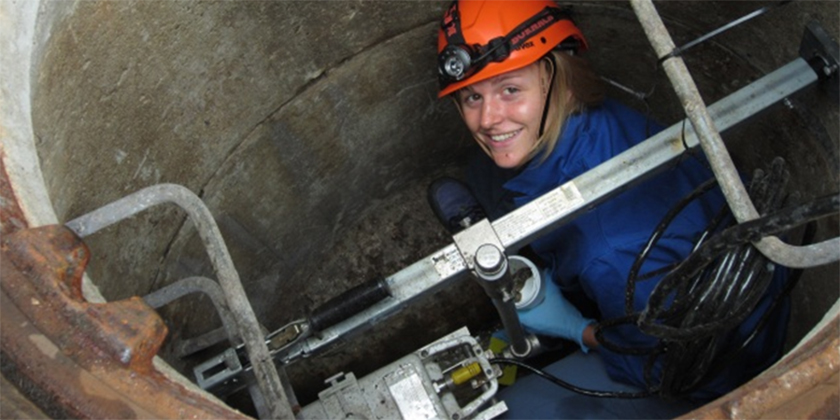
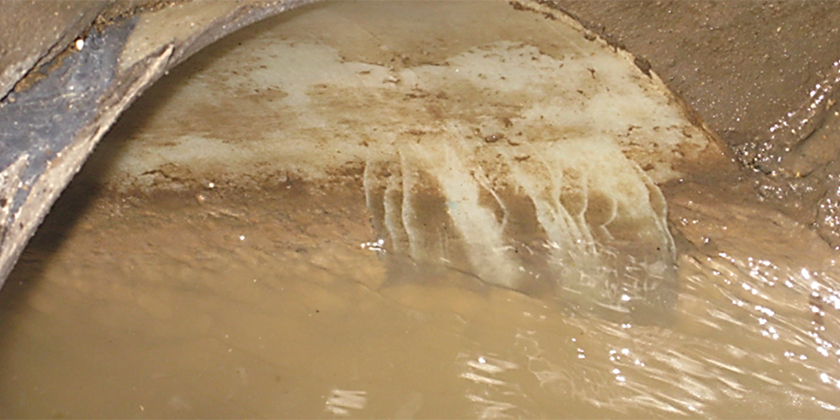
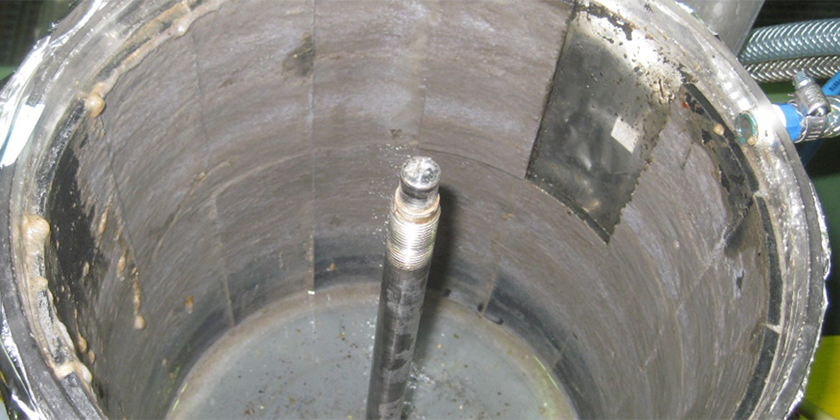
As part of the European Marie Curie ITN “SEWPROF”, this PhD project focuses on the biotic and abiotic transformation processes of the illicit drugs during their transport in sewer networks. Ann-Kathrin investigates the role of sewer biofilms on the illicit drug transformation.

Extbase Variable Dump
array(2 items)
   publications => '13996' (5 chars)
   libraryUrl => '' (0 chars)
Extbase Variable Dump
array(1 item)
   0 => Snowflake\Publications\Domain\Model\Publicationprototypepersistent entity (uid=13996, pid=124)
      originalId => protected13996 (integer)
      authors => protected'McCall, A.-K.; Bade, R.; Kinyua, J.; Lai, F. Y.; Th
         ai, P. K.; Covaci, A.; Bijlsma, L.; van Nuijs, A.&n
         bsp;L. N.; Ort, C.
' (180 chars) title => protected'Critical review on the stability of illicit drugs in sewers and wastewater s
         amples
' (82 chars) journal => protected'Water Research' (14 chars) year => protected2016 (integer) volume => protected88 (integer) issue => protected'' (0 chars) startpage => protected'933' (3 chars) otherpage => protected'947' (3 chars) categories => protected'transformation; sewage epidemiology; sample preservation; psychoactive subst
         ances; biodegradation
' (97 chars) description => protected'Wastewater-based epidemiology (WBE) applies advanced analytical methods to q
         uantify drug residues in wastewater with the aim to estimate illicit drug us
         e at the population level. Transformation processes during transport in sewe
         rs (chemical and biological reactors) and storage of wastewater samples befo
         re analysis are expected to change concentrations of different drugs to vary
         ing degrees. Ignoring transformation for drugs with low to medium stability
         will lead to an unknown degree of systematic under- or overestimation of dru
         g use, which should be avoided. This review aims to summarize the current kn
         owledge related to the stability of commonly investigated drugs and, further
         more, suggest a more effective approach to future experiments. From over 100
          WBE studies, around 50 mentioned the importance of stability and 24 include
         d tests in wastewater. Most focused on in-sample stability (i.e., sample pre
         paration, preservation and storage) and some extrapolated to in-sewer stabil
         ity (i.e., during transport in real sewers). While consistent results were r
         eported for rather stable compounds (e.g., MDMA and methamphetamine), a vary
         ing range of stability under different or similar conditions was observed fo
         r other compounds (e.g., cocaine, amphetamine and morphine). Wastewater comp
         osition can vary considerably over time, and different conditions prevail in
          different sewer systems. In summary, this indicates that more systematic st
         udies are needed to: i) cover the range of possible conditions in sewers and
          ii) compare results more objectively. To facilitate the latter, we propose
         a set of parameters that should be reported for in-sewer stability experimen
         ts. Finally, a best practice of sample collection, preservation, and prepara
         tion before analysis is suggested in order to minimize transformation during
          these steps.
' (1837 chars) serialnumber => protected'0043-1354' (9 chars) doi => protected'10.1016/j.watres.2015.10.040' (28 chars) uid => protected13996 (integer) _localizedUid => protected13996 (integer)modified _languageUid => protectedNULL _versionedUid => protected13996 (integer)modified pid => protected124 (integer)
McCall, A.-K.; Bade, R.; Kinyua, J.; Lai, F. Y.; Thai, P. K.; Covaci, A.; Bijlsma, L.; van Nuijs, A. L. N.; Ort, C. (2016) Critical review on the stability of illicit drugs in sewers and wastewater samples, Water Research, 88, 933-947, doi:10.1016/j.watres.2015.10.040, Institutional Repository

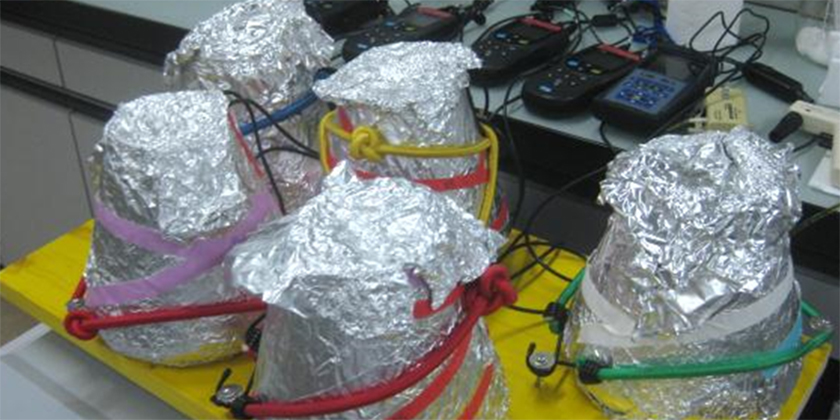
In batch experiments with wastewater and sewer biofilms the influences of biological, chemical, and physical processes on the transformation of 30 illicit drugs and pharmaceuticals (or metabolites) were quantified. Rates varied among locations and over time which are published in a recent ES&T article.  

The current aim is to identify relevant variables to model drug transformation during in-sewer transport. This model will predict drug loss and uncertainty for different realistic scenarios (e.g., influence of catchment size, number of drug users).

Project description

SEWPROF:  “A new paradigm in drug use and human health risk assessment: Sewage profiling at the community level”. EU FP7, Marie Curie ITN (Initial Training Network, Grant agreement no.: 317205).