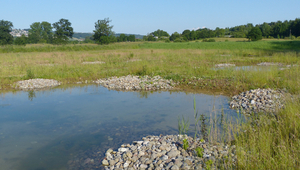
May 16, 2024Number, size, surroundings and water level: for the first time, there are quantitative scientific recommendations when it comes to the development of new ecological infrastructures for amphibian conservation. A team of researchers from Eawag, WSL and info fauna karch has analysed the optimal conditions for life between water and land.
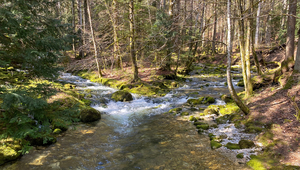
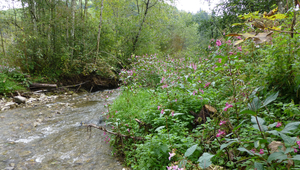
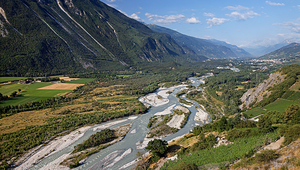
May 6, 2024A survey of 99 small Swiss streams reveals that the majority of the studied streams have significant deficits in their ecological condition and can only fulfil their function as a habitat for animals to a limited extent. Insect larvae and other small animals that react sensitively to pesticides are missing in over 70% of the streams examined. Statistical analyses indicate that these aquatic organisms are particularly impacted when the structure and morphology of the stream bed has been altered or if the proportion of agricultural land in the catchment area is high.
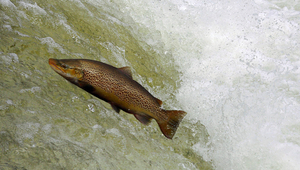
April 22, 2024Lake trout migrate between different habitats many times over their lives. This helps them grow larger and have more offspring than sedentary trout. However, it also exposes them to dangers – both natural risks and from human intervention in their habitats. To be able to protect them better, researchers from Eawag are investigating the variety and ecological differences of lake trout as part of a nationwide research project in Switzerland.
April 4, 2024Invasive species influence biodiversity across larger spatial extents than previously thought. In a recently published study, researchers from Eawag and the University of Zurich show that the impacts of invasive species extend far beyond the ecosystems they invade and that three mechanisms are primarily responsible for this. These findings are of great importance for the management of ecosystems.
April 3, 2024Eawag and the Ecotox Centre welcome a total revision of the Plant Protection Products Ordinance (PPPO). However, the two institutes are calling for improvements on important points, such as the adoption of EU authorisations or the precautionary principle. The ordinance must ensure that other regulations such as the Water Protection or the Environmental Protection Act are not undermined.
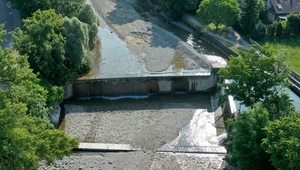
March 7, 2024Which barriers need to be removed for the greatest benefit of migratory fish? Where do the measures make the most sense and how do the costs relate to the benefits?
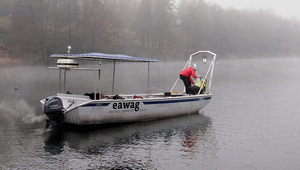
January 25, 2024At night or during cold winter days, lake water cools faster near the shore than in the middle of the lake. This creates a current that connects the shallow shore region with the deeper part of the lake. An international team led by Eawag researchers were able to show for the first time that this horizontal circulation transports gases such as oxygen and methane.
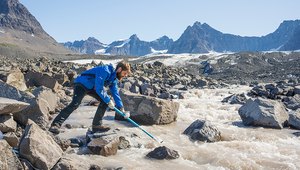
December 12, 2023Field studies by Eawag researcher David Janssen in southern Greenland show that the heavy metals in the rivers are largely of natural origin, and that the influence of mining and agriculture is negligible, at least during the period observed.