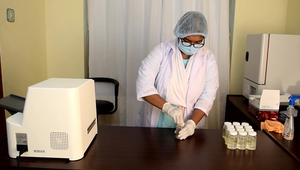
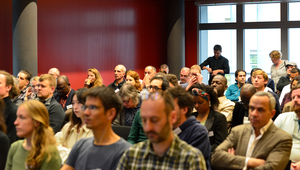
May 30, 2023Trainees from Eawag’s analytical and training laboratory assist in the analysis of a wide variety of water samples. A prominent example is the National River Monitoring and Survey Programme (NADUF). In a video, we take a look behind the scenes of the laboratory and show its role for the NADUF programme.
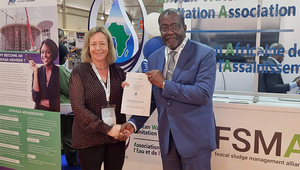
May 25, 2023At the recent joint 21st AfWASA International Congress and Exhibition and 7th Conference on Faecal Sludge Management (FSM7), Eawag signed a Memorandum of Understanding agreement with the African Water and Sanitation Association. The two conferences took place under one roof in Abidjan, Ivory Coast.
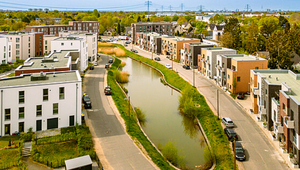
August 7, 2025A new dataset on the water quality in Swiss river catchments is now available. CAMELS-CH-Chem incorporates up to 40 water quality parameters for 115 Swiss catchments between 1981 and 2020.
July 11, 2025The ETH Board appointed Daniel McCurry as a joint professor at EPFL and Eawag. The environmental engineer, who is currently still teaching in the USA, is already on sabbatical at Eawag. From summer 2026, alongside his teaching and research activities at EPFL, he will set up a research group that will also be active at Eawag.
May 13, 2025The year 2024 was very warm and very wet, especially in early summer. This led to a welcome replenishment of groundwater reservoirs and record hydropower production, but also to severe flooding. In Bern, the focus was on the further expansion of hydropower and the pollution of water resources by pesticides and the "eternal chemicals" PFAS.
March 14, 2025Laboratories play an important role in effective water quality monitoring. The Eawag department of Sanitation, Water and Solid Waste for Development (Sandec) is collaborating on the REACHLabs project, which is analysing the effectiveness of fit-for-purpose (FFP) laboratories in rural areas of low- and middle-income countries. FFP labs are laboratories designed to meet specific local operational and management needs of rural water supplies.
October 22, 2024Forest or farmland: The impact on amphipods in the groundwater is detectable, even if the groundwater extraction site is up to one kilometre away.
October 11, 2024The Swiss fisheries advisory office (FIBER) promotes sustainable fisheries through advice and training. It now has a location in French-speaking Switzerland.
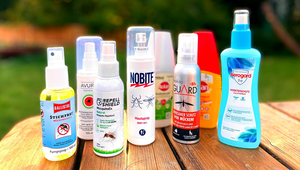
August 22, 2024Microorganisms in biofilms in rivers can break down harmful substances. Some are also able to degrade biocides, including the insect repellent diethyltoluamide (DEET) - or so it is thought. Researchers at the aquatic research institute Eawag have now discovered that DEET is degraded better when the proportion of treated wastewater in the water is high. They attribute this to specific enzymes that occur primarily where wastewater treatment plants return the water to the aquatic environment. However, the enzymes involved are not straightforward to predict.
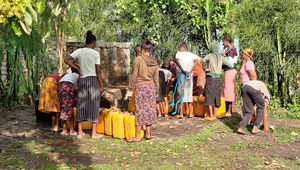
August 15, 2024More than half of the global population were estimated to lack safely managed drinking water services in a recent study lead by Eawag researchers. This is shown in a global map that researchers compiled using machine learning based on data from household surveys and data derived from Earth observations.