
News Detail
Urine treatment: from trial and error to exciting innovation
May 4, 2022 |
Worldwide, the demand for fertiliser for agriculture is increasing. This makes the recovery of nutrients from wastewater interesting. Switzerland, for example, is completely dependent on imports for phosphorus. Phosphorus reserves (which are also finite) are controlled by a few countries such as China and the USA. Large reserves claimed by Morocco are located in annexed territories of the Western Sahara.
Dead zones in the sea grow
Parallel to the large-scale trade in fertilisers, inadequate removal of nutrients from wastewater is leading to over-fertilised waters in many places around the world. "Dead zones" in the North Sea and in offshore stretches of sea are not primarily due to chemical residues, but to excessive inputs of nitrogen and phosphorus. In 2021, the UN's second "World Ocean Assessment" report noted that the number of these areas where life is barely possible is rising sharply. "Pressures are destroying important habitats and hampering the ability of the oceans to cope with the impacts of climate change," said UN Secretary-General António Guterres.
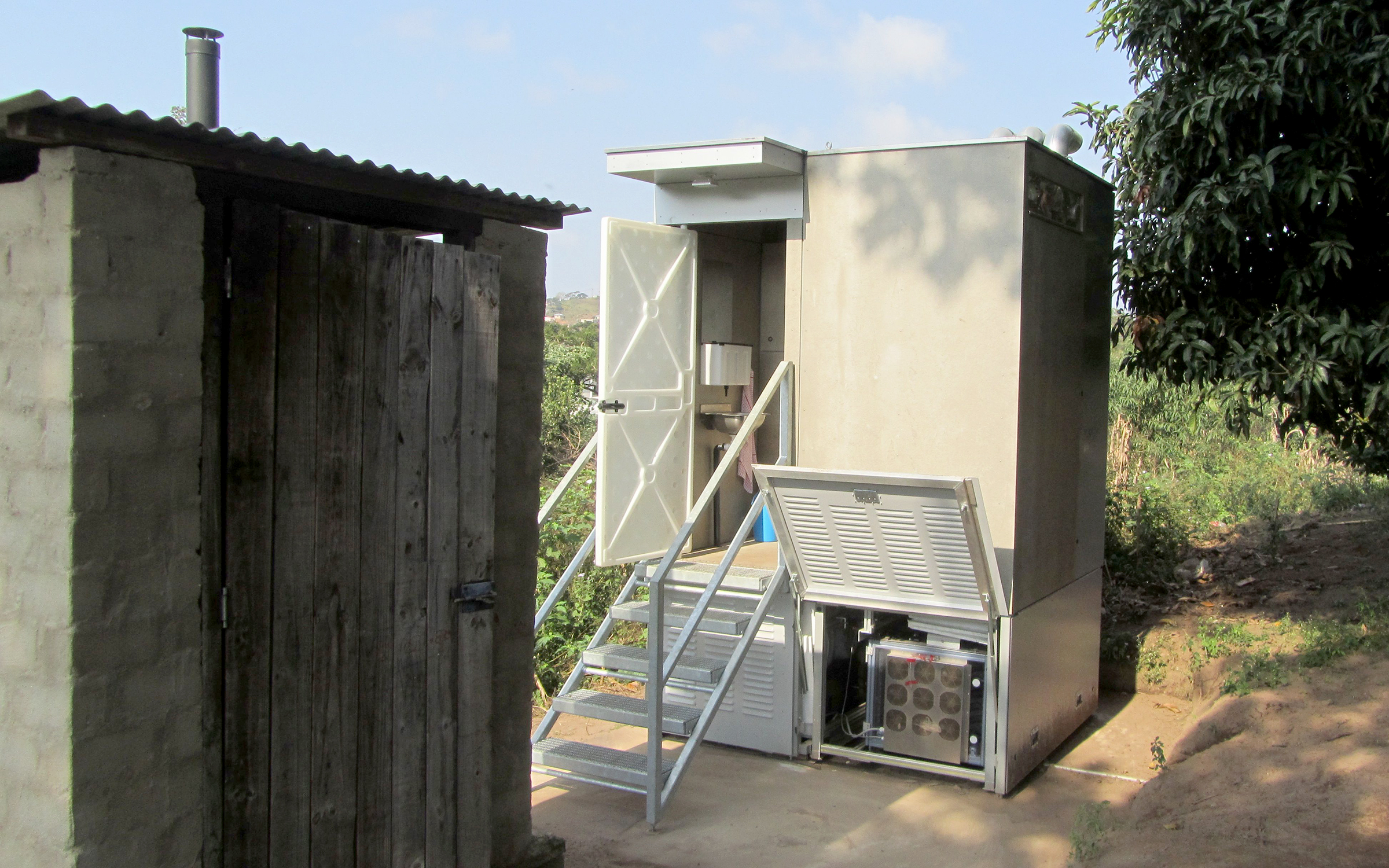
The Blue Diversion Autarky toilet in test on the outskirts of Durban, South Africa. The evaporation module is visible in the front right.
(Michel Riechmann, Eawag)
Early separation instead of "end of pipe
Nutrients can be removed from wastewater in conventional wastewater treatment plants, processed and returned to regional material cycles. But end-of-pipe processes require space, technical effort, energy and chemicals. It is not the case that all this is omitted with decentralised or semi-centralised treatment of wastewater. But an early separation of the different material flows enables more flexible solutions, especially in terms of process technology. One example of this is the Blue Diversion Autarky Toilet developed at Eawag. It relies on on-site measures and technology that turns wastewater into useful products. At the same time, with Autarky, Eawag staff are researching and developing a platform that will gradually bring modern on-site technology to bathroom scale: What was still the vision of a few pioneers 20 years ago is now an interesting innovation in which more and more process engineers and companies are collaborating.
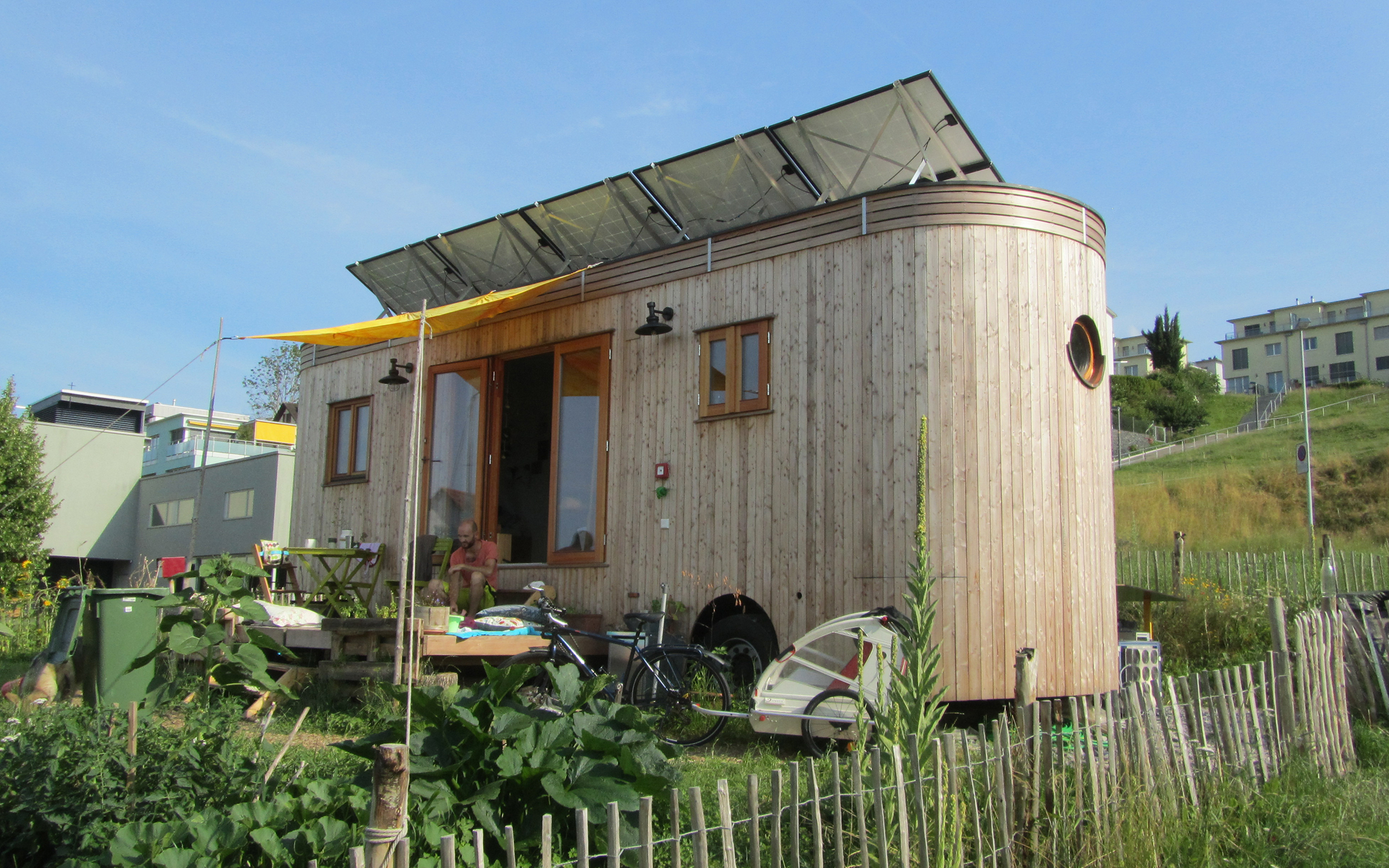
Autonomous urine treatment with nutrient recovery is also being tested in the innovative Tinyhome "Tilla". The evaporation module can be seen small on the back right.
(Michel Riechmann, Eawag)
The six-step plan with urine
Recently, Eawag researchers published an overview in the journal Water Research of the processes and process steps being worked on for the treatment of urine. The focus is on urine because, although it accounts for less than 1% of the volume of wastewater, it contains 80 to 90% of the nutrients. The review covers all six areas currently covered in urine treatment - not all of them need to be implemented in one system at the same time.
- Stabilisation: If fresh urine is not stabilised, a lot of nitrogen is lost as ammonia (NH3). In addition, unstabilised urine stinks and precipitates (urine scale) can clog pipes. The researchers have identified biological processes as being well suited for urine stabilisation, because they require little energy and hardly any chemicals. Biological stabilisation is used by Vuna, among others, to produce the fertiliser product Aurin.
- Volume reduction: Volume reduction is often accompanied by the recovery of nutrients. The focus is on evaporation and membrane filtration, the latter also combined with electrochemical processes. But research is also being conducted on the uptake of nutrients via algae. Pathogens are often removed or inactivated in this step at the same time.
- Recovery of individual nutrients: The targeted recovery of certain nutrients (essentially nitrogen and/or phosphorus) can be interesting because a fertiliser product can then be produced with a nutrient mix that is precisely tailored to the needs of individual crops. For nitrogen, stripping, adsorption and electrochemical processes can be used; for phosphorus, precipitation and adsorption.
- Disinfection: Although urine is normally free of pathogens, it may have been contaminated with faecal germs, e.g. salmonella or enterococci, before separate collection. Therefore, treatment, for example brief heating above 55 °C, is useful in order to be able to use a fertiliser end product safely.
- Removal of micropollutants: Particularly traces of pharmaceuticals in urine can make its use as a fertiliser tricky. Eawag researchers have therefore also been looking for methods to remove organic micropollutants from urine. Some, such as ozonation, are effective but require a lot of energy. Currently, adsorption with activated carbon is the main method used, for example for the urine fertiliser "Aurin", which is already commercially available.
- Energy generation: Electricity can be produced from urine using microbiological fuel cells. However, the yield (less than 1 W per person) is modest compared to the electricity demand (CH: 760 W per person). In addition, costly anodes are needed, which are platinum-coated, for example, to achieve the highest possible yields. However, urine-powered fuel cells could become interesting for special applications such as operating pacemakers, charging mobile phones or transmitting data from sensors.
Bathroom scale remains high hurdle
The Eawag researchers involved in the review conclude that the potential for nutrient recovery from urine is great. This is especially true if the treatment is carried out close to the "source", because transport costs are then eliminated. However, urine treatment in the bathroom remains a major challenge. This is because those processes that are suitable for this scale require the addition of chemicals and considerable maintenance (for cleaning membranes, for example). Simpler, biological processes have so far only been robust in larger facilities.
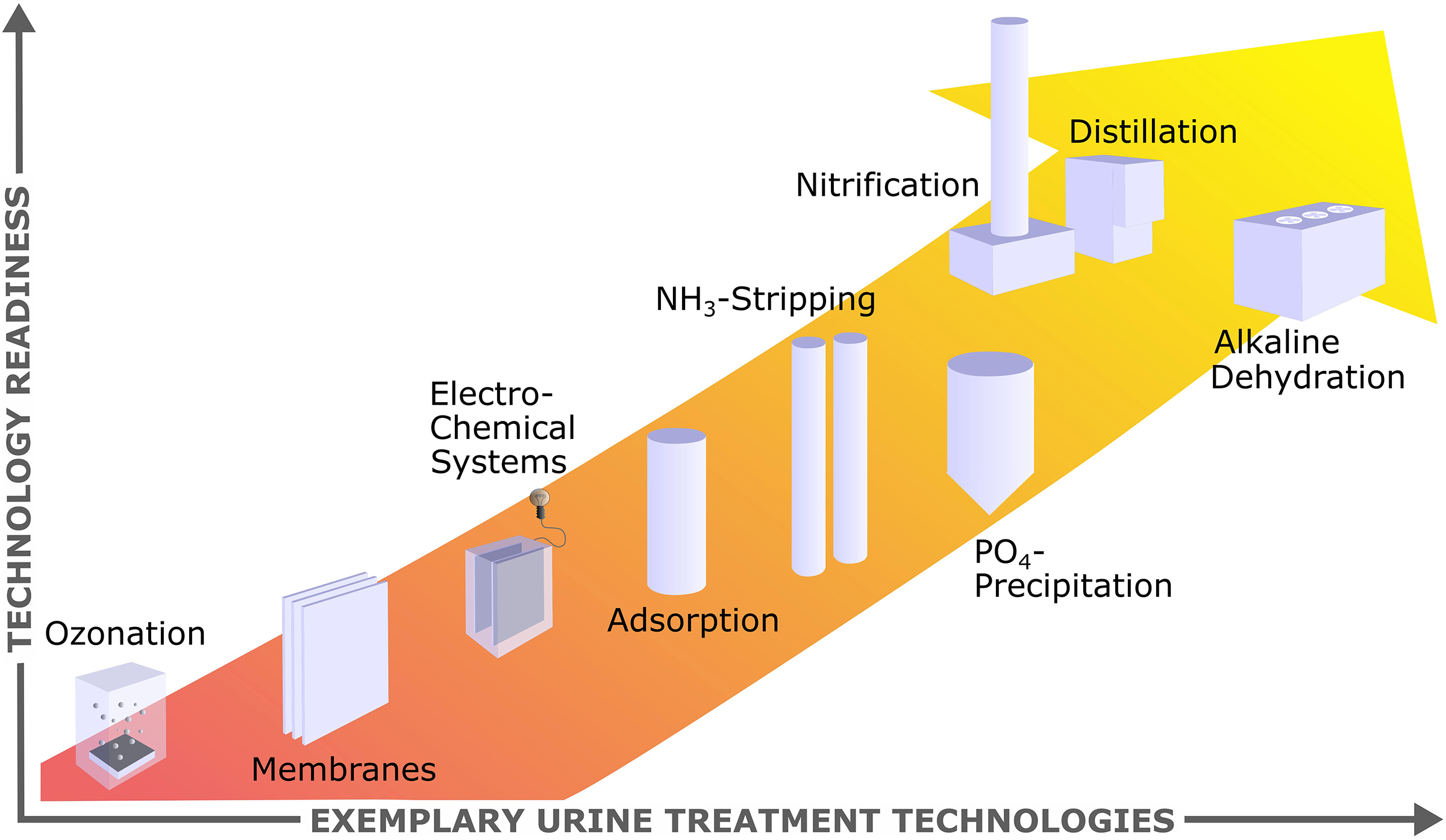
Different technologies of urine treatment and their current practical readiness.
(Graphic: Eawag)
In the compact "all-in-one" Blue Diversion Autarky (BDA) toilet, the researchers rely on two treatment steps for urine: Stabilisation with calcium hydroxide is followed by energy-efficient evaporation of the excess water, powered by ambient air. The hurdle to the small, technically not too complex and at the same time as robust as possible bathroom scale has thus at least been overcome for the volume reduction step. And because the first step greatly increases the pH value in the urine, germs are also killed. At the same time, handwashing and rinsing water is treated in the BDA module to such an extent that it can be reused for these purposes.
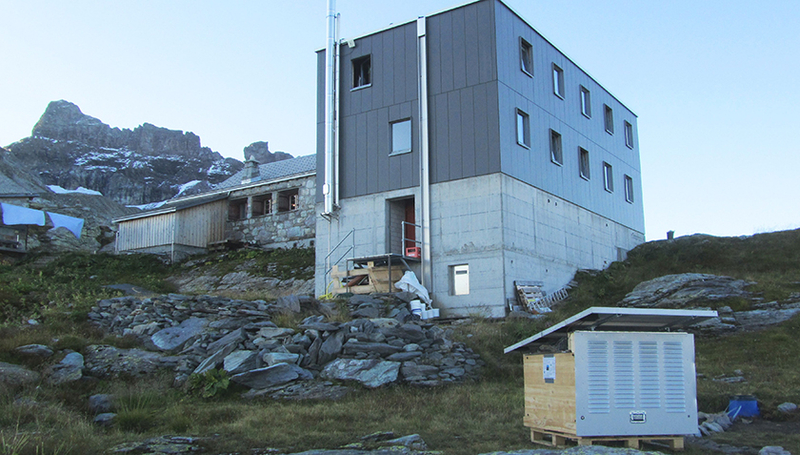
Prototypes of BDA urine treatment have already undergone intensive testing, from the Eawag campus in Dübendorf, to a Tiny Home and an SAC hut, to a site in Durban, South Africa . In collaboration with the University of Applied Sciences Northwestern Switzerland FNHW and the PSI, research has also been carried out on an extension to include a module with hydrothermal oxidation. This would also allow the faeces to be treated on site - leaving only water, carbon dioxide and a minimal amount of ash from inorganic substances.
NoMix on the farm is coming
The nitrogen surpluses in agriculture are still enormous, ammonia evaporates into the air, nitrate enters the groundwater. The cause: too much manure, unstabilised and occasionally applied at the wrong time. What could be more obvious than to separate the solid and the liquid in the stable at an early stage? Researchers at Eawag and the spin-off Vuna are therefore testing how urine treatment processes also work for liquid manure. The tests were successful: fresh cattle urine can be stabilised with nitrification - as has been used in wastewater treatment for decades. Together with the Strickhof Centre of Competence, an agricultural technology company and supported by the Federal Office for Agriculture, initial projects have already been extended from laboratory scale to "real" farms. The goal here is not only the controlled recovery of nutrients, but above all a reduction in nitrogen losses via ammonia and nitrous oxide. Stabilised slurry or even specifically compounded fertilisers from liquid manure have further advantages: they do not stink and can be stored. This is interesting, as the prices for imported fertilisers are currently rising sharply. And one more thing: if slurry and dung are separated at an early stage, i.e. already in the barn, this is also good for animal welfare, because the cows are less exposed to the ammonia-laden air.
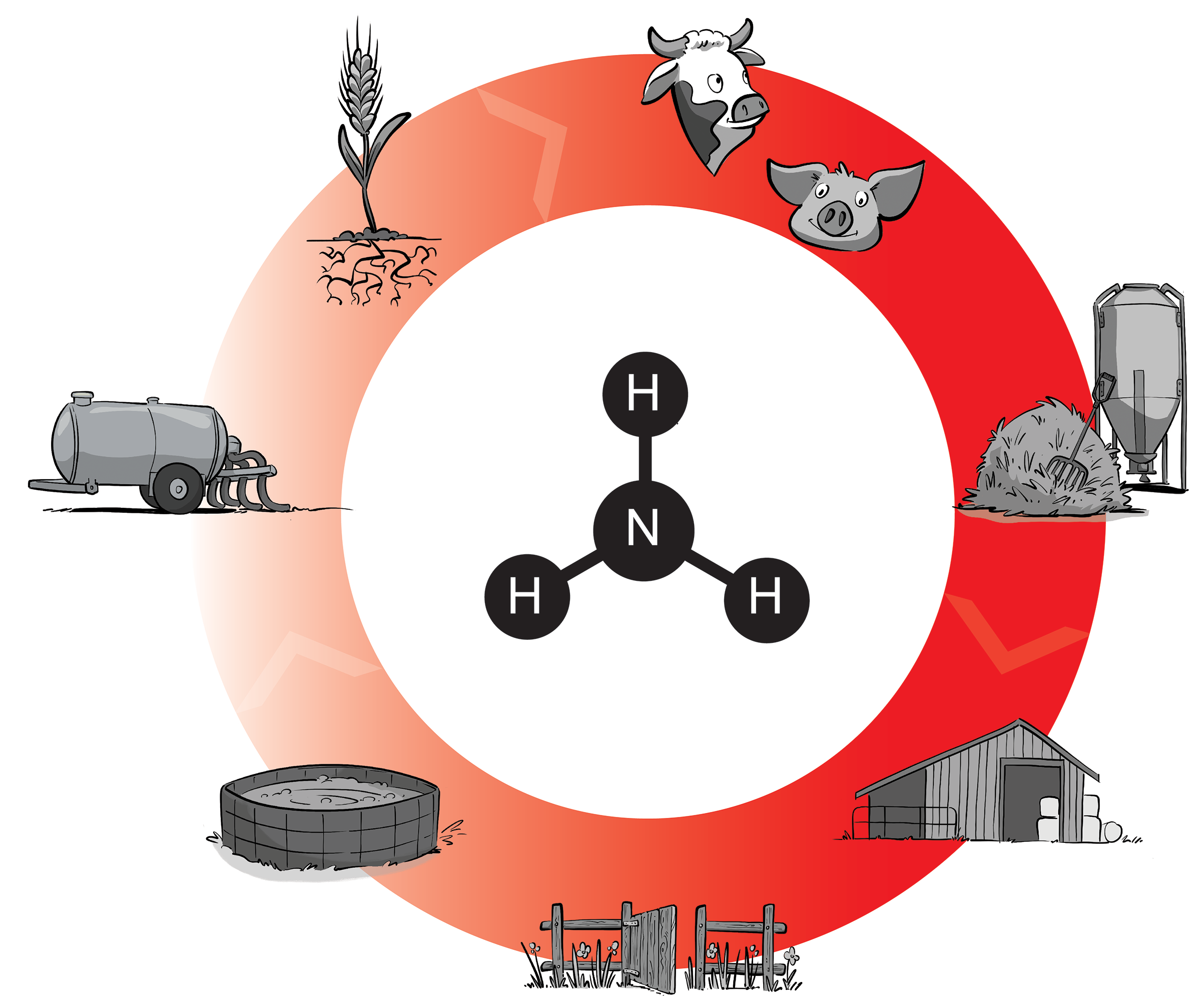
NoMix on the farm could avoid losses and climate-damaging emissions at many points in the nitrogen cycle.
(Graphic: Schauer Agrotronic)
Cover picture: Energy-efficient evaporation of excess water in a test at the SAC's Legler Hut at 2280 m a.s.l. (Michel Riechmann, Eawag)