The latest news from Eawag

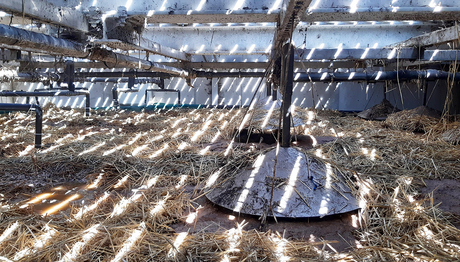
Vermifilter in Geneva, Switzerland (Photo: Kayla Coppens, Eawag)
News
How local materials and climate shape optimal ...
March 30, 2026
The sanitation objective of Sustainable Development Goal 6, sanitation for all, is off-track and far from being completed by 2030. Vermifiltration could help address this gap: The nature-based sanitation management system shows increasing promise globally because of its low cost. Researchers at Eawag’s Sandec department visited vermifilter installations in India and Switzerland to examine how local differences influence their optimal design.

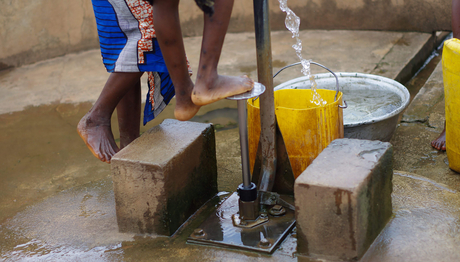
Children fetching water at foot pump in rural Togo (Photo: Jess MacArthur, 2013)
Interview
World Water Day: "Where water flows, equality grows"
March 19, 2026
Since 1992, the United Nations has designated 22 March as World Water Day. In 2026, the theme will be "Water and Gender". What does water have to do with gender equality? And why does access to water determine education, dignity and power? We discuss this with Jessica MacArthur, knowledge broker in Eawag's Research Department for Sanitation and Water for Development (Sandec).

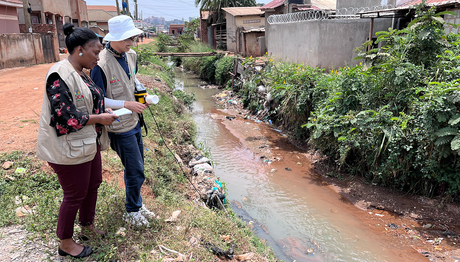
Photo: Linda Strande, Eawag
News
Monitoring Community Health Through Drainage in Kampala
March 12, 2026
Can urban drainage system serve as a proxy for disease surveillance? Eawag and partners in Uganda explore a new approach to public health surveillance.

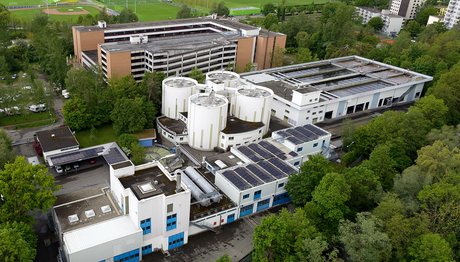
Thanks to sludge thickening, the Neugut WWTP no longer requires the addition of flocculants, which were previously used to increase sludge sedimentation. (Photo: Neugut WWTP)
News
Equipping wastewater treatment plants for the future ...
March 3, 2026
An Eawag study at 10 WWTPs that use sludge densification shows that the process could improve capacity as well as nitrogen removal. 

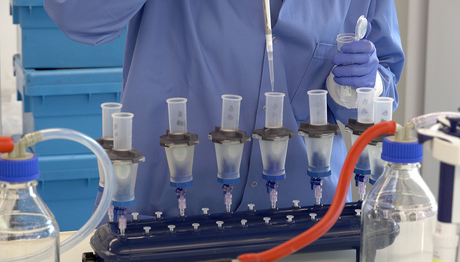
Preparation of wastewater samples for virus monitoring at Eawag (Eawag, Andri Bryner)
News
Continuation of wastewater monitoring secured
February 19, 2026

The Swiss Federal Institute of Aquatic Science and Technology (Eawag) has been newly commissioned by the Federal Office of Public Health as the National Reference Centre for Wastewater Monitoring. This work centres around the collection of health data from municipal wastewater, and particularly that of viruses that are known to be pathogenic. A new national mandate has also been introduced for the analysis of substances related to pharmaceutical and illicit drug use.

Rare earths are indispensable for many technical applications, but they also find their way into bodies of water and can have a negative impact on the organisms living there. (Photo: Adobe Stock)
News
Rare earths pollute Zurich's waters
February 10, 2026
An investigation in the canton of Zurich has shown that certain rare earth elements can enter bodies of water via wastewater treatment plants in concentrations that pose a risk to aquatic organisms. These elements are gadolinium, which comes from contrast agents used in healthcare facilities, as well as lanthanum and cerium, which are used in a number of wastewater treatment plants to remove phosphorus.

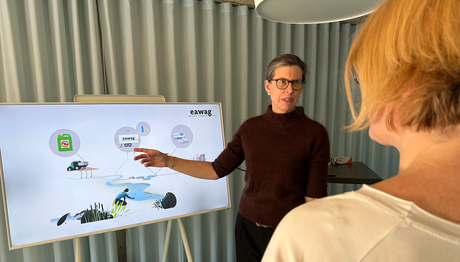
Eawag environmental chemist Kathrin Fenner explained how AI-based models can be developed and used to predict how chemicals behave. (Photo: Luzia Schär)
News
Research meets the future: AI for sustainability
January 23, 2026
To mark the 2026 World Economic Forum (WEF), the ETH Domain presented highlights from its research, demonstrating how artificial intelligence is paving the way for greater sustainability. Policymakers and business leaders learned about practical AI applications for the environment and society.

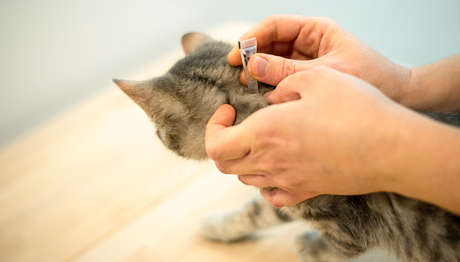
Flea and tick repellents for pets are the most likely sources of fipronil in Swiss waterways. (Image: Canva / Csaba Deli)
News
From flea repellent to waterways
January 15, 2026

The insecticide fipronil has been detected in Swiss waterways in concentrations that are critical for aquatic life. It has not been permitted for use as a plant protection product for many years. A study involving Eawag now shows that the most likely source of contamination is flea and tick repellents for pets.