Abteilung Umweltsozialwissenschaften

Environmental Decision Analysis with Games - Edanaga
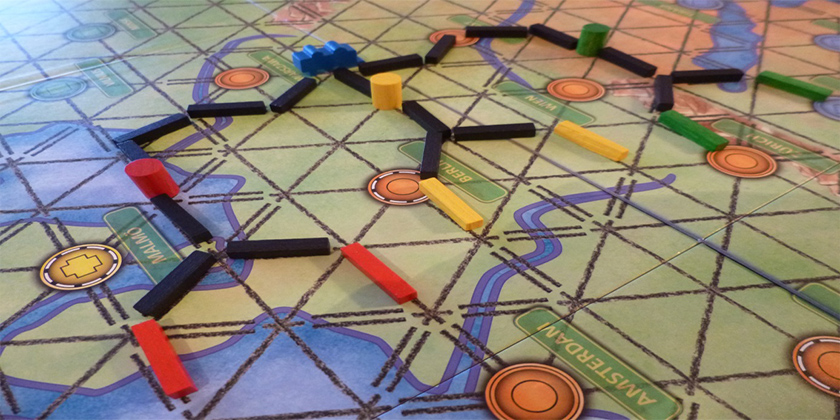
Die Umwelt ist ein gemeinsames Gut. Das Umweltmanagement betrifft somit alle Bürgerinnen und Bürger: Massnahmen werden häufig mit öffentlichen Mitteln durchgeführt und können das tägliche Leben der Bürgerinnen und Bürger beeinflussen. Das trifft auch auf das städtische Wassermanagement zu. Es existieren unterschiedliche Optionen für die städtische Wasser- und Abwasserbewirtschaftung. Diese alternativen Optionen können beispielsweise die Installation neuartiger Toiletten (z. B. mit Abtrennung des Urins) oder vermehrte Behandlung vor Ort (z. B. im Gebäude selbst) beinhalten. Aus diesen Gründen sollten Entscheidungen über das städtische Wassermanagement transparent und partizipativ sein.

Die multikriterielle Entscheidungsanalyse (MCDA, von englisch „Multi-Criteria Decision Analysis“) ist eine Methode, die es ermöglicht, komplexe Entscheidungen zu treffen, die sich durch Zielkonflikte und schwierige Abwägungen auszeichnen. Meistens können jedoch nur wenige Interessengruppen, in der Regel Experten, an einem solchen Entscheidungsprozess teilnehmen.

Das Hauptziel des Edanaga-Projekts ist es, Laien und / oder Bürgerinnen und Bürgern die Teilnahme am MCDA-Prozess zu ermöglichen. Serious Games und Gamification sind vielversprechend: Diese Medien können das Interesse für a priori unattraktive Themen wecken, die Aufmerksamkeit auch bei wenig spannenden Aufgaben verbessern und das Lernen erleichtern.

Bis heute haben nur wenige Studien diese Hypothesen gründlich getestet. Während des Edanaga-Projekts möchten wir zuerst eine Prototyp für eine neuartige Online-Umfrage testen und verbessern, der es den Bürgerinnen und Bürgern ermöglicht, ihre Präferenzen zu den schwierigen Abwägungen auszudrücken. Zweitens wollen wir diesen Prototyp nutzen, um zu erfahren, was die Schweizer Bevölkerung in Bezug auf das städtische Wassermanagement für wichtig hält und welche Optionen sie daher bevorzugen würde. Darüber hinaus werden wir bestehende Serious Games evaluieren, die für die Strukturierung von Entscheidungsproblemen und die Erkundung der Bandbreite möglicher Optionen nützlich sein könnten.

https://data.snf.ch/grants/grant/173973

Team

Dr. Alice Aubert

ZHAW Life Sciences und Facility Management
Institut für Umwelt und Natürliche Ressourcen
 

Publikationen

Extbase Variable Dump
array(2 items)
   publications => '32194,32147,32042,25777,25775,25009,24490,22015,21706,18641' (59 chars)
   libraryUrl => '' (0 chars)
Extbase Variable Dump
array(10 items)
   0 => Snowflake\Publications\Domain\Model\Publicationprototypepersistent entity (uid=32194, pid=124)
      originalId => protected32194 (integer)
      authors => protected'Aubert, A. H.; Lienert, J.' (41 chars)
      title => protected'Operational research for, with, and by citizens: an overview' (60 chars)
      journal => protected'European Journal of Operational Research' (40 chars)
      year => protected2024 (integer)
      volume => protected316 (integer)
      issue => protected'3' (1 chars)
      startpage => protected'800' (3 chars)
      otherpage => protected'814' (3 chars)
      categories => protected'decision support systems; OR in government; stakeholder participation; e-dem
         ocracy; community operational research
' (114 chars) description => protected'Interest in citizen participation is increasing generally. Almost all operat
         ional research (OR) is engaged with clients, but it is mainly in the areas o
         f Soft and Community OR that wider stakeholder and citizen participation has
          been a significant focus. It is the involvement of citizens that is the sub
         ject of this paper. We surveyed OR literature and compiled a corpus of 62 st
         udies, the earliest from 1970, to systematically characterize the involvemen
         t of citizens in OR processes. Our review produced three findings: First, so
         me fields of OR have embraced citizen participation, but this is not yet a m
         ajor concern outside the field of Community OR. Second, citizen participatio
         n in OR processes is often driven by a moral rationale. Third, progress in i
         nformation and communication technology (ICT) enables broad participation, b
         ut traditional processes requiring physical presence can also be participato
         ry. From these insights, we formulate research opportunities for OR. (1) OR
         may join Community OR's endeavor to engage with and empower citizens who hav
         e so far rarely been involved in OR processes. (2) OR may identify benefits
         and drawbacks of digital OR processes in empirical studies. (3) OR may deter
         mine whether involving large numbers of citizens is suitable for the societa
         l scale. (4) OR may research building and maintaining trust. (5) OR may join
          efforts for data protection of participants. (6) OR may systematically repo
         rt and reflect on participatory OR processes. (7) OR should continue researc
         hing the fair aggregation of individual inputs. Citizen participation in OR
         is topical and challenging. Pursuing these research opportunities will contr
         ibute to OR fulfilling its mandate of better decision-making in close cooper
         ation with all affected stakeholders.
' (1785 chars) serialnumber => protected'0377-2217' (9 chars) doi => protected'10.1016/j.ejor.2023.10.037' (26 chars) uid => protected32194 (integer) _localizedUid => protected32194 (integer)modified _languageUid => protectedNULL _versionedUid => protected32194 (integer)modified pid => protected124 (integer)
1 => Snowflake\Publications\Domain\Model\Publicationprototypepersistent entity (uid=32147, pid=124) originalId => protected32147 (integer) authors => protected'Aubert, A. H.; Schmid, S.; Lienert, J.' (58 chars) title => protected'Can online interfaces enhance learning for public decision-making? Eliciting
          citizens' preferences for multicriteria decision analysis
' (134 chars) journal => protected'European Journal of Operational Research' (40 chars) year => protected2024 (integer) volume => protected314 (integer) issue => protected'2' (1 chars) startpage => protected'760' (3 chars) otherpage => protected'775' (3 chars) categories => protected'behavioral OR; learning; preference elicitation; online survey; gamification' (76 chars) description => protected'Innovative online interfaces informing and consulting citizens about their p
         references for multicriteria decision analysis (MCDA) could make public deci
         sion-making more participatory. We propose a three-faceted learning for deci
         sion-making framework and used it to test newly-designed online weight elici
         tation interfaces. We investigated two features meant to enhance learning: f
         ully-fledged gamification with a narrative, interaction with nonplayer chara
         cters, and ambient music, and learning loops (LL) using consistency checks o
         f elicited weights and the challenge to resolve inconsistencies. We operatio
         nalized our framework with a novel systematic set of measure instruments pro
         viding complementary data types. We designed a 2 × 2 between-subject expe
         riment with pre- and postquestionnaires. Answers from 769 respondents, repre
         sentative of the Swiss population in age and gender, indicated that the inte
         rfaces successfully raised awareness about wastewater management. Gamificati
         on was helpful: respondents performed better in the factual learning test, a
         nd unexpected social learning occurred. However, gamification lowered the pe
         rception of process understanding. The LL were beneficial: objectively, resp
         ondents performed better in the factual learning test. However, respondents
         perceived the LL as cognitively demanding and their factual learning as lowe
         r. Our structured assessment highlighted the need for further research to in
         vestigate, for instance, high interpersonal variability and the disparities
         between tested and perceived learning. Measuring preference construction rem
         ains challenging; and social learning should be added to the assessment fram
         ework. Applying such structured assessment of learning outcomes to more trad
         itional operational research interventions would provide a baseline for futu
         re comparison.
' (1838 chars) serialnumber => protected'0377-2217' (9 chars) doi => protected'10.1016/j.ejor.2023.10.031' (26 chars) uid => protected32147 (integer) _localizedUid => protected32147 (integer)modified _languageUid => protectedNULL _versionedUid => protected32147 (integer)modified pid => protected124 (integer)
2 => Snowflake\Publications\Domain\Model\Publicationprototypepersistent entity (uid=32042, pid=124) originalId => protected32042 (integer) authors => protected'Aubert, A. H.; Scheidegger, A.; Schmid, S.' (62 chars) title => protected'Gamified online surveys: Assessing experience with self-determination theory' (76 chars) journal => protected'PLoS One' (8 chars) year => protected2023 (integer) volume => protected18 (integer) issue => protected'10' (2 chars) startpage => protected'e0292096 (20 pp.)' (17 chars) otherpage => protected'' (0 chars) categories => protected'' (0 chars) description => protected'We developed four online interfaces supporting citizen participation in deci
         sion-making. We included (1) learning loops (LLs), good practice in decision
          analysis, and (2) gamification, to enliven an otherwise long and tedious su
         rvey. We investigated the effects of these features on drop-out rate, percei
         ved experience, and basic psychological needs (BPNs): autonomy, competence,
         and relatedness, all from self-determination theory. We also investigated ho
         w BPNs and individual causality orientation influence experience of the four
          interfaces. Answers from 785 respondents, representative of the Swiss Germa
         n-speaking population in age and gender, provided insightful results. LLs an
         d gamification increased drop-out rate. Experience was better explained by t
         he BPN satisfaction than by the interface, and this was moderated by respond
         ents’ causality orientations. LLs increased the challenge, and gamificatio
         n enhanced the social experience and playfulness. LLs frustrated all three n
         eeds, and gamification satisfied relatedness. Autonomy and relatedness both
         positively influenced the social experience, but competence was negatively c
         orrelated with challenge. All observed effects were small. Hence, using gami
         fication for decision-making is questionable, and understanding individual v
         ariability is a prerequisite; this study has helped disentangle the diversit
         y of responses to survey design options.
' (1408 chars) serialnumber => protected'' (0 chars) doi => protected'10.1371/journal.pone.0292096' (28 chars) uid => protected32042 (integer) _localizedUid => protected32042 (integer)modified _languageUid => protectedNULL _versionedUid => protected32042 (integer)modified pid => protected124 (integer)
3 => Snowflake\Publications\Domain\Model\Publicationprototypepersistent entity (uid=25777, pid=124) originalId => protected25777 (integer) authors => protected'Aubert, A. H.; Lienert, J.; von Helversen, B.' (65 chars) title => protected'Gamified environmental multi‐criteria decision analysis: information on ob
         jectives and range insensitivity bias
' (113 chars) journal => protected'International Transactions in Operational Research' (50 chars) year => protected2023 (integer) volume => protected30 (integer) issue => protected'6' (1 chars) startpage => protected'3738' (4 chars) otherpage => protected'3770' (4 chars) categories => protected'behavioral OR; wastewater; preference elicitation; learning; Decision Suppor
         t System; citizen participation; evaluation process; self-determination theo
         ry; gamification
' (168 chars) description => protected'Multi-criteria decision analysis (MCDA) is well suited to address complex pu
         blic policy problems but could benefit from new tools to involve many laypeo
         ple. Online information on specialized topics could be more engaging by incl
         uding game elements. This paper reports an experiment that assessed a gamifi
         ed interface to (1) inform laypeople about the objectives to consider in was
         tewater management decisions, (2) assist them in constructing range-based pr
         eferences, and (3) provide a positive experience. We measured the effects wi
         th (1) a knowledge pre- and posttest, (2) the elicited weights and a range s
         ensitivity index, and (3) an experience questionnaire based on self-determin
         ation theory. Answers from 174 participants indicated that participants lear
         nt about the objectives and constructed preferences in both the gamified and
          control treatments. However, in neither were weights sufficiently adjusted.
          Our gamification making the ranges salient did not help overcome this bias.
          Both treatments were experienced as neutral to positive, the gamified being
          more entertaining. We discuss implications: if gamification of tools for pa
         rticipatory decision-making is to be promoted, it requires further research.
          Range insensitivity remains an unresolved bias in MCDA.
' (1272 chars) serialnumber => protected'' (0 chars) doi => protected'10.1111/itor.13206' (18 chars) uid => protected25777 (integer) _localizedUid => protected25777 (integer)modified _languageUid => protectedNULL _versionedUid => protected25777 (integer)modified pid => protected124 (integer)
4 => Snowflake\Publications\Domain\Model\Publicationprototypepersistent entity (uid=25775, pid=124) originalId => protected25775 (integer) authors => protected'Aubert, A. H.; Schmid, S.; Beutler, P.; Lienert, J.' (76 chars) title => protected'Innovative online survey about sustainable wastewater management: what young
          Swiss citizens know and value
' (106 chars) journal => protected'Environmental Science and Policy' (32 chars) year => protected2022 (integer) volume => protected137 (integer) issue => protected'' (0 chars) startpage => protected'323' (3 chars) otherpage => protected'335' (3 chars) categories => protected'environmental decision; citizen participation; Multi-Criteria Decision Analy
         sis (MCDA); policy analytics; learning; preference construction
' (139 chars) description => protected'Investigating wastewater management matters: in many OECD countries, the con
         ventional centralized system is reaching its limits. Alternative decentraliz
         ed options exist. Some directly affect citizens with in-house wastewater tre
         atment. Involving citizens in decision processes would legitimate the outcom
         e and facilitate implementation. However, citizen participation is challengi
         ng because they are numerous, and need to learn about the topic and construc
         t their opinion. To include citizens, we propose an innovative online survey
          based on Multi-Attribute Value Theory (MAVT). Citizens receive value-focuse
         d information, and can communicate their preferences, captured as weights as
         signed to objectives. We collected quantitative and qualitative data, and el
         icited preferences from 184 young Swiss citizens, who will have to live with
          the decision outcome. In addition to reporting on insights for wastewater m
         anagement, we assessed our survey, i.e. whether respondents learnt about the
          topic, constructed preferences, and understood the requirement to think in
         terms of objectives. Water quality and health protection mattered the most.
         The objectives directly concerning the respondents (time demand, attractiven
         ess) were the least important. The best-ranked option in the subsequent Mult
         i-Criteria Decision Analysis was a decentralized source separating system wi
         th dry toilets. Respondents were unaware that such decentralized options exi
         st, indicating that learning about the topic occurred. Preferences were most
         ly newly constructed from no opinion, or pre-existing ones were reinforced.
         Our value-focused online survey helped citizens to understand the complex de
         cision and construct their preferences. Swiss decision-makers, and beyond, s
         hould not be scared of a paradigm shift in wastewater management: the young
         generation seems ready to decentralize.
' (1863 chars) serialnumber => protected'1462-9011' (9 chars) doi => protected'10.1016/j.envsci.2022.08.018' (28 chars) uid => protected25775 (integer) _localizedUid => protected25775 (integer)modified _languageUid => protectedNULL _versionedUid => protected25775 (integer)modified pid => protected124 (integer)
5 => Snowflake\Publications\Domain\Model\Publicationprototypepersistent entity (uid=25009, pid=124) originalId => protected25009 (integer) authors => protected'Aubert, A. H.; McConville, J.; Schmid, S.; Lienert,&nbsp
         ;J.
' (79 chars) title => protected'Gamifying and evaluating problem structuring: a card game workshop for gener
         ating decision objectives
' (101 chars) journal => protected'EURO Journal on Decision Processes' (34 chars) year => protected2022 (integer) volume => protected10 (integer) issue => protected'' (0 chars) startpage => protected'100021 (13 pp.)' (15 chars) otherpage => protected'' (0 chars) categories => protected'gamification; value-focused thinking; wastewater management; behavioural ope
         rational research; multi-criteria decision analysis (MCDA)
' (134 chars) description => protected'Serious games, gamification, or game-based interventions are increasingly us
         ed as tools to aid participatory decision-making processes, but their evalua
         tion is often not very rigorous. Therefore, it is still unclear whether game
         -based interventions are really beneficial. We focused on the following over
         arching question: how effective are game-based interventions specifically de
         signed to support decision-making processes. We used an illustrative case to
          reflect on this question. Using a published framework proposing that design
          processes of game-based interventions and their evaluation are intertwined,
          we designed simultaneously (1) a game-based intervention, specifically a ca
         rd game and a workshop structure in which this card game is to be used, and
         (2) its evaluation procedure, formulating evaluation questions and proposing
          measure instruments based on the literature. We pre-tested the evaluation p
         rocedure in a small pilot study with 10 students. We illustrate the use of t
         he design framework for an intervention to generate objectives in a decision
         -making process about sustainable wastewater management. Through our illustr
         ative case, we identify future research opportunities about designing game-b
         ased interventions and evaluating their effectiveness. We found that it is p
         ossible to address the dual challenge of game-based interventions for partic
         ipatory decision-making processes: (1) designing an informative and engagin
         g game-based intervention without telling participants what to think and (2)
          designing a tailored evaluation procedure. Designing the game-based interv
         ention and its evaluation simultaneously is valuable, because both are stron
         gly intertwined. However, conducting the evaluation is demanding and require
         s the collaborative efforts of scientists, including across disciplinary bou
         ndaries. For instance, the data collection effort could be distributed among
          different research groups to increase sample size. This would allow includi
         ng control treatment(s) ...
' (2151 chars) serialnumber => protected'2193-9438' (9 chars) doi => protected'10.1016/j.ejdp.2022.100021' (26 chars) uid => protected25009 (integer) _localizedUid => protected25009 (integer)modified _languageUid => protectedNULL _versionedUid => protected25009 (integer)modified pid => protected124 (integer)
6 => Snowflake\Publications\Domain\Model\Publicationprototypepersistent entity (uid=24490, pid=124) originalId => protected24490 (integer) authors => protected'Haag, F.; Aubert, A. H.; Lienert, J.' (56 chars) title => protected'ValueDecisions, a web app to support decisions with conflicting objectives,
         multiple stakeholders, and uncertainty
' (114 chars) journal => protected'Environmental Modelling and Software' (36 chars) year => protected2022 (integer) volume => protected150 (integer) issue => protected'' (0 chars) startpage => protected'105361 (19 pp.)' (15 chars) otherpage => protected'' (0 chars) categories => protected'multi criteria decision analysis; MCDA software; multi-attribute value theor
         y; environmental decision analysis; open source; population survey
' (142 chars) description => protected'Complex environmental and public policy decisions profit from structured pro
         cedures such as multi-criteria decision analysis (MCDA). To support such dec
         isions, the new open source application ValueDecisions provides advanced ana
         lysis and visualization with no programming expected from users. Based on mu
         lti-attribute value theory (MAVT), it offers analysis for decisions with con
         flicting and interacting objectives, multiple stakeholders, and uncertain co
         nsequences of options. Programmed in R, the shiny web framework makes it acc
         essible via a graphical user interface in the browser. We exemplify using Va
         lueDecisions for a wastewater infrastructure planning case in the Paris regi
         on. We surveyed preferences of 655 citizens and conducted sensitivity analys
         is of preference parameters. The best management options were robust across
         a range of preference profiles and assumptions. To evaluate the app, we deve
         loped a novel usability test based on the ISO standard for software quality
         and surveyed students using ValueDecisions for case studies.
' (1048 chars) serialnumber => protected'1364-8152' (9 chars) doi => protected'10.1016/j.envsoft.2022.105361' (29 chars) uid => protected24490 (integer) _localizedUid => protected24490 (integer)modified _languageUid => protectedNULL _versionedUid => protected24490 (integer)modified pid => protected124 (integer)
7 => Snowflake\Publications\Domain\Model\Publicationprototypepersistent entity (uid=22015, pid=124) originalId => protected22015 (integer) authors => protected'Aubert, A. H.; Friedrich, M. N. D.' (59 chars) title => protected'Gamifying quantitative face-to-face interviews in rural India: an empirical
         evaluation based on the basic psychological needs theory
' (132 chars) journal => protected'PLoS One' (8 chars) year => protected2021 (integer) volume => protected16 (integer) issue => protected'1' (1 chars) startpage => protected'e0244077 (18 pp.)' (17 chars) otherpage => protected'' (0 chars) categories => protected'' (0 chars) description => protected'<em>Objective </em><br /> Standardized face-to-face interviews are widely us
         ed in low and middle-income countries to collect data for social science and
          health research. Such interviews can be long and tedious. In an attempt to
         improve the respondents' experience of interviews, we developed a concept of
          gamified interview format by including a game element. Gamification is repo
         rted to increase engagement in tasks, but results from rigorously developed
         research are equivocal, and a theory of gamification is still needed.<br /><
         br /><em>Materials &amp; methods </em><br /> We evaluated the proposed gamif
         ication with a randomized controlled trial based on self-determination theor
         y, specifically on the basic psychological needs theory. In total, 1266 resp
         ondents were interviewed. Single and multiple mediation analyses were used t
         o understand the effects of the gamified interview format.<br /><br /><em>Re
         sults </em><br /> Our evaluation showed that the gamification we had develop
         ed did not improve the outcome, the experience of the interview reported by
         respondent. The effect of the gamified interview format depended on the abil
         ity of respondents: gamification can be counterproductive if it overburdens
         the respondents. However, the basic psychological needs theory explained the
          mechanisms of action of gamification well: feeling competent and related to
          others improved the reported experience of the interview.<br /><br /><em>Co
         nclusion</em><br /> We emphasize the need to develop context-specific gamifi
         cation and invite researchers to conduct equivalently rigorous evaluations o
         f gamification in future studies.
' (1629 chars) serialnumber => protected'' (0 chars) doi => protected'10.1371/journal.pone.0244077' (28 chars) uid => protected22015 (integer) _localizedUid => protected22015 (integer)modified _languageUid => protectedNULL _versionedUid => protected22015 (integer)modified pid => protected124 (integer)
8 => Snowflake\Publications\Domain\Model\Publicationprototypepersistent entity (uid=21706, pid=124) originalId => protected21706 (integer) authors => protected'Nardi,&nbsp;F.; Cudennec,&nbsp;C.; Abrate,&nbsp;T.; Allouch,&nbsp;C.; Annis,
         &nbsp;A.; Assumpção,&nbsp;T.; Aubert,&nbsp;A.&nbsp;H.; Bérod,&nbsp;D.; Br
         accini,&nbsp;A.&nbsp;M.; Buytaert,&nbsp;W.; Dasgupta,&nbsp;A.; Hannah,&nbsp;
         D.&nbsp;M.; Mazzoleni,&nbsp;M.; Polo,&nbsp;M.&nbsp;J.; Sæbø,&nbsp;Ø.; Sei
         bert,&nbsp;J.; Tauro,&nbsp;F.; Teichert,&nbsp;F.; Teutonico,&nbsp;R.; Uhlenb
         rook,&nbsp;S.; Wahrmann Vargas,&nbsp;C.; Grimaldi,&nbsp;S.
' (438 chars) title => protected'Citizens AND HYdrology (CANDHY): conceptualizing a transdisciplinary framewo
         rk for citizen science addressing hydrological challenges
' (133 chars) journal => protected'Hydrological Sciences Journal' (29 chars) year => protected2022 (integer) volume => protected67 (integer) issue => protected'16' (2 chars) startpage => protected'2534' (4 chars) otherpage => protected'2551' (4 chars) categories => protected'citizen science; crowdsourcing; Volunteered Geographic Information (VGI); hu
         man sensors; human behaviour; Citizens AND HYdrology (CandHy); unsolved prob
         lems in hydrology (UPH); transdisciplinarity
' (196 chars) description => protected'Widely available digital technologies are empowering citizens who are increa
         singly well informed and involved in numerous water, climate, and environmen
         tal challenges. Citizen science can serve many different purposes, from the
         "pleasure of doing science" to complementing observations, increasing scient
         ific literacy, and supporting collaborative behaviour to solve specific wate
         r management problems. Still, procedures on how to incorporate citizens' kno
         wledge effectively to inform policy and decision-making are lagging behind.
         Moreover, general conceptual frameworks are unavailable, preventing the wide
         spread uptake of citizen science approaches for more participatory cross-sec
         torial water governance. In this work, we identify the shared constituents,
         interfaces and interlinkages between hydrological sciences and other academi
         c and non-academic disciplines in addressing water issues. Our goal is to co
         nceptualize a transdisciplinary framework for valuing citizen science and ad
         vancing the hydrological sciences. Joint efforts between hydrological, compu
         ter and social sciences are envisaged for integrating human sensing and beha
         vioural mechanisms into the framework. Expanding opportunities of online com
         munities complement the fundamental value of on-site surveying and indigenou
         s knowledge. This work is promoted by the Citizens AND HYdrology (CANDHY) Wo
         rking Group established by the International Association of Hydrological Sci
         ences (IAHS).
' (1457 chars) serialnumber => protected'0262-6667' (9 chars) doi => protected'10.1080/02626667.2020.1849707' (29 chars) uid => protected21706 (integer) _localizedUid => protected21706 (integer)modified _languageUid => protectedNULL _versionedUid => protected21706 (integer)modified pid => protected124 (integer)
9 => Snowflake\Publications\Domain\Model\Publicationprototypepersistent entity (uid=18641, pid=124) originalId => protected18641 (integer) authors => protected'Aubert,&nbsp;A.&nbsp;H.; Medema,&nbsp;W.; Wals,&nbsp;A.&nbsp;E.&nbsp;J.' (71 chars) title => protected'Towards a framework for designing and assessing game-based approaches for su
         stainable water governance
' (102 chars) journal => protected'Water' (5 chars) year => protected2019 (integer) volume => protected11 (integer) issue => protected'4' (1 chars) startpage => protected'869 (19 pp.)' (12 chars) otherpage => protected'' (0 chars) categories => protected'sustainability; gamification; serious games; water governance; stakeholder p
         articipation
' (88 chars) description => protected'Most of the literature on serious games and gamification calls for a shift f
         rom evaluating practices to using theories to assess them. While the former
         is necessary to justify using game-based approaches, the latter enables unde
         rstanding “why” game-based approaches are beneficial (or not). Based on
         earlier review papers and the papers in this special issue of Water entitled
          “Understanding game-based approaches for improving sustainable water gove
         rnance: the potential of serious games to solve water problems”, we show t
         hat game-based approaches in a water governance context are relatively diver
         se. In particular, the expected aims, targeted audience, and spatial and tem
         poral scales are factors that differentiate game-based approaches. These fac
         tors also strongly influence the design of game-based approaches and the res
         earch developed to assess them. We developed a framework to guide and reflec
         t on the design and assessment of game-based approaches, and we suggest oppo
         rtunities for future research. In particular, we highlight the lack of game-
         based approaches that can support “society-driven” sustainable water gov
         ernance.
' (1148 chars) serialnumber => protected'2073-4441' (9 chars) doi => protected'10.3390/w11040869' (17 chars) uid => protected18641 (integer) _localizedUid => protected18641 (integer)modified _languageUid => protectedNULL _versionedUid => protected18641 (integer)modified pid => protected124 (integer)
Aubert, A. H.; Lienert, J. (2024) Operational research for, with, and by citizens: an overview, European Journal of Operational Research, 316(3), 800-814, doi:10.1016/j.ejor.2023.10.037, Institutional Repository
Aubert, A. H.; Schmid, S.; Lienert, J. (2024) Can online interfaces enhance learning for public decision-making? Eliciting citizens' preferences for multicriteria decision analysis, European Journal of Operational Research, 314(2), 760-775, doi:10.1016/j.ejor.2023.10.031, Institutional Repository
Aubert, A. H.; Scheidegger, A.; Schmid, S. (2023) Gamified online surveys: Assessing experience with self-determination theory, PLoS One, 18(10), e0292096 (20 pp.), doi:10.1371/journal.pone.0292096, Institutional Repository
Aubert, A. H.; Lienert, J.; von Helversen, B. (2023) Gamified environmental multi‐criteria decision analysis: information on objectives and range insensitivity bias, International Transactions in Operational Research, 30(6), 3738-3770, doi:10.1111/itor.13206, Institutional Repository
Aubert, A. H.; Schmid, S.; Beutler, P.; Lienert, J. (2022) Innovative online survey about sustainable wastewater management: what young Swiss citizens know and value, Environmental Science and Policy, 137, 323-335, doi:10.1016/j.envsci.2022.08.018, Institutional Repository
Aubert, A. H.; McConville, J.; Schmid, S.; Lienert, J. (2022) Gamifying and evaluating problem structuring: a card game workshop for generating decision objectives, EURO Journal on Decision Processes, 10, 100021 (13 pp.), doi:10.1016/j.ejdp.2022.100021, Institutional Repository
Haag, F.; Aubert, A. H.; Lienert, J. (2022) ValueDecisions, a web app to support decisions with conflicting objectives, multiple stakeholders, and uncertainty, Environmental Modelling and Software, 150, 105361 (19 pp.), doi:10.1016/j.envsoft.2022.105361, Institutional Repository
Aubert, A. H.; Friedrich, M. N. D. (2021) Gamifying quantitative face-to-face interviews in rural India: an empirical evaluation based on the basic psychological needs theory, PLoS One, 16(1), e0244077 (18 pp.), doi:10.1371/journal.pone.0244077, Institutional Repository
Nardi, F.; Cudennec, C.; Abrate, T.; Allouch, C.; Annis, A.; Assumpção, T.; Aubert, A. H.; Bérod, D.; Braccini, A. M.; Buytaert, W.; Dasgupta, A.; Hannah, D. M.; Mazzoleni, M.; Polo, M. J.; Sæbø, Ø.; Seibert, J.; Tauro, F.; Teichert, F.; Teutonico, R.; Uhlenbrook, S.; Wahrmann Vargas, C.; Grimaldi, S. (2022) Citizens AND HYdrology (CANDHY): conceptualizing a transdisciplinary framework for citizen science addressing hydrological challenges, Hydrological Sciences Journal, 67(16), 2534-2551, doi:10.1080/02626667.2020.1849707, Institutional Repository
Aubert, A. H.; Medema, W.; Wals, A. E. J. (2019) Towards a framework for designing and assessing game-based approaches for sustainable water governance, Water, 11(4), 869 (19 pp.), doi:10.3390/w11040869, Institutional Repository

Kontakt

PD Dr. Judit Lienert Gruppenleiterin, Gruppe: DA Tel. +41 58 765 5574 Inviare e-mail

Informationen

Projektbeginn: März 2018

Projektdauer: 4 Jahre

Projekttyp: SNSF Ambizione Beitrag