Abteilung Umweltsozialwissenschaften

Wie sich die Wahl von Politikinstrumenten in komplexen Politikprozessen erklären lässt – Ein vergleichender Netzwerkansatz über die Regulierung von Mikroverunreinigung im Rheineinzugsgebiet
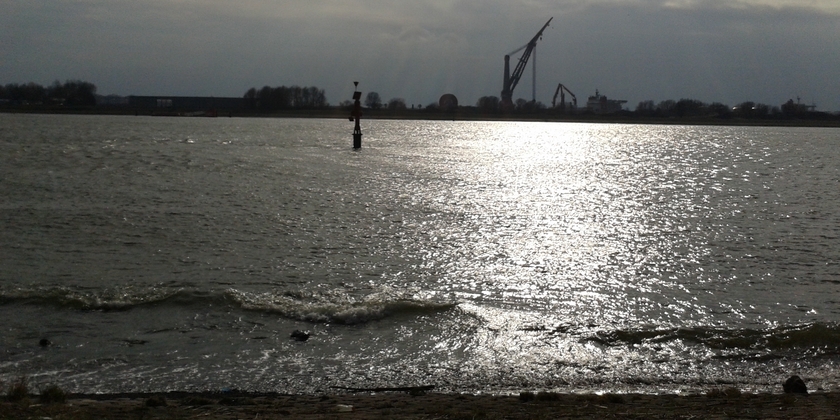

Dieses Forschungsprojekt behandelt die Frage, welche Faktoren die Wahl von Politikinstrumenten durch Regierungen erklären. Um diese Frage zu beantworten, wird vergleichend untersucht, welche gesetzlichen Massnahmen die Anrainerstaaten des Rheins (Schweiz, Deutschland, Frankreich, Luxemburg, Holland) unternehmen, um die Konzentration von Mikroschadstoffen im Wasser zu reduzieren. Mit Hilfe einer Netzwerkanalyse soll herausgefunden werden, welche Akteure an den politischen Entscheidungsprozessen der verschiedenen Rheinanliegerstaaten beteiligt sind, welche Strukturmerkmale die Entscheidungsnetzwerke aufweisen und ob es einen kausalen Zusammenhang gibt zwischen Netzwerkstrukturen und der Wahl von Politikinstrumenten. Darüber hinaus wird untersucht, ob dem Problem der Mikroverunreinigungen am Rhein durch einen integrierten und grenzüberschreitenden Wassermanagementansatz begegnet wird.

Resultate

Dieses Projekt hat aufgezeigt dass Netzwerke und ihre Strukturen tatsächlich einen Einfluss auf die Wahl von regulativen Instrumenten und Massnahme-Mixes haben. Instrumenten-Arrangements sind umso zielführender gestaltet wenn ein gewisses Grad an Zusammenarbeit und Koordination im Netzwerk besteht. Auch die Präsenz einzelner Akteure wie Vermittler oder Entrepreneurs kann sich positiv auf den Instrmenten-Mix auswirken. Diese Resultate wurden für die Regulierung von Mikroschadstoffen generiert und können in weiteren Politikfeldern nun bestätigt werden. 

Hauptantragsstellerin

Projektteam

Florence Metz, Universität Bern

Projektpartner

H. Bresser, UTwente

M. Lubell, UDavis

F. Varone, UGeneva

Publikationen

Extbase Variable Dump
array(2 items)
   publications => '9059' (4 chars)
   libraryUrl => '' (0 chars)
Extbase Variable Dump
array(1 item)
   0 => Snowflake\Publications\Domain\Model\Publicationprototypepersistent entity (uid=9059, pid=124)
      originalId => protected9059 (integer)
      authors => protected'Metz, F.; Ingold, K.' (30 chars)
      title => protected'Sustainable wastewater management: is it possible to regulate micropollution
          in the future by learning from the Past? A policy analysis
' (135 chars) journal => protected'Sustainability' (14 chars) year => protected2014 (integer) volume => protected6 (integer) issue => protected'4' (1 chars) startpage => protected'1992' (4 chars) otherpage => protected'2012' (4 chars) categories => protected'micropollution regulation; water quality; policy analysis; policy instrument
         s
' (77 chars) description => protected'This paper applies a policy analysis approach to the question of how to effe
         ctively regulate micropollution in a sustainable manner. Micropollution is a
          complex policy problem characterized by a huge number and diversity of chem
         ical substances, as well as various entry paths into the aquatic environment
         . It challenges traditional water quality management by calling for new tech
         nologies in wastewater treatment and behavioral changes in industry, agricul
         ture and civil society. In light of such challenges, the question arises as
         to how to regulate such a complex phenomenon to ensure water quality is main
         tained in the future? What can we learn from past experiences in water quali
         ty regulation? To answer these questions, policy analysis strongly focuses o
         n the design and choice of policy instruments and the mix of such measures.
         In this paper, we review instruments commonly used in past water quality reg
         ulation. We evaluate their ability to respond to the characteristics of a mo
         re recent water quality problem, <I>i.e.</I>, micropollution, in a sustainab
         le way. This way, we develop a new framework that integrates both the proble
         m dimension (<I>i.e.</I>, causes and effects of a problem) as well as the su
         stainability dimension (e.g., long-term, cross-sectoral and multi-level) to
         assess which policy instruments are best suited to regulate micropollution.
         We thus conclude that sustainability criteria help to identify an appropriat
         e instrument mix of end-of-pipe and source-directed measures to reduce aquat
         ic micropollution.
' (1538 chars) serialnumber => protected'' (0 chars) doi => protected'10.3390/su6041992' (17 chars) uid => protected9059 (integer) _localizedUid => protected9059 (integer)modified _languageUid => protectedNULL _versionedUid => protected9059 (integer)modified pid => protected124 (integer)
Metz, F.; Ingold, K. (2014) Sustainable wastewater management: is it possible to regulate micropollution in the future by learning from the Past? A policy analysis, Sustainability, 6(4), 1992-2012, doi:10.3390/su6041992, Institutional Repository