Fasziniert von der Vielfalt an Fischen, beschäftigt sich diese Arbeitsgruppe damit Prozesse und Faktoren zu studieren, die Variation und Unterschiede auf der genomischen Ebene erzeugen.
Wir bearbeiten große genomische Datensätze, um zu verstehen wie Selektion, Drift, Mutation und Rekombination zusammen spielen und die beobachtete Variation entlang des Genoms erzeugt. Um dieses Ziel zu erreichen kombinieren wir Populationsgenetik, Bioinformatik und ein gutes Verständnis für die untersuchten Organismen (meistens Fische).
array(20 items)0 => Snowflake\Publications\Domain\Model\Publicationprototypepersistent entity (uid=32289, pid=124)originalId => protected32289 (integer)
authors => protected'Haltiner, L.; Spaak, P.; Dennis, S. R.; Feulner, P. G. D.' (92 chars)
title => protected'Population genetic insights into establishment, adaptation, and dispersal of the invasive quagga mussel across perialpine lakes' (127 chars)
journal => protected'Evolutionary Applications' (25 chars)
year => protected2024 (integer)
volume => protected17 (integer)
issue => protected'1' (1 chars)
startpage => protected'e13620 (16 pp.)' (15 chars)
otherpage => protected'' (0 chars)
categories => protected'ddRADseq; dispersal; Dreissena; phenotypic plasticity; population genetics' (74 chars)
description => protected'Human activities have facilitated the invasion of freshwater ecosystems by v arious organisms. Especially, invasive bivalves such as the quagga mussels, <em>Dreissena bugensis</em>, have the potential to alter ecosystem function as they heavily affect the food web. Quagga mussels occur in high abundance, have a high filtration rate, quickly spread within and between waterbodies via pelagic larvae, and colonize various substrates. They have invaded vario us waterbodies across the Northern Hemisphere. In Central Europe, they have invaded multiple large and deep perialpine lakes with first recordings in La ke Geneva in 2015 and 2016 in Lake Constance. In the deep perialpine lakes, quagga mussels quickly colonized the littoral zone but are also abundant dee per (>80 m), where they are often thinner and brighter shelled. We anal ysed 675 quagga mussels using ddRAD sequencing to gain in-depth insights int o the genetic population structure of quagga mussels across Central European lakes and across various sites and depth habitats in Lake Constance. We rev ealed substantial genetic differentiation amongst quagga mussel populations from three unconnected lakes, and all populations showed high genetic divers ity and effective population size. In Lake Constance, we detected no genetic differentiation amongst quagga mussels sampled across different sites and d epth habitats. We also did not identify any convincing candidate loci eviden tial for adaptation along a depth gradient and a transplant experiment showe d no indications of local adaptation to living in the deep based on investig ating growth and survival. Hence, the shallow-water and the deep-water morph otypes seem to be a result of phenotypic plasticity rather than local adapta tion to depth. In conclusion, our ddRAD approach revealed insight into the e stablishment of genetically distinct quagga mussel populations in three peri alpine lakes and suggests that phenotypic plasticity and life history traits (broadcast spawner with...' (2138 chars)
serialnumber => protected'1752-4571' (9 chars)
doi => protected'10.1111/eva.13620' (17 chars)
uid => protected32289 (integer)
_localizedUid => protected32289 (integer)modified_languageUid => protectedNULL
_versionedUid => protected32289 (integer)modifiedpid => protected124 (integer)1 => Snowflake\Publications\Domain\Model\Publicationprototypepersistent entity (uid=32245, pid=124)originalId => protected32245 (integer)
authors => protected'Frei, D.; Mwaiko, S.; Seehausen, O.; Feulner, P. G. D.' (84 chars)
title => protected'Ecological disturbance reduces genomic diversity across an Alpine whitefish adaptive radiation' (94 chars)
journal => protected'Evolutionary Applications' (25 chars)
year => protected2024 (integer)
volume => protected17 (integer)
issue => protected'2' (1 chars)
startpage => protected'e13617 (12 pp.)' (15 chars)
otherpage => protected'' (0 chars)
categories => protected'Alpine whitefish; anthropogenic environmental change; genomic diversity decl ine' (79 chars)
description => protected'Genomic diversity is associated with the adaptive potential of a population and thereby impacts the extinction risk of a species during environmental ch ange. However, empirical data on genomic diversity of populations before env ironmental perturbations are rare and hence our understanding of the impact of perturbation on diversity is often limited. We here assess genomic divers ity utilising whole-genome resequencing data from all four species of the La ke Constance Alpine whitefish radiation. Our data covers a period of strong but transient anthropogenic environmental change and permits us to track cha nges in genomic diversity in all species over time. Genomic diversity became strongly reduced during the period of anthropogenic disturbance and has not recovered yet. The decrease in genomic diversity varies between 18% and 30% , depending on the species. Interspecific allele frequency differences of SN Ps located in potentially ecologically relevant genes were homogenized over time. This suggests that in addition to the reduction of genome-wide genetic variation, the differentiation that evolved in the process of adaptation to alternative ecologies between species might have been lost during the ecolo gical disturbance. The erosion of substantial amounts of genomic variation w ithin just a few generations in combination with the loss of potentially ada ptive genomic differentiation, both of which had evolved over thousands of y ears, demonstrates the sensitivity of biodiversity in evolutionary young ada ptive radiations towards environmental disturbance. Natural history collecti ons, such as the one used for this study, are instrumental in the assessment of genomic consequences of anthropogenic environmental change. Historical s amples enable us to document biodiversity loss against the shifting baseline syndrome and advance our understanding of the need for efficient biodiversi ty conservation on a global scale.' (1934 chars)
serialnumber => protected'1752-4571' (9 chars)
doi => protected'10.1111/eva.13617' (17 chars)
uid => protected32245 (integer)
_localizedUid => protected32245 (integer)modified_languageUid => protectedNULL
_versionedUid => protected32245 (integer)modifiedpid => protected124 (integer)2 => Snowflake\Publications\Domain\Model\Publicationprototypepersistent entity (uid=30693, pid=124)originalId => protected30693 (integer)
authors => protected'Le Pennec, G.; Retel, C.; Kowallik, V.; Becks, L.; Feul ner, P. G. D.' (104 chars)
title => protected'Demographic fluctuations and selection during host–parasite co-evolution i nteractively increase genetic diversity' (115 chars)
journal => protected'Molecular Ecology' (17 chars)
year => protected2024 (integer)
volume => protected33 (integer)
issue => protected'10' (2 chars)
startpage => protected'e16939 (14 pp.)' (15 chars)
otherpage => protected'' (0 chars)
categories => protected'demography; experimental evolution; genetic diversity; host–parasite inter actions; selective sweeps' (101 chars)
description => protected'Host–parasite interactions can cause strong demographic fluctuations accom panied by selective sweeps of resistance/infectivity alleles. Both demograph ic bottlenecks and frequent sweeps are expected to reduce the amount of segr egating genetic variation and therefore might constrain adaptation during co -evolution. Recent studies, however, suggest that the interaction of demogra phic and selective processes is a key component of co-evolutionary dynamics and may rather positively affect levels of genetic diversity available for a daptation. Here, we provide direct experimental testing of this hypothesis b y disentangling the effects of demography, selection and their interaction i n an experimental host–parasite system. We grew 12 populations of a unicel lular, asexually reproducing algae (<em>Chlorella variabilis</em>) that expe rienced either growth followed by constant population sizes (three populatio ns), demographic fluctuations (three populations), selection induced by expo sure to a virus (three populations), or demographic fluctuations together wi th virus-induced selection (three populations). After 50 days (~50 generatio ns), we conducted whole-genome sequencing of each algal host population. We observed more genetic diversity in populations that jointly experienced sele ction and demographic fluctuations than in populations where these processes were experimentally separated. In addition, in those three populations that jointly experienced selection and demographic fluctuations, experimentally measured diversity exceeds expected values of diversity that account for the cultures' population sizes. Our results suggest that eco-evolutionary feedb acks can positively affect genetic diversity and provide the necessary empir ical measures to guide further improvements of theoretical models of adaptat ion during host–parasite co-evolution.' (1864 chars)
serialnumber => protected'0962-1083' (9 chars)
doi => protected'10.1111/mec.16939' (17 chars)
uid => protected30693 (integer)
_localizedUid => protected30693 (integer)modified_languageUid => protectedNULL
_versionedUid => protected30693 (integer)modifiedpid => protected124 (integer)3 => Snowflake\Publications\Domain\Model\Publicationprototypepersistent entity (uid=32573, pid=124)originalId => protected32573 (integer)
authors => protected'Stankowski, S.; Cutter, A. D.; Satokangas, I.; Lerch,&nb sp;B. A.; Rolland, J.; Smadja, C. M.; Segami Marzal,&nbs p;J. C.; Cooney, C. R.; Feulner, P. G. D.; Bic alho Domingos, F. M. C.; North, H. L.; Yamaguchi,&n bsp;R.; Butlin, R. K.; Wolf, J. B. W.; Coughlan,&nb sp;J.; Heidbreder, P.; Hernández-Gutiérrez, R.; Barnard-Kubow,&n bsp;K. B.; Peede, D.; Rancilhac, L.; Salvador, R. B .; Thompson, K. A.; Stacy, E. A.; Moyle, L. C. ; Garlovsky, M. D.; Maulana, A.; Kantelinen, A.; Cacho,& nbsp;N. I.; Schneemann, H.; Domínguez, M.; Dopman, E.&n bsp;B.; Lohse, K.; Rometsch, S. J.; Comeault, A. A. ; Merrill, R. M.; Scordato, E. S. C.; Singhal,  ;S.; Pärssinen, V.; Lackey, A. C. R.; Kumar, S.; M eier, J. I.; Barton, N.; Fraïsse, C.; Ravinet, M.; Kulmuni, J.' (1081 chars)
title => protected'Toward the integration of speciation research' (45 chars)
journal => protected'Evolutionary Journal of the Linnean Society' (43 chars)
year => protected2024 (integer)
volume => protected3 (integer)
issue => protected'1' (1 chars)
startpage => protected'1' (1 chars)
otherpage => protected'24' (2 chars)
categories => protected'collaboration; diversity; equity and inclusion; scientific practices; synthe sis' (79 chars)
description => protected'Speciation research—the scientific field focused on understanding the orig in and diversity of species—has a long and complex history. While relevant to one another, the specific goals and activities of speciation researchers are highly diverse, and scattered across a collection of different perspect ives. Thus, our understanding of speciation will benefit from efforts to bri dge scientific findings and the diverse people who do the work. In this pape r, we outline two ways of integrating speciation research: (i) scientific in tegration, through the bringing together of ideas, data, and approaches; and (ii) social integration, by creating ways for a diversity of researchers to participate in the scientific process. We then discuss five challenges to integration: (i) the multidisciplinary nature of speciation research, (ii) t he complex language of speciation; (iii) a bias toward certain study systems ; (iv) the challenges of working across scales; and (v) inconsistent measure s and reporting standards. We provide practical steps that individuals and g roups can take to help overcome these challenges, and argue that integration is a team effort in which we all have a role to play.' (1194 chars)
serialnumber => protected'2752-938X' (9 chars)
doi => protected'10.1093/evolinnean/kzae001' (26 chars)
uid => protected32573 (integer)
_localizedUid => protected32573 (integer)modified_languageUid => protectedNULL
_versionedUid => protected32573 (integer)modifiedpid => protected124 (integer)4 => Snowflake\Publications\Domain\Model\Publicationprototypepersistent entity (uid=26070, pid=124)originalId => protected26070 (integer)
authors => protected'Frei, D.; Reichlin, P.; Seehausen, O.; Feulner, P. G. D.' (86 chars)
title => protected'Introgression from extinct species facilitates adaptation to its vacated nic he' (78 chars)
journal => protected'Molecular Ecology' (17 chars)
year => protected2023 (integer)
volume => protected32 (integer)
issue => protected'4' (1 chars)
startpage => protected'841' (3 chars)
otherpage => protected'853' (3 chars)
categories => protected'adaptive radiation; deep-water adaptation; environmental change; extinction by hybridization; introgression' (107 chars)
description => protected'Anthropogenic disturbances of ecosystems are causing a loss of biodiversity at an unprecedented rate. Species extinctions often leave ecological niches underutilized, and their colonization by other species may require new adapt ation. In Lake Constance, on the borders of Germany, Austria and Switzerland , an endemic profundal whitefish species went extinct during a period of ant hropogenic eutrophication. In the process of extinction, the deep-water spec ies hybridized with three surviving whitefish species of Lake Constance, res ulting in introgression of genetic variation that is potentially adaptive in deep-water habitats. Here, we sampled a water depth gradient across a known spawning ground of one of these surviving species, <em>Coregonus macrophtha lmus</em>, and caught spawning individuals at greater depths (down to 90 m ) than historically recorded. We sequenced a total of 96 whole genomes, 11-1 7 for each of six different spawning depth populations (4, 12, 20, 40, 60 an d 90 m), to document genomic intraspecific differentiation along a water d epth gradient. We identified 52 genomic regions that are potentially under d ivergent selection between the deepest (90 m) and all shallower (4-60 m) spawning habitats. At 12 (23.1%) of these 52 loci, the allele frequency pat tern across historical and contemporary populations suggests that introgress ion from the extinct species potentially facilitates ongoing adaptation to d eep water. Our results are consistent with the syngameon hypothesis, proposi ng that hybridization between members of an adaptive radiation can promote f urther niche expansion and diversification. Furthermore, our findings demons trate that introgression from extinct into extant species can be a source of evolvability, enabling rapid adaptation to environmental change, and may co ntribute to the ecological recovery of ecosystem functions after extinctions .' (1901 chars)
serialnumber => protected'0962-1083' (9 chars)
doi => protected'10.1111/mec.16791' (17 chars)
uid => protected26070 (integer)
_localizedUid => protected26070 (integer)modified_languageUid => protectedNULL
_versionedUid => protected26070 (integer)modifiedpid => protected124 (integer)5 => Snowflake\Publications\Domain\Model\Publicationprototypepersistent entity (uid=25558, pid=124)originalId => protected25558 (integer)
authors => protected'De-Kayne, R.; Selz, O. M.; Marques, D. A.; Frei,&nb sp;D.; Seehausen, O.; Feulner, P. G. D.' (135 chars)
title => protected'Genomic architecture of adaptive radiation and hybridization in Alpine white fish' (80 chars)
journal => protected'Nature Communications' (21 chars)
year => protected2022 (integer)
volume => protected13 (integer)
issue => protected'1' (1 chars)
startpage => protected'4479 (13 pp.)' (13 chars)
otherpage => protected'' (0 chars)
categories => protected'' (0 chars)
description => protected'Adaptive radiations represent some of the most remarkable explosions of dive rsification across the tree of life. However, the constraints to rapid diver sification and how they are sometimes overcome, particularly the relative ro les of genetic architecture and hybridization, remain unclear. Here, we addr ess these questions in the Alpine whitefish radiation, using a whole-genome dataset that includes multiple individuals of each of the 22 species belongi ng to six ecologically distinct ecomorph classes across several lake-systems . We reveal that repeated ecological and morphological diversification along a common environmental axis is associated with both genome-wide allele freq uency shifts and a specific, larger effect, locus, associated with the gene <em>edar</em>. Additionally, we highlight the possible role of introgression between species from different lake-systems in facilitating the evolution a nd persistence of species with unique trait combinations and ecology. These results highlight the importance of both genome architecture and secondary c ontact with hybridization in fuelling adaptive radiation.' (1121 chars)
serialnumber => protected'' (0 chars)
doi => protected'10.1038/s41467-022-32181-8' (26 chars)
uid => protected25558 (integer)
_localizedUid => protected25558 (integer)modified_languageUid => protectedNULL
_versionedUid => protected25558 (integer)modifiedpid => protected124 (integer)6 => Snowflake\Publications\Domain\Model\Publicationprototypepersistent entity (uid=24480, pid=124)originalId => protected24480 (integer)
authors => protected'Frei, D.; De-Kayne, R.; Selz, O. M.; Seehausen, O.; Feulner, P. G. D.' (109 chars)
title => protected'Genomic variation from an extinct species is retained in the extant radiatio n following speciation reversal' (107 chars)
journal => protected'Nature Ecology & Evolution' (26 chars)
year => protected2022 (integer)
volume => protected6 (integer)
issue => protected'' (0 chars)
startpage => protected'461' (3 chars)
otherpage => protected'468' (3 chars)
categories => protected'' (0 chars)
description => protected'Ecosystem degradation and biodiversity loss are major global challenges. Whe n reproductive isolation between species is contingent on the interaction of intrinsic lineage traits with features of the environment, environmental ch ange can weaken reproductive isolation and result in extinction through hybr idization. By this process called speciation reversal, extinct species can l eave traces in genomes of extant species through introgressive hybridization . Using historical and contemporary samples, we sequenced all four species o f an Alpine whitefish radiation before and after anthropogenic lake eutrophi cation and the associated loss of one species through speciation reversal. D espite the extinction of this taxon, substantial fractions of its genome, in cluding regions shaped by positive selection before eutrophication, persist within surviving species as a consequence of introgressive hybridization dur ing eutrophication. Given the prevalence of environmental change, studying s peciation reversal and its genomic consequences provides fundamental insight s into evolutionary processes and informs biodiversity conservation.' (1132 chars)
serialnumber => protected'' (0 chars)
doi => protected'10.1038/s41559-022-01665-7' (26 chars)
uid => protected24480 (integer)
_localizedUid => protected24480 (integer)modified_languageUid => protectedNULL
_versionedUid => protected24480 (integer)modifiedpid => protected124 (integer)7 => Snowflake\Publications\Domain\Model\Publicationprototypepersistent entity (uid=24360, pid=124)originalId => protected24360 (integer)
authors => protected'Retel, C.; Kowallik, V.; Becks, L.; Feulner, P. G.& nbsp;D.' (83 chars)
title => protected'Strong selection and high mutation supply characterize experimental<em> Chlo rovirus </em>evolution' (98 chars)
journal => protected'Virus Evolution' (15 chars)
year => protected2022 (integer)
volume => protected8 (integer)
issue => protected'1' (1 chars)
startpage => protected'veac003 (14 pp.)' (16 chars)
otherpage => protected'' (0 chars)
categories => protected'virus evolution; genomics; repeatable genomic change; predicted phenotypic e ffect; Chlorovirus PBCV-1' (101 chars)
description => protected'Characterizing how viruses evolve expands our understanding of the underlyin g fundamental processes, such as mutation, selection and drift. One group of viruses whose evolution has not yet been extensively studied are the <em>Ph ycodnaviridae</em>, a globally abundant family of aquatic large dsDNA viruse s. Here we studied the evolutionary change of <em>Paramecium bursaria</em> c hlorella virus 1 (PBCV-1) during experimental coevolution with its algal hos t. We used pooled genome sequencing of six independently evolved populations to characterize genomic change over five time points. Across six experiment al replicates involving either strong or weak demographic fluctuations, we f ound single nucleotide polymorphisms (SNPs) at 67 sites. The occurrence of g enetic variants was highly repeatable, with just two of the SNPs found in on ly a single experimental replicate. Three genes <em>A122/123R, A140/145R</em > and <em>A540L</em> showed an excess of variable sites, providing new infor mation about potential targets of selection during <em>Chlorella</em>-Chloro virus coevolution. Our data indicated that the studied populations were not mutation-limited and experienced strong positive selection. Our investigatio n highlighted relevant processes governing the evolution of aquatic large ds DNA viruses, which ultimately contributes to a better understanding of the f unctioning of natural aquatic ecosystems.' (1409 chars)
serialnumber => protected'' (0 chars)
doi => protected'10.1093/ve/veac003' (18 chars)
uid => protected24360 (integer)
_localizedUid => protected24360 (integer)modified_languageUid => protectedNULL
_versionedUid => protected24360 (integer)modifiedpid => protected124 (integer)8 => Snowflake\Publications\Domain\Model\Publicationprototypepersistent entity (uid=21849, pid=124)originalId => protected21849 (integer)
authors => protected'De‐Kayne, R.; Frei, D.; Greenway, R.; Mendes, S. L.; Retel, C.; Feulner, P. G. D.' (128 chars)
title => protected'Sequencing platform shifts provide opportunities but pose challenges for com bining genomic datasets' (99 chars)
journal => protected'Molecular Ecology Resources' (27 chars)
year => protected2021 (integer)
volume => protected21 (integer)
issue => protected'3' (1 chars)
startpage => protected'653' (3 chars)
otherpage => protected'660' (3 chars)
categories => protected'' (0 chars)
description => protected'Technological advances in DNA sequencing over the last decade now permit the production and curation of large genomic datasets in an increasing number o f non‐model species. Additionally, this new data provides the opportunity for combining datasets, resulting in larger studies with a broader taxonomic range. Whilst the development of new sequencing platforms has been benefici al, resulting in a higher throughput of data at a lower per‐base cost, shi fts in sequencing technology can also pose challenges for those wishing to c ombine new sequencing data with data sequenced on older platforms. Here, we outline the types of studies where the use of curated data might be benefici al, and highlight potential biases that might be introduced by combining dat a from different sequencing platforms. As an example of the challenges assoc iated with combining data across sequencing platforms, we focus on the impac t of the shift in Illumina's base calling technology from a four‐channel t o a two‐channel system. We caution that when data is combined from these t wo systems, erroneous guanine base calls that result from the two‐channel chemistry can make their way through a bioinformatic pipeline, eventually le ading to inaccurate and potentially misleading conclusions. We also suggest solutions for dealing with such potential artifacts, which make samples sequ enced on different sequencing platforms appear more differentiated from one another than they really are. Finally, we stress the importance of archiving tissue samples and the associated sequences for the continued reproducibili ty and reusability of sequencing data in the face of ever‐changing sequenc ing platform technology.' (1696 chars)
serialnumber => protected'1755-098X' (9 chars)
doi => protected'10.1111/1755-0998.13309' (23 chars)
uid => protected21849 (integer)
_localizedUid => protected21849 (integer)modified_languageUid => protectedNULL
_versionedUid => protected21849 (integer)modifiedpid => protected124 (integer)9 => Snowflake\Publications\Domain\Model\Publicationprototypepersistent entity (uid=20700, pid=124)originalId => protected20700 (integer)
authors => protected'De-Kayne, R.; Zoller, S.; Feulner, P. G. D.' (68 chars)
title => protected'<em>A de novo</em> chromosome-level genome assembly of <em>Coregonus sp. "Ba lchen"</em>: one representative of the Swiss Alpine whitefish radiation' (147 chars)
journal => protected'Molecular Ecology Resources' (27 chars)
year => protected2020 (integer)
volume => protected20 (integer)
issue => protected'4' (1 chars)
startpage => protected'1093' (4 chars)
otherpage => protected'1109' (4 chars)
categories => protected'Alpine whitefish; Coregonus; whitefish; Salmonidae; genome assembly' (67 chars)
description => protected'Salmonids are of particular interest to evolutionary biologists due to their incredible diversity of life-history strategies and the speed at which many salmonid species have diversified. In Switzerland alone, over 30 species of Alpine whitefish from the subfamily Coregoninae have evolved since the last glacial maximum, with species exhibiting a diverse range of morphological a nd behavioural phenotypes. This, combined with the whole genome duplication which occurred in the ancestor of all salmonids, makes the Alpine whitefish radiation a particularly interesting system in which to study the genetic ba sis of adaptation and speciation and the impacts of ploidy changes and subse quent rediploidization on genome evolution. Although well curated genome ass emblies exist for many species within Salmonidae, genomic resources for the subfamily Coregoninae are lacking. To assemble a whitefish reference genome, we carried out PacBio sequencing from one wild-caught <em>Coregonus sp. "Ba lchen"</em> from Lake Thun to ~90x coverage. PacBio reads were assembled ind ependently using three different assemblers, Falcon, Canu and wtdbg2 and sub sequently scaffolded with additional Hi-C data. All three assemblies were hi ghly contiguous, had strong synteny to a previously published <em>Coregonus< /em> linkage map, and when mapping additional short-read data to each of the assemblies, coverage was fairly even across most chromosome-scale scaffolds . Here, we present the first <em>de novo</em> genome assembly for the Salmon id subfamily Coregoninae. The final 2.2 Gb wtdbg2 assembly included 40 scaff olds, an N50 of 51.9 Mb, and was 93.3% complete for BUSCOs. The assembly con sisted of ~52% TEs and contained 44,525 genes.' (1718 chars)
serialnumber => protected'1755-098X' (9 chars)
doi => protected'10.1111/1755-0998.13187' (23 chars)
uid => protected20700 (integer)
_localizedUid => protected20700 (integer)modified_languageUid => protectedNULL
_versionedUid => protected20700 (integer)modifiedpid => protected124 (integer)10 => Snowflake\Publications\Domain\Model\Publicationprototypepersistent entity (uid=18184, pid=124)originalId => protected18184 (integer)
authors => protected'Feulner, P. G. D.; Seehausen, O.' (52 chars)
title => protected'Genomic insights into the vulnerability of sympatric whitefish species flock s' (77 chars)
journal => protected'Molecular Ecology' (17 chars)
year => protected2019 (integer)
volume => protected28 (integer)
issue => protected'' (0 chars)
startpage => protected'615' (3 chars)
otherpage => protected'629' (3 chars)
categories => protected'coregonus spp; ecological speciation; RADseq; speciation reversal' (65 chars)
description => protected'The erosion of habitat heterogeneity can reduce species diversity directly b ut can also lead to the loss of distinctiveness of sympatric species through speciation reversal. We know little about changes in genomic differentiatio n during the early stages of these processes, which can be mediated by anthr opogenic perturbation. Here, we analyse three sympatric whitefish species (< em>Coregonus</em> spp) sampled across two neighbouring and connected Swiss p re‐alpine lakes, which have been differentially affected by anthropogenic eutrophication. Our data set comprises 16,173 loci genotyped across 138 whit efish using restriction‐site associated DNA sequencing (RADseq). Our analy sis suggests that in each of the two lakes the population of a different, bu t ecologically similar, whitefish species declined following a recent period of eutrophication. Genomic signatures consistent with hybridisation are mor e pronounced in the more severely impacted lake. Comparisons between sympatr ic pairs of whitefish species with contrasting ecology, where one is shallow benthic and the other one more profundal pelagic, reveal genomic differenti ation that is largely correlated along the genome, while differentiation is uncorrelated between pairs of allopatric provenance with similar ecology. We identify four genomic loci that provide evidence of parallel divergent adap tation between the shallow benthic species and the two different more profun dal species. Functional annotations available for two of those loci are cons istent with divergent ecological adaptation. Our genomic analysis indicates the action of divergent natural selection between sympatric whitefish specie s in pre‐alpine lakes and reveals the vulnerability of these species to an thropogenic alterations of the environment and associated adaptive landscape .' (1825 chars)
serialnumber => protected'0962-1083' (9 chars)
doi => protected'10.1111/mec.14977' (17 chars)
uid => protected18184 (integer)
_localizedUid => protected18184 (integer)modified_languageUid => protectedNULL
_versionedUid => protected18184 (integer)modifiedpid => protected124 (integer)11 => Snowflake\Publications\Domain\Model\Publicationprototypepersistent entity (uid=19270, pid=124)originalId => protected19270 (integer)
authors => protected'Retel, C.; Kowallik, V.; Huang, W.; Werner, B.; Künzel, S.; Becks, L.; Feulner, P. G. D.' (134 chars)
title => protected'The feedback between selection and demography shapes genomic diversity durin g coevolution' (89 chars)
journal => protected'Science Advances' (16 chars)
year => protected2019 (integer)
volume => protected5 (integer)
issue => protected'10' (2 chars)
startpage => protected'eaax0530 (9 pp.)' (16 chars)
otherpage => protected'' (0 chars)
categories => protected'' (0 chars)
description => protected'Species interactions and coevolution are integral to ecological communities, but we lack empirical information on when and how these interactions genera te and purge genetic diversity. Using genomic time series data from host-vir us experiments, we found that coevolution occurs through consecutive selecti ve sweeps in both species, with temporal consistency across replicates. Swee ps were accompanied by phenotypic change (resistance or infectivity increase s) and expansions in population size. In the host, population expansion enab led rapid generation of genetic diversity in accordance with neutral process es. Viral molecular evolution was, in contrast, confined to few genes, all p utative targets of selection. This study demonstrates that molecular evoluti on during species interactions is shaped by both eco-evolutionary feedback d ynamics and interspecific differences in how genetic diversity is generated and maintained.' (927 chars)
serialnumber => protected'' (0 chars)
doi => protected'10.1126/sciadv.aax0530' (22 chars)
uid => protected19270 (integer)
_localizedUid => protected19270 (integer)modified_languageUid => protectedNULL
_versionedUid => protected19270 (integer)modifiedpid => protected124 (integer)12 => Snowflake\Publications\Domain\Model\Publicationprototypepersistent entity (uid=9142, pid=124)originalId => protected9142 (integer)
authors => protected'Chain, F. J. J.; Feulner, P. G. D.; Panchal,&n bsp;M.; Eizaguirre, C.; Samonte, I. E.; Kalbe, M.; Lenz, T. L.; Stoll, M.; Bornberg-Bauer, E.; Milinski, M. ; Reusch, T. B. H.' (261 chars)
title => protected'Extensive copy-number variation of young genes across stickleback population s' (77 chars)
journal => protected'PLoS Genetics' (13 chars)
year => protected2014 (integer)
volume => protected10 (integer)
issue => protected'12' (2 chars)
startpage => protected'1' (1 chars)
otherpage => protected'18' (2 chars)
categories => protected'' (0 chars)
description => protected'Duplicate genes emerge as copy-number variations (CNVs) at the population le vel, and remain copy-number polymorphic until they are fixed or lost. The su ccessful establishment of such structural polymorphisms in the genome plays an important role in evolution by promoting genetic diversity, complexity an d innovation. To characterize the early evolutionary stages of duplicate gen es and their potential adaptive benefits, we combine comparative genomics wi th population genomics analyses to evaluate the distribution and impact of C NVs across natural populations of an eco-genomic model, the three-spined sti ckleback. With whole genome sequences of 66 individuals from populations inh abiting three distinct habitats, we find that CNVs generally occur at low fr equencies and are often only found in one of the 11 populations surveyed. A subset of CNVs, however, displays copy-number differentiation between popula tions, showing elevated within-population frequencies consistent with local adaptation. By comparing teleost genomes to identify lineage-specific genes and duplications in sticklebacks, we highlight rampant gene content differen ces among individuals in which over 30% of young duplicate genes are CNVs. T hese CNV genes are evolving rapidly at the molecular level and are enriched with functional categories associated with environmental interactions, depic ting the dynamic early copy-number polymorphic stage of genes during populat ion differentiation.' (1464 chars)
serialnumber => protected'1553-7390' (9 chars)
doi => protected'10.1371/journal.pgen.1004830' (28 chars)
uid => protected9142 (integer)
_localizedUid => protected9142 (integer)modified_languageUid => protectedNULL
_versionedUid => protected9142 (integer)modifiedpid => protected124 (integer)13 => Snowflake\Publications\Domain\Model\Publicationprototypepersistent entity (uid=17867, pid=124)originalId => protected17867 (integer)
authors => protected'De-Kayne, R.; Feulner, P. G. D.' (51 chars)
title => protected'A European whitefish linkage map and its implications for understanding geno me-wide synteny between salmonids following whole genome duplication' (144 chars)
journal => protected'G3: Genes, Genomes, Genetics' (28 chars)
year => protected2018 (integer)
volume => protected8 (integer)
issue => protected'12' (2 chars)
startpage => protected'3745' (4 chars)
otherpage => protected'3755' (4 chars)
categories => protected'Coregonus; RAD; recombination rate; Salmonidae; sex-specific linkage maps; s ynteny' (82 chars)
description => protected'Genomic datasets continue to increase in number due to the ease of productio n for a wider selection of species including non-model organisms. For many o f these species, especially those with large or polyploid genomes, highly co ntiguous and well-annotated genomes are still rare due to the complexity and cost involved in their assembly. As a result, a common starting point for g enomic work in non-model species is the production of a linkage map. Dense l inkage maps facilitate the analysis of genomic data in a variety of ways, fr om broad scale observations regarding genome structure e.g. chromosome numbe r and type or sex-related structural differences, to fine scale patterns e.g . recombination rate variation and co-localization of differentiated regions . Here we present both sex-averaged and sex-specific linkage maps for <em>Co regonus sp. "Albock"</em>, a member of the European whitefish lineage (<em>C . lavaretus</em> spp. complex), containing 5395 single nucleotide polymorphi sm (SNP) loci across 40 linkage groups to facilitate future investigation in to the genomic basis of whitefish adaptation and speciation. The map was pro duced using restriction-site associated digestion (RAD) sequencing data from two wild-caught parents and 156 F1 offspring. We discuss the differences be tween our sex-averaged and sex-specific maps and identify genome-wide synten y between <em>C. sp. "Albock"</em> and Atlantic Salmon (<em>Salmo salar</em> ), which have diverged following the salmonid-specific whole genome duplicat ion. Our analysis confirms that many patterns of synteny observed between At lantic Salmon and <em>Oncorhynchus and Salvelinus</em> species are also shar ed by members of the Coregoninae subfamily. We also show that regions known for their species-specific rediploidization history can pose challenges for synteny identification since these regions have diverged independently in ea ch salmonid species following the salmonid-specific whole genome duplication . The European whitefish...' (2243 chars)
serialnumber => protected'' (0 chars)
doi => protected'10.1534/g3.118.200552' (21 chars)
uid => protected17867 (integer)
_localizedUid => protected17867 (integer)modified_languageUid => protectedNULL
_versionedUid => protected17867 (integer)modifiedpid => protected124 (integer)14 => Snowflake\Publications\Domain\Model\Publicationprototypepersistent entity (uid=16857, pid=124)originalId => protected16857 (integer)
authors => protected'Frickel, J.; Feulner, P. G. D.; Karakoc, E.; Becks, L.' (84 chars)
title => protected'Population size changes and selection drive patterns of parallel evolution i n a host–virus system' (99 chars)
journal => protected'Nature Communications' (21 chars)
year => protected2018 (integer)
volume => protected9 (integer)
issue => protected'1' (1 chars)
startpage => protected'1760 (10 pp.)' (13 chars)
otherpage => protected'' (0 chars)
categories => protected'' (0 chars)
description => protected'Predicting the repeatability of evolution remains elusive. Theory and empiri cal studies suggest that strong selection and large population sizes increas e the probability for parallel evolution at the phenotypic and genotypic lev els. However, selection and population sizes are not constant, but rather ch ange continuously and directly affect each other even on short time scales. Here, we examine the degree of parallel evolution shaped through ecoevolutio nary dynamics in an algal host population coevolving with a virus. We find h igh degrees of parallelism at the level of population size changes (ecology) and at the phenotypic level between replicated populations. At the genomic level, we find evidence for parallelism, as the same large genomic region wa s duplicated in all replicated populations, but also substantial novel seque nce divergence between replicates. These patterns of genome evolution can be explained by considering population size changes as an important driver of rapid evolution.' (1004 chars)
serialnumber => protected'' (0 chars)
doi => protected'10.1038/s41467-018-03990-7' (26 chars)
uid => protected16857 (integer)
_localizedUid => protected16857 (integer)modified_languageUid => protectedNULL
_versionedUid => protected16857 (integer)modifiedpid => protected124 (integer)15 => Snowflake\Publications\Domain\Model\Publicationprototypepersistent entity (uid=17146, pid=124)originalId => protected17146 (integer)
authors => protected'Feulner, P. G. D.; Schwarzer, J.; Haesler, M. P.; Meier, J. I.; Seehausen, O.' (122 chars)
title => protected'A dense linkage map of Lake Victoria cichlids improved the <em>Pundamilia</e m> genome assembly and revealed a major QTL for sex-determination' (141 chars)
journal => protected'G3: Genes, Genomes, Genetics' (28 chars)
year => protected2018 (integer)
volume => protected8 (integer)
issue => protected'7' (1 chars)
startpage => protected'2411' (4 chars)
otherpage => protected'2420' (4 chars)
categories => protected'genetics of sex; amh; Cichlidae; RAD; recombination rate; sex chromosome evo lution; sex determination; synteny; XY system' (121 chars)
description => protected'Genetic linkage maps are essential for comparative genomics, high quality ge nome sequence assembly and fine scale quantitative trait locus (QTL) mapping . In the present study we identified and genotyped markers via restriction-s ite associated DNA (RAD) sequencing and constructed a genetic linkage map ba sed on 1,597 SNP markers of an interspecific F2 cross of two closely related Lake Victoria cichlids (<em>Pundamilia pundamilia</em> and <em>P.</em> sp. 'red head'). The SNP markers were distributed on 22 linkage groups and the t otal map size was 1,594 cM with an average marker distance of 1.01 cM. This high-resolution genetic linkage map was used to anchor the scaffolds of the <em>Pundamilia</em> genome and estimate recombination rates along the genome . Via QTL mapping we identified a major QTL for sex in a ∼1.9 Mb region on Pun-LG10, which is homologous to <em>Oreochromis niloticus</em> LG 23 (Ore- LG23) and includes a well-known vertebrate sex-determination gene (<em>amh</ em>).' (993 chars)
serialnumber => protected'' (0 chars)
doi => protected'10.1534/g3.118.200207' (21 chars)
uid => protected17146 (integer)
_localizedUid => protected17146 (integer)modified_languageUid => protectedNULL
_versionedUid => protected17146 (integer)modifiedpid => protected124 (integer)16 => Snowflake\Publications\Domain\Model\Publicationprototypepersistent entity (uid=15184, pid=124)originalId => protected15184 (integer)
authors => protected'Feulner, P. G. D.; De-Kayne, R.' (51 chars)
title => protected'Genome evolution, structural rearrangements and speciation' (58 chars)
journal => protected'Journal of Evolutionary Biology' (31 chars)
year => protected2017 (integer)
volume => protected30 (integer)
issue => protected'8' (1 chars)
startpage => protected'1488' (4 chars)
otherpage => protected'1490' (4 chars)
categories => protected'' (0 chars)
description => protected'' (0 chars)
serialnumber => protected'1010-061X' (9 chars)
doi => protected'10.1111/jeb.13101' (17 chars)
uid => protected15184 (integer)
_localizedUid => protected15184 (integer)modified_languageUid => protectedNULL
_versionedUid => protected15184 (integer)modifiedpid => protected124 (integer)17 => Snowflake\Publications\Domain\Model\Publicationprototypepersistent entity (uid=15607, pid=124)originalId => protected15607 (integer)
authors => protected'Stapley, J.; Feulner, P. G. D.; Johnston, S. E .; Santure, A. W.; Smadja, C. M.' (128 chars)
title => protected'Variation in recombination frequency and distribution across eukaryotes: pat terns and processes' (95 chars)
journal => protected'Philosophical Transactions of the Royal Society B: Biological Sciences' (70 chars)
year => protected2017 (integer)
volume => protected372 (integer)
issue => protected'1736' (4 chars)
startpage => protected'20160455 (10 pp.)' (17 chars)
otherpage => protected'' (0 chars)
categories => protected'crossing over; meiosis; genetic linkage; evolution; adaptation; genomic arch itecture' (84 chars)
description => protected'Recombination, the exchange of DNA between maternal and paternal chromosomes during meiosis, is an essential feature of sexual reproduction in nearly al l multicellular organisms. While the role of recombination in the evolution of sex has received theoretical and empirical attention, less is known about how recombination rate <i>itself</i> evolves and what influence this has on evolutionary processes within sexually reproducing organisms. Here, we expl ore the patterns of, and processes governing recombination in eukaryotes. We summarize patterns of variation, integrating current knowledge with an anal ysis of linkage map data in 353 organisms. We then discuss proximate and ult imate processes governing recombination rate variation and consider how thes e influence evolutionary processes. Genome-wide recombination rates (cM/Mb) can vary more than tenfold across eukaryotes, and there is large variation i n the distribution of recombination events across closely related taxa, popu lations and individuals. We discuss how variation in rate and distribution r elates to genome architecture, genetic and epigenetic mechanisms, sex, envir onmental perturbations and variable selective pressures. There has been grea t progress in determining the molecular mechanisms governing recombination, and with the continued development of new modelling and empirical approaches , there is now also great opportunity to further our understanding of how an d why recombination rate varies. <br/> This article is part of the themed is sue 'Evolutionary causes and consequences of recombination rate variation in sexual organisms'.' (1615 chars)
serialnumber => protected'0962-8436' (9 chars)
doi => protected'10.1098/rstb.2016.0455' (22 chars)
uid => protected15607 (integer)
_localizedUid => protected15607 (integer)modified_languageUid => protectedNULL
_versionedUid => protected15607 (integer)modifiedpid => protected124 (integer)18 => Snowflake\Publications\Domain\Model\Publicationprototypepersistent entity (uid=10420, pid=124)originalId => protected10420 (integer)
authors => protected'Huang, Y.; Chain, F. J. J.; Panchal, M.; Eizaguirre , C.; Kalbe, M.; Lenz, T. L.; Samonte, I. E.; Stoll, M.; Bornberg-Bauer, E.; Reusch, T. B. H.; Mi linski, M.; Feulner, P. G. D.' (277 chars)
title => protected'Transcriptome profiling of immune tissues reveals habitat-specific gene expr ession between lake and river sticklebacks' (118 chars)
journal => protected'Molecular Ecology' (17 chars)
year => protected2016 (integer)
volume => protected25 (integer)
issue => protected'4' (1 chars)
startpage => protected'943' (3 chars)
otherpage => protected'958' (3 chars)
categories => protected'habitat-specific gene expression; immune genes; parasites; RNA-Seq; three-sp ined strickleback; transcriptomics' (110 chars)
description => protected'The observation of habitat-specific phenotypes suggests the action of natura l selection. The three-spined stickleback (<I>Gasterosteus aculeatus</I>) ha s repeatedly colonized and adapted to diverse freshwater habitats across the northern hemisphere since the last glaciation, while giving rise to recurri ng phenotypes associated with specific habitats. Parapatric lake and river p opulations of sticklebacks harbour distinct parasite communities, a factor p roposed to contribute to adaptive differentiation between these ecotypes. Ho wever, little is known about the transcriptional response to the distinct pa rasite pressure of those fish in a natural setting. Here, we sampled wild-ca ught sticklebacks across four geographical locations from lake and river hab itats differing in their parasite load. We compared gene expression profiles between lake and river populations using 77 whole-transcriptome libraries f rom two immune-relevant tissues, the head kidney and the spleen. Differentia l expression analyses revealed 139 genes with habitat-specific expression pa tterns across the sampled population pairs. Among the 139 differentially exp ressed genes, eight are annotated with an immune function and 42 have been i dentified as differentially expressed in previous experimental studies in wh ich fish have been immune challenged. Together, these findings reinforce the hypothesis that parasites contribute to adaptation of sticklebacks in lake and river habitats.' (1463 chars)
serialnumber => protected'0962-1083' (9 chars)
doi => protected'10.1111/mec.13520' (17 chars)
uid => protected10420 (integer)
_localizedUid => protected10420 (integer)modified_languageUid => protectedNULL
_versionedUid => protected10420 (integer)modifiedpid => protected124 (integer)19 => Snowflake\Publications\Domain\Model\Publicationprototypepersistent entity (uid=9158, pid=124)originalId => protected9158 (integer)
authors => protected'Feulner, P. G. D.; Chain, F. J. J.; Panchal,&n bsp;M.; Huang, Y.; Eizaguirre, C.; Kalbe, M.; Lenz, T.&n bsp;L.; Samonte, I. E.; Stoll, M.; Bornberg-Bauer, E.; R eusch, T. B. H.; Milinski, M.' (277 chars)
title => protected'Genomics of divergence along a continuum of parapatric population differenti ation' (81 chars)
journal => protected'PLoS Genetics' (13 chars)
year => protected2015 (integer)
volume => protected11 (integer)
issue => protected'2' (1 chars)
startpage => protected'1' (1 chars)
otherpage => protected'18' (2 chars)
categories => protected'' (0 chars)
description => protected'The patterns of genomic divergence during ecological speciation are shaped b y a combination of evolutionary forces. Processes such as genetic drift, loc al reduction of gene flow around genes causing reproductive isolation, hitch hiking around selected variants, variation in recombination and mutation rat es are all factors that can contribute to the heterogeneity of genomic diver gence. On the basis of 60 fully sequenced three-spined stickleback genomes, we explore these different mechanisms explaining the heterogeneity of genomi c divergence across five parapatric lake and river population pairs varying in their degree of genetic differentiation. We find that divergent regions o f the genome are mostly specific for each population pair, while their size and abundance are not correlated with the extent of genome-wide population d ifferentiation. In each pair-wise comparison, an analysis of allele frequenc y spectra reveals that 25–55% of the divergent regions are consistent with a local restriction of gene flow. Another large proportion of divergent reg ions (38–75%) appears to be mainly shaped by hitchhiking effects around po sitively selected variants. We provide empirical evidence that alternative m echanisms determining the evolution of genomic patterns of divergence are no t mutually exclusive, but rather act in concert to shape the genome during p opulation differentiation, a first necessary step towards ecological speciat ion.' (1448 chars)
serialnumber => protected'1553-7390' (9 chars)
doi => protected'10.1371/journal.pgen.1004966' (28 chars)
uid => protected9158 (integer)
_localizedUid => protected9158 (integer)modified_languageUid => protectedNULL
_versionedUid => protected9158 (integer)modifiedpid => protected124 (integer)
Population genetic insights into establishment, adaptation, and dispersal of the invasive quagga mussel across perialpine lakes
Human activities have facilitated the invasion of freshwater ecosystems by various organisms. Especially, invasive bivalves such as the quagga mussels, Dreissena bugensis, have the potential to alter ecosystem function as they heavily affect the food web. Quagga mussels occur in high abundance, have a high filtration rate, quickly spread within and between waterbodies via pelagic larvae, and colonize various substrates. They have invaded various waterbodies across the Northern Hemisphere. In Central Europe, they have invaded multiple large and deep perialpine lakes with first recordings in Lake Geneva in 2015 and 2016 in Lake Constance. In the deep perialpine lakes, quagga mussels quickly colonized the littoral zone but are also abundant deeper (>80 m), where they are often thinner and brighter shelled. We analysed 675 quagga mussels using ddRAD sequencing to gain in-depth insights into the genetic population structure of quagga mussels across Central European lakes and across various sites and depth habitats in Lake Constance. We revealed substantial genetic differentiation amongst quagga mussel populations from three unconnected lakes, and all populations showed high genetic diversity and effective population size. In Lake Constance, we detected no genetic differentiation amongst quagga mussels sampled across different sites and depth habitats. We also did not identify any convincing candidate loci evidential for adaptation along a depth gradient and a transplant experiment showed no indications of local adaptation to living in the deep based on investigating growth and survival. Hence, the shallow-water and the deep-water morphotypes seem to be a result of phenotypic plasticity rather than local adaptation to depth. In conclusion, our ddRAD approach revealed insight into the establishment of genetically distinct quagga mussel populations in three perialpine lakes and suggests that phenotypic plasticity and life history traits (broadcast spawner with high fecundity and dispersing pelagic larvae) facilitate the fast spread and colonization of various depth habitats by the quagga mussel.
Haltiner, L.; Spaak, P.; Dennis, S. R.; Feulner, P. G. D. (2024) Population genetic insights into establishment, adaptation, and dispersal of the invasive quagga mussel across perialpine lakes, Evolutionary Applications, 17(1), e13620 (16 pp.), doi:10.1111/eva.13620, Institutional Repository
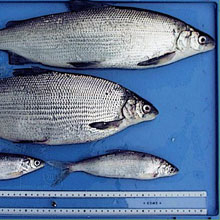
Ecological disturbance reduces genomic diversity across an Alpine whitefish adaptive radiation
Genomic diversity is associated with the adaptive potential of a population and thereby impacts the extinction risk of a species during environmental change. However, empirical data on genomic diversity of populations before environmental perturbations are rare and hence our understanding of the impact of perturbation on diversity is often limited. We here assess genomic diversity utilising whole-genome resequencing data from all four species of the Lake Constance Alpine whitefish radiation. Our data covers a period of strong but transient anthropogenic environmental change and permits us to track changes in genomic diversity in all species over time. Genomic diversity became strongly reduced during the period of anthropogenic disturbance and has not recovered yet. The decrease in genomic diversity varies between 18% and 30%, depending on the species. Interspecific allele frequency differences of SNPs located in potentially ecologically relevant genes were homogenized over time. This suggests that in addition to the reduction of genome-wide genetic variation, the differentiation that evolved in the process of adaptation to alternative ecologies between species might have been lost during the ecological disturbance. The erosion of substantial amounts of genomic variation within just a few generations in combination with the loss of potentially adaptive genomic differentiation, both of which had evolved over thousands of years, demonstrates the sensitivity of biodiversity in evolutionary young adaptive radiations towards environmental disturbance. Natural history collections, such as the one used for this study, are instrumental in the assessment of genomic consequences of anthropogenic environmental change. Historical samples enable us to document biodiversity loss against the shifting baseline syndrome and advance our understanding of the need for efficient biodiversity conservation on a global scale.
Frei, D.; Mwaiko, S.; Seehausen, O.; Feulner, P. G. D. (2024) Ecological disturbance reduces genomic diversity across an Alpine whitefish adaptive radiation, Evolutionary Applications, 17(2), e13617 (12 pp.), doi:10.1111/eva.13617, Institutional Repository
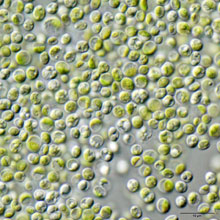
Demographic fluctuations and selection during host–parasite co-evolution interactively increase genetic diversity
Host–parasite interactions can cause strong demographic fluctuations accompanied by selective sweeps of resistance/infectivity alleles. Both demographic bottlenecks and frequent sweeps are expected to reduce the amount of segregating genetic variation and therefore might constrain adaptation during co-evolution. Recent studies, however, suggest that the interaction of demographic and selective processes is a key component of co-evolutionary dynamics and may rather positively affect levels of genetic diversity available for adaptation. Here, we provide direct experimental testing of this hypothesis by disentangling the effects of demography, selection and their interaction in an experimental host–parasite system. We grew 12 populations of a unicellular, asexually reproducing algae (Chlorella variabilis) that experienced either growth followed by constant population sizes (three populations), demographic fluctuations (three populations), selection induced by exposure to a virus (three populations), or demographic fluctuations together with virus-induced selection (three populations). After 50 days (~50 generations), we conducted whole-genome sequencing of each algal host population. We observed more genetic diversity in populations that jointly experienced selection and demographic fluctuations than in populations where these processes were experimentally separated. In addition, in those three populations that jointly experienced selection and demographic fluctuations, experimentally measured diversity exceeds expected values of diversity that account for the cultures' population sizes. Our results suggest that eco-evolutionary feedbacks can positively affect genetic diversity and provide the necessary empirical measures to guide further improvements of theoretical models of adaptation during host–parasite co-evolution.
Le Pennec, G.; Retel, C.; Kowallik, V.; Becks, L.; Feulner, P. G. D. (2024) Demographic fluctuations and selection during host–parasite co-evolution interactively increase genetic diversity, Molecular Ecology, 33(10), e16939 (14 pp.), doi:10.1111/mec.16939, Institutional Repository
Toward the integration of speciation research
Speciation research—the scientific field focused on understanding the origin and diversity of species—has a long and complex history. While relevant to one another, the specific goals and activities of speciation researchers are highly diverse, and scattered across a collection of different perspectives. Thus, our understanding of speciation will benefit from efforts to bridge scientific findings and the diverse people who do the work. In this paper, we outline two ways of integrating speciation research: (i) scientific integration, through the bringing together of ideas, data, and approaches; and (ii) social integration, by creating ways for a diversity of researchers to participate in the scientific process. We then discuss five challenges to integration: (i) the multidisciplinary nature of speciation research, (ii) the complex language of speciation; (iii) a bias toward certain study systems; (iv) the challenges of working across scales; and (v) inconsistent measures and reporting standards. We provide practical steps that individuals and groups can take to help overcome these challenges, and argue that integration is a team effort in which we all have a role to play.
Stankowski, S.; Cutter, A. D.; Satokangas, I.; Lerch, B. A.; Rolland, J.; Smadja, C. M.; Segami Marzal, J. C.; Cooney, C. R.; Feulner, P. G. D.; Bicalho Domingos, F. M. C.; North, H. L.; Yamaguchi, R.; Butlin, R. K.; Wolf, J. B. W.; Coughlan, J.; Heidbreder, P.; Hernández-Gutiérrez, R.; Barnard-Kubow, K. B.; Peede, D.; Rancilhac, L.; Salvador, R. B.; Thompson, K. A.; Stacy, E. A.; Moyle, L. C.; Garlovsky, M. D.; Maulana, A.; Kantelinen, A.; Cacho, N. I.; Schneemann, H.; Domínguez, M.; Dopman, E. B.; Lohse, K.; Rometsch, S. J.; Comeault, A. A.; Merrill, R. M.; Scordato, E. S. C.; Singhal, S.; Pärssinen, V.; Lackey, A. C. R.; Kumar, S.; Meier, J. I.; Barton, N.; Fraïsse, C.; Ravinet, M.; Kulmuni, J. (2024) Toward the integration of speciation research, Evolutionary Journal of the Linnean Society, 3(1), 1-24, doi:10.1093/evolinnean/kzae001, Institutional Repository
Introgression from extinct species facilitates adaptation to its vacated niche
Anthropogenic disturbances of ecosystems are causing a loss of biodiversity at an unprecedented rate. Species extinctions often leave ecological niches underutilized, and their colonization by other species may require new adaptation. In Lake Constance, on the borders of Germany, Austria and Switzerland, an endemic profundal whitefish species went extinct during a period of anthropogenic eutrophication. In the process of extinction, the deep-water species hybridized with three surviving whitefish species of Lake Constance, resulting in introgression of genetic variation that is potentially adaptive in deep-water habitats. Here, we sampled a water depth gradient across a known spawning ground of one of these surviving species, Coregonus macrophthalmus, and caught spawning individuals at greater depths (down to 90 m) than historically recorded. We sequenced a total of 96 whole genomes, 11-17 for each of six different spawning depth populations (4, 12, 20, 40, 60 and 90 m), to document genomic intraspecific differentiation along a water depth gradient. We identified 52 genomic regions that are potentially under divergent selection between the deepest (90 m) and all shallower (4-60 m) spawning habitats. At 12 (23.1%) of these 52 loci, the allele frequency pattern across historical and contemporary populations suggests that introgression from the extinct species potentially facilitates ongoing adaptation to deep water. Our results are consistent with the syngameon hypothesis, proposing that hybridization between members of an adaptive radiation can promote further niche expansion and diversification. Furthermore, our findings demonstrate that introgression from extinct into extant species can be a source of evolvability, enabling rapid adaptation to environmental change, and may contribute to the ecological recovery of ecosystem functions after extinctions.
Frei, D.; Reichlin, P.; Seehausen, O.; Feulner, P. G. D. (2023) Introgression from extinct species facilitates adaptation to its vacated niche, Molecular Ecology, 32(4), 841-853, doi:10.1111/mec.16791, Institutional Repository
Genomic architecture of adaptive radiation and hybridization in Alpine whitefish
Adaptive radiations represent some of the most remarkable explosions of diversification across the tree of life. However, the constraints to rapid diversification and how they are sometimes overcome, particularly the relative roles of genetic architecture and hybridization, remain unclear. Here, we address these questions in the Alpine whitefish radiation, using a whole-genome dataset that includes multiple individuals of each of the 22 species belonging to six ecologically distinct ecomorph classes across several lake-systems. We reveal that repeated ecological and morphological diversification along a common environmental axis is associated with both genome-wide allele frequency shifts and a specific, larger effect, locus, associated with the gene edar. Additionally, we highlight the possible role of introgression between species from different lake-systems in facilitating the evolution and persistence of species with unique trait combinations and ecology. These results highlight the importance of both genome architecture and secondary contact with hybridization in fuelling adaptive radiation.
De-Kayne, R.; Selz, O. M.; Marques, D. A.; Frei, D.; Seehausen, O.; Feulner, P. G. D. (2022) Genomic architecture of adaptive radiation and hybridization in Alpine whitefish, Nature Communications, 13(1), 4479 (13 pp.), doi:10.1038/s41467-022-32181-8, Institutional Repository
Genomic variation from an extinct species is retained in the extant radiation following speciation reversal
Ecosystem degradation and biodiversity loss are major global challenges. When reproductive isolation between species is contingent on the interaction of intrinsic lineage traits with features of the environment, environmental change can weaken reproductive isolation and result in extinction through hybridization. By this process called speciation reversal, extinct species can leave traces in genomes of extant species through introgressive hybridization. Using historical and contemporary samples, we sequenced all four species of an Alpine whitefish radiation before and after anthropogenic lake eutrophication and the associated loss of one species through speciation reversal. Despite the extinction of this taxon, substantial fractions of its genome, including regions shaped by positive selection before eutrophication, persist within surviving species as a consequence of introgressive hybridization during eutrophication. Given the prevalence of environmental change, studying speciation reversal and its genomic consequences provides fundamental insights into evolutionary processes and informs biodiversity conservation.
Frei, D.; De-Kayne, R.; Selz, O. M.; Seehausen, O.; Feulner, P. G. D. (2022) Genomic variation from an extinct species is retained in the extant radiation following speciation reversal, Nature Ecology & Evolution, 6, 461-468, doi:10.1038/s41559-022-01665-7, Institutional Repository
Strong selection and high mutation supply characterize experimental Chlorovirus evolution
Characterizing how viruses evolve expands our understanding of the underlying fundamental processes, such as mutation, selection and drift. One group of viruses whose evolution has not yet been extensively studied are the Phycodnaviridae, a globally abundant family of aquatic large dsDNA viruses. Here we studied the evolutionary change of Paramecium bursaria chlorella virus 1 (PBCV-1) during experimental coevolution with its algal host. We used pooled genome sequencing of six independently evolved populations to characterize genomic change over five time points. Across six experimental replicates involving either strong or weak demographic fluctuations, we found single nucleotide polymorphisms (SNPs) at 67 sites. The occurrence of genetic variants was highly repeatable, with just two of the SNPs found in only a single experimental replicate. Three genes A122/123R, A140/145R and A540L showed an excess of variable sites, providing new information about potential targets of selection during Chlorella-Chlorovirus coevolution. Our data indicated that the studied populations were not mutation-limited and experienced strong positive selection. Our investigation highlighted relevant processes governing the evolution of aquatic large dsDNA viruses, which ultimately contributes to a better understanding of the functioning of natural aquatic ecosystems.
Retel, C.; Kowallik, V.; Becks, L.; Feulner, P. G. D. (2022) Strong selection and high mutation supply characterize experimental Chlorovirus evolution, Virus Evolution, 8(1), veac003 (14 pp.), doi:10.1093/ve/veac003, Institutional Repository
Sequencing platform shifts provide opportunities but pose challenges for combining genomic datasets
Technological advances in DNA sequencing over the last decade now permit the production and curation of large genomic datasets in an increasing number of non‐model species. Additionally, this new data provides the opportunity for combining datasets, resulting in larger studies with a broader taxonomic range. Whilst the development of new sequencing platforms has been beneficial, resulting in a higher throughput of data at a lower per‐base cost, shifts in sequencing technology can also pose challenges for those wishing to combine new sequencing data with data sequenced on older platforms. Here, we outline the types of studies where the use of curated data might be beneficial, and highlight potential biases that might be introduced by combining data from different sequencing platforms. As an example of the challenges associated with combining data across sequencing platforms, we focus on the impact of the shift in Illumina's base calling technology from a four‐channel to a two‐channel system. We caution that when data is combined from these two systems, erroneous guanine base calls that result from the two‐channel chemistry can make their way through a bioinformatic pipeline, eventually leading to inaccurate and potentially misleading conclusions. We also suggest solutions for dealing with such potential artifacts, which make samples sequenced on different sequencing platforms appear more differentiated from one another than they really are. Finally, we stress the importance of archiving tissue samples and the associated sequences for the continued reproducibility and reusability of sequencing data in the face of ever‐changing sequencing platform technology.
De‐Kayne, R.; Frei, D.; Greenway, R.; Mendes, S. L.; Retel, C.; Feulner, P. G. D. (2021) Sequencing platform shifts provide opportunities but pose challenges for combining genomic datasets, Molecular Ecology Resources, 21(3), 653-660, doi:10.1111/1755-0998.13309, Institutional Repository
A de novo chromosome-level genome assembly of Coregonus sp. "Balchen": one representative of the Swiss Alpine whitefish radiation
Salmonids are of particular interest to evolutionary biologists due to their incredible diversity of life-history strategies and the speed at which many salmonid species have diversified. In Switzerland alone, over 30 species of Alpine whitefish from the subfamily Coregoninae have evolved since the last glacial maximum, with species exhibiting a diverse range of morphological and behavioural phenotypes. This, combined with the whole genome duplication which occurred in the ancestor of all salmonids, makes the Alpine whitefish radiation a particularly interesting system in which to study the genetic basis of adaptation and speciation and the impacts of ploidy changes and subsequent rediploidization on genome evolution. Although well curated genome assemblies exist for many species within Salmonidae, genomic resources for the subfamily Coregoninae are lacking. To assemble a whitefish reference genome, we carried out PacBio sequencing from one wild-caught Coregonus sp. "Balchen" from Lake Thun to ~90x coverage. PacBio reads were assembled independently using three different assemblers, Falcon, Canu and wtdbg2 and subsequently scaffolded with additional Hi-C data. All three assemblies were highly contiguous, had strong synteny to a previously published Coregonus linkage map, and when mapping additional short-read data to each of the assemblies, coverage was fairly even across most chromosome-scale scaffolds. Here, we present the first de novo genome assembly for the Salmonid subfamily Coregoninae. The final 2.2 Gb wtdbg2 assembly included 40 scaffolds, an N50 of 51.9 Mb, and was 93.3% complete for BUSCOs. The assembly consisted of ~52% TEs and contained 44,525 genes.
De-Kayne, R.; Zoller, S.; Feulner, P. G. D. (2020) A de novo chromosome-level genome assembly of Coregonus sp. "Balchen": one representative of the Swiss Alpine whitefish radiation, Molecular Ecology Resources, 20(4), 1093-1109, doi:10.1111/1755-0998.13187, Institutional Repository
Genomic insights into the vulnerability of sympatric whitefish species flocks
The erosion of habitat heterogeneity can reduce species diversity directly but can also lead to the loss of distinctiveness of sympatric species through speciation reversal. We know little about changes in genomic differentiation during the early stages of these processes, which can be mediated by anthropogenic perturbation. Here, we analyse three sympatric whitefish species (Coregonus spp) sampled across two neighbouring and connected Swiss pre‐alpine lakes, which have been differentially affected by anthropogenic eutrophication. Our data set comprises 16,173 loci genotyped across 138 whitefish using restriction‐site associated DNA sequencing (RADseq). Our analysis suggests that in each of the two lakes the population of a different, but ecologically similar, whitefish species declined following a recent period of eutrophication. Genomic signatures consistent with hybridisation are more pronounced in the more severely impacted lake. Comparisons between sympatric pairs of whitefish species with contrasting ecology, where one is shallow benthic and the other one more profundal pelagic, reveal genomic differentiation that is largely correlated along the genome, while differentiation is uncorrelated between pairs of allopatric provenance with similar ecology. We identify four genomic loci that provide evidence of parallel divergent adaptation between the shallow benthic species and the two different more profundal species. Functional annotations available for two of those loci are consistent with divergent ecological adaptation. Our genomic analysis indicates the action of divergent natural selection between sympatric whitefish species in pre‐alpine lakes and reveals the vulnerability of these species to anthropogenic alterations of the environment and associated adaptive landscape.
Feulner, P. G. D.; Seehausen, O. (2019) Genomic insights into the vulnerability of sympatric whitefish species flocks, Molecular Ecology, 28, 615-629, doi:10.1111/mec.14977, Institutional Repository
The feedback between selection and demography shapes genomic diversity during coevolution
Species interactions and coevolution are integral to ecological communities, but we lack empirical information on when and how these interactions generate and purge genetic diversity. Using genomic time series data from host-virus experiments, we found that coevolution occurs through consecutive selective sweeps in both species, with temporal consistency across replicates. Sweeps were accompanied by phenotypic change (resistance or infectivity increases) and expansions in population size. In the host, population expansion enabled rapid generation of genetic diversity in accordance with neutral processes. Viral molecular evolution was, in contrast, confined to few genes, all putative targets of selection. This study demonstrates that molecular evolution during species interactions is shaped by both eco-evolutionary feedback dynamics and interspecific differences in how genetic diversity is generated and maintained.
Retel, C.; Kowallik, V.; Huang, W.; Werner, B.; Künzel, S.; Becks, L.; Feulner, P. G. D. (2019) The feedback between selection and demography shapes genomic diversity during coevolution, Science Advances, 5(10), eaax0530 (9 pp.), doi:10.1126/sciadv.aax0530, Institutional Repository
Extensive copy-number variation of young genes across stickleback populations
Duplicate genes emerge as copy-number variations (CNVs) at the population level, and remain copy-number polymorphic until they are fixed or lost. The successful establishment of such structural polymorphisms in the genome plays an important role in evolution by promoting genetic diversity, complexity and innovation. To characterize the early evolutionary stages of duplicate genes and their potential adaptive benefits, we combine comparative genomics with population genomics analyses to evaluate the distribution and impact of CNVs across natural populations of an eco-genomic model, the three-spined stickleback. With whole genome sequences of 66 individuals from populations inhabiting three distinct habitats, we find that CNVs generally occur at low frequencies and are often only found in one of the 11 populations surveyed. A subset of CNVs, however, displays copy-number differentiation between populations, showing elevated within-population frequencies consistent with local adaptation. By comparing teleost genomes to identify lineage-specific genes and duplications in sticklebacks, we highlight rampant gene content differences among individuals in which over 30% of young duplicate genes are CNVs. These CNV genes are evolving rapidly at the molecular level and are enriched with functional categories associated with environmental interactions, depicting the dynamic early copy-number polymorphic stage of genes during population differentiation.
Chain, F. J. J.; Feulner, P. G. D.; Panchal, M.; Eizaguirre, C.; Samonte, I. E.; Kalbe, M.; Lenz, T. L.; Stoll, M.; Bornberg-Bauer, E.; Milinski, M.; Reusch, T. B. H. (2014) Extensive copy-number variation of young genes across stickleback populations, PLoS Genetics, 10(12), 1-18, doi:10.1371/journal.pgen.1004830, Institutional Repository
A European whitefish linkage map and its implications for understanding genome-wide synteny between salmonids following whole genome duplication
Genomic datasets continue to increase in number due to the ease of production for a wider selection of species including non-model organisms. For many of these species, especially those with large or polyploid genomes, highly contiguous and well-annotated genomes are still rare due to the complexity and cost involved in their assembly. As a result, a common starting point for genomic work in non-model species is the production of a linkage map. Dense linkage maps facilitate the analysis of genomic data in a variety of ways, from broad scale observations regarding genome structure e.g. chromosome number and type or sex-related structural differences, to fine scale patterns e.g. recombination rate variation and co-localization of differentiated regions. Here we present both sex-averaged and sex-specific linkage maps for Coregonus sp. "Albock", a member of the European whitefish lineage (C. lavaretus spp. complex), containing 5395 single nucleotide polymorphism (SNP) loci across 40 linkage groups to facilitate future investigation into the genomic basis of whitefish adaptation and speciation. The map was produced using restriction-site associated digestion (RAD) sequencing data from two wild-caught parents and 156 F1 offspring. We discuss the differences between our sex-averaged and sex-specific maps and identify genome-wide synteny between C. sp. "Albock" and Atlantic Salmon (Salmo salar), which have diverged following the salmonid-specific whole genome duplication. Our analysis confirms that many patterns of synteny observed between Atlantic Salmon and Oncorhynchus and Salvelinus species are also shared by members of the Coregoninae subfamily. We also show that regions known for their species-specific rediploidization history can pose challenges for synteny identification since these regions have diverged independently in each salmonid species following the salmonid-specific whole genome duplication. The European whitefish map provided here will enable future studies to understand the distribution of loci of interest, e.g. FST outliers, along the whitefish genome as well as assisting with the de novo assembly of a whitefish reference genome.
De-Kayne, R.; Feulner, P. G. D. (2018) A European whitefish linkage map and its implications for understanding genome-wide synteny between salmonids following whole genome duplication, G3: Genes, Genomes, Genetics, 8(12), 3745-3755, doi:10.1534/g3.118.200552, Institutional Repository
Population size changes and selection drive patterns of parallel evolution in a host–virus system
Predicting the repeatability of evolution remains elusive. Theory and empirical studies suggest that strong selection and large population sizes increase the probability for parallel evolution at the phenotypic and genotypic levels. However, selection and population sizes are not constant, but rather change continuously and directly affect each other even on short time scales. Here, we examine the degree of parallel evolution shaped through ecoevolutionary dynamics in an algal host population coevolving with a virus. We find high degrees of parallelism at the level of population size changes (ecology) and at the phenotypic level between replicated populations. At the genomic level, we find evidence for parallelism, as the same large genomic region was duplicated in all replicated populations, but also substantial novel sequence divergence between replicates. These patterns of genome evolution can be explained by considering population size changes as an important driver of rapid evolution.
Frickel, J.; Feulner, P. G. D.; Karakoc, E.; Becks, L. (2018) Population size changes and selection drive patterns of parallel evolution in a host–virus system, Nature Communications, 9(1), 1760 (10 pp.), doi:10.1038/s41467-018-03990-7, Institutional Repository
A dense linkage map of Lake Victoria cichlids improved the Pundamilia genome assembly and revealed a major QTL for sex-determination
Genetic linkage maps are essential for comparative genomics, high quality genome sequence assembly and fine scale quantitative trait locus (QTL) mapping. In the present study we identified and genotyped markers via restriction-site associated DNA (RAD) sequencing and constructed a genetic linkage map based on 1,597 SNP markers of an interspecific F2 cross of two closely related Lake Victoria cichlids (Pundamilia pundamilia and P. sp. 'red head'). The SNP markers were distributed on 22 linkage groups and the total map size was 1,594 cM with an average marker distance of 1.01 cM. This high-resolution genetic linkage map was used to anchor the scaffolds of the Pundamilia genome and estimate recombination rates along the genome. Via QTL mapping we identified a major QTL for sex in a ∼1.9 Mb region on Pun-LG10, which is homologous to Oreochromis niloticus LG 23 (Ore-LG23) and includes a well-known vertebrate sex-determination gene (amh).
Feulner, P. G. D.; Schwarzer, J.; Haesler, M. P.; Meier, J. I.; Seehausen, O. (2018) A dense linkage map of Lake Victoria cichlids improved the Pundamilia genome assembly and revealed a major QTL for sex-determination, G3: Genes, Genomes, Genetics, 8(7), 2411-2420, doi:10.1534/g3.118.200207, Institutional Repository
Feulner, P. G. D.; De-Kayne, R. (2017) Genome evolution, structural rearrangements and speciation, Journal of Evolutionary Biology, 30(8), 1488-1490, doi:10.1111/jeb.13101, Institutional Repository
Variation in recombination frequency and distribution across eukaryotes: patterns and processes
Recombination, the exchange of DNA between maternal and paternal chromosomes during meiosis, is an essential feature of sexual reproduction in nearly all multicellular organisms. While the role of recombination in the evolution of sex has received theoretical and empirical attention, less is known about how recombination rate itself evolves and what influence this has on evolutionary processes within sexually reproducing organisms. Here, we explore the patterns of, and processes governing recombination in eukaryotes. We summarize patterns of variation, integrating current knowledge with an analysis of linkage map data in 353 organisms. We then discuss proximate and ultimate processes governing recombination rate variation and consider how these influence evolutionary processes. Genome-wide recombination rates (cM/Mb) can vary more than tenfold across eukaryotes, and there is large variation in the distribution of recombination events across closely related taxa, populations and individuals. We discuss how variation in rate and distribution relates to genome architecture, genetic and epigenetic mechanisms, sex, environmental perturbations and variable selective pressures. There has been great progress in determining the molecular mechanisms governing recombination, and with the continued development of new modelling and empirical approaches, there is now also great opportunity to further our understanding of how and why recombination rate varies. This article is part of the themed issue 'Evolutionary causes and consequences of recombination rate variation in sexual organisms'.
Stapley, J.; Feulner, P. G. D.; Johnston, S. E.; Santure, A. W.; Smadja, C. M. (2017) Variation in recombination frequency and distribution across eukaryotes: patterns and processes, Philosophical Transactions of the Royal Society B: Biological Sciences, 372(1736), 20160455 (10 pp.), doi:10.1098/rstb.2016.0455, Institutional Repository
Transcriptome profiling of immune tissues reveals habitat-specific gene expression between lake and river sticklebacks
The observation of habitat-specific phenotypes suggests the action of natural selection. The three-spined stickleback (Gasterosteus aculeatus) has repeatedly colonized and adapted to diverse freshwater habitats across the northern hemisphere since the last glaciation, while giving rise to recurring phenotypes associated with specific habitats. Parapatric lake and river populations of sticklebacks harbour distinct parasite communities, a factor proposed to contribute to adaptive differentiation between these ecotypes. However, little is known about the transcriptional response to the distinct parasite pressure of those fish in a natural setting. Here, we sampled wild-caught sticklebacks across four geographical locations from lake and river habitats differing in their parasite load. We compared gene expression profiles between lake and river populations using 77 whole-transcriptome libraries from two immune-relevant tissues, the head kidney and the spleen. Differential expression analyses revealed 139 genes with habitat-specific expression patterns across the sampled population pairs. Among the 139 differentially expressed genes, eight are annotated with an immune function and 42 have been identified as differentially expressed in previous experimental studies in which fish have been immune challenged. Together, these findings reinforce the hypothesis that parasites contribute to adaptation of sticklebacks in lake and river habitats.
Huang, Y.; Chain, F. J. J.; Panchal, M.; Eizaguirre, C.; Kalbe, M.; Lenz, T. L.; Samonte, I. E.; Stoll, M.; Bornberg-Bauer, E.; Reusch, T. B. H.; Milinski, M.; Feulner, P. G. D. (2016) Transcriptome profiling of immune tissues reveals habitat-specific gene expression between lake and river sticklebacks, Molecular Ecology, 25(4), 943-958, doi:10.1111/mec.13520, Institutional Repository
Genomics of divergence along a continuum of parapatric population differentiation
The patterns of genomic divergence during ecological speciation are shaped by a combination of evolutionary forces. Processes such as genetic drift, local reduction of gene flow around genes causing reproductive isolation, hitchhiking around selected variants, variation in recombination and mutation rates are all factors that can contribute to the heterogeneity of genomic divergence. On the basis of 60 fully sequenced three-spined stickleback genomes, we explore these different mechanisms explaining the heterogeneity of genomic divergence across five parapatric lake and river population pairs varying in their degree of genetic differentiation. We find that divergent regions of the genome are mostly specific for each population pair, while their size and abundance are not correlated with the extent of genome-wide population differentiation. In each pair-wise comparison, an analysis of allele frequency spectra reveals that 25–55% of the divergent regions are consistent with a local restriction of gene flow. Another large proportion of divergent regions (38–75%) appears to be mainly shaped by hitchhiking effects around positively selected variants. We provide empirical evidence that alternative mechanisms determining the evolution of genomic patterns of divergence are not mutually exclusive, but rather act in concert to shape the genome during population differentiation, a first necessary step towards ecological speciation.
Feulner, P. G. D.; Chain, F. J. J.; Panchal, M.; Huang, Y.; Eizaguirre, C.; Kalbe, M.; Lenz, T. L.; Samonte, I. E.; Stoll, M.; Bornberg-Bauer, E.; Reusch, T. B. H.; Milinski, M. (2015) Genomics of divergence along a continuum of parapatric population differentiation, PLoS Genetics, 11(2), 1-18, doi:10.1371/journal.pgen.1004966, Institutional Repository
Laufende Projekte
Establishing a framework for conservation genomics of freshwater biodiversity
In this on-going large-scale genomics project we study the genome evolution at a population scale in an ecological and evolutionary model species, the three-spined stickleback. We analyse whole genome data from 66 three-spined sticklebacks, which originate from three ecotypes, a marine population and multiple lake-river population pairs, over a broad geographical range. Population diversity is contrasted between parapatric and geographically distant (allopatric) population pairs undergoing parallel ecological Adaptation.
array(2 items)0 => Snowflake\Publications\Domain\Model\Publicationprototypepersistent entity (uid=9158, pid=124)originalId => protected9158 (integer)
authors => protected'Feulner, P. G. D.; Chain, F. J. J.; Panchal,&n bsp;M.; Huang, Y.; Eizaguirre, C.; Kalbe, M.; Lenz, T.&n bsp;L.; Samonte, I. E.; Stoll, M.; Bornberg-Bauer, E.; R eusch, T. B. H.; Milinski, M.' (277 chars)
title => protected'Genomics of divergence along a continuum of parapatric population differenti ation' (81 chars)
journal => protected'PLoS Genetics' (13 chars)
year => protected2015 (integer)
volume => protected11 (integer)
issue => protected'2' (1 chars)
startpage => protected'1' (1 chars)
otherpage => protected'18' (2 chars)
categories => protected'' (0 chars)
description => protected'The patterns of genomic divergence during ecological speciation are shaped b y a combination of evolutionary forces. Processes such as genetic drift, loc al reduction of gene flow around genes causing reproductive isolation, hitch hiking around selected variants, variation in recombination and mutation rat es are all factors that can contribute to the heterogeneity of genomic diver gence. On the basis of 60 fully sequenced three-spined stickleback genomes, we explore these different mechanisms explaining the heterogeneity of genomi c divergence across five parapatric lake and river population pairs varying in their degree of genetic differentiation. We find that divergent regions o f the genome are mostly specific for each population pair, while their size and abundance are not correlated with the extent of genome-wide population d ifferentiation. In each pair-wise comparison, an analysis of allele frequenc y spectra reveals that 25–55% of the divergent regions are consistent with a local restriction of gene flow. Another large proportion of divergent reg ions (38–75%) appears to be mainly shaped by hitchhiking effects around po sitively selected variants. We provide empirical evidence that alternative m echanisms determining the evolution of genomic patterns of divergence are no t mutually exclusive, but rather act in concert to shape the genome during p opulation differentiation, a first necessary step towards ecological speciat ion.' (1448 chars)
serialnumber => protected'1553-7390' (9 chars)
doi => protected'10.1371/journal.pgen.1004966' (28 chars)
uid => protected9158 (integer)
_localizedUid => protected9158 (integer)modified_languageUid => protectedNULL
_versionedUid => protected9158 (integer)modifiedpid => protected124 (integer)1 => Snowflake\Publications\Domain\Model\Publicationprototypepersistent entity (uid=9142, pid=124)originalId => protected9142 (integer)
authors => protected'Chain, F. J. J.; Feulner, P. G. D.; Panchal,&n bsp;M.; Eizaguirre, C.; Samonte, I. E.; Kalbe, M.; Lenz, T. L.; Stoll, M.; Bornberg-Bauer, E.; Milinski, M. ; Reusch, T. B. H.' (261 chars)
title => protected'Extensive copy-number variation of young genes across stickleback population s' (77 chars)
journal => protected'PLoS Genetics' (13 chars)
year => protected2014 (integer)
volume => protected10 (integer)
issue => protected'12' (2 chars)
startpage => protected'1' (1 chars)
otherpage => protected'18' (2 chars)
categories => protected'' (0 chars)
description => protected'Duplicate genes emerge as copy-number variations (CNVs) at the population le vel, and remain copy-number polymorphic until they are fixed or lost. The su ccessful establishment of such structural polymorphisms in the genome plays an important role in evolution by promoting genetic diversity, complexity an d innovation. To characterize the early evolutionary stages of duplicate gen es and their potential adaptive benefits, we combine comparative genomics wi th population genomics analyses to evaluate the distribution and impact of C NVs across natural populations of an eco-genomic model, the three-spined sti ckleback. With whole genome sequences of 66 individuals from populations inh abiting three distinct habitats, we find that CNVs generally occur at low fr equencies and are often only found in one of the 11 populations surveyed. A subset of CNVs, however, displays copy-number differentiation between popula tions, showing elevated within-population frequencies consistent with local adaptation. By comparing teleost genomes to identify lineage-specific genes and duplications in sticklebacks, we highlight rampant gene content differen ces among individuals in which over 30% of young duplicate genes are CNVs. T hese CNV genes are evolving rapidly at the molecular level and are enriched with functional categories associated with environmental interactions, depic ting the dynamic early copy-number polymorphic stage of genes during populat ion differentiation.' (1464 chars)
serialnumber => protected'1553-7390' (9 chars)
doi => protected'10.1371/journal.pgen.1004830' (28 chars)
uid => protected9142 (integer)
_localizedUid => protected9142 (integer)modified_languageUid => protectedNULL
_versionedUid => protected9142 (integer)modifiedpid => protected124 (integer)
Genomics of divergence along a continuum of parapatric population differentiation
The patterns of genomic divergence during ecological speciation are shaped by a combination of evolutionary forces. Processes such as genetic drift, local reduction of gene flow around genes causing reproductive isolation, hitchhiking around selected variants, variation in recombination and mutation rates are all factors that can contribute to the heterogeneity of genomic divergence. On the basis of 60 fully sequenced three-spined stickleback genomes, we explore these different mechanisms explaining the heterogeneity of genomic divergence across five parapatric lake and river population pairs varying in their degree of genetic differentiation. We find that divergent regions of the genome are mostly specific for each population pair, while their size and abundance are not correlated with the extent of genome-wide population differentiation. In each pair-wise comparison, an analysis of allele frequency spectra reveals that 25–55% of the divergent regions are consistent with a local restriction of gene flow. Another large proportion of divergent regions (38–75%) appears to be mainly shaped by hitchhiking effects around positively selected variants. We provide empirical evidence that alternative mechanisms determining the evolution of genomic patterns of divergence are not mutually exclusive, but rather act in concert to shape the genome during population differentiation, a first necessary step towards ecological speciation.
Feulner, P. G. D.; Chain, F. J. J.; Panchal, M.; Huang, Y.; Eizaguirre, C.; Kalbe, M.; Lenz, T. L.; Samonte, I. E.; Stoll, M.; Bornberg-Bauer, E.; Reusch, T. B. H.; Milinski, M. (2015) Genomics of divergence along a continuum of parapatric population differentiation, PLoS Genetics, 11(2), 1-18, doi:10.1371/journal.pgen.1004966, Institutional Repository
Extensive copy-number variation of young genes across stickleback populations
Duplicate genes emerge as copy-number variations (CNVs) at the population level, and remain copy-number polymorphic until they are fixed or lost. The successful establishment of such structural polymorphisms in the genome plays an important role in evolution by promoting genetic diversity, complexity and innovation. To characterize the early evolutionary stages of duplicate genes and their potential adaptive benefits, we combine comparative genomics with population genomics analyses to evaluate the distribution and impact of CNVs across natural populations of an eco-genomic model, the three-spined stickleback. With whole genome sequences of 66 individuals from populations inhabiting three distinct habitats, we find that CNVs generally occur at low frequencies and are often only found in one of the 11 populations surveyed. A subset of CNVs, however, displays copy-number differentiation between populations, showing elevated within-population frequencies consistent with local adaptation. By comparing teleost genomes to identify lineage-specific genes and duplications in sticklebacks, we highlight rampant gene content differences among individuals in which over 30% of young duplicate genes are CNVs. These CNV genes are evolving rapidly at the molecular level and are enriched with functional categories associated with environmental interactions, depicting the dynamic early copy-number polymorphic stage of genes during population differentiation.
Chain, F. J. J.; Feulner, P. G. D.; Panchal, M.; Eizaguirre, C.; Samonte, I. E.; Kalbe, M.; Lenz, T. L.; Stoll, M.; Bornberg-Bauer, E.; Milinski, M.; Reusch, T. B. H. (2014) Extensive copy-number variation of young genes across stickleback populations, PLoS Genetics, 10(12), 1-18, doi:10.1371/journal.pgen.1004830, Institutional Repository
Feulner, P.G.D.*, Chain, F.J.J.*, Panchal, M.*, Eizaguirre, C., Kalbe, M., Lenz, T.L., Mundry, M., Samonte-Padilla, I., Stoll, M., Milinski, M., Reusch, T.B.H., Bornberg-Bauer, E. (2013) Genome-wide patterns of standing genetic variation in a natural marine population of three-spined sticklebacks. Molecular Ecology 22: 635-49
Admixture, the mixing between divergent genomes, is widely thought to hinder local adaptation. However, a handful of recent studies have suggested that admixture can promote local adaptation. The Soay sheep of St Kilda are a primitive breed that have been the subject of a well documented long-term study, where data on life history, morphology, parasite burden, and pedigree information have been collected for over 7000 sheep. We followed up historical anecdotal evidence of an admixture event in the mid-late 1800s by screening 486 Soay sheep on a 50k ovine SNP chip. We found evidence for such a recent admixture event with a more modern, domesticated breed in the analysed genomic data. Utilising the HapMap dataset of over 60 different sheep breeds we showed that several haplotypes, previously demonstrated to be under selection in this population, have been introduced into Soay sheep from more modern breeds. Our study demonstrates that the introgression of domesticated alleles into wild populations is not necessarily disadvantageous and in fact it may provide a novel source of genetic variation capable of generating rapid evolutionary changes.
Publikationen
Feulner, P.G.D. *, Gratten, J.*, Kijas, J.W., Visscher, P.M., Pemberton, J.M., Slate, J. (2013) Introgression and the fate of domesticated genes in a wild mammal population, Molecular Ecology 22:4210-4221
In this project we build a first comprehensive phylogeny of the mormyrid genus Campylomormyrus. We further assessed the importance of two very unusual features of these peculiar fish for the speciation process: their trunk-like elongated snout and their ability to produce electric signals for orientation and communication. Using morphometrics we demonstrated that the trunk morphology correlates with reproductively isolated groups characterised by specific electric signals, i.e. species. Behavioural studies further indicated that the waveform of the Electric Organ Discharge (EOD) causes assortative mating and therefore reproductive isolation. Because the EOD is also used for electrolocation of prey, we proposed the EOD as a ‘magic trait’ promoting the ecological speciation of Campylomormyrus within the Congo River.
Publikationen
Feulner, P.G.D., Plath, M., Engelmann, J., Kirschbaum, F., Tiedemann, R. (2009) Electrifying love: electric fish use species-specific discharge for mate recognition. Biology Letters 5: 225-228.
Feulner, P.G.D., Plath, M., Engelmann, J., Kirschbaum, F., Tiedemann, R. (2009) Article Addendum - Magic trait Electric Organ Discharge (EOD): Dual function of electric signals promotes speciation in African weakly electric fish. Communicative & Integrative Biology 2: issue 4.
Feulner, P.G.D., Kirschbaum, F., Tiedemann, R. (2008) Adaptive radiation in the Congo River: An ecological speciation scenario for African weakly electric fish (Teleostei; Mormyridae; Campylomormyrus). Journal of Physiology – Paris 102: 340-346.
Feulner, P.G.D., Kirschbaum, F., Mamonekene V., Ketmaier V., Tiedemann, R. (2007) Adaptive radiation in African weakly electric fish (Teleostei: Mormyridae: Campylomormyrus): a combined molecular and morphological approach. Journal of Evolutionary Biology 20: 403-414.
Feulner, P.G.D., Kirschbaum, F., Schugardt C., Ketmaier V., Tiedemann, R. (2006) Electrophysiological and molecular genetic evidence for sympatrically occuring cryptic species in African weakly electric fishes (Teleostei: Mormyridae: Campylomormyrus). Molecular Phylogenetics and Evolution 39: 198-208.