Archiv Detail

ETH-Medaille für Lisa Deutsch

26 gennaio 2026 | Bärbel Zierl

Die Soziologin und Politikwissenschaftlerin Lisa Deutsch wurde für ihre an der Eawag und der ETH Zürich verfassten Doktorarbeit mit der ETH-Medaille ausgezeichnet. Mit ihrer Forschung zeigte sie auf, wie inter- und transdisziplinäre Forschung gelingen kann und wie sich Theorie und Praxis in der Forschung verbinden lassen.

Die ETH Zürich zeichnet jedes Jahr hervorragende Master- und Doktorarbeiten mit der ETH-Medaille aus. Eine der Medaillen ging dieses Jahr an Lisa Deutsch für ihre Doktorarbeit «Practicing integration in inter- and transdisciplinary research: The role of enabling conditions and integrative leadership». Die Verleihung der ETH-Medaille fand im Rahmen der Promotionsfeier am 23. Januar statt.

Inter- und transdisziplinäre Forschung in der Praxis

Gesellschaftliche Herausforderungen wie Klimawandel, Nachhaltigkeit oder Pandemien sind komplex und lassen sich nicht einfach bewältigen. In ihrer Doktorarbeit zeigt Lisa Deutsch, dass es weniger an Expertinnen und Experten mangelt, sondern vor allem an einer wirksamen Zusammenarbeit über disziplinäre Fachgrenzen hinweg (interdisziplinär) sowie zwischen Wissenschaft, Politik und Praxis (transdisziplinär). Damit inter- und transdisziplinäre (ITD) Integration gelingt, muss sie proaktiv gefördert und geleitet werden.

Geeignete Rahmenbedingungen, integrative Führung und unterstützende Methoden

Auf Basis einer qualitativen Begleitforschung in drei grossen ITD-Forschungsprogrammen und Netzwerken in der Schweiz zwischen 2020 und 2023 analysierte Lisa Deutsch, wie Integrationsprozesse konkret gestaltet werden können, was förderlich bzw. hinderlich ist. Ihre Ergebnisse zeigen, dass das Ineinandergreifen von drei Faktoren entscheidend ist: geeignete Rahmenbedingungen, integrative Führung und unterstützende Methoden. «Oft konzentriert man sich auf nur einen dieser Faktoren. Mir war wichtig, ihr Zusammenspiel zu untersuchen und daraus konkrete Handlungsansätze auf verschiedenen Ebenen abzuleiten» sagt Lisa Deutsch.
 

Ihre Arbeit macht deutlich, dass förderliche Rahmenbedingungen auf mehreren Ebenen ansetzen müssen – von einzelnen Teammitgliedern, Programmleitenden und Direktionen über Programmdesign und Anreizstrukturen in Institutionen bis hin zu den Geldgebern und Entscheidungsträgerinnen in der Wissenschaftspolitik. Zudem arbeitete Lisa Deutsch heraus, dass integrative Führung eine Schlüsselrolle spielt, für die ausreichend personelle Ressourcen und Integrationsexpertise vorhanden sein müssen. Erfolgreiche Leitung von ITD-Programmen bedeutet dabei mehr als Koordination und Moderation: Sie umfasst neben unterstützenden, auch kreative und inhaltliche Beiträge sowie den aktiven Umgang mit vielfältigen Führungsherausforderungen. Ergänzend präsentiert die Arbeit Einsichten in die Anwendung integrativer Methoden wie der „Theory of Change“ auf ITD-Forschungsprogramme und diskutiert, wie diese dabei helfen können, die Integration über inter- und transdisziplinäre Grenzen hinweg zu erleichtern und praktisch umzusetzen.

Cartoons und ein nominierter Kurzfilm veranschaulichen die Ergebnisse

Ihre Erkenntnisse veranschaulichte Lisa Deutsch zudem mit dem Zeichner und Cartoonisten Christof Stückelberger und der Eawag-Forschungsgruppenleiterin Sabine Hoffmann in einer Reihe von Cartoons «Wie inter- und transdisziplinäre Forschung garantiert scheitert». Die dargestellten Szenen geben auf humoristische Art disziplinenübergreifende Denkanstösse. Sie laden dazu ein, das eigene Forschungsverhalten zu überdenken und mit Teammitgliedern zu diskutieren, wie gute ITD-Forschung gelingen kann.
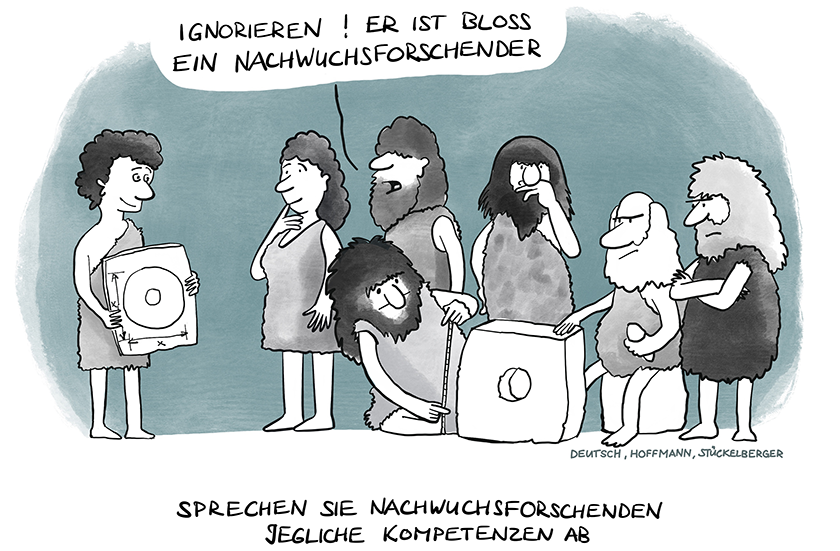
Cartoons: Wie inter- und transdisziplinäre Forschung garantiert scheitert. Szenen aus der inter- und transdisziplinären Forschung. Zu den Cartoons (Cartoons: Lisa Deutsch, Sabine Hoffmann, Christof Stückelberger)

Zudem entstand in Zusammenarbeit mit anderen Nachwuchsforschenden aus dem Forschungsprogramm Wings der animierte Kurzfilm «Verhebets? Ein ressourcenorientierter Apéro», der vom Global Science Film Festival in der Kategorie «Best Short Film 2023» nominiert wurde. Er erklärt das Potenzial der ressourcenorientierten Siedlungswasserwirtschaft und beantwortet häufige Fragen und Bedenken der wichtigsten Interessengruppen.

Animierter Kurzfilm «Verhebets? Ein ressourcenorientierter Apéro»

Insgesamt verbindet die Doktorarbeit von Lisa Deutsch Theorie und Praxis und liefert konkrete, handlungsorientierte Erkenntnisse für alle, die inter- und transdisziplinäre Forschung stärken und ihren Beitrag zur Lösung gesellschaftlicher Zukunftsfragen wirksam gestalten möchten. «Besonders begeistert hat mich der Enthusiasmus und das Engagement, mit dem die Programmleitenden an den regelmässigen Fokusgruppen teilgenommen haben. Dieser Reflexionsraum ermöglichte es, Erkenntnisse aus der Begleitforschung frühzeitig in die laufenden Programme einfliessen zu lassen – statt erst am Ende des Projekts, wo sie potenziell in der Schublade verschwinden können.»

Die Arbeit entstand im Rahmen des Eawag-Programms Wings in der Eawag-Forschungsgruppe Inter- und Transdisziplinäre Forschung (Dr. Sabine Hoffmann) sowie dem Transdisciplinarity Lab (Prof. Christian Pohl) und der Forschungsgruppe Wetter- und Klimarisiken (Prof. David N. Bresch) der ETH Zürich. Aktuell ist Lisa Deutsch für das Gesundheits- und Umweltdepartement der Stadt Zürich als Stabsmitarbeiterin und Projektleiterin tätig.


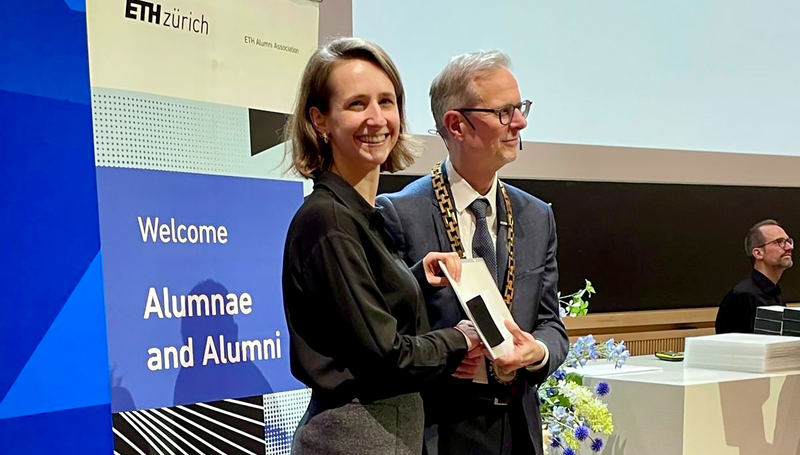
Titelbild:  Die ETH-Zürich überreicht Lisa Deutsch die ETH-Medaille für ihre Doktorarbeit, die sie an der Eawag und an der ETH Zürich verfasst hat. (Foto: Sabine Hoffmann)
 

Publikationen

Extbase Variable Dump
array(3 items)
   publications => '33599,33843,33548,22292' (23 chars)
   libraryUrl => '' (0 chars)
   layout => '0' (1 chars)
Extbase Variable Dump
array(4 items)
   0 => Snowflake\Publications\Domain\Model\Publicationprototypepersistent entity (uid=33599, pid=124)
      originalId => protected33599 (integer)
      authors => protected'Deutsch, L.' (16 chars)
      title => protected'Practicing integration in inter- and transdisciplinary research: the role of
          enabling conditions and integrative leadership
' (123 chars) journal => protected'' (0 chars) year => protected2024 (integer) volume => protected0 (integer) issue => protected'' (0 chars) startpage => protected'145 p' (10 chars) otherpage => protected'' (0 chars) categories => protected'' (0 chars) description => protected'Given the complexity of contemporary societal challenges such as climate cha
         nge, sustainability transformations and pandemics, the question of how these
          challenges can be adequately addressed has become increasingly urgent in re
         cent years. In the highly differentiated societies of the 21st century, ther
         e is generally no shortage of experts who can make a valuable contribution t
         o addressing these problems. However, what tends to be lacking is a meaningf
         ul integration of these individual perspectives across disciplinary boundari
         es (interdisciplinarity) as well as the integration of knowledge from scienc
         e, policy and practice (transdisciplinarity) in order to avoid a one-sided u
         nderstanding of and solution to the aforementioned challenges. For this reas
         on, more and more inter- and transdisciplinary research programs are being s
         et up to address societally relevant issues by bundling several projects und
         er one roof and involving a large number of different disciplines and stakeh
         olders. However, this integration does not take place automatically, but mus
         t be proactively encouraged, fostered and led. This dissertation aims to con
         tribute to the theoretical understanding as well as the practical implementa
         tion of inter- and transdisciplinary (ITD) integration in research programs
         and projects by embracing three research foci: (a) the role of conditions un
         der which ITD integration takes place (<em>structures</em>), (b) the role of
          integrative leadership to advance ITD integration processes (<em>agency</em
         >), and (c) the role of integrative methods to facilitate ITD integration (<
         em>means</em>). [...]
' (1617 chars) serialnumber => protected'' (0 chars) doi => protected'10.3929/ethz-b-000698963' (24 chars) uid => protected33599 (integer) _localizedUid => protected33599 (integer)modified _languageUid => protectedNULL _versionedUid => protected33599 (integer)modified pid => protected124 (integer)
1 => Snowflake\Publications\Domain\Model\Publicationprototypepersistent entity (uid=33843, pid=124) originalId => protected33843 (integer) authors => protected'Deutsch,&nbsp;L.; Pohl,&nbsp;C.; Bresch,&nbsp;D.&nbsp;N.; Hoffmann,&nbsp;S.' (75 chars) title => protected'
         
' (125 chars) journal => protected'Global Environmental Change' (27 chars) year => protected2025 (integer) volume => protected91 (integer) issue => protected'' (0 chars) startpage => protected'102963 (15 pp.)' (15 chars) otherpage => protected'' (0 chars) categories => protected'interdisciplinary; transdisciplinary; integration; environmental change; sus
         tainability; science to action; critical realism
' (124 chars) description => protected'Complex global social-ecological challenges of our time such as climate chan
         ge, biodiversity loss or, more recently, the Covid-19 pandemic can neither b
         e comprehensively understood nor properly addressed by employing a single di
         sciplinary or sectoral perspective. For this reason, more and more large int
         er- and transdisciplinary (ITD) initiatives are on the rise, intending to op
         en up the silo-like production of knowledge and to advance the integration o
         f different fields of expertise within academia, but also across science, po
         licy and practice. While the need for ITD initiatives in order to both under
         stand and address the complexity of such global socio-ecological challenges
         has increasingly been acknowledged by research institutions, funders and pub
         lic authorities, a question remains concerning the extent to which prevailin
         g conditions suffice for conducting ITD research, particularly in terms of w
         hether the envisioned integration of perspectives and actors really happen i
         n practice. This paper embraces a holistic view on ITD integration by presen
         ting both an analytical framework and empirical insights from three ITD init
         iatives based in Switzerland dealing with sustainable urban water management
         , (future) extreme events and cross-sectoral climate impacts and climate ser
         vices in different socio-economic contexts. The framework is based on critic
         al realist reasoning and employs a structure-agency lens by distinguishing c
         onditions of integration at different structural levels, while also acknowle
         dging the power of actors to shape integration and the respective structures
         . The paper thereby illustrates and helps diagnose the source of challenges
         experienced in living up to ITD integration endeavors and how these differen
         t structural levels are interrelated and impact ITD integration. We conclude
          by discussing entry points for action aimed at transforming currently unfav
         orable structures into favorable ones. We thereby intend to provide, in part
         icular, insights for a w...
' (2196 chars) serialnumber => protected'0959-3780' (9 chars) doi => protected'10.1016/j.gloenvcha.2024.102963' (31 chars) uid => protected33843 (integer) _localizedUid => protected33843 (integer)modified _languageUid => protectedNULL _versionedUid => protected33843 (integer)modified pid => protected124 (integer)
2 => Snowflake\Publications\Domain\Model\Publicationprototypepersistent entity (uid=33548, pid=124) originalId => protected33548 (integer) authors => protected'Deutsch,&nbsp;L.; Björnsen,&nbsp;A.; Fischer,&nbsp;A.&nbsp;M.; Hama,&nbsp;A
         .&nbsp;M.; Zimmermann,&nbsp;N.&nbsp;E.; Zurbrügg,&nbsp;C.; Hoffmann,&nbsp;S
         .
' (153 chars) title => protected'Herding cats: integrative leadership strategies in inter- and transdisciplin
         ary research programs
' (97 chars) journal => protected'Sustainability Science' (22 chars) year => protected2025 (integer) volume => protected20 (integer) issue => protected'' (0 chars) startpage => protected'95' (2 chars) otherpage => protected'115' (3 chars) categories => protected'leadership; interdisciplinary; transdisciplinary; integration; research prog
         rams; actionable knowledge
' (102 chars) description => protected'This paper focuses on the critical role of integrative leadership in inter-
         and transdisciplinary (ITD) research programs. ITD programs have become one
         of academia's responses to address contemporary sustainability challenges. F
         ulfilling the promise of such programs is extraordinarily challenging for al
         l involved participants, but especially for program leaders who have to ensu
         re that the perspectives of the involved program participants become truly i
         ntegrated and that final and useful synthesis outputs are created. We presen
         t six core leadership challenges and respective strategies to address them t
         o advance integration within ITD programs. These challenges include (1) mast
         ering complexity and ambiguity, (2) advancing decision-making with lateral l
         eadership, (3) ensuring responsibility and accountability, (4) setting progr
         am boundaries, (5) selecting suitable projects, and (6) dealing with misconc
         eptions. We derived these challenges and respective strategies from both lea
         ding and studying in-depth three ITD programs focusing on sustainability iss
         ues in Switzerland. With this paper, we intend to promote awareness about th
         e range of leadership challenges in ITD programs and provide actionable know
         ledge, which can support in particular fellow and future leaders, but also f
         unders and heads of research institutions in their efforts to realize the in
         tegrative potential of such programs.
' (1405 chars) serialnumber => protected'1862-4065' (9 chars) doi => protected'10.1007/s11625-024-01585-4' (26 chars) uid => protected33548 (integer) _localizedUid => protected33548 (integer)modified _languageUid => protectedNULL _versionedUid => protected33548 (integer)modified pid => protected124 (integer)
3 => Snowflake\Publications\Domain\Model\Publicationprototypepersistent entity (uid=22292, pid=124) originalId => protected22292 (integer) authors => protected'Deutsch,&nbsp;L.; Belcher,&nbsp;B.; Claus,&nbsp;R.; Hoffmann,&nbsp;S.' (69 chars) title => protected'Leading inter- and transdisciplinary research: lessons from applying theorie
         s of change to a strategic research program
' (119 chars) journal => protected'Environmental Science and Policy' (32 chars) year => protected2021 (integer) volume => protected120 (integer) issue => protected'' (0 chars) startpage => protected'29' (2 chars) otherpage => protected'41' (2 chars) categories => protected'interdisciplinary; transdisciplinary; theory of change; leadership; urban wa
         ter management; research programs
' (109 chars) description => protected'Theory of Change (ToC) has been promoted as a useful tool in sustainability
         research for visioning, planning, communication, monitoring, evaluation and
         learning. It involves a mapping of steps towards a desired long-term goal su
         pplemented with continuous reflection on how and why change is expected to h
         appen in a particular context. However, there is limited reported experience
          with the development and application of ToCs in inter- and transdisciplinar
         y research contexts. While some previous publications have focused on ex-pos
         t application, there has been little discussion about the process of develop
         ing and using ToCs in strategic planning and monitoring in large inter- and
         transdisciplinary research programs. This article reports challenges and les
         sons learned from the experience of developing and using ToCs in the inter-
         and transdisciplinary research program <em>Wings</em> (<em>W</em>ater and sa
         nitation <strong>i</strong>nnovations for <em>n</em>on-<em>g</em>rid <em>s</
         em>olutions). Challenges include (1) managing time constraints, (2) balancin
         g between concrete and abstract discussions, (3) ensuring diversity in group
          composition, (4) fluctuating between reservations and appreciation, and (5)
          fulfilling both service and science roles while leading the ToC process. Th
         e experience highlights the importance of alternating formal and informal in
         teraction formats throughout the process, ensuring heterogenous group format
         ion, involving early career scientists, being responsive to emergent needs a
         nd making the added value of developing and using ToCs explicit and tangible
          for all participants. Although these lessons are mainly derived from develo
         ping ToCs within the interdisciplinary program team, they can support other
         programs in both their inter- and transdisciplinary research endeavors.
' (1819 chars) serialnumber => protected'1462-9011' (9 chars) doi => protected'10.1016/j.envsci.2021.02.009' (28 chars) uid => protected22292 (integer) _localizedUid => protected22292 (integer)modified _languageUid => protectedNULL _versionedUid => protected22292 (integer)modified pid => protected124 (integer)
Deutsch, L. (2024) Practicing integration in inter- and transdisciplinary research: the role of enabling conditions and integrative leadership, 145 p, doi:10.3929/ethz-b-000698963, Institutional Repository
Deutsch, L.; Pohl, C.; Bresch, D. N.; Hoffmann, S. (2025) Creating favorable conditions for inter- and transdisciplinary integration – an analytical framework and empirical insights, Global Environmental Change, 91, 102963 (15 pp.), doi:10.1016/j.gloenvcha.2024.102963, Institutional Repository
Deutsch, L.; Björnsen, A.; Fischer, A. M.; Hama, A. M.; Zimmermann, N. E.; Zurbrügg, C.; Hoffmann, S. (2025) Herding cats: integrative leadership strategies in inter- and transdisciplinary research programs, Sustainability Science, 20, 95-115, doi:10.1007/s11625-024-01585-4, Institutional Repository
Deutsch, L.; Belcher, B.; Claus, R.; Hoffmann, S. (2021) Leading inter- and transdisciplinary research: lessons from applying theories of change to a strategic research program, Environmental Science and Policy, 120, 29-41, doi:10.1016/j.envsci.2021.02.009, Institutional Repository