Abteilung Umweltsozialwissenschaften

Fair Wings: Wahrgenommene Verteilungsgerechtigkeit und Akzeptanz von dezentralen Wasser- und Abwassersystemen in Bangalore und San Francisco
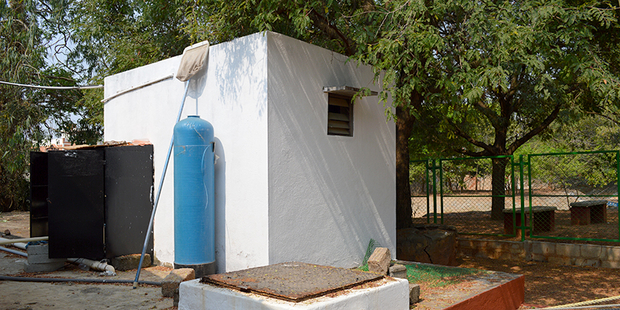
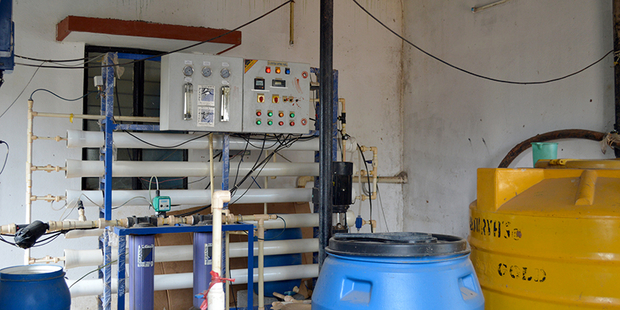
Zunehmende Wasserknappheit und rasches Bevölkerungswachstum in Städten machen es erforderlich, den Trinkwasserverbrauch zu senken und alternative Wege der Abwasserbehandlung zu entwickeln, zum Beispiel durch dezentrale Wasser- und Abwassersysteme (so genannte Wings-Systeme). Um die Nutzung von Wings-Systemen zu fördern, haben die Kommunalverwaltungen von Bangalore und San Francisco Gesetze erlassen, die die Einführung von Wings-Systemen für einen Teil der Bevölkerung vorschreiben, während für den restlichen Teil der Bevölkerung ein zentrales System beibehalten wird. Eine solche Politik kann die Nutzung von Wings-Systemen erfolgreich erhöhen, kann aber gleichzeitig auch die gerechte Verteilung von Kosten und Nutzen von Wasser- und Abwassersystemen in der Gesellschaft gefährden. Beispielsweise werden die Wings-Systeme in beiden Städten nicht vom Wasserversorgungsunternehmen, sondern vom Gebäudeverwalter verwaltet und gewartet, was zu Ungleichheiten bei der Wasserqualität zwischen den Nutzern und dem Rest der Gesellschaft führen könnte. Darüber hinaus sind die Installation und Wartung von Wings-Systemen mit erheblichen Kosten verbunden, die die Nutzer finanziell belasten. Andererseits sind in San Francisco Projekte für erschwinglichen Wohnraum von diesem Gesetz ausgenommen, was die unbeabsichtigte Folge haben kann, dass einkommensschwache Bevölkerungsgruppen von der erhöhten Wassersicherheit, die Wings-Systeme mit sich bringen können, ausgeschlossen werden. Dieser potentielle Mangel an Verteilungsgerechtigkeit könnte die öffentliche Akzeptanz der Maßnahmen und der entsprechenden Wings-Systeme beeinträchtigen.  Daher ist ein besseres Verständnis darüber notwendig, wie die Verteilungsgerechtigkeit von Wings-Systemen und Gesetzen zur verpflichtenden Anschaffung von der Öffentlichkeit wahrgenommen wird und wie dies die Akzeptanz der Gesetze und der Wings-Systeme beeinflusst.

Das Fair Wings-Projekt

Das Fair Wings-Projekt zielt auf ein besseres Verständnis davon ab, wie die Bevölkerung Bangalores und San Franciscos die Verteilungsgerechtigkeit dieser Gesetze wahrnimmt. Anhand von qualitativen Interviews und Online-Befragungen werden die wahrgenommenen Kosten, Risiken und Vorteile der Gesetze und der jeweiligen Systeme sowie ihre wahrgenommene Verteilung in der Gesellschaft untersucht. Zudem wird die Rolle der wahrgenommenen Verteilungsgerechtigkeit für die öffentliche Akzeptanz dieser Systeme und der jeweiligen politischen Maßnahmen untersucht.

Die im Rahmen des Fair Wings-Projekts gewonnenen Erkenntnisse können dazu beitragen, künftige politische Maßnahmen so zu gestalten, dass die Fairness bei der Gestaltung und Umsetzung städtischer Wassersysteme gefördert wird, und sich die Akzeptanz der Gesetze in der Bevölkerung erhöht.

Fair Wings ist ein Gemeinschaftsprojekt von drei Eawag-Abteilungen: Umweltsozialwissenschaften, Sandec, und Verfahrenstechnik.

Weitere Informationen finden Sie unter Outputs.

Projektpartner der Eawag

Dr. Christian Binz Gruppenleiter, Gruppe: Cirus +41 58 765 5030 E-Mail senden

Externe Mitarbeiter

San Francisco

Dr. Sasha Harris-Lovett
Berkeley Water Center, University of California, Berkeley


Prof. Dr. Kara Nelson
Civil and Environmental Engineering, University of California, Berkeley

Bangalore

Shreya Nath
Centre for Social and Environmental Innovation, Ashoka Trust for Research in Ecology and the Environment


B Sneha Singh
Centre for Social and Environmental Innovation, Ashoka Trust for Research in Ecology and the Environment


Sahana Balasubramanian
Centre for Social and Environmental Innovation, Ashoka Trust for Research in Ecology and the Environment

Projektteam

Dr. Josianne Kollmann Wissenschaftlerin, Gruppe: EHP +41 58 765 6420 E-Mail senden
Dr. Nadja Contzen Gruppenleiterin, Gruppe: EHP +41 58 765 6892 E-Mail senden

Projektdaten

  • Projektdauer: 1. April 2021 bis 31. März 2024
  • Finanzierung: Eawag discretionary funding

Publikationen

Extbase Variable Dump
array(2 items)
   publications => '35887,32850,30093,31131' (23 chars)
   libraryUrl => '' (0 chars)
Extbase Variable Dump
array(4 items)
   0 => Snowflake\Publications\Domain\Model\Publicationprototypepersistent entity (uid=35887, pid=124)
      originalId => protected35887 (integer)
      authors => protected'Kollmann, J.; Harris-Lovett, S.; Nelson, K. L.; Contzen,
          N.
' (84 chars) title => protected'Mandated on-site wastewater reuse in San Francisco: the role of distributive
          fairness for policy acceptance
' (107 chars) journal => protected'npj Urban Sustainability' (24 chars) year => protected2025 (integer) volume => protected5 (integer) issue => protected'1' (1 chars) startpage => protected'93 (10 pp.)' (11 chars) otherpage => protected'' (0 chars) categories => protected'' (0 chars) description => protected'With increasing water scarcity worldwide, policies regulating wastewater reu
         se are becoming increasingly important. In San Francisco, on-site wastewater
          treatment and reuse is mandatory for large residential buildings, while oth
         er buildings continue using centralised systems without reuse. This disparit
         y may affect perceived fairness and policy acceptance. In an online survey (
         N = 176), policy acceptance, perceived fairness, and perceptions of a range
         of policy implications were assessed for five societal groups and one entity
         : residents and owners of buildings with mandated on-site systems, San Franc
         isco’s population, low-income residents, future generations, and the envir
         onment. Regression analyses showed that both positive and negative policy im
         plications explained perceived fairness. Policy acceptance was explained by
         perceived fairness for future generations, San Francisco’s population, and
          building owners, but not other groups or entities. Results suggest that col
         lective fairness considerations and impacts on most-affected groups are key
         to policy acceptance, indicating policymakers should consider implications a
         cross different societal groups when designing water reuse policies.
' (1208 chars) serialnumber => protected'' (0 chars) doi => protected'10.1038/s42949-025-00283-z' (26 chars) uid => protected35887 (integer) _localizedUid => protected35887 (integer)modified _languageUid => protectedNULL _versionedUid => protected35887 (integer)modified pid => protected124 (integer)
1 => Snowflake\Publications\Domain\Model\Publicationprototypepersistent entity (uid=32850, pid=124) originalId => protected32850 (integer) authors => protected'Kollmann, J.; Nath, S.; Singh, S.; Balasubramanian, S.;
         Scheidegger, A.; Contzen, N.
' (114 chars) title => protected'Perceived distributive fairness and public acceptance of a policy mandating
         on-site wastewater treatment and reuse
' (114 chars) journal => protected'Journal of Environmental Psychology' (35 chars) year => protected2024 (integer) volume => protected96 (integer) issue => protected'' (0 chars) startpage => protected'102292 (11 pp.)' (15 chars) otherpage => protected'' (0 chars) categories => protected'policy acceptance; distributive justice; decentralised wastewater treatment;
          wastewater reuse; climate change adaptation
' (120 chars) description => protected'Throughout the world, climate change, rapid population growth, and urbanisat
         ion raise the need for reducing freshwater consumption. One solution are on-
         site systems that treat wastewater for non-potable reuse near its source of
         generation, for example within a building. Policies mandating their installa
         tion can effectively increase installation rates and have been implemented i
         n several cities. Yet, such policies have the potential to impair distributi
         ve fairness in society and therefore also policy acceptance, because usually
          they cover only part of the population, which then has to carry most costs
         and risks. On the example of Bengaluru, India, where such a policy exists, t
         his online study (N = 350) analysed whether policy acceptance can be explain
         ed by the perceived policy outcome for different groups of society (i.e. the
          distribution of the policy's costs, risks, and benefits among these groups)
         , and whether this relation is mediated by perceived fairness. We further in
         vestigated whether these relations differed between participants covered and
          those not covered by the policy, since being personally affected may influe
         nce perceptions. Specifically, the outcomes for the following six groups wer
         e included: 1) participants themselves, 2) people covered by the policy, 3)
         people with a low income who are covered by the policy, 4) people vulnerable
          to water insecurity who are covered by the policy, 5) all inhabitants of Be
         ngaluru taken together, and 6) the environment and future generations. A mod
         erated mediation analysis showed that higher acceptance of the policy was ex
         plained by a higher perceived fairness, which, in turn, was explained by a b
         etter perceived outcome of the policy for different groups of society. Cover
         ed and non-covered participants differed with regard to which groups of soci
         ety they considered for evaluating fairness. While a better perceived outcom
         e for residents covered by the policy (compared with the outcome for those n
         ot covered) explained pe...
' (2550 chars) serialnumber => protected'0272-4944' (9 chars) doi => protected'10.1016/j.jenvp.2024.102292' (27 chars) uid => protected32850 (integer) _localizedUid => protected32850 (integer)modified _languageUid => protectedNULL _versionedUid => protected32850 (integer)modified pid => protected124 (integer)
2 => Snowflake\Publications\Domain\Model\Publicationprototypepersistent entity (uid=30093, pid=124) originalId => protected30093 (integer) authors => protected'Contzen, N.; Kollmann, J.; Mosler, H.-J.' (55 chars) title => protected'The importance of user acceptance, support, and behaviour change for the imp
         lementation of decentralized water technologies
' (123 chars) journal => protected'Nature Water' (12 chars) year => protected2023 (integer) volume => protected1 (integer) issue => protected'' (0 chars) startpage => protected'138' (3 chars) otherpage => protected'150' (3 chars) categories => protected'' (0 chars) description => protected'Decentralized water treatment technologies could help in addressing global k
         ey water issues. Their successful implementation, however, depends on users'
          positive valuation and, depending on the technology, 'passive' use (rooted
         in acceptance), 'engaged' use (rooted in support) or 'active' use (rooted in
          behaviour change). Although users' valuation of a technology is contingent
         on its characteristics, positive valuation and use usually also require supp
         orting promotion activities. Here we review the literature on psychological
         determinants of use as well as change techniques to promote use, and propose
          a user-focused theory of change to guide promotions. Our review highlights
         a lack of (conclusive) evidence on both psychological determinants and effec
         tive change techniques. We call on environmental and health psychologists to
          intensify their research on 'passive', 'engaged' and 'active' use of decent
         ralized water treatment technologies and encourage engineers, practitioners
         and psychologists to intensify collaboration to ensure that technologies, im
         plementation and promotions are optimally integrated.
' (1117 chars) serialnumber => protected'' (0 chars) doi => protected'10.1038/s44221-022-00015-y' (26 chars) uid => protected30093 (integer) _localizedUid => protected30093 (integer)modified _languageUid => protectedNULL _versionedUid => protected30093 (integer)modified pid => protected124 (integer)
3 => Snowflake\Publications\Domain\Model\Publicationprototypepersistent entity (uid=31131, pid=124) originalId => protected31131 (integer) authors => protected'Kollmann, J.; Nath, S.; Singh, S.; Balasubramanian, S.;
         Reynaert, E.; Morgenroth, E.; Contzen, N.
' (132 chars) title => protected'Acceptance of on-site wastewater treatment and reuse in Bengaluru, India: th
         e role of perceived costs, risks, and benefits
' (122 chars) journal => protected'Science of the Total Environment' (32 chars) year => protected2023 (integer) volume => protected895 (integer) issue => protected'' (0 chars) startpage => protected'165042 (11 pp.)' (15 chars) otherpage => protected'' (0 chars) categories => protected'wastewater treatment and reuse; on-site systems; user acceptance; decentrali
         sation; cost, risk, benefit perception
' (114 chars) description => protected'In dealing with water pollution and freshwater scarcity, on-site treatment a
         nd reuse of domestic wastewater has shown to be a promising solution. To inc
         rease on-site wastewater treatment and reuse, some cities, among them Bengal
         uru in India, have mandated the installation and use of the necessary techno
         logy in certain building types. However, even with a mandate, a successful a
         nd sustainable implementation of the technology, including reliable operatio
         n, monitoring, and maintenance, depends on the acceptance (i.e. positive val
         uation) of the technology and its use by the (prospective) users. Literature
          on technology acceptance indicates perceived costs, risks, and benefits of
         the respective technology as key predictors of acceptance. Therefore, the pr
         esent online study assessed this relationship for on-site systems in Bengalu
         ru. The relation was analysed separately for mandated users of on-site syste
         ms (<em>N</em> = 103) and current non-users (i.e. potential prospective us
         ers, should the mandate be expanded; <em>N</em> = 232), as the perceptions
          might differ between the two groups, due to the personal experience with th
         e technology among users. The results show that for mandated users and non-u
         sers, acceptance of on-site systems is explained by perceived benefits only,
          namely a positive image of users, environmental benefits, and, only for non
         -users, also financial benefits for the city. The findings suggest that inte
         rventions aimed at promoting on-site systems should include emphasis on the
         benefits of on-site systems. Whenever possible, interventions should be tail
         ored to the target group's individual cost, risk, and benefit perception.
' (1669 chars) serialnumber => protected'0048-9697' (9 chars) doi => protected'10.1016/j.scitotenv.2023.165042' (31 chars) uid => protected31131 (integer) _localizedUid => protected31131 (integer)modified _languageUid => protectedNULL _versionedUid => protected31131 (integer)modified pid => protected124 (integer)
Kollmann, J.; Harris-Lovett, S.; Nelson, K. L.; Contzen, N. (2025) Mandated on-site wastewater reuse in San Francisco: the role of distributive fairness for policy acceptance, npj Urban Sustainability, 5(1), 93 (10 pp.), doi:10.1038/s42949-025-00283-z, Institutional Repository
Kollmann, J.; Nath, S.; Singh, S.; Balasubramanian, S.; Scheidegger, A.; Contzen, N. (2024) Perceived distributive fairness and public acceptance of a policy mandating on-site wastewater treatment and reuse, Journal of Environmental Psychology, 96, 102292 (11 pp.), doi:10.1016/j.jenvp.2024.102292, Institutional Repository
Contzen, N.; Kollmann, J.; Mosler, H.-J. (2023) The importance of user acceptance, support, and behaviour change for the implementation of decentralized water technologies, Nature Water, 1, 138-150, doi:10.1038/s44221-022-00015-y, Institutional Repository
Kollmann, J.; Nath, S.; Singh, S.; Balasubramanian, S.; Reynaert, E.; Morgenroth, E.; Contzen, N. (2023) Acceptance of on-site wastewater treatment and reuse in Bengaluru, India: the role of perceived costs, risks, and benefits, Science of the Total Environment, 895, 165042 (11 pp.), doi:10.1016/j.scitotenv.2023.165042, Institutional Repository

Outputs

Perceived distributive fairness of alternative systems

Despite the many benefits that alternative, i.e. novel and decentralized, water and sanitation systems bring to society, adoption rates are low. Therefore, a few governments have issued policies that mandate the adoption of alternative systems for a part of the population, while keeping the centralized system for the rest of the population. Read more

Fair or Unfair? Mandatory Decentralised Sewage Treatment in Bangalore
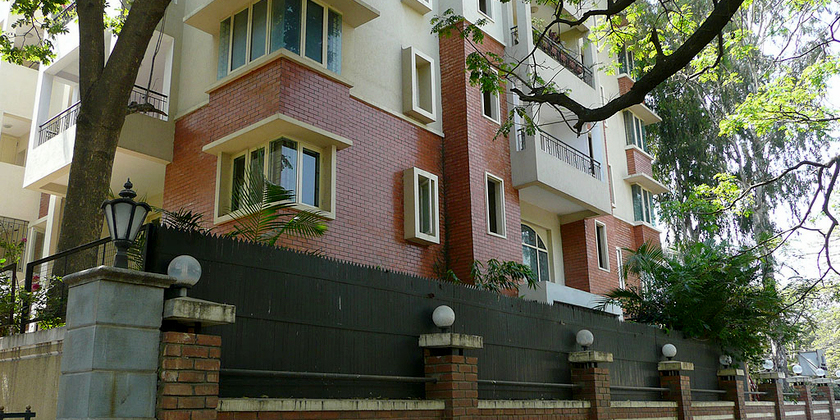
Bangalore is one of the fastest growing cities worldwide. This challenges the population’s water supply and pushes the central wastewater system to its limits, leading to environmental pollution and resource degradation. Read more