Department Fish Ecology and Evolution

Speciation and adaptive radiation
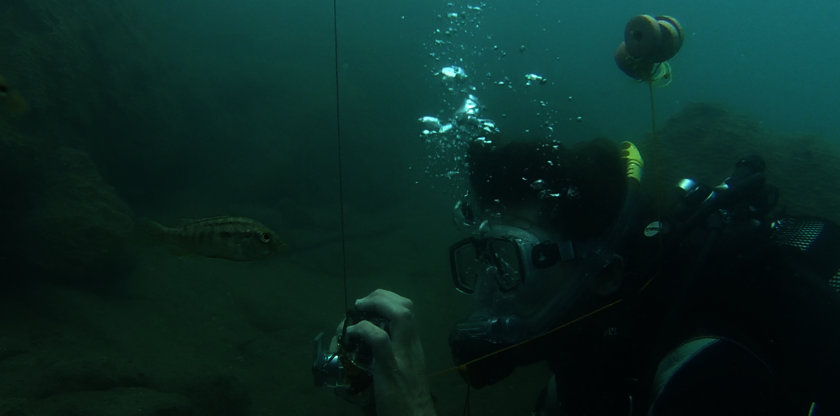
We investigate the mechanisms of speciation and adaptive radiation with a focus on processes that take place within lakes, in parapatry or sympatry. We wish to understand the intrinsic evolutionary constraints to speciation as well as the environmental triggers of speciation. We think it is most often the interaction between intrinsic lineage traits and extrinsic factors that determine the extent of diversification and adaptive radiation that a lineage may achieve. 

Whenever possible we study the entire speciation continuum from the incipient stage of speciation with very incomplete extrinsic postzygotic and premating isolation to completely isolated sister species and fully fledged adaptive radiations all within the same evolutionary lineage. African cichlids are excellent for this, as are stickleback, char and whitefish in high latitudes. We combine investigations into the ecology, behavior, morphology and natural history of populations and species with population genomic analyses of adaptation and isolation and with phylogenetic analyses of evolutionary relationships. We investigate the roles of different agents of ecological and sexual selection, the role of ecological opportunity, evolutionary innovation and interspecific hybridization in speciation and adaptive radiation.

Contact

Funding

Swiss National Science Foundation

We have been studying the radiations of haplochromine cichlid fish in African lakes for more than 25 years. Currently we work mostly in Lake Victoria, Lake Mweru and some other smaller lakes. These radiations are the largest and fastest known animal species radiations on Earth. We have shown that speciation is driven by strong interactions between natural and sexual selection, and that unusually large standing genetic variation and ancient hybridization events facilitate this. We have also shown indications of a latitudinal gradient in adaptive radiation with more radiations at lower latitudes.

We are studying several other young lacustrine radiations of fish in temperate and cold  climates. Our focus are whitefish and char in the deep subalpine lakes on the feet of the European Alps. Many species are endemic to single lake chains and have evolved in the past 15’000 years. We study the entire fish assemblages of these lakes in order to learn about the interactions among lineages, and the roles of immigration and speciation in community assembly.  

We are studying Threespine stickleback, a major model system in evolutionary and ecological genomics. We capitalize on the circumstance that the large lakes and associated streams of Switzerland have only been colonized by stickleback in the past 150 years. We have shown that colonization involved several distinct lineages from distant parts of Europe that have admixed their genes to various extents in different parts of Switzerland. We have also shown that genetically and phenotypically distinct ecotypes have evolved despite gene flow in several lake systems of Switzerland, suggesting incipient speciation. We seek to understand the ecological and behavioral mechanisms that drive this very early stage of speciation and the sources of the genetic variation that facilitate it.

Current projects

Population Genomics of different stages of adaptive radiation
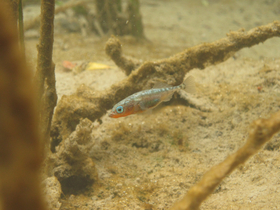
Much of organismal diversity is thought to have evolved in bursts of adaptive radiation - periods of rapid speciation associated with diversification into a multitude of ecological niches. Studying the mechanisms of adaptive radiation and the factors that shape it is central to understanding the origin and structure of species diversity. Adaptive radiations are are a composite phenomenon, characterized by a complex series of successive processes, starting with invasion followed by adaptation and speciation, and ending with evolutionary community assembly into many sympatric species as four critical stages that lead to a fully fledged adaptive radiation. We use next generation sequencing, bioinformatics and population genomic modeling to investigate genetic constraint and facilitation of the four critical stages in a single analytical and conceptual framework. We study adaptive radiation processes in stickleback and cichlid fish, having occurred over different time scales :from 100 years (Swiss invasive sticklebacks), to several tens of thousands of years (older clades of Lake Victoria cichlids). Sticklebacks and haplochromine cichlids share an unusual propensity to rapid speciation, orders of magnitude faster than in most other animals. Yet haplochromines and sticklebacks markedly differ in their ability to generate sympatric species diversity. Stickleback have radiated into hundreds of very young species distributed over all the coastal regions of the northern hemisphere. However, most species pairs diverged just a few thousand years ago, while older species are very rare, and there are never more than two species in any one site. On the other hand, haplochromine cichlids have also radiated into hundreds of species, but tens or hundreds of species, often not much older than the stickleback species, can be found sympatrically at a single site. We are investigating genomic variation, its origins and the architecture of adaptation and reproductive isolation in these two taxa.

Sticklebacks and haplochromine cichlids share an unusual propensity to rapid speciation, orders of magnitude faster than in most other animals. Yet haplochromines and sticklebacks markedly differ in their ability to generate sympatric species diversity. Stickleback have radiated into hundreds of very young species distributed over all the coastal regions of the northern hemisphere. However, most species pairs diverged just a few thousand years ago, while older species are very rare, and there are never more than two species in any one site. On the other hand, haplochromine cichlids have also radiated into hundreds of species, but tens or hundreds of species, often not much older than the stickleback species, can be found sympatrically at a single site. We are investigating genomic variation, its origins and the architecture of adaptation and reproductive isolation in these two taxa.

Contact

Funding

  • Swiss National Science Foundation grant no. PDFMP3_134657/1

Publications

Extbase Variable Dump
array(2 items)
   publications => '10400,7578' (10 chars)
   libraryUrl => '' (0 chars)
Extbase Variable Dump
array(2 items)
   0 => Snowflake\Publications\Domain\Model\Publicationprototypepersistent entity (uid=10400, pid=124)
      originalId => protected10400 (integer)
      authors => protected'Marques, D. A.; Lucek, K.; Meier, J. I.; Mwaiko,&nb
         sp;S.; Wagner, C. E.; Excoffier, L.; Seehausen, O.
' (146 chars) title => protected'Genomics of rapid incipient speciation in sympatric threespine stickleback' (74 chars) journal => protected'PLoS Genetics' (13 chars) year => protected2016 (integer) volume => protected12 (integer) issue => protected'2' (1 chars) startpage => protected'1' (1 chars) otherpage => protected'34' (2 chars) categories => protected'' (0 chars) description => protected'Ecological speciation is the process by which reproductively isolated popula
         tions emerge as a consequence of divergent natural or ecologically-mediated
         sexual selection. Most genomic studies of ecological speciation have investi
         gated allopatric populations, making it difficult to infer reproductive isol
         ation. The few studies on sympatric ecotypes have focused on advanced stages
          of the speciation process after thousands of generations of divergence. As
         a consequence, we still do not know what genomic signatures of the early ons
         et of ecological speciation look like. Here, we examined genomic differentia
         tion among migratory lake and resident stream ecotypes of threespine stickle
         back reproducing in sympatry in one stream, and in parapatry in another stre
         am. Importantly, these ecotypes started diverging less than 150 years ago. W
         e obtained 34,756 SNPs with restriction-site associated DNA sequencing and i
         dentified genomic islands of differentiation using a Hidden Markov Model app
         roach. Consistent with incipient ecological speciation, we found significant
          genomic differentiation between ecotypes both in sympatry and parapatry. Of
          19 islands of differentiation resisting gene flow in sympatry, all were als
         o differentiated in parapatry and were thus likely driven by divergent selec
         tion among habitats. These islands clustered in quantitative trait loci cont
         rolling divergent traits among the ecotypes, many of them concentrated in on
         e region with low to intermediate recombination. Our findings suggest that a
         daptive genomic differentiation at many genetic loci can arise and persist i
         n sympatry at the very early stage of ecotype divergence, and that the genom
         ic architecture of adaptation may facilitate this.
' (1722 chars) serialnumber => protected'1553-7390' (9 chars) doi => protected'10.1371/journal.pgen.1005887' (28 chars) uid => protected10400 (integer) _localizedUid => protected10400 (integer)modified _languageUid => protectedNULL _versionedUid => protected10400 (integer)modified pid => protected124 (integer)
1 => Snowflake\Publications\Domain\Model\Publicationprototypepersistent entity (uid=7578, pid=124) originalId => protected7578 (integer) authors => protected'Seehausen, O.; Butlin, R. K.; Keller, I.; Wagner, C
         . E.; Boughman, J. W.; Hohenlohe, P. A.; Peichel,&n
         bsp;C. L.; Saetre, G.-P.; Bank, C.; Brännström, Å.; B
         relsford, A.; Clarkson, C. S.; Eroukhmanoff, F.; Feder,&
         nbsp;J. L.; Fischer, M. C.; Foote, A. D.; Franchini
         , P.; Jiggins, C. D.; Jones, F. C.; Lindholm, 
         A. K.; Lucek, K.; Maan, M. E.; Marques, D. A.;
          Martin, S. H.; Matthews, B.; Meier, J. I.; Möst,&
         nbsp;M.; Nachman, M. W.; Nonaka, E.; Rennison, D. J
         .; Schwarzer, J.; Watson, E. T.; Westram, A. M.; Wi
         dmer, A.
' (773 chars) title => protected'Genomics and the origin of species' (34 chars) journal => protected'Nature Reviews Genetics' (23 chars) year => protected2014 (integer) volume => protected15 (integer) issue => protected'' (0 chars) startpage => protected'176' (3 chars) otherpage => protected'192' (3 chars) categories => protected'' (0 chars) description => protected'Speciation is a fundamental evolutionary process, the knowledge of which is
         crucial for understanding the origins of biodiversity. Genomic approaches ar
         e an increasingly important aspect of this research field. We review current
          understanding of genome-wide effects of accumulating reproductive isolation
          and of genomic properties that influence the process of speciation. Buildin
         g on this work, we identify emergent trends and gaps in our understanding, p
         ropose new approaches to more fully integrate genomics into speciation resea
         rch, translate speciation theory into hypotheses that are testable using gen
         omic tools and provide an integrative definition of the field of speciation
         genomics.
' (693 chars) serialnumber => protected'1471-0056' (9 chars) doi => protected'10.1038/nrg3644' (15 chars) uid => protected7578 (integer) _localizedUid => protected7578 (integer)modified _languageUid => protectedNULL _versionedUid => protected7578 (integer)modified pid => protected124 (integer)
Marques, D. A.; Lucek, K.; Meier, J. I.; Mwaiko, S.; Wagner, C. E.; Excoffier, L.; Seehausen, O. (2016) Genomics of rapid incipient speciation in sympatric threespine stickleback, PLoS Genetics, 12(2), 1-34, doi:10.1371/journal.pgen.1005887, Institutional Repository
Seehausen, O.; Butlin, R. K.; Keller, I.; Wagner, C. E.; Boughman, J. W.; Hohenlohe, P. A.; Peichel, C. L.; Saetre, G.-P.; Bank, C.; Brännström, Å.; Brelsford, A.; Clarkson, C. S.; Eroukhmanoff, F.; Feder, J. L.; Fischer, M. C.; Foote, A. D.; Franchini, P.; Jiggins, C. D.; Jones, F. C.; Lindholm, A. K.; Lucek, K.; Maan, M. E.; Marques, D. A.; Martin, S. H.; Matthews, B.; Meier, J. I.; Möst, M.; Nachman, M. W.; Nonaka, E.; Rennison, D. J.; Schwarzer, J.; Watson, E. T.; Westram, A. M.; Widmer, A. (2014) Genomics and the origin of species, Nature Reviews Genetics, 15, 176-192, doi:10.1038/nrg3644, Institutional Repository

Ecological population genomics of constraints to adaptation and speciation in sympatry
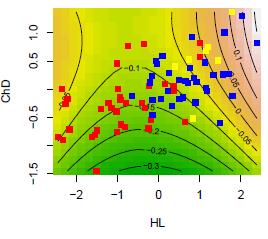
Environmental heterogeneity in spatially continuous habitats such as a lake will likely often enforce a rugged multimodal adaptive landscape on populations, yet at the same time create little opportunity for spatial isolation between tenants of alternative peaks in the adaptive landscape, causing a situation in which a Environmental heterogeneity in spatially continuous habitats such as a lake will likely often enforce a rugged multimodal adaptive landscape on populations, yet at the same time create little opportunity for spatial isolation between tenants of alternative peaks in the adaptive landscape, causing a situation in which a panmictic population experiences disruptive selection. Evolutionary response to such disruptive selection is constrained by homogenizing gene flow and indeed good examples of sympatric speciation are still rare. Yet, while most taxa fail to speciate altogether in such circumstances, some radiate into many new species with predictable regularity. Despite one and a half centuries of speciation research, surprisingly little is known about the causes of this differential response. Absence of radiation may be because populations of many taxa fail to adapt to disruptive selection in the face of gene flow, but alternatively, taxa that do not radiate may not experience disruptive selection to begin with, or they may adapt through mechanisms that do not require speciation. Few studies have explored these alternatives in the same system. In this project we are doing just that. While some haplochromine cichlid lineages have repeatedly radiated in lake environments, others consistently fail to diversify. This is an ideal system to study constraints to speciation. We investigate pairs of sister species that have diverged between contrasting habitats and other pairs of populations that have not speciatied but occupy the same or similar habitat contrasts. We estimate fitness functions in the wild for phenotypes and genotypes in contrasting habitats and adaptive landscapes for populations. We are using Next Generation Sequencing technology to sequence genome-wide markers for a large sample of these individuals. This will allow us to measure the total magnitude and genomic distribution of response to disruptive selection between habitats in cases with and cases without speciation. Third, are making laboratory crosses between speciated and non-speciated populations to map traits that are under selection. Combining these approaches will allow us to test predictions of alternative models of adaptation and speciation with gene flow.

Contact

Funding

  • Swiss National Science Foundation, grant no. 31003A_144046 

Genomics of ecological polymorphism in a marine fish group
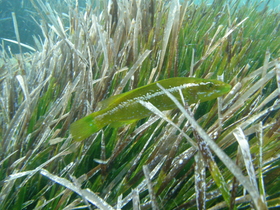
Marine fish were long thought of as not doing geographically localized adaptive radiations. However, the geologically young Mediterranean Sea does host several small to moderately sized species radiations. One of them occurs in the European wrasses (Labrinae) with some 15 species in two largely endemic clades. Many of the species in both clades share a very remarkable phenotypic polymorphism with brown morphs that tend to live among rocks, and green morphs that are strictly associated with Posidonia seagrass. Little is known about the genetic mechanism that permits such remarkable polymorphism in full sympatry. The polymorphism may be due to phenotypic plasticity or developmental plasticity, may have a simple Mendelian genetic basis, or more complicated mechanisms could be at work, including speciation. We are investigating this polymorphism, using next generation sequencing to test for genetic differences between morphs.

Contact

Testing for ecological interactions between two salmonid radiations in the same lake
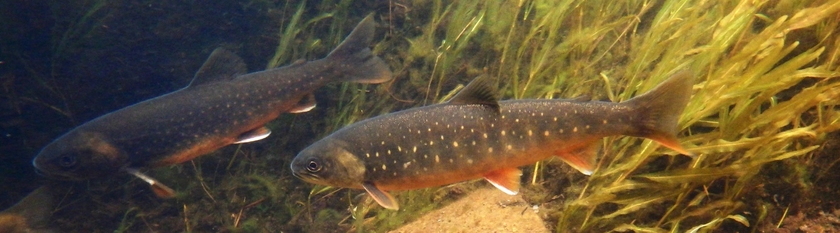
Once upon a time was a species that colonized a new environment, e.g. a newly formed archipelago or a lake, providing a variety of different, unexploited resources, where it rapidly diversified into a suite of species adapted to use their environment in different ways. This is the classical story of adaptive radiation (Simpson, 1953). Now imagine that not one, but two species from two distant lineages which are both known to sometimes radiate when each occurs alone colonize such a new environment at around the same time, perhaps even more than two. How do they partition niches among each other? Or do they? Do they diversify independently or do they constrain or promote each other’s diversification? We are addressing these questions studying unusually diverse assemblages of whitefish and char coexisting in the same young pre-alpine lakes.

Ecology and genetics of speciation in Pundamilia cichlids

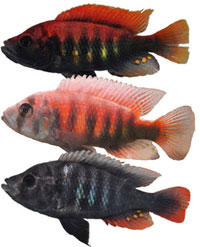
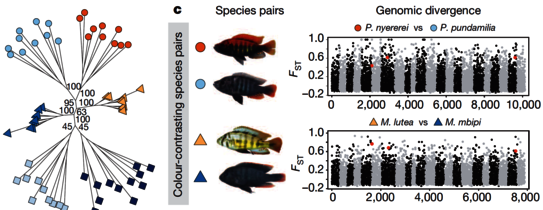
Identifying mechanisms of speciation has proven one of the most challenging problems in evolutionary biology, perhaps mainly for two reasons, speciation in sexually reproducing diploid organisms is not readily accessible to experimental approaches, and rarely to time series analyses. Any one case of speciation can usually be investigated only at a single stage of completion, which makes it impossible to isolate cause and consequence of divergence and differentiation. The cichlid fish species Pundamilia pundamilia, Pundamilia nyererei, their hybrids and intermediate colour morphs occur at various stages of differentiation at different islands placed along an environmental gradient of water clarity in Lake Victoria. At the same time, populations occurring at different islands do exchange genes as is evident from our work using microsatellites, AFLPs and SNPs. Hence, the Pundamilia system comes close to the ideal case where variation in stage of speciation can be studied in the same pair of species and along a continuous series of differentiation. As such, it allows us to identify the minimum set of traits that have to be under divergent selection to recruit and/or maintain non-random mating. We have investigated this system for more than twenty years, with our first papers published in 1997. We have studied the ecology, mating behavior, aggressive behavior and territoriality, parasites, visual system, gene flow and selection and phylogenetic history combining a wide range of methods and brining in several collaborating labs. Six PhD students have graduated with dissertation research that was based mostly on this system.
Contact

A number of conclusions can be drawn from the investigations carried out to date.

1. the most turbid sites are inhabited by a single species with variation in colour and mating preferences: colour and preference phenotypes both have a unimodal frequency distribution; there is no association between colour and microdistribution or alleles at visual genes, nor is there genetic differentiation between the phenotypes at neutral markers. The clearest sites are inhabited by two different species: colour and preference distributions are strongly bimodal with few or no intermediates; colour is strongly associated with microdistribution and with alleles at the long wavelength sensitive opsin gene (LWS): Red males and females that prefer mating with red males live deep and have fixed an LWS allele that makes them sensitive to the red-shifted ambient light in their habitat. Blue males and females that prefer mating with blue males live shallow in rocky crevices, and have fixed an LWS allele that is less strongly red-shifted. They also have different diets and are significantly differentiated at many neutral loci.

2. The mate choice traits that mediate assortative mating at the differentiated islands (female preferences and male nuptial colours) are already variable at the non-differentiated islands. Pundamilia is not unusual in this regard. There is a large number of cichlid populations in Lake Victoria that segregate for the different nuptial colours.

3. Populations from islands with intermediate water clarity are intermediate in that they show strongly bimodal frequency distributions of the mate choice traits, male nuptial colour and female preference, strongly differentiated allele frequencies at the LWS opsin gene, and weakly but significantly different allele frequencies at neutral loci. These populations also show an intermediate level of association between colour and microdistribution; reds have a much wider depth range, while blues are restricted to shallow waters. Most females have strong mating preferences, and these are based on the male coloration.

4. The data are compatible with models of speciation by sensory drive, where divergent light conditions at different water depths and divergent adaptations of the visual system affect mating preferences and the fitness of male nuptial colour morphs.

5. The same nuptial colour cues that females use for choosing mates are also used by males when defending territories against competitors. Evidence gathered from a number of different experiments are consistent with the hypothesis that colour-mediated competition between males contributes a negative frequency-dependent selection component but it is asymmetric and hence unsuitable to stabilize the coexistence of the incipient species without contributions of other mechanisms.

6. Parasitological data have yet to be collected from intermediate sites on the transect to ask whether sexual selection for parasite resistance in different parts of the environment may contribute to divergent selection on mating preferences and colours. Imprinting experiments ought to be conducted with fish from intermediately differentiated and non-differentiated populations to better understand the role of maternal imprinting in the early stages of speciation.

7. The accumulation of divergence in a successively larger number of traits along the Pundamilia ‘speciation continuum’ suggests increasing dimensionality of niche divergence. One potentially important observation then is that the dimensionality of niche divergence can grow rapidly with decreasing gene flow or vice versa, gene flow can rapidly decrease with increasing dimensionality of niche divergence. That divergent daptation and gene flow can be reciprocally constraining has been shown for other incipient species systems too, suggesting a feedback loop between gene flow and selection. If the analogy of the different stages of differentiation on the different islands with successive stages in speciation is valid, the observations in Pundamilia may imply that dimensionality of niche divergence and gene flow restriction co-evolve. A minimum dimensionality of niche divergence may be required for divergent selection to be sufficiently strong to initiate speciation (here the occupation of a sufficiently large range of water depth to be exposed to different selection regimes). However, as soon as gene flow becomes sufficiently reduced, divergence in other traits becomes possible, which may be under less strong divergent selection. The increased dimensionality of niche divergence, in turn, is likely to reduce gene flow further.

Publications

Extbase Variable Dump
array(2 items)
   publications => '10441,9050,9266,7187,7087,8864,11601,6354,6343,6291,6536,5987,5827,11512' (72 chars)
   libraryUrl => '' (0 chars)
Extbase Variable Dump
array(14 items)
   0 => Snowflake\Publications\Domain\Model\Publicationprototypepersistent entity (uid=10441, pid=124)
      originalId => protected10441 (integer)
      authors => protected'Selz, O. M.; Thommen, R.; Pierotti, M. E. R.; 
         Anaya-Rojas, J. M.; Seehausen, O.
' (124 chars) title => protected'Differences in male coloration are predicted by divergent sexual selection b
         etween populations of a cichlid fish
' (112 chars) journal => protected'Proceedings of the Royal Society B: Biological Sciences' (55 chars) year => protected2016 (integer) volume => protected283 (integer) issue => protected'1830' (4 chars) startpage => protected'20160172 (9 pp.)' (16 chars) otherpage => protected'' (0 chars) categories => protected'mate choice; assortative mating; sexual selection; reproductive isolation; s
         ensory drive; cichlid
' (97 chars) description => protected'Female mating preferences can influence both intraspecific sexual selection
         and interspecific reproductive isolation, and have therefore been proposed t
         o play a central role in speciation. Here, we investigate experimentally in
         the African cichlid fish <em>Pundamilia nyererei</em> if differences in male
          coloration between three para-allopatric populations (i.e. island populatio
         ns with gene flow) of <em>P. nyererei</em> are predicted by differences in s
         exual selection by female mate choice between populations<em>.</em> Second,
         we investigate if female mating preferences are based on the same components
          of male coloration and go in the same direction when females choose among m
         ales of their own population, their own and other conspecific populations an
         d a closely related para-allopatric sister-species, <em>P. igneopinnis</em>.
          Mate-choice experiments revealed that females of the three populations mate
         d species-assortatively, that populations varied in their extent of populati
         on-assortative mating and that females chose among males of their own popula
         tion based on different male colours. Females of different populations exert
         ed directional intrapopulation sexual selection on different male colours, a
         nd these differences corresponded in two of the populations to the observed
         differences in male coloration between the populations. Our results suggest
         that differences in male coloration between populations of <em>P. nyererei</
         em> can be explained by divergent sexual selection and that population-assor
         tative mating may directly result from intrapopulation sexual selection.
' (1592 chars) serialnumber => protected'0962-8452' (9 chars) doi => protected'10.1098/rspb.2016.0172' (22 chars) uid => protected10441 (integer) _localizedUid => protected10441 (integer)modified _languageUid => protectedNULL _versionedUid => protected10441 (integer)modified pid => protected124 (integer)
1 => Snowflake\Publications\Domain\Model\Publicationprototypepersistent entity (uid=9050, pid=124) originalId => protected9050 (integer) authors => protected'Selz,&nbsp;O.&nbsp;M.; Pierotti,&nbsp;M.&nbsp;E.&nbsp;R.; Maan,&nbsp;M.&nbsp
         ;E.; Schmid,&nbsp;C.; Seehausen,&nbsp;O.
' (116 chars) title => protected'Female preference for male color is necessary and sufficient for assortative
          mating in 2 cichlid sister species
' (111 chars) journal => protected'Behavioral Ecology' (18 chars) year => protected2014 (integer) volume => protected25 (integer) issue => protected'3' (1 chars) startpage => protected'612' (3 chars) otherpage => protected'626' (3 chars) categories => protected'assortative mating; cichlid; hue; mate choice; teleost fish' (59 chars) description => protected'A critical step for speciation in the face of gene flow is the origination o
         f reproductive isolation. The evolution of assortative mating greatly facili
         tates this process. Assortative mating can be mediated by one or multiple cu
         es across an array of sensory modalities. We here explore possible cues that
          may underlie female mate choice in a sympatric species pair of cichlid fish
          from Lake Victoria, <I>Pundamilia pundamilia</I> and <I>Pundamilia nyererei
         </I>. Previous studies identified species-specific female preferences for ma
         le coloration, but effects of other cues could not be ruled out. Therefore,
         we assessed female choice in a series of experiments in which we manipulated
          visual (color) and chemical cues. We show that the visibility of difference
         s in nuptial hue (i.e., either blue or red) between males of the 2 species i
         s necessary and sufficient for assortative mating by female mate choice. Suc
         h assortment mediated by a single cue may evolve relatively quickly, but cou
         ld make reproductive isolation vulnerable to environmental changes. These fi
         ndings confirm the important role of female mate choice for male nuptial hue
          in promoting the explosive speciation of African haplochromine cichlids.
' (1213 chars) serialnumber => protected'1045-2249' (9 chars) doi => protected'10.1093/beheco/aru024' (21 chars) uid => protected9050 (integer) _localizedUid => protected9050 (integer)modified _languageUid => protectedNULL _versionedUid => protected9050 (integer)modified pid => protected124 (integer)
2 => Snowflake\Publications\Domain\Model\Publicationprototypepersistent entity (uid=9266, pid=124) originalId => protected9266 (integer) authors => protected'Dijkstra,&nbsp;P.&nbsp;D.; Seehausen,&nbsp;O.; Metcalfe,&nbsp;N.&nbsp;B.' (72 chars) title => protected'Metabolic divergence between sibling species of cichlids <I>Pundamilia nyere
         rei</I> and <I>Pundamilia pundamilia</I>
' (116 chars) journal => protected'Journal of Fish Biology' (23 chars) year => protected2013 (integer) volume => protected82 (integer) issue => protected'6' (1 chars) startpage => protected'1975' (4 chars) otherpage => protected'1989' (4 chars) categories => protected'Lake Victoria; male-male competition; speciation' (48 chars) description => protected'This study compared <I>Pundamilia nyererei</I> and <I>Pundamilia pundamilia<
         /I> males in routine metabolic rate (<I>R</I><SUB>R</SUB>) and in the metabo
         lic costs males pay during territorial interactions (active metabolic rate,
         <I>R</I><SUB>A</SUB>). <I>Pundamilia nyererei</I> and <I>P. pundamilia</I> m
         ales housed in social isolation did not differ in <I>R</I><SUB>R</SUB>. In c
         ontrast to expectation, however, <I>P. nyererei</I> males used less oxygen t
         han <I>P. pundamilia</I> males, for a given mass and level of agonistic acti
         vity. This increased metabolic efficiency may be an adaptation to limit the
         metabolic cost that <I>P. nyererei</I> males pay for their higher rate of ag
         gressiveness compared to <I>P. pundamilia</I> males. Thus, the divergence be
         tween the species in agonistic behaviour is correlated with metabolic differ
         entiation. Such concerted divergence in physiology and behaviour might be wi
         despread in the dramatically diverse cichlid radiations in East African lake
         s and may be an important factor in the remarkably rapid speciation of these
          fishes. The results did not support the hypothesis that higher metabolic ra
         tes caused a physiological cost to <I>P. nyererei</I> males that would offse
         t their dominance advantage.
' (1244 chars) serialnumber => protected'0022-1112' (9 chars) doi => protected'10.1111/jfb.12125' (17 chars) uid => protected9266 (integer) _localizedUid => protected9266 (integer)modified _languageUid => protectedNULL _versionedUid => protected9266 (integer)modified pid => protected124 (integer)
3 => Snowflake\Publications\Domain\Model\Publicationprototypepersistent entity (uid=7187, pid=124) originalId => protected7187 (integer) authors => protected'van der Sluijs,&nbsp;I.; Dijkstra,&nbsp;P.&nbsp;D.; Lindeyer,&nbsp;C.&nbsp;M
         .; Visser,&nbsp;B.; Smith,&nbsp;A.&nbsp;M.; Groothuis,&nbsp;T.&nbsp;G.&nbsp;
         G.; van Alphen,&nbsp;J.&nbsp;J.&nbsp;M.; Seehausen,&nbsp;O.
' (211 chars) title => protected'A test of genetic association among male nuptial coloration, female mating p
         reference, and male aggression bias within a polymorphic population of cichl
         id fish
' (159 chars) journal => protected'Current Zoology' (15 chars) year => protected2013 (integer) volume => protected59 (integer) issue => protected'2' (1 chars) startpage => protected'221' (3 chars) otherpage => protected'229' (3 chars) categories => protected'disruptive selection; sexual selection; speciation; Pundamilia; linkage dise
         quilibrium
' (86 chars) description => protected'Both inter- and intrasexual selection have been implicated in the origin and
          maintenance of species-rich taxa with diverse sexual traits. Simultaneous d
         isruptive selection by female mate choice and male-male competition can, in
         theory, lead to speciation without geographical isolation if both act on the
          same male trait. Female mate choice can generate discontinuities in gene fl
         ow, while male-male competition can generate negative frequency-dependent se
         lection stabilizing the male trait polymorphism. Speciation may be facilitat
         ed when mating preference and/or aggression bias are physically linked to th
         e trait they operate on. We tested for genetic associations among female mat
         ing preference, male aggression bias and male coloration in the Lake Victori
         a cichlid <em>Pundamilia</em>. We crossed females from a phenotypically vari
         able population with males from both extreme ends of the phenotype distribut
         ion in the same population (blue or red). Male offspring of a red sire were
         significantly redder than males of a blue sire, indicating that intra-popula
         tion variation in male coloration is heritable. We tested mating preferences
          of female offspring and aggression biases of male offspring using binary ch
         oice tests. There was no evidence for associations at the family level betwe
         en female mating preferences and coloration of sires, but dam identity had a
          significant effect on female mate preference. Sons of the red sire directed
          significantly more aggression to red than blue males, whereas sons of the b
         lue sire did not show any bias. There was a positive correlation among indiv
         iduals between male aggression bias and body coloration, possibly due to ple
         iotropy or physical linkage, which could facilitate the maintenance of color
          polymorphism.
' (1762 chars) serialnumber => protected'1674-5507' (9 chars) doi => protected'10.1093/czoolo/59.2.221' (23 chars) uid => protected7187 (integer) _localizedUid => protected7187 (integer)modified _languageUid => protectedNULL _versionedUid => protected7187 (integer)modified pid => protected124 (integer)
4 => Snowflake\Publications\Domain\Model\Publicationprototypepersistent entity (uid=7087, pid=124) originalId => protected7087 (integer) authors => protected'Keller,&nbsp;I.; Wagner,&nbsp;C.&nbsp;E.; Greuter,&nbsp;L.; Mwaiko,&nbsp;S.;
          Selz,&nbsp;O.&nbsp;M.; Sivasundar,&nbsp;A.; Wittwer,&nbsp;S.; Seehausen,&nb
         sp;O.
' (157 chars) title => protected'Population genomic signatures of divergent adaptation, gene flow and hybrid
         speciation in the rapid radiation of Lake Victoria cichlid fishes
' (141 chars) journal => protected'Molecular Ecology' (17 chars) year => protected2013 (integer) volume => protected22 (integer) issue => protected'11' (2 chars) startpage => protected'2848' (4 chars) otherpage => protected'2863' (4 chars) categories => protected'divergent selection; East Africa cichlids; Mbipia; outlier scan; Pundamilia;
          RAD-sequencing; speciation
' (103 chars) description => protected'Adaptive radiations are an important source of biodiversity and are often ch
         aracterized by many speciation events in very short succession. It has been
         proposed that the high speciation rates in these radiations may be fuelled b
         y novel genetic combinations produced in episodes of hybridization among the
          young species. The role of such hybridization events in the evolutionary hi
         story of a group can be investigated by comparing the genealogical relations
         hips inferred from different subsets of loci, but such studies have thus far
          often been hampered by shallow genetic divergences, especially in young ada
         ptive radiations, and the lack of genome-scale molecular data. Here, we use
         a genome-wide sampling of SNPs identified within restriction site–associat
         ed DNA (RAD) tags to investigate the genomic consistency of patterns of shar
         ed ancestry and adaptive divergence among five sympatric cichlid species of
         two genera, <I>Pundamilia</I> and <I>Mbipia</I>, which form part of the mass
         ive adaptive radiation of cichlids in the East African Lake Victoria. Specie
         s pairs differ along several axes: male nuptial colouration, feeding ecology
         , depth distribution, as well as the morphological traits that distinguish t
         he two genera and more subtle morphological differences. Using outlier scan
         approaches, we identify signals of divergent selection between all species p
         airs with a number of loci showing parallel patterns in replicated contrasts
          either between genera or between male colour types. We then create SNP subs
         ets that we expect to be characterized to different extents by selection his
         tory and neutral processes and describe phylogenetic and population genetic
         patterns across these subsets. These analyses reveal very different evolutio
         nary histories for different regions of the genome. To explain these results
         , we propose at least two intergeneric hybridization events (between <I>Mbip
         ia</I> spp. and <I>Pundamilia</I> spp.) in the evolutionary history of these
          five species that would...
' (2072 chars) serialnumber => protected'0962-1083' (9 chars) doi => protected'10.1111/mec.12083' (17 chars) uid => protected7087 (integer) _localizedUid => protected7087 (integer)modified _languageUid => protectedNULL _versionedUid => protected7087 (integer)modified pid => protected124 (integer)
5 => Snowflake\Publications\Domain\Model\Publicationprototypepersistent entity (uid=8864, pid=124) originalId => protected8864 (integer) authors => protected'Castillo Cajas,&nbsp;R.&nbsp;F.; Selz,&nbsp;O.&nbsp;M.; Ripmeester,&nbsp;E.&
         nbsp;A.&nbsp;P.; Seehausen,&nbsp;O.; Maan,&nbsp;M.&nbsp;E.
' (134 chars) title => protected'Species-specific relationships between water transparency and male coloratio
         n within and between two closely related Lake Victoria cichlid species
' (146 chars) journal => protected'International Journal of Evolutionary Biology' (45 chars) year => protected2012 (integer) volume => protected2012 (integer) issue => protected'' (0 chars) startpage => protected'161306 (12 pp.)' (15 chars) otherpage => protected'' (0 chars) categories => protected'' (0 chars) description => protected'Environmental variation in signalling conditions affects animal communicatio
         n traits, with possible consequences for sexual selection and reproductive i
         solation. Using spectrophotometry, we studied how male coloration within and
          between populations of two closely related Lake Victoria cichlid species (<
         em>Pundamilia pundamilia</em> and <em>P. nyererei</em>) covaries with water
          transparency. Focusing on coloration patches implicated in sexual selection
         , we predicted that in clear waters, with broad-spectrum light, (1) colours
         should become more saturated and (2) shift in hue away from the dominant amb
         ient wavelengths, compared to more turbid waters. We found support for these
          predictions for the red and yellow coloration of <em>P. nyererei</em> but n
         ot the blue coloration of <em>P. pundamilia</em>. This may be explained by t
         he species difference in depth distribution, which generates a steeper gradi
         ent in visual conditions for <em>P. nyererei</em> compared to <em>P. pundami
         lia</em>. Alternatively, the importance of male coloration in intraspecific
         sexual selection may differ between the species. We also found that anal fin
          spots, that is, the orange spots on male haplochromine anal fins that presu
         mably mimic eggs, covaried with water transparency in a similar way for both
          species. This is in contrast to the other body regions studied and suggests
          that, while indeed functioning as signals, these spots may not play a role
         in species differentiation.
' (1471 chars) serialnumber => protected'2090-8032' (9 chars) doi => protected'10.1155/2012/161306' (19 chars) uid => protected8864 (integer) _localizedUid => protected8864 (integer)modified _languageUid => protectedNULL _versionedUid => protected8864 (integer)modified pid => protected124 (integer)
6 => Snowflake\Publications\Domain\Model\Publicationprototypepersistent entity (uid=11601, pid=124) originalId => protected11601 (integer) authors => protected'Joost,&nbsp;S.; Kalbermatten,&nbsp;M.; Bezault,&nbsp;E.; Seehausen,&nbsp;O.' (75 chars) title => protected'Use of qualitative environmental and phenotypic variables in the context of
         allele distribution models: detecting signatures of selection in the genome
         of Lake Victoria cichlids
' (177 chars) journal => protected'In: Pompanon,&nbsp;F.; Bonin,&nbsp;A. (Eds.), Data production and analysis i
         n population genomics. Methods and protocols
' (120 chars) year => protected2012 (integer) volume => protected0 (integer) issue => protected'' (0 chars) startpage => protected'295' (3 chars) otherpage => protected'314' (3 chars) categories => protected'genome scans; signature of selection; genotype × phenotype association; env
         ironmental variables; logistic regression; cichlid fishes; seascape genetics
' (152 chars) description => protected'When searching for loci possibly under selection in the genome, an alternati
         ve to population genetics theoretical models is to establish allele distribu
         tion models (ADM) for each locus to directly correlate allelic frequencies a
         nd environmental variables such as precipitation, temperature, or sun radiat
         ion. Such an approach implementing multiple logistic regression models in pa
         rallel was implemented within a computing program named MATSAM. Recently, th
         is application was improved in order to support qualitative environmental pr
         edictors as well as to permit the identification of associations between gen
         omic variation and individual phenotypes, allowing the detection of loci inv
         olved in the genetic architecture of polymorphic characters. Here, we presen
         t the corresponding methodological developments and compare the results prod
         uced by software implementing population genetics theoretical models (DFDIST
          and BAYESCAN) and ADM (MATSAM) in an empirical context to detect signatures
          of genomic divergence associated with speciation in Lake Victoria cichlid f
         ishes.
' (1070 chars) serialnumber => protected'' (0 chars) doi => protected'10.1007/978-1-61779-870-2_17' (28 chars) uid => protected11601 (integer) _localizedUid => protected11601 (integer)modified _languageUid => protectedNULL _versionedUid => protected11601 (integer)modified pid => protected124 (integer)
7 => Snowflake\Publications\Domain\Model\Publicationprototypepersistent entity (uid=6354, pid=124) originalId => protected6354 (integer) authors => protected'Dijkstra,&nbsp;P.&nbsp;D.; Lindström,&nbsp;J.; Metcalfe,&nbsp;N.&nbsp;B.; H
         emelrijk,&nbsp;C.&nbsp;K.; Brendel,&nbsp;M.; Seehausen,&nbsp;O.; Groothuis,&
         nbsp;T.&nbsp;G.&nbsp;G.
' (175 chars) title => protected'Frequency-dependent social dominance in a color polymorphic cichlid fish' (72 chars) journal => protected'Evolution, International Journal of Organic Evolution' (53 chars) year => protected2010 (integer) volume => protected64 (integer) issue => protected'10' (2 chars) startpage => protected'2797' (4 chars) otherpage => protected'2807' (4 chars) categories => protected'cichlid fish; color polymorphism; frequency-dependent selection; Lake Victor
         ia; male–male competition; sexual selection
' (121 chars) description => protected'A mechanism commonly suggested to explain the persistence of color polymorph
         isms in animals is negative frequency-dependent selection. It could result f
         rom a social dominance advantage to rare morphs. We tested for this in males
          of red and blue color morphs of the Lake Victoria cichlid, <em>Pundamilia</
         em>. Earlier work has shown that males preferentially attack the males of th
         eir own morph, while red males are more likely to win dyadic contests with b
         lue males. In order to study the potential contribution of both factors to t
         he morph co-existence, we manipulated the proportion of red and blue males i
         n experimental assemblages and studied its effect on social dominance. We th
         en tried to disentangle the effects of the own-morph attack bias and social
         dominance of red using simulations. In the experiment, we found that red mal
         es were indeed socially dominant to the blue ones, but only when rare. Howev
         er, blue males were not socially dominant when rare. The simulation results
         suggest that an own-morph attack bias reduces the social dominance of red ma
         les when they are more abundant. Thus, there is no evidence of symmetric neg
         ative frequency-dependent selection acting on social dominance, suggesting t
         hat additional fitness costs to the red morph must explain their co-existenc
         e.
' (1294 chars) serialnumber => protected'0014-3820' (9 chars) doi => protected'10.1111/j.1558-5646.2010.01046.x' (32 chars) uid => protected6354 (integer) _localizedUid => protected6354 (integer)modified _languageUid => protectedNULL _versionedUid => protected6354 (integer)modified pid => protected124 (integer)
8 => Snowflake\Publications\Domain\Model\Publicationprototypepersistent entity (uid=6343, pid=124) originalId => protected6343 (integer) authors => protected'Magalhaes,&nbsp;I.&nbsp;S.; Seehausen,&nbsp;O.' (46 chars) title => protected'Genetics of male nuptial colour divergence between sympatric sister species
         of a Lake Victoria cichlid fish
' (107 chars) journal => protected'Journal of Evolutionary Biology' (31 chars) year => protected2010 (integer) volume => protected23 (integer) issue => protected'5' (1 chars) startpage => protected'914' (3 chars) otherpage => protected'924' (3 chars) categories => protected'Castle-Wright estimator; cichlids; male colour; sympatric speciation' (68 chars) description => protected'The hypothesis of sympatric speciation by sexual selection has been contenti
         ous. Several recent theoretical models of sympatric speciation by disruptive
          sexual selection were tailored to apply to African cichlids. Most of this w
         ork concludes that the genetic architecture of female preference and male tr
         ait is a key determinant of the likelihood of disruptive sexual selection to
          result in speciation. We investigated the genetic architecture controlling
         male nuptial colouration in a sympatric sibling species pair of cichlid fish
          from Lake Victoria, which differ conspicuously in male colouration and fema
         le mating preferences for these. We estimated that the difference between th
         e species in male nuptial red colouration is controlled by a minimum number
         of two to four genes with significant epistasis and dominance effects. Yello
         w colouration appears to be controlled by one gene with complete dominance.
         The two colours appear to be epistatically linked. Knowledge on how male col
         ouration segregates in hybrid generations and on the number of genes control
         ling differences between species can help us assess whether assumptions made
          in simulation models of sympatric speciation by sexual selection are realis
         tic. In the particular case of the two sister species that we studied a smal
         l number of genes causing major differences in male colouration may have fac
         ilitated the divergence in male colouration associated with speciation.
' (1439 chars) serialnumber => protected'1010-061X' (9 chars) doi => protected'10.1111/j.1420-9101.2010.01960.x' (32 chars) uid => protected6343 (integer) _localizedUid => protected6343 (integer)modified _languageUid => protectedNULL _versionedUid => protected6343 (integer)modified pid => protected124 (integer)
9 => Snowflake\Publications\Domain\Model\Publicationprototypepersistent entity (uid=6291, pid=124) originalId => protected6291 (integer) authors => protected'Maan,&nbsp;M.&nbsp;E.; Seehausen,&nbsp;O.; van Alphen,&nbsp;J.&nbsp;J.&nbsp;
         M.
' (78 chars) title => protected'Female mating preferences and male coloration covary with water transparency
          in a Lake Victoria cichlid fish
' (108 chars) journal => protected'Biological Journal of the Linnean Society' (41 chars) year => protected2010 (integer) volume => protected99 (integer) issue => protected'2' (1 chars) startpage => protected'398' (3 chars) otherpage => protected'406' (3 chars) categories => protected'divergence; eutrophication; haplochromine; nuptial; Pundamilia nyererei; rep
         roductive isolation; sexual selection; speciation
' (125 chars) description => protected'Rapid speciation in Lake Victoria cichlid fish of the genus <I>Pundamilia</I
         > may be facilitated by sexual selection: female mate choice exerts sexual s
         election on male nuptial coloration within species and maintains reproductiv
         e isolation between species. However, declining water transparency coincides
          with increasingly dull coloration and increasing hybridization. In the pres
         ent study, we investigated the mechanism underlying this pattern in <I>Punda
         milia nyererei</I>, a species that interbreeds with a sister species in turb
         id but not in clear water. We compared measures of intraspecific sexual sele
         ction between two populations from locations that differ in water transparen
         cy. First, in laboratory mate-choice experiments, conducted in clear water a
         nd under broad-spectrum illumination, we found that females originating from
          turbid water have significantly weaker preferences for male coloration than
          females originating from clear water. Second, both the hue and body coverag
         e of male coloration differ between populations, which is consistent with ad
         aptation to different photic habitats. These findings suggest that the obser
         ved relationship between male coloration and water transparency is not media
         ted by environmental variation alone. Rather, female mating preferences are
         indicated to have changed in response to this variation, constituting the fi
         rst evidence for intraspecific preference-trait co-evolution in cichlid fish
         .
' (1445 chars) serialnumber => protected'0024-4066' (9 chars) doi => protected'10.1111/j.1095-8312.2009.01368.x' (32 chars) uid => protected6291 (integer) _localizedUid => protected6291 (integer)modified _languageUid => protectedNULL _versionedUid => protected6291 (integer)modified pid => protected124 (integer)
10 => Snowflake\Publications\Domain\Model\Publicationprototypepersistent entity (uid=6536, pid=124) originalId => protected6536 (integer) authors => protected'van der Sluijs,&nbsp;I.; Seehausen,&nbsp;O.; Van Dooren,&nbsp;T.&nbsp;J.&nbs
         p;M.; van Alphen,&nbsp;J.&nbsp;J.&nbsp;M.
' (117 chars) title => protected'No evidence for a genetic association between female mating preference and m
         ale secondary sexual trait in a Lake Victoria cichlid fish
' (134 chars) journal => protected'Current Zoology' (15 chars) year => protected2010 (integer) volume => protected56 (integer) issue => protected'1' (1 chars) startpage => protected'57' (2 chars) otherpage => protected'64' (2 chars) categories => protected'speciation; sexual selection; mate choice; genetic association; cichlid fish
         ; lake Victoria
' (91 chars) description => protected'Sexual selection by female mating preference for male nuptial coloration has
          been suggested as a driving force in the rapid speciation of Lake Victoria
         cichlid fish. This process could have been facilitated or accelerated by gen
         etic associations between female preference loci and male coloration loci. P
         references, as well as coloration, are heritable traits and are probably det
         ermined by more than one gene. However, little is known about potential gene
         tic associations between these traits. In turbid water, we found a populatio
         n that is variable in male nuptial coloration from blue to yellow to red. Ma
         les at the extreme ends of the phenotype distribution resemble a reproductiv
         ely isolated species pair in clear water that has diverged into one species
         with blue-grey males and one species with bright red males. Females of the t
         urbid water population vary in mating preference coinciding with the male ph
         enotype distribution. For the current study, these females were mated to blu
         e males. We measured the coloration of the sires and male offspring. Parents
         -offspring regression showed that the sires did not affect male offspring co
         loration, which confirms earlier findings that the blue species breeds true.
          In contrast, male offspring coloration was determined by the identity of th
         e dams, which suggests that there is heritable variation in male color genes
          between females. However, we found that mating preferences of the dams were
          not correlated with male offspring coloration. Thus, there is no evidence f
         or strong genetic linkage between mating preference and the preferred trait
         in this population.
' (1615 chars) serialnumber => protected'1674-5507' (9 chars) doi => protected'10.1093/czoolo/56.1.57' (22 chars) uid => protected6536 (integer) _localizedUid => protected6536 (integer)modified _languageUid => protectedNULL _versionedUid => protected6536 (integer)modified pid => protected124 (integer)
11 => Snowflake\Publications\Domain\Model\Publicationprototypepersistent entity (uid=5987, pid=124) originalId => protected5987 (integer) authors => protected'Magalhaes,&nbsp;I.&nbsp;S.; Mwaiko,&nbsp;S.; Schneider,&nbsp;M.&nbsp;V.; See
         hausen,&nbsp;O.
' (91 chars) title => protected'Divergent selection and phenotypic plasticity during incipient speciation in
          Lake Victoria cichlid fish
' (103 chars) journal => protected'Journal of Evolutionary Biology' (31 chars) year => protected2009 (integer) volume => protected22 (integer) issue => protected'2' (1 chars) startpage => protected'260' (3 chars) otherpage => protected'274' (3 chars) categories => protected'cichlids; divergent selection; FST; phenotypic plasticity; PST; QST' (67 chars) description => protected'Divergent selection acting on several different traits that cause multidimen
         sional shifts are supposed to promote speciation, but the outcome of this pr
         ocess is highly dependent on the balance between the strength of selection v
         s. gene flow. Here, we studied a pair of sister species of Lake Victoria cic
         hlids at a location where they hybridize and tested the hypothesis that dive
         rgent selection acting on several traits can maintain phenotypic differentia
         tion despite gene flow. To explore the possible role of selection we tested
         for correlations between phenotypes and environment and compared phenotypic
         divergence (<I>P</I><SUB>ST</SUB>) with that based on neutral markers (<I>F<
         /I><SUB>ST</SUB>). We found indications for disruptive selection acting on m
         ale breeding colour and divergent selection acting on several morphological
         traits. By performing common garden experiments we also separated the enviro
         nmental and heritable components of divergence and found evidence for phenot
         ypic plasticity in some morphological traits contributing to species differe
         nces.
' (1069 chars) serialnumber => protected'1010-061X' (9 chars) doi => protected'10.1111/j.1420-9101.2008.01637.x' (32 chars) uid => protected5987 (integer) _localizedUid => protected5987 (integer)modified _languageUid => protectedNULL _versionedUid => protected5987 (integer)modified pid => protected124 (integer)
12 => Snowflake\Publications\Domain\Model\Publicationprototypepersistent entity (uid=5827, pid=124) originalId => protected5827 (integer) authors => protected'Seehausen,&nbsp;O.; Terai,&nbsp;Y.; Magalhaes,&nbsp;I.&nbsp;S.; Carleton,&nb
         sp;K.&nbsp;L.; Mrosso,&nbsp;H.&nbsp;D.&nbsp;J.; Miyagi,&nbsp;R.; van der Slu
         ijs,&nbsp;I.; Schneider,&nbsp;M.&nbsp;V.; Maan,&nbsp;M.&nbsp;E.; Tachida,&nb
         sp;H.; Imai,&nbsp;H.; Okada,&nbsp;N.
' (264 chars) title => protected'Speciation through sensory drive in cichlid fish' (48 chars) journal => protected'Nature' (6 chars) year => protected2008 (integer) volume => protected455 (integer) issue => protected'7285' (4 chars) startpage => protected'620' (3 chars) otherpage => protected'626' (3 chars) categories => protected'' (0 chars) description => protected'Theoretically, divergent selection on sensory systems can cause speciation t
         hrough sensory drive. However, empirical evidence is rare and incomplete. He
         re we demonstrate sensory drive speciation within island populations of cich
         lid fish. We identify the ecological and molecular basis of divergent evolut
         ion in the cichlid visual system, demonstrate associated divergence in male
         colouration and female preferences, and show subsequent differentiation at n
         eutral loci, indicating reproductive isolation. Evidence is replicated in se
         veral pairs of sympatric populations and species. Variation in the slope of
         the environmental gradients explains variation in the progress towards speci
         ation: speciation occurs on all but the steepest gradients. This is the most
          complete demonstration so far of speciation through sensory drive without g
         eographical isolation. Our results also provide a mechanistic explanation fo
         r the collapse of cichlid fish species diversity during the anthropogenic eu
         trophication of Lake Victoria.
' (1018 chars) serialnumber => protected'0028-0836' (9 chars) doi => protected'10.1038/nature07285' (19 chars) uid => protected5827 (integer) _localizedUid => protected5827 (integer)modified _languageUid => protectedNULL _versionedUid => protected5827 (integer)modified pid => protected124 (integer)
13 => Snowflake\Publications\Domain\Model\Publicationprototypepersistent entity (uid=11512, pid=124) originalId => protected11512 (integer) authors => protected'Seehausen,&nbsp;O.' (18 chars) title => protected'Progressive levels of trait divergence along a ‘speciation transect’ in
         the Lake Victoria cichlid fish <I>Pundamilia</I>
' (124 chars) journal => protected'In: Butlin,&nbsp;R.&nbsp;K.; Bridle,&nbsp;J.&nbsp;R.; Schluter,&nbsp;D. (Eds
         .), Speciation and Patterns of Diversity
' (116 chars) year => protected2009 (integer) volume => protected0 (integer) issue => protected'' (0 chars) startpage => protected'155' (3 chars) otherpage => protected'176' (3 chars) categories => protected'' (0 chars) description => protected'' (0 chars) serialnumber => protected'' (0 chars) doi => protected'' (0 chars) uid => protected11512 (integer) _localizedUid => protected11512 (integer)modified _languageUid => protectedNULL _versionedUid => protected11512 (integer)modified pid => protected124 (integer)
Selz, O. M.; Thommen, R.; Pierotti, M. E. R.; Anaya-Rojas, J. M.; Seehausen, O. (2016) Differences in male coloration are predicted by divergent sexual selection between populations of a cichlid fish, Proceedings of the Royal Society B: Biological Sciences, 283(1830), 20160172 (9 pp.), doi:10.1098/rspb.2016.0172, Institutional Repository
Selz, O. M.; Pierotti, M. E. R.; Maan, M. E.; Schmid, C.; Seehausen, O. (2014) Female preference for male color is necessary and sufficient for assortative mating in 2 cichlid sister species, Behavioral Ecology, 25(3), 612-626, doi:10.1093/beheco/aru024, Institutional Repository
Dijkstra, P. D.; Seehausen, O.; Metcalfe, N. B. (2013) Metabolic divergence between sibling species of cichlids Pundamilia nyererei and Pundamilia pundamilia, Journal of Fish Biology, 82(6), 1975-1989, doi:10.1111/jfb.12125, Institutional Repository
van der Sluijs, I.; Dijkstra, P. D.; Lindeyer, C. M.; Visser, B.; Smith, A. M.; Groothuis, T. G. G.; van Alphen, J. J. M.; Seehausen, O. (2013) A test of genetic association among male nuptial coloration, female mating preference, and male aggression bias within a polymorphic population of cichlid fish, Current Zoology, 59(2), 221-229, doi:10.1093/czoolo/59.2.221, Institutional Repository
Keller, I.; Wagner, C. E.; Greuter, L.; Mwaiko, S.; Selz, O. M.; Sivasundar, A.; Wittwer, S.; Seehausen, O. (2013) Population genomic signatures of divergent adaptation, gene flow and hybrid speciation in the rapid radiation of Lake Victoria cichlid fishes, Molecular Ecology, 22(11), 2848-2863, doi:10.1111/mec.12083, Institutional Repository
Castillo Cajas, R. F.; Selz, O. M.; Ripmeester, E. A. P.; Seehausen, O.; Maan, M. E. (2012) Species-specific relationships between water transparency and male coloration within and between two closely related Lake Victoria cichlid species, International Journal of Evolutionary Biology, 2012, 161306 (12 pp.), doi:10.1155/2012/161306, Institutional Repository
Joost, S.; Kalbermatten, M.; Bezault, E.; Seehausen, O. (2012) Use of qualitative environmental and phenotypic variables in the context of allele distribution models: detecting signatures of selection in the genome of Lake Victoria cichlids, In: Pompanon, F.; Bonin, A. (Eds.), Data production and analysis in population genomics. Methods and protocols, 295-314, doi:10.1007/978-1-61779-870-2_17, Institutional Repository
Dijkstra, P. D.; Lindström, J.; Metcalfe, N. B.; Hemelrijk, C. K.; Brendel, M.; Seehausen, O.; Groothuis, T. G. G. (2010) Frequency-dependent social dominance in a color polymorphic cichlid fish, Evolution, International Journal of Organic Evolution, 64(10), 2797-2807, doi:10.1111/j.1558-5646.2010.01046.x, Institutional Repository
Magalhaes, I. S.; Seehausen, O. (2010) Genetics of male nuptial colour divergence between sympatric sister species of a Lake Victoria cichlid fish, Journal of Evolutionary Biology, 23(5), 914-924, doi:10.1111/j.1420-9101.2010.01960.x, Institutional Repository
Maan, M. E.; Seehausen, O.; van Alphen, J. J. M. (2010) Female mating preferences and male coloration covary with water transparency in a Lake Victoria cichlid fish, Biological Journal of the Linnean Society, 99(2), 398-406, doi:10.1111/j.1095-8312.2009.01368.x, Institutional Repository
van der Sluijs, I.; Seehausen, O.; Van Dooren, T. J. M.; van Alphen, J. J. M. (2010) No evidence for a genetic association between female mating preference and male secondary sexual trait in a Lake Victoria cichlid fish, Current Zoology, 56(1), 57-64, doi:10.1093/czoolo/56.1.57, Institutional Repository
Magalhaes, I. S.; Mwaiko, S.; Schneider, M. V.; Seehausen, O. (2009) Divergent selection and phenotypic plasticity during incipient speciation in Lake Victoria cichlid fish, Journal of Evolutionary Biology, 22(2), 260-274, doi:10.1111/j.1420-9101.2008.01637.x, Institutional Repository
Seehausen, O.; Terai, Y.; Magalhaes, I. S.; Carleton, K. L.; Mrosso, H. D. J.; Miyagi, R.; van der Sluijs, I.; Schneider, M. V.; Maan, M. E.; Tachida, H.; Imai, H.; Okada, N. (2008) Speciation through sensory drive in cichlid fish, Nature, 455(7285), 620-626, doi:10.1038/nature07285, Institutional Repository
Seehausen, O. (2009) Progressive levels of trait divergence along a ‘speciation transect’ in the Lake Victoria cichlid fish Pundamilia, In: Butlin, R. K.; Bridle, J. R.; Schluter, D. (Eds.), Speciation and Patterns of Diversity, 155-176, Institutional Repository

Population genomics of cichlid fish adaptive radiation
Cichlid fishes are famous for large, diverse and replicated adaptive radiations in the Great Lakes of East Africa. To make a start towards understanding what molecular mechanisms may have played a role in the rapid origins of cichlid phenotypic diversity, a large group of cichlid researchers under the leadership of the Broad Institute sequenced the genomes and transcriptomes of five lineages of African cichlids: the Nile tilapia (Oreochromis niloticus), an ancestral lineage with low diversity; and four members of the East African lineage: Neolamprologus brichardi/pulcher (older radiation, Lake Tanganyika), Metriaclima zebra (recent radiation, LakeMalawi), Pundamilia nyererei (very recent radiation, LakeVictoria), Astatotilapia burtoni (riverine species around Lake Tanganyika).

Contact

We observed several remarkable and interesting patterns. We saw what seems to be an excess of gene duplications in the ancestor of the East African lineage compared to tilapia and other teleost fishes, an abundance of non-coding element divergence, accelerated coding sequence evolution, expression divergence associated with transposable element insertions, and regulation by novel microRNAs. We analyzed Restriction Site Associated DNA (RAD) sequence data from sixty individuals representing six closely related species from Lake Victoria, and showed that differentiation among these extremely closely related and occasionally hybridizing species affects many regions on all chromosomes, includes coding and potentially regulatory variants, and quite a few of these were recruited from ancient polymorphisms that by far predates the origin of the radiation. We interpret these data as evidence for amassing of standing variation prior to the onset of radiations, possibly associated with periods of relaxed purifying selection. It will be interesting in the future to investigate whether this period of relaxed selection may have been important in facilitating subsequent evolutionary diversification.

Publications

Extbase Variable Dump
array(2 items)
   publications => '9093,7068,8823' (14 chars)
   libraryUrl => '' (0 chars)
Extbase Variable Dump
array(3 items)
   0 => Snowflake\Publications\Domain\Model\Publicationprototypepersistent entity (uid=9093, pid=124)
      originalId => protected9093 (integer)
      authors => protected'Brawand,&nbsp;D.; Wagner,&nbsp;C.&nbsp;E.; Li,&nbsp;Y.&nbsp;I.; Malinsky,&nb
         sp;M.; Keller,&nbsp;I.; Fan,&nbsp;S.; Simakov,&nbsp;O.; Ng,&nbsp;A.&nbsp;Y.;
          Lim,&nbsp;Z.&nbsp;W.; Bezault,&nbsp;E.; Greuter,&nbsp;L.; Mwaiko,&nbsp;S.;
         Seehausen,&nbsp;O.; Di Palma,&nbsp;F.
' (265 chars) title => protected'The genomic substrate for adaptive radiation in African cichlid fish' (68 chars) journal => protected'Nature' (6 chars) year => protected2014 (integer) volume => protected513 (integer) issue => protected'7518' (4 chars) startpage => protected'375' (3 chars) otherpage => protected'381' (3 chars) categories => protected'' (0 chars) description => protected'Cichlid fishes are famous for large, diverse and replicated adaptive radiati
         ons in the Great Lakes of East Africa. To understand the molecular mechanism
         s underlying cichlid phenotypic diversity, we sequenced the genomes and tran
         scriptomes of five lineages of African cichlids: the Nile tilapia (<I>Oreoch
         romis niloticus</I>), an ancestral lineage with low diversity; and four memb
         ers of the East African lineage: <I>Neolamprologus brichardi/pulcher</I> (ol
         der radiation, Lake Tanganyika), <I>Metriaclima zebra</I> (recent radiation,
          Lake Malawi), <I>Pundamilia nyererei</I> (very recent radiation, Lake Victo
         ria), and <I>Astatotilapia burtoni</I> (riverine species around Lake Tangany
         ika). We found an excess of gene duplications in the East African lineage co
         mpared to tilapia and other teleosts, an abundance of non-coding element div
         ergence, accelerated coding sequence evolution, expression divergence associ
         ated with transposable element insertions, and regulation by novel microRNAs
         . In addition, we analysed sequence data from sixty individuals representing
          six closely related species from Lake Victoria, and show genome-wide divers
         ifying selection on coding and regulatory variants, some of which were recru
         ited from ancient polymorphisms. We conclude that a number of molecular mech
         anisms shaped East African cichlid genomes, and that amassing of standing va
         riation during periods of relaxed purifying selection may have been importan
         t in facilitating subsequent evolutionary diversification.
' (1502 chars) serialnumber => protected'0028-0836' (9 chars) doi => protected'10.1038/nature13726' (19 chars) uid => protected9093 (integer) _localizedUid => protected9093 (integer)modified _languageUid => protectedNULL _versionedUid => protected9093 (integer)modified pid => protected124 (integer)
1 => Snowflake\Publications\Domain\Model\Publicationprototypepersistent entity (uid=7068, pid=124) originalId => protected7068 (integer) authors => protected'Wagner,&nbsp;C.&nbsp;E.; Keller,&nbsp;I.; Wittwer,&nbsp;S.; Selz,&nbsp;O.&nb
         sp;M.; Mwaiko,&nbsp;S.; Greuter,&nbsp;L.; Sivasundar,&nbsp;A.; Seehausen,&nb
         sp;O.
' (157 chars) title => protected'Genome-wide RAD sequence data provide unprecedented resolution of species bo
         undaries and relationships in the Lake Victoria cichlid adaptive radiation
' (150 chars) journal => protected'Molecular Ecology' (17 chars) year => protected2013 (integer) volume => protected22 (integer) issue => protected'3' (1 chars) startpage => protected'787' (3 chars) otherpage => protected'798' (3 chars) categories => protected'adaptive radiation; cichlid; Lake Victoria; next generation sequencing; phyl
         ogenetics; RAD-seq
' (94 chars) description => protected'Although population genomic studies using next generation sequencing (NGS) d
         ata are becoming increasingly common, studies focusing on phylogenetic infer
         ence using these data are in their infancy. Here, we use NGS data generated
         from reduced representation genomic libraries of restriction-site-associated
          DNA (RAD) markers to infer phylogenetic relationships among 16 species of c
         ichlid fishes from a single rocky island community within Lake Victoria's ci
         chlid adaptive radiation. Previous attempts at sequence-based phylogenetic a
         nalyses in Victoria cichlids have shown extensive sharing of genetic variati
         on among species and no resolution of species or higher-level relationships.
          These patterns have generally been attributed to the very recent origin (<1
         5 000 years) of the radiation, and ongoing hybridization between species. We
          show that as we increase the amount of sequence data used in phylogenetic a
         nalyses, we produce phylogenetic trees with unprecedented resolution for thi
         s group. In trees derived from our largest data supermatrices (3 to >5.8 mil
         lion base pairs in width), species are reciprocally monophyletic with high b
         ootstrap support, and the majority of internal branches on the tree have hig
         h support. Given the difficulty of the phylogenetic problem that the Lake Vi
         ctoria cichlid adaptive radiation represents, these results are striking. Th
         e strict interpretation of the topologies we present here warrants caution b
         ecause many questions remain about phylogenetic inference with very large ge
         nomic data set and because we can with the current analysis not distinguish
         between effects of shared ancestry and post-speciation gene flow. However, t
         hese results provide the first conclusive evidence for the monophyly of spec
         ies in the Lake Victoria cichlid radiation and demonstrate the power that NG
         S data sets hold to resolve even the most difficult of phylogenetic challeng
         es.
' (1903 chars) serialnumber => protected'0962-1083' (9 chars) doi => protected'10.1111/mec.12023' (17 chars) uid => protected7068 (integer) _localizedUid => protected7068 (integer)modified _languageUid => protectedNULL _versionedUid => protected7068 (integer)modified pid => protected124 (integer)
2 => Snowflake\Publications\Domain\Model\Publicationprototypepersistent entity (uid=8823, pid=124) originalId => protected8823 (integer) authors => protected'Bezault,&nbsp;E.; Mwaiko,&nbsp;S.; Seehausen,&nbsp;O.' (53 chars) title => protected'Population genomic tests of models of adaptive radiation in Lake Victoria re
         gion cichlid fish
' (93 chars) journal => protected'Evolution, International Journal of Organic Evolution' (53 chars) year => protected2011 (integer) volume => protected65 (integer) issue => protected'12' (2 chars) startpage => protected'3381' (4 chars) otherpage => protected'3397' (4 chars) categories => protected'AFLP; AMOVA; gene flow; genetic diversity; speciation' (53 chars) description => protected'Adaptive radiation is usually thought to be associated with speciation, but
         the evolution of intraspecific polymorphisms without speciation is also poss
         ible. The radiation of cichlid fish in Lake Victoria (LV) is perhaps the mos
         t impressive example of a recent rapid adaptive radiation, with 600+ very yo
         ung species. Key questions about its origin remain poorly characterized, suc
         h as the importance of speciation versus polymorphism, whether species persi
         st on evolutionary time scales, and if speciation happens more commonly in s
         mall isolated or in large connected populations. We used 320 individuals fro
         m 105 putative species from Lakes Victoria, Edward, Kivu, Albert, Nabugabo a
         nd Saka, in a radiation-wide amplified fragment length polymorphism (AFLP) g
         enome scan to address some of these questions. We demonstrate pervasive sign
         atures of speciation supporting the classical model of adaptive radiation as
         sociated with speciation. A positive relationship between the age of lakes a
         nd the average genomic differentiation of their species, and a significant f
         raction of molecular variance explained by above-species level taxonomy sugg
         est the persistence of species on evolutionary time scales, with radiation t
         hrough sequential speciation rather than a single starburst. Finally the lar
         ge gene diversity retained from colonization to individual species in every
         radiation suggests large effective population sizes and makes speciation in
         small geographical isolates unlikely.
' (1481 chars) serialnumber => protected'0014-3820' (9 chars) doi => protected'10.1111/j.1558-5646.2011.01417.x' (32 chars) uid => protected8823 (integer) _localizedUid => protected8823 (integer)modified _languageUid => protectedNULL _versionedUid => protected8823 (integer)modified pid => protected124 (integer)
Brawand, D.; Wagner, C. E.; Li, Y. I.; Malinsky, M.; Keller, I.; Fan, S.; Simakov, O.; Ng, A. Y.; Lim, Z. W.; Bezault, E.; Greuter, L.; Mwaiko, S.; Seehausen, O.; Di Palma, F. (2014) The genomic substrate for adaptive radiation in African cichlid fish, Nature, 513(7518), 375-381, doi:10.1038/nature13726, Institutional Repository
Wagner, C. E.; Keller, I.; Wittwer, S.; Selz, O. M.; Mwaiko, S.; Greuter, L.; Sivasundar, A.; Seehausen, O. (2013) Genome-wide RAD sequence data provide unprecedented resolution of species boundaries and relationships in the Lake Victoria cichlid adaptive radiation, Molecular Ecology, 22(3), 787-798, doi:10.1111/mec.12023, Institutional Repository
Bezault, E.; Mwaiko, S.; Seehausen, O. (2011) Population genomic tests of models of adaptive radiation in Lake Victoria region cichlid fish, Evolution, International Journal of Organic Evolution, 65(12), 3381-3397, doi:10.1111/j.1558-5646.2011.01417.x, Institutional Repository

The macro patterns of adaptive radiation
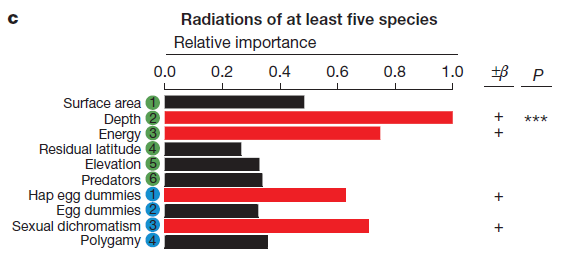
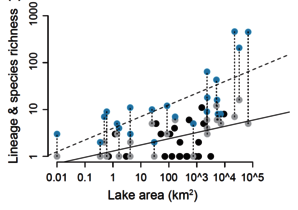
A fundamental challenge to our understanding of biodiversity is to explain why some groups of species undergo adaptive radiations, diversifying extensively into many and varied species, whereas others do not. Both extrinsic environmental factors (for example, resource availability, climate) and intrinsic lineage-specific traits (for example, behavioural or morphological traits, genetic architecture) influence diversification, but few studies have addressed how such factors interact. Radiations of cichlid fishes in the African Great Lakes provide some of the most dramatic cases of species diversification. However, most cichlid lineages in African lakes have not undergone adaptive radiations. We have compiled data on cichlid colonization and diversification in 46 African lakes, along with lake environmental features and information about the traits of colonizing cichlid lineages, to investigate why adaptive radiation does and does not occur. We find that extrinsic environmental factors related to ecological opportunity and intrinsic lineage-specific traits related to sexual selection both strongly influence whether cichlids radiate.  Cichlids are more likely to radiate in deep lakes, in regions with more incident solar radiation and in lakes where there has been more time for diversification. Among the suite of intrinsic traits that we investigate, sexual dichromatism, a surrogate for the intensity of sexual selection, is consistently positively associated with diversification. Thus, for cichlids, it is the coincidence between ecological opportunity and sexual selection that best predicts whether adaptive radiation will occur. These findings suggest in order to predict adaptive radiation, species traits and environmental factors have to be considered jointly. We are currently extending this approach to other fish radiations.
Contact

Adaptive radiation’s hallmark is exceptional species richness within geographically restricted clades. Although understanding the factors influencing geographical patterns of species richness is a fundamental goal of ecological research, adaptive radiations have rarely been studied from macroecological perspectives. Decades of ecological research have uncovered strong and predictable relationships between ecological variables (e.g. area, productivity) and species richness. These same variables may influence processes of species origination and the occurrence and richness of adaptive radiations. For example, habitat size may influence in situ speciation and adaptive radiation. Adaptive radiations are often characterized by slowdowns in diversification rate through time, assumed to derive from niche-filling processes. If adaptive radiations have reached this slowdown phase, there should be clear relationships between species richness and environmental variables related to resource availability, if these variables limit species richness. However, rarely have such environmental variables been identified for adaptive radiations. We investigate these hypotheses using our data set for 48 African lakes. Recently we discovered that within-lake adaptive radiation strongly modifies the species-area relationship for African cichlid fishes. The total number of species derived from in situ speciation increases with lake size, resulting in faunas orders of magnitude higher in species richness than faunas assembled by immigration alone. We found that diversity of clades representing within-lake radiations show responses to lake area, depth and energy consistent with limitation by these factors, suggesting that ecological factors influence the species richness of radiating clades within these ecosystems.

Publications

Extbase Variable Dump
array(2 items)
   publications => '9049,6949' (9 chars)
   libraryUrl => '' (0 chars)
Extbase Variable Dump
array(2 items)
   0 => Snowflake\Publications\Domain\Model\Publicationprototypepersistent entity (uid=9049, pid=124)
      originalId => protected9049 (integer)
      authors => protected'Wagner,&nbsp;C.&nbsp;E.; Harmon,&nbsp;L.&nbsp;J.; Seehausen,&nbsp;O.' (68 chars)
      title => protected'Cichlid species-area relationships are shaped by adaptive radiations that sc
         ale with area
' (89 chars) journal => protected'Ecology Letters' (15 chars) year => protected2014 (integer) volume => protected17 (integer) issue => protected'1' (1 chars) startpage => protected'583' (3 chars) otherpage => protected'592' (3 chars) categories => protected'adaptive radiation; cichlid; diversity-dependent diversification; ecological
          limits; island biogeography; species-area relationship
' (131 chars) description => protected'A positive relationship between species richness and island size is thought
         to emerge from an equilibrium between immigration and extinction rates, but
         the influence of species diversification on the form of this relationship is
          poorly understood. Here, we show that within-lake adaptive radiation strong
         ly modifies the species-area relationship for African cichlid fishes. The to
         tal number of species derived from <I>in situ</I> speciation increases with
         lake size, resulting in faunas orders of magnitude higher in species richnes
         s than faunas assembled by immigration alone. Multivariate models provide ev
         idence for added influence of lake depth on the species-area relationship. D
         iversity of clades representing within-lake radiations show responses to lak
         e area, depth and energy consistent with limitation by these factors, sugges
         ting that ecological factors influence the species richness of radiating cla
         des within these ecosystems. Together, these processes produce lake fish fau
         nas with highly variable composition, but with diversities that are well pre
         dicted by environmental variables.
' (1098 chars) serialnumber => protected'1461-023X' (9 chars) doi => protected'10.1111/ele.12260' (17 chars) uid => protected9049 (integer) _localizedUid => protected9049 (integer)modified _languageUid => protectedNULL _versionedUid => protected9049 (integer)modified pid => protected124 (integer)
1 => Snowflake\Publications\Domain\Model\Publicationprototypepersistent entity (uid=6949, pid=124) originalId => protected6949 (integer) authors => protected'Wagner,&nbsp;C.&nbsp;E.; Harmon,&nbsp;L.&nbsp;J.; Seehausen,&nbsp;O.' (68 chars) title => protected'Ecological opportunity and sexual selection together predict adaptive radiat
         ion
' (79 chars) journal => protected'Nature' (6 chars) year => protected2012 (integer) volume => protected487 (integer) issue => protected'7407' (4 chars) startpage => protected'366' (3 chars) otherpage => protected'369' (3 chars) categories => protected'' (0 chars) description => protected'A fundamental challenge to our understanding of biodiversity is to explain w
         hy some groups of species undergo adaptive radiations, diversifying extensiv
         ely into many and varied species, whereas others do not<sup>1,2</sup>. Both
         extrinsic environmental factors (for example, resource availability, climate
         ) and intrinsic lineage-specific traits (for example, behavioural or morphol
         ogical traits, genetic architecture) influence diversification, but few stud
         ies have addressed how such factors interact. Radiations of cichlid fishes i
         n the African Great Lakes provide some of the most dramatic cases of species
          diversification. However, most cichlid lineages in African lakes have not u
         ndergone adaptive radiations. Here we compile data on cichlid colonization a
         nd diversification in 46 African lakes, along with lake environmental featur
         es and information about the traits of colonizing cichlid lineages, to inves
         tigate why adaptive radiation does and does not occur. We find that extrinsi
         c environmental factors related to ecological opportunity and intrinsic line
         age-specific traits related to sexual selection both strongly influence whet
         her cichlids radiate. Cichlids are more likely to radiate in deep lakes, in
         regions with more incident solar radiation and in lakes where there has been
          more time for diversification. Weak or negative associations between divers
         ification and lake surface area indicate that cichlid speciation is not cons
         trained by area, in contrast to diversification in many terrestrial taxa<sup
         >3</sup>. Among the suite of intrinsic traits that we investigate, sexual di
         chromatism, a surrogate for the intensity of sexual selection, is consistent
         ly positively associated with diversification. Thus, for cichlids, it is the
          coincidence between ecological opportunity and sexual selection that best p
         redicts whether adaptive radiation will occur. These findings suggest that a
         daptive radiation is predictable, but only when species traits and environme
         ntal factors are jointly...
' (2012 chars) serialnumber => protected'0028-0836' (9 chars) doi => protected'10.1038/nature11144' (19 chars) uid => protected6949 (integer) _localizedUid => protected6949 (integer)modified _languageUid => protectedNULL _versionedUid => protected6949 (integer)modified pid => protected124 (integer)
Wagner, C. E.; Harmon, L. J.; Seehausen, O. (2014) Cichlid species-area relationships are shaped by adaptive radiations that scale with area, Ecology Letters, 17(1), 583-592, doi:10.1111/ele.12260, Institutional Repository
Wagner, C. E.; Harmon, L. J.; Seehausen, O. (2012) Ecological opportunity and sexual selection together predict adaptive radiation, Nature, 487(7407), 366-369, doi:10.1038/nature11144, Institutional Repository