Department Surface Waters - Research and Management

Metal Isotopes as Potential Indicators
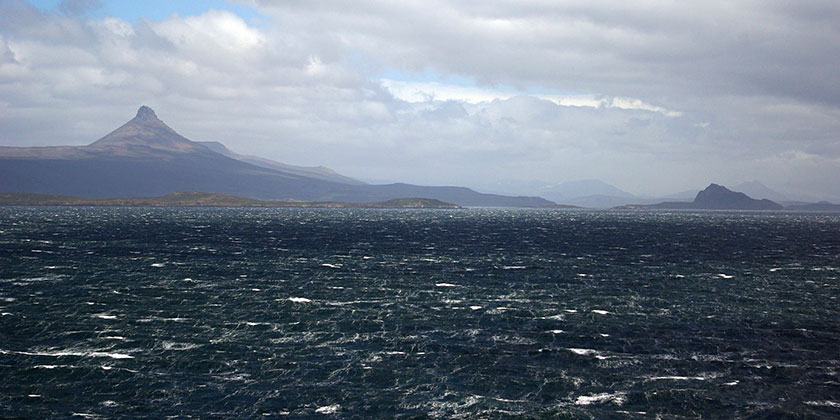

The biogeochemical cycling of trace metals is fundamentally connected to biological productivity because trace metals are micronutrients for phytoplankton. Due to fractionation during biological uptake, trace metal stable isotope composition is also influenced by biological productivity. Consequently, metal stable isotopes in sediment records are emerging as potential tools to reconstruct biological productivity in the past. Such tools, called paleoproxies, help to understand connections between global climate and surface water biogeochemistry in the past. The understanding of biogeochemical responses to past climatic shifts, derived from paleoproxies, can then help forecast impacts of ongoing climate change.

This project connects the modern and past biogeochemical cycling of trace metals and their isotopes. Stable isotope signals will be followed through modern aquatic systems, from uptake in surface waters, export to depth, and finally sedimentation. This will quantitatively constrain connections between isotope records in sediments and surface water biogeochemical cycling. Promising new stable isotope proxies will then be compared to existing tracers over time in biogenic sediments. These data will help evaluate the potential of stable isotopes as proxies, and will guide future stable isotope paleoproxy research.

Publication

Extbase Variable Dump
array(2 items)
   publications => '36380' (5 chars)
   libraryUrl => '' (0 chars)
Extbase Variable Dump
array(1 item)
   0 => Snowflake\Publications\Domain\Model\Publicationprototypepersistent entity (uid=36380, pid=124)
      originalId => protected36380 (integer)
      authors => protected'Chiu, C. F.; Archer, C.; Vance, D.; de Souza, G.&nb
         sp;F.; Ellwood, M. J.; Janssen, D. J.
' (133 chars) title => protected'Elucidating the role of biogenic and authigenic phases in marine cycling of
         nickel with paired dissolved and particulate nickel isotopes
' (136 chars) journal => protected'Earth and Planetary Sciences Letters' (36 chars) year => protected2026 (integer) volume => protected681 (integer) issue => protected'' (0 chars) startpage => protected'119934 (11 pp.)' (15 chars) otherpage => protected'' (0 chars) categories => protected'nickel isotopes; particles; Southern Ocean; GEOTRACES; subtropical front; pr
         oductivity
' (86 chars) description => protected'Nickel (Ni) is a bio-essential trace metal for marine phytoplankton, serving
          as a cofactor in key enzymes. Its nutrient-like distribution and the mirror
         ed distribution of δ<sup>60</sup>Ni in seawater suggest that δ<sup>60</sup
         >Ni could serve as a tracer of biological Ni cycling. However, particulate N
         i (pNi) remains understudied despite its important role. Here, we present th
         ree coupled dissolved and particulate δ<sup>60</sup>Ni profiles from distin
         ct biogeochemical regimes across the Subtropical Front in the Australian sec
         tor of the Southern Ocean.<br />In surface waters, pNi is isotopically light
         er than co-located dissolved Ni, and particulate Ni/P in the mixed layer fal
         ls within the range observed for phytoplankton, reflecting an association wi
         th organic matter. These results support previous studies suggesting that ph
         ytoplankton preferentially remove isotopically light Ni. In the subtropics,
         higher surface productivity corresponds to elevated mixed layer pNi concentr
         ations, below which pNi declines, associated with the regeneration of organi
         c matter. However, particulate δ<sup>60</sup>Ni shows limited variation, im
         plying minimal isotope fractionation during this process. At subantarctic st
         ations, pNi concentrations remain relatively constant, while particulate δ<
         sup>60</sup>Ni decreases with depth in the upper 300 m. Moreover, δ<sup>60<
         /sup>Ni offsets between the dissolved and particulate phases are smaller tha
         n for the subtropical counterpart, likely associated with different phytopla
         nkton assemblages. At greater depth, particulate Mn/P increases, and Ni/P ra
         tios exceed those of phytoplankton. This suggests a shift in pNi association
          from organic-rich to Mn-rich phases, with minimal change in total particula
         te δ<sup>60</sup>Ni. These findings suggest a more complex internal cycling
          of Ni in the oceans than one driven solely by biological processes.
' (1892 chars) serialnumber => protected'0012-821X' (9 chars) doi => protected'10.1016/j.epsl.2026.119934' (26 chars) uid => protected36380 (integer) _localizedUid => protected36380 (integer)modified _languageUid => protectedNULL _versionedUid => protected36380 (integer)modified pid => protected124 (integer)
Chiu, C. F.; Archer, C.; Vance, D.; de Souza, G. F.; Ellwood, M. J.; Janssen, D. J. (2026) Elucidating the role of biogenic and authigenic phases in marine cycling of nickel with paired dissolved and particulate nickel isotopes, Earth and Planetary Sciences Letters, 681, 119934 (11 pp.), doi:10.1016/j.epsl.2026.119934, Institutional Repository

Contact

Collaboration

Prof. Dr. Derek Vance, ETH Zürich


Funding

SNF Ambizione (Proposal PZ00P2_202069 / 1)