Department Surface Waters - Research and Management

Sustainable Hydropower in Andean River Ecosystems
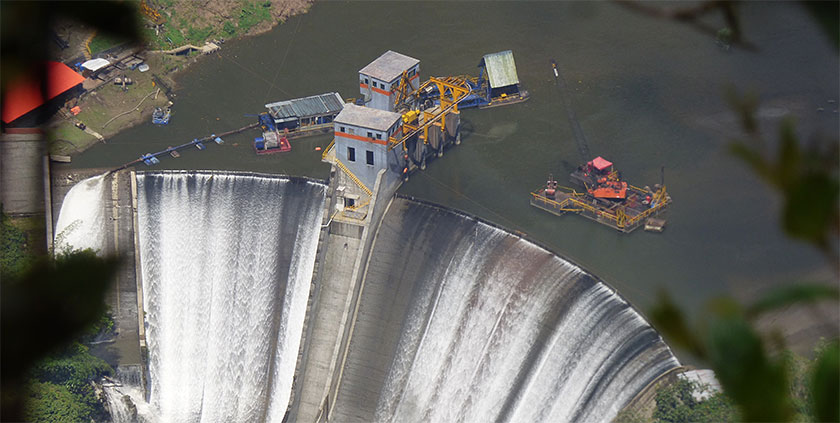

The impacts of hydropower development on tropical river ecosystems are poorly understood and this is especially true for the tropical Andes of South America, a hotspot for dam construction.
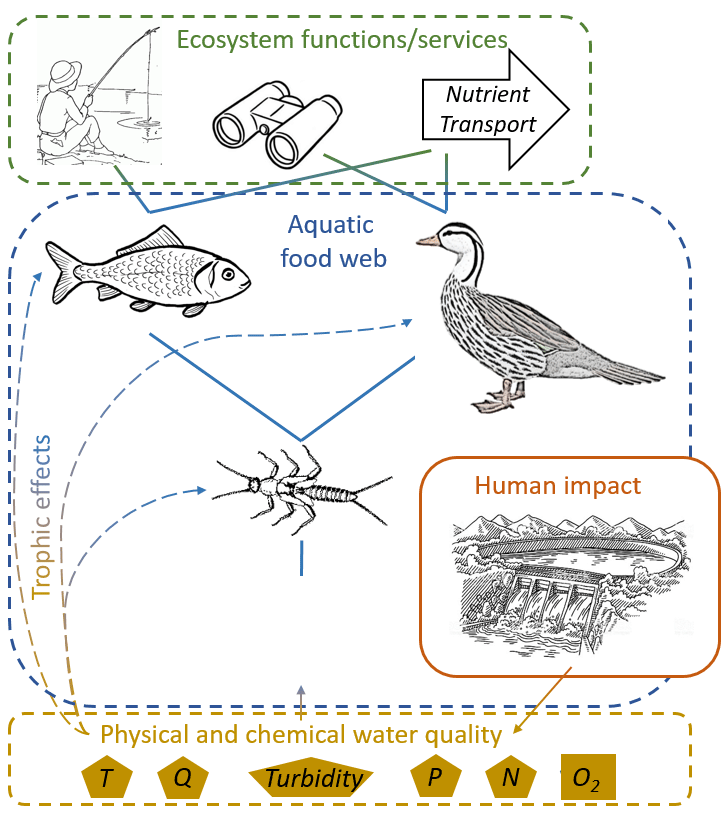
This project forms a collaboration between Eawag and Colombian aquatic scientists and environmental regulatory agencies in order to explore the link between dams, water quality and the functioning of tropical aquatic ecosystems with the ultimate goal of improving monitoring, design and management of hydropower.
We analyze data sets from environmental impact statements and water quality monitoring programs associated with hydropower infrastructure to systematically test for chemical and ecological changes to Andean Rivers associated with hydropower in Colombia.


Publications

Extbase Variable Dump
array(2 items)
   publications => '24738' (5 chars)
   libraryUrl => '' (0 chars)
Extbase Variable Dump
array(1 item)
   0 => Snowflake\Publications\Domain\Model\Publicationprototypepersistent entity (uid=24738, pid=124)
      originalId => protected24738 (integer)
      authors => protected'Valencia-Rodríguez, D.; Herrera-Pérez, J.; Restrepo-Santamaría,
          D.; Galeano, A.; Winton, R. S.; Jiménez-Segura, L
         .
' (153 chars) title => protected'Fish community turnover in a dammed Andean River over time' (58 chars) journal => protected'Neotropical Ichthyology' (23 chars) year => protected2022 (integer) volume => protected20 (integer) issue => protected'1' (1 chars) startpage => protected'e210091 (19 pp.)' (16 chars) otherpage => protected'' (0 chars) categories => protected'beta diversity; beta diversity; freshwater ichthyofauna; hydropower; long-te
         rm monitoring; Magdalena River
' (106 chars) description => protected'We describe the change in the fish community of the Porce River in Magdalena
          River Basin, Colombia, following the construction of the Porce III hydropow
         er reservoir based on 13 years of monitoring data. The results show a clear
         reduction of the number of native species, which have been supplanted by col
         onizing non-native species, especially in the reservoir. Four native species
          detected prior to dam construction have apparently disappeared, but 12 new
         species were registered post-construction. We analyzed spatial changes in be
         ta diversity in the aquatic environments surrounding the dam. The new enviro
         nment generated by the reservoir presents a unique species composition and c
         ontributes significantly to the total beta diversity of the system. Altogeth
         er three distinct new fish assemblages emerged following reservoir formation
          and there are now six assemblages where there had previously been three. Th
         is dramatic change, already visible within a decade of construction, highlig
         hts just how strong of an impact dam construction has on habitats and how ra
         pidly fish communities react in this hotspot for endemic fish diversity. Our
          findings demonstrate the importance of monitoring fish communities for reve
         aling the impact of damming on river ecosystems and informs potential comple
         mentary fish diversity inventories elsewhere in the Magdalena River basin.
' (1366 chars) serialnumber => protected'1679-6225' (9 chars) doi => protected'10.1590/1982-0224-2021-0091' (27 chars) uid => protected24738 (integer) _localizedUid => protected24738 (integer)modified _languageUid => protectedNULL _versionedUid => protected24738 (integer)modified pid => protected124 (integer)
Valencia-Rodríguez, D.; Herrera-Pérez, J.; Restrepo-Santamaría, D.; Galeano, A.; Winton, R. S.; Jiménez-Segura, L. (2022) Fish community turnover in a dammed Andean River over time, Neotropical Ichthyology, 20(1), e210091 (19 pp.), doi:10.1590/1982-0224-2021-0091, Institutional Repository

Contacts

Collaboration

  • Luz Fernanda Jimenez Segura, Universidad de Medellin
  • Silvia Lopez Casas & Juliana Delgado, The Nature Conservancy Colombia
  • Silvia Vanegas Pinzón, Autoridad Nacional de Licencias Ambientales de Colombia