Department Urban Water Management
DroMedario
(German acronym for Drugs, Medicaments, Alcohol and tobacco Residues: Wastewater-based epidemiology in Switzerland)

Anonymous wastewater‑based consumption trends at the population level
Wastewater contains a wide range of epidemiological markers. These include chemical markers such as illicit drugs, pharmaceuticals, and tobacco‑related compounds, which are analyzed in the DroMedArio project to provide anonymous insights into population‑level consumption trends.
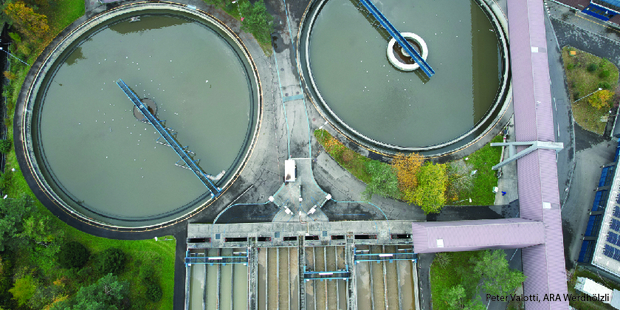
Since 2021, 24‑hour composite samples are being collected every 13 days from ten wastewater treatment plants (WWTPs) across Switzerland and analyzed at Eawag.
In 2025, these ten DroMedArio WWTPs were harmonized with those of the Swiss wastewater monitoring program for infectious diseases. This integration allows to optimize logistical resources and enables biological markers to be complemented with chemical monitoring data.
Together, the ten participating treatment plants process the wastewater of nearly 2 million people, corresponding to about 21% of the Swiss population.
Monitoring these markers in wastewater enables the estimation of temporal trends and spatial differences in consumption in Switzerland.
Anonymous wastewater‑based consumption trends at the population level
Methods for Chemical Wastewater Analysis
Chemical wastewater analysis is carried out using liquid chromatography coupled with mass spectrometry (LC‑MS).
Routine quantification of the target substances is performed with triple‑quadrupole mass spectrometry (TQ), which provides the sensitivity required for targeted measurements at low concentrations.
In addition, Orbitrap‑based high‑resolution mass spectrometry (HRMS) is used in research projects to enable broad, non‑targeted measurements of chemicals in wastewater. This creates a digital archive of the samples, allowing for retrospective analyses as well as the identification of new substances.
Methods for Chemical Wastewater Analysis
The DroMedArio wastewater data are publicly accessible via the Dromedario.ch dashboard.
Data for selected target substances from the first quarter of each year are also forwarded to the European wastewater‑based monitoring program for illicit drugs, SCORE (Sewage Analysis CORe group Europe) / EUDA (European Union Drugs Agency). This makes it possible to place the data in an international context.