The Pathogens and Human Health group research agenda is to contribute to the reduction of the global infectious disease burden through the study of pathogen surveillance and transmission at the boundary between humans and the environment.
Despite dramatic reductions in infectious disease burden over the past century, morbidity and mortality remain strikingly high. For example, there are over 4 billion cases of gastrointestinal illness and 14 billion cases of respiratory illness worldwide every year. Antimicrobial resistance is also an emerging threat, with over an estimated 1 million attributable deaths per year. These diseases, like many others, transit through the environment during transmission from infected to susceptible people. This environmental transmission provides opportunities for pathogen detection to inform disease dynamics and help to inform design of effective infection control interventions.
The Pathogens and Human Health research group works to develop, standardize, and apply methods for sensitive detection, quantification, and characterization of environmentally mediated infectious diseases. Methodological approaches include quantitative culture- and molecular-based detection, quantitative and digital PCR, tilling amplicon-based sequencing, metagenomic sequencing, and whole genome sequencing. These approaches are applied to diverse matrices, including hands, soil, surfaces, water, and wastewater.
Outputs from our group are shared and disseminated through peer reviewed publications (DORA 4RI), national and international conferences and seminars, online data dashboards (wise.ethz.ch), and direct engagement with cantonal and federal authorities.
Pathogens and Human Health Group (December 2024), from left: Sheena Conforti, Lizhan Tang, Meret Zimmermann, Seju Kang, Andrea Aquize, Anna Wettlaufer, Jolinda de Korne, Ida Werner, Nadine Hürlimann, Rachel McLeod, Melissa Pitton, Lea Caduff, Patrick Schmidhalter, Esther Greenwood, Julia Kamer, Timothy R. Julian
array(5 items)0 => Snowflake\Publications\Domain\Model\Publicationprototypepersistent entity (uid=33893, pid=124)originalId => protected33893 (integer)
authors => protected'de Korne-Elenbaas, J.; Caduff, L.; Lison, A.; McLeod, R .; Pitton, M.; Gan, C.; Julian, T. R.' (133 chars)
title => protected'Design, validation, and implementation of multiplex digital PCR assays for s imultaneous quantification of multiple targets' (122 chars)
journal => protected'Letters in Applied Microbiology' (31 chars)
year => protected2025 (integer)
volume => protected78 (integer)
issue => protected'1' (1 chars)
startpage => protected'ovae137 (11 pp.)' (16 chars)
otherpage => protected'' (0 chars)
categories => protected'PCR (polymerase chain reaction); microbial detection methods; molecular biol ogy; molecular diagnostics; method development' (122 chars)
description => protected'Quantitative polymerase chain reaction (qPCR) and digital PCR (dPCR) are app lied for quantifying molecular targets in disease diagnostics, pathogen dete ction, and ecological monitoring. Uptake of dPCR is increasing due to its hi gher quantification accuracy relative to qPCR, which stems from its independ ence from standard curves and its increased resistance to PCR inhibitors. Th roughput can be increased through multiplexing, which allows simultaneous qu antification of multiple targets. However, multiplexing with dPCR faces uniq ue challenges relative to qPCR. Here, we describe the three-phase developmen t process of non-competing multiplex dPCR assays using target-specific fluor escently labeled hydrolysis probes. We highlight common challenges encounter ed, along with recommended solutions. Phase 1: <em>In silico</em> assay desi gn; target-specific primers and probes are selected or designed, potential i ssues with primer and probe interactions are identified, and fluorophores an d quenchers are chosen based on dPCR instrumentation. Phase 2: Wet-lab valid ation; assays are benchmarked using positive controls. Insufficient performa nce leads to assay redesign, as needed. Phase 3: Assay implementation; assay specificity and sensitivity are validated on relevant sample matrices. Fina lly, we provide recommendations on the future design and standardization of multiplexed dPCR assays, highlighting the need for better <em>in silico</em> predictions of assay performance, standardizing positive controls, and auto mating partition classification systems.' (1560 chars)
serialnumber => protected'0266-8254' (9 chars)
doi => protected'10.1093/lambio/ovae137' (22 chars)
uid => protected33893 (integer)
_localizedUid => protected33893 (integer)modified_languageUid => protectedNULL
_versionedUid => protected33893 (integer)modifiedpid => protected124 (integer)1 => Snowflake\Publications\Domain\Model\Publicationprototypepersistent entity (uid=33212, pid=124)originalId => protected33212 (integer)
authors => protected'Greenwood, E. E.; Lauber, T.; van den Hoogen, J.; Donmez , A.; Bain, R. E. S.; Johnston, R.; Crowther, T. W.; Julian, T. R.' (187 chars)
title => protected'Mapping safe drinking water use in low- and middle-income countries' (67 chars)
journal => protected'Science' (7 chars)
year => protected2024 (integer)
volume => protected385 (integer)
issue => protected'6710' (4 chars)
startpage => protected'784' (3 chars)
otherpage => protected'790' (3 chars)
categories => protected'' (0 chars)
description => protected'Safe drinking water access is a human right, but data on safely managed drin king water services (SMDWS) is lacking for more than half of the global popu lation. We estimate SMDWS use in 135 low- and middle-income countries (LMICs ) at subnational levels with a geospatial modeling approach, combining exist ing household survey data with available global geospatial datasets. We esti mate that only one in three people used SMDWS in LMICs in 2020 and identifie d fecal contamination as the primary limiting factor affecting almost half o f the population of LMICs. Our results are relevant for raising awareness ab out the challenges and limitations of current global monitoring approaches a nd demonstrating how globally available geospatial data can be leveraged to fill data gaps and identify priority areas in LMICs.' (812 chars)
serialnumber => protected'0036-8075' (9 chars)
doi => protected'10.1126/science.adh9578' (23 chars)
uid => protected33212 (integer)
_localizedUid => protected33212 (integer)modified_languageUid => protectedNULL
_versionedUid => protected33212 (integer)modifiedpid => protected124 (integer)2 => Snowflake\Publications\Domain\Model\Publicationprototypepersistent entity (uid=32890, pid=124)originalId => protected32890 (integer)
authors => protected'Tang, L.; Rhoads, W. J.; Eichelberg, A.; Hamilton, K. A.; Julian, T. R.' (111 chars)
title => protected'Applications of quantitative microbial risk assessment to respiratory pathog ens and implications for uptake in policy: a state-of-the-science review' (148 chars)
journal => protected'Environmental Health Perspectives' (33 chars)
year => protected2024 (integer)
volume => protected132 (integer)
issue => protected'5' (1 chars)
startpage => protected'56001 (16 pp.)' (14 chars)
otherpage => protected'' (0 chars)
categories => protected'' (0 chars)
description => protected'<em>BACKGROUND:</em> respiratory tract infections are major contributors to the global disease burden. Quantitative microbial risk assessment (QMRA) hol ds potential as a rapidly deployable framework to understand respiratory pat hogen transmission and inform policy on infection control.<br />OBJECTIVES: the goal of this paper was to evaluate, motivate, and inform further develop ment of the use of QMRA as a rapid tool to understand the transmission of re spiratory pathogens and improve the evidence base for infection control poli cies.<br />METHODS: we conducted a literature review to identify peer-review ed studies of complete QMRA frameworks on aerosol inhalation or contact tran smission of respiratory pathogens. From each of the identified studies, we e xtracted and summarized information on the applied exposure model approaches , dose-response models, and parameter values, including risk characterizatio n. Finally, we reviewed linkages between model outcomes and policy.<br />RES ULTS: we identified 93 studies conducted in 16 different countries with comp lete QMRA frameworks for diverse respiratory pathogens, including SARS-CoV-2 , <em>Legionella</em> spp., <em>Staphylococcus aureus</em>, influenza, and < em>Bacillus anthracis</em>. Six distinct exposure models were identified acr oss diverse and complex transmission pathways. In 57 studies, exposure model frameworks were informed by their ability to model the efficacy of potentia l interventions. Among interventions, masking, ventilation, social distancin g, and other environmental source controls were commonly assessed. Pathogen concentration, aerosol concentration, and partitioning coefficient were infl uential exposure parameters as identified by sensitivity analysis. Most (84% , <em>n</em>=78) studies presented policy-relevant content including <em>a)< /em> determining disease burden to call for policy intervention, <em>b)</em> determining risk-based threshold values for regulations, <em>c)</em> inform ing intervention and con...' (2442 chars)
serialnumber => protected'0091-6765' (9 chars)
doi => protected'10.1289/EHP12695' (16 chars)
uid => protected32890 (integer)
_localizedUid => protected32890 (integer)modified_languageUid => protectedNULL
_versionedUid => protected32890 (integer)modifiedpid => protected124 (integer)3 => Snowflake\Publications\Domain\Model\Publicationprototypepersistent entity (uid=33237, pid=124)originalId => protected33237 (integer)
authors => protected'Reynaert, E.; Sylvestre, É.; Morgenroth, E.; Julian, T. R.' (84 chars)
title => protected'Greywater recycling for diverse collection scales and appliances: enteric pa thogen log-removal targets and treatment trains' (123 chars)
journal => protected'Water Research' (14 chars)
year => protected2024 (integer)
volume => protected264 (integer)
issue => protected'' (0 chars)
startpage => protected'122216 (13 pp.)' (15 chars)
otherpage => protected'' (0 chars)
categories => protected'Quantitative microbial risk assessment (QMRA); water reuse; greywater; log-r emoval value; recycling' (99 chars)
description => protected'In light of increasingly diverse greywater reuse applications, this study pr oposes risk-based log-removal targets (LRTs) to aid the selection of treatme nt trains for greywater recycling at different collection scales, including appliance-scale reuse of individual greywater streams. An epidemiology-based model was used to simulate the concentrations of prevalent and treatment-re sistant reference pathogens (protozoa: <em>Giardia</em> and <em>Cryptosporid ium</em> spp.<em>,</em> bacteria: <em>Salmonella</em> and <em>Campylobacter< /em> spp., viruses: rotavirus, norovirus, adenovirus, and Coxsackievirus B5) in the greywater streams for collection scales of 5-, 100-, and a 1000-peop le. Using quantitative microbial risk assessment (QMRA), we calculated LRTs to meet a health benchmark of 10<sup>–4</sup> infections per person per ye ar over 10′000 Monte Carlo iterations. LRTs were highest for norovirus at the 5-people scale and for adenovirus at the 100- and 1000-people scales. Ex ample treatment trains were designed to meet the 95 % quantiles of LRTs. Tre atment trains consisted of an aerated membrane bioreactor, chlorination, and , if required, UV disinfection. In most cases, rotavirus, norovirus, adenovi rus and <em>Cryptosporidium</em> spp<em>.</em> determined the overall treatm ent train requirements. Norovirus was most often critical to dimension the c hlorination (concentration × time values) and adenovirus determined the req uired UV dose. Smaller collection scales did not generally allow for simpler treatment trains due to the high LRTs associated with viruses, with the exc eption of recirculating washing machines and handwashing stations. Similarly , treating greywater sources individually resulted in lower LRTs, but the lo wer required LRTs nevertheless did not generally allow for simpler treatment trains. For instance, LRTs for a recirculating washing machine were around 3-log units lower compared to LRTs for indoor reuse of combined greywater (1 000-people scale), but b...' (2546 chars)
serialnumber => protected'0043-1354' (9 chars)
doi => protected'10.1016/j.watres.2024.122216' (28 chars)
uid => protected33237 (integer)
_localizedUid => protected33237 (integer)modified_languageUid => protectedNULL
_versionedUid => protected33237 (integer)modifiedpid => protected124 (integer)4 => Snowflake\Publications\Domain\Model\Publicationprototypepersistent entity (uid=32976, pid=124)originalId => protected32976 (integer)
authors => protected'Conforti, S.; Holschneider, A.; Sylvestre, É.; Julian, T. R.' (86 chars)
title => protected'Monitoring ESBL-Escherichia coli in Swiss wastewater between November 2021 a nd November 2022: insights into population carriage' (127 chars)
journal => protected'mSphere' (7 chars)
year => protected2024 (integer)
volume => protected9 (integer)
issue => protected'5' (1 chars)
startpage => protected'1' (1 chars)
otherpage => protected'16' (2 chars)
categories => protected'esbl-e. coli; wastewater-based epidemiology; Switzerland; antimicrobial resi stance; molecular methods' (101 chars)
description => protected'Antimicrobial resistance (AMR) poses a global health threat, causing million s of deaths annually, with expectations of increased impact in the future. W astewater surveillance offers a cost-effective, non-invasive tool to underst and AMR carriage trends within a population. We monitored extended-spectrum β-lactamase producing Escherichia coli (ESBL-E. coli) weekly in influent wa stewater from six wastewater treatment plants (WWTPs) in Switzerland (Novemb er 2021 to November 2022) to investigate spatio-temporal variations, explore correlations with environmental variables, develop a predictive model for E SBL-E. coli carriage in the community, and detect the most prevalent ESBL-ge nes. We cultured total and ESBL-E. coli in 300 wastewater samples to quantif y daily loads and percentage of ESBL-E. coli. Additionally, we screened 234 ESBL-E. coli isolates using molecular methods for the presence of 18 ESBL-ge ne families. We found a population-weighted mean percentage of ESBL-E. coli of 1.9% (95% confidence interval: 1.8–2%) across all sites and weeks, whic h can inform ESBL-E. coli carriage. Concentrations of ESBL-E. coli varied ac ross WWTPs and time, with higher values observed in WWTPs serving larger pop ulations. Recent precipitations (previous 24/96 h) showed no significant ass ociation with ESBL-E. coli, while temperature occasionally had a moderate im pact (P < 0.05, correlation coefficients approximately 0.40) in some loca tions. We identified bla<sub>CTX-M-1</sub>, bla<sub>CTX-M-9</sub>, and bla<s ub>TEM</sub> as the predominant ESBL-gene families. Our study demonstrates t hat wastewater-based surveillance of culturable ESBL-E. coli provides insigh ts into AMR trends in Switzerland and may also inform resistance. These find ings establish a foundation for long term, nationally established monitoring protocols and provide information that may help inform targeted public heal th interventions. IMPORTANCE Antimicrobial resistance (AMR) is a global heal th threat and is commonl...' (2901 chars)
serialnumber => protected'' (0 chars)
doi => protected'10.1128/msphere.00760-23' (24 chars)
uid => protected32976 (integer)
_localizedUid => protected32976 (integer)modified_languageUid => protectedNULL
_versionedUid => protected32976 (integer)modifiedpid => protected124 (integer)
Design, validation, and implementation of multiplex digital PCR assays for simultaneous quantification of multiple targets
Quantitative polymerase chain reaction (qPCR) and digital PCR (dPCR) are applied for quantifying molecular targets in disease diagnostics, pathogen detection, and ecological monitoring. Uptake of dPCR is increasing due to its higher quantification accuracy relative to qPCR, which stems from its independence from standard curves and its increased resistance to PCR inhibitors. Throughput can be increased through multiplexing, which allows simultaneous quantification of multiple targets. However, multiplexing with dPCR faces unique challenges relative to qPCR. Here, we describe the three-phase development process of non-competing multiplex dPCR assays using target-specific fluorescently labeled hydrolysis probes. We highlight common challenges encountered, along with recommended solutions. Phase 1: In silico assay design; target-specific primers and probes are selected or designed, potential issues with primer and probe interactions are identified, and fluorophores and quenchers are chosen based on dPCR instrumentation. Phase 2: Wet-lab validation; assays are benchmarked using positive controls. Insufficient performance leads to assay redesign, as needed. Phase 3: Assay implementation; assay specificity and sensitivity are validated on relevant sample matrices. Finally, we provide recommendations on the future design and standardization of multiplexed dPCR assays, highlighting the need for better in silico predictions of assay performance, standardizing positive controls, and automating partition classification systems.
de Korne-Elenbaas, J.; Caduff, L.; Lison, A.; McLeod, R.; Pitton, M.; Gan, C.; Julian, T. R. (2025) Design, validation, and implementation of multiplex digital PCR assays for simultaneous quantification of multiple targets, Letters in Applied Microbiology, 78(1), ovae137 (11 pp.), doi:10.1093/lambio/ovae137, Institutional Repository
Mapping safe drinking water use in low- and middle-income countries
Safe drinking water access is a human right, but data on safely managed drinking water services (SMDWS) is lacking for more than half of the global population. We estimate SMDWS use in 135 low- and middle-income countries (LMICs) at subnational levels with a geospatial modeling approach, combining existing household survey data with available global geospatial datasets. We estimate that only one in three people used SMDWS in LMICs in 2020 and identified fecal contamination as the primary limiting factor affecting almost half of the population of LMICs. Our results are relevant for raising awareness about the challenges and limitations of current global monitoring approaches and demonstrating how globally available geospatial data can be leveraged to fill data gaps and identify priority areas in LMICs.
Greenwood, E. E.; Lauber, T.; van den Hoogen, J.; Donmez, A.; Bain, R. E. S.; Johnston, R.; Crowther, T. W.; Julian, T. R. (2024) Mapping safe drinking water use in low- and middle-income countries, Science, 385(6710), 784-790, doi:10.1126/science.adh9578, Institutional Repository
Applications of quantitative microbial risk assessment to respiratory pathogens and implications for uptake in policy: a state-of-the-science review
BACKGROUND: respiratory tract infections are major contributors to the global disease burden. Quantitative microbial risk assessment (QMRA) holds potential as a rapidly deployable framework to understand respiratory pathogen transmission and inform policy on infection control. OBJECTIVES: the goal of this paper was to evaluate, motivate, and inform further development of the use of QMRA as a rapid tool to understand the transmission of respiratory pathogens and improve the evidence base for infection control policies. METHODS: we conducted a literature review to identify peer-reviewed studies of complete QMRA frameworks on aerosol inhalation or contact transmission of respiratory pathogens. From each of the identified studies, we extracted and summarized information on the applied exposure model approaches, dose-response models, and parameter values, including risk characterization. Finally, we reviewed linkages between model outcomes and policy. RESULTS: we identified 93 studies conducted in 16 different countries with complete QMRA frameworks for diverse respiratory pathogens, including SARS-CoV-2, Legionella spp., Staphylococcus aureus, influenza, and Bacillus anthracis. Six distinct exposure models were identified across diverse and complex transmission pathways. In 57 studies, exposure model frameworks were informed by their ability to model the efficacy of potential interventions. Among interventions, masking, ventilation, social distancing, and other environmental source controls were commonly assessed. Pathogen concentration, aerosol concentration, and partitioning coefficient were influential exposure parameters as identified by sensitivity analysis. Most (84%, n=78) studies presented policy-relevant content including a) determining disease burden to call for policy intervention, b) determining risk-based threshold values for regulations, c) informing intervention and control strategies, and d) making recommendations and suggestions for QMRA application in policy. CONCLUSIONS: we identified needs to further the development of QMRA frameworks for respiratory pathogens that prioritize appropriate aerosol exposure modeling approaches, consider trade-offs between model validity and complexity, and incorporate research that strengthens confidence in QMRA results. doi.org/10.1289/EHP12695.
Tang, L.; Rhoads, W. J.; Eichelberg, A.; Hamilton, K. A.; Julian, T. R. (2024) Applications of quantitative microbial risk assessment to respiratory pathogens and implications for uptake in policy: a state-of-the-science review, Environmental Health Perspectives, 132(5), 56001 (16 pp.), doi:10.1289/EHP12695, Institutional Repository
Greywater recycling for diverse collection scales and appliances: enteric pathogen log-removal targets and treatment trains
In light of increasingly diverse greywater reuse applications, this study proposes risk-based log-removal targets (LRTs) to aid the selection of treatment trains for greywater recycling at different collection scales, including appliance-scale reuse of individual greywater streams. An epidemiology-based model was used to simulate the concentrations of prevalent and treatment-resistant reference pathogens (protozoa: Giardia and Cryptosporidium spp., bacteria: Salmonella and Campylobacter spp., viruses: rotavirus, norovirus, adenovirus, and Coxsackievirus B5) in the greywater streams for collection scales of 5-, 100-, and a 1000-people. Using quantitative microbial risk assessment (QMRA), we calculated LRTs to meet a health benchmark of 10–4 infections per person per year over 10′000 Monte Carlo iterations. LRTs were highest for norovirus at the 5-people scale and for adenovirus at the 100- and 1000-people scales. Example treatment trains were designed to meet the 95 % quantiles of LRTs. Treatment trains consisted of an aerated membrane bioreactor, chlorination, and, if required, UV disinfection. In most cases, rotavirus, norovirus, adenovirus and Cryptosporidium spp. determined the overall treatment train requirements. Norovirus was most often critical to dimension the chlorination (concentration × time values) and adenovirus determined the required UV dose. Smaller collection scales did not generally allow for simpler treatment trains due to the high LRTs associated with viruses, with the exception of recirculating washing machines and handwashing stations. Similarly, treating greywater sources individually resulted in lower LRTs, but the lower required LRTs nevertheless did not generally allow for simpler treatment trains. For instance, LRTs for a recirculating washing machine were around 3-log units lower compared to LRTs for indoor reuse of combined greywater (1000-people scale), but both scenarios necessitated treatment with a membrane bioreactor, chlorination and UV disinfection. However, simpler treatment trains may be feasible for small-scale and application-scale reuse if: (i) less conservative health benchmarks are used for household-based systems, considering the reduced relative importance of treated greywater in pathogen transmission in households, and (ii) higher log-removal values (LRVs) can be validated for unit processes, enabling simpler treatment trains for a larger number of appliance-scale reuse systems.
Reynaert, E.; Sylvestre, É.; Morgenroth, E.; Julian, T. R. (2024) Greywater recycling for diverse collection scales and appliances: enteric pathogen log-removal targets and treatment trains, Water Research, 264, 122216 (13 pp.), doi:10.1016/j.watres.2024.122216, Institutional Repository
Monitoring ESBL-Escherichia coli in Swiss wastewater between November 2021 and November 2022: insights into population carriage
Antimicrobial resistance (AMR) poses a global health threat, causing millions of deaths annually, with expectations of increased impact in the future. Wastewater surveillance offers a cost-effective, non-invasive tool to understand AMR carriage trends within a population. We monitored extended-spectrum β-lactamase producing Escherichia coli (ESBL-E. coli) weekly in influent wastewater from six wastewater treatment plants (WWTPs) in Switzerland (November 2021 to November 2022) to investigate spatio-temporal variations, explore correlations with environmental variables, develop a predictive model for ESBL-E. coli carriage in the community, and detect the most prevalent ESBL-genes. We cultured total and ESBL-E. coli in 300 wastewater samples to quantify daily loads and percentage of ESBL-E. coli. Additionally, we screened 234 ESBL-E. coli isolates using molecular methods for the presence of 18 ESBL-gene families. We found a population-weighted mean percentage of ESBL-E. coli of 1.9% (95% confidence interval: 1.8–2%) across all sites and weeks, which can inform ESBL-E. coli carriage. Concentrations of ESBL-E. coli varied across WWTPs and time, with higher values observed in WWTPs serving larger populations. Recent precipitations (previous 24/96 h) showed no significant association with ESBL-E. coli, while temperature occasionally had a moderate impact (P < 0.05, correlation coefficients approximately 0.40) in some locations. We identified blaCTX-M-1, blaCTX-M-9, and blaTEM as the predominant ESBL-gene families. Our study demonstrates that wastewater-based surveillance of culturable ESBL-E. coli provides insights into AMR trends in Switzerland and may also inform resistance. These findings establish a foundation for long term, nationally established monitoring protocols and provide information that may help inform targeted public health interventions. IMPORTANCE Antimicrobial resistance (AMR) is a global health threat and is commonly monitored in clinical settings, given its association with the risk of antimicrobial-resistant infections. Nevertheless, tracking AMR within a community proves challenging due to the substantial sample size required for a representative population, along with high associated costs and privacy concerns. By investigating high resolution temporal and geographic trends in extended-spectrum beta-lactamase producing Escherichia coli in wastewater, we provide an alternative approach to monitor AMR dynamics, distinct from the conventional clinical settings focus. Through this approach, we develop a mechanistic model, shedding light on the relationship between wastewater indicators and AMR carriage in the population. This perspective contributes valuable insights into trends of AMR carriage, emphasizing the importance of wastewater surveillance in informing effective public health interventions.
Conforti, S.; Holschneider, A.; Sylvestre, É.; Julian, T. R. (2024) Monitoring ESBL-Escherichia coli in Swiss wastewater between November 2021 and November 2022: insights into population carriage, mSphere, 9(5), 1-16, doi:10.1128/msphere.00760-23, Institutional Repository
Projects
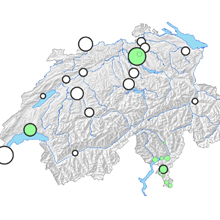
The WISE research project aims at enhancing wastewater-based surveillance to track and predict infectious disease dynamics beyond traditional clinical surveillance.
Inhalation of legionella bacteria – which thrive in warm water – can cause illness: in a new project, an Eawag-led multidisciplinary research team is investigating how the risks associated with these bacteria can best be managed.