Department Environmental Microbiology

Project MicroscapesX

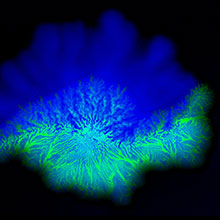
Individual microbial cells rarely exist alone in the natural environment. Instead, they typically arrange themselves in space relative to other cells. Spatial positioning determines how different cells interact with each other (e.g., positive or negative effects on each other) and how those interactions lead to emergent community behaviors. The main objective of Microscapes is to understand the underlying processes that give rise to spatial self-organization and to predict the consequences of spatial self-organization on ecological processes.

To address our objective, we use synthetic microbial ecosystems where we impose specific types of interactions between different cell types. We then manipulate those interactions and measure the consequences on spatial self-organization and emergent community behaviors. We finally develop quantitative and predictive models for the formation and dynamical behavior of spatially assembled communities.

Microscapes is an inherently interdisciplinary project that encompasses a wide range of biological disciplines, including microbiology, ecology, evolution, and systems biology. We always strive to integrate experiments with mathematical modeling. The broader project therefore encompasses a total of five research groups that meet on a regular basis and have different expertise. Three groups focus on experimentation (Jan Roelof van der Meer, UNIL; Yok Que Ai, CHU; David R. Johnson, Eawag) while the other two focus on mathematical modeling (Dani Or, ETHZ; Vassily Hatzimanikatis, EPFL).

Publications
Extbase Variable Dump
array(2 items)
   publications => '7100' (4 chars)
   libraryUrl => '' (0 chars)
Extbase Variable Dump
array(1 item)
   0 => Snowflake\Publications\Domain\Model\Publicationprototypepersistent entity (uid=7100, pid=124)
      originalId => protected7100 (integer)
      authors => protected'Johnson, D. R.; Goldschmidt, F.; Lilja, E. E.; Acke
         rmann, M.
' (90 chars) title => protected'Metabolic specialization and the assembly of microbial communities' (66 chars) journal => protected'ISME Journal' (12 chars) year => protected2012 (integer) volume => protected6 (integer) issue => protected'11' (2 chars) startpage => protected'1985' (4 chars) otherpage => protected'1991' (4 chars) categories => protected'metabolic specialization; community assembly; biochemical conflicts; trade-o
         ffs; cross-feeding
' (94 chars) description => protected'Metabolic specialization is a general biological principle that shapes the a
         ssembly of microbial communities. Individual cell types rarely metabolize a
         wide range of substrates within their environment. Instead, different cell t
         ypes often specialize at metabolizing only subsets of the available substrat
         es. What is the advantage of metabolizing subsets of the available substrate
         s rather than all of them? In this perspective piece, we argue that biochemi
         cal conflicts between different metabolic processes can promote metabolic sp
         ecialization and that a better understanding of these conflicts is therefore
          important for revealing the general principles and rules that govern the as
         sembly of microbial communities. We first discuss three types of biochemical
          conflicts that could promote metabolic specialization. Next, we demonstrate
          how knowledge about the consequences of biochemical conflicts can be used t
         o predict whether different metabolic processes are likely to be performed b
         y the same cell type or by different cell types. We then discuss the major c
         hallenges in identifying and assessing biochemical conflicts between differe
         nt metabolic processes and propose several approaches for their measurement.
          Finally, we argue that a deeper understanding of the biochemical causes of
         metabolic specialization could serve as a foundation for the field of synthe
         tic ecology, where the objective would be to rationally engineer the assembl
         y of a microbial community to perform a desired biotransformation.
' (1510 chars) serialnumber => protected'1751-7362' (9 chars) doi => protected'10.1038/ismej.2012.46' (21 chars) uid => protected7100 (integer) _localizedUid => protected7100 (integer)modified _languageUid => protectedNULL _versionedUid => protected7100 (integer)modified pid => protected124 (integer)
Johnson, D. R.; Goldschmidt, F.; Lilja, E. E.; Ackermann, M. (2012) Metabolic specialization and the assembly of microbial communities, ISME Journal, 6(11), 1985-1991, doi:10.1038/ismej.2012.46, Institutional Repository