
Department Environmental Microbiology
Predictive phage ecology across scales
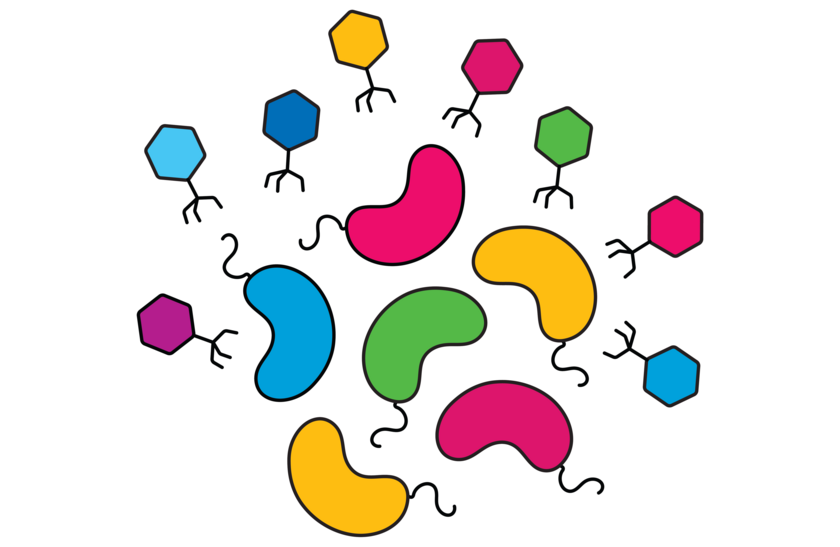
Viruses are everywhere life exists, including within the bacterial communities that support life across Earth in soils, oceans, and ourselves. The viruses that infect bacteria – known as phages – are so abundant that they often outnumber their bacterial hosts. Phages transform the membership and activities of bacterial communities, which in turn impacts the health of ecosystems around the globe. Therefore, it is essential that we understand how they are being affected by the climate crisis – both to predict how our world is changing and to harness the power of microbiomes to create a more sustainable future.
We are currently far from being able to predict how interactions between phages and bacteria shape the ecosystem-level functions of microbial communities. Our research addresses several questions about phages across scales of ecological complexity: Do trade-offs in phage traits define ecological strategies? How do bacterial physiology and environmental factors tune phage-host interactions? And which phage and host traits are predictive of their dynamics? For this research, we are using both model phages and natural phage-host populations from plant microbiomes, which harbor enormous, unexplored viral diversity and are key targets for sustainability-oriented microbiome engineering.



Funding
EMBO Postdoctoral Fellowship
ETH Postdoctoral Fellowship
ETH Career Seed Award