
Department Environmental Microbiology
Temperature-driven Legionella ecology
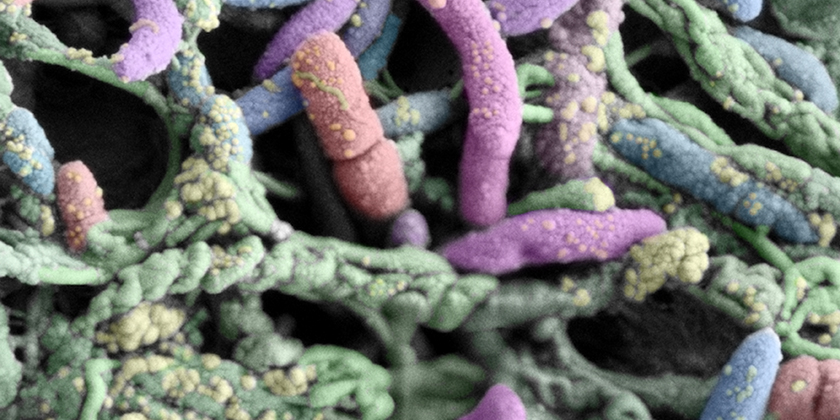
Legionella pneumophila accounts for most cases of Legionellosis in Europe and North America, with several other Legionella species also exhibiting clinical relevance. These bacteria replicate within free-living amoebae and ciliates, a key characteristic promoting their persistence in engineered water systems.
These host-pathogen relationships are tightly influenced by temperature, which dictates when Legionella grow, survive, or are suppressed. Building on knowledge gaps identified through the LeCo Project and to capture these temperature-driven dynamics, this SNSF-funded project combines batch growth assays and microfluidic co-culture experiments across fixed and fluctuating temperatures representative of building water systems, using multiple clinically relevant Legionella species and amoebal hosts. To translate these laboratory insights to real-world conditions, the project also includes a pilot-scale system that simulates different climate change scenarios to assess how drastic water temperature shifts could reshape Legionella diversity and overall eukaryotic composition.
Expected outcomes and implications:
- Species-specific temperature niches for Legionella and amoebal hosts growth, and temperature ranges that favor their co-existence or Legionella suppression (lab-scale).
- Quantitative thresholds where temperature fluctuations shift host-pathogen interactions from replication, to survival, or decay.
- System-level evidence of how climate-driven water warming reshapes plumbing microbiomes and increases opportunistic pathogen prevalence


Funding
Swiss National Science Foundation
Project duration
2025 - 2029