Department Environmental Toxicology

Metabolomics in green algae
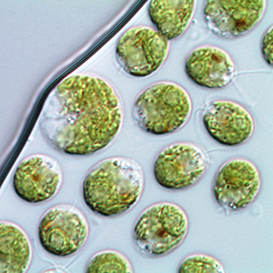

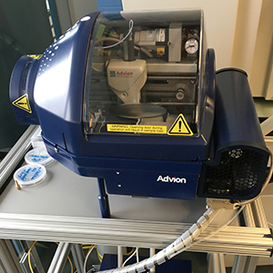
Aquatic organisms are exposed to an ever-increasing variety of chemicals. In the area of chemical risk assessment and molecular ecotoxicology it is therefore crucial to identify and understand the underlying molecular mechanisms of their stress response. Metabolites reflect the current biochemical state of an organism and hence can be used to capture the dynamics of the metabolic network in response to stress. Metabolic changes happen on a smaller timescale than the resulting physiological changes. In order to obtain insights into these metabolic adaptations we use a high throughput direct infusion method for the analysis of primary metabolites in algae and zebrafish at high temporal resolution and high number of experimental conditions.

Currently we are analyzing the metabolic response of model organisms to silver, zinc, copper and aluminum. A collaborative seed project with Anita Narwani (Eco) will investigate the impact of temperature and resource limitation on phytoplankton metabolism.

Publications

Extbase Variable Dump
array(2 items)
   publications => '10615' (5 chars)
   libraryUrl => '' (0 chars)
Extbase Variable Dump
array(1 item)
   0 => Snowflake\Publications\Domain\Model\Publicationprototypepersistent entity (uid=10615, pid=124)
      originalId => protected10615 (integer)
      authors => protected'Ammann, A. A.; Suter, M. J. -F.' (56 chars)
      title => protected'Multimode gradient high performance liquid chromatography mass spectrometry 
         method applicable to metabolomics and environmental monitoring
' (138 chars) journal => protected'Journal of Chromatography A' (27 chars) year => protected2016 (integer) volume => protected1456 (integer) issue => protected'' (0 chars) startpage => protected'145' (3 chars) otherpage => protected'151' (3 chars) categories => protected'gradient multimode separation; HILIC; anion exchange (AEX); cation exchange
         (CEX); reversed-phase; metabolomics; complex environmental mixtures
' (143 chars) description => protected'Metabolomics or environmental investigations generate samples containing ver
         y large numbers of small molecular weight analytes. A single mode chromatogr
         aphic separation excludes a substantial part of such complex analyte mixture
         s. For instance, a reversed-phase separation would not retain ionic species,
          resulting in a correspondingly huge front peak. To address this problem, we
          used two commercially available mixed-mode ion-exchange reversed-phase colu
         mns (WAX-1 and WCX-1) in sequence in a novel multimode separation method.<BR
         /> After trapping hydrophobics on a C<SUB>18</SUB>-trap in loop position, hy
         drophilics passing the trap are separated by a simultaneous gradient for HIL
         IC, anion and cation exchange chromatography. This gradient ends in a washou
         t phase with a high percentage of water, the correct starting conditions for
          a reversed-phase gradient eluting hydrophobics from the trap in a second st
         ep of the run. Amino acids (9), organic acids (2), sugars (8), fatty acid de
         rived compounds (11), antioxidants (4), miscellanea (6) and xenobiotics (4)
         were analyzed. Compounds were separated after a single sample injection duri
         ng a 50 min run. Lipids derived small fatty acids up to a chain length of 1
         2 carbons were also accessible within this run time.
' (1268 chars) serialnumber => protected'0021-9673' (9 chars) doi => protected'10.1016/j.chroma.2016.06.001' (28 chars) uid => protected10615 (integer) _localizedUid => protected10615 (integer)modified _languageUid => protectedNULL _versionedUid => protected10615 (integer)modified pid => protected124 (integer)
Ammann, A. A.; Suter, M. J. -F. (2016) Multimode gradient high performance liquid chromatography mass spectrometry method applicable to metabolomics and environmental monitoring, Journal of Chromatography A, 1456, 145-151, doi:10.1016/j.chroma.2016.06.001, Institutional Repository