Proteins play crucial roles in maintaining and directing cellular structure, metabolism and functions, through serving as structural components, enzymes, signaling molecules, transporters, ion pumps or transcription factors, etc. Extracellularly displayed or excreted proteins are also involved in cell-cell communication and development of tissue and organ architecture. It is therefore not surprising that molecular-level actions of many chemicals involve effects on the abundance, posttranslational modifications, structure or function of certain proteins. These changes can in turn affect cellular phenotypes and propagate further to the level of tissues and organs, finally manifesting at the whole organism level.
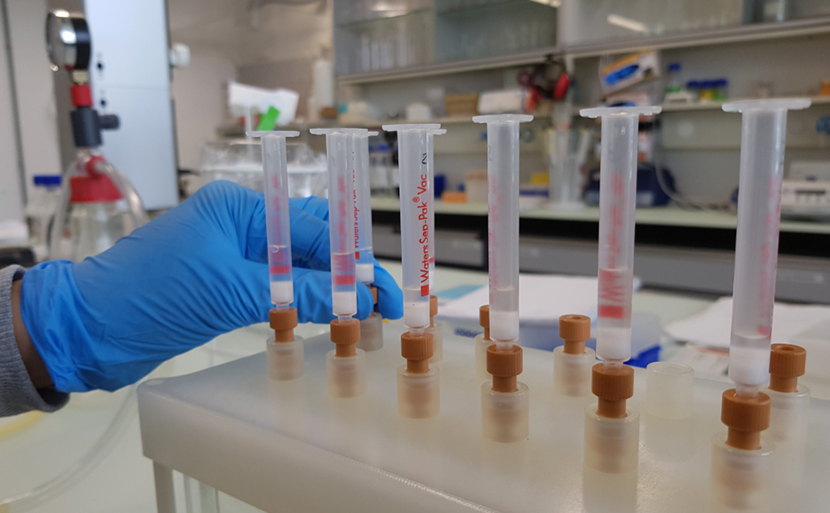
Proteomics focuses on studying proteins and their alterations as part of natural biological variation or in response to stimuli or stressors. Compared to transcriptomics, i.e. the analysis of mRNA transcripts’ abundance, proteomics have so far been less widely employed in toxicological research. This may have been due to technological challenges, higher cost and (perceived) lower amount of information obtained in a typical proteomics experiment compared to a transcriptomics study. However, driven by the developments in the biomedical arena, proteomics technologies have been constantly improving in the recent years, thus opening up exciting avenues for a broader application in the ecotoxicological research studies as well. Therefore, the bioanalytics team at the Department of Environmental Toxicology works on adapting mass spectrometry-based bottom-up proteomics analysis pipelines for various applications in ecotoxicology.
Depending on the research question, both global and targeted proteomics experiments can be designed.
Discovery-mode global proteomics can provide a broad overview of multiple processes and functions governed by proteins, allowing identification of specific components or pathways affected by exposure to a particular stressor. In terms of mass spectrometry analysis, both data-dependent acquisition (DDA) and data-independent acquisition (DIA) can be employed, with the latter offering an improvement in the sensitivity and reproducibility of label-free quantitation.
Specific proteins of interest identified through a global proteomics analysis or based on a particular hypothesis, can be studied by targeted proteomics methods, typically based on selected reaction monitoring (SRM). For example, we are employing targeted proteomics to glutathione S-transferases (GST), an important phase II biotransformation enzyme family involved in detoxification of electrophiles, in fish early life stages and cellular models.
Both global and targeted proteomics can also be employed to study post-translational modifications of proteins. For example, phosphorylation/dephosphorylation of proteins is known to be involved in signaling cascades playing important roles in basic cell physiology and cellular response to stressors. We are currently developing a pipeline for mass spectrometry-based targeted analysis of phosphorylation dynamics within the mechanistic target of rapamycin (mTOR) pathway, suspected to be involved in the mediation of chemical effects on growth in fish. The developed workflow could then be applied to study other protein networks. Mass spectrometry-based targeted proteomics assays could thus provide a valuable tool to study phosphorylation-based molecular signaling in fish, where this mechanistic aspect has been so far largely neglected due to challenges with obtaining species-specific antibodies for (de)phosphorylated proteins of interest.
array(15 items)0 => Snowflake\Publications\Domain\Model\Publicationprototypepersistent entity (uid=35005, pid=124)originalId => protected35005 (integer)
authors => protected'Revel, M.; Groh, K.; Bertoli, J.; Degeratu, M.-O.; Fisch er, M.; Fischer, S.; Hoekman, J.; Jozef, B.; Li, R. ; Mosimann, S. L.; vom Berg, C.; Županič, A.; Truffer, B.; Schirmer, K.' (255 chars)
title => protected'Development of the fish invitrome for animal-free environmental risk assessm ent of chemicals' (92 chars)
journal => protected'Environmental Toxicology and Chemistry' (38 chars)
year => protected2025 (integer)
volume => protected44 (integer)
issue => protected'9' (1 chars)
startpage => protected'2648' (4 chars)
otherpage => protected'2658' (4 chars)
categories => protected'new approach methodologies; rainbow trout cell lines; toxicity testing; soci o-technical approach; co-design with stakeholders' (125 chars)
description => protected'Given the need to reduce animal testing for environmental risk assessment, w e aim to develop a fish invitrome, an alternative fish modular framework cap able of predicting chemical toxicity in fish without the use of animals. The central module of the framework is the validated RTgill-W1 cell line assay that predicts fish acute toxicity of chemicals (Organisation for Economic Co -operation and Development test guideline 249). Expanding towards prediction of chronic toxicity, the fish invitrome includes two other well-advanced mo dules for chemical bioaccumulation/biotransformation and inhibition of fish growth. This framework is expected to continuously evolve with the developme nt of modules that predict, for instance, neurotoxicity and reproductive tox icity. We envisage the fish invitrome framework becoming part of the broader academic field of new approach methodologies (NAMs), where it will remain f lexible and open to integration of new developments from research groups aro und the world. To accelerate the development and uptake of this framework, w e strive for transdisciplinarity, integrating both natural and social scienc es, along with broader stakeholder interactions. A stepwise socio-technical approach was chosen, where mainstreaming the fish invitrome involves progres sive adoption across various ecotoxicological contexts. The framework will b e codesigned with stakeholders from academia, industry, and regulatory bodie s. Rather than aiming for immediate regulatory acceptance, this approach aim s to build trust and familiarity with fish cell line–based testing among s takeholders. By doing so, it encourages broader use of the framework in prac tical applications while gradually overcoming institutional, cultural, and t echnical barriers. Additionally, establishing a clear roadmap for mainstream ing the fish invitrome will help identify and address challenges to its upta ke, ensuring a smoother transition<br />to nonorganismal testing methodologi es.' (1979 chars)
serialnumber => protected'0730-7268' (9 chars)
doi => protected'10.1093/etojnl/vgaf028' (22 chars)
uid => protected35005 (integer)
_localizedUid => protected35005 (integer)modified_languageUid => protectedNULL
_versionedUid => protected35005 (integer)modifiedpid => protected124 (integer)1 => Snowflake\Publications\Domain\Model\Publicationprototypepersistent entity (uid=34827, pid=124)originalId => protected34827 (integer)
authors => protected'Huwa, N.; Schönenberger, R.; Groh, K. J.' (61 chars)
title => protected'Development and application of a targeted phosphoproteomics method for analy sing the mTOR pathway dynamics in zebrafish PAC2 cell line' (134 chars)
journal => protected'Journal of Proteomics' (21 chars)
year => protected2025 (integer)
volume => protected319 (integer)
issue => protected'' (0 chars)
startpage => protected'105469 (11 pp.)' (15 chars)
otherpage => protected'' (0 chars)
categories => protected'phosphoproteomics; mTOR signalling; zebrafish; LC-MS/MS; phosphopeptide enri chment' (82 chars)
description => protected'The mechanistic target of rapamycin (mTOR) signalling pathway plays a crucia l role in regulating cellular growth and proliferation. While extensively st udied in mammals, the phosphorylation dynamics of this pathway in non-mammal ian model organisms remain largely unexplored, often due to the scarcity of suitable antibodies to measure (phosphorylated) proteins of interest. To add ress this gap, we developed an antibody-independent targeted phosphoproteomi cs method applying liquid chromatography-tandem mass spectrometry (LC-MS/MS) to quantify the abundance and phosphorylation levels of mTOR pathway-relate d proteins in zebrafish (<em>Danio rerio</em>), using the permanent cell lin e PAC2 as a model system. With optimized sample processing and data analysis strategies, we could successfully quantify 10 endogenous phosphosites and 1 5 endogenous proteins at different cell culture growth phases, revealing com plex phosphorylation dynamics for both the upstream regulators (e.g., AKT, A MPK) and downstream effectors (e.g., eIF4EBP1, RPS6) of the mTOR pathway, wh ich reflected transition from exponential growth to stationary subsistence. Our findings confirm the overall similarity of the mTOR pathway structure an d functionality between zebrafish and mammals. Furthermore, this work demons trates the high potential of the LC-MS/MS-based analytical approaches for st udying phosphorylation-governed signalling in diverse organisms of interest, thus paving the way for further investigations in comparative physiology an d toxicology across species.<br />Significance: We demonstrate the feasibili ty of using LC-MS/MS-based targeted phosphoproteomics to quantify protein ph osphorylation dynamics of a specific pathway of interest – mTOR – in a n on-mammalian model organism, zebrafish. This antibody-independent approach c an enable the performance of further hypothesis-driven studies of phosphoryl ation-based signalling in diverse non-mammalian, non-model species. This too l could thus prove valua...' (2665 chars)
serialnumber => protected'1874-3919' (9 chars)
doi => protected'10.1016/j.jprot.2025.105469' (27 chars)
uid => protected34827 (integer)
_localizedUid => protected34827 (integer)modified_languageUid => protectedNULL
_versionedUid => protected34827 (integer)modifiedpid => protected124 (integer)2 => Snowflake\Publications\Domain\Model\Publicationprototypepersistent entity (uid=34912, pid=124)originalId => protected34912 (integer)
authors => protected'Groh, K. J.' (21 chars)
title => protected'A perspective on fish-derived extracellular proteins and their potential app lications in aquatic toxicity testing and environmental monitoring' (142 chars)
journal => protected'Aquatic Toxicology' (18 chars)
year => protected2025 (integer)
volume => protected286 (integer)
issue => protected'' (0 chars)
startpage => protected'107465 (10 pp.)' (15 chars)
otherpage => protected'' (0 chars)
categories => protected'aquatic risk assessment; environmental protein (eProtein); extracellular ves icle; exosome; proteomics' (101 chars)
description => protected'Synthetic chemicals contaminating aquatic environment can harm aquatic life and contribute to biodiversity loss. Aquatic toxicity testing and environmen tal biomonitoring approaches often incorporate molecular studies. Since toxi c effects begin at the molecular level and propagate to higher levels, molec ular biomarkers can serve as valuable indicators of potential organismal and even population-level effects. However, such mechanistic studies commonly f ocus on measuring internal molecular changes, which often necessitates disru ptive sampling and hence limits the ability to perform recurrent analyses of the same specimen in chronic exposure scenarios. This limitation could be o vercome by analyzing externally present biomolecules, as they could provide valuable insights into internal conditions as well. Among such biomolecules, extracellular proteins are known to perform many important structural, meta bolic and signaling functions in the extracellular/extraorganismal milieu. R ecent studies in biomedical research areas showed that proteins released wit hin extracellular vesicles (EVs), especially exosomes (<150 nm), could re flect internal responses to toxicity, stress and disease in a particularly s ensitive and specific manner. These findings open new possibilities for envi ronmentally oriented research as well, both in the lab and in the field. EVs and associated proteins can be analyzed in conditioned medium of in vitro a quatic toxicity tests, as well as in fish tissues, blood or even mucus, coll ected during long-term in vivo testing, in aquaculture facilities or within environmental monitoring programs. While increasing the information value of molecular analyses in all cases, this approach could also enable recurrent non-lethal sampling in some applications. Moreover, direct analysis of water -residing environmental proteins (eProteins) could provide—upon overcoming certain technical limitations—a truly non-invasive method for collecting ecosystem-wide informati...' (2476 chars)
serialnumber => protected'0166-445X' (9 chars)
doi => protected'10.1016/j.aquatox.2025.107465' (29 chars)
uid => protected34912 (integer)
_localizedUid => protected34912 (integer)modified_languageUid => protectedNULL
_versionedUid => protected34912 (integer)modifiedpid => protected124 (integer)3 => Snowflake\Publications\Domain\Model\Publicationprototypepersistent entity (uid=33285, pid=124)originalId => protected33285 (integer)
authors => protected'Degeratu, M. O.; Schönenberger, R.; Huwa, N.; Groh,&nbs p;K.' (80 chars)
title => protected'Exploring zebrafish embryonic cell line PAC2 by proteomics profiling' (68 chars)
journal => protected'Chimia' (6 chars)
year => protected2024 (integer)
volume => protected78 (integer)
issue => protected'7-8' (3 chars)
startpage => protected'558' (3 chars)
otherpage => protected'' (0 chars)
categories => protected'animal testing alternative; bottom-up global proteomics; cell line-based mod els; cell morphology markers; fish toxicity; zebrafish' (130 chars)
description => protected'' (0 chars)
serialnumber => protected'0009-4293' (9 chars)
doi => protected'10.2533/chimia.2024.558' (23 chars)
uid => protected33285 (integer)
_localizedUid => protected33285 (integer)modified_languageUid => protectedNULL
_versionedUid => protected33285 (integer)modifiedpid => protected124 (integer)4 => Snowflake\Publications\Domain\Model\Publicationprototypepersistent entity (uid=33089, pid=124)originalId => protected33089 (integer)
authors => protected'Simmons, D.; Groh, K.' (31 chars)
title => protected'Omics beyond transcriptomics session summary' (44 chars)
journal => protected'SETAC Globe' (11 chars)
year => protected2024 (integer)
volume => protected0 (integer)
issue => protected'' (0 chars)
startpage => protected'(4 pp.)' (7 chars)
otherpage => protected'' (0 chars)
categories => protected'' (0 chars)
description => protected'' (0 chars)
serialnumber => protected'' (0 chars)
doi => protected'' (0 chars)
uid => protected33089 (integer)
_localizedUid => protected33089 (integer)modified_languageUid => protectedNULL
_versionedUid => protected33089 (integer)modifiedpid => protected124 (integer)5 => Snowflake\Publications\Domain\Model\Publicationprototypepersistent entity (uid=22731, pid=124)originalId => protected22731 (integer)
authors => protected'Bakker, E.; Bleiner, D.; Groh, K.' (48 chars)
title => protected'Perspectives and future directions of the division of analytical sciences of the Swiss Chemical Society' (103 chars)
journal => protected'Chimia' (6 chars)
year => protected2021 (integer)
volume => protected75 (integer)
issue => protected'5' (1 chars)
startpage => protected'455' (3 chars)
otherpage => protected'456' (3 chars)
categories => protected'' (0 chars)
description => protected'' (0 chars)
serialnumber => protected'0009-4293' (9 chars)
doi => protected'10.2533/chimia.2021.455' (23 chars)
uid => protected22731 (integer)
_localizedUid => protected22731 (integer)modified_languageUid => protectedNULL
_versionedUid => protected22731 (integer)modifiedpid => protected124 (integer)6 => Snowflake\Publications\Domain\Model\Publicationprototypepersistent entity (uid=21420, pid=124)originalId => protected21420 (integer)
authors => protected'Tierbach, A.; Groh, K. J.; Schoenenberger, R.; Schirmer, K.; Suter, M. J. -F.' (117 chars)
title => protected'Characterization of the mercapturic acid pathway, an important phase II biot ransformation route, in a zebrafish embryo cell line' (128 chars)
journal => protected'Chemical Research in Toxicology' (31 chars)
year => protected2020 (integer)
volume => protected33 (integer)
issue => protected'11' (2 chars)
startpage => protected'2863' (4 chars)
otherpage => protected'2871' (4 chars)
categories => protected'' (0 chars)
description => protected'In view of the steadily increasing number of chemical compounds used in vari ous products and applications, high-throughput toxicity screening techniques can help meeting the needs of 21st century risk assessment. Zebrafish (<em> Danio rerio</em>), especially its early life stages, are increasingly used i n such screening efforts. In contrast, cell lines derived from this model or ganism have received less attention so far. A conceivable reason is the limi ted knowledge about their overall capacity to biotransform chemicals and the spectrum of expressed biotransformation pathways. One important biotransfor mation route is the mercapturic acid pathway, which protects organisms from harmful electrophilic compounds. The fully functional pathway involves a suc cession of several enzymatic reactions. To investigate the mercapturic acid pathway performance in the zebrafish embryonic cell line, PAC2, we analyzed the biotransformation products of the reactions comprising this pathway in t he cells exposed to a nontoxic concentration of the reference substrate, 1-c hloro-2,4-dinitrobenzene (CDNB). Additionally, we used targeted proteomics t o measure the expression of cytosolic glutathione S-transferases (GSTs), the enzyme family catalyzing the first reaction in this pathway. Our results re veal that the PAC2 cell line expresses a fully functional mercapturic acid p athway. All but one of the intermediate CDNB biotransformation products were identified. The presence of the active mercapturic acid pathway in this cel l line was further supported by the expression of a large palette of GST enz yme classes. Although the enzymes of the class alpha, one of the dominant GS T classes in the zebrafish embryo, were not detected, this did not seem to a ffect the capacity of the PAC2 cells to biotransform CDNB. Our data provide an important contribution toward using zebrafish cell lines, specifically PA C2, for animal-free high-throughput screening in toxicology and chemical haz ard assessment.' (1991 chars)
serialnumber => protected'0893-228X' (9 chars)
doi => protected'10.1021/acs.chemrestox.0c00315' (30 chars)
uid => protected21420 (integer)
_localizedUid => protected21420 (integer)modified_languageUid => protectedNULL
_versionedUid => protected21420 (integer)modifiedpid => protected124 (integer)7 => Snowflake\Publications\Domain\Model\Publicationprototypepersistent entity (uid=21600, pid=124)originalId => protected21600 (integer)
authors => protected'Groh, K. J.; Suter, M. F. -J.' (54 chars)
title => protected'Mass spectrometry in ecotoxicology' (34 chars)
journal => protected'In: Sidona, G.; Banoub, J. H.; Di Gioia, M. L. (Eds .), Toxic chemical and biological agents. Detection, diagnosis and health co ncerns' (158 chars)
year => protected2020 (integer)
volume => protected0 (integer)
issue => protected'' (0 chars)
startpage => protected'93' (2 chars)
otherpage => protected'108' (3 chars)
categories => protected'chemical analysis; mass spectrometry; search for unknowns; environmental che mistry; ecotoxicology; risk assessment; -omics techniques' (133 chars)
description => protected'Risk assessment of chemical effects in the environment requires the understa nding of the fate and behavior of anthropogenic chemicals in natural and tec hnical systems, which is the focus of environmental chemistry. The exposure data obtained by environmental chemists are in turn used to evaluate the sig nificance of toxicological effects in organisms, as studied by environmental toxicologists. Mass spectrometry-based techniques are frequently applied to monitor the exposure or investigate the effects of chemicals, particularly their mechanism of action. These techniques include, for example, targeted a nd non-targeted chemical analytics as well as diverse –omics methods. This chapter illustrates the application of mass spectrometry in environmental c hemistry and toxicology using research projects carried out at our institute , with a particular focus on the aquatic environment.' (889 chars)
serialnumber => protected'' (0 chars)
doi => protected'10.1007/978-94-024-2041-8_6' (27 chars)
uid => protected21600 (integer)
_localizedUid => protected21600 (integer)modified_languageUid => protectedNULL
_versionedUid => protected21600 (integer)modifiedpid => protected124 (integer)8 => Snowflake\Publications\Domain\Model\Publicationprototypepersistent entity (uid=16497, pid=124)originalId => protected16497 (integer)
authors => protected'Tierbach, A.; Groh, K. J.; Schönenberger, R.; Schirmer, K.; Suter, M. J. -F.' (117 chars)
title => protected'Glutathione S-transferase protein expression in different life stages of zeb rafish (<i>Danio rerio</i>)' (103 chars)
journal => protected'Toxicological Sciences' (22 chars)
year => protected2018 (integer)
volume => protected162 (integer)
issue => protected'2' (1 chars)
startpage => protected'702' (3 chars)
otherpage => protected'712' (3 chars)
categories => protected'GST; biotransformation; mass spectrometry; multiple reaction monitoring; tar geted proteomics' (92 chars)
description => protected'Zebrafish is a widely used animal model in biomedical sciences and toxicolog y. Although evidence for the presence of phases I and II xenobiotic defense mechanisms in zebrafish exists on the transcriptional and enzyme activity le vel, little is known about the protein expression of xenobiotic metabolizing enzymes. Given the important role of glutathione S-transferases (GSTs) in p hase II biotransformation, we analyzed cytosolic GST proteins in zebrafish e arly life stages and different organs of adult male and female fish, using a targeted proteomics approach. The established multiple reaction monitoring- based assays enable the measurement of the relative abundance of specific GS T isoenzymes and GST classes in zebrafish through a combination of proteotyp ic peptides and peptides shared within the same class. GSTs of the classes a lpha, mu, pi and rho are expressed in zebrafish embryo as early as 4 h postf ertilization (hpf). The majority of GST enzymes are present at 72 hpf follow ed by a continuous increase in expression thereafter. In adult zebrafish, GS T expression is organ dependent, with most of the GST classes showing the hi ghest expression in the liver. The expression of a wide range of cytosolic G ST isoenzymes and classes in zebrafish early life stages and adulthood suppo rts the use of zebrafish as a model organism in chemical-related investigati ons.' (1372 chars)
serialnumber => protected'1096-6080' (9 chars)
doi => protected'10.1093/toxsci/kfx293' (21 chars)
uid => protected16497 (integer)
_localizedUid => protected16497 (integer)modified_languageUid => protectedNULL
_versionedUid => protected16497 (integer)modifiedpid => protected124 (integer)9 => Snowflake\Publications\Domain\Model\Publicationprototypepersistent entity (uid=10600, pid=124)originalId => protected10600 (integer)
authors => protected'Oliveira, I. B.; Groh, K. J.; Stadnicka-Michalak, J .; Schönenberger, R.; Beiras, R.; Barroso, C. M.; Langf ord, K. H.; Thomas, K. V.; Suter, M. J. - F.' (230 chars)
title => protected'Tralopyril bioconcentration and effects on the gill proteome of the Mediterr anean mussel <I>Mytilus galloprovincialis</I>' (121 chars)
journal => protected'Aquatic Toxicology' (18 chars)
year => protected2016 (integer)
volume => protected177 (integer)
issue => protected'' (0 chars)
startpage => protected'198' (3 chars)
otherpage => protected'210' (3 chars)
categories => protected'Mytilus galloprovincialis; tralopyril; antifouling biocides; proteomic diffe rential analysis; multidimensional protein identification technology (MudPIT )' (153 chars)
description => protected'Antifouling (AF) systems are used worldwide as one of the most cost-effectiv e ways of protecting submerged structures against heavy biofouling. The emer gence of environmentally friendly AF biocides requires knowledge on their en vironmental fate and toxicity. In this study we measured the bioconcentratio n of the emerging AF biocide tralopyril (TP) in the Mediterranean mussel <I> Mytilus galloprovincialis</I> and investigated the effects of TP on the muss el gill proteome following acute (2 days) and chronic (30 days) exposure, as well as after a 10-day depuration period. The experiments were carried ou t with 1 μg/L TP; blank and solvent (5 × 10<SUP>−5</SUP>% DMSO) contr ols were also included. Proteomics analysis was performed by mass spectromet ry-based multidimensional protein identification technology (MudPIT). Differ entially expressed proteins were identified using a label-free approach base d on spectral counts and G-test. Our results show that TP is rapidly accumul ated by mussels at concentrations up to 362 ng/g dw (whole tissues), reachi ng steady-state condition within 13 days. Ten days of depuration resulted i n 80% elimination of accumulated TP from the organism, suggesting that a com plete elimination could be reached with longer depuration times. In total, 4 6 proteins were found to be regulated in the different exposure scenarios. I nterestingly, not only TP but also DMSO alone significantly modulated the pr otein expression in mussel gills following acute and chronic exposure. Both compounds regulated proteins involved in bioenergetics, immune system, activ e efflux and oxidative stress, often in the opposite way. Alterations of sev eral proteins, notably several cytoskeletal ones, were still observed after the depuration period. These may reflect either the continuing chemical effe ct due to incomplete elimination or an onset of recovery processes in the mu ssel gills. Our study shows that exposure of adult mussels to sublethal TP c oncentration results in ...' (2152 chars)
serialnumber => protected'0166-445X' (9 chars)
doi => protected'10.1016/j.aquatox.2016.05.026' (29 chars)
uid => protected10600 (integer)
_localizedUid => protected10600 (integer)modified_languageUid => protectedNULL
_versionedUid => protected10600 (integer)modifiedpid => protected124 (integer)10 => Snowflake\Publications\Domain\Model\Publicationprototypepersistent entity (uid=11647, pid=124)originalId => protected11647 (integer)
authors => protected'Groh, K. J.; Suter, M. J. -F.' (54 chars)
title => protected'Mass spectrometric target analysis and proteomics in environmental toxicolog y' (77 chars)
journal => protected'In: Banoub, J. (Eds.), Detection of chemical, biological, radiological and nuclear agents for the prevention of terrorism' (126 chars)
year => protected2014 (integer)
volume => protected0 (integer)
issue => protected'' (0 chars)
startpage => protected'149' (3 chars)
otherpage => protected'167' (3 chars)
categories => protected'aquatic organisms; ecotoxicology; effect-directed analysis; chemical target analysis; proteomics' (96 chars)
description => protected'Mass spectrometric techniques are widely used in environmental toxicology. O ne major application is the quantitative determination of chemical pollutant s in environmental compartments. This is increasingly linked with biological effects assessment in an approach called effect-directed analysis, which, a s the term says, allows focusing on samples that cause an effect in <em>in v itro</em> or <em>in vivo</em> test systems. Identification of the chemical(s ) causing an effect is done by submitting the active sample to a classical t arget analysis using established methods. If the causative agent is not part of the list of target analytes, scan-dependent MS/MS analyses have to be pe rformed and active samples compared to controls. This then allows to narrow- down the elemental composition of compounds primarily found in active sample s, find functional groups and substructures, and potentially identify the un knowns.<br /> Equally important for a refined risk assessment is the determi nation of actual internal concentrations in organisms, which reduces uncerta inties in predicting toxicity thresholds across chemicals and species.<br /> An entirely new level in environmental toxicology has been reached with the application of novel techniques such as proteomics and metabolomics. They a llow investigating the molecular response of a model organism to environment al challenge. Ideally this leads to the identification of robust biomarkers of exposure and the identification of conserved stress response pathways whi ch can be used to extrapolate to other species and predict adverse effects o f novel chemical stressors or even their mixtures.<br /> This chapter gives an introduction into effect-directed analysis and environmental proteomics.' (1747 chars)
serialnumber => protected'' (0 chars)
doi => protected'10.1007/978-94-017-9238-7_10' (28 chars)
uid => protected11647 (integer)
_localizedUid => protected11647 (integer)modified_languageUid => protectedNULL
_versionedUid => protected11647 (integer)modifiedpid => protected124 (integer)11 => Snowflake\Publications\Domain\Model\Publicationprototypepersistent entity (uid=7382, pid=124)originalId => protected7382 (integer)
authors => protected'Groh, K. J.; Schönenberger, R.; Eggen, R. I. L.; Segner, H.; Suter, M. J. -F.' (128 chars)
title => protected'Analysis of protein expression in zebrafish during gonad differentiation by targeted proteomics' (95 chars)
journal => protected'General and Comparative Endocrinology' (37 chars)
year => protected2013 (integer)
volume => protected193 (integer)
issue => protected'' (0 chars)
startpage => protected'210' (3 chars)
otherpage => protected'220' (3 chars)
categories => protected'zebrafish; sexual differentiation; development; mass spectrometry; selected reaction monitoring (SRM); targeted proteomics' (122 chars)
description => protected'The molecular mechanisms governing sex determination and differentiation in the zebrafish (<I>Danio rerio</I>) are not fully understood. To gain more in sights into the function of specific genes in these complex processes, the e xpression of multiple candidates needs to be assessed, preferably on the pro tein level. Here, we developed a targeted proteomics method based on selecte d reaction monitoring (SRM) to study the candidate sex-related proteins in z ebrafish which were selected based on a global proteomics analysis of adult gonads and representational difference analysis of male and female DNA, as w ell as on published information on zebrafish and other vertebrates. We emplo yed the developed SRM protocols to acquire time-resolved protein expression profiles during the gonad differentiation period in <I>vas::</I>EGFP transge nic zebrafish. Evidence on protein expression was obtained for the first tim e for several candidate genes previously studied only on the mRNA level or s uggested by bioinformatic predictions. Tuba1b (tubulin alpha 1b), initially included in the study as one of the potential housekeeping proteins, was fou nd to be preferentially expressed in the adult testis with nearly absent exp ression in the ovary. The revealed changes in protein expression patterns as sociated with gonad differentiation suggest that several of the examined pro teins, especially Ilf2 and Ilf3 (interleukin enhancer-binding factors 2 and 3), Raldh3 (retinaldehyde dehydrogenase type 3), Zgc:195027 (low density lip oprotein-related receptor protein 3) and Sept5a (septin 5a), may play a spec ific role in the sexual differentiation in zebrafish.' (1649 chars)
serialnumber => protected'0016-6480' (9 chars)
doi => protected'10.1016/j.ygcen.2013.07.020' (27 chars)
uid => protected7382 (integer)
_localizedUid => protected7382 (integer)modified_languageUid => protectedNULL
_versionedUid => protected7382 (integer)modifiedpid => protected124 (integer)12 => Snowflake\Publications\Domain\Model\Publicationprototypepersistent entity (uid=7034, pid=124)originalId => protected7034 (integer)
authors => protected'Nestler, H.; Groh, K. J.; Schönenberger, R.; Eggen,&nbs p;R. I. L.; Suter, M. J. -F.' (129 chars)
title => protected'Linking proteome responses with physiological and biochemical effects in her bicide-exposed <I>Chlamydomonas reinhardtii</I>' (123 chars)
journal => protected'Journal of Proteomics' (21 chars)
year => protected2012 (integer)
volume => protected75 (integer)
issue => protected'17' (2 chars)
startpage => protected'5370' (4 chars)
otherpage => protected'5385' (4 chars)
categories => protected'Chlamydomonas reinhardtii; herbicides; differential proteome analysis; MudPI T; label-free quantitation' (102 chars)
description => protected'Exposure to a toxicant causes proteome alterations in an organism. In ecotox icology, analysis of these changes may allow linking them to physiological a nd biochemical endpoints, providing insights into subcellular exposure effec ts and responses and, ultimately mechanisms of action. Based on this, useful protein markers of exposure can be identified. We investigated the proteome changes induced by the herbicides paraquat, diuron, and norflurazon in the green alga <I>Chlamydomonas reinhardtii</I>. Shotgun proteome profiling and spectral counting quantification in combination with G-test statistics revea led significant changes in protein abundance. Functional enrichment analysis identified protein groups that responded to the exposures. Significant chan ges were observed for 149–254 proteins involved in a variety of metabolic pathways. While some proteins and functional protein groups responded to sev eral tested exposure conditions, others were affected only in specific cases . Expected as well as novel candidate markers of herbicide exposure were ide ntified, the latter including the photosystem II subunit PsbR or the VIPP1 p rotein. We demonstrate that the proteome response to toxicants is generally more sensitive than the physiological and biochemical endpoints, and that it can be linked to effects on these levels. Thus, proteome profiling may serv e as a useful tool for ecotoxicological investigations in green algae.' (1438 chars)
serialnumber => protected'1874-3919' (9 chars)
doi => protected'10.1016/j.jprot.2012.06.017' (27 chars)
uid => protected7034 (integer)
_localizedUid => protected7034 (integer)modified_languageUid => protectedNULL
_versionedUid => protected7034 (integer)modifiedpid => protected124 (integer)13 => Snowflake\Publications\Domain\Model\Publicationprototypepersistent entity (uid=8811, pid=124)originalId => protected8811 (integer)
authors => protected'Groh, K. J.; Nesatyy, V. J.; Segner, H.; Eggen,&nbs p;R. I. L.; Suter, M. J. -F.' (129 chars)
title => protected'Global proteomics analysis of testis and ovary in adult zebrafish (<I>Danio rerio</I>)' (86 chars)
journal => protected'Fish Physiology and Biochemistry' (32 chars)
year => protected2011 (integer)
volume => protected37 (integer)
issue => protected'3' (1 chars)
startpage => protected'619' (3 chars)
otherpage => protected'647' (3 chars)
categories => protected'sex differentiation; testis; ovary; proteomics; multidimensional protein ide ntification technology (MudPIT); zebrafish' (118 chars)
description => protected'The molecular mechanisms controlling sex determination and differentiation i n zebrafish (<I>Danio rerio</I>) are largely unknown. A genome-wide analysis may provide comprehensive insights into the processes involved. The mRNA ex pression in zebrafish gonads has been fairly well studied, but much less dat a on the corresponding protein expression are available, although the protei ns are considered to be more relevant markers of gene function. Because mRNA and protein abundances rarely correlate well, mRNA profiles need to be comp lemented with the information on protein expression. The work presented here analyzed the proteomes of adult zebrafish gonads by a multidimensional prot ein identification technology, generating the to-date most populated lists o f proteins expressed in mature zebrafish gonads. The acquired proteomics dat a partially confirmed existing transcriptomics information for several genes , including several novel transcripts. However, disagreements between mRNA a nd protein abundances were often observed, further stressing the necessity t o assess the expression on different levels before drawing conclusions on a certain gene's expression and function. Several gene groups expressed in a s exually dimorphic way in zebrafish gonads were identified. Their potential i mportance for gonad development and function is discussed. The data gained i n the current study provide a basis for further work on elucidating processe s occurring during zebrafish development with use of high-throughput proteom ics.' (1524 chars)
serialnumber => protected'0920-1742' (9 chars)
doi => protected'10.1007/s10695-010-9464-x' (25 chars)
uid => protected8811 (integer)
_localizedUid => protected8811 (integer)modified_languageUid => protectedNULL
_versionedUid => protected8811 (integer)modifiedpid => protected124 (integer)14 => Snowflake\Publications\Domain\Model\Publicationprototypepersistent entity (uid=11606, pid=124)originalId => protected11606 (integer)
authors => protected'Groh, K. J.; Nesatyy, V. J.; Suter, M. J.  ;-F.' (80 chars)
title => protected'Proteomics for the analysis of environmental stress responses in prokaryotes' (76 chars)
journal => protected'In: de Bruijn, F. J. (Eds.), Handbook of molecular microbial ecolo gy. Volume I: Metagenomics and complementary approaches' (131 chars)
year => protected2011 (integer)
volume => protected0 (integer)
issue => protected'' (0 chars)
startpage => protected'605' (3 chars)
otherpage => protected'625' (3 chars)
categories => protected'' (0 chars)
description => protected'Prokaryotic microorganisms constitute a large proportion of the inhabitants of aquatic and terrestrial ecosystems, greatly contributing to the maintenan ce of the natural nutrient cycles and the overall balance in their habitat. Having to adjust to ever-changing environmental conditions, bacteria and arc haea have evolved sophisticated systems allowing them to respond and adjust to various stresses encountered, be it physical, chemical, or starvation-rel ated. Some prokaryotes are able to tolerate extreme environments inaccessibl e for other organisms, such as those displaying temperature extremes, very h igh salinity, acidity, heavy metal contamination or other pollution, or nutr ient limitation. This makes them interesting and useful research models for both investigating the mechanisms of stress response and searching for novel biomarkers of toxicity. In addition, microbes are well known for their outs tanding catabolic versatility. They can, for instance, use many different el ectron donors and acceptors, and can drive dehalogenation, denitrification, sulfate reduction, and many other chemical reactions. Consequently, some spe cies play an important role in bioremediation processes including detoxifica tion and mineralization of contaminants [see Chapters 43–46, Vol. II], whi le others are used in a wide array of biotechnological applications (see als o Chapters in Sections 6 and 7, Vol. II). All these features make the microo rganisms important, interesting, and useful research models (see Sections 6 and 7, Vol. II).' (1536 chars)
serialnumber => protected'' (0 chars)
doi => protected'10.1002/9781118010518.ch66' (26 chars)
uid => protected11606 (integer)
_localizedUid => protected11606 (integer)modified_languageUid => protectedNULL
_versionedUid => protected11606 (integer)modifiedpid => protected124 (integer)
Development of the fish invitrome for animal-free environmental risk assessment of chemicals
Given the need to reduce animal testing for environmental risk assessment, we aim to develop a fish invitrome, an alternative fish modular framework capable of predicting chemical toxicity in fish without the use of animals. The central module of the framework is the validated RTgill-W1 cell line assay that predicts fish acute toxicity of chemicals (Organisation for Economic Co-operation and Development test guideline 249). Expanding towards prediction of chronic toxicity, the fish invitrome includes two other well-advanced modules for chemical bioaccumulation/biotransformation and inhibition of fish growth. This framework is expected to continuously evolve with the development of modules that predict, for instance, neurotoxicity and reproductive toxicity. We envisage the fish invitrome framework becoming part of the broader academic field of new approach methodologies (NAMs), where it will remain flexible and open to integration of new developments from research groups around the world. To accelerate the development and uptake of this framework, we strive for transdisciplinarity, integrating both natural and social sciences, along with broader stakeholder interactions. A stepwise socio-technical approach was chosen, where mainstreaming the fish invitrome involves progressive adoption across various ecotoxicological contexts. The framework will be codesigned with stakeholders from academia, industry, and regulatory bodies. Rather than aiming for immediate regulatory acceptance, this approach aims to build trust and familiarity with fish cell line–based testing among stakeholders. By doing so, it encourages broader use of the framework in practical applications while gradually overcoming institutional, cultural, and technical barriers. Additionally, establishing a clear roadmap for mainstreaming the fish invitrome will help identify and address challenges to its uptake, ensuring a smoother transition to nonorganismal testing methodologies.
Revel, M.; Groh, K.; Bertoli, J.; Degeratu, M.-O.; Fischer, M.; Fischer, S.; Hoekman, J.; Jozef, B.; Li, R.; Mosimann, S. L.; vom Berg, C.; Županič, A.; Truffer, B.; Schirmer, K. (2025) Development of the fish invitrome for animal-free environmental risk assessment of chemicals, Environmental Toxicology and Chemistry, 44(9), 2648-2658, doi:10.1093/etojnl/vgaf028, Institutional Repository
Development and application of a targeted phosphoproteomics method for analysing the mTOR pathway dynamics in zebrafish PAC2 cell line
The mechanistic target of rapamycin (mTOR) signalling pathway plays a crucial role in regulating cellular growth and proliferation. While extensively studied in mammals, the phosphorylation dynamics of this pathway in non-mammalian model organisms remain largely unexplored, often due to the scarcity of suitable antibodies to measure (phosphorylated) proteins of interest. To address this gap, we developed an antibody-independent targeted phosphoproteomics method applying liquid chromatography-tandem mass spectrometry (LC-MS/MS) to quantify the abundance and phosphorylation levels of mTOR pathway-related proteins in zebrafish (Danio rerio), using the permanent cell line PAC2 as a model system. With optimized sample processing and data analysis strategies, we could successfully quantify 10 endogenous phosphosites and 15 endogenous proteins at different cell culture growth phases, revealing complex phosphorylation dynamics for both the upstream regulators (e.g., AKT, AMPK) and downstream effectors (e.g., eIF4EBP1, RPS6) of the mTOR pathway, which reflected transition from exponential growth to stationary subsistence. Our findings confirm the overall similarity of the mTOR pathway structure and functionality between zebrafish and mammals. Furthermore, this work demonstrates the high potential of the LC-MS/MS-based analytical approaches for studying phosphorylation-governed signalling in diverse organisms of interest, thus paving the way for further investigations in comparative physiology and toxicology across species. Significance: We demonstrate the feasibility of using LC-MS/MS-based targeted phosphoproteomics to quantify protein phosphorylation dynamics of a specific pathway of interest – mTOR – in a non-mammalian model organism, zebrafish. This antibody-independent approach can enable the performance of further hypothesis-driven studies of phosphorylation-based signalling in diverse non-mammalian, non-model species. This tool could thus prove valuable for the fields of, e.g., comparative physiology and (eco)toxicology, where such investigations were previously limited due to the scarcity of suitable antibodies for specific proteins of interest in less frequently studied organisms. Moreover, thanks to the lower costs and higher throughput of targeted compared to global proteomics quantification methods, this approach can also be employed in studies aiming to validate the use of specific phosphosites as biomarkers of disease, stress or toxic chemical exposure in laboratory models or sentinel species in the environment, thus supporting future applications in toxicity testing or environmental monitoring.
Huwa, N.; Schönenberger, R.; Groh, K. J. (2025) Development and application of a targeted phosphoproteomics method for analysing the mTOR pathway dynamics in zebrafish PAC2 cell line, Journal of Proteomics, 319, 105469 (11 pp.), doi:10.1016/j.jprot.2025.105469, Institutional Repository
A perspective on fish-derived extracellular proteins and their potential applications in aquatic toxicity testing and environmental monitoring
Synthetic chemicals contaminating aquatic environment can harm aquatic life and contribute to biodiversity loss. Aquatic toxicity testing and environmental biomonitoring approaches often incorporate molecular studies. Since toxic effects begin at the molecular level and propagate to higher levels, molecular biomarkers can serve as valuable indicators of potential organismal and even population-level effects. However, such mechanistic studies commonly focus on measuring internal molecular changes, which often necessitates disruptive sampling and hence limits the ability to perform recurrent analyses of the same specimen in chronic exposure scenarios. This limitation could be overcome by analyzing externally present biomolecules, as they could provide valuable insights into internal conditions as well. Among such biomolecules, extracellular proteins are known to perform many important structural, metabolic and signaling functions in the extracellular/extraorganismal milieu. Recent studies in biomedical research areas showed that proteins released within extracellular vesicles (EVs), especially exosomes (<150 nm), could reflect internal responses to toxicity, stress and disease in a particularly sensitive and specific manner. These findings open new possibilities for environmentally oriented research as well, both in the lab and in the field. EVs and associated proteins can be analyzed in conditioned medium of in vitro aquatic toxicity tests, as well as in fish tissues, blood or even mucus, collected during long-term in vivo testing, in aquaculture facilities or within environmental monitoring programs. While increasing the information value of molecular analyses in all cases, this approach could also enable recurrent non-lethal sampling in some applications. Moreover, direct analysis of water-residing environmental proteins (eProteins) could provide—upon overcoming certain technical limitations—a truly non-invasive method for collecting ecosystem-wide information not only about the presence (as is currently delivered by environmental DNA (eDNA) analyses) but also about the fitness and health status of fish that released them. This review aims to highlight the potential applications of extracellular proteins and EV research in environmental toxicology, summarize relevant studies in mammals and fish, and identify knowledge gaps and remaining challenges that need to be addressed to successfully implement this approach in practice.
Groh, K. J. (2025) A perspective on fish-derived extracellular proteins and their potential applications in aquatic toxicity testing and environmental monitoring, Aquatic Toxicology, 286, 107465 (10 pp.), doi:10.1016/j.aquatox.2025.107465, Institutional Repository
Degeratu, M. O.; Schönenberger, R.; Huwa, N.; Groh, K. (2024) Exploring zebrafish embryonic cell line PAC2 by proteomics profiling, Chimia, 78(7-8), 558, doi:10.2533/chimia.2024.558, Institutional Repository
Bakker, E.; Bleiner, D.; Groh, K. (2021) Perspectives and future directions of the division of analytical sciences of the Swiss Chemical Society, Chimia, 75(5), 455-456, doi:10.2533/chimia.2021.455, Institutional Repository
Characterization of the mercapturic acid pathway, an important phase II biotransformation route, in a zebrafish embryo cell line
In view of the steadily increasing number of chemical compounds used in various products and applications, high-throughput toxicity screening techniques can help meeting the needs of 21st century risk assessment. Zebrafish (Danio rerio), especially its early life stages, are increasingly used in such screening efforts. In contrast, cell lines derived from this model organism have received less attention so far. A conceivable reason is the limited knowledge about their overall capacity to biotransform chemicals and the spectrum of expressed biotransformation pathways. One important biotransformation route is the mercapturic acid pathway, which protects organisms from harmful electrophilic compounds. The fully functional pathway involves a succession of several enzymatic reactions. To investigate the mercapturic acid pathway performance in the zebrafish embryonic cell line, PAC2, we analyzed the biotransformation products of the reactions comprising this pathway in the cells exposed to a nontoxic concentration of the reference substrate, 1-chloro-2,4-dinitrobenzene (CDNB). Additionally, we used targeted proteomics to measure the expression of cytosolic glutathione S-transferases (GSTs), the enzyme family catalyzing the first reaction in this pathway. Our results reveal that the PAC2 cell line expresses a fully functional mercapturic acid pathway. All but one of the intermediate CDNB biotransformation products were identified. The presence of the active mercapturic acid pathway in this cell line was further supported by the expression of a large palette of GST enzyme classes. Although the enzymes of the class alpha, one of the dominant GST classes in the zebrafish embryo, were not detected, this did not seem to affect the capacity of the PAC2 cells to biotransform CDNB. Our data provide an important contribution toward using zebrafish cell lines, specifically PAC2, for animal-free high-throughput screening in toxicology and chemical hazard assessment.
Tierbach, A.; Groh, K. J.; Schoenenberger, R.; Schirmer, K.; Suter, M. J. -F. (2020) Characterization of the mercapturic acid pathway, an important phase II biotransformation route, in a zebrafish embryo cell line, Chemical Research in Toxicology, 33(11), 2863-2871, doi:10.1021/acs.chemrestox.0c00315, Institutional Repository
Mass spectrometry in ecotoxicology
Risk assessment of chemical effects in the environment requires the understanding of the fate and behavior of anthropogenic chemicals in natural and technical systems, which is the focus of environmental chemistry. The exposure data obtained by environmental chemists are in turn used to evaluate the significance of toxicological effects in organisms, as studied by environmental toxicologists. Mass spectrometry-based techniques are frequently applied to monitor the exposure or investigate the effects of chemicals, particularly their mechanism of action. These techniques include, for example, targeted and non-targeted chemical analytics as well as diverse –omics methods. This chapter illustrates the application of mass spectrometry in environmental chemistry and toxicology using research projects carried out at our institute, with a particular focus on the aquatic environment.
Groh, K. J.; Suter, M. F. -J. (2020) Mass spectrometry in ecotoxicology, In: Sidona, G.; Banoub, J. H.; Di Gioia, M. L. (Eds.), Toxic chemical and biological agents. Detection, diagnosis and health concerns, 93-108, doi:10.1007/978-94-024-2041-8_6, Institutional Repository
Glutathione S-transferase protein expression in different life stages of zebrafish (Danio rerio)
Zebrafish is a widely used animal model in biomedical sciences and toxicology. Although evidence for the presence of phases I and II xenobiotic defense mechanisms in zebrafish exists on the transcriptional and enzyme activity level, little is known about the protein expression of xenobiotic metabolizing enzymes. Given the important role of glutathione S-transferases (GSTs) in phase II biotransformation, we analyzed cytosolic GST proteins in zebrafish early life stages and different organs of adult male and female fish, using a targeted proteomics approach. The established multiple reaction monitoring-based assays enable the measurement of the relative abundance of specific GST isoenzymes and GST classes in zebrafish through a combination of proteotypic peptides and peptides shared within the same class. GSTs of the classes alpha, mu, pi and rho are expressed in zebrafish embryo as early as 4 h postfertilization (hpf). The majority of GST enzymes are present at 72 hpf followed by a continuous increase in expression thereafter. In adult zebrafish, GST expression is organ dependent, with most of the GST classes showing the highest expression in the liver. The expression of a wide range of cytosolic GST isoenzymes and classes in zebrafish early life stages and adulthood supports the use of zebrafish as a model organism in chemical-related investigations.
Tierbach, A.; Groh, K. J.; Schönenberger, R.; Schirmer, K.; Suter, M. J. -F. (2018) Glutathione S-transferase protein expression in different life stages of zebrafish (Danio rerio), Toxicological Sciences, 162(2), 702-712, doi:10.1093/toxsci/kfx293, Institutional Repository
Tralopyril bioconcentration and effects on the gill proteome of the Mediterranean mussel Mytilus galloprovincialis
Antifouling (AF) systems are used worldwide as one of the most cost-effective ways of protecting submerged structures against heavy biofouling. The emergence of environmentally friendly AF biocides requires knowledge on their environmental fate and toxicity. In this study we measured the bioconcentration of the emerging AF biocide tralopyril (TP) in the Mediterranean mussel Mytilus galloprovincialis and investigated the effects of TP on the mussel gill proteome following acute (2 days) and chronic (30 days) exposure, as well as after a 10-day depuration period. The experiments were carried out with 1 μg/L TP; blank and solvent (5 × 10⁻⁵% DMSO) controls were also included. Proteomics analysis was performed by mass spectrometry-based multidimensional protein identification technology (MudPIT). Differentially expressed proteins were identified using a label-free approach based on spectral counts and G-test. Our results show that TP is rapidly accumulated by mussels at concentrations up to 362 ng/g dw (whole tissues), reaching steady-state condition within 13 days. Ten days of depuration resulted in 80% elimination of accumulated TP from the organism, suggesting that a complete elimination could be reached with longer depuration times. In total, 46 proteins were found to be regulated in the different exposure scenarios. Interestingly, not only TP but also DMSO alone significantly modulated the protein expression in mussel gills following acute and chronic exposure. Both compounds regulated proteins involved in bioenergetics, immune system, active efflux and oxidative stress, often in the opposite way. Alterations of several proteins, notably several cytoskeletal ones, were still observed after the depuration period. These may reflect either the continuing chemical effect due to incomplete elimination or an onset of recovery processes in the mussel gills. Our study shows that exposure of adult mussels to sublethal TP concentration results in the bioconcentration of this biocide in the tissues and modulates the expression of several proteins that may intervene in important metabolic pathways.
Oliveira, I. B.; Groh, K. J.; Stadnicka-Michalak, J.; Schönenberger, R.; Beiras, R.; Barroso, C. M.; Langford, K. H.; Thomas, K. V.; Suter, M. J. -F. (2016) Tralopyril bioconcentration and effects on the gill proteome of the Mediterranean mussel Mytilus galloprovincialis, Aquatic Toxicology, 177, 198-210, doi:10.1016/j.aquatox.2016.05.026, Institutional Repository
Mass spectrometric target analysis and proteomics in environmental toxicology
Mass spectrometric techniques are widely used in environmental toxicology. One major application is the quantitative determination of chemical pollutants in environmental compartments. This is increasingly linked with biological effects assessment in an approach called effect-directed analysis, which, as the term says, allows focusing on samples that cause an effect in in vitro or in vivo test systems. Identification of the chemical(s) causing an effect is done by submitting the active sample to a classical target analysis using established methods. If the causative agent is not part of the list of target analytes, scan-dependent MS/MS analyses have to be performed and active samples compared to controls. This then allows to narrow-down the elemental composition of compounds primarily found in active samples, find functional groups and substructures, and potentially identify the unknowns. Equally important for a refined risk assessment is the determination of actual internal concentrations in organisms, which reduces uncertainties in predicting toxicity thresholds across chemicals and species. An entirely new level in environmental toxicology has been reached with the application of novel techniques such as proteomics and metabolomics. They allow investigating the molecular response of a model organism to environmental challenge. Ideally this leads to the identification of robust biomarkers of exposure and the identification of conserved stress response pathways which can be used to extrapolate to other species and predict adverse effects of novel chemical stressors or even their mixtures. This chapter gives an introduction into effect-directed analysis and environmental proteomics.
Groh, K. J.; Suter, M. J. -F. (2014) Mass spectrometric target analysis and proteomics in environmental toxicology, In: Banoub, J. (Eds.), Detection of chemical, biological, radiological and nuclear agents for the prevention of terrorism, 149-167, doi:10.1007/978-94-017-9238-7_10, Institutional Repository
Analysis of protein expression in zebrafish during gonad differentiation by targeted proteomics
The molecular mechanisms governing sex determination and differentiation in the zebrafish (Danio rerio) are not fully understood. To gain more insights into the function of specific genes in these complex processes, the expression of multiple candidates needs to be assessed, preferably on the protein level. Here, we developed a targeted proteomics method based on selected reaction monitoring (SRM) to study the candidate sex-related proteins in zebrafish which were selected based on a global proteomics analysis of adult gonads and representational difference analysis of male and female DNA, as well as on published information on zebrafish and other vertebrates. We employed the developed SRM protocols to acquire time-resolved protein expression profiles during the gonad differentiation period in vas::EGFP transgenic zebrafish. Evidence on protein expression was obtained for the first time for several candidate genes previously studied only on the mRNA level or suggested by bioinformatic predictions. Tuba1b (tubulin alpha 1b), initially included in the study as one of the potential housekeeping proteins, was found to be preferentially expressed in the adult testis with nearly absent expression in the ovary. The revealed changes in protein expression patterns associated with gonad differentiation suggest that several of the examined proteins, especially Ilf2 and Ilf3 (interleukin enhancer-binding factors 2 and 3), Raldh3 (retinaldehyde dehydrogenase type 3), Zgc:195027 (low density lipoprotein-related receptor protein 3) and Sept5a (septin 5a), may play a specific role in the sexual differentiation in zebrafish.
Groh, K. J.; Schönenberger, R.; Eggen, R. I. L.; Segner, H.; Suter, M. J. -F. (2013) Analysis of protein expression in zebrafish during gonad differentiation by targeted proteomics, General and Comparative Endocrinology, 193, 210-220, doi:10.1016/j.ygcen.2013.07.020, Institutional Repository
Linking proteome responses with physiological and biochemical effects in herbicide-exposed Chlamydomonas reinhardtii
Exposure to a toxicant causes proteome alterations in an organism. In ecotoxicology, analysis of these changes may allow linking them to physiological and biochemical endpoints, providing insights into subcellular exposure effects and responses and, ultimately mechanisms of action. Based on this, useful protein markers of exposure can be identified. We investigated the proteome changes induced by the herbicides paraquat, diuron, and norflurazon in the green alga Chlamydomonas reinhardtii. Shotgun proteome profiling and spectral counting quantification in combination with G-test statistics revealed significant changes in protein abundance. Functional enrichment analysis identified protein groups that responded to the exposures. Significant changes were observed for 149–254 proteins involved in a variety of metabolic pathways. While some proteins and functional protein groups responded to several tested exposure conditions, others were affected only in specific cases. Expected as well as novel candidate markers of herbicide exposure were identified, the latter including the photosystem II subunit PsbR or the VIPP1 protein. We demonstrate that the proteome response to toxicants is generally more sensitive than the physiological and biochemical endpoints, and that it can be linked to effects on these levels. Thus, proteome profiling may serve as a useful tool for ecotoxicological investigations in green algae.
Nestler, H.; Groh, K. J.; Schönenberger, R.; Eggen, R. I. L.; Suter, M. J. -F. (2012) Linking proteome responses with physiological and biochemical effects in herbicide-exposed Chlamydomonas reinhardtii, Journal of Proteomics, 75(17), 5370-5385, doi:10.1016/j.jprot.2012.06.017, Institutional Repository
Global proteomics analysis of testis and ovary in adult zebrafish (Danio rerio)
The molecular mechanisms controlling sex determination and differentiation in zebrafish (Danio rerio) are largely unknown. A genome-wide analysis may provide comprehensive insights into the processes involved. The mRNA expression in zebrafish gonads has been fairly well studied, but much less data on the corresponding protein expression are available, although the proteins are considered to be more relevant markers of gene function. Because mRNA and protein abundances rarely correlate well, mRNA profiles need to be complemented with the information on protein expression. The work presented here analyzed the proteomes of adult zebrafish gonads by a multidimensional protein identification technology, generating the to-date most populated lists of proteins expressed in mature zebrafish gonads. The acquired proteomics data partially confirmed existing transcriptomics information for several genes, including several novel transcripts. However, disagreements between mRNA and protein abundances were often observed, further stressing the necessity to assess the expression on different levels before drawing conclusions on a certain gene's expression and function. Several gene groups expressed in a sexually dimorphic way in zebrafish gonads were identified. Their potential importance for gonad development and function is discussed. The data gained in the current study provide a basis for further work on elucidating processes occurring during zebrafish development with use of high-throughput proteomics.
Groh, K. J.; Nesatyy, V. J.; Segner, H.; Eggen, R. I. L.; Suter, M. J. -F. (2011) Global proteomics analysis of testis and ovary in adult zebrafish (Danio rerio), Fish Physiology and Biochemistry, 37(3), 619-647, doi:10.1007/s10695-010-9464-x, Institutional Repository
Proteomics for the analysis of environmental stress responses in prokaryotes
Prokaryotic microorganisms constitute a large proportion of the inhabitants of aquatic and terrestrial ecosystems, greatly contributing to the maintenance of the natural nutrient cycles and the overall balance in their habitat. Having to adjust to ever-changing environmental conditions, bacteria and archaea have evolved sophisticated systems allowing them to respond and adjust to various stresses encountered, be it physical, chemical, or starvation-related. Some prokaryotes are able to tolerate extreme environments inaccessible for other organisms, such as those displaying temperature extremes, very high salinity, acidity, heavy metal contamination or other pollution, or nutrient limitation. This makes them interesting and useful research models for both investigating the mechanisms of stress response and searching for novel biomarkers of toxicity. In addition, microbes are well known for their outstanding catabolic versatility. They can, for instance, use many different electron donors and acceptors, and can drive dehalogenation, denitrification, sulfate reduction, and many other chemical reactions. Consequently, some species play an important role in bioremediation processes including detoxification and mineralization of contaminants [see Chapters 43–46, Vol. II], while others are used in a wide array of biotechnological applications (see also Chapters in Sections 6 and 7, Vol. II). All these features make the microorganisms important, interesting, and useful research models (see Sections 6 and 7, Vol. II).
Groh, K. J.; Nesatyy, V. J.; Suter, M. J. -F. (2011) Proteomics for the analysis of environmental stress responses in prokaryotes, In: de Bruijn, F. J. (Eds.), Handbook of molecular microbial ecology. Volume I: Metagenomics and complementary approaches, 605-625, doi:10.1002/9781118010518.ch66, Institutional Repository